LAND IS ALL THAT MATTERS: THE AUTHOR’S CUT 2 – The Resident Magistrate

(Another piece that didn’t make it into the finished work)

The ’satrapy’ of Clifford Lloyd.

‘When constabulary duty’s to the done (to be done)A policeman’s lot is not a happy one (happy one)’(W.S. Gilbert, The Pirates of Penzance)  

‘As in the Indian Mutiny the officers of Sepoy regiments refused to believe in the treachery of those among whom they had passed their lives, and remained at their posts until shot down in their mess-rooms, so the gentry in Ireland who remained in the country were loath to believe individually that their doom had been decreed, and that the executioners were to be found among their own tenants’. [1](Clifford Lloyd, Ireland Under the Land League)


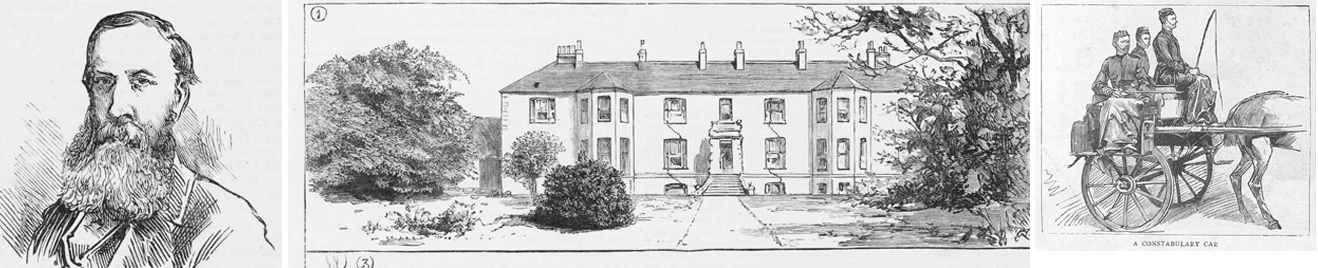
Clifford Lloyd 

Another significant Land War memoirist did not dawdle for as long as Samuel Hussey before pouring out his spleen in print. Within a decade of his departure from Ireland, Special Resident Magistrate (SRM) Clifford Lloyd had recorded his impressions of a Land War in which he had played a pivotal policing role. His writing was as robust as his policing. Since he was far removed from Ireland when his volume was published—it actually came out after he died— he had no need to censor himself. Nor did he. He reserved his most cantankerous brickbats for the Land League and the Irish Republican Brotherhood, but he was under no illusions about the nature of the police force upon which he relied heavily during his decade-long tenure in Ireland. ‘The Royal Irish Constabulary,’ he wrote, ‘can best be described as an army of occupation, upon which is imposed the performance of certain civil duties’. [2]  Michael Collins could not have put it more pithily. The fundamental difference between these two warriors was that Lloyd had no problem whatsoever with the idea of an occupied Ireland whose elite was being protected by a 12,000 strong paramilitary force with associated surveillance and intelligence duties. A force that shifted itself, now and again, to such unrelated banalities as closing down public houses for entertaining customers after hours, or investigating the occasional burglary.                 Lloyd, born in Portsmouth in 1844, graduated from Sandhurst, worked for the Burmese police for a decade, and was called to the bar in 1875, a year after being appointed a Resident Magistrate in Ireland. It was in that role that he appears to have found his true calling in life. The avocation of Irish Resident Magistrate has been entertainingly romanticised in the three ‘Irish RM’ books of Somerville and Ross (aka Edith Somerville and Violet Florence Martin) in which Major Sinclair Yeates moves from England to take up such a position, a magistracy being ‘not an easy thing to come by nowadays’.[3] While the three books of the adventures of Major Yeates are not entirely apolitical (one of the stories in The Irish RM and his Experiences is entitled ‘The Whiteboys’), the narrative is largely one of japes and jiggery-pokery, laced with dollops of cultural cringe—Yeates is slow to adapt to rural Ireland—rather than the humourless realities of such an avocation in the late nineteenth century.


 During the First Land War there were 72 resident magistrates in Ireland. They were not required to have any awe-inspiring qualifications (Lloyd was one of the few with a legal background) and ‘many gentlemen obtained these appointments, not on account of their capacity, intelligence or experience, but as a reward for political services rendered to the government of the time by those who supported the candidates’ applications.’ RMs tended to be drawn from the ranks of the RIC, the Colonial Service, or the military. Before the onset of the Land War duties were relatively light—this was reflected in a salary of between £425 and £675 in the 1870s— and usually of a judicial nature, although RMs also had some responsibility for public order and for keeping the Castle informed of criminal and political developments in their bailiwicks.             

Lloyd, however, was no run-of-the-mill RM. He was an über-magistrate, who, along with four other appointees, became an elite Special Resident Magistrate (SRM) in early 1882. Initially these five trouble-shooters were to be called ‘commissioners’, but that idea was dropped after objections to such nomenclature by Crown lawyers in Dublin Castle, some of whom were opposed to the creation of these enhanced portfolios in the first place. Lloyd, whose experience had been as an ordinary resident magistrate in Down and Longford, was allocated Clare, Limerick and Galway as his sphere of operations. The other four were appointed to Kerry, Cork, King’s and Queen’s Counties (Offaly and Laois), Leitrim, Westmeath, Roscommon, Waterford and Tipperary, counties where ‘outrage’ had become a way of life. The creation of the new SRM role was an attempt by W.E. Forster, the beleaguered chief secretary, to come to grips with the radically changed role of the RIC. As Lloyd put it himself: ‘The police were harassed to the last degree … their legitimate work had become quite neglected. They procured little or no information, and murders were of frequent occurrence, while it can hardly be said that  any serious effort was being made in detecting criminals’.  Hence the reliance placed on the quasi-military supervisors of five sub-districts to monitor security in their area and take responsibility for co-ordinating the activities of the police (12,000) and military (30,000) when it came to curtailing and punishing the perpetrators of agrarian violence and protecting the obvious targets of ‘moonlighters’.              

In his brief foray as an SRM Lloyd succeeded in becoming persona non grata #1 with the Land League leadership, Irish Party MPs, tenant agitators west of the River Shannon, and United Ireland. He managed to conjure up a formidable array of enemies, while retaining the loyalty of Forster for his insistence on ‘the law being obeyed and order preserved’.               

His first claim to notoriety came shortly after his transfer from Longford to Limerick in May 1881. His earliest test came in the environs of Kilmallock and Kilfinane, rich dairy country with relatively few indigent tenants. Here the roost was ruled by the famous ‘Land League priest’, Father Eugene Sheehy, president of the Kilmallock branch of the Land League. Lloyd’s assessment of the status quo in the area was terse. ‘In this district there had been no murders, for landlords and agents alike had been driven away, and even those loyally disposed among the people prudently bowed to the authority of the Land League in preference to being shot for opposing it … I found myself face to face with a state of affairs recognised to be bordering on civil war’.            Lloyd did not temporise. Within a fortnight of his arrival, he had despatched to jail Sheehy and most of the committee members of the troublesome Kilmallock and Kilfinane Land League branches (‘the hostile power in occupation’). Sheehy thus became the first priest to be arrested during the Land War and his incarceration became both a cause célèbre and a warning to other militants that Lloyd meant business. Lloyd supervised the arrest of Sheehy personally. An attempt was made by the RIC to roust the priest out at 5.30 a.m., but he declined to put in an appearance until 7.00. By this time the street outside his house was ‘already thronged with an excited crowd of people’. Lloyd anticipated bloodshed. Instead, Sheehy, as he was led away peacefully, was treated to displays of extreme deference. ‘The people fell upon their knees as he passed, and seized his hands and the skirts of his clothes, while begging his blessing before he left them. Shouts of defiance and awful loud curses greeted my appearance as I walked towards the barracks through the people.[4]After the release of the Kilmallock and Kilfinane ‘suspects’ in the autumn of 1881, Sheehy did not let up in his invective against Lloyd. In her ‘war diary’ of the tenure of her father as chief secretary, Florence Arnold-Forster, an admirer of the Clare SRM (‘I cannot help having a strong feeling for Mr. Clifford Lloyd’) recorded Sheehy, in an entry of 30 September 1881, as ‘foaming at the mouth in personal abuse of Mr. Clifford Lloyd, whom he described as being like Richard III in mind and body.’ The reference to the last Plantagenet King was because of ‘some rheumatic stiffness in Mr. Clifford Lloyd’s neck which gives him rather a high-shouldered look’. The chief secretary’s daughter, however, asserted boldly that Lloyd ‘has the mastery of Kilmallock’.[5] In deriding his physical appearance United Ireland was less oblique than Sheehy, referring to Lloyd as ‘the hunchback’. [6]            

William O’Brien’s newspaper waged a war of attrition against Lloyd long before he painted a target on his own back by becoming one of the country’s first Special Resident Magistrates. In its debut edition, United Ireland was already describing Lloyd as a ‘tyrant’. Later he would mature into a ‘satrap’. While Lloyd would obviously have rejected such categorisations, he would have viewed the hostility of United Ireland as a badge of honour. United Ireland itself does not merit a single mention in Lloyd’s memoir of the Land War, although we cannot be certain whether that is a subtle gesture of contempt, or an indication of painful memories best forgotten.            

 Lloyd, as one might expect, faced constant threats against his life as he went about his work. In his memoir of the Land War he recorded the receipt of dozens of death threats after the committal to prison of Father Eugene Sheehy and his Kilmallock allies:              ‘From this time I was closely watched by policemen. A man slept at my door, even in the barrack; a sentry was under my window by day and night; if I went into the street,  there were always in plain clothes two men close behind me, others at a little distance off, before, behind me, and on the other side of the street; if I went for a walk to get a little fresh air, even after a hard day’s work, 10 men with loaded rifles followed me; if I rode, a mounted escort was with me; and if I drove, ten men followed me on cars.’[7] 

 Naturally, moving around the countryside accompanied by such a retinue was represented by Irish parliamentarians as ‘a passion for theatrical display’. In the House of Commons in August 1882 IPP MP Thomas Sexton accused Lloyd of having been ‘appointed to play the part of despot’ and of travelling around Clare and Limerick ‘amidst the glittering of spurs and the clattering of sabres’.[8] Six months previously a notice posted in Tulla, Co. Clare had offered a ‘£10,000 reward for the corpse of Clifford Lloyd’.[9] No specific reward was offered for the body of Lloyd’s brother, Wilford, an officer of the Royal Horse Artillery, seconded to Clare as a temporary magistrate, but in February 1882 six shots were fired at him as he rode towards Tulla. One of the bullets struck home and severely wounded a policeman accompanying Wilford Lloyd.[10]             

The physical and mental strain on Lloyd was clear to Florence Arnold-Forster when she met the SRM in Cruise’s Hotel in Limerick in January 1882. ‘He looked ill,’ she wrote in her diary on 7 January, ‘which is not surprising.’[11] Unlike many of his peers Lloyd tended to be proactive rather than reactive. This served to increase his unpopularity. His attitude towards public Land League assemblies and the provision of huts for evicted tenants were two cases in point. Lloyd never saw a Land League or Irish National League meeting that he approved of: ‘The violent, disorderly, and seditious public meetings of the Land League were palpably illegal, and were followed by crime, bloodshed, and anarchy …. [12]Like his colleagues in the magistracy, Lloyd was under government orders, however, not to prohibit bona fidegatherings. As he might have done with Santa Claus and the Tooth Fairy, however, he did not believe such a phenomenon existed as a Land League meeting summoned for peaceful purposes. In a letter to the successor of the ill-fated under-secretary Thomas H. Burke, Sir Robert Hamilton, he was unambiguous in his rejection of the notion of public gatherings for ‘political’ purposes, asserting that ‘they mark the cessation of all true freedom in the districts in which they are held and in which the local ‘Leaguers’ are raised to the position of dictators’.[13]All Land League meetings, in Lloyd’s book, had a subversive intent and were inimical to the maintenance of public order. Whenever feasible, he ignored the political exigencies that dictated Dublin Castle’s approach to public gatherings and proclaimed as many as possible. Before his premature death in 1891, he waxed nostalgic in his memoir about the legal process relating to the right of assembly which he subsequently encountered in the colonial service in India. There, the officer in charge of a district, the equivalent of the Irish Special Resident Magistrates of the Land War era, was solely responsible for public order. ‘Had such a system been in force in Ireland,’ he wrote, ‘we should not have had to deplore a long succession of civil disorders and abortive revolutions’.[14]              

In the case of the installation of huts by the League, and later by the Ladies Land League, Lloyd was equally chary. These small huts were intended to house temporarily families that had been subjected to eviction and who had not been readmitted as caretakers on their land. While this facility had a clear charitable intent, there is no doubt that the huts could also be used for a nefarious purpose. They were often erected close to the ‘evicted’ farm in order to maintain around the clock surveillance and ensure that no ‘land grabber’ occupied the farm from which the hut dwellers had just been turned out. In the case of a number of evicted tenants in the troublesome district of Tulla, Lloyd chose to believe that intimidation lay behind the construction of a number of huts in the disturbed district. In the House of Commons on 18 April 1882, IPP MP Thomas Sexton rose to inform the Irish attorney general, W.M. Johnson, in the unlikely event that he was unaware of the development, that: ‘Mr. Clifford Lloyd interfered to-day, stating that the building of the huts was illegal, and ordered the builder to leave the place this evening, and informed him that unless he left he would be arrested’. Sexton wanted to know if this was government policy or a particular quirk of Lloyd’s. He got no satisfaction from the attorney general, whose response was supportive of any course of action the SRM deemed it wise to pursue. Lloyd’s cause was not helped by the fact that one of the evicted Tulla tenants, John Canny, died shortly after losing his farm. An attempt by Irish MPs to highlight this tragedy received short shrift from the administration. It was pointed out in the House of Commons that Canny was not one of the tenants denied access to the huts of the Ladies Land League, and that he was seventy-four years of age and in bad health before his death.[15] 

 Although Lloyd was better known for the prevention and prosecution of public order offences—he proved adept, for example, at securing the services of platoons of soldiers from reluctant military commanders—than for the red-handed apprehension of ribbonmen and moonlighters, this was largely because his tenure in Ireland coincided with coercion legislation that allowed the authorities to imprison those suspected of committing ‘outrages’. This could be done almost summarily, without resort to the traditional method of disposing of malefactors: trial by jury. Although he unquestionably benefited from this practice when it came to covert ‘ribbon’ activity, Lloyd was not greatly enamoured of the frequent employment by the RIC of the ‘internment without trial’ provisions of the Protection of Person and Property Act. He considered the ‘lifting’ and subsequent incarceration of suspects to be lazy policing. His preference was for the procurement of evidence usable in a court of law. That said, he was well aware that RIC investigators were frequently forced to adopt such a strategy because of the difficulty of obtaining convictions in trials involving partisan ‘home’ juries.             

Attempts by Irish parliamentarians to imply that, despite his fearsome reputation, his presence in Limerick, Clare and Galway had little actual impact on crime statistics, and to suggest that he had signally failed to clear those counties of its ‘hard men’ were brushed off by W.E. Forster’s successor as chief secretary, George Otto Trevelyan. Trevelyan, in response to gibes from Irish MPs that Lloyd had been merely abrasive and autocratic while being simultaneously ineffective, pointed out that, before his appointment in 1882, ‘outrages’ in Clare in the last quarter of 1881 had been at a high of 148. By the spring of 1882, three months after Lloyd’s appointment, they had declined to 86. Results in Limerick, another county within his tri-county bailiwick, had been similar.     

Whether or not Lloyd felt that his continued presence in Clare, Limerick and Galway was rapidly becoming counterproductive, given increasing local and national antagonism towards him; whether he became disillusioned after the apparent concessions of the Kilmainham Treaty and the principled resignation of his patron, William E. Forster; or whether he had simply had enough of the threats and the constant strain of his work, Lloyd began to seek alternative employment in May 1882. Nothing was forthcoming from a government that, in light of the Phoenix Park murders and the passage of the draconian Crimes Act, was not yet ready to dispense with his services in Ireland. Towards the end of 1882 he again applied for a transfer. It was not until the middle of 1883, when the government reorganised the magistracy and dispensed with the role of Special Resident Magistrate, that Lloyd was allowed to move on.             

He was retained pro tem as an ordinary magistrate but he secured extended leave to work in the Egyptian police and prison system. Nationalist newspapers gloated over his departure, and raised raucous protests at his precipitate return when his Middle Eastern idyll did not work out. United Ireland, coming up with yet another imaginatively scornful appellation for Lloyd (‘tyrannical bashaw’) crowed at his minor humiliation in having proved unacceptable to the Egyptian authorities. ‘Mr Clifford Lloyd,’ O’Brien exulted, ‘is not to rid Ireland of his presence after all. The cholera is too virulent in Egypt at present for gallant heroes of the SRM type’.[16]Lloyd was reassigned to Derry as an ordinary RM, an apparent demotion, while, like Mr. Micawber, he waited for something to turn up. In 1885 an opportunity finally presented itself.  It was not the colonial governorship to which he aspired, and which he felt was his due, but the lieutenant-governorship of the island of Mauritius. There he quickly fell foul of the Irish-born governor and future nationalist MP for Kilkenny, Sir John Pope Hennessy. After transferring to the Seychelles, Lloyd resigned from the colonial service in 1887. He died prematurely of pneumonia, six days shy of his forty-seventh birthday. While historian Stephen Ball, an acknowledged expert on nineteenth century policing policy, describes Lloyd as ‘perhaps the sternest of Forster’s Special Resident Magistrates’,[17] the chief secretary’s daughter, Florence Arnold-Forster, herself beguiled by both Lloyd’s personality and his methods, acknowledged that ‘with all his vigour Mr. Lloyd is a little too impulsive, too much up and down’. Her father placed more trust in one of Lloyd’s four SRM colleagues, Captain Plunkett (‘Pasha’ Plunkett to United Ireland) who would continue to function as a resident magistrate well into the Plan of Campaign era of the late 1880s. ‘Father is inclined to think Mr. Plunkett is the best for his work’ Florence confided to her diary in February 1882 after a long walk with her harassed

parent.[18]

 Lloyd may well have been more mercurial and not quite as quietly efficient as the more durable Plunkett, but his profile, during his brief tenure in his specialist role as a potent stipendiary magistrate, was higher than that of his colleague. His acerbic and unsurprisingly self-aggrandising memoir of the Land War—which devotes much space to his rivalry with a combative Eugene Sheehy—reveals a man of considerable moral and physical courage whose determination to maintain law and order was as strong as his obsession with the preservation of the prevailing status quo in rural Ireland. Clifford Lloyd was never plagued by self-doubt, neither was he a public service cipher or a disillusioned mercenary. He was a champion of the rights of private property who deprecated the impertinence of the Irish peasantry, affluent and indigent alike, in seeking the overthrow of their landlords. His undiscriminating vigour; his penchant for tarring political activism and agrarian violence with the same brush; and his proclivity for aggressive policing rather than diplomacy, rendered him a rapidly wasting asset to a government whose ‘Kilmainham Treaty’ May 1882 volte-face (notwithstanding the introduction of the Crimes Act after the Phoenix Park murders) signalled a desire for accommodation rather than confrontation. An assertive magistrate with Lloyd’s record became supernumerary once the Liberal government chose compromise over conflict.            

Lloyd, however, remained unrepentant. His valediction in Ireland Under the Land League was stark and unapologetic. ‘Blood the Land League wanted,’ he wrote in the final paragraph of his memoir,  ‘and blood it caused to flow, with a cruelty and savageness unsurpassed in history’.[19]   It was typical hyperbole from a distinguished member of the establishment officer corps, but it contained more than a grain of truth.   


[1] Clifford Lloyd, Ireland Under the Land League, (London, 1892), 60-61.[2] Lloyd, Ireland Under the Land League, 70.[3] Edith Somerville and Martin Ross, The Irish RM and his experiences (London, 1948), 7. [4] Lloyd, Ireland Under the Land League, 44, 226, 27, 81, 97, 89-90.[5]T.W.Moody and R.A.J.Hawkins (eds.) Florence Arnold-Forster’s Irish Journal (Oxford, 1988), 465, 254.[6] United Ireland, 7 January 1882. [7] Lloyd, Ireland Under the Land League, 92. [8] HC Deb 10 August 1882 vol 273 cc1414-70. [9] Clare Independent, 25 February 1882.[10] Clare Freeman, 18 February 1882. [11] Moody and Hawkins, Florence Arnold-Forster’s Irish Journal, 345.[12] Lloyd, Ireland Under the Land League, 99-100.[13] Clifford Lloyd to Sir Robert Hamilton, 2 Sept 1883, NAI CSORP 1883/2040.[14] Lloyd, Ireland Under the Land League, 101.[15] HC Deb 04 May 1882 vol 269 cc.95-695.[16] United Ireland, 11 August 1883.[17] Stephen Andrew Ball, Policing the Land War: Official responses to political protest and agrarian crime in Ireland 1879-91 |(PhD thesis Trinity College, Dublin, 2000), 30. [18] Moody and Hawkins, Florence Arnold-Forster’s Irish Journal, 382.[19] Lloyd, Ireland Under the Land League, 243.  

Land Is All That Matters – The Author’s Cut 1

Land Is All That Matters comes in at around 700 pages. It could have been longer but I agreed to cut a couple of chapters to keep costs down. So, here, over the next few days, is the ‘deleted material’, which, when added back in constitute The Author’s Cut.

THE AGENT

‘Anti-Christ and Orangeman’ – The land agent, Samuel Murray Hussey

‘This Hussey is of English origin and was formerly a cattle-dealer, and practised usury as far back as 1845. If all Ireland were to be searched for a similar despot he would not be found. He is a regular anti-Christ and Orangeman at heart, and, in fact, he acts as agent for all the bankrupt landlords in Kerry.’[1]

(Daniel O’Shea, letter to the New York Tablet, 1880)

The difference twixt moonlight and moonshine 

The people at last understand, 

For moonlight’s the law of the League 

And moonshine is the law of the land.[2]

(Doggerel quoted by Samuel M. Hussey in The Reminiscences of an Irish Land Agent

Samuel Murray Hussey

Samuel Murray Hussey’s autobiography, Remininiscences of an Irish Land Agent, appeared in 1904, just in time to allow him to fire off some artillery shells at the Land Purchase Act introduced the previous year by the Tory chief secretary, George Wyndham. No provision had been made for lost agent income in legislation designed to bid adieu to as many Irish landlords prepared to ‘take the shilling’ and depart. The author was suitably aggrieved and didn’t hold back.

            Hussey, after the hapless Boycott, is perhaps the best-known agent of the Land War era. Such celebrity in the 1880s was not, of course, a function of popularity. During the Land War, agents were not ‘celebrated’ or ‘famous’, they were, deservedly or not, ‘notorious’ or ‘infamous’.

            It is important to get Sam Hussey in some perspective. He was undoubtedly a Land League bete noire, but the raw figures belie his reputation for cold-bloodedness. On the estate of Lord Kenmare, Samuel Hussey’s primary responsibility, permanent evictions (where tenants were not readmitted) between 1878 and 1880 were of the order of 4 per cent of the 2,000 or more tenants. Even in 1880, at the height of the Land War, in the first six months of that year, five tenants out of a total of 4,160 under his agency in Kerry were evicted, and two of those were given paid passage to the USA.[3]However, we should be under no illusion that the relative paucity of evictions on estates under Hussey’s regulation had anything to do with moderation or excessive leniency. Hussey had made a simple economic calculation: there was no income to be extracted from an empty farm, and the power of the boycott had ensured that few if any evicted farms would be occupied in the short term at least. He said as much in his 1904 memoir: ‘Suppose twenty men were tenants on a townland …. Unless caretakers at a cost of about three times the rent were put in under excessive police protection, all the nineteen farms would promptly become derelict’.[4]

 Given the low level of eviction on his Kerry estates, why, therefore, was Hussey the most reviled agent in the country at a time when it was open season on members of his profession? The tone of his memoir, Remininiscences of an Irish Land Agent, offers some explanation. Hussey was pugnacious and highly combative. He was a profoundly and self-consciously alienating figure. Furthermore, he positively revelled in his notoriety. The ‘substance’ in Hussey’s case was comparatively inconsequential, his eviction record lagged behind many of his less well-known peers. But with Hussey ‘style’ was as important as ‘substance’. Where wholesale clearances were financially impractical, the optics of house-burning at the few ejectments that did take place assumed additional importance. While it attracted widespread excoriation, burning the cottage of an evicted farmer acted as a powerful psychological disincentive for tenants to default. Public opprobrium did not concern Hussey, not in 1880 and not in his declining years when he doubled down on his record in his self-serving memoir. 

Born in 1824 Hussey had experienced the horrors of the Great Famine (at second hand) and was in his prime as an agent when the First Land War began in earnest in 1879 with the founding of the Irish National Land League. Hussey’s memoir is as opinionated as it is entertaining. It is also utterly myopic and partial, almost beguilingly so. Hussey writes of facing death at the hands of moonlighters with the sort of insouciance of a curmudgeonly Great War British battalion commander describing how he regularly despatched ‘the Hun’ to their eternal reward. Hussey began his career as an agent in County Cork in 1845 as an assistant to his brother-in-law. In his reminiscences he observed that he had ‘thus really embarked on the profession of my life, one which, on the whole, I have most thoroughly and heartily enjoyed’. Never has the phrase ‘on the whole’ been required to work so hard. Shortly after this assertion Hussey pointed out the inherent thanklessness of a life as the landlord’s factotum: ‘Lord Derby received threats that if he did not reduce his rents, his agent would be murdered. He coolly replied: ‘If you think you will intimidate me by shooting my agent you are greatly mistaken’.[5]

Lord Derby could well afford to be so cool in his response.  As a landlord he was not required to face a fraction of the physical risks of his agent. Furthermore, as prime minister no one was likely to get close enough to him for an accurate shot, although, admittedly, that had not saved the life of one of his predecessors, Spencer Perceval.  

            Hussey, however, largely shrugged off the copious ill-will towards him, observing of the ubiquitous threatening letter that, although he had received over 100 of such missives,  ‘I’ll die in my bed for all that’.[6] That is what almost happened to him and his entire family when the Hussey household in Edenburn, Ballymacelligott, near Castleisland, Co. Kerry was the subject of a dynamite attack in the early hours of the morning of 6 December 1884. The would-be killers were able to plant the dynamite despite the presence of a permanent three-man RIC guard on the house.  The ManchesterGuardian offered a graphic description of the event: 

‘A large aperture was made in the wall, which is three feet thick. Several large rents running to the top have been made, and it now presents a most dilapidated appearance. The ground-floor, where the explosion occurred, was used as a larder, and everything in it was smashed to pieces, the glass window-frames and shutters being shivered into atoms. On the three stories above it, the explosion produced a similar effect.’[7]

Hussey’s phlegmatic temperament asserted itself in the minutes after the explosion. His first laconic observation was to his wife, ‘My dear,’ he told her, ‘we can have a quiet night at last, for the scoundrels won’t bother us again before breakfast.’ With that he returned to bed. A couple of days later he received a claim for compensation from a neighbour about half a mile distant. The force of the explosion had knocked some of the plaster off her wall. This had then fallen into a pan full of milk, spoiling it. It was probably the least of his worries.[8]

            The dynamiters were prepared to kill up to sixteen people in order to end Hussey’s life, which suggests an extraordinary level of both callousness and determination. It was this attack, blowing away much of the rear of his house, which finally persuaded Hussey that it was time to move to London.  

Hussey’s main employer, Lord Kenmare, a Roman Catholic landlord, was relatively popular in Kerry. More than a year after the founding of the Land League, in November 1880, 5,000 of his tenants demonstrated in his favour after he had received a letter threatening his life.[9] However, in September 1880 Hussey succeeded in damaging his employer’s status, while reinforcing his own reputation for ruthlessness, by burning the house of an evicted tenant in what was seen locally as an unnecessarily provocative act. Timothy Harrington’s Kerry Sentinel suggested that Kenmare was ‘playing the second fiddle’ to his single-minded agent.[10] By the outset of the First Land War Hussey was agent to Kenmare’s estate of almost 120,000 acres in Kerry, Cork and Limerick and headed a land agency firm that supervised 88 estates and was responsible for collecting around £250,000 in rent per annum.[11] This placed him at the top of the Kerry ribbonmen’s ‘most wanted’ list. Although claiming in his memoir to have been personally responsible for the eviction of only ten tenants over a six-year period from 1879, Hussey’s life was under permanent threat. He admitted that: ‘I never travelled without a revolver, and occasionally was accompanied by a Winchester rifle. I used to place my revolver as regularly beside my fork on the dinner-table, either in my own or in anybody else’s house, as I spread my napkin on my knee.’

Hussey also took the precaution of gifting his daughter a revolver. She slept with this under her pillow and would have been well capable of using it had the need arisen as, during the Land War in the Hussey household, Sunday afternoons were reserved for weapons training and target practice. The agent proudly laid claim to the nickname ‘Woodcock’— so christened by the editor of the Daily Telegraph—on the basis that ‘he was never hit, though often shot at’.  Hussey claimed, that even living in London, he was still unsafe, although, he added, ‘if a man shoots me in London he’ll be hung, and every Irish scoundrel is careful of his own neck’. [12]

            Hussey’s memoir is interesting in its assessment of the composition of the leadership of the Land League (‘The Land League agitation generally originated with the publicans, small shopkeepers, and bankrupt farmers, rather than with the actual land occupiers’) and his observation that of the six Poor Law districts in Kerry, the most violent agitation took place in the wealthiest (Tralee) and in the most prosperous part of the Tralee Poor Law district, Castleisland (‘which shows that poverty was not the cause’).   

            Hussey, in ‘there but for the grace of God’ mode, also discusses the murder of the prominent Kerry landlord Arthur E. Herbert. This killing took place near Castleisland in March 1882. The picture Hussey paints of the murder victim is less than flattering. 

He was a turbulent, headstrong man, brave to rashness and foolhardiness, and too fond of proclaiming his contempt for the people by whom he was surrounded. As a magistrate, sitting at Brosna Petty Sessions, he expressed his regret that he was not in command of a force when a riot occurred in that village, when he would have ‘skivered the people with buckshot’. 

In describing the death of Herbert, Hussey must have been well aware, that, in different circumstances, he might well have shared the deceased landlord’s fate. He certainly did not lack for potential assassins.  Like Hussey, Herbert never travelled abroad without a revolver in his pocket. On the day of the fatal ambush in which he died, he even had an armed guard for the first mile of his journey between Castleisland and his home in nearby Killeentierna House where he lived with his eighty-year-old mother. It was after the RIC constable turned back home for Castleisland that Herbert was attacked and killed. The killers made certain of their quarry as ‘The body was almost riddled with shot and bullets’.[13]

            A piece of contemporary doggerel offers some indication of the esteem in which Herbert was held by his tenants. 

            A for poor Arthur who thought he was smart, 

            B for the bullet that went through his heart;

It goes on …

            G for the groan he made when he fell,

            H for the hurry he showed going to hell,

            I for the Irish who will laugh at the sport.[14]

When it came to tenant marriage Hussey was not as oppressive as his fellow Kerry agent, William Steuart Trench—who insisted on being approached for permission by tenants who wished to marry. Hussey’s memoir also offers a revealing insight into one of the consequences of the end of the practice of subdivision. Although marriage patterns changed post-Famine—with men who were no longer entitled to a share of their father’s farm tending to postpone connubial bliss until they could support a wife and children by some other means—family numbers still remained relatively high. Something had to be done for the sons who were not going to inherit. Hussey described how, in this context, the dowry acquired an even greater importance than in pre-Famine days. The marriage prospects of the son who was due to inherit (not necessarily the eldest) became of vital importance and interest to the rest of the family. In many cases the dowry he received before his nuptials would not accrue to himself but to the disinherited members of the clan, in compensation for their bad fortune.    

Hence, if the eldest son were to marry the Venus de Medici with ten pounds less dowry than he could get with the ugliest wall-eyed female in the neighbourhood, he would be considered as an enemy to all his family. A tenant of a neighbour of mine actually got married to a woman without a penny, a thing unparalleled in my experience in Kerry, and his sister presently came to my wife for some assistance. 

My wife asked her: ‘Why does not your brother support you?’  And she was answered:  ‘How could he support any one after bringing an empty woman to the house?’ 

To marry ‘an empty woman’ was to commit a crime of the first water. Another tenant of Hussey’s approached him after the death of his (the tenant’s) father, and sought to have his name inserted in the rent book as his father had left him the farm and its stock in his will. 

‘What’s to become of your brother and sister?’ says I.  ‘They are to get whatever I draw,’ says he. ‘That means whatever you get with your wife?’  ‘That is so.’  ‘Well, suppose you marry a girl worth only twenty pounds, what would happen then?’ 

‘That would not do at all,’ very gravely. ‘Is there no limit put on the worth of your wife?’ ‘Oh,’ says he, ‘I was valued at one hundred and sixty pounds.’ I found out afterwards he had one hundred and seventy with his wife.[15]

While it is easy to abhor the supercilious arrogance that pervades Hussey’s memoir it is hard not to admire his mordant sense of humour. For example, when asked by the Earl of Lansdowne’s agent, J.Townsend Trench (son and successor of that other agent/memoirist, W.S. Trench, writer of Realities of Irish Life ), ‘How is it, Hussey, that you have not got shot long ago?’ Hussey responded sardonically, ‘I have warned them that if they shoot me, you will be their agent’.[16]

            Samuel Murray Hussey, described in his Times obituary as ‘one of the best-known land agents in the United Kingdom’, was as good as his word. He did succeed in dying in his bed—without the assistance of dynamite—at Aghadoe House near Killarney in 1913, nine years after the publication of his self-serving, often thought-provoking, and always highly diverting memoir. 


[1] S. M. Hussey, The Reminiscences of an Irish Land Agent (London, 1904), 210 

[2] Hussey, Reminiscences, 131.

[3] Donnacha Seán Lucey, Land and popular politics in County Kerry, 1872–86 (PhD thesis, Maynooth University, 2007), 75

[4] Hussey, Reminiscences, 190

[5] Hussey, Reminiscences, 40.

[6] Hussey, Reminiscences, 61.

[7] Manchester Guardian, 7 December 1884.

[8] Hussey, Reminiscences, 240-242.

[9] Kerry Sentinel, 16 November 1880.

[10] Kerry Sentinel, 1 October 1880.

[11] Dictionary of Irish Biography, Vol 4, 860.   

[12] Hussey,  Reminiscences, 67, 255, 130-131.

[13] Hussey, Reminiscences, 208, 214, 226, 227.

[14] http://www.odonohoearchive.com/castleisland-and-the-herbert-family/ – Accessed 22 March 2022.

[15] Hussey, Reminiscences, 228, 143-44.

[16] L. Perry Curtis Jr. The Depiction of Eviction in Ireland 1845-1910 (Dublin, 2011), 176.  

VIDEO – The Bodyke Evictions – Co. Clare June 1887

Check out the video on Vimeo

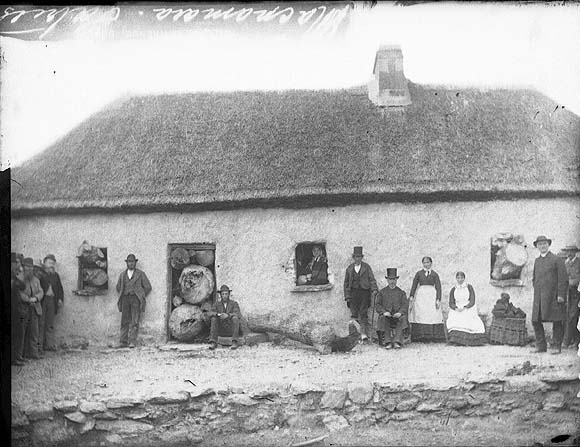
One of the most notorious Irish mass evictions of the turbulent 1880s took place around the small County Clare village of Bodyke in June 1887 on the 5000 acre estate of Colonel John O’Callaghan, which supported around 100 tenants. The landlord lived in the splendid Maryfort House in nearby Tulla. O’Callaghan had inherited the estate from his father in 1849.Through much of the 1880s O’Callaghan’s property was closely guarded by armed members of the Royal Irish Constabulary. This was because he had conducted a series of evictions in 1881 at the height of the Land War during which the land arbitration court reduced his rents by a whopping 35%.In 1887  O’Callaghan went to war again with  tenants unable to pay even the already reduced rents. Arrears of £2000 had built up. The tenants offered O’Callaghan £900, which he refused. Instead he called in the bailiffs, who were protected by a large force of Royal Irish Constabulary and military.On the side of the tenants, and visiting Bodyke to observe proceedings were future MPs Michael Davitt, founder of Land League in 1879 and Henry Norman, at the time a journalist working for the liberal London evening daily the Pall Mall Gazette, who  would write a lengthy account of the evictions in a  book.    

The O’Halloran sisters of Bodyke  

Land Is All That Matters – Video explainer on Vimeo

<iframe src=”https://player.vimeo.com/video/952838540?h=58bfb78abf&#8221; width=”640″ height=”564″ frameborder=”0″ allow=”autoplay; fullscreen” allowfullscreen></iframe>

Land Is All That Matters – GLOSSARY OF TERMS L-Z

Land Acts

A variety of remedial land legislation was introduced in the 19th century, mostly in the last three decades, initially by William E. Gladstone in 1870 and 1881 and later by the Tory government of Lord Salisbury (and his nephews Arthur and Gerald Balfour) in 1887 and the 1890s.

Land Commission

Established in 1881 after the passage of the second Gladstone Land Act, its role went from the arbitration of rents between tenant and landlord, to direct involvement in the land purchase process when it acquired the power to buy estates and re-distribute the land to tenants who were offered loans to enable the purchases. It was re-constituted by the Irish Free State government in 1923, continued the work of land re-distribution until the 1980s, and was dissolved in 1999.

Land Courts

Established by the 1881 Land Act as an arbitrator between tenant and landlord whereby a tenant could apply to the court for a reduction in rent and the decision of the Land Court would be binding on both parties. Initial scepticism about the body gave way to a sudden wave of enthusiasm among tenant farmers when its early decisions reduced rents by an average of 15-20%. 

Land League, the

From its origins in Mayo in 1879, the Irish National Land League quickly developed, under the leadership of agrarian activists like Michael Davitt and Patrick Egan, and the presidency of Charles Stewart Parnell, into a vibrant and cohesive national pressure group intent on achieving ‘tenant right’ as well as a reduction of rent and an end to evictions. With agrarian crime levels rising in 1881 the organisation was banned in October of that year and most of its leadership arrested. Their release followed the conclusion of the unofficial ‘Kilmainham Treaty’ (qv)

Ladies Land League, the

Established by Parnell’s sisters Fanny and Anna in 1880 with the latter as the primary motivating force, the Ladies Land League (LLL) came into its own in October 1881 after the Liberal government proscribed the Land League. Anna Parnell’s organisation essentially took over the functions of its ‘brother’ organisation and did so with great efficiency and tenacity. Anna Parnell, who was far more radical than her brother Charles, and the rest of the LLL became surplus to requirements after the conclusion of the so-called ‘Kilmainham Treaty’ and the release from jail in May 1882 of her brother and the Land League leadership cadre. The LLL, because of its inherent agrarian radicalism, also became a political embarrassment to a Parnell whose focus had now shifted to the issue of Home Rule. 

Anna Parnell

Land purchase 

The transfer of land from landlord to tenant. A small element was contained in the Church Disestablishment Act of 1869 and Gladstone’s 1870 Land Act (‘The Bright Clause’). The Ashbourne Act of 1885 offered terms to landlord and tenant to encourage the process, but this was only marginally successful. The Conservative party chief secretary Arthur Balfour made another attempt in 1891 legislation but it was not until the Wyndham Act of 1903 and its subsequent amendment by Liberal chief secretary Augustine Birrell in 1909 that generous government funding led to the sale by landlords, and the subsidised purchase by tenants, on a vast scale. 

Land War, the

A campaign against excessive rents and evictions that began in Mayo in 1879. While the Land League was the public face of tenant opposition to landlord exactions during a period of worldwide economic depression, in the background secret agrarian ‘ribbon’ societies also played a significant role in forcing the passage of the 1881 Land Act and bringing William E. Gladstone to the negotiating table in the formulation of the so-called ‘Kilmainham Treaty’ (qv) which effectively brought the ‘War’ to an end.   

Landed Estates Court

The 1858 successor to the Encumbered Estates Court (qv) which took over the sale of the estates of bankrupt landlords. 

Land grabbers

The undesirable epithet applied to tenant-farmers who took up land from which the prior tenant had been evicted and, from 1919-23 to ‘squatters’ engaged in the illicit seizure of land. See also ‘grabbers’. 

Latitat

A writ or summons generally issued on the assumption that the object of the summons is in hiding. 

Middlemen

Someone who rented land from a landlord and then sub-let to others. Some middlemen were wealthy minor gentry, some were businessmen or professionals, others were farmers who worked their own land as well as subletting. On some estates there were ‘layers’ of middlemen, with, perhaps, a single middleman sub-letting to other members of a species that had become seriously endangered by the end of the 19th century and was close to extinction a hundred years later.. 

Molly Maguires 

A secret society suspected of the murder of Roscommon landlord, Denis Mahon. The term was later applied to the fraternal Ancient Order of Hibernians (a Roman Catholic counterpart of the Orange Order) and to a secret society based in the anthracite fields of the US state of Pennsylvania. 

A drawing of a person sitting in a chair

Description automatically generated

Major Denis Mahon

Newtownbarry

Today known as Bunclody, it was the scene in June 1831 of an affray that led to the killing of at least eighteen anti-tithe protestors by members of the Yeomanry militia. It was also the last time a Yeomanry company was used in a policing operation. 

Oakboys (see Hearts of Oak) 

Ordnance Survey

Beginning in 1825, and employing, among others, future Irish under-secretaries Thomas Drummond and Thomas Larcom, the Ordnance Survey mapped the country thoroughly for the first time since the Down Survey.  

Pastorini

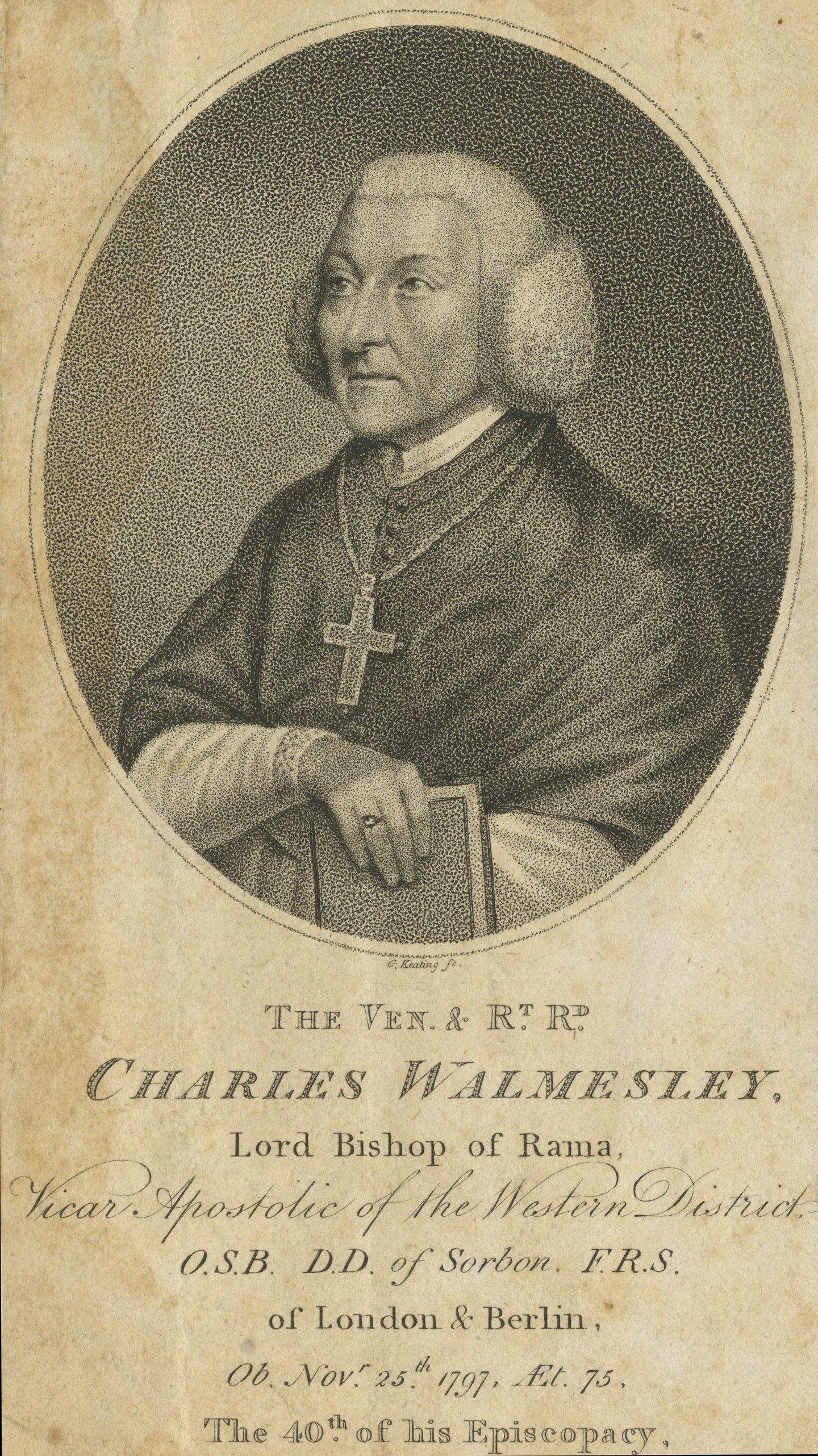
The 18th century millenarian prophecies of Bishop Charles Walmsley (‘Pastorini’ was his pen-name) which predicted the demise of Protestantism in the 1820s. Walmsley’s writings influenced many of those who participated in the Rockite insurgency of the 1820s.

Bishop Charles Walmsley

Pound

An area of confinement where distrained livestock were kept prior to being auctioned. Also a unit of currency rarely if ever seen by Irish landless labourers or cottiers. 

Process server

An agent employed to serve eviction notices on tenants in arrears. As well liked and respected as a serious case of leprosy. 

Property Defence Association

A largely unionist landlord organisation established during the Land War to protect the interests of landlords against the rival tenants combination, the Land League. 

Ranch War, the

The outcome, from 1906-09, of a movement composed largely of small farmers and landless labourers, and led by Irish Parliamentary Party politicians, such as Laurence Ginnell, who campaigned against the move from tillage to pasture and the consequent reduction in the number of farms for purchase or rent. Often characterised by the illicit activity of cattle ‘driving’ (qv)

Laurence Ginnell MP

Replevy

To re-deliver distrained goods to their original owner after receiving financial guarantees. In Castle Rackrent Maria Edgeworth writes of Sir Murtagh, ‘he was always … replevying and replevying.’

Ribbonmen, the

The name by which members of secret agrarian societies came to be known by the middle of the 19th century, largely replacing the term ‘Whiteboy’. However, the Ribbonmen were, initially at least, more politicised, and emerged from the ‘Defender’ tradition in Ulster. Ribbonism also had a foothold in Dublin, unlike any of its purely rural predecessors. 

Rockites, the

A well-coordinated agrarian secret society, often driven by anti-Protestant millenarianism (see ‘Pastorini), which posed a major threat to the authorities in Munster in the 1820s. Named after the mythical ‘Captain Rock’ (qv) who ‘signed’ many of the threatening letters issued to agents, landlords and non-compliant tenants.    

undefined

‘The Installation of Captain Rock’, Daniel Maclise 1834

Rundale

A co-operative tenurial system based on a clachán (qv) or small community in which land was held collectively and its distribution settled by local agreement. 

Rightboys, the

A largely Munster-based agrarian secret organisation of the 1780s whose main grievance was the obligation to pay tithes. The name derives from their allegiance to the mythical ‘Captain Right’.

Shanavests, the

The rivals of the Caravat (qv) secret society in a class-based conflict in Munster and south Leinster from 1806-11. The Shanavests were prosperous farmers who combined to resist the antagonism of small farmers and labourers. 

Sive (Sieve) Oultagh

The mythical guiding light of the Whiteboys whose signature was often appended to threatening letters from the organisation. Other exotic names used in this context included Joanna, Shevane Meskill and the more masculine Lightfoot, Slasher, Cropper, Echo, Fearnot and Burnstack.

Steelboys, the (see Hearts of Steel)

Terry Alts, the

A secret society that emerged in County Clare in the late 1820s, post-Rockite and pre-Tithe War and was responsible for a number of murders, the most celebrated being the killing of Captain William Blood, land agent of Lord Stradbrooke in 1831. 

Three Fs

‘Fair rent, Free sale. Fixity of tenure’. An ongoing slogan since the days of the Tenant League. Finally given legal status in Gladstone’s 1881 Land Act. 

Tithes

A form of taxation payable to the clergy of the Established Church and a frequent bone of contention, especially with members of the Roman Catholic and Presbyterian faiths. The nature of the tax varied from region to region and, for a long time, livestock farmers were exempted from the levy. The so-called ‘Tithe War’ of the 1830s led to the Tithe Rentcharge Act of 1838 which ended the anti-tithe agitation.

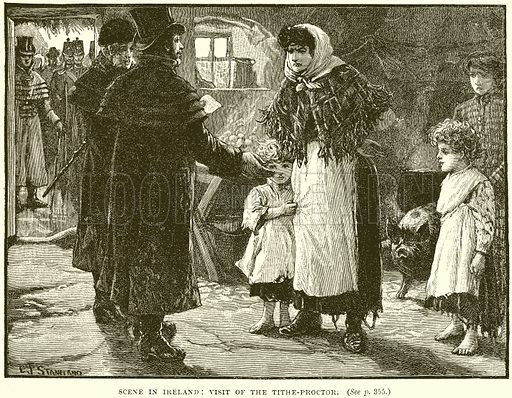
Tithe proctor

An agent who established crop valuations and collected tithe contributions on behalf of a Church of Ireland rector for a commission of around 10%. As welcome as gout.

A visit from the tithe proctor

Tithe farmer

Someone who reached agreement with a local rector to take on the collection of tithes on payment of an agreed sum to the clergyman. How he then made a profit was dependent on how much he could extract from those in the local parish liable for the tax. As popular as syphilis.

Tithe War 

A conflict that spawned the effective, but relatively uncoordinated movement which led to the transfer of direct responsibility for the payment of tithes from tenants to landlords. The ‘war’ began in Kilkenny in 1830 and included two notable atrocities, at Newtownbarry, Co. Wexford (qv) in June 1831 where yeomanry killed fourteen protestors and at Carrigshock, Co. Kilkenny (qv) in December 1831 where a process server and twelve policemen were killed.     

Ulster Custom 

The right of a tenant to be compensated for improvements when vacating land (either voluntarily, or as a result of eviction proceedings) or to sell his ‘interest’ in the land. Also known as ‘tenant right’ it was supposed to exist throughout Ulster, although this was often disputed by landlords, as the incoming tenant was expected to pay for the interest or fund the compensation and this tended to reduce the potential rent.  

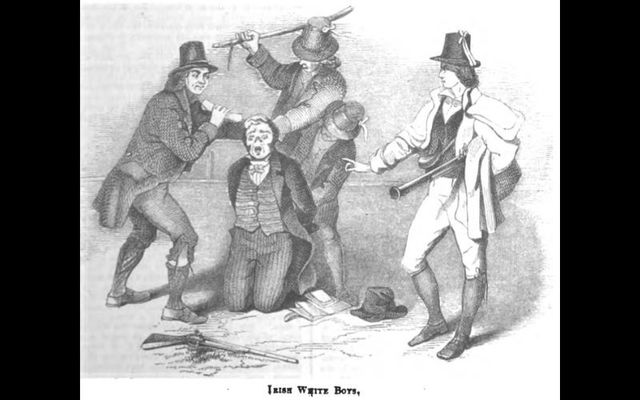
Whiteboys. 

An agrarian secret society that originated in Tipperary in 1761 in opposition to the enclosures of common land. The movement then spread into neighbouring counties with an expanded agenda. Named for the white shirts worn over workday clothing. The movement died away by 1765 but re-emerged in 1769 in opposition to high rents, evictions and excessive levels of tithe payments. The term ‘Whiteboy’ continued to be used in the early 19th century as an umbrella term for violent agrarian activity, until it was gradually supplanted by the term ‘Ribbonism’. The 18th century legislation against agrarian crime passed in 1766, 1776 and 1787 became known as the ‘Whiteboy Acts’. 

A group of men in clothing

Description automatically generated

Whiteboy activity

Whitefeet

An offshoot of the Whiteboys, in that this was a secret agrarian society which emerged in the Carlow-Kilenny area in the 1830s in imitation of the 18th century Whiteboys.