On This Day – Drivetime – 30.10.1751 – Birth of playwright and politician Richard Brinsley Sheridan

5415-1-h.tif

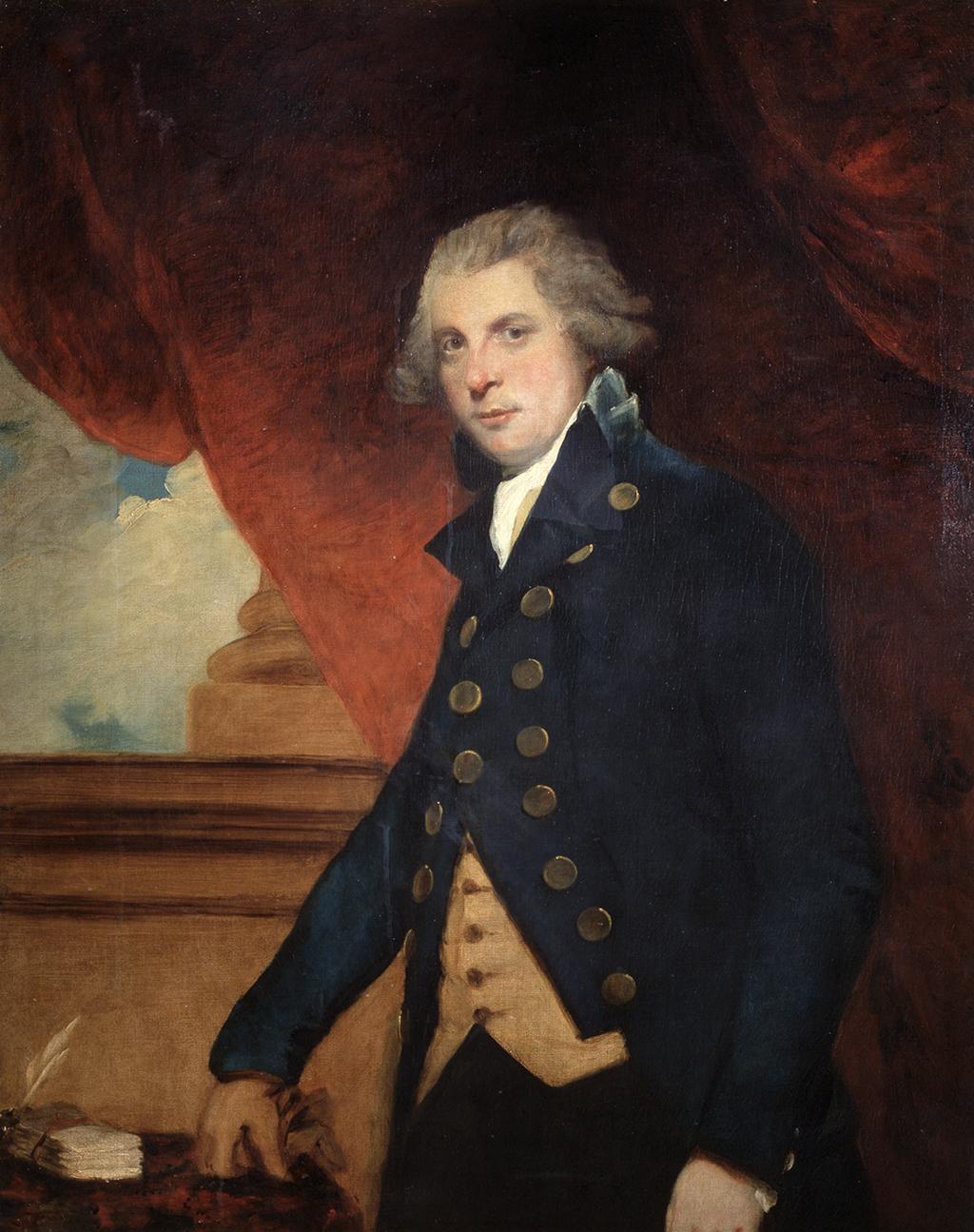
He was one of the outstanding English playwrights and politicians of the 18th century. Except like many other exceptional exponents of the benign art of theatre and the dark arts of politics he wasn’t English – he was Irish.

Richard Brinsley Sheridan was born in Dorset Street in Dublin in 1751. His surroundings were slightly more fashionable then than they are now. He was probably born to write for the theatre. His mother, Frances was a playwright and novelist, his father Thomas was, for a long time, an actor-manager.

His budding theatrical and political careers almost failed to get off the ground, however. Sheridan, to defend the honour of his future wife, Elizabeth Linley, was obliged to fight a duel against one Thomas Matthews, a rival for Elizabeth’s affections, who also happened to be married. Matthews had churlishly defamed her in a newspaper article when she rejected his advances.

The two men met twice in 1772. Swords were the weapons of choice on both occasions. At the first encounter, in London, Matthews posed few difficulties for the Irishman. He was quickly disarmed, begged for his life and was forced to retract the defamatory article. However, Matthews insisted on a rematch and Sheridan decided to oblige him. The second meeting, in Bath, was a much bloodier affair that Sheridan barely survived. According to contemporary accounts he was borne from the field with his opponents broken sword sticking from his ear and his whole body covered in wounds.

Sheridan survived and three years later produced his first play The Rivals a sparkling comedy that included the character of a hot-blooded and mean-spirited Irish duelist Sir Lucius O’Trigger. The comedy, coincidentally, is set in Bath. There is more than one way of gaining revenge on a loathsome adversary.

However, the most memorable character in the play was the sublime Mrs. Malaprop, a lady much given to hilarious verbal solecisms. Hence such infamous howlers as her reference to ‘an allegory on the banks of the Nile’ and ‘he can tell you the perpendiculars’. She also refers to another character as ‘the very pineapple of politeness.’

His greatest work, which appeared two years later, in 1777, was The School for Scandal – still performed today it matches and surpasses most of Oscar Wilde’s comedies of manners with it’s acid observations on contemporary social mores and the endless capacity for evil gossip in 18th century London society.

In 1780 Sheridan essentially bribed his way into the House of Commons, as you often did in those days. The franchise in his constituency was fortunately small as each vote cost him a reported five guineas. In parliament he allied himself to the Whig faction led by Charles James Fox and sided with the American Colonials in their disputes with England. In one celebrated and highly theatrical aside in 1793 his fellow Irishman Edmund Burke was ranting about French revolutionary spies and saboteurs. After a rhetorical flourish to emphasise the dangers of allowing Johnny Foreigner access to England Burke threw a knife onto the floor of the Commons. This drew the retort from Sheridan ‘where’s the fork?’

Although he was an accomplished parliamentary orator and briefly held political office one of Sheridan’s reasons for retaining his seat in the Commons was probably to evade his creditors. When he lost his seat in 1812 they pounced. He died in poverty three years later but is buried in Poets Corner in Westminster Abbey.

Sheridan is responsible for many memorable, pithy and witty phrases. He once said of a political opponent that ‘the right honourable gentleman is indebted to his memory for his jests and to his imagination for his facts.’ In his 1779 play The Critic he has one of his characters make the very politically apposite observation that ‘the number of those who undergo the fatigue of judging for themselves is very small indeed.’

Richard Brinsley Sheridan, playwright, politician and sometime duelist, was born 264 years ago, on this day.
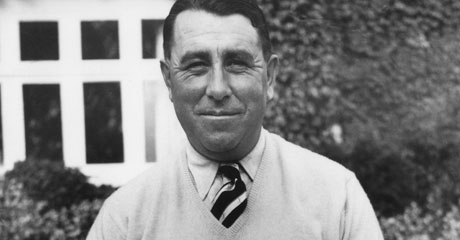
On This Day – 9 October 1913 – The Birth of golfer Harry Bradshaw

0805IrishHarryBradshaw

He was the son of a professional golfer and three of his brothers followed the same calling. Harry Bradshaw was Ireland’s first golfing superstar, a proven winner with a jovial personality that endeared him to one and all and helped popularize the professional game in this country

Bradshaw played his golf out of the picturesque Delgany club in Co. Wicklow, where he was treated with respect and admiration. However, it was not always thus where professional golfers were concerned in those days. Even today golf would not be noted for its egalitarianism. In the 1940s and 1950s – when Bradshaw was in his pomp – it was a thoroughly elitist sport and many of those in its professional ranks were working-class men who often came to the game via the caddying route. They would serve their apprenticeships humping bags for well-heeled club members, sneak in as much practice as was tolerated, become assistant professional and fix the clubs and shoes of the same members. They would then, if they were fortunate, become fully-fledged professionals and play occasional tournaments for filthy lucre. This did not, of course, entitle them to admission to the clubhouse. They were, after all, mere employees. To enter the holy of holies they would usually have to be accompanied by a member. There is an enormous social, cultural and sporting gap between Harry Bradshaw and Rory McIlroy.

Bradshaw, dominated the Irish professional golfing scene from the time of his first Irish PGA championship victory in 1941. He went on to win it for the next three years, and took first prize ten times in all.

But it was on the international scene that he really made his mark. In the days prior to any notion of a PGA European Tour the Irish Open championship was a significant event. Brad first won it in 1947 and again two years later. He took the prestigious Dunlop Masters in 1953 and again in 1955. He played on three Ryder Cup teams during this period as well, taking on the Americans in 1953, 1955 and 1957 – the latter event, at Lindrick in England, giving Britain and Ireland its first win in the tournament since 1933.

In 1958, along with Christy O’Connor Sr. he shared in an Irish world championship victory when they combined to win the Canada Cup – now the World Cup – in Mexico. This despite the fact that Bradshaw suffered nosebleeds because of the altitude.

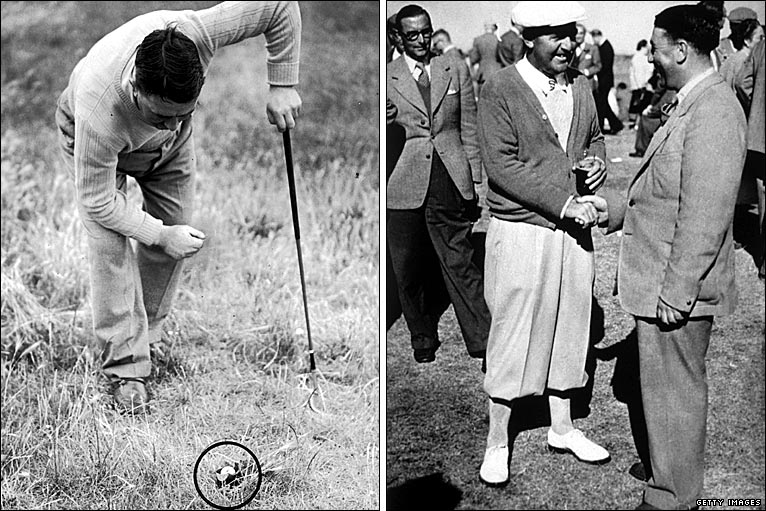
But his greatest achievement was also his greatest tragedy. In the 1949 Open Championship at the Royal St. George’s course in Sandwich in Kent he was inspired and took the great South African Bobby Locke to a play-off. It has always been argued that, but for a rush of blood to the head during the second round, Bradshaw would have won that tournament. He had driven off the 5th tee and was walking down the fairway towards his ball when he realized that it had come to rest against a large piece of glass from a broken bottle. He could probably have dropped without penalty, he could well have waited for a ruling, but, somewhat rashly, though in the spirit of the game at the time, he opted to play the ball as it lay and duffed it. Had he been more patient he might well have won the tournament outright. Sadly, he lost the playoff to Locke who went on to win three more British Opens.

A few weeks later in the Irish Open Golf Championship at Belvoir Park in Belfast Locke was part of a distinguished field. This time, however, Bradshaw had the measure of the great South African and took the trophy. It was revenge of a sort but scant consolation for his failure to take the British Open. Bradshaw must rank alongside Christy O’Connor Senior as the greatest Irish golfer never to have won a Major. However, his heyday was at a time when the notion of ‘Majors’ was not as well developed as it is now and it was virtually impossible for Irish pros to play in the big money tournaments in the USA

Harry Bradshaw, the ebullient, trailblazing Irish professional golfer was born in Delgany, Co. Wicklow 102 years ago, on this day.

_54009400_locke49

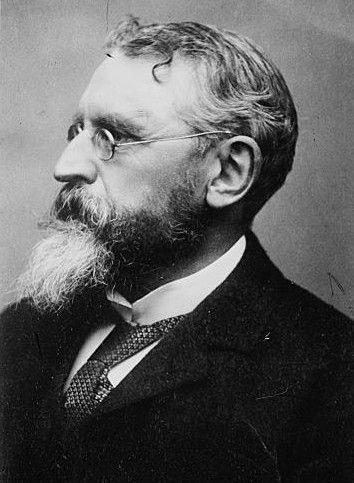
On This Day – 2 October 1852 – Journalist and politician William O’Brien is born in Mallow

William_O'Brien_1917

He was argumentative, controversial, committed, exasperating, vicious, divisive, loyal and lots of other adjectives besides, some positive, some pejorative.

William O’Brien was a poacher turned gamekeeper. For the early part of his life he was a muck-raking nationalist journalist, before devoting himself almost entirely to politics. Born into a Cork Fenian family – his brother was a member of the IRB and he may well have been sworn in himself – he was a campaigning newspaperman in his youth in the late 1870s writing for the stuffy Freeman’s Journal. Although his often explosive articles got his proprietor, the MP Edmund Dwyer Gray into plenty of trouble there was a huge mutual admiration between the Dublin grandee and the Cork firebrand.

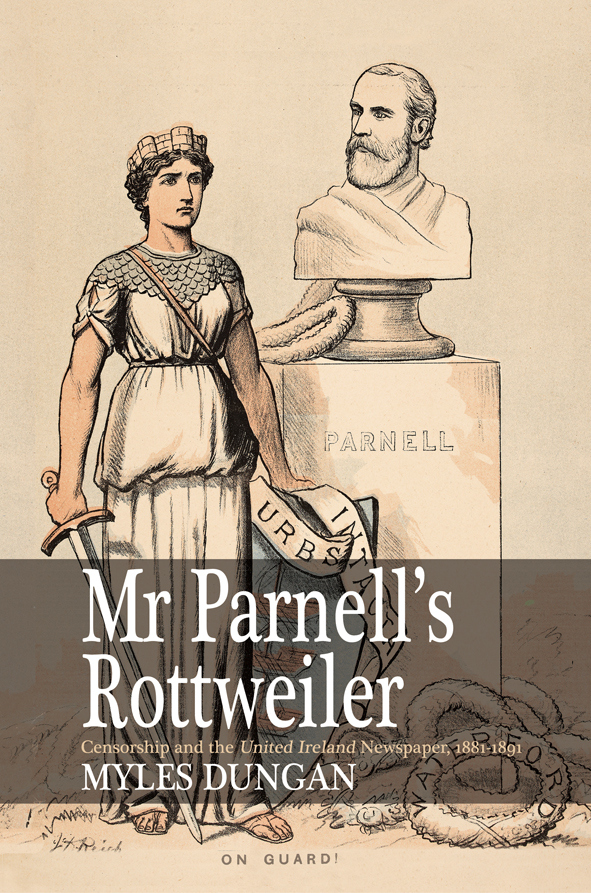
In 1881, still in his twenties, he was asked by Charles Stewart Parnell to become the first editor of the new Land League newspaper United Ireland. He took on the task with gusto – so much so that he was arrested and jailed after barely a dozen issues. Totally undeterred O’Brien continued to edit the newspaper from Kilmainham jail, using the same underground communications system that allowed his leader to continue to conduct his passionate and adulterous relationship with Katharine O’Shea.

After the Land War United Ireland became the mouthpiece of Parnellism and an equal opportunities offender. O’Brien would, on a weekly basis, attack the Liberal and Tory parties in England, the Royal Irish Constabulary and Dublin Metropolitan Police, landlords, Unionists, Unionist journalists, nationalist journalists who weren’t nationalist enough, nationalist MPs who were equally unconvincing in their nationalism and anyone else who, in his eyes, was not stepping up to the mark. On finishing reading the very first issue of United Ireland in August 1881 the Chief Secretary for Ireland, William E. Forster was reported to have asked ‘Who is this new madman?’

He was a thorn in the side of the establishment, occasionally of his own party, and arguably he was even a thorn in his own side. He was utterly relentless and fearless in his journalism. That’s not to suggest that he was fair – he was anything but. However he was prepared to risk some stupendous libel suits in order to get his version of the truth out. It helped that for many years he wasn’t really worth suing, he had no personal resources, famously living out of two suitcases in the Imperial Hotel on Sackville Street – now Clery’s department store.

Although he could at times be a journalistic windbag he also had an eye for the pithy phrase or aphorism. When the Tory Prime Minister, Robert Cecil, Lord Salisbury in 1887 appointed his own nephew Arthur Balfour as Irish Chief Secretary – in the process giving rise to the immortal phrase ‘Bob’s your uncle’ -O’Brien noted the languid Tory’s predilection for playing golf and dubbed him ‘Mr.Arthur Golfour’ . Balfour, however, had the last laugh, throwing O’Brien in jail many times over the next four years.

While it broke his heart he opposed Parnell after the O’Shea divorce case but played little part in the vicious hounding of the former Irish party leader which only ended with his death in October 1891. Thereafter O’Brien temporarily disappeared from active politics. He re-emerged at the end of the decade to re-assert his dedication to agrarian politics by forming the United Irish League. It was under the auspices of this grass roots organisation that the Irish party split was healed. But O’Brien had a penchant for falling out with people and he soon moved on.

His latter years as a politician and journalist saw him at the helm of a Cork-based nationalist splinter group the All For Ireland League and editing the Cork Free Press.

By the time of the 1916 Rising, like many other nationalist politicians of his generation he’s had his day. Although highly respected by many of the more extreme Republicans who came to dominate Irish post-WW1 politics there was no place for him in the new dispensation and it was time to write a number of highly readable, entertaining and utterly unreliable memoirs. He died in 1928.

William O’Brien, Irish father of the so-called ‘New Journalism’ of the late 19th century was born in Mallow, Co. Cork 163 years ago, on this day.

Dungan-Cover-Final

On This Day – Drivetime – 25 September 1880 The Murder of Lord Mountmorres

June1210b.jpg

It would probably be safe to say that for every week Ireland spent in the throes of rebellion in the course of our history we spent a year involved in serious and often violent land agitation.

The 1830s and 1880s in particular were times of agrarian uproar as the Tithe War, the Land War and the Plan of Campaign dominated the political and social agendas. From the Land War came the word and the practice of ‘boycotting’ – a peaceful but effective form of isolation of despised and uncooperative landlords. But sometimes the tactics employed on both sides were less than peaceful and distinctly unpalatable. The term ‘Ribbonism’ was used to describe the activities of the members of illegal secret societies who took direct action against those opposed to the interests of the tenants. The term Royal Irish Constabulary was used to describe the response of the authorities.

One of the myths of the periods of agrarian violence that frequently bedevilled rural Ireland was that members of Ribbon societies spent their evenings running around with blackened faces killing landlords. Nothing could be further from the truth. Not that many Ribbonmen would have objected to doing violence to their friendly neighbourhood aristocrats it was just that they rarely got close enough to take a pot shot at them. More at risk were the agents of the landlords, bailiffs who did their bidding, fellow tenants who did something inadvisable, like taking on land vacated by someone who had been evicted, aka ‘land grabbers’. or, more often than not, completely innocent livestock.

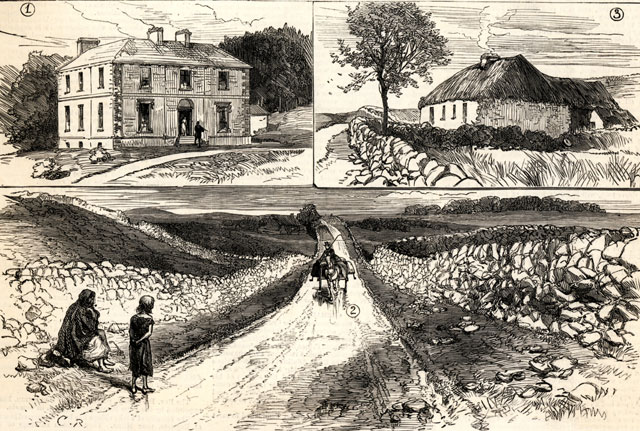
One significant exception, however, was an extremely modest landlord based in Clonbur in Co. Galway, Lord Mountmorres. He was ‘modest’ in the context of the size of his holdings. He was one of the smallest landlords in the country with only 11 tenants producing an annual income of around £300. The country’s bigger landlords – there were about 10,000 landed families altogether – would have boasted 20,000 or more acres and incomes of more than £10,000 a year. Unlike some of his peers Mountmorres was not known for evicting his tenants, led a relatively frugal lifestyle in the unpretentious Ebor House and was said to be quite popular in the part of Galway where he lived. So why was he shot dead a few miles from his home in September 1880 when another Galway landlord, the loathsome and avaricious Lord Clanricarde, notorious for evicting tenants, avoided a similar fate.

Two reasons come to mind. Firstly Clanricarde didn’t regularly take to the roads of Galway in a horse and trap – he spent his life in London and paid others to do his dirty work. Secondly, when you scratch the surface of the ‘benign landlord’ narrative that surrounds Mountmorres you find someone who was not nearly as popular as he was cracked up to be.

Mountmorres was shot at around 8.00 on the evening of 25 September driving alone between Clonbur and Ebor House. When his horse and carriage made it home without their driver the alarm was raised. His body was quickly found. He had been shot six times, some of the shots were at close range, and he had obviously died quickly at the scene. A local family, the Flanagan’s refused to allow the corpse to be taken into their house before it was finally removed, saying that ‘if they admitted it nothing belonging to [them] would be alive this day twelve months.’

Despite a £1000 reward being offered for information no one came forward. One of Mountmorres’s tenants, Patrick Sweeney, who had been served with an eviction notice, was suspected but no one was ever convicted, or even tried for the murder.

Later Michael Davitt would claim that Mountmorres had been killed because he ‘eked out his wretched income as a landlord by doing spy’s work for the Castle’. When Lady Mountmorres testified at a tribunal investigating agrarian crime in the late 1880s she claimed that the atmosphere changed in the locality after Sweeney was issued with his eviction order – ‘The men ceased to touch their hats, and they were disrespectful in their manner.’ – she later fainted under cross examination.

It emerged that Mountmorres had little time for the activities of the newly formed Land League, had sought police protection and demanded that the army be brought into the area to suppress the activities of the League. None of this was calculated to increase his popularity.

But, the truth is that we will never know who killed Viscount Mountmorres, and precisely why he was murdered 135 years ago, on this day.

011905w

On This Day – 11.9.1838 BIRTH OF ARCHBISHOP JOHN IRELAND

UnknownTribune1-1-81

The American Roman Catholic Church can be a very conservative institution indeed. And few Irish-American prelates have a reputation for being on the progressive wing of that conservative institution. That’s why John Ireland, Kilkenny born bishop of the Twin Cities of St.Paul/Minnesota stands out. He was a 19th century political progressive on issues like Church/State relations, education and immigration. He was friendly with two American Presidents, Theodore Roosevelt and William McKinley and was vocally opposed to the widespread and pervasive political corruption of the late 19th century USA and to racial inequality. Cardinal Paul Cullen he was not.

So it’s something of a shame that, in Minnesota at least, he is best remembered, and none to fondly by some, for his encounter with a group of fishermen from Connemara in the 1880s

Ireland, disturbed by reports of the economic conditions being experienced by Irish immigrants in Eastern cities, and conscious of the need to populate the wideopen spaces of the Minnesota hinterland, established colonies with names like Clontarf, Avoca and Iona that provided land and a fresh start for impoverished urban dwellers. The Kilkenny-born archbishop was highly successful in populating the often inhospitable prairies with pockets of Irish settlements through his Catholic Colonization Bureau The project brought more than 4000 families from eastern slums onto 400,000 acres of farmland in rural Minnesota. Many of the colonies remain relatively intact to this day.

Ireland’s right-hand man in this enterprise (which used railroad land) was Roscommon man Dillon O’Brien, born into the Catholic landholding class, who had been financially ruined by the Famine and forced to emigrate.

However, the philanthropic archbishop had an unhappy experience when he agreed to take on a group of impoverished fisherman from the West of Ireland that he misguidedly attempted to turn into frontier farmers. The saga of the ‘Connemaras’ is part of the lore of the American Midwest.

Ireland had to be coaxed into accepting the fishermen and their families in the first place. He allowed himself to be persuaded to take them on but the wisdom of his initial reluctance was rapidly justified. The fifty or so families that came from Connemara were coastal inhabitants. When Dillon O’Brien’s son first saw them he was not impressed. He described the group, mostly monolingual Irish speakers, as ‘not the competent, but the incompetent; not the industrious but the shiftless; a group composed of mendicants who knew nothing about farming’.

They were settled near a pre-existing colony called Graceville. The settlers already there were even less well disposed towards the new arrivals than O’Brien’s son. The timing of their arrival was unfortunate as well. It coincided with the harsh prairie winter. Opportunities for planting were not promising. The soil was only to be penetrated with pickaxes rather than ploughs or spades. One of the first things the bewildered fisher folk did was to eat or sell the seed crops allocated to them.

Ireland was forced to find employment for many members of the group in Minneapolis and St Paul. Worse still from his point of view was the charitable intervention of the local Freemasons. The Connemaras, happy to accept assistance from any source, had no awareness of the antagonism that existed between the overwhelmingly Protestant Masons and the American Catholic church. Ireland spoke out against the donors and the recipients. As few of the Connemaras had any English their right of reply was somewhat circumscribed. In attacking such obvious underdogs for accepting the charity of members of a highly respected organisation Ireland lost some of his progressive gloss.

Today a street that runs from the Cathedral of St.Paul to the Minnesota State Capitol building is named after him. Despite his brush with the Connemaras he is still held in high regard.

John Ireland, Catholic Archbishop of the Twin Cities, was born 177 years ago, on this day.

https://soundcloud.com/irishhistory/sept-11th-1838-birth-of-archbishop-john-ireland-the-connemaras-story