On This Day – Drivetime – 10.7.1867 Birth of Finlay Peter Dunne

idunnef001p1

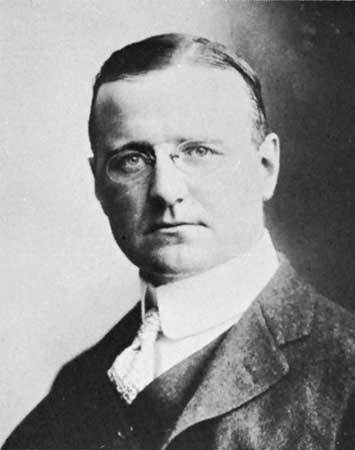
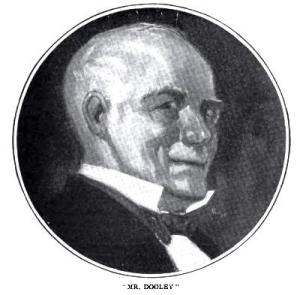
For more than a decade an irascible bar tender from Roscommon, owner of a saloon in Chicago, became the most famous fictional character in American journalism. The barkeep in question, Mr. Dooley, was the creation of the Irish-American humorist Finley Peter Dunne and every week, in the pages of numerous newspapers across the USA, in a syndicated column, Dooley would hold forth on matters of public and domestic policy to his long-suffering customer Hennessy in an Irish dialect that often has to be read aloud to be properly understood.

Finley Peter Dunne was born in Chicago in 1867, the son of Irish immigrants who came to America as refugees from the Great Famine. He was brought up in the heavily Irish neighborhood of Bridgeport and began working for Chicago newspapers straight out of high school. In his mid twenties he started composing Dooley’s satirical monologues for the Chicago Sunday Evening Post. Many of Dooley’s political views would not have been shared by his author. A latter-day version of Dooley therefore might be TV’s Comedy Central creation Stephen Colbert.

Mr.Dooley was never shy about expressing his opinions. In, for example, a column about the vexed topic of immigration (and remember this was the 1890s) Dooley, himself an immigrant, favours the lowering of the portcullis to prevent the entry of further migrants to the USA. Dooley tells Hennessy, whose own cousin is due to arrive in Chicago shortly

Tis time we put our back agin’ the open door an’ kept out th’ savage horde. If that cousin of yers expects to cross, he’d better tear for th’ ship. In a few minutes th’ gates will be down an’ when th’ oppressed world comes hikin’ acrost to th’ haven of refuge, th’ Goddess of Liberty will meet them at th’ dock with an axe in her hand

Dunne coined a host of well-known aphorisms that have entered the great American lexicon, phrases such as ‘trust everyone, but cut the cards,’ ‘the past only looks pleasant because it isn’t here,’ ‘larceny is the sincerest form of flattery,’ and his pithy appraisal of corrupt big city politics ‘a vote on the tallysheet is worth two in the box.’ He may also have coined the famous truism, ‘All politics are local’ an observation usually ascribed to the late House of Representatives Speaker Tip O’Neill.

Perhaps Dooley’s most pointed observation concerned Dunne’s own profession. He once said of the newspaper business that …

The newspaper does ivrything for us. It runs th’ polis foorce an’ th’ banks, commands th’ milishy, controls th’ ligislachure, baptizes th’ young, marries th’ foolish, comforts th’ afflicted, afflicts th’ comfortable, buries th’ dead an’ roasts thim aftherward.

The reference to comforting the afflicted and afflicting the comfortable has been adopted and claimed as a mantra by many journalists, writers and activists.

Despite the numerous barbs aimed at his administration President Theodore Roosevelt contrived to be on very friendly terms with Dunne. Roosevelt would regularly read out Dunne’s columns at cabinet meetings to alert the nation’s political leaders to the vox populi – Dooley being seen as a man of the people and as reflecting the opinions of the man in the street.


Dunne himself, in 1902, married one Margaret Ives Abbot, who just happened to be the first American woman to have won an Olympic gold medal, she was the women’s golf champion at the 1900 Paris Olympiad. In 1910, after writing more than 700 columns, Dunne ended the career of the garrulous Roscommon bartender and no more was heard from Mr. Dooley.

Irish-American writer, Finlay Peter Dunne, humorist, journalist and one of America’s most successful newspaper columnists, was born 148 years ago, on this day.

dooley2

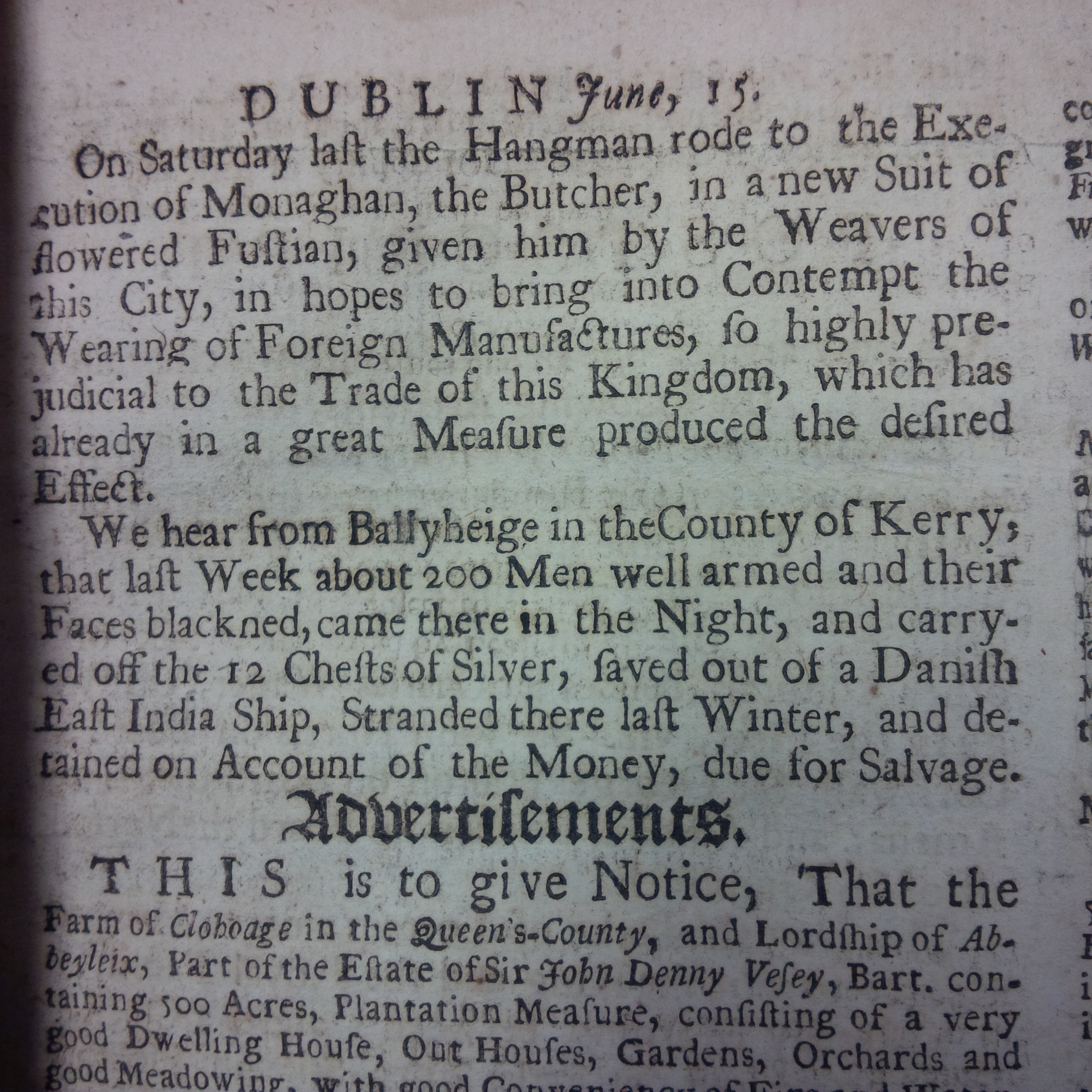
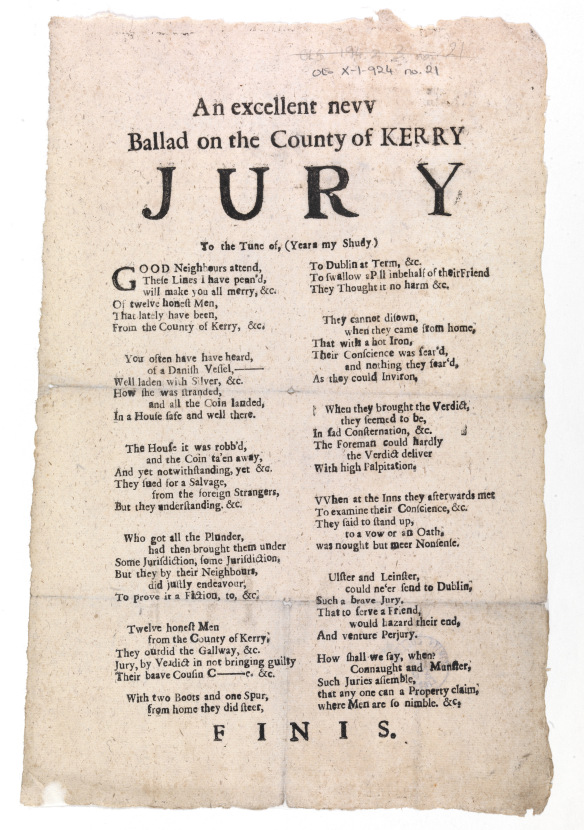
On this day – 12 June 1730 – The robbery of the Golden Lion in Ballyheigue, Co.Kerry.

img_20150121_094801ols-x-1-924-no-21_01-2

The small picturesque coastal town of Ballyheigue in Co.Kerry is close to Banna Strand which briefly played host to Sir Roger Casement in Easter Week of 1916, before he was rounded up by the RIC and escorted to London to be hanged on 4 August. Another ill-fated tourist in the area, in 1731, was a Danish ship named the Golden Lion, en route from Copenhagen to India, which made an impromptu visit to an inconvenient sandbank and never left. It’s by far the most interesting of some twenty-six shipwrecked vessels around the village.

What made the story of the Golden Lion so compelling was the fact that, in addition to its captain Johan Heitman and the eighty-six other Danish crew-members it also carried twelve sizeable chests loaded with silver bullion.

Kerching indeed!

Although the ship was not entirely wrecked and might well have been floated off the rocks, the locals were having none of it. Their hospitality knew no bounds when they discovered what the cargo was composed of. The 87 Danes were rapidly rescued and far more generously treated than their marauding 9th and 10th century predecessors would have been had they been spotted off the Kerry coast.

Not that the local grandee, Thomas Crosbie, was fooled by the willingness of the local population to share their meagre fare with their Viking guests. He smelled a rat and decided that the locals were up to no good. He raced, post haste, to the beach where the Golden Lion lay stranded and chased away anyone he felt might have designs upon the cargo. He then spirited away the bullion himself, for safe keeping of course. But then that was all right wasn’t it, because he was an avaricious landlord and not a starving peasant. Contemporary records refer to the Good Samaritan Crosbie as having ‘[gone] to the strand, [driven] back possible villains, comforted the sailors and had the silver transported to his own home’

The silver was held in a tower on Crosbie’s premises until arrangements could be made to get it somewhere safer. Undoubtedly the entirely altruistic aristocrat – if that isn’t a contradiction in terms – had no intention of claiming any reward for his act of mercy. Hopefully that was the case anyway as he never got an opportunity to stake any such claim owing to the fact that the silver was nicked. Tragically, given the scale of his generosity and public-spiritedness, Crosbie died before he got a chance to restore the bullion to its rightful owners. Whatever Crosbie’s intentions might have been his widow was not at all philanthropic. She demanded salvage payments from the Danish owners. Choosing to ignore the role of Thomas Crosbie in saving their dosh from the depredations of the north Kerry peasantry the Danes counter-claimed that the ship and its contents were not salvage as it had not been in danger of sinking – which was rather beside the point really.

While the matter was being adjudicated around a hundred enterprising locals decided to intervene. Now Ballyheigue also happens to have been the birthplace of the great Irish economist Richard Cantillon – who invented the word ‘entrepreneur’. He might well have described this group in such terms. Most of the North Kerry entrepreneurial class, albeit with blackened faces, surrounded the Crosbie household, broke into the tower, killed two of the Danish guards and made off with the loot on carts. Cantillon wrote in the early 18th century about the movement of gold and silver through the economy. However this was probably not the sort of movement he had in mind.

The theft was believed to have been carried out by certain members of the Kerry upper crust. Sir Maurice Crosbie of Ardfert, a relative of the late lamented Thomas, conducted an investigation. The Danish Asiatic Company offered a generous reward of 10 per cent of the value of the cargo for its recovery. One of the alleged robbers turned states evidence and ten men were charged with the theft. All were acquitted at a subsequent trial in Dublin that was a bizarre saga itself, involving, perjury, suicide and the suspected poisoning of a witness.

To date just over £7000 worth of the bullion has been recovered. It may well have all been melted down by now or transported out of the area. However, far be it from me to spark a stampede of silver prospectors to the pristine Kerry coastline, but there has to be an outside chance that it might be buried somewhere near Ballyheigue. Think about that one for a moment.

The Revenue Commissioners announced that the Golden Lion had been robbed of its cargo 285 years ago, on this day

A day of American Civil War events at the Hay/Kells Festival 25 June 2015 – www.hayfestival.org/kells 

Abraham_Lincoln_November_1863images

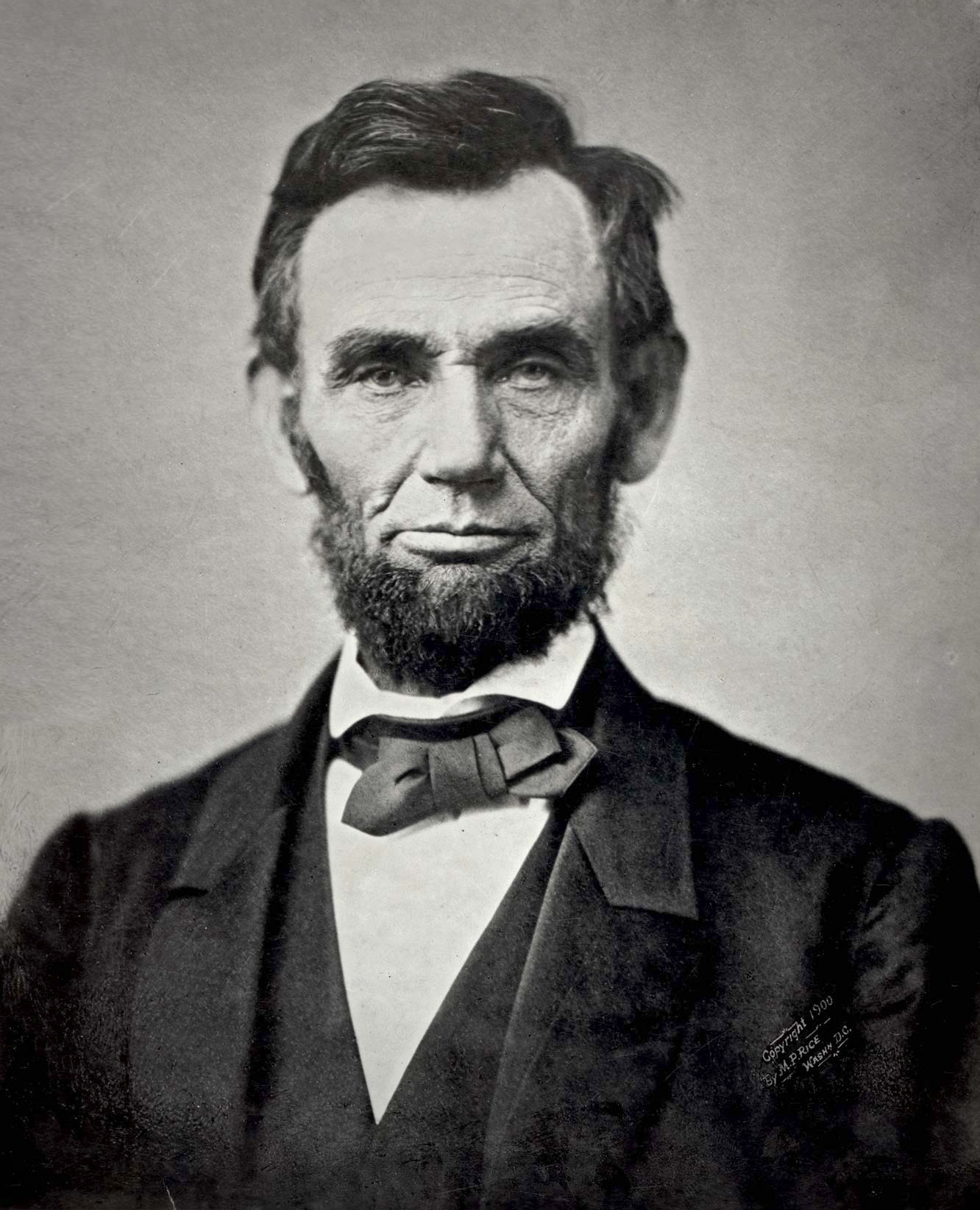
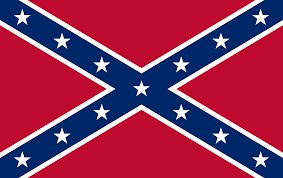
2015 marks the 150th anniversary of the end of the cataclysmic American Civil War. Up to 200,000 Irish-born soldiers participated in this divisive conflict, on both sides. 150,000 fought for the Union in units like the Irish Brigade and Corcoran’s Irish Legion while 20,000 fought for the Confederacy – the most famous of these being Gen. Patrick Ronayne Cleburne, the highest-ranking Irish officer on either side of the conflict.

We will be marking this anniversary with a day of talks and music at the 3rd annual Hay/Kells Festival on 25 June. We are delighted that we have managed to get together the acknowledged experts in this field and will be putting them under one roof for the day – the roof in question is that of St. Columba’s Church of Ireland, Market Street Kells, host to the recent Gallipoli 100 weekend of commemorative events.

The line up for the day includes …

10am: Damien Shiels
Damien Shiels is author of the definitive and highly influential work The Irish in the American Civil War.

11am: Glen Gendzel
American historian Glen Gendzel talks about the story of California in the American Civil War.

12pm: Robert Doyle
Robert Doyle tells the story of Carlow-born Civil War veteran Myles Keogh on the anniversary of his death at the Battle of the Little Bighorn in 1876.

2pm: Myles Dungan
The presenter of the RTÉ Radio 1 History Show will highlight the life of Oldcastle Civil War veteran, the author and journalist Charles Halpine, and his hilarious creation Myles O’Reilly.

3pm: Tom Bartlett
Thomas Bartlett of Aberdeen University talks about President Abraham Lincoln and the Civil War.

4pm: David Gleeson
David Gleeson (The Green and the Gray) looks at the Irish who fought for the Confederate States of America between 1861 and 1865.

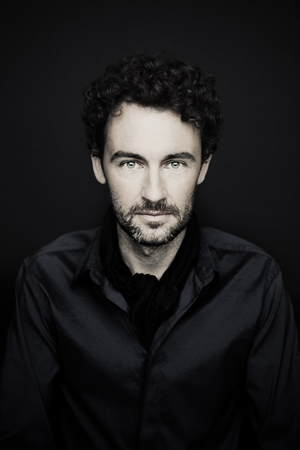
At the same venue at 8.30 Myles Dungan combines forces with Matthew Gilsenan of the Celtic Tenors in The Blue, the Gray and the Green an evening of Irish music associated with the American Civil War. This will include classics like Paddy’s Green Shamrock Shore, He is far from the land, No Irish Need Apply, Paddy’s Lamentation, Shenandoah, When Johnny comes marching home and many more.

Matthew_sm

You can book for all the events on 046 9240055 / 9240081- or via the Hay Festival / Kells website here

If these guys could be there you can be sure they would …

MTE1ODA0OTcxNzg0NjM1OTE3images

On This Day – Drivetime – 5 June 1916 – The death of Lord Kitchener

world war propaganda_Britons Lord Kitchener Alfred Leete 1914 example_big

A number of highly significant Irishmen died violently in 1916 – Patrick Pearse, Tom Clarke, James Connolly and their associates to name but a few who were shot in May. Pacifist Francis Sheehy Skeffington had been summarily executed during the Rising. His brother in law Tom Kettle, barrister, poet and former MP followed them all in September when he died at the Battle of Ginchy on the Western front.

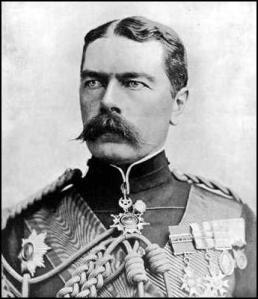
In between, another famous Irishman came to an unfortunate end. However not many people realise that Herbert, Lord Kitchener, hero of Omdurman, scourge of the Boers and Secretary of State for War in the British Cabinet was actually Irish. It was not something he tended to highlight himself.

But he was, in fact, as much a Kerryman as Mick O’Dwyer or John B.Keane. He was born Horatio Herbert Kitchener on 24 June 1850 in Ballylongford, near Listowel. His father, Lt.Col. Henry Horatio Kitchener, had purchased land under the terms of the Encumbered Estates Act designed to buy out bankrupt property owners after the Famine – so a sort of 19th century NAMA.

Kitchener left Kerry at the age of fourteen when the family moved to Switzerland for the health of his ailing mother. The future war lord nurtured a similar attitude to his native land as had that other great 19th century military figure, the Duke of Wellington, who allegedly observed of his Irish birth that, ‘being born in a stable does not make one a horse’. His dislike of the Irish, of course, did not stop Kitchener, like a lot of other Anglo-Irish grandees with a minimal knowledge of the country of their birth, from claiming to have an informed insight into how the country should be governed. Kitchener was for lots of stick and very little carrot.

Not that his counsel on the subject would have been widely canvassed. Kitchener made his reputation in faraway wars, starting with the Sudan and his victory at the Battle of Omdurman in 1898. There he showed his compassionate side by digging up the remains of the Mahdi, slayer of General Gordon in the 1880s humiliation of Khartoum, and having his bones scattered. Even Winston Churchill, not renowned for his squeamishness, who was covering the war as a reporter, was disgusted with the slaughter of, in particular, Sudanese prisoners.

The de facto Kerryman also made his presence felt in the Boer War where his scorched earth policy and his creation of concentration camps brought the Boers to their knees in the most ruthless possible fashion. Kitchener didn’t have much time for uppity colonials.

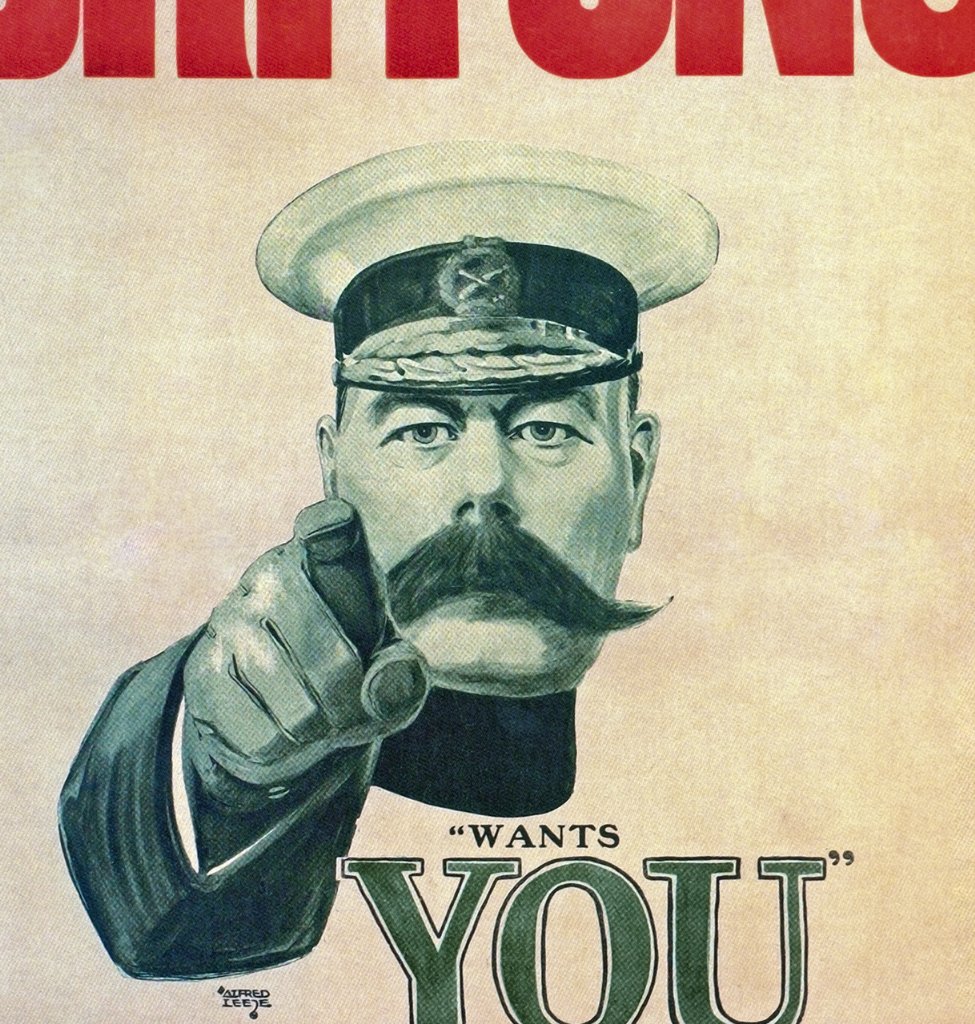
When WW1 broke out Kitchener was quickly appointed Secretary of State for War and his iconic moustache and index finger were used as recruiting devices on the famous ‘Your country needs you’ posters.’

In a final gesture of solidarity with his native land Kitchener refused all requests for the incorporation of the southern Irish Volunteers as a unit into his New Army, despite the passage of the Home Rule act before hostilities commenced. The Ulster Volunteers however, signatories of a covenant pledging opposition to a democratic decision taken by the British parliament, became the 36th Ulster division. Consistency to Kitchener was as dangerous a vice as sentimentality.

Kitchener, who harboured a pathological hatred of journalists probably owed his appointment to the Cabinet in 1914 to a newspaper campaign designed to force the Liberal government to put this crusty old Tory in charge of the Army and Navy. Having created him the newspapers of the Press Baron Lord Northcliffe, the Dublin born Alfred Harmsworth from Chapelizod, sought to undo their own handiwork when they campaigned against him in 1915, blaming the Secretary of State for War for a chronic shortage of shells on the western front. The public sided with the most famous moustache in history and burned copies of the Times and Mail in the streets.

In June 1916 Kitchener set sail for talks in Russia on board the HMS Hampshire. The ship hit a German mine and sank, taking the Secretary of State for War with it. The reluctant Kerryman died 99 years ago, on this day.

FWWkitchener3

On This Day – 29.5.1917 Birth of John F.Kennedy

John_F_Kennedy-HUnknown

It’s one of the most popular ‘what ifs’ of the last fifty years. ‘What if it had been raining on 22 November 1963 in Dallas?’

Obviously there would have been no Presidential open-top motorcade and Lee Harvey Oswald – or the Mafia, or the man on the grassy knoll, or the four French hired assassins from Marseilles, or whatever other conspiracy theory you subscribe to – would have been denied the opportunity to demonstrate his or their peerless marksmanship and John Fitzgerald Kennedy, 35th President of the United States of America, would probably have seen out his first term and been re-elected in November 1964.

JFK was originally elected with just over 49% of the popular vote in the 1960 race for the White House with Richard Nixon. While in office his popularity rarely dipped below 60%. After the Cuban missile crisis his ratings were in the high 70s. In a poll of 1960 voters taken after his death 70% claimed to have chosen him as President.

Of course there’s another great ‘what if’ when it comes to the career of John F.Kennedy. What if his older brother Joseph Kennedy Jr, had survived World War 2? Would John F have become Bobby, his older sibling’s loyal Doberman, rather than Senator and President?

He was arguably, the first conscious political ‘brand’. With iconographers like Theodore Sorenson and Pierre Salinger cultivating and honing the Kennedy narrative he could hardly fail. Fifty years later he is a mythic figure. Myth=branding + time.

But the skein of myth is easily unravelled.

For example, he wasn’t even the youngest American president. When Theodore Roosevelt took over the office after the assassination of William McKinley in 1901 he was nine months younger than Kennedy.

And his credentials as a supposed political progressive don’t stand up to too much examination. In 1957 he opposed Eisenhower’s civil rights legislation. He persisted, when in office, with the Democratic party practice of appointing dodgy judges to federal courts in the south. One such JFK appointee, a man called Harold Cox, once described African Americans as ‘chimpanzees’ after he had been elevated to the federal bench.

During his first term as a senator Kennedy teamed up with the darling of the Republican right, Barry Goldwater, to try and keep rock and roll music off American radio stations. He presided over the assassination of a supposed ally (and fellow Catholic) in Ngo Dinh Diem, beleaguered president of South Vietnam.

But he also achieved a lot of good in a very short life

Take just one month of his Presidency – June 1963. On June 10 this apparent cold war warrior made a major foreign policy speech at the American University in Washington DC. In a world dominated by ideas of mutually assured destruction he appeared to extend an olive branch to the Russians.

The following day, after Governor George Wallace of Alabama was forced by Federal intervention to, quite literally, step aside and allow two African American students pass into the campus of the University of Alabama, Kennedy made a largely improvised address on national radio and TV, promising equal access to public schools and enhanced voting rights, to African American citizens.

Then on 26 June he made his famous ‘Ich bin ein Berliner’ speech (the ‘ein’ was superfluous) a short time after viewing the newly erected Berlin wall. Oh, yes, and, of course, he dropped into Ireland for four days on his way home.

Not a bad month’s work really.

John Fitzgerald Kennedy, 35th President of the USA, was born 98 years ago, on this day.

john-f-kennedy