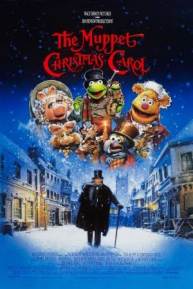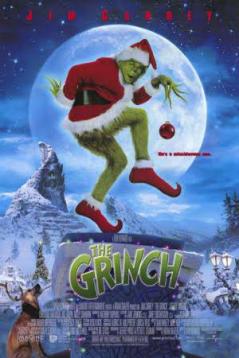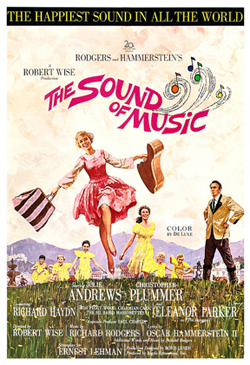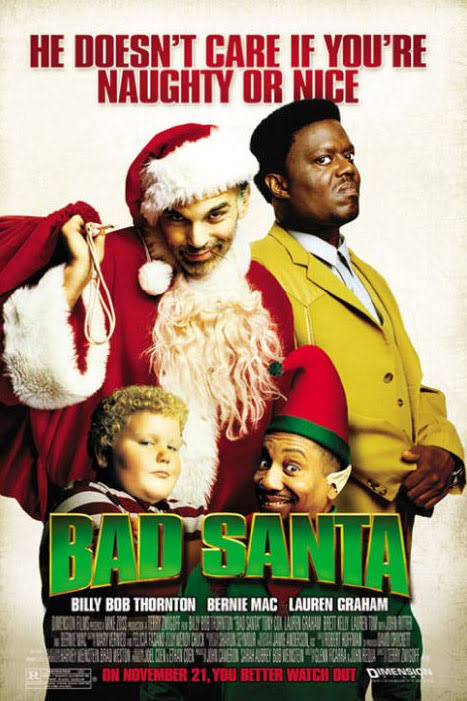
The Muppets, The Grinch and Bad Santa come to the Old Courthouse in Kells!

images-2.jpegimages-1.jpeg

From the disgraceful antics of the worst ever Santa, to the unexpected childminding skills of a former novice nun, Christmas comes early to Kells.

The Old Courthouse becomes a cinema for the weekend of Saturday and Sunday, 17/18 December with four great family movies, as well as Billy Bob Thornton in the original Bad Santa (strictly for the Mums and Dads)

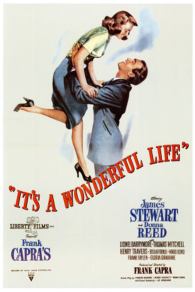
Hollywood greats James Stewart and Julie Andrews feature in two of the family movies, the magical It’s a wonderful life and timeless The Sound of Music – everyone is encouraged to dress up for the latter, and even singalong with the seven young von Trapps et al.

The Grinch and the Muppets will also be making an appearance in How the Grinch Stole Christmas – starring Jim Carrey, and The Muppet Christmas Carol,  in which Kermit, Miss Piggy, Fozzie Bear and the gang do some damage to Dickens.

The Kells Cultural Hub, which combines Kells Type Trail, Guth Gafa International Documentary Festival, and the Hinterland Festival (previously Hay/Kells). is pleased to present this weekend of family entertainment. Tickets for the daytime presentations will be €5 for adults €3 for children. The screening of Bad Santa on the evening of Saturday 17 December (tickets €10) will include a free glass of wine, (quite possibly mulled).

images-3.jpegSound_of_music.jpg

images.jpeg

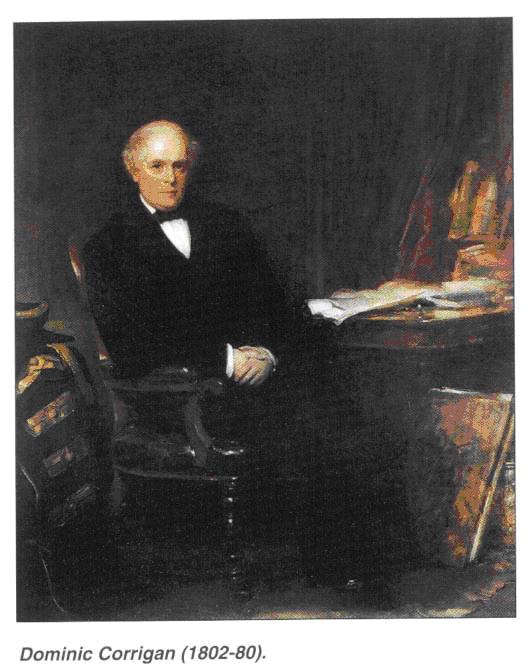
On This Day – 2.12.1802  Sir Dominic Corrigan, cardiologist, is born in Dublin


Sir Dominic John Corrigan.JPG

Next time you’re watching TV and you see someone bend over a prone figure, place their finger on his or her carotid artery and pronounce them dead, you can turn to whoever you’re with and tell them suavely ‘No Corrigan’s pulse’. If the almost inevitable response is ‘How do you know their name is Corrigan?’ you can then crank the suavity up to the level of smugness by responding ‘I’m not referring to the corpse but to the technique employed to establish morbidity’.

All right, I accept that’s probably too smug. It’s also a gross oversimplification on my part.

The Corrigan in question is Sir Dominic John Corrigan who was born in Thomas Street in Dublin in 1802 on the site of what is now an Augustinian Church. Unusually for that time he received his university education in St. Patrick’s College Maynooth which already had a section for non-clerical students. He qualified as a doctor in Edinburgh in 1825 where he would just have missed dissecting bodies supplied by the notorious grave-robbers and murderers Burke and Hare to the University’s anatomy professor Dr. Robert Knox.

After qualifying in Scotland Corrigan returned to practise medicine in Dublin rising to the dizzy heights of rooms in Merrion Square by 1837. However in addition to his lucrative private practice he also worked extensively amongst the poor of the city, specializing in heart and lung complaints. He incurred considerable personal risk, as did many members of his profession, during the famine, working with the victims of potentially fatal communicable diseases. His extensive and badly-paid public health work made him unpopular with many of his more mercenary colleagues and he was initially blackballed when he applied for membership of what would become the Royal College of Physicians of Ireland. He circumvented the veto by cheekily taking an entrance examination along with a group of newly qualified doctors in 1855. Revenge was sweet. He was president of the RCPI four years later, the first Roman Catholic to hold the office. His original naysayers would not be pleased by the fact that there is a statue and a portrait of Corrigan in the RCPI building on Kildare Street in Dublin today, while no one even remembers the physicians who blackballed him.

Corrigan appears to have been a patient-centered doctor. He once scolded a junior colleague for consulting his watch in front of a patient. In addition to his work as a cardiologist he also developed a cauterising device known as Corrigan’s Button. This exquisitely painful looking instrument was heated and placed on the skin several times to treat, among other ailments, sciatica. It was also used as a form of shock treatment for psychiatric patients. So if you were depressed and suffering from back pain you probably ran a mile when you saw Corrigan approach. Corrigan’s Button has, happily, gone the way of the rack and the thumbscrew. Though it’s invention probably contributed to his becoming a baronet in 1866

In 1870 Dr. Corrigan stepped well outside his comfort zone by standing in a parliamentary by-election as a Liberal. It was the year of William Gladstone’s first Irish Land Act and Corrigan was duly elected. He was an ardent advocate of early release for Fenian prisoners, jailed after the 1867 rebellion. But he then did something unconscionable for any Irish politician. He fell foul of the vintners! Corrigan was a temperance advocate, actively seeking the Sunday closure of public houses and thus lost the confidence of his electorate and, more importantly, their extremely active and vociferous publicans. He didn’t stand for re-election in 1874, though this probably had little impact on the return to power of Disraeli and the Tories that year.

Sir Dominic John Corrigan, humanitarian, cardiologist and inventor of one of the nastiest looking medical devices ever invented, was born two hundred and fourteen years ago, on this day.


port141.jpg

90729473.jpg

On This Day November 25th 
1764  – Birth of Henry Sirr


Trial-by-Nisi-Prius-in-SDL557264242-1-e912d.jpg

Turncoat, informer, abuser of power, or dedicated public servant – it all depends on your political perspective when it comes to Major Henry Sirr. Let’s face it, if you were a member of the United Irishmen you probably wouldn’t have liked him very much. He was to that revolutionary organisation what Eliot Ness was to Al Capone.

Henry Sirr was a police chief extraordinaire. He dedicated his life to catching bad guys for two decades at the turn of the 18th century. Well, a lot of his life anyway. He was also a wine merchant. That would be a bit like Garda Commissioner Noreen O’Sullivan owning a few pubs on the side.

Sirr served in the British Army from 1778-1791 where one of his military acquaintances was a certain Lord Edward Fitzgerald. Hold that particular thought for just a few minutes.

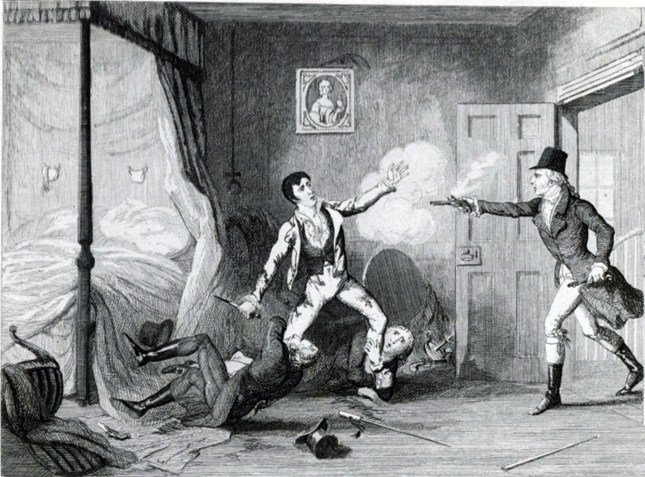
In 1796 he became Acting Town Major of the city of Dublin – effectively Chief of the City’s police force. He became a member of the Orange Order and was permanently appointed to his new role in 1798 – a significant year I’m sure you’ll agree. It was certainly significant for Sirr and for his relentless pursuit of the revolutionary element of the Society of United Irishmen, who were planning a rebellion for that year. Sirr appears to have been well-informed by a network of spies about the activities of the leading lights of the United Irishmen. So much so that he caught almost the entire committee of the Leinster Branch at a covert meeting on 12 March 1798 in the house of the woollen merchant Oliver Bond. The only man he missed was his old Army colleague Lord Edward Fitzgerald, but he atoned for that oversight on 19 May when he shot and killed Fitzgerald after the aristocrat had tried to stab him to avoid arrest. A few days later he also caught the radical Sheares brothers in two different houses on the same day, this may have given rise to his reputation for bi-location.

Five years later Sirr added to his lustre – assuming you were a major fan of Dublin Castle – by apprehending the young rebel leader Robert Emmet, a month after his ill-starred Dublin rising. He also burst into the home of the eminent barrister John Philpott Curran in a frustrated attempt to locate correspondence between Emmet and Curran’s daughter Sarah.

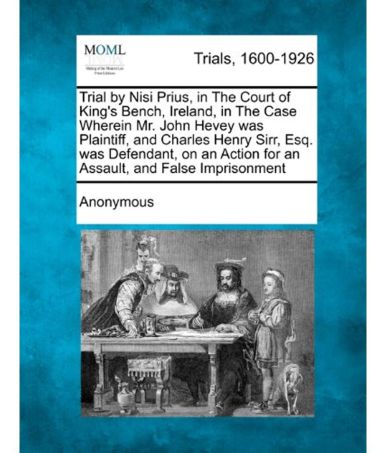
Raiding Curran’s house must have given Sirr considerable pleasure as the two men had ‘previous’. In 1802 Curran had represented one John Hevey in the case of Hevey v Sirr . In 1798 Hevey, a well-known Brewer, happened to be in court at the trial of a man named McGuire, being prosecuted for insurgency at the behest of Sirr and being damned by informer evidence. Hevey was familiar with the informer, an unloved and dishonest former employee. He testified to the witness’s total lack of reliability and was believed by the jury. Sirr was suitably enraged at the collapse of his case. He threatened Hevey and three years later delivered on the threat by arresting the brewer. Hevey later sued for assault, battery and false imprisonment. Curran went to town on Sirr, and Hevey duly won damages of £150 – more than £10,000 today. Testifying to Sirr’s lack of popularity bonfires were lit all around the city and church bells were rung when the verdict was announced.

Sirr paid a personal price for his pursuit of the United Irishmen, he escaped at least three assassination attempts, and was forced to move his family home on no less that six occasions before being quartered inside Dublin Castle. A noted collector of antiques and curios he is believed to have obtained and retained copies of every broadside, cartoon or satirical article in which he featured.

Sirr, however, was not a stereotypical central casting villain. He was a deeply religious man who was involved with the wonderfully named Association for Discountenancing Vice. He must have had a low opinion of the morals of Dublin hackney drivers because he could often be found haranguing them. Though he might simply have been objecting to excessive fares or lack of availability. He was also a founder of the Irish Society for Promoting Scriptural Education in the Irish Language. Later in life he became a magistrate, was an admirer of Daniel O’Connell and supported the 1832 political Reform Act which curtailed aristocratic privilege in the House of Commons.

Despite doing the state much service he was never elevated to the peerage. Perhaps the civil authorities and the monarchs of his day felt that he was just a little too prone to the odd bit of abuse of power. Or maybe they felt that someone called Sir Henry Sirr was just too much tautology.

Major Henry Charles Sirr, Dublin Chief of Police in interesting times, was born two hundred and fifty two years ago, on this day.

The_Arrest_of_Lord_Edward_Fitzgerald_by_George_Cruikshank.jpg

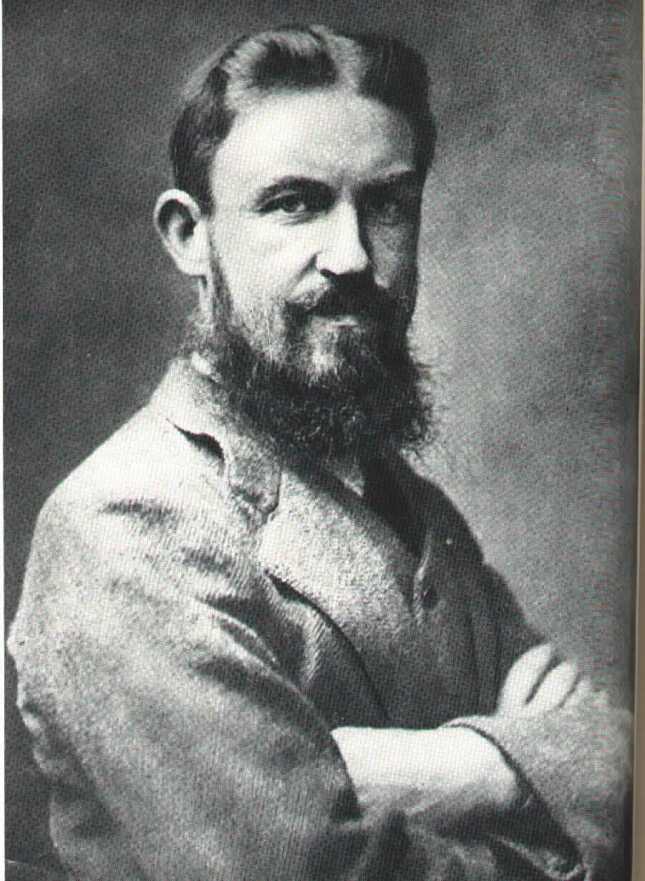
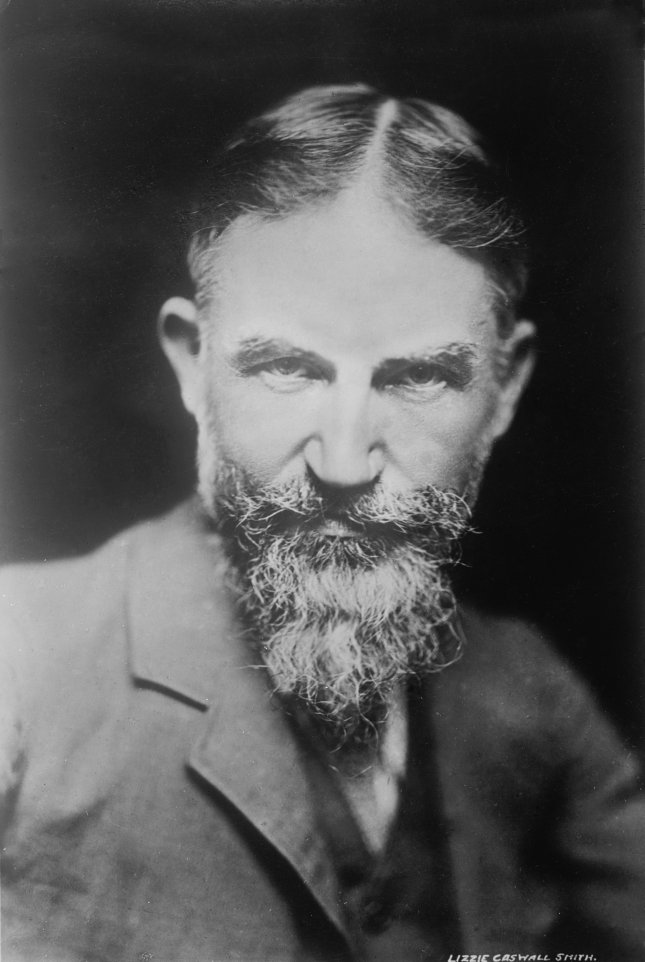
On This Day – 18 NOVEMBER 1926 – George Bernard Shaw refuses the Nobel prize for literature

shaw352.jpg

It’s one of those great table quiz questions the answer to which is likely to spark a bunfight worthy of any UKIP parliamentary meeting. ‘How many Irish writers have won the Nobel Prize for literature?’  You’d probably answer ‘Four’. And you’d probably be right. Except that our most recent winner, Seamus Heaney, was technically born in the United Kingdom so if it’s a tie at the end of the night that dweeby nerd on the team that finished in joint first place might insist that your answer to that question was incorrect. Am I speaking from direct experience? Did the adjudicator rule in his favour? Did we lose?  Did I want to wring his obsessive compulsive pedantic self-satisfied neck? We will never know.

But the commonly accepted answer – I hope he’s listening – is four, namely W.B.Yeats in 1923, George Bernard Shaw in 1925, Samuel Beckett in 1969 and Seamus Heaney in 1995. Beckett, incidentally, is, thus far, the only first-class cricketer to have received a Nobel prize. Which is probably not that important, really. What is of more consequence is that Beckett’s wife Suzanne considered the award to be a ‘catastrophe’ and Beckett himself gave all his prize money away.

There have been one hundred and thirteen Nobel Literature Laureates, with France leading the way on sixteen wins and the USA – courtesy of Bob Dylan – just ahead of the UK in second place on eleven. Unless of course you’re so pedantic you absolutely insist on Seamus Heaney being described as a UK winner (I’m really not bitter you understand) in which case the UK would be joint second. For the record Ireland lies in joint eighth place alongside Poland and Russia.

Yeats was cited for ‘for his always inspired poetry, which in a highly artistic form gives expression to the spirit of a whole nation”. Shaw was honoured ‘for his work which is marked by both idealism and humanity, its stimulating satire often being infused with a singular poetic beauty’. Beckett was awarded the prize ‘for his writing, which – in new forms for the novel and drama – in the destitution of modern man acquires its elevation’ and Heaney ‘for works of lyrical beauty and ethical depth, which exalt everyday miracles and the living past.’

Shaw was nearly 70 years of age when he finally won the award. It was his play about Joan of Arc, St.Joan, written in 1923, the year of her canonization, that seems to have sealed the deal for the Nobel Committee. They had, after all, managed to overlook the Shaw of Pygmalion, Man and Superman and Major Barbara while giving the prize in 1907 to the imperialist zealot Rudyard Kipling, who became the first UK winner. Though, as he was actually born in Bombay certain nit-picking know-alls might claim that he was the first Indian winner. But we’ll let that one pass.

Shaw was about as enamoured of the award as would Beckett be more than forty years later. He didn’t quite reject the prize but he said some pretty scathing things about it and refused to take the money. He is reported as having observed that ‘I can forgive Nobel for inventing dynamite, but only a fiend in human form could have invented the Nobel Prize.’ As regards the prize-fund he pointed out that ‘My readers and my audiences provide me with more than sufficient money for my needs.’ Shaw thus turned down £7000 – the equivalent of £384,000 in 2016 – or about half the value of this year’s award.

Until the Nobel Committee gave the 2016 award to Bob Dylan Shaw had been the only writer to have won both a Nobel Prize and an Oscar – in his case for best-adapted screenplay of his own play Pygmalion. He was even less pleased with his Academy Award than he was with his Nobel gong – describing it as ‘an insult’. Though, apparently, he still placed the slim golden statuette on his mantelpiece. He didn’t turn up for either the Academy or Nobel awards bash but he wasn’t able to spurn the Oscar dosh because there wasn’t any.

George Bernard Shaw turned down the cash element of his Nobel prize, though not the award itself, ninety years ago, on this day.

GBShaw1900.jpg


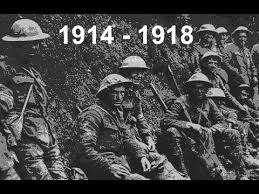
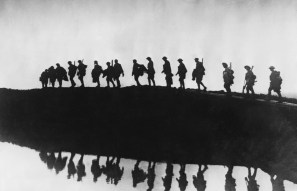
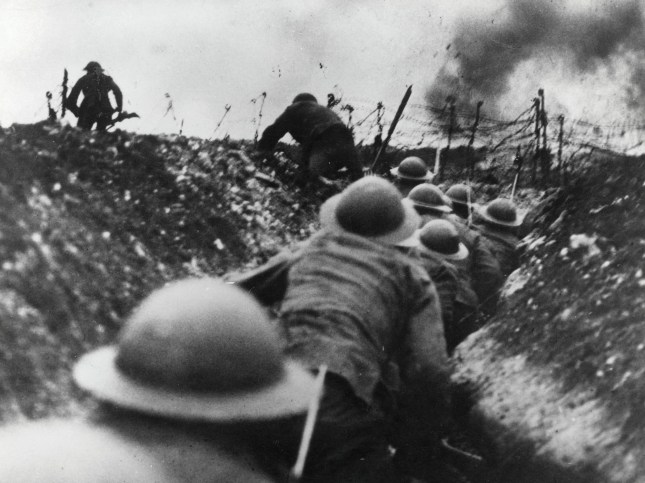
On This Day – 11.11.1918 Armistice Day

Unknown.jpegww1-flanders-soldiers.jpg


The World had seen nothing like it before. At least nine million men had died in combat and more than twice that number had been wounded. Untold and often uncounted millions of civilians had perished in the conflict itself and its many Ugly Sisters, such as the Armenian Massacre and the Russian Revolution.   Sadly the ‘war to end all wars’, didn’t, and the process was repeated twenty years later with even more tragic and disastrous results.


But it had to come to an end at some point and eventually it did. Germany was in no position to fight on. The Generals did what they often do, made sure the blame was passed to politicians and then retired, or waited to get the whole thing started all over again.


Three days of intense negotiations in a forest near Compiegne in France yielded little more than an abject, unconditional surrender for Germany after one thousand five hundred and sixty-six days of fighting. Hostilities were to cease at 11.00 am on the 11th November, entirely coincidentally but poetically and memorably, the eleventh hour, of the eleventh day, of the eleventh month.


For the British Army it was a clear case of déjà vu. Their war ended where it had begun, outside the Belgian city of Mons. Which is why five of the first and four of the final British fatalities of the war are buried in St. Symphorien Cemetery a few yards, and nine million lives, apart.


The last British soldier to die did so at 9.30 am on the morning of the 11th.  George Ellison from Leeds was serving in the Fifth Royal Irish Lancers when he met his end. He is buried facing the grave of John Parr, the first British fatality of the conflict.


You might expect a spirit of ‘live and let live’ on the last day of such an obscene war. But actually it was mostly business as usual. The American General Pershing decided his army had not lost nearly enough men and ordered vigorous actions to be conducted against the Germans right up to the 11th hour.  More than 10,000 men were killed, wounded or were taken prisoner on the ultimate day. 3000 of those were American.


Irishmen responded in various ways, some with rapture, others with indifference and apathy. One Dublin Fusilier, the unrepentant southern unionist Captain Noel Drury wrote in his diary that ..


it’s like when one heard of the death of a friend – a sort of forlorn feeling. I went along and read the order to the men, but they just stared at me and showed no enthusiasm at all. One or two muttered “We were just getting a bit of our own back” They all had the look of hounds whipped off just as they were about to kill.


Another veteran, Frank Hitchcock of the Leinster Regiment, brother of the Hollywood director Rex Ingram recalled that …


The Brigadier had galloped up and yelled out: “The War is over! The Kaiser has abdicated!”  We were typically Irish, and never cheered except under adverse conditions, such as shell-fire and rain. Somewhat crestfallen the Brigadier rode slowly off to communicate his glad tidings to an English battalion, who, no doubt took the news in a different way.


Terence Poulter, another Dublin Fusilier, who survived into old age, was more excited at the end of hostilities.


Approaching eleven o’clock in our sector you could have heard a pin drop. When eleven o’clock came there were loud cheers. The war was over as far as we were concerned.


Back in London Big Ben was rung for the first time since August 1914 while in Paris, gas lamps were lit for the first time in four years as the Great War finally came to an end ninety eight years ago, on this day.
 

worldwar1somme-tl.jpg