On This Day – Drivetime – 13.3.1856 Birth of P.W.Nally

pwnallySgtMcCarthy

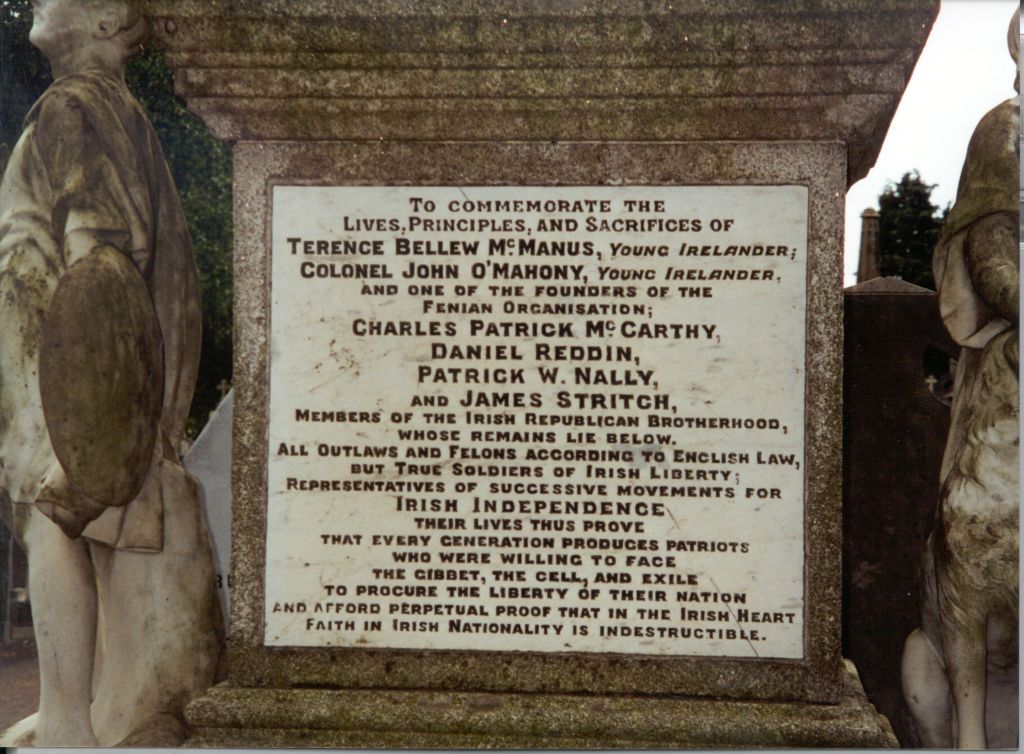
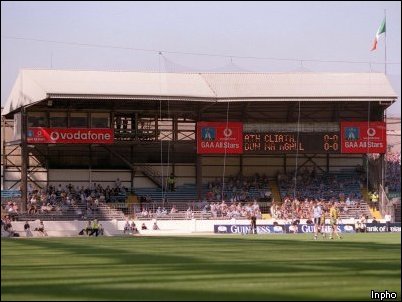
In September 2003 the redevelopment of Croke Park led to the demolition of the old Nally Stand and the creation of the Nally Terrace, adjacent to Hill 16. While people would be well aware that the stadium’s Hogan stand was called after the best known victim of the Black and Tans’ unwelcome visit to Croke Park in November 1920 on Bloody Sunday, and that the Cusack Stand was named in honour of one of the GAA founders, how many people would know the story behind the man for whom the old Nally Stand was dedicated in 1952?

Patrick W.Nally, as you might expect, was one of the motive forces behind the creation of the GAA in 1884, though for reasons that will become clear, he was not present at the pivotal meeting in Thurles that established the new body. He was, himself, a well-known athlete who began discussions with Michael Cusack in the 1870s about forming an organisation devoted to the promotion of Gaelic Games.

However, his motives were not entirely sporting in nature. Nally was, at the time, a member of the Supreme Council of the revolutionary nationalist organisation the Irish Republican Brotherhood which he had joined in his early twenties. He managed to keep his republican activities – his job was to import firearms into Connaught – secret from the local Mayo RIC by condemning agrarian outrages. This was, somewhat surprisingly, perfectly consistent with IRB policy. So much so that when he applied for a gun licence the local RIC Inspector advised his superiors that it was safe to grant the request, asserting that Nally ‘would lead a useful and loyal life’. Indeed he did, but not quite in the way the senior policeman anticipated.

With the Land War raging in 1880, Nally’s IRB activities came to the attention of spymasters in Dublin Castle and London. To avoid arrest he left the country for two years, returning in 1882. He was arrested on conspiracy to murder charges the following year – this was a favoured Dublin Castle ploy for jailing people it didn’t much approve of. He was implicated by an informer, another common procedure at the time. Nally was convicted, and sentenced to ten years penal servitude.

Half way through his sentence his father, W.R.Nally, sought assistance from an apparently unlikely source, Captain William O’Shea, husband of Katharine and later Parnell’s nemesis. However, O’Shea, though a conservative nationalist and a bona fide charlatan was a political opportunist with a history of murky associations with the IRB. O’Shea’s self-serving efforts to secure Nally’s early release came to nothing.

Nally did not, in the end, actually serve his full term. But that was only because he died, aged 36, in Mountjoy Prison, days before he was due to be released in November 1891. Efforts had been made by Dublin Castle, with a promise of clemency and other rewards, to get him to implicate Charles Stewart Parnell in the organisation and encouragement of agrarian crime at a Special Commission of Inquiry tasked with investigating such allegations. He is said to have responded to these blandishments “not all the gold or honours that the Queen could bestow would induce Patrick Nally to become a traitor.”

The official cause of Nally’s death was typhoid fever – some, however, suspected foul play. A Dublin coroner’s jury held that his ‘naturally strong constitution’ had been broken by ‘the harsh and cruel treatment to which he was subjected … for refusing to give evidence … at the Special Commission.’

He was pre-deceased by four weeks by the man he had refused to betray to secure his release. At his funeral the same green flag was draped over Nally’s coffin as had enveloped that of Parnell himself a month before.

Patrick W.Nally, revolutionary nationalist and sportsman, was born 159 years ago, on this day.
481525120a5444254371l

On This Day – 6.3.1831 – Birth of General Philip Sheridan

Unknownimages

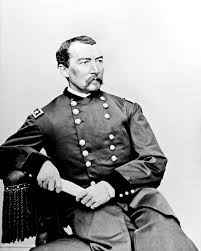
Was the man who is supposed to have uttered the decidedly non PC comment ‘the only good Indian I ever saw was a dead Indian’ born in Killinkere, Co.Cavan, in mid-Atlantic on the emigrant boat to the Americas, or in the USA itself. No one knows exactly, but no one totally trusts Phillip Sheridan’s own version, which is that he was a 100% American, born in Albany, New York.

Sheridan while an immensely successful general was a man of small stature. Because he never exceeded five feet five inches in height he was known all his life as ‘Little Phil’, despite his military stature. Abraham Lincoln, who towered over Sheridan, once described him as “A brown, chunky little chap, with a long body, short legs, not enough neck to hang him, and such long arms that if his ankles itch he can scratch them without stooping.”

Sheridan first made a name for himself at Westpoint Military Academy where he was suspended for a year for fighting with a classmate whom he had threatened to run through with a bayonet. This type of behaviour was not encouraged by the authorities despite the fact that he was training for an occupation in which he would be required to kill people.

His reputation was greatly enhanced in the American civil war where before his first major promotion – to Brigadier General – he was described by his divisional commander as being ‘worth his weight in gold’ as a cavalry officer. Later his pursuit of Robert E.Lee’s army in the final campaign of the conflict, forced the southern commander to seek surrender terms and end the war.

Two years later Sheridan headed west to begin the work for which he would become famous, or notorious, depending on your point of view, defending the area between the Mississippi river and the Rocky Mountains from Native American nations like the Lakota and Cheyenne who had lived on the Great Plains for centuries before the arrival of the white man. His methods were utterly ruthless. Intent on corralling the Plains tribes in Federal reservations he encouraged white hunters to wipe out their main food supply, the buffalo.

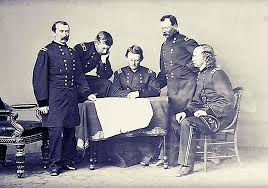
He was also General George Armstrong Custer’s boss – not that Custer was much of a one for following orders if they got in the way of glorious triumphs like the murder of a peaceful Lakota settlement on the Washita River in 1968, a massacre that took place on Sheridan’s watch. Given Custer’s periodic unruliness Sheridan might not have been all that traumatised when his egotistical subordinate came to a bad end at the hands of the Lakota and Cheyenne in 1876 at the Little Big Horn.

Sheridan’s reward for his ruthless suppression of the various Indian insurgencies in the 1860s and 1870s was command of the entire US Army when he succeeded the legendary William Tecumseh Sherman in 1883

By the way – he may never actually have said ‘the only good Indian I ever saw was a dead Indian’. As a young man he is even reported to have had a child by a Native American woman with whom he had a lengthy relationship. But he probably did say something approximating the most memorable statement attributed to him. However, he always denied having uttered that telling phrase.

Philip Sheridan was born, in Cavan, on a trans-Atlantic passage to America, or in Albany, New York 184 years ago on this day

On This Day – Drivetime – 27.2.1890 – Needham – Kerrigan fight a draw over 100 rounds

needham-danny-11PatsyKerrigan-994

Perhaps the most celebrated boxer to come out of San Francisco was the son of an Irish emigrant. James J. Corbett, better known as, Gentleman Jim, was born in 1866, fought 24 professional bouts and defeated the great John L.Sullivan to become world heavyweight champion. His father was from Mayo, his uncle, who shared his name, was a parish priest in the county. But while Corbett may have been the greatest Irish-American boxing champion to emerge from the city, the greatest, and indeed the longest, fight involved another Irish American Danny Needham.

Needham was born in St.Paul Minnesota a year after Corbett. He was one of four brothers constantly in trouble with the law until he found his natural home in the ring, fighting as a lightweight. The 1880s had seen the establishment of Queensbury rules but professional boxing then was very different to the sport as practised today. Most fighters wore 2 ounce gloves – four ounce gloves were scathingly referred to as ‘pillows’. Today boxers wear gloves weighing 8-10 ounces. In most cases there was no limit to the number of three minute rounds that could be fought. Boxers generally agreed to keep going until one or other was knocked out or threw in the towel. The sport in America was dominated by men with names like Paddy Duffy Dan Murphy, Charlie Gleason, Charlie “Bull” McCarthy & Jack McGinty as well as Sullivan and Corbett. It was a very Irish sport and a very Irish route out of poverty.

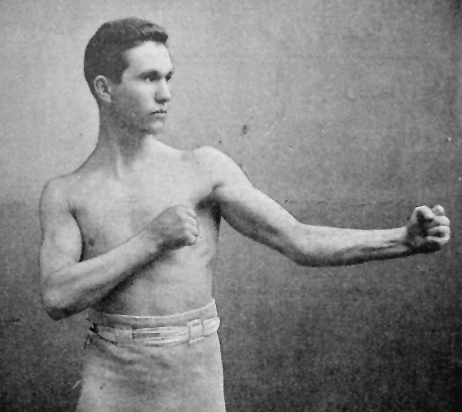
Danny Needham was a colourful character, to say the least. He had a reputation for involvement in petty theft when he wasn’t in training and always carried a revolver with him. In 1890 he was persuaded by his manager to move up a weight division to welter and to try his luck in San Francisco. There he encountered the Scotch-Irish boxer Patsy Kerrigan. Needham was conceding 6 pounds to Kerrigan. The fight turned into an epic – the War and Peace of professional boxing, although there wasn’t a lot of peace in evidence.

The bout began shortly after 8.30 in the evening in front of an enthusiastic crowd. It ended six hours and 39 minutes later after 100 rounds, the second longest bout in pugilistic history. The longest, 111 rounds, came three years later between Andy Bowen and Jack Burke in New Orleans. According to one newspaper report ‘Needham was pushed down three times in the fifty-sixth round and four times in the seventieth, but he arose and fought on desperately,”

Neither boxer laid a glove on his opponent in the final 11 rounds, both were so exhausted they simply stalked each other around the ring feinting from time to time. Eventually the referee called it a draw at 3.15 a.m. Some of the spectators had actually left the arena and returned a number of hours later to discover, to their surprise, that both fighters were still on their feet.


Later in life Needham went prospecting in Alaska, attempted to murder a man stalking his wife and was jailed for armed robbery in 1899. He died at the age of 55 after having spent the last two years of his life in a mental institution.

Danny Needham and Patsy Kerrigan eventually fought each other to a standstill in San Francisco in one of only two boxing contests to go over 100 rounds 125 years ago on this day.

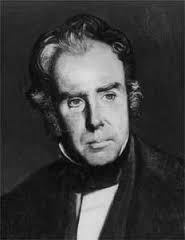
ON THIS DAY – DRIVETIME – 20 FEBRUARY, 1794 – Birth of William Carleton

UnknownUnknown-2

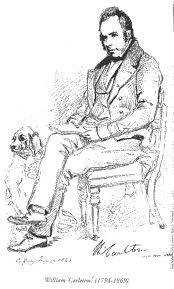
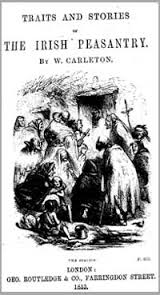
One of the great Irish writers of the 19th century, William Carleton, was an author who made a huge impression early on in his career and is still most famous for the first book he ever published. Traits and stories of the Irish peasantry came out when he was in his early thirties. To literate Dubliners Carleton was a Protestant writer whose full-time job was as a clerk in the Church of Ireland Sunday School office. He was noted for his satiric takes on certain Roman Catholic rituals like penitential pilgrimages to Lough Derg. By the 1830s Carleton was a well regarded middle class Protestant writer with an eye for detail and dialogue who had managed to capture perfectly the vagaries, eccentricities and violence of the Irish Catholic peasant.

Which is why Carleton’s real background is doubly interesting. He was born into Catholic peasant stock in Co.Tyrone in 1794. He received much of his education in a variety of local ‘hedge schools’, informal educational establishments in the era prior to organized primary education. His early life was far from unproblematic. His family was evicted from their small-holding in 1813. Carleton himself, despite his later impeccable Protestant respectability, had at one time been a member of a local agrarian secret society. When his academic abilities had been noted he had also been aimed at the priesthood. But Carleton made his own choices rather than follow the road laid down for him by birth, tradition, and the will of others. If we are to believe the story ‘The Poor Scholar’ he reacted against the idea of the priesthood after being discouraged by a portentous dream

He left Tyrone in 1817 and worked as a hedge schoolmaster himself for a time before trying his luck in Dublin. He had little more than half a crown in his pocket. His luck held, he made some opportunistic adjustments to his life and prospered for a while. Though he had some early failures. He sought to join the army, for example, but it was suggested to him by a regimental Colonel that such a life might not be the best one for him. He had made his application in Latin.

Carleton has given us characters like Willie Reilly and his dear Colleen Bawn and the Squanders of Castle Squander while also writing a fictionalized but searing account of the Great Famine, The Black Prophet, published in the dark year of 1847.

Never a man given to political consistency he once offered to British Prime Minister Sir Robert Peel to link Daniel O’Connell to agrarian crime but still managed to befriend the romantic nationalists of Young Ireland and contribute to their newspaper The Nation. Despite, or perhaps because of, his own Catholic birth, his writing on the subject of religion and politics, was virulently anti-Roman.

He died in 1869, the year William Gladstone dis-established the Church which he had joined in the 1820s.

Never good with money he had relied in the twilight of his life on a government pension after a successful petition from a wide range of Irish political and religious figures, including the the fiery Belfast Protestant evangelical preacher Dr.Harold Cooke and the President of the Roman Catholic seminary at Maynooth College.

Carleton never quite extracted his foot entirely from the camp into which he was born, in Clogher, Co.Tyrone 219 years ago, on this day.

Unknown-1