On This Day – Drivetime – 21 November 1915, Shackleton’s Endurance finally sinks

enduranceshackleton_sh

https://soundcloud.com/irishhistory/on-this-day-drivetime-november-21st-1915-endurance-sinks-shackleton-stranded

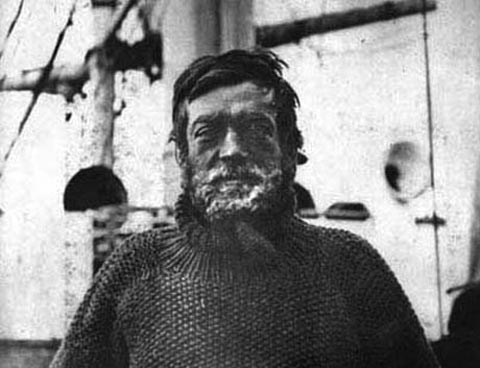
It all started out with high expectations. The title was rather grandiose ‘The Imperial Trans-Antarctic Expedition’ but the idea was simple, for a team led by Irish explorer Ernest Shackleton, to cross the Antarctic continent. Funded by the British government, and many individual donors, including Scottish jute merchant James Caird, the expedition was given the go-ahead in August 1914 despite the outbreak of a European war a few days before the scheduled departure.

Shackleton’s ship, the Endurance, one of two making the journey, was captained by Frank Worsley. An Irishman, Tom Crean, looked after the 70 dogs with names like Slobbers, Painful, Shakespeare, Bummer and even Amundsen, who were expected to haul the explorers and their equipment across the ice.

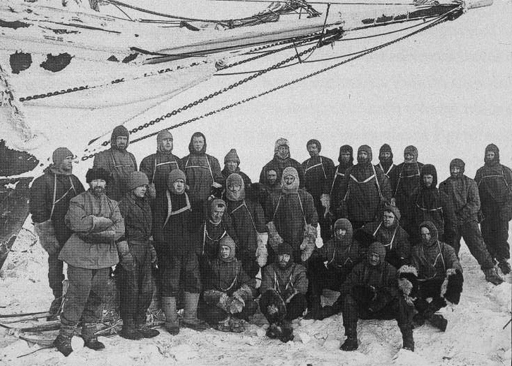
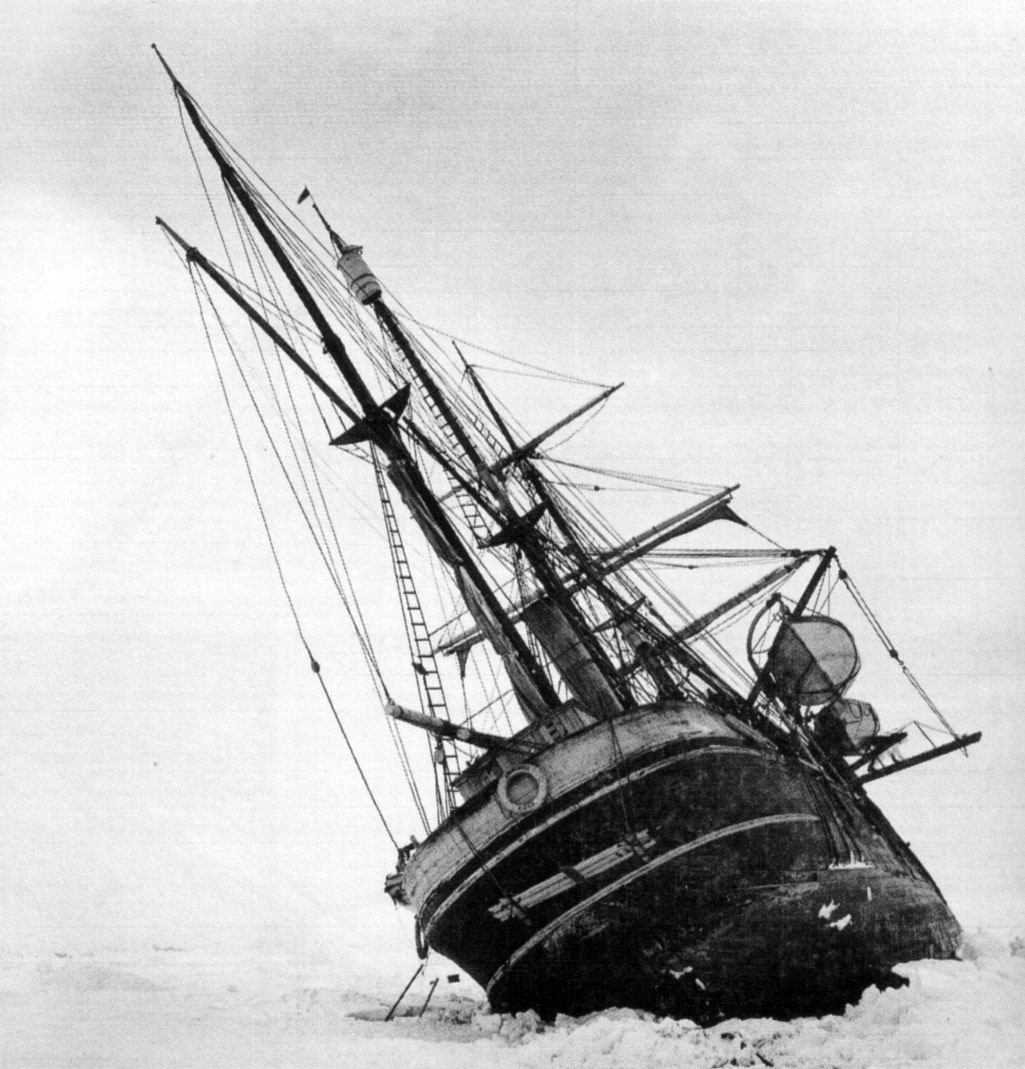
But it all went drastically wrong when, in early 1915, the Endurance was encased in an ice floe and inexorably crushed to destruction. She had already been abandoned when, in November 1915, she sank below the surface, an episode recorded by the movie camera of the expedition’s Australian photographer Frank Hurley.

Shackleton managed to get his crew to Elephant Island, almost 350 miles from where the Endurance had gone down. But the chances of rescue were slim. The celebrated decision was then taken to launch the small lifeboat, named the James Caird, after the donor whose money had helped create the predicament, and for six members of the crew, led by Shacklteon, to try and find help. Making the journey, in April 1916, with the famous explorer were two fellow Irishman, Kerryman, Tom Crean and Able Seaman Timothy McCarthy from Cork.

Taking only four weeks’ supplies of food Shackleton pointed the James Caird in the direction of South Georgia, more than 800 miles away. The navigational skills of the Endurance captain, Frank Worlsey, ensured that the small craft managed to reach its destination after 15 days but it was forced to land on the southern shore of the island. Help, in the form of a Norwegian whaling station, was far to the north.

This opened the next chapter of the unlikely rescue of the crew of the Endurance. Shackleton opted to go overland, across forbidding mnountains in freezing temperatures, in a journey that had never been attempted before. He took Worsley and Crean with him. Famously, after 36 hours, they made it to the Stromness whaling station, on 20 May 1916, to the absolute astonishment of the Norwegian occupants of this isolated outpost of civilisation. It was another 40 years before British explorer Duncan Carse emulated the achievement of Shackleton, Crean and Worsley.

It was not until August 1916 that he explorer was able to rescue the bulk of the original Endurance crew and bring them all to safety.

When Shackleton returned to civilisation one of the first questions he asked was about the final outcome of the war that had just broken out when he and his crew had left for the South Pole. He was shocked to be informed that the outcome was still to be decided. The Great War, already two years old, would continue for a further two years and three months.

The Endurance, after being slowly crushed by pack ice for ten months, finally succumbed and sank 99 years ago on this day.

20030804_3612-teamlg

On This Day – Drivetime – 14 November 1669 – Oliver Plunkett becomes Archbishop of Armagh

Saint_Oliver_Plunkett

To generations of Irish children his is the rather frightening head that stares out of a glass shrine in St. Peter’s Roman Catholic Church in Drogheda, Co.Louth. Even if you knew what to expect as a child it was a memorable sight – probably the stuff of many a subsequent nightmare.

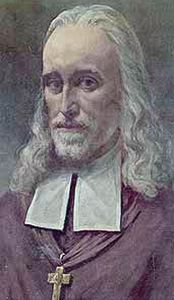
But before Oliver Plunkett became separated from his head at the behest of elements of the British establishment on 1 July 1681 he had been a distinguished cleric, educated on the continent during the time of the Penal Laws and functioning at a high level in Rome before his appoitment in 1669 to the see of Armagh.

Plunkett had been born in Loughcrew, near Oldcastle in County Meath to weel to do parents of Anglo Norman stock. By the time of his appointment as Primate of Ireland attitudes towards Roman Catholic priests had relaxed sufficiently to allow him to take up his position.

He was a reforming Archbishop. He found Irish priests to be sadly ‘ignorant in moral theology’ – though their lack of such knowledge may have much to do with their inability to acquire a grounding in philosophy while trying to avoid being executed or tarred and feathered at the hands of the authorities in the mid 1600s. The new archbishop also took on drunkenness among members of the clergy, observing that if this habit was squashed Irish priests would become saints. As it turned out he himself was the only Irish cleric of the period to be canonised.

In 1678 Plunkett fell victim to the infamous English Popish Plot of notorious perjurer Titus Oates, who fabricated knowledge of a Catholic conspiracy to murder King Charles II. Oates shopped the Archbishop by alleging that he had evidence of Plunkett colluding to bring 20,000 French soldiers to Ireland. Plinkett might have chosen discretion and headed back to Rome but instead he insisted in remaining in Ireland, though he, sensibly, went on the run. He was captured and tried in Dundalk where numerous informers came forward to confirm the charges against him. The Lord Lieutenant of the day, the Duke of Ormonde, privately referred to them as ‘silly drunken vagabonds whom no schoolboy would trust to rob an orchard.’ The trial quickly collapsed so Plunkett was brought to London to face charges there instead. A grand jury found no case against him but he continued to be detained until the Crown could find witnesses who would stitch him up with the help of a co-operative judge, in this case the Lord Chief Justice Sir Francis Pemberton.

Plunkett was found guilty of ‘promoting the Roman faith’ in June 1681 – which was probably a fair cop, though far from plotting regicide. The penalty, however, was the same in both cases, and on 1 July 1681, the incumbent Roman Catholic Archbishop of Armagh became the last Catholic martyr to die in England when he was hanged, drawn and quartered at Tyburn. In case you are wondering what is involved in the ancient practice of hanging, drawing and quartering, believe me you don’t want to know. His head eventually found its way to Rome, went from there to Armagh before being installed in Drogheda. Most of the his body was interred in Downside Abbey in Somerset. That’s Down –SIDE Abbey, it’s actually the real thing, a monastery, unlike the home of the fictional Crawley family.

Since his death Plunkett’s trial has been described by many distinguished British jurists as an egregious miscarriage of justice, even by 17th century standards.

Oliver Plunkett, canonised in 1975, was appointed to the see of Armagh, 345 years ago, on this day.

On This Day – 31 October 1867 – The Earl of Rosse and the Leviathan telescope

William_Parsons,_3rd_Earl_of_Rosse_photoking_214

Once upon a time Birr, Co.Offaly didn’t exist. There was a town there all right, but it was called Parsonstown, King’s County.

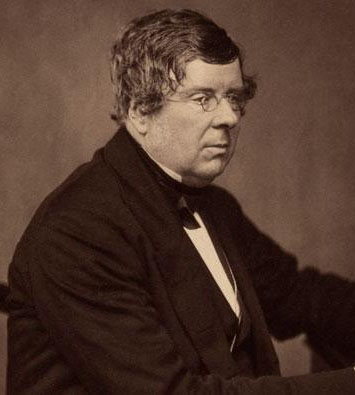
The ‘Parson’ in question wasn’t a cleric. The name derived from the Parsons family [plural], who were local landowners bearing the hereditary title of Earls of Rosse. The most prominent of that name was the 3rd Earl, William Parsons, born in 1800 during the debate on the Act of Union, a piece of legislation his father vigorously opposed. As the humble Lord Oxmantown William Parsons been educated at Trinity College, Dublin and Magdalen College, Oxford, where he graduated with a first in mathematics in 1822. He inherited his father’s title in 1841. Prior to that he had been an MP who had voted both for Catholic Emancipation and the Great Reform Bill of 1832.

The facility with sums proved to be useful in his future obsession. Because William Parsons was an astronomer. Not just someone who liked to look at the stars through whatever enhancing lens was available, but a serious scientist who won the Royal Medal in 1851. Previous winners included Humphry Davy, John Hesrchel (three times), Michael Faraday (twice) and our own William Rowan Hamilton. It was a sort of Victorian Nobel Prize.

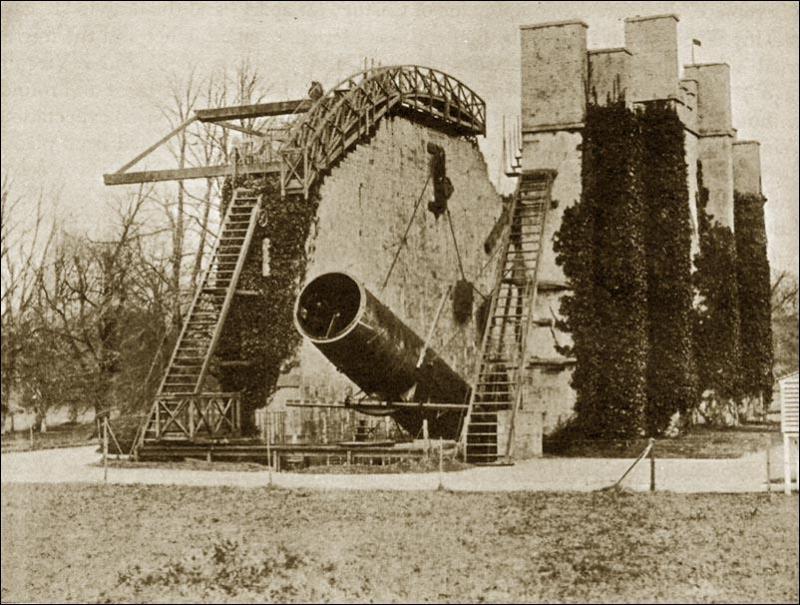
Once he inherited the title Earl of Rosse and came into possession of Birr Castle he could do pretty much whatever he liked with the ancestral pile. So he proceeded to move in the biggest telescope ever built – the 72” Leviathan, built to his own specifications. It would continue to be the world’s largest telescope, in terms of aperture size, until the early years of the 20th century. Work on this wonder of modern science and technology began in 1842 and it was completed by 1845. It was constructed largely through trial and error as few telescope makers had left behind the secrets of their trade and Lord Rosse started out on his labours a century and a half before Google.

The Leviathan was revealed to the world in a whimsical ceremony. By way of dedication, blessing or opening a Church of Ireland Dean walked through the length of the telescope’s six-foot wide tube wearing a top hat and with an umbrella raised above his head, presumably because he could.

No sooner was the Leviathan complete than it was rendered inactive by the calamity of Great Famine. William Parsons devoted much of his family fortune and most of his time for the next three years to alleviating the effects of famine in what would later become Birr, Co.Offaly.

When Rosse did get the Leviathan up and running again his concentration was on the distant nebulae, whose spiral structure he identified thanks to his powerful telescope. He theorised, based on his observations, that millions of galaxies, like our own, might exist. His conclusions were later borne out when the era of radio-astronomy dawned and his deductions could be verified. Astronomers from all over the world would come to Birr Castle to use Leviathan themselves. Rosse was far from precious when it came sharing his impressive telescope.

His own findings and theories were published in the proceedings of the Royal Irish Academy and the Royal Astronomical Society. Recognition followed swiftly. Rosse became a Knight of the Order of St.Patrick in 1845 and was awarded the French Legion of Honour in 1855.

Rosse’s health began to fail in the 1860s and he took a house near the sea at Monkstown near Dublin to assist in his recuperation. He died there 147 years ago, on this day.

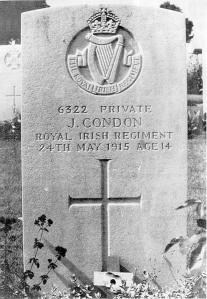
IRISH SOLDIERS WHO DIED IN THE SERVICE OF AUSTRALIA, CANADA, INDIA, NEW ZEALAND, SOUTH AFRICA AND THE USA IN WW1

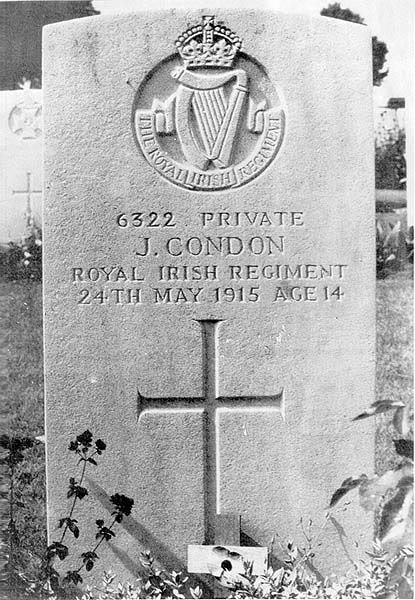
johncondon_memorial

[This is a companion piece to an article that is due to appear in the Irish Times WW1 Supplement on 22.10.14]

Work on the 49,000+ names in the Irish National War Memorial Records suggests that around 36,500 of the names contained in the eight-volume memorial are of men born in Ireland and serving, mostly but not exclusively, in the British Army.[1]

But what of the Irishmen who enlisted (Australia) or were conscripted (Canada, USA, New Zealand) in armies other than that of Britain? How many Irishmen died in the service of Colonial forces and that of the USA? The answer is, as with so many statistical questions related to the Great War, that we don’t know. We can come up with a rough estimate but detailed and intensive research would be required to give a definitive answer, if indeed such an answer is possible.

Thanks to the Trojan work of Professor Jeff Kildea and the Irish Anzacs Database we now know that 5774 Irish-born soldiers fought in the Australian Imperial Force in the Great War of whom 860 died.[2] This study reveals as a major underestimate the figures compiled by the Commonwealth War Graves Commission, which puts the number of Irish-born dead in the Australian armed forces at 488.

My own researches into the Irish dead in the New Zealand army (which I will upload in a few weeks when the work is in a better state of readiness) suggests a figure of around 280 Irish fatalities in units of that 100,000-strong force. This is largely confirmed by the information gleaned from the Commonwealth War Graves Commission website.

It appears that around 20,000 Irishmen served in a Canadian Expeditionary Force that conscripted 630,000 men (just over 400,000 of whom went to Europe).[3] Of those around 65,000 were lost.[4] On that basis (a 10.3% death rate) up to 2000 Irishmen may have died while serving in the CEF. However, the Commonwealth War Graves Commission website suggests around half this figure. It records 960 Canadian fatalities of Irish origin.[5] However, given the Australian underestimate the numbers may be higher. Canadian attestation papers asked the question ‘in what town, township or parish and in what country were you born.’ It is possible that a number of recruits neglected to include their country of birth or used an abbreviation such as ‘Irl’, thus rendering themselves inaccessible on the CWGC website. The same may be true of other colonial forces – this may account for the Australian discrepancy.

The USA is proving, and will continue to prove, most problematic.

By the end of the war the US Army numbered almost 4.4 million men.[6] However, only half of these actually served overseas. The figure for US fatalities was 116,000 (around half that number died of flu). There is, unfortunately, no indication in the three-volume publication listing American fatalities, Soldiers of the Great War, of the birthplaces of any of American dead.

What we do know is that 24 million American men were required to register for the draft.[7] Around 18% of those either volunteered for service or were conscripted, though less than 10% served on the Western Front.

The probable total of those with Irish origins who registered for the draft comes to 65,025.[8] Extrapolating from the overall figure that would give us a cohort of around 11,700 (18%) Irish-born men actually serving in the US Armed forces. There may well have been more if Irish-born men volunteered in disproportionate numbers. The names of early volunteers do not show up in the Draft Registration Cards. However, this is unlikely given Irish-American antipathy to the war before American entry into the conflict in April 1917. In addition many of the most enthusiastic Irish are reckoned to have gone to Canada and joined the CEF.

We don’t know how many of that highly speculative number, of just under twelve thousand, actually went abroad. If we extrapolate once again we come up with a figure of under 6000. The American fatality rate was relatively small, around 6%, or a ratio of one death for every seventeen serving soldiers (1:17). On that basis Irish-born fatalities in the US Army could have been as low as 350, on a par with that of New Zealand in absolute terms but small in proportionate terms. The truth is we don’t know, the process of arriving at the figure of 350 is highly speculative and it will be extremely laborious and time-consuming to attempt to discover the true figure.

As regards Irishmen in the South African and Indian Armies, while there were undoubtedly some serving in both forces, the bulk of the million-strong Indian Army was Indian-born and suffered 62,000 deaths, while total South African fatalities came to under 7,000 of the 74,000 who served.[9] The Commonwealth War Graves Commission lists 80 names of members of the South African armed forces associated with Ireland and 13 (all officers) for the Indian Army. In the case of the former however the South Africa War Graves project lists 181 names associated with Ireland, though a detailed examination is required to ascertain how many of these are likely to have been born in this country.

Based on hard but incomplete evidence for Australia, New Zealand, India, South Africa and Canada, and little more than informed speculation regarding the USA the figures for Irish-born dead in the main Imperial armed forces and those of the USA might, at a minimum, look something like this.

AUSTRALIA                            860

NEW ZEALAND                      280

CANADA                                 960

INDIA                                      13

SOUTH AFRICA                      80

USA                                         350

TOTAL                               c.2,543

There is, however, a further difficulty with these figures. It is not possible simply to add this number to the total number of Irish dead recorded in the INWMR. Almost a thousand names in that record are of men who served in the Colonial or American armed forces. In most cases there is no indication in the records as to their place of birth, they have simply been added to the INWMR. However, despite the fact that they are numbered among the 7405 men recorded in the INWMR but not assigned a country of birth, it is likely that all are of Irish origin. It would appear utterly pointless to have included the names of men serving in, for example, the Australian or Canadian armies in a record of the Irish dead, who themselves have no connection whatever with this country. We must assume that certain information was available to the compilers of the INWMR which meant the name warranted inclusion in the Irish records while the criterion used [Ireland as place of birth] was not included in the record of the dead soldier.

INWMR RECORDING OF DECEASED IN COLONIAL OR US ARMIES

TOTAL           IRISH  OTHER            NO NATIONALITY INDICATED

CANADA         644                 58       4                  582

USA                 52                 14       20                   18

AUSTRALIA    230                 21       17                192

NEW ZEAL.     75                  15          3                 57

INDIA              127                 11       73                  43

S.AFRICA         72                 10         8                  54

TOTAL           1200               129     125                 946

Only those numbered Column 3 (Other) are unambiguously not Irish. The 129 names in Column 2 are definitively identified as Irish – the mystery is the place of birth of the remaining 946 and why, if they are not all Irish, they found their way into the Irish National War Memorial Records in the first place?

[If anyone has any helpful observations to make or any worthwhile statistics to contribute based on their own researches please contact me on www.irishhistory@gmail.com. I am new to this particular field of Irish World War 1 studies so I am happy to be corrected on any of the assertions contained above.]

[1] 30,986 have Ireland as their place of birth – the remainder of the figure is made up of the extrapolated Irish ‘share’ of the 7404 names with no known place of birth.

[2] http://www.irishtimes.com/news/ireland/irish-news/irish-in-australia-were-not-shirkers-in-first-world-war-1.1967446

[3] http://www.1914-1918.net/faq.htm

[4] http://www.cwgc.org/learning-and-resources/publications/annual-report.aspx

[5] The methodology employed here was simple and far from foolproof. The word ‘Ireland’ was inserted in the ‘additional information’ box in the CWGC ‘Find War Dead’ search engine. ‘First World War’ and ‘Canadian Forces’ were also selected. This brought up 975 records matching the search criteria. 16 of these represented non-Irish entries of men named ‘Ireland’. When the word ‘Irish’ was Adjustments were made for fatalities with the surname ‘Ireland’. The same methodology was employed in the case of Australia, New Zealand, South Africa and India.

[6] http://www.pbs.org/greatwar/resources/casdeath_pop.html

[7] http://search.ancestry.co.uk/search/db.aspx?dbid=6482

[8] This calculation is based on the insertion of ‘Ireland’ as a keyword in the Ancestry.com Draft Registration Cards 1917-18 (66713) and the subtraction from that figure of 1688 men whose surname was Ireland.

[9] http://www.1914-1918.net/faq.htm
On This Day – Drivetime -17 October 1738 – Arthur Rochfort, duellist and the Jealous Wall

Mary_Molesworth,_Lady_Belvedere18duel-1

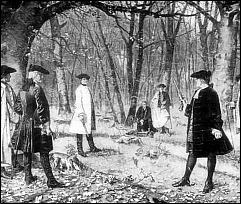
In 18th century Ireland if you considered yourself to be a gentleman and you were insulted by someone of similar status you didn’t a) take it lying down b) bring him to court and sue his ass – you challenged him to a duel and tried to shoot or stab him to death.

One of the more quarrelsome gentlemen of the first half of the 1700s was Arthur Rochfort, a Westmeath grandee whose family had occupied land around Mullingar since the 13th century. The town of Rochfortbridge is called after them.

Arthur Rochfort was a justice of the peace, a man who exercised considerable power over the lesser orders from the bench. In 1737 he was challenged to a duel by one Thomas Nugent. Nugent’s beef was that Rochfort had jailed one of his servants for poaching and carrying arms. Proper order really. Nothing came of that particular challenge because the authorities got wind of it and prosecuted Nugent before he could do any damage. They weren’t having one of their magistrates shot up by an argumentative aristocrat.

Rochfort, however, did make it into the lists the following year when he had another quarrel, this one with an influential member of the Freemasons, Dillon Hampson Pollard. In the shoot out that followed the challenge Rochfort came off better, hitting his opponent in the stomach. Fortunately for the JP Pollard recovered. He died of natural causes two years later.

Rochfort’s own end was quite ignominious. As it happened he was the proud owner of two irascible, litigious and obnoxious brothers, Robert and George. Robert would go on to become the 1st Earl of Belvedere and build Belvedere House outside Mullingar.

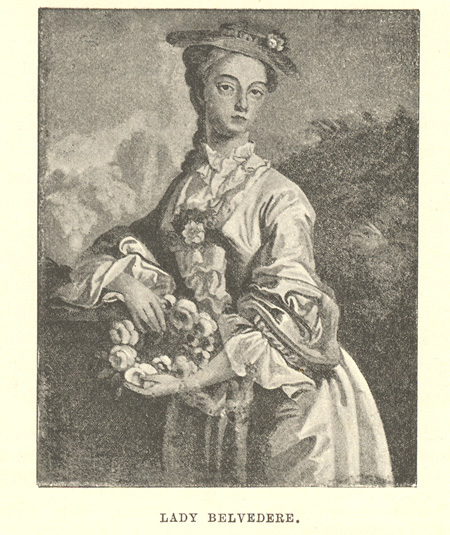
Robert had married a beautiful young Dublin heiress, Mary Molesworth. They didn’t get on – few people did see eye to eye with the arrogant future Lord Belvedere – but she produced three children for him before he became bored with her and aribitrarily accused her of having had an affair with Arthur. Arthur denied all carnal knowledge of the alleged relationship. However, either cowed or convinced by friends that an admission of guilt would get her a divorce, Mary admitted adultery. For her supposed sins she was incarcerated for most of the rest of her life in one of the houses on the Belvedere estate while Arthur was forced to flee the country. When he came back Robert sued him for criminal conversation anyway, won a massive judgment of £2000 and when that was not forthcoming had his brother committed to the Marshalsea Debtors prison in Dublin, where he died. They took their sibling rivalries very seriously in the 18th century.

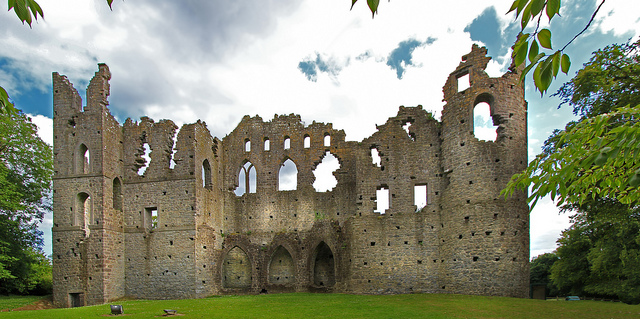
Later the charming Robert fell out with his other brother George. The latter had the effrontery to build a bigger and finer mansion and plonk it within sight of Belvedere House. Robert erected a folly – looking something like a ruined monastery – to cut off his view of George’s new manor. It became known, and still is, as The Jealous Wall. Neither Robert nor George, two utterly disagreeable gentlemen, were ever heard to express any regret at the passing of their brother Arthur.

Incidentally among the apparent descendants of the Rochforts is a certain former Kerry TD, the extremely agreeable Jackie Healy Rae.

Arthur Rochfort almost killed Dillon Hampson Pollard in a duel 276 years ago on this day.

5963266849_3a3e8a95a0_z