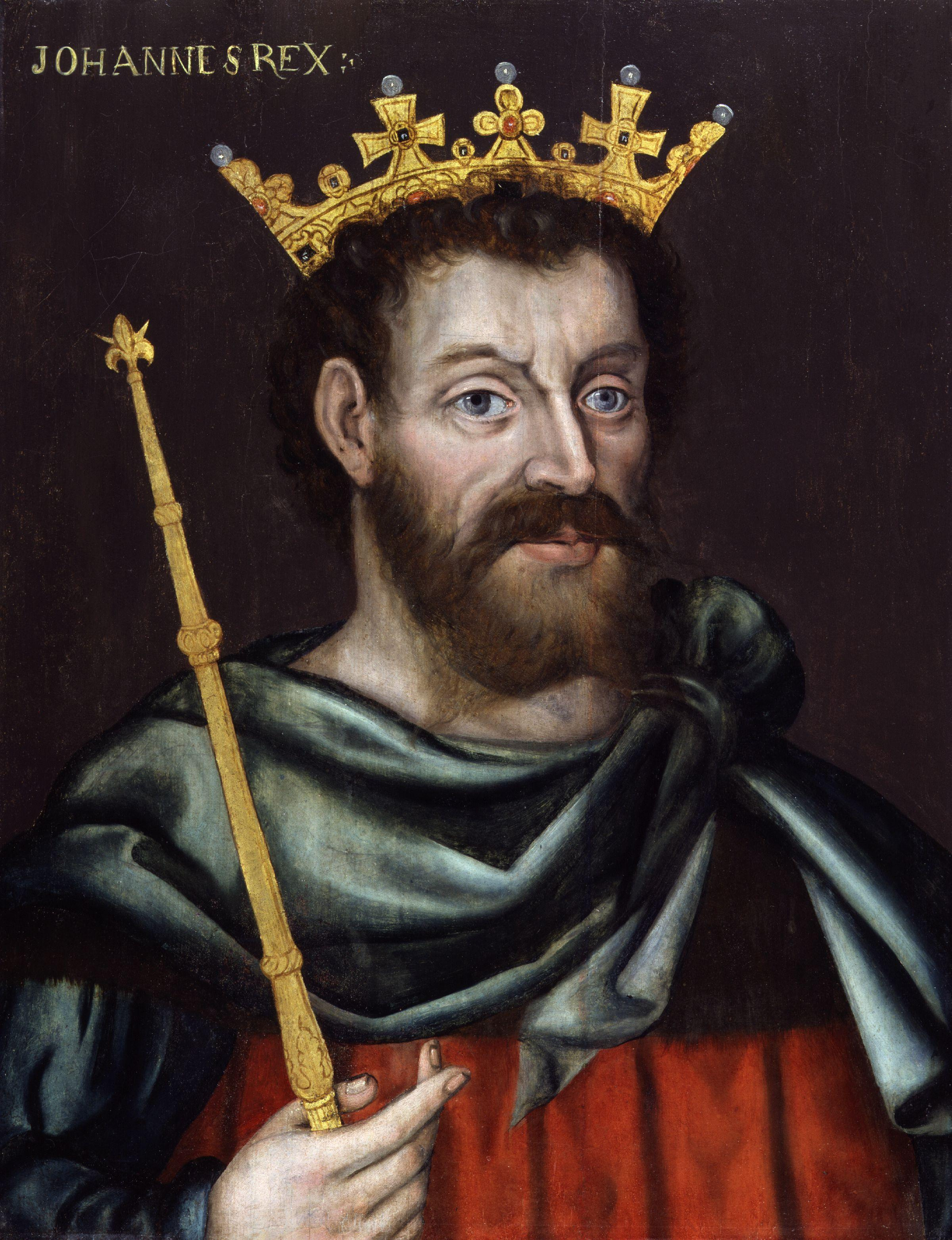
On This Day -Drivetime -20.6.1210 – King John lands at Waterford.

Image


King John has had a pretty bad rap from history. To some extent he deserved it but he was hardly worthy of the intense vilification of future generations. In popular mythology he is the villain-in-chief of the Robin Hood legends, in cahoots with the Sheriff of Nottingham to rob simple peasants of their livelihoods. He is the evil younger brother of the valiant Richard the Lionheart who spent most of his reign in the service of Christianity engaged in retaking the shrines of the Holy Land from Muslim invaders. In the movie about his rather interesting family, The Lion in Winter – he was one of the sons of Eleanor of Aquitaine and King Henry II– he tends to snivel and skulk quite a lot

That’s the mythology. The reality is quite different. For a start there probably was no Robin Hood and even if there was he was just as likely to have lived up to his surname as he was to have robbed from the rich and given to the poor. As for Richard the Lionheart he spent most of his reign as King of England ignoring his subjects while pursuing his hobby of killing Muslims. He got the money for this by selling public offices to the highest bidder. Eventually he cost his subjects a shed-load of money when he got himself captured by Duke Leopold of Austria and was ransomed by the German Emperor Henry VI.

King John’s reputation was acquired because he spent much of Richard’s ten-year reign plotting against his big brother. But then what’s a guy supposed to do? They weren’t particularly fraternal to begin with and then Richard abadons the family store and leaves it wide open to shoplifters. Then there was the whole ‘Lionheart’ thing. Red rag to a royal bull really.

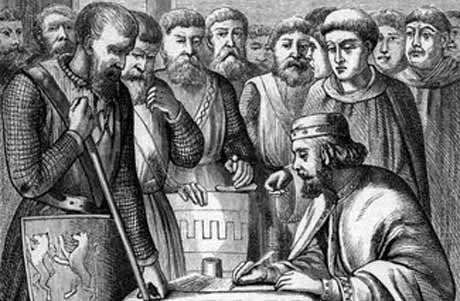
Of course John was neither a popular nor a successful King. He managed to lose most of England’s French dominions and in trying to get them back annoyed the barons. This led to the Magna Charta being forced down his throat after a successful rebellion. The Great Charter, signed at Runnymede in 1215, was the first negotiated curb on kingly power in England.

Five years before he submitted to the barons he went after one of their number in Ireland. King John landed here with an army in 1210 in an attempt to put manners on the de Lacy’s – Walter, the Earl of Meath and Hugh, Earl of Ulster. He landed at Crook in Co.Waterford, giving rise to some confusion about the origins of the phrase ‘by hook or by crook’. One version has it that had John not landed in Crook he would have come ashore nearby at Hook Head – hence his invasion of Ireland would have taken place ‘by hook or by crook’. There are, however, umpteen other versions of how the phrase originated. John’s visit was fairly successful and the De Lacy’s ceased to be a major irritant for him as a result.

Six year’s later he died, after reneging on the Magna Charta and going back to war with his barons. He claimed that he had signed it under duress. He is said to have died of dysentery, not the kind of thing you associate with the deaths of Kings.

King John, the only English monarch of that name, landed in Ireland 904 years ago, on this day.
 

Image


On This Day -Drivetime – 13.6.1865 – Birth of W.B. Yeats in Dublin


Unknown5746941_130392795052


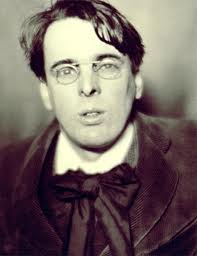
William Butler Yeats, Ireland’s first Nobel Literature laureate – he received the award in 1923, two years before George Bernard Shaw – was born in Sandymount in Dublin in 1865. However, he spent much of his early life in County Sligo, which he considered to be his spiritual home. Painting rather than poetry was more in the Yeats bloodline. His father and brother, both called John, were distinguished painters as was his ancestor Jervis Yeats, a Williamite soldier who benefitted from the defeat of King James in 1690.

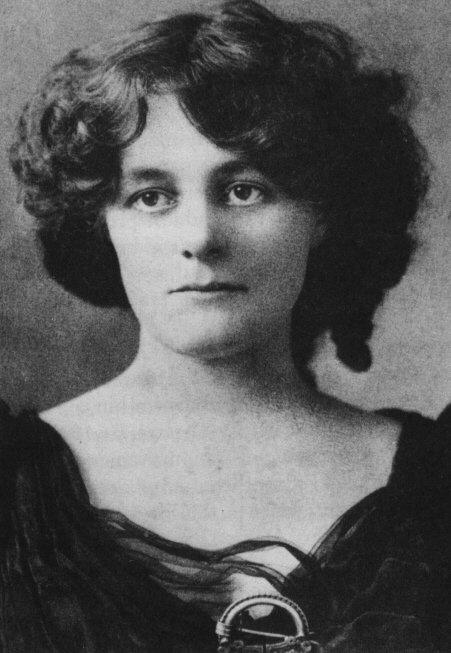
Despite his impressive corpus of poetry and the fact that people constantly quote some of his best lines – how many ‘Terrible Beauties’ have been born since he wrote Easter 1916? – Yeats is probably best known, in popular consciousness at least, for his doomed relationship with Maud Gonne.  They met in 1889. According to Yeats she brought into his life ‘a sound, as of a Burmese gong’. Presumably that was intended as a compliment but it was hardly designed to set the pulses of the 23 year old beauty racing. He first proposed to her in 1891. Sh refused him. He waited for another eight years before trying again. With the same result. He popped the question for a third time in 1900. Again, her answer was ‘no’. Proving that he was a perennial optimist or someone who didn’t take no for an answer he tried again in 1901. He got no for an answer. Instead, a few years later she horrified Yeats by marrying fellow Irish nationalist John McBride and, to his additional chagrin, became a Catholic into the bargain. The marriage, to Yeats’s intense satisfaction, was a disaster.

In 1908 Yeats had the even greater satisfaction of finally, after almost twenty years of forbearance, consummating his relationship with Maud Gonne. How well it went from her point of view can possibly be surmised from the letter she sent him in January 1909 suggesting that artists who abstained from sex would reap the rewards in their work. Either way they never re-consummated their relationship.

Yeats was very much a public figure throughout the early part of the 20th century. His co-founding of the Abbey Theatre, his aristocratic nationalism – which apparently included membership of the revolutionary organisation the Irish Republican Brotherhood – and two stints as a Senator of the newly formed Irish Free State, ensured that he lived much of his life far from the stereotype of the secluded, reclusive poet.

After the execution of  Major John McBride in 1916 he proposed to Maud Gonne for a fifth time. Again he was rejected. He then turned his attention to her daughter Iseult with the same result. Eventually Yeats did find happiness in his marriage to Georgie Hyde-Lees, who, although only half the poet’s age, became his accomplice in some strange spiritualistic  experiments and an excellent partner for the ageing artist.

W.B.Yeats, a man whose tangled love life inspired some wonderful poetry, was born 149 years ago, on this day.


On This Day – Drivetime – 6 June 1944 – Irishmen in D Day

Image


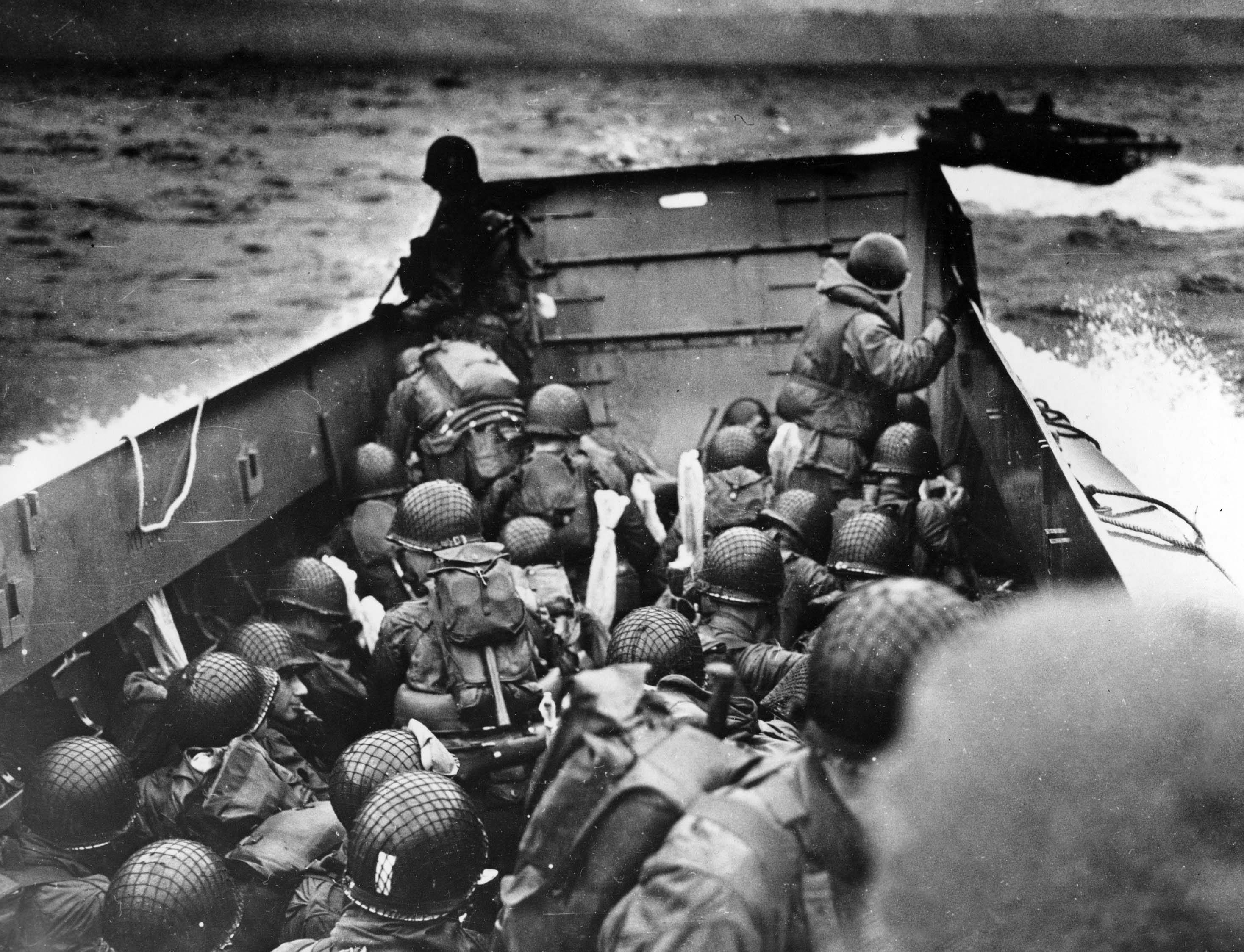
It was the biggest seaborne invasion in military history. Preparation for Operation Overlord, the allied invasion of Europe in June 1944, began three years beforehand. The planning was utterly meticulous. Knowledge was confined to an elite group and never seeped outside of that close circle.

Thousands of Irishmen were involved in what would become known as D-Day. Many of those were from the neutral Irish Free State. The Royal Ulster Rifles was the only regiment with two battalions in operation on the day of the invasion of Normandy itself. The 1st battalion went in on board gliders and landed behind enemy lines, the 2nd battalion took the more traditional route.

One Irishman centrally involved was the future Lord Killanin. He was a staff officer in an armoured division. Despite being completely ‘in the know’ about the invasion plans he was allowed back to Ireland on leave a fortnight before D-Day. A few sherries too many in the wrong place and the entire plan might have been betrayed unknowingly.

The Sweeney family, who ran the meteorological station and lighthouse at Blacksod in Mayo played their own small but significant part in proceedings. The invasion had originally been planned for 5 June but the weather was so vile it was cancelled. If it could not happen on 6th or 7th June it would have to be postponed for a number of weeks so that the moon and the tides aligned to maximum benefit. Would the weather break sufficiently to allow for the invasion to take place. It was confirmation from Edward Sweeney at Blacksod lighthouse in Mayo that there was a brief window available that prompted Eisenhower to order the operation to proceed. The temporary improvement in the weather took the Germans completely by surprise.

The commanders of the invading force expected a renewal of chemical warfare on a scale not seen since the Great War. Paddy Devlin from Galway, waiting on board a glider with the rest of the 1st Royal Ulster Rifles, remembers being ‘issued with new suits of battle dress that were as stiff as planks and had a white residue on them.’ They were told that they had been soaked in a solution to prevent lice. In fact they were designed to counteract gas – Devlin chose to believe the story about the lice.

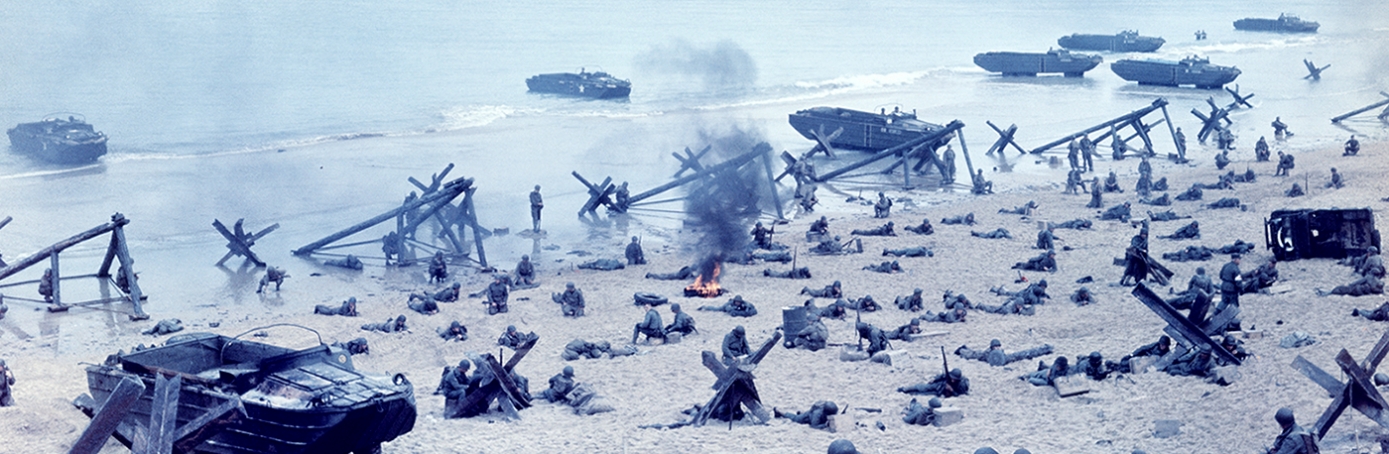
The greatest loss of life was suffered at one of the American beaches, codenamed Omaha – the tragedy is graphically depicted in the opening scene of Saving Private Ryan. Dubliner David McCaughey operated a landing craft at Omaha. He was hit early on in the landings and was forced to sit out most of the day on the foreshore sheltering in his stricken vehicle. He became conscious of two oddities. The first was the figure ‘one’ in red on the backs of the helmets of the dead US soldiers who had pitched forward when struck by bullets or shrapnel. This was the insignia of the 1st Infantry Division, nicknamed, the Big Red One. The second memorable feature of the day was an odd transparent material blowing across the beach in huge quantities. McCaughey remembered seeing this wrapped around the soldiers’ guns. They had removed it when they reached the beach. He found out later that he was looking at polythene for the first time. It is a sad fact of life that war tends to spark scientific innovation.

Operation Overlord, the allied invasion of German-occupied France, took place seventy years ago, on this day.

 Image

On This Day -Drivetime – 30 May, 1807- Alcock-Colclough duel and a dubious link to the Kennedy fortune


Image


Irish elections can be boisterous and violent affairs but none more so than the Co.Wexford election to the British House of Commons in 1807, just a few years after the Act of Union.


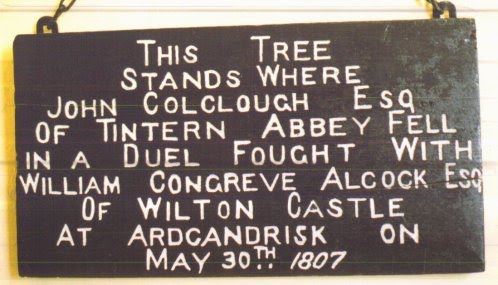
Among the contestants (who, unbeknownst to himself included the playwright Richard Brinsley Sheridan) were two local grandees William Congreve Alcock and John Colclough. Colclough’s brother, who gloried in the traditional Irish monicker of Caesar, had been the local MP but was a prisoner of war in France. The Colclough’s, who were generally popular landlords, had lived at Tintern Abbey, a former monastery, since the mid-16th century.


The election campaign was a bitter one, polling was due to take place on 1 June but with just two days to go Alcock took exception to what he alleged was an attempt by Colclough to steal the support of tenants obligated to vote for him in what was, by today’s standards, a slightly democratic election. In what appears like a piece of egregious over-reaction, he challenged Colclough to a duel and in the encounter that followed Alcock shot his political opponent dead. As the MP for Athlone, George Tierney observed tartly, ‘that’s one way of getting an election’. As duelling was still socially acceptable in early 19th century Ireland Alcock was acquitted of murder and allowed to take his seat in the House of Commons. But he was not to continue in office for long – two years after the duel he was committed to an asylum. The Irish judge and memoirist, Jonah Barrington wrote of Alcock that ‘alas! the acquitted duellist suffered more in mind than his victim had done in body. The horror of the scene, and the solemnity of the trial, combined to make a fatal inroad on his reason! He became melancholy; his understanding declined; a dark gloom enveloped his entire intellect; and an excellent young man and perfect gentleman at length sank into irrecoverable imbecility.’


But there is an interesting postscript to this sad tale. Not all those affected by the duel came out of it badly.


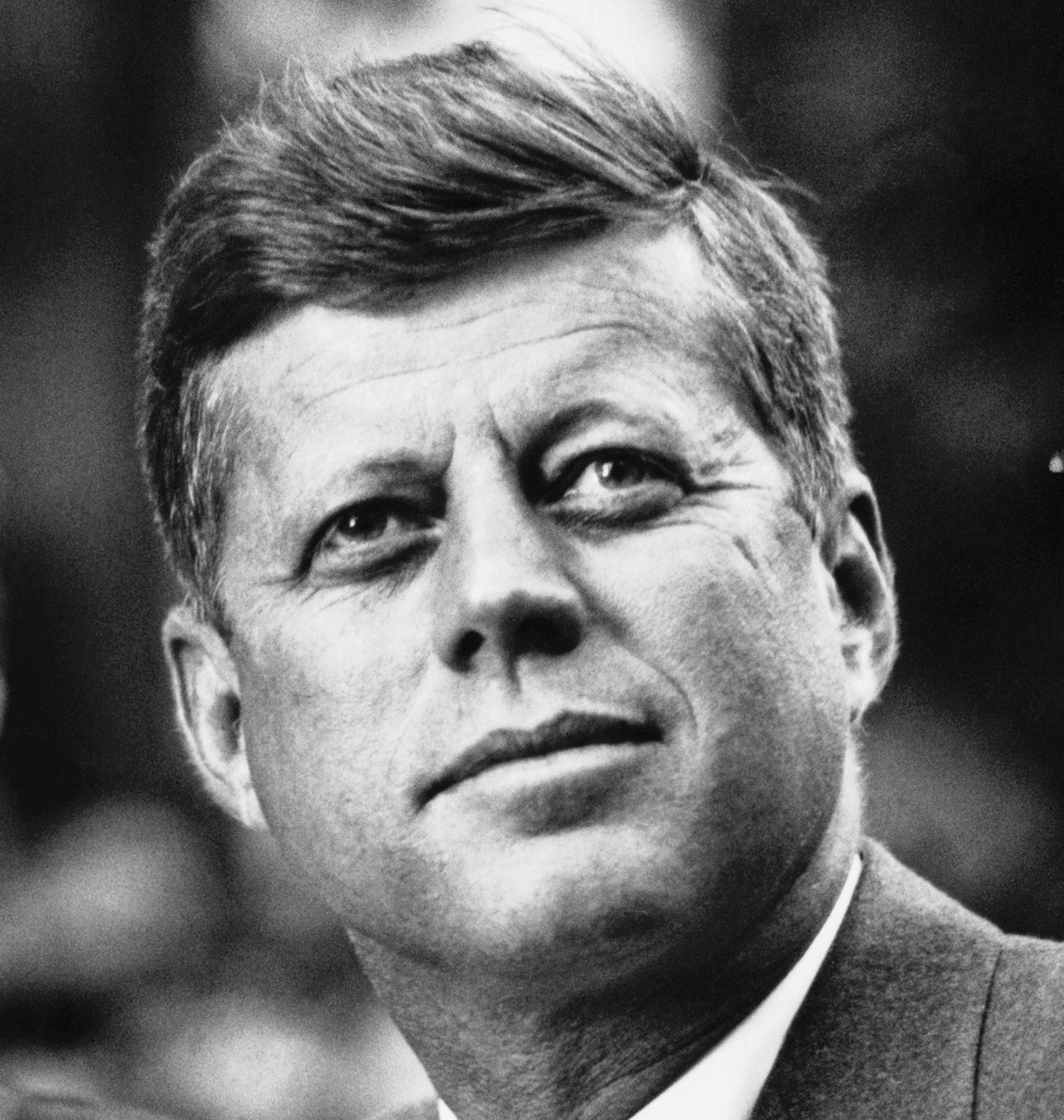
Colclough’s estate at Tintern Abbey was managed by his steward, one James Kennedy. Because of the absence of Caesar Colclough in France Kennedy continued to run the estate until his Caesar’s return in 1815. During that period something of the order of £80,000 disappeared. Nobody could pin it directly on the steward but in 1818 Kennedy was dismissed at the behest of Caesar Colclough’s wife, Jane Stratford Kirwan. The money remains unaccounted for. There are, however, persistent rumours that at least some of it may have been used a generation later to fund the migration to the USA of the Kennedy family in the 1840s, and perhaps even to set up the Boston saloon that became the basis of the family fortune. A descendant of James Kennedy, by the name of John Fitzgerald Kennedy, went on to become President of the United States of American in 1961.


Was the Kennedy fortune based on the tragic outcome of a tragic confrontation between two Irish aristocrats? Perish the thought.


William Congreve Alcock shot his opponent John Colclough dead in a duel 207 years ago, on this day.


Image


On This Day -Drivetime – 23 May 1798 – the rebellion of the United Irishmen begins


Image 


It may come as a surprise to learn that the county of Wexford was once a Republic in its own right, as opposed to being merely part of one.   I blame the French myself, as did the British administration in Ireland. Far too many people thinking they could emulate the French Revolution and get rid of tyrranical rule.


It all happened, of course, in May 1798, when the United Irishmen rose in rebellion in different parts of the country. The most successful and longest lasting of these disparate insurrections was in the Banner county but the rebellion itself kicked off in Dublin when small crowds of men set out from some of the poorer parts of Dublin hoping to seize the symbolic Dublin Castle and other key public buildings.


So thoroughly infiltrated were the Dublin United Irishmen – one of their most inspirational leaders, Lord Edward Fitzgerald had already been captured, that the rising stood little or no chance. The militia sorted out the rebels and many simply abandoned their weapons and quietly slipped back to their homes. More successful were rebellions in the counties around Dublin, in north Kildare, southern Meath and west Wicklow – though opposition was mopped up quickly here.


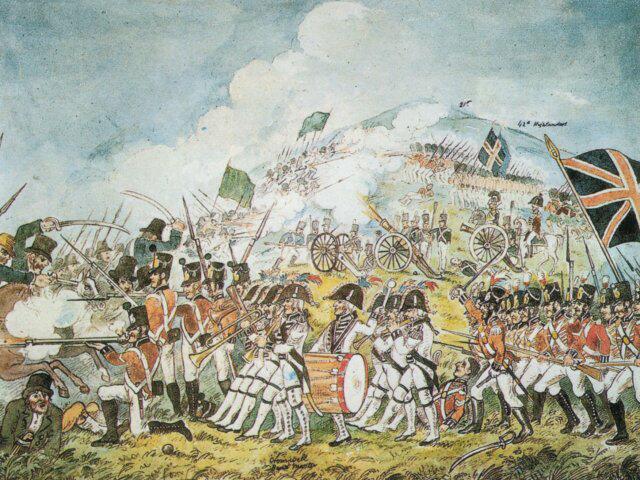
But the most successful insurrection, other than that of the Northern United Irishmen in County Antrim, was in Wexford, an area not deemed worthy of that much attention by the Castle in its intelligence operations. That was a mistake. Despite losing its leader, Bagenal Harvey, before Wexford rose, the rebels retained good enough leaders to cause serious problems to the local militia. Harvey was captured after the authorities moved against him on the basis of information secured through the torture of leading United Irishman Anthony Perry. Perry had been pitchcapped by the North Cork Militia in Gorey. This delightful practice involved pouring hot tar onto the heads of rebels and tearing it off when it had cooled. Perry later got at least some of his own back when he was released, joined the rebels and led a force at the Battle of Tuberneering in 4 June which destroyed much of the British force in North Wexford. A few days before the citizens of Wexford had established their own republican regime.


The rebels had quickly taken Enniscorthy and then Wexford town itself, led by among others, Perry, Fr.John Murphy and John Kelly, the ‘Boy from Killane’ in the folk song of that name – though he was highly unlikely to have ‘seven feet in height with some inches to spare’. For a fortnight the British Army in Wexford was unable to inflict serious defeat on the rebels, until the United Irishmen fell short of taking New Ross on 5 June. It was towards the end of the battle for New Ross that one of two infamous massacres of loyalist civilians took place at Scullabogue when 200 men, women and children were herded into a farm building which was then burned with the loss of all but two lives. The atrocity was probably in retaliation for the many outrages that had been committed, by the largely Protestant, Yeomanry forces in the weeks prior.


As the British General, Gerard Lake, continued to make inroads on the rebels, defeating the bulk of their forces at Vinegar Hill on 21 June, a second massacre of loyalists took place on Wexford Bridge. Accordingly it was there that Bagenal Harvey and John Kelly were hanged after the reverse at Vinegar Hill and inevitable repercussions of that defeat. The British response to rebellion was ferocious, all the more so as small bands of rebels continued to hold out in the county for some months. Many of those captured in 1798 and later were brutally executed.


The United Irishmen’s rebellion, which found its most successful expression in County Wexford, began in Dublin 216 years ago, on this day.s

 Image