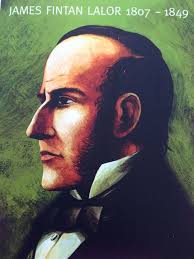
Article on James Fintan Lalor, banksters, gombeen men and other pillars of society – for Journal.ie and JFL summer school

Image     Image


THE LEGACY OF JAMES FINTAN LALOR

His is not a name well known to the casual student of Irish history. His contemporaries, William Smith O’Brien, Thomas Davis, Thomas Francis Meagher, John Blake Dillon, John Mitchel, and Charles Gavan Duffy have acquired almost legendary status in the Irish nationalist canon. Such fame has eluded a man seen by many as their philosophical and intellectual superior, James Fintan Lalor.

In one sense at least Lalor’s father, Patrick, otherwise a rather mainstream O’Connellite, is almost as interesting as his eldest son. Patrick Lalor, was the first Roman Catholic MP (1832-35) for Laois (Queen’s County). In 1831 he announced that he would refuse to pay tithes (a tax on produce owed to the Church of Ireland) and that he intended to take a leaf from the book of the Quakers and base his opposition to tithes along civil disobedience lines.

In so doing he was one of the earliest progenitors of what would become, in the 1880s the sport of ‘boycotting’. Before Patrick Lalor’s sheep were seized to pay his ‘church cess’ he painted the word ‘tithe’ on each of them in a vivid red. He asked his neighbours not to bid on the animals when they came up for auction. His campaign was successful. Lalor’s sheep remained unsold and were shipped to Britain. There the red paint also had a salutary effect and the boycott continued. Lalor had made his point. According to one account, however, the big losers were the sheep, who ‘died at the side of the road’.

So Patrick Lalor was a good many years ahead of his time.

As with the father so with the son.

James Fintan Lalor, born in 1807, did not have a particularly easy life. A childhood accident left him deformed and his health was always delicate. He also had a hugely problematic relationship with his father. His rejection of O’Connell’s Repeal movement (and his offer to the Tory Prime Minister, Sir Robert Peel, to do anything in his power to crush it) may have resulted in or from that sense of alienation from his surviving parent – his mother having died when he was younger. We are not entirely sure whether the father-son animosity in any way informed Lalor’s attitude to the Repeal Association or whether his emphatic rejection of repeal as a flawed policy was what actually caused the rift with his father.

It was the Great Famine that spurred Fintan Lalor into action. In a harbinger of the Land War of the early 1880s he sought to found a Tenant Right organisation and encouraged tenants to withhold rents. He was, therefore, already an advocate of ‘strategic default’ in the 1840s. In a series of ground-breaking letters to the Nation newspaper he announced his presence while pouring cold water over the much vaunted campaign for repeal of the act of Union (‘a petty parish question’).

For Lalor political activism in Ireland began and ended with the struggle for the land of Ireland and, ultimately, all politics proceeded from the barrel of a gun. He had no confidence that the concessions required to improve the conditions of a starving peasantry could be wrested from the establishment peacefully. 

Lalor was an agrarian radical who claimed that the land of Ireland belonged to the people of Ireland ‘from the sod to the sky’. It is never quite clear from his writings whether that was intended to mean ALL the people of Ireland or just those currently paying rent to often rapacious landlords. In a letter to the Nation on 19 April 1847 Lalor proposed an association between landlord and tenant. In a very real sense his memorandum could have been written in 2008 as the country approached the end of its rope.

He began by insisting that ‘Society stands dissolved … and another requires to be constituted.’ He went on to demand a new ‘social constitiution’ – ‘political rights are but paper and parchment. It is the social constitution that determines the condition and character of a people … we are now living in the midst of a social anarchy in which no man knows with certainty what he is or what he can call his own. Never was government or guidance more necessary to a people; but government or guidance there is none, for the one great purpose needed … a new structure of society has to be created.’ The more naïve amongst us cherished fanciful notions in early 2011 that just such fundamental societal change was on the horizon.

Lalor, however, rather spoils the effect of his rhetoric by adding a postscript.  Such is the state of the nation that ‘a clear original right returns and reverts to the people – the right of establishing, and entering into a new social arrangement. The right is in them because the power is in them. The right lodges where the power lodges.’

‘The right lodges where the power lodges’ – a dangerous assertion, given that power, rather than democratic rights, did not necessarily rest with the majority but with those strong and resourceful enough to wield it, whatever their numerical strength. The extreme social disruption caused by the Famine may have led to the expectation that civil society would be reformed and social conditions ameliorated. While that did happen to a limited extent it was a phenomenon based on demographic arithmetic rather than revolutionary change. There were far fewer people, so the cake was divided up just a little more evenly.

As far as our own post-Apocalyptic society is concerned it is merely a case of ‘plus ca change, plus c’est la meme chose’. Were Fintan Lalor writing today he would be as disappointed with the lack of political change wrought by the crisis of modern capitalism as he would have been by the state of Ireland in the 1850s. However, he was spared the resurgence of the landlord, the middleman and the gombeen man. His health failed and he died in 1849.

The landlord, the middleman and the gombeen man, however, survived and thrived. They remain with us today.    


 I’ll be interviewing said James Fintan Lalor (aka actor Paul Meade) in Mike Finn’s ‘From the sod to the sky’ at the Dunamaise theatre in Port Laoise on Friday 20 September as part of the JFL School. I’ll also be chairing a session on Saturday afternoon on ‘A Vision for Ireland’ – more info on http://www.jamesfintanlalor.ie 
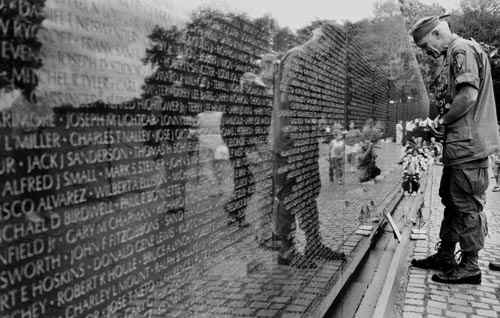
An exceedingly brief history of American international interventions (or not) – Irish Daily Mail, 7 September, 2013.


Image


The world is right to be outraged by the use of chemical weapons in Syria. The US administration is absolutely correct to assert that the Assad regime has crossed a ‘red line’. It’s just that their timing is a little off. These things can so easily happen with moral outrage. The Syrian government crossed a bloody ‘red line’ two years ago, when it began to kill its own citizens. The ‘west’ had its opportunity then to intervene and prevent a slow-motion carnage on a scale not seen since the even more dramatic genocide in Rwanda in 1994, when, quelle surprise, the ‘west’ chose not to get involved until hundreds of thousands had been slaughtered.


In four years of the Great War 100,000 people, mostly men, were killed by chemical weapons. This was out of a total of 17 million.  In Syria hundreds have died from chemical warfare as against the thousands who have perished as a result of the use of conventional ordnance. So why do chemical weapons get such a bad press? Is it merely because death comes more slowly and painfully to the unfortunate victims of sarin or good old-fashioned mustard gas?


No one has yet satisfactorily explained why the use of nerve gas is more heinous than the multiple rape and murder of Muslim women in Bosnia, the fire bombing of Dresden or the use of nuclear weapons on a beaten Japan in WW2 – the latter primarily as a warning to the Soviet Union as to its future behaviour. Just this week the NATO secretary general Anders Fogh Rasmussen became the latest in a long line of statesmen who have failed to validate the distinction. He volunteered the observation that, ‘there is a reason that chemical weapons are banned across the civilised world. They are horrific and barbaric arms that have no place in the twenty-first century.’ Obviously the depleted uranium shells used by some of his organisation’s members (eg,the US in Iraq in 1991, Serbia in 1999, Iraq in 2003 and Britain in Iraq in 2003) are perfectly acceptable. The unanswerable logic and intellectual subtlety of Rasmussen’s argument might well elude a family in Homs sheltering from murderous artillery fire. He is saying, in effect, that chemical weapons are more odious than conventional weapons because chemical weapons are more odious than conventional weapons.


But let us, for the moment, assume that the use of sarin, mustard gas, chlorine, phosgene, VX, (are we allowed to mention napalm, the carcinogenic chemical defoliant of choice in Vietnam? – best not) is indeed more reprehensible than lobbing hundreds of tons of artillery shells into populated areas. Is the Obama administration intent on punishing the Assad regime because he has crossed a moral Rubicon? It would appear not. Talking to CNN last week the American President was refreshingly forthright in his justification of military intervention. He was quoted by CNN as saying that, ‘when you start seeing chemical weapons used on a large scale… that starts getting to some core national interests that the United States has, both in terms of us making sure that weapons of mass destruction are not proliferating, as well as needing to protect our allies, our bases in the region.’ So, is that why the use of chemical weapons is a ‘red line’ issue?  Not because it contravenes the Hague treaty of 1899 or the Geneva Protocol of 1925, but because it violates US national interests?  If that is indeed the primary motivation of the Obama administration it would, at least, be consistent with US foreign policy since it became a global power in the early 20th century. The United States of America (and it is hardly unique in this respect) has generally intervened in foreign conflicts only when its own interests, vital or otherwise, have been threatened. 


It may appear somewhat unseemly for the citizen of a country which has relentlessly, if peacefully, pursued its own self-interest at EEC, EC, and EU level since 1 January 1973, to appear to lecture the USA for ceaselessly advancing its own foreign policy interests since the Spanish American War of the late 19th century (the genocide of the Native American being a purely domestic issue). But what follows should not be seen as a lecture. It is more of a gentle reminder of decades of realpolitik and the exercise of overwhelming power, lest we mistake military intervention in Syria for anything other than, to paraphrase Carl von Clausewitz, ‘the continuation of self-interest by other means’.


Lets look at the recent history of crushing retaliation against chemical weapons use. When Saddam Hussein used mustard gas and nerve agents against Iranian troops in the Iran-Iraq war this, of course, sparked international outrage and a devastating military response? Similarly, the moral indignation of the civilized world was provoked into action when Saddam gassed his Kurdish opponents in Halabja in 1988?  Russia was made to feel the wrath of the free world in 1989 when it used WW1 chemical weapons against Georgian protestors in Tblisi? On the previous occasions when the Assad forces unleashed chemical weapons, in a reduced dosage, Syria was punished by air strikes and targeted drone attacks?  In a parallel universe perhaps, but not in the real world.


In fact in the former case the influential periodical Foreign Policy reported this week that CIA documents have revealed that the US acted as ‘spotter’ for Iraq in 1988, identifying Iranian troop locations, although fully aware that the Iraqi regime intended to use chemical weapons against their (mutual) enemy. But of course that was two years before the Iraqi dictator imprudently provoked western intervention when he invaded the oil-rich Kuwait and became, at last, persona non grata.


There is a phenomenon in behavioural economics known as the ‘say-do gap’. This is where people say one thing and then do something else. The ‘say-do gap’ does not just belong in the realm of economics, however. It has important applications in foreign policy as well. When it is accompanied by the crippling condition  ‘tut tut syndrome’ it is a recipe for strategic inaction. The ‘say-do gap’ and ‘tut tut syndrome’ are only trumped in diplomatic and political circles when a combatant is unwise enough to threaten the economic or political priorities of the USA, Britain, France, or Russia, then the altruism of self-interest kicks in and it’s time for a moral crusade. (Except, of course, in the case of Russia which tends, brutally but refreshingly, to eschew moral indignation)


America’s first major international intervention – unrelated, that is, to the simple acquisition of territory – was its declaration of war on Germany in 1917. Partly for Anglo-centric cultural reasons, but mainly to secure a seat at the post-war negotiating table, President Woodrow Wilson defied the sentiments of a nation, and of a huge ‘hyphenated American’ (German, Irish, Scandinavian) cohort within his Democratic party, and went to war. That adventure cost 120,000 American lives but earned Wilson a seat at the Versailles peace conference. There he was eaten alive by Lloyd George and Clemenceau.


John Kerry has warned the American people this week that this is no time for ‘armchair isolationism’. President Wilson would have been glad of a few more couch potato ‘little Americans’ back in 1919 when he returned from the Treaty of Versailles with the League of Nations in his briefcase. Instead, however, of any convenient slothful lassitude, America rewarded the man who had kept it out of the war – before bringing it into the war after his re-election – by rejecting his lovingly constructed new world order.  The USA decided that its national interest no longer included ‘entangling alliances’ or opposition to the subsequent European and African adventures of Herr Hitler and Signor Mussolini.  The abysmal record of the League of Nations in the 1935 Abyssinian crisis suggests they got it just about right.


America might have similarly retreated into splendid isolation after another Anglo-centric president, Franklin D.Roosevelt, took his people into a second global war in 1941. The ultimate provocation offered by Japan at Pearl Harbour could hardly have been ignored. But it was Germany who, unwisely, made the first move against America, declaring war on December 11, 1941. So much then for the notion that Roosevelt set aside American interests to give ‘plucky little England’ and the Jews of Europe a dig out.


But a cynic might suggest that once on a war footing which offered  the prospect of wiping out a potentially dominant German economy  the Americans may well have warmed to the theme.


That the USA did not return to its shell in 1945 had nothing to do with any philanthropic urge to keep the world safe for democracy (many of the regimes it allowed to flourish had only a passing acquaintance with the concept). For the next forty years American foreign policy, though feigning altruism, was actually based on a version of George Kennan’s 1947 notion of ‘containment’ of communism. Out of this policy came the Korean war, the interminable conflict in Vietnam and a variety of other proxy clashes  – some collegial, others solitary adventures – where the USA and the other western powers merely had to convince themselves that their actions sprang from the loftiest of motives and their policies were for the greater good. 


In the aftermath of the fall of the Berlin wall in 1989 and the self-destruction of communism, the genocide in Rwanda, Russian intervention in Chechnya, and Serbian ethnic cleansing in Bosnia were, by and large, allowed to play themselves out against a backdrop of western indifference and/or lethargic ineffectualism. The common thread between these vicious little civil wars was either that intervention would come at huge cost, or that no discernible western self-interest justified the effort involved.  


Occasional outbursts of humanitarian scruples, such as the 1993 mission to Somalia and the NATO (American) intervention in Kossovo, were either dilatory, under-resourced, or simply dysfunctional. Such rare manifestations of humanity tend, however, be weighed down by the intrusions of the USA into the Dominican Republic in 1965 – in the aptly named Operation Power Pack – Grenada in 1983 (‘a flagrant violation of international law’ according to the UK, Canada and the UN General Assembly), and Panama in 1989 (despite the military codename Operation Just Cause). And let us not forget the entirely philanthropic British and French enterprise in Suez in 1956, where even the USA baulked.


In season three of NBC TVs The West Wing, which captured the fictional incumbency of President Josiah Bartlett –  a presidency that never was but always will be – even the often-saintly Jed overcomes his scruples and orders the assassination of the defence minister of the equally fictional, but thoroughly believable, middle eastern state of Qumar. Bartlett, only the second Roman Catholic president of the USA, just as in the case of the first, John F.Kennedy, was always prepared to put American interests and security over any moral impulse or due process. Aaron Sorkin, the writer/producer of the award- winning series, got it just about right.

 When western nations go to war it is always self-interest that is the motivating force. World powers don’t do moral crusades.


WILLIAM MARTIN MURPHY – Idle jottings on a pietistic zealot


 Image

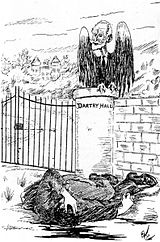
They were sometimes, for geographical reasons, known as the ‘Bantry band’. But their often-belligerent Roman Catholic pietism also earned them the nickname ‘The Pope’s Brass Band’ (previously applied to a group of Irish parliamentarians in the 1850s). Their leader may have been Timothy Healy, MP, but William Martin Murphy, entrepreneur, builder, railwayman, MP, publisher and zealot, was one of the most influential forces within this group of Irish nationalist politicians who came from the area around Bantry in Co.Cork.


Although Murphy inherited some wealth and a viable building business from his father he quickly struck out on his own and turned a small fortune into a large one.  He turns up in some unexpected places early in his career. While he is known for having made large sums of money building railway lines in Africa he was also on hand in Milltown Malbay in January 1885 when Charles Stewart Parnell turned the first sod on the project that became the Ennis and West Clare Railway. Later the railway was made infamous by Percy French in his song Are you right there Michael are you right. Three years after breaking the resolve of the workers of the city of Dublin he became president of the recently established (1913) Rathmines and Rathgar Musical Society. He was succeeded in this office by, in turn, his son and daughter.


While it was his ownership of the Dublin United Tramways Company and his leadership of the employers that renders Murphy infamous or celebrated to this day (depending on your position on the political spectrum), of equal significance was his involvement in the newspaper business. This began long before his ownership of the Irish Independent newspaper. In 1891, after the seizure by the Parnellite faction of the Irish party newspaper, United Ireland, and the ejection from the premises of its acting editor Matthias McDonnell Bodkin (its editor, William  O’Brien, was in the USA at the time) Murphy’s money funded the short-lived National Press, although his name does not appear on the list of those who subscribed to the shareholding that established it.


The National Press was little more than a vehicle for the anti-Parnellite rhetoric and vitriol of Tim Healy.  It was responsible for a series of editorials, the first of which was entitled ‘Stop Thief’. In these Parnell was accused of the embezzlement of National League funds. The party leader, it was claimed, had, for a number of years ‘been stealing the money entrusted to his charge’ [their italics] Parnell’s unwillingness to sue the newspaper for libel was exploited in further editorials as the week went on. Emboldened by the non-appearance of a writ, on 2 June the Press reminded its readers ‘ “Thief” is an unmistakable word. We called Mr.Parnell a thief. We now repeat the epithet.’. By the time of his death in October Parnell had not sued.


Later Murphy’s and Healy’s wings were clipped by John Dillon and William O’Brien when the apostasy of the Freeman’s Journal – which had initially supported Parnell – allowed them to merge the two anti-Parnellite dailies.  While incarcerated in Galway jail Dillon had written to O’Brien. ‘Loathing is the only word that can express my feeling every time I open the National Press. If that spirit is to triumph, national politics will be turned into a privy.’


Many years later, however, Murphy had the penultimate laugh when he purchased what had been the Parnellite daily during the period of the Split, the Irish Daily Independent.  The last laugh would have come when the Freeman was merged with his new acquisition in 1924. But as he had died five years before he was not around to enjoy the demise of the 160 year old newspaper.


One of Murphy’s few reversals was his convincing defeat in the 1892 general election for the Dublin, St.Patrick’s constituency by the Parnellite candidate William Field. Murphy lost by a 4:1 margin. Field, as luck would have it, though he ran one of the largest butcher’s businesses in the city, had a background in the labour movement through his involvement with farm labourers. Though far from being a syndicalist (he often expressed his opposition to socialism) Field can, arguably, be cited as the only representative of labour to have given the capitalist pietistic zealot, William Martin Murphy, a political hiding. 

 (Recently published in Dun Laoghaire 1913 commemoration book)


Image             Image 


2 August, 1823 – On this day – Birth of Thomas Francis Meagher

69historyofficers_clip_image002


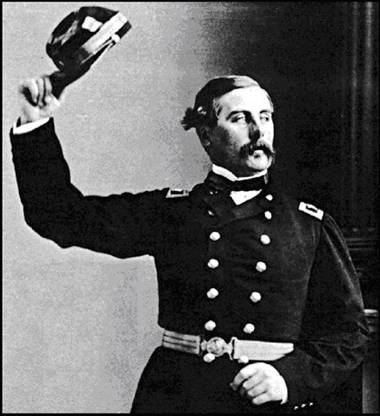
He was one of the most colourful and erratic characters in 19th century Irish history. Thomas Francis Meagher was born to a wealthy Waterford merchant family in 1823. He was educated by the Jesuits at Clongowes wood and later at Stonyhurst in England, where he replaced his Irish accent with a clipped upper class English drawl – something that was to alienate many of his fellow-countrymen in the years that followed.

His involvement with the Young Ireland movement in the 1840s led to his falling out with Daniel O’Connell and a drift towards militancy. This culminated in the farcical 1848 rebellion – but before that dismal revolutionary failure Meagher had conferred on the Irish nation perhaps his most abiding legacy – the green, white and orange tricolor. He had been gifted the flag on a visit to France and its use in the 1916 rising copper-fastened its status as the flag of the Irish republic.

His involvement in the 1848 rebellion led to a sentence that he was to suffer the barbaric punishment of being ‘hanged, drawn and quartered’ – this was later commuted to transportation to Van Diemen’s Land, or Tasmania. Initially Meagher opted for a ‘ticket of leave’ arrangement, whereby he was given considerable freedom on a promise not to attempt to escape from captivity there. In 1852 he abruptly surrendered his ticket of leave and escaped to the USA where, arguably, he made a greater contribution to American history than he did to that of his native country.

His most significant impact came after the outbreak of the Civil War. Taking over command of the Irish brigade from Michael Corcoran he proved to be an excellent recruiter for the Union army. His backing of the Union had not been a given, initially he had been an advocate of states rights and a supporter of the South, sharing many of the views of his friend John Mitchel. Ultimately they parted company over the issue of slavery and Meagher committed himself to the Union cause.

Knowing his target market well one of General Meagher’s recruiting posters read –‘The Cotton Lords and Traitor Allies of England Must Be Put Down Once and for All.’ To his detractors, of whom there were many, Meagher was a self important and pompous alcoholic. But to his troops he was their General, ‘Meagher of the Sword’. His reputation was sealed by an iconic engraving of the celebrated American artists Currier and Ives in which he was depicted on horseback leading the Irish Brigade into the Battle of Fair Oaks in June 1862


When the great Southern commander, Robert E.Lee, marched his forces north into Maryland in the fall of 1862, Meagher’s Irish Brigade was badly mauled at the infamous Battle of Antietam. Meagher had fallen off his horse in the fighting – his detractors claimed that he had been drunk at the time. This was followed by an even more bloody encounter with the Confederacy near the small town of Fredericksburg, Virginia, in December, 1862.

Most of the Brigade’s regimental banners had already been shot to pieces. But Meagher insisted that they go into the fight carrying some symbol of their nationality. A boxwood hedge was raided and bunches of leaves of the evergreen plant were distributed among the troops to be worn in their hats, like shamrock on St. Patrick’s Day.

Contrary to the claim of John F.Kennedy in his June 1963 speech to the Oireachtas Thomas Francis Meagher did not lead his troops into the battle of Fredericksburg – he was wounded at the time and sent the Irish brigade into a battle where many of its members were slaughtered.

Almost half of its members were killed or wounded. The famous 69th New York regiment – the ‘Fighting 69th’ – lost three quarters of its men. In the confusion and carnage of the battle the Brigade lost one of its distinctive green flags. Some time after Fredericksburg an exhausted Confederate soldier. Michael Sullivan, made his way to Union lines and demanded to be taken to Meagher. When he was brought to the Irish general he reached into his tunic and handed him the flag. He had seen the flag bearer fall and had crawled out, under fire, to recover it.

After the Civil War, Meagher was rewarded by the administration –  if reward it was – with the secretaryship of the territory of Montana. On his arrival the then governor upped and left and Meagher found himself in charge of a large and relatively lawless region of the American west in which the assertive Lakota nation disputed the writ of the Federal government in suitably muscular fashion. Meagher found himself in the middle of some vicious factional disputes among the small white population and it may have been political opponents who were responsible for his mysterious death on 1 July 1867. He died at Fort Benton on the Missouri river when he disappeared from a steamboat. His body was never found. It was presumed to have been whisked away rapidly by the fierce river currents. Various theories have been advanced as to the cause of his death, the most popular is that he was drunk and fell overboard. Others suggest he was killed by native Americans, renegade Confederates or Montanan political enemies. We shall never know.

He was survived by his American wife  Elizabeth Townsend and an Irish son by his Tasmanian wife Katherine Bennett, a son he never met. Statues honour him in the Mall in Waterford and outside the Capitol building in Helena, Montana.

Thomas Francis Meagher was born 190 years ago, on this day.

On this day – 14 July 1792 – The Belfast Harp Festival and the 96 year old Denis Hampson

Image


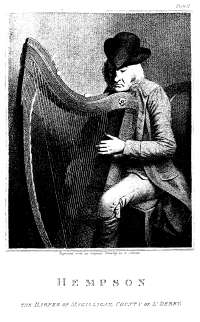
Denis Hampson would have been a rarity in 19th century Ireland if only for his longevity. He died in 1807 but he had been born in the 17th century, probably in 1695. He is, therefore, one of the few men to have lived through the 18th century in its entirety.

But Hampson has another claim to fame, he was one of the great practitioners of an ancient Irish art which was dying out as he drew his last breath in the year Napoleon first made war on Russia and the Slave trade was abolished throughout the British Empire. Hampson was a harpist, a man who made his living collecting, composing and playing tunes for wealthy patrons.

What made his life even more extraordinary is that, like a number of the men who followed his trade, he had been blinded by smallpox at the age of three. Hampson was from the Magilligan area in Co.Derry and was first taught to play the harp by a woman named Bridget O’Cathain. He acquired a harp of his own at the age of 18 and spent most of his 20s travelling and playing in Ireland and Scotland. Many years later, on a return trip to Scotland, in 1745, he performed before  Bonnie Prince Charlie, the pretender Charles Stuart. The harp, which became known as the Downhill harp after his last patron, Frederick Hervey, 4th Earl of Bristol and Bishop of Derry, who built the Downhill estate, is on display at the Guinness hop-store in Dublin having been bought by the company in the 1960s.

Hampson was also notorious for a swelling or a ‘wen’ on the back of his head. In 1805, when he was more than a hundred years old, Hampson was visited by the Rev. George Vaughan Sampson of Magilligan who wrote that ‘the wen on the back of his head is greatly increased; it is now hanging over his neck and shoulders, nearly as large as his head.’ Towards the end of his life Hampson was actually nicknamed “the man with two heads.”

He married at the age of 86, a lady described only as ‘a woman from Inishowen’, by whom he had a daughter and several grandchildren. Hampson once said of the marriage  ‘I can’t tell if it was not the devil buckled us together, she being lame and I blind.’

In 1792 at the age of 96, Hampson was prevailed upon to attend the Belfast Harper’s Assembly, organized by, among others, United Irishman Henry Joy McCracken. It was the first such assembly for six years. A young Edward Bunting, who would go on to collect and record hundreds of traditional tunes, was engaged to notate the music played by the ten Irish and one Welsh harpers, who gathered for the festival. Hampson was described as playing with long, crooked fingernails

Hampson was not a fan of the most celebrated Irish harpist and composer of harp music, Turlough Carolan from Meath. While much of Carolan’s repertoire featured at the Belfast Festival Hampson himself resolutely refused to perform the work of his great and more famous contemporary.

Denis Hampson graced the Belfast Harper’s Assembly with his presence, at the tender age of 96. The festival concluded 221 years ago, on this day.