The Red Branch (A Novel) (Etruscan Press, 2025)
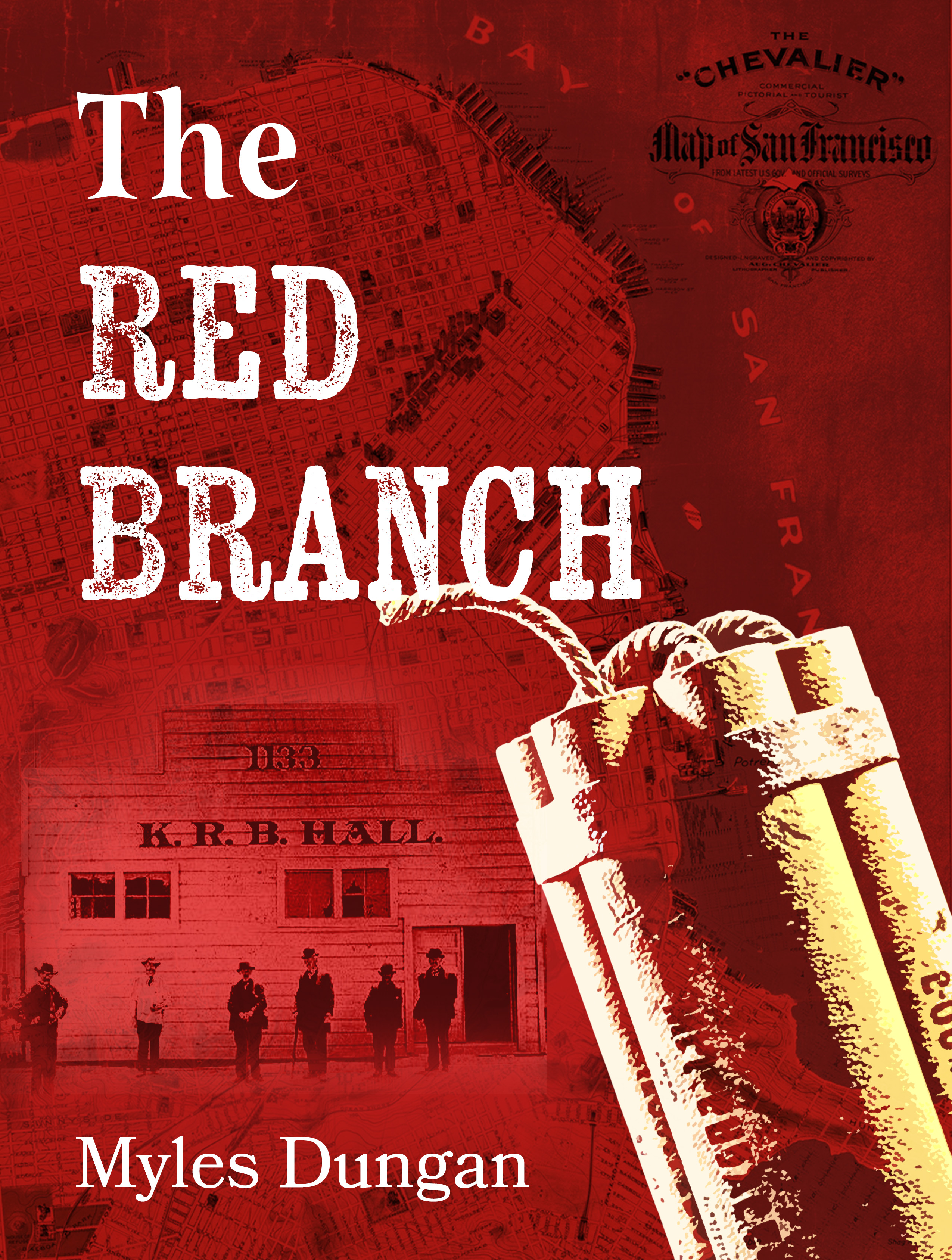
It’s 1883 and the Fenians are at it again, bombing high profile targets in London (Scotland Yard, the House of Commons etc). Some of the dynamite is coming from 6000 miles away in San Francisco. Because he’s Irish, expendable, and an annoying pain in the ass, a young London Metropolitan policeman, Robert Emmet Orpen, is despatched on a secret mission to the city by the Bay. His job is to infiltrate the Fenian front organisation in San Francisco, the Knights of the Red Branch.
His cover is blown before he sees his first cable car.
He finds himself on the San Francisco police force, competing for the attention of the flamboyant southerner, Sergeant Wellington Campbell, and the feisty Californian medic, Ophelia Williams. He ends up investigating a bloody revenge killing while going ten rounds with the seamier side of California’s murderous politics, and San Francisco’s Irish-American turf wars.
The Red Branch is part-detective, part-espionage, part-thriller, where the Rogues Gallery of malevolent characters and the sequence of deadly events are often observed with a wry sense of humour, and where you will be trying (and hopefully failing) to get your bearings until the final page.
Land is all that matters: the struggle that shaped Irish history (Head of Zeus, 2024)
Land is all that matters covers a lot of ground – no pun intended. What I was hoping to do in the book was to go back to the last great colonial land seizure – carried out on the orders of Oliver Cromwell in the 1650s and on the back of the Down survey conducted by Sir William Petty – and then move on a century or so to the era where land agitation, legal and illegal, begins to dominate Irish political life.
That all starts with the Whiteboys in the 1760s, who came into being to prevent or reverse the enclosure by landlords of common land, much as they were already doing in England at the same time.
But I also wanted to get past the somewhat simplistic idea that all Irish agrarian insurgencies pitched landlord against tenant. Granted, most of them did, but that ignores the conflicts between tenants and the Church of Ireland to whom many of them paid tithes that, in some places, were as high as their rent.
Or the antagonism of secret societies like the Rightboys, assailed from the pulpit by the great Roman Catholic archbishop of the 18th century, John Troy, and who objected to the level of dues tenant farmers were being forced to pay their priests for masses, weddings and funerals.
Worse again were the class antagonisms of the Irish peasants themselves which didn’t even involve landlords. Labourers and small farmers would often band together to take on wealthier tenants or middlemen (who rented land from owners and made a profit from their undertenants). Or, later in the 19th century, the same allies would take on graziers, prosperous farmers who bought up large tracts of land to graze livestock.
Yes, there were ruthless and uncaring landlords, like George Bingham, the 3rd Earl of Lucan who cleared his estates at the time of the famine, or Hubert Canning, 2nd Marquess of Clanricarde, who did the same 40 years later. And it was their very ruthlessness which ultimately contributed to the passing of the landlord class and the creation in 20th century Ireland of a nation of peasant proprietors. It’s a complex story, which makes it all the more interesting, and is about so much more than the long str
The Forgettables: Remarkable Irish People (and Animals) You’ve Never Heard of (Gill) (2023)
The forgettables are a modest bunch, like most of us Irish. But they really shouldn’t be. For a start they’re not that forgettable, even though you’ve probably never heard of them.
But once you’re introduced to Alice Kyteler, Ireland’s #1 witch, she’s not likely to slip your mind. Neither are our most famous bodysnatchers, Burke and Hare.
William Blood and Frank Shackleton both tried to steal Crown Jewels, you can find out which of them managed to scoop the lot. Delia Murphy helped save the lives of hundreds of Jews and prisoners of war in the 1940s. And just for fun we’ve completely made up one of the stories. See if you can spot it.
We’ve even left room for some fascinating animals, like Paddy the military pigeon, Cairbre the movie star lion and Poppet, the rebel dog who chewed up one of the 1916 flags.
Get your copy of The Forgettables for more great stories you just won’t believe, and in the case of one of them, you’d be dead right.

The Great Irish History Book (Gill) (2022)
A few million years of Irish history (mostly the last 1000 or so) written for 8-12 year olds and wonderfully illustrated by Alan Dunne.
Four Killings: Murder, Land Hunger and Family in the Irish Revolution
(Head of Zeus, London, 2021)
Starting in the newly created US state of Arizona in 1915 before moving to the Irish War of Independence, Four Killings looks at the story of two very ordinary families in the extraordinary times of the Anglo-Irish War. It explores the divisive issue of land hunger in rural Ireland, a phenomenon that did not suddenly disappear during the Anglo-Irish War. It also touches on the corrosive effect of violence on feuding families, and the responsibilities and pressures placed on the shoulders of young men and women in the turbulent creation of the new Irish state that emerged in the 1920s.
The White House (2019) Kindle edition
U.S. President Tyrone Bentley Trout has a problem, and it’s not just with the Special Prosecutor. His exclusive Irish golf course, designed by Jack Nicklaus, is falling victim to climate change. One of his greens (‘The White House’) is being flooded by sea water. He wants the Irish to build a wall, and he wants Ireland to pay for it. This is a tale of rare snails, a kidnapped horse, Russian interference, a tenacious Special Prosecutor, three ex-wives, Osama Bin Laden, a frustrated assassin, low earth orbit reconnaissance, a Fatberg, two scheming political advisers, a Welsh eco-warrior, Ireland’s first female Taoiseach and a climactic golf match which might, at any point, become an ‘homage’ to Goldfinger. Any resemblance to current or former occupants of the West Wing is highly probable.

The Stealing of the Irish Crown Jewels: an unsolved crime – Kindle
An audacious crime with an astonishing outcome. Scandal, murder, blackmail and political intrigue in 1907.
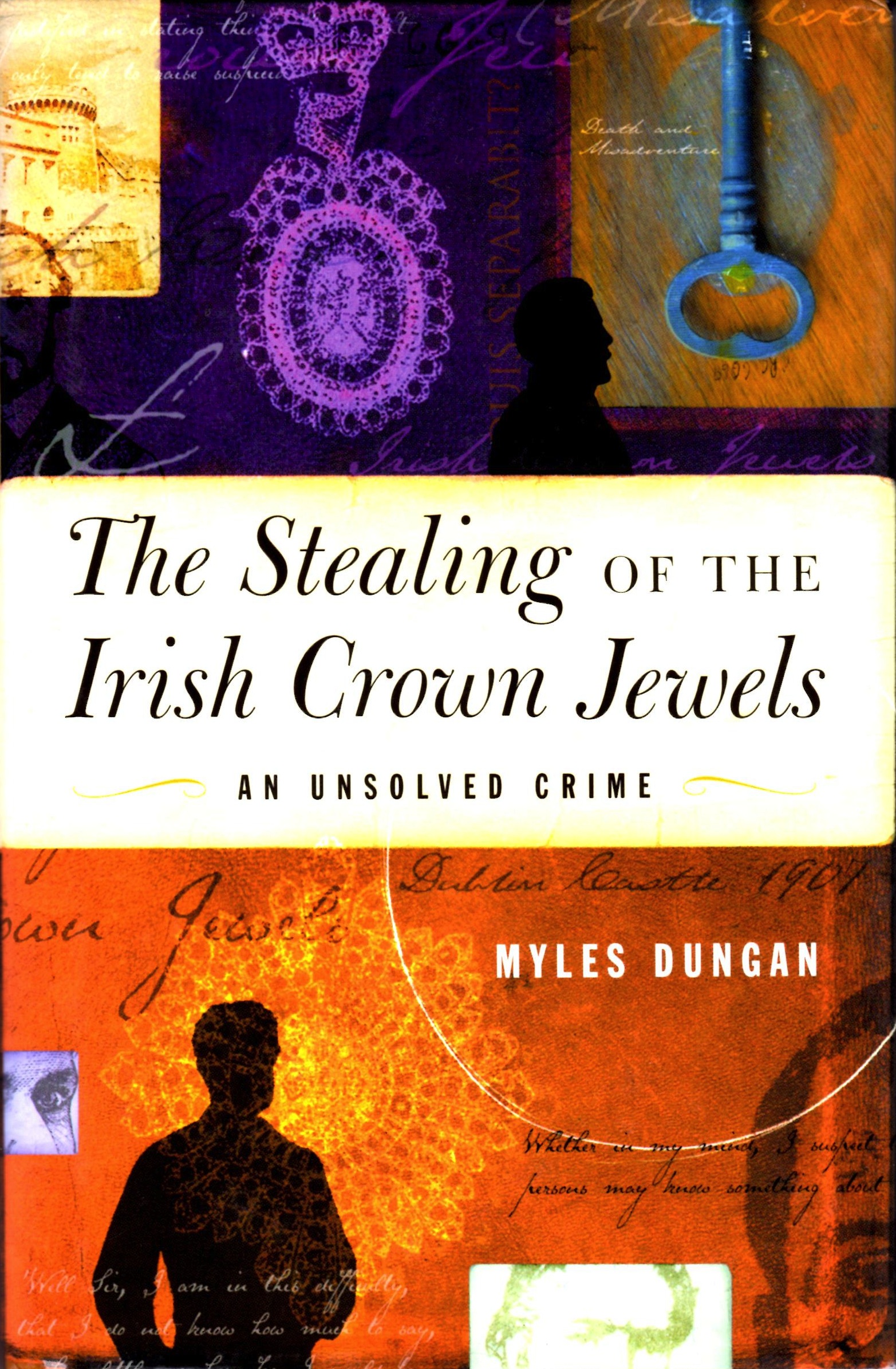
HARDBACK / PAPERBACK
On This Day 2 (2017) – The Drivetime columns 2016 & 2017
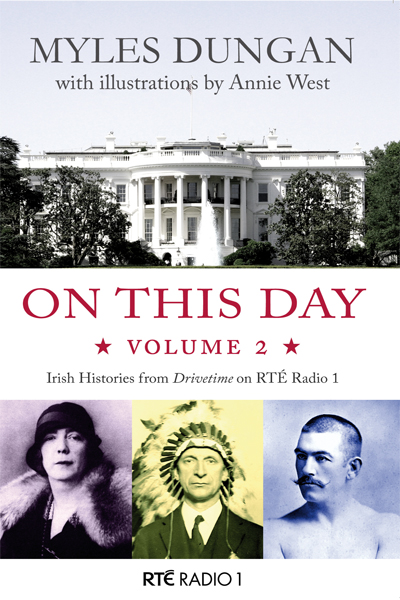
On This Day (2015) – The Drivetime columns 2014 & 2015

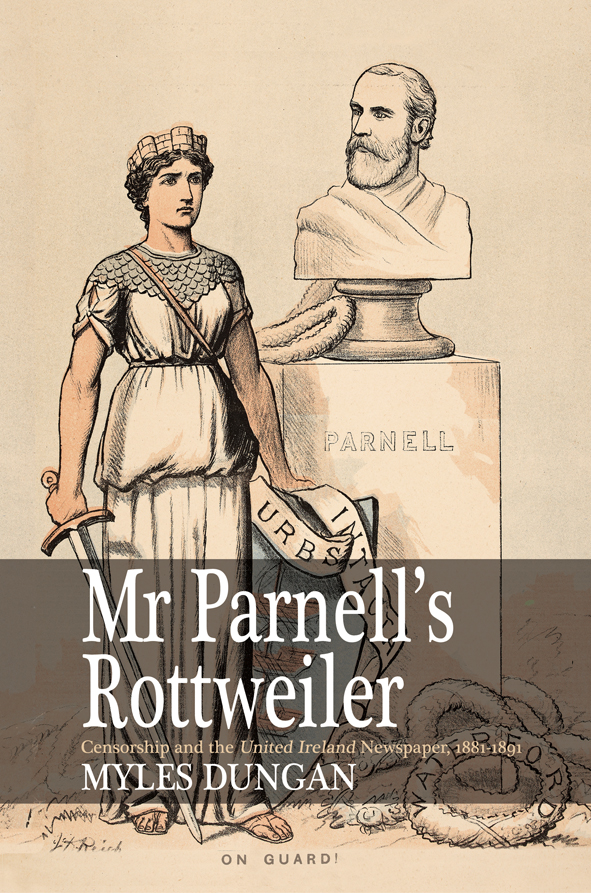
Mr. Parnell’s Rottweiler: Censorship and the United Ireland newspaper, 1881-91
An account of the short-ish career of a newspaper established by the Land League in 1881 under the editorship of William O’Brien, which became the scourge of the British government (Liberal and Tory) and the most vociferous champion of Parnellism when that movement was in its pomp. United Ireland was subject to a variety of forms of censorship.
The book also explores the darker side of United Ireland and the threat the newspaper itself posed to freedom of speech.
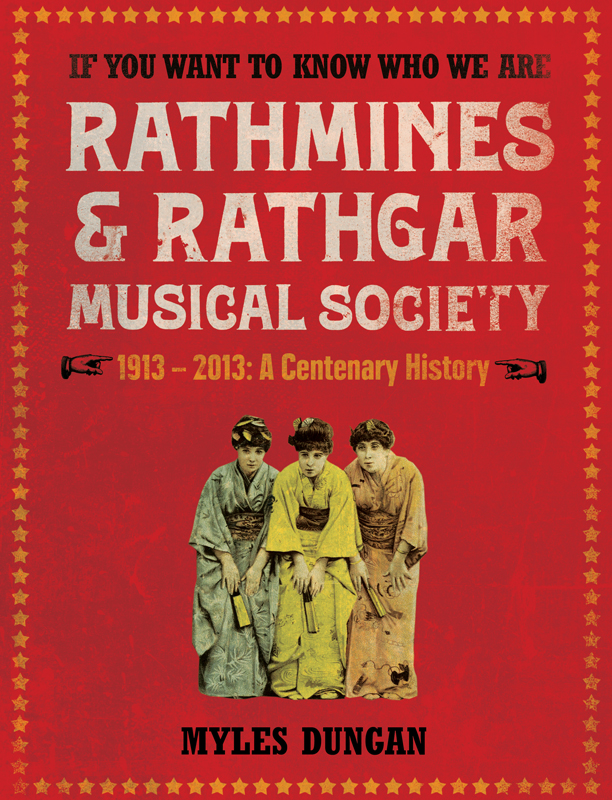
If you want to know who we are (2013) – 100 years of the Rathmines and Rathgar Musical Society.
Tracing the history of the most successful musical society in the country, from its origins just before the 1913 Lockout to its April, 2013 production of Hello Dolly!, starring Rebecca Storm, at the Gaiety Theatre.
IN PRINT:
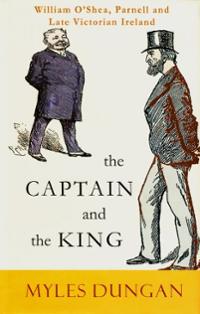
The Captain and the King: William O’Shea, Parnell and Early Victorian Ireland – New Island books – 2009
A biography of one of the most reviled figures in modern Irish history. O’Shea was the husband of Katharine O’Shea and his divorce suit in 1889/90 effectively ended Parnell’s career as leader of the Irish Parliamentary Party. Although he was an egotistical self-serving careerist, a bully, and a philanderer his career offers a fascinating insight into the politics of late Victorian Ireland and the hubris that led to the downfall of Parnell.
New Island books here
Amazon.co.uk here
Conspiracy: Irish political trials – Royal Irish Academy – 2009
An examination of 120 years of ‘political trials’, from the Emmet rebellion of 1803, via the Maamtrasna massacre and the Phoenix Park Murders to the courts martial of Easter, 1916.
Royal Irish Academy here
Amazon.co.uk here

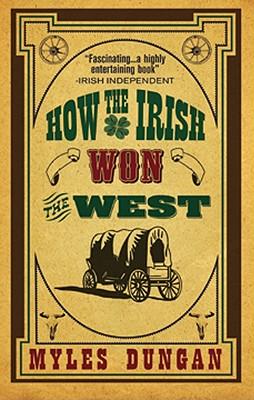
How the Irish won the West – New Island Books (Dublin) – 2007 – Skyhorse (New York) 2011
An account of some of the extraordinary Irish emigrants (Thomas Fitzpatrick, Nellie Cashman, William Brady, James Reed) who leap-frogged the eastern cities of the USA and sought fame and fortune in the newly emerging American West.
New Island books here
Skyhorse here
Amazon.co.uk here
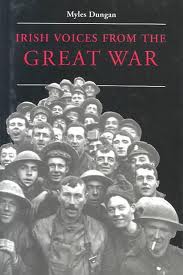
Irish voices from the Great War – Irish Academic Press – 1995 & 2014
First hand accounts of some of the crucial engagements of the Great War (the Somme, Gallipoli, Messines, 3rd Ypres) from the point of view of Irish veterans.
Irish Academic Press here
Amazon.co.uk here
 Myles Dungan
You must be logged in to post a comment.