GLOSSARY: A-K ‘Land is all that matters: the struggle that shaped Irish history’.

Agistment

The process of bringing livestock to pasture. In 1735 the House of Commons effectively removed the ‘tithe of agistment’ thus ensuring that beef and milch cattle were exempt from tithes. This had the effect of shifting the burden from wealthy graziers to tillage and subsistence farmers.

Approver

An accused party offering evidence against his co-conspirators in a crime, in return for full or partial amnesty.

Back to the Land

A co-operative movement that emerged in the early years of the 20th century, raised its own finance, and purchased estates for division among small farmers and landless labourers. 

Bailiff 

An official whose function was to effect the eviction of a tenant and, if required, sequestration of the tenant’s ‘removables’ (furniture etc.). 

Bessborough Commission

Appointed in 1881 to inquire into the working of the 1870 Land Act and chaired by Frederick Ponsonby, 6th Earl of Bessborough. Its books of evidence offer a valuable insight into rural Ireland during the Land War. The Commission essentially offered support for the Land League (qv)  demands for the 3Fs (qv), the only dissenting commissioner being the landlord representative, the idiosyncratic Arthur McMurough Kavanagh, the limbless former MP and Lord Lieutenant of Carlow.  

Frederick Ponsonby, 6th Earl of Bessborough

Blackfeet

A Whiteboy variant that emerged in south Leinster in the 1830s. 

Board of Works

Established in 1831 the Board of Works spent £49m on public works projects up to 1914.

Boycotting

The despatch of an obnoxious tenant, agent, landlord or ‘grabber’ (qv)  to a ‘moral Coventry’. A process of ostracization generally seen to have been initiated in 1881 but actually a longstanding tactic in Irish agrarian campaigns. Individuals were cut off by their neighbours from all social and economic intercourse. Named for the Mayo land agent Captain Charles Boycott who was its most prominent victim during the Land War of 1879-82 (qv). 

Captain Charles Boycott

Canting

The sale by auction to the highest bidder of a farm with a recently evicted tenant or a tenant in the process of being evicted. 

‘Captain Moonlight’

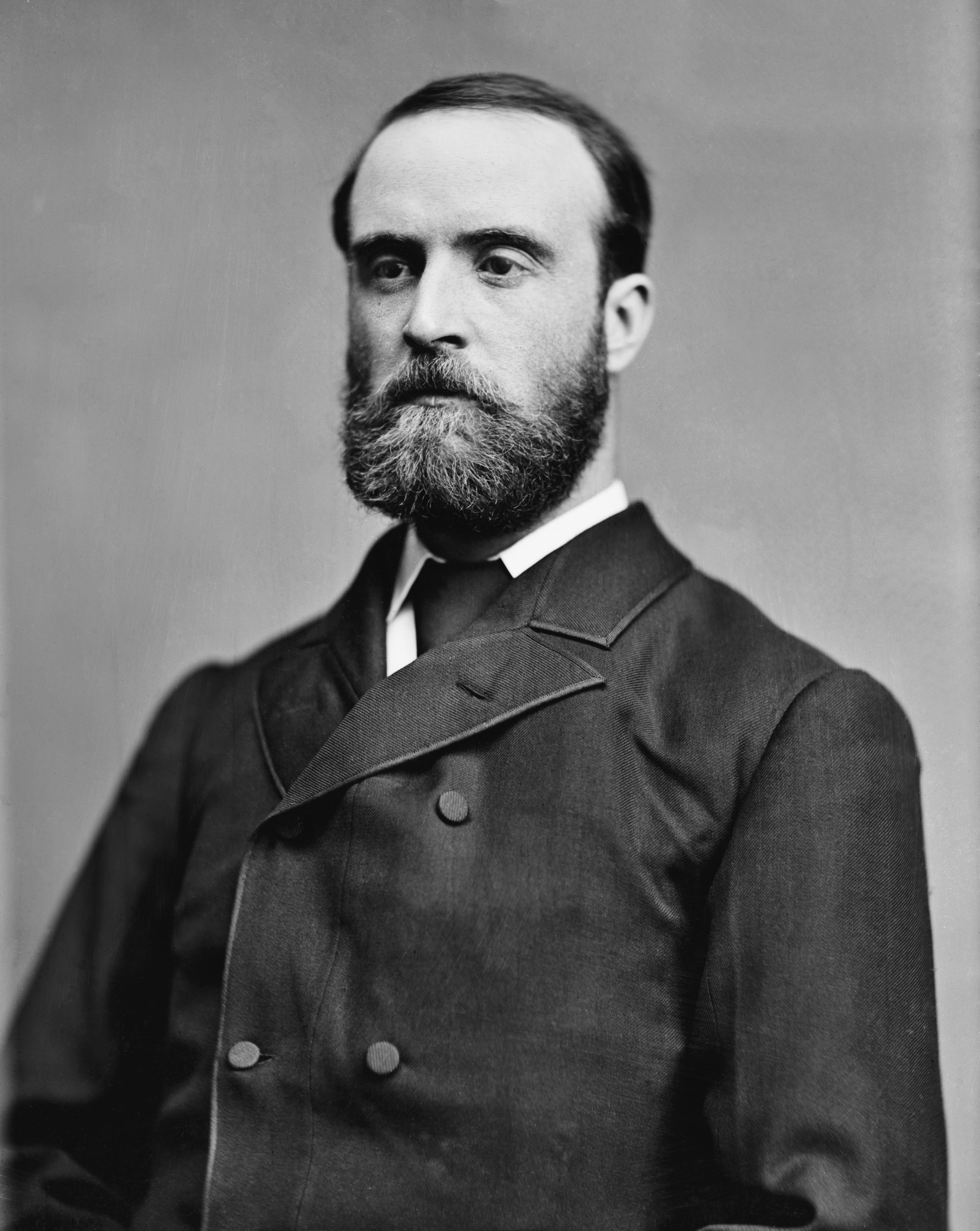
A (mostly) 19th century euphemism for agrarian outrages. On being jailed in October 1881 Charles Stewart Parnell famously said that his place at the helm of agrarian agitation would be taken by ‘Captain Moonlight’. 

‘Captain Rock’

The mythical figure supposedly behind the Rockite disturbances of the 1820s. During that period many threatening letters bore the signature of ‘Captain Rock’ or ‘John Rock’. 

Caravats, the

An agrarian secret society whose antagonism was aimed not at landlords as such, but at large farmers. Their activities from 1806-11 were based in south Leinster (Kilkenny) and east Munster (Limerick, Tipperary, Waterford and Cork) and were opposed by a society of wealthy farmers known as the Shanavests (qv).  

Carders, the

An early 19th century agrarian secret society that took its name from the vicious practice of carding (qv). 

Carding

An atrocious punishment meted out by members of agrarian secret societies in which nails are driven through a board and this is then drawn across the back of a victim. This method was so extreme that it was eventually abandoned as it was deprecated by most of the supporters of even militant agrarian activism. 

Caretaker

A person or persons left to occupy a house after an eviction. The function was sometimes undertaken by bailiffs (qv) or ‘emergency men’ (qv) but often, where an eviction had been carried out largely as a warning to a tenant in arrears, the tenant himself would be left in situ as caretaker.  This practice partly accounted for the disparity between permanent evictions and tenant readmissions.

Carrickshock

A townland in County Kilkenny, near Knocktopher where a fracas in December 1831 during the Tithe War led to the deaths of a process server, a dozen policemen and three anti-tithe protestors.

Cattle driving

The practice, particularly notable during the Ranch War (19060-09) (qv), of stealing cattle and ‘driving’ them a considerable distance. Used as a form of protest and intimidation during the Ranch War. 

Cess

A tax levied by county Grand Juries for the upkeep of roads and bridges. Excess levels of cess in certain counties or baronies often sparked militant action by agrarian secret societies. The word is still a term of abuse in some parts of rural Ireland, as in ‘bad cess to you!’

Clachán

The community at the centre of land held under the rundale system (qv).  

Conacre

The act of renting a small area of land and planting a single crop, generally potatoes. 

Congested Districts Board 

Established by Tory chief secretary, Arthur Balfour, in 1891 to alleviate poverty in ‘congested’ regions of high population density and few resources in the west and northwest of Ireland. The CDB was dissolved by the new Irish Free State in 1923. An integral element of the Tory policy of ‘killing Home Rule with kindness’ in the 1890s.  

Congests’

The name often applied to impoverished tenants in general, but in particular to those from areas under the aegis of the Congested Districts Board (qv).

Cottier

Sometimes represented as ‘cottar’, these were generally agricultural labourers or small farmers who rented small plots (c. 1 acre) and planted potatoes thereon in return for their labour. Almost wiped out by the Great Famine. 

Cowper Commission

A commission of inquiry into Irish land tenure named for its chair, the former Lord Lieutenant, Earl Cowper, and established by the Tory government of Lord Salisbury. It reported in 1887, recognising that the fall in agricultural prices since the passage of the 1881 Land Act  had reduced the ability of tenants to pay even Land Court arbitrated rents.  

7th Earl Cowper

Deasy’s Act

Legislation passed in 1860 which altered the relationship of landlord and tenant, to the benefit of the latter. Passed through parliament without amendment, its central principle was that ‘The relation of landlord and tenant shall be deemed to be founded on the express or implied contract of the parties, and not upon tenure or service.’

Devon Commission, the  

Its full title was the ‘Royal Commission on the state of the law and practice relating to the occupation of land in Ireland’. It was chaired by the Co. Limerick landlord, William Courtney, 10th Earl of Devon. The commission gathered evidence and compiled its report between 1843 and 1845. Its central recommendation, that ‘tenant right’ be formally recognised by the payment of compensation to outgoing tenants for any improvements made to their farm, was not enacted into law.   

Distraint

The seizure of farm produce or implements, for subsequent sale at auction to meet the financial obligations of tenants in arrears to their landlords.

Down Survey

The Cromwellian-era mapping of Ireland under the supervision of Sir William Petty. 

Sir William Petty

Driver

A bailiff employed to drive distrained cattle to the pound. The term could also apply to a Ranch War-era moonlighter (qv) who ‘drives’ a grazier’s cattle from pasture land onto the roads. The former was generally reviled by small tenant farmers, but operated within the law. The latter did not, but was generally revered by small tenant farmers.  

Duty days

An obligation sometimes owed by a tenant to a landlord. The tenant was required to work on a set number of days per annum. A particularly vindictive landlord would demand his duty days at a time when a tenant needed to bring in his own harvest, in order to pay his rent. The fictional Thady Quirk refers to such punishments in Castle Rackrent by Maria Edgeworth.

‘Eleven month’ system

A device frequently used to get around the tenant-oriented land legislation of the 1880s and 1890s. Land was auctioned on an annual basis and the highest bidder was then allowed the use of the land for eleven months. The system encouraged wealthy merchants and professionals to purchase, graze and sell herds of livestock.  

Emergency men

A generic term for those offering their services as bailiffs (qv), or often as caretakers left in the houses of evicted tenants to ensure that their former occupants were unable to re-possess. The name is derived from one of the landlord bodies, the Orange Emergency Committee, which opposed the activities of the Land League during the Land War, and those of the Irish National League during the Plan of Campaign.   

Enclosure

The act of fencing off common land previously available to all members of a community. Most common land in Ireland and Britain had been enclosed by landowners by the end of the eighteenth century. 

Encumbered Estates Acts

Passed in 1848 and 1849 this legislation established the Encumbered Estates Court, which allowed the sale of the estates of landlords rendered insolvent by the Great Famine. Designed to encourage a new wave of British owners of Irish land, in fact much of the almost five million acres that changed hands went to wealthy Irish Roman Catholic landlords, often Dublin-based professional men. 

‘English tenant’

This has nothing to do with nationality but referred to a tenant who was required to pay his rent on the day it was due, rather than on a ‘gale day’ (qv) six month in arrears, as was the Irish custom. It could be used, for example, as a punishment by a landlord in the case of a tenant who had not voted as instructed in an election. He could be required to become an ‘English tenant’, i.e. immediately pay six months arrears of rent.  

Gale days

The bi-annual period during which tenants paid their rent, generally to a landlord’s agent. The two annual gale days tended to be in May and November. 

‘Grabber’

Or ‘land grabber’. Generally a tenant farmer who took over the land vacated by an evicted tenant. Many were threatened, injured or murdered. The phrase acquired particular currency during the Land War (1879-82). It later came to be applied to those illicitly seizing land during the Anglo Irish War and the subsequent Civil War.

Graziers

Farmers (and non-farmers) who rented extensive tracts of pasture land and raised cattle or sheep. This type of husbandry was anathema to small farmers and landless labourers because of the usage of what might otherwise have been arable land, available to rent. Graziers were also known (and not in a positive way) as ‘ranchers’.

‘Griffith’ valuation

Named after Richard Griffith, Commissioner of Valuation in Ireland from 1827 until 1868. Griffith was the man primarily responsible for mapping and valuing, for taxation purposes, the land of Ireland from the 1830s to the 1860s.
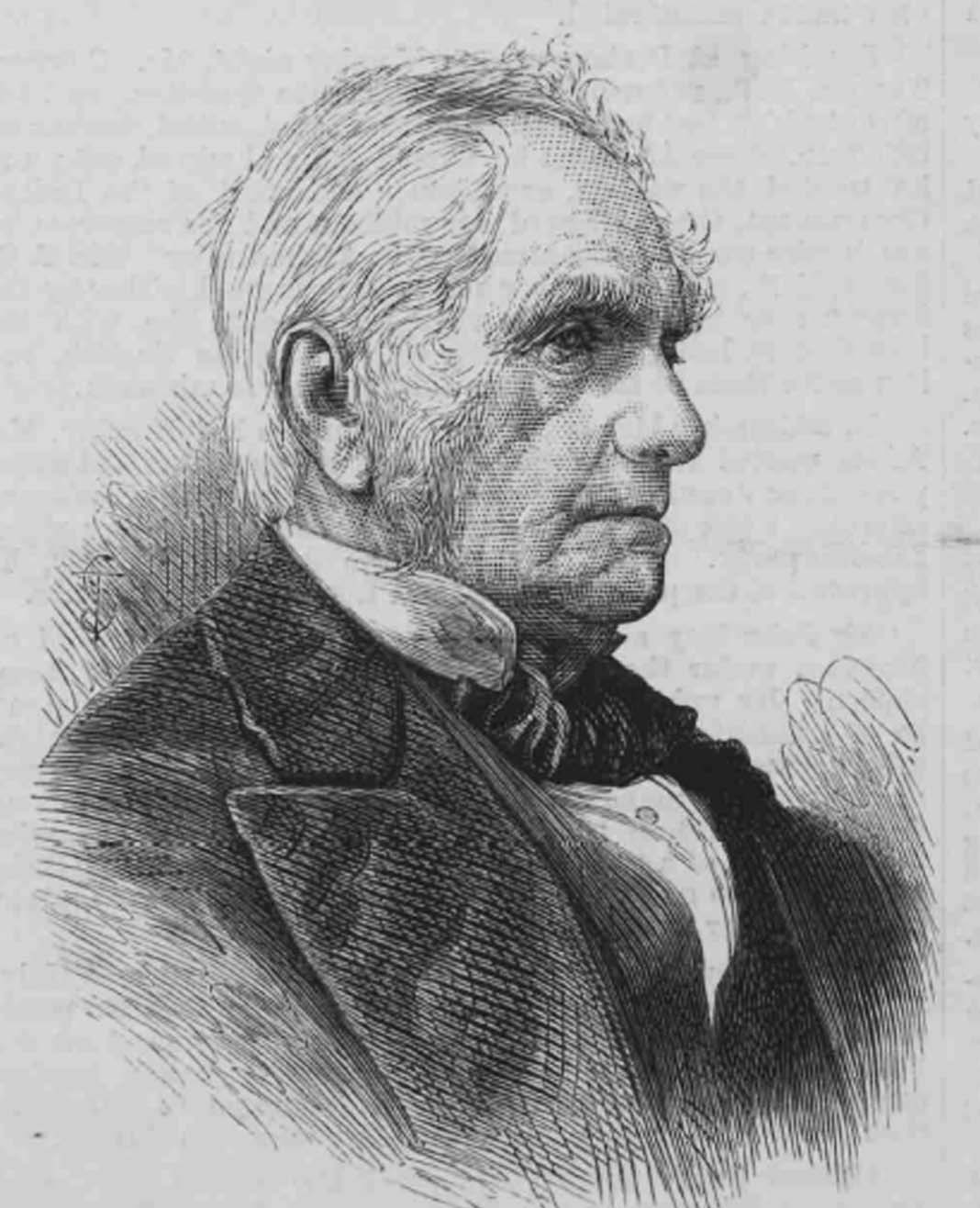
Richard Griffith, Commissioner of Valuation (1827-68)

Hanging gale

The first six month period (May-November or November-May) of a tenancy after which the tenant was obliged to pay his first portion of rent.  

Hearts of Oak

An 18th century agrarian secret society that emerged in Armagh in 1763 in opposition, at first, to a legal obligation on the part of tenants to work on road construction. After a few weeks of protest activities and muted violence the ‘Oakboys’ disbanded in the face of military opposition.  

Hearts of Steel

A more sustained—it continued in existence for three years—and coherent movement than the ‘Oakboys’ which emerged in Antrim and Down and was originally founded in opposition to ‘fines’ imposed on the estate of Lord Donegall on tenants who wanted to renew their leases. The ‘Steelboys’ often operated openly and they successfully attacked a Belfast barracks (1770) and Gilford Castle (1772).   

Heriot

A landlord right, deriving from an old medieval custom, to the use of a tenant’s horse at short notice. 

Houghers

An early agrarian secret society (1711-12) based in Connacht and opposed to the use of land for the purpose of grazing livestock. Named for one of their favoured methods of protest, the maiming of cattle.

Houghing 

Maiming cattle in order to intimidate their owner. The cattle would be lamed by severing their hamstring tendons. 

Improving landlords

Something of a ‘catch-all’ phrase covering everything from landlords wishing to divest themselves of tenants in order to ‘work’ their own estates, to landlords intent on either enhancing the lot of their tenants by undertaking ‘improvements’ to their land, or the introduction of progressive and more scientific farming methods. ‘Improving’ landlords (the term often appears in quotation marks to suggest a degree of historiographical scepticism of the breed) were often as welcome to the tenant as a bad toothache.   

‘Kilmainham Treaty, the’

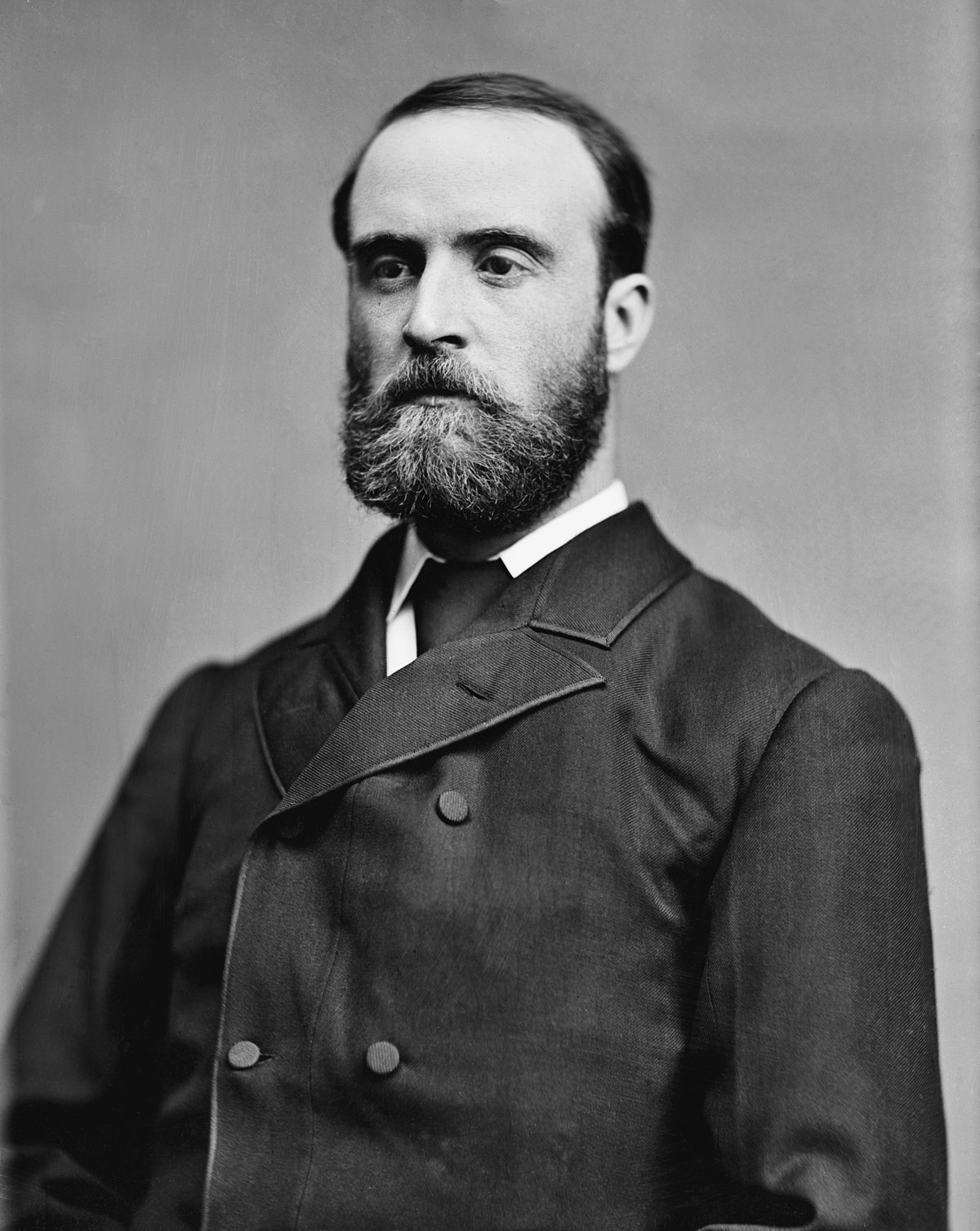
An unofficial agreement brokered by Captain William O’Shea between the incarcerated Charles Stewart Parnell and British prime minister William E. Gladstone. The Liberal government agreed to introduce an act of parliament allowing tenants in arrears access to the newly established Land Courts, and Parnell agreed to use his ‘influence’ to end agrarian disorder and ‘outrage’. 

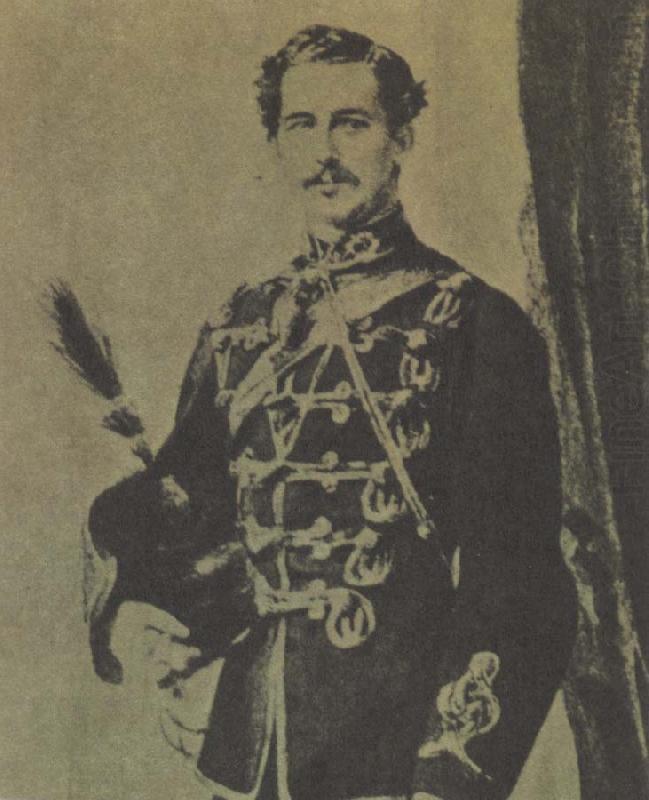
Captain William O’Shea
Fake Histories #40  Katharine O’Shea was a British spy whose job was to destroy Parnell?


iu-3.jpeg

Next Sunday is the hundred and twenty eighth anniversary of the death of the so-called ‘Uncrowned King of Ireland’ Charles Stewart Parnell. The honorary title is ironic as the man who conferred it on him in 1880, Timothy Healy MP, played a huge part in consigning Parnell to an early grave at the age of forty-five on 6 October 1891.

The waspish Healy had long since fallen out with his aloof and arrogant party leader before he got his opportunity to bring his animosity out in the open. This was handed to him, neatly tied up with silk ribbons, by Parnell himself, after the Irish party leader’s citation as co-respondent in the divorce of William and Katharine O’Shea.

This allowed Healy to give full reign to his vitriol in the pivotal five day meeting in Committee Room Fifteen at Westminster where Parnell’s continued leadership of the Irish Parliamentary party was being debated by its MPs in December 1890. At one point in that marathon internecine squabble Parnell squarely addressed the issue at stake by demanding pointedly ‘Who is the master of the party?’. To which Healy responded ‘Aye, but who is the mistress of the party?’ Legend has it that Parnell had to be physically restrained from assaulting his tormentor.

iu.jpegiu-1.jpeg

In the months that followed the inevitable split in the ranks of the party, at every opportunity, Healy would refer to Katharine O’Shea—even after she and Parnell married—as ‘Kitty’ O’Shea. It’s the name by which many people know her today. But back in late Victorian Britain and Ireland the word ‘Kitty’ had an entirely different connotation. It was one of the many nicknames for a prostitute, and fed into the prurience of the political opponents of Parnell in the months before his death.

Such was the devastation the entire affair caused to Parnell’s political career, and the damage it did to any hopes of Home Rule for another generation, that many contemporaries of the nationalist leader, both supporters and opponents, wondered, and openly claimed, that Katharine O’Shea and her pompous, self-aggrandising, cuckolded husband, William, had been agents of the British, expressly charged with the task of destroying the threat posed by the biggest Irish nuisance to the British establishment since Daniel O’Connell. The entire affair, so the allegation went, had been whistled up by the Tory establishment to discredit and disrupt the forces of Irish constitutional nationalism.

It has to said, if this were true, then the O’Sheas were very good at their jobs. Double Oh Seven himself would have been proud to be numbered among their successors. Bringing Parnell down was a masterstroke, but killing him off was the coup de grace. There are no comebacks from the grave.

There is no doubt that both the O’Shea’s were well connected. Husband and wife, at different times, would have had dealings with the British Prime Minister William E. Gladstone. But the circumstances of the downfall of the Irish leader who, by 1890, was a staunch ally of the Liberal Prime Minister, were almost as much of an embarrassment to Gladstone as they were to the Irish party. That’s why it has to be a diabolical Tory plot.

The problem with that scenario is, when Parnell and Katharine met, and embarked on their ten-year affair, the Tories had just been tossed out of office. They didn’t get a whiff of power for another five years and thoroughly enjoyed the spectacle of Parnell baiting Gladstone and the Liberals for most of their period in opposition. Until they got back into government, in 1886, five years after the affair began, they would have had no interest whatever in shaming of humiliating Parnell by exposing his relationship with a married woman.

Which leaves us with the Victorian ‘deep state’, the shadowy institution that lives forever, irrespective of who is in power. It’s tempting to believe anything of an establishment that, because of its many mansions, and competing agents provocateurs,  succeeded, in 1887, in exposing a plot against the life of Queen Victoria which its own agents had concocted in the first place. But there’s not a shred of evidence for this proposition. In addition to which anyone even vaguely familiar with William O’Shea is always astonished that he was able to put on his own boots every morning. A former military type, he was always at least one brigade short of a division.

And anyone familiar with the relationship between Parnell and Katharine O’Shea would never accept that it was based on a treacherous deception.

So, even though one is prone to believe William O’Shea capable of almost anything, is it possible that he and his wife were British spies given the onerous chore of destroying Charles Stewart Parnell? Not a hope. That’s fake history.

iu-2.jpeg


27 January 1885 
- Parnell turns the first sod on the West Clare Railway


perpost.gifWClareMap.jpg

In extenuation for his many crimes, it was once suggested that at least Benito Mussolini, the Italian Fascist leader, ‘made the trains run on time’. It’s hardly enough to erase the invasion of Abyssinia, and his alliance with Nazi Germany, nor the liquidation of a number of inconvenient political opponents.

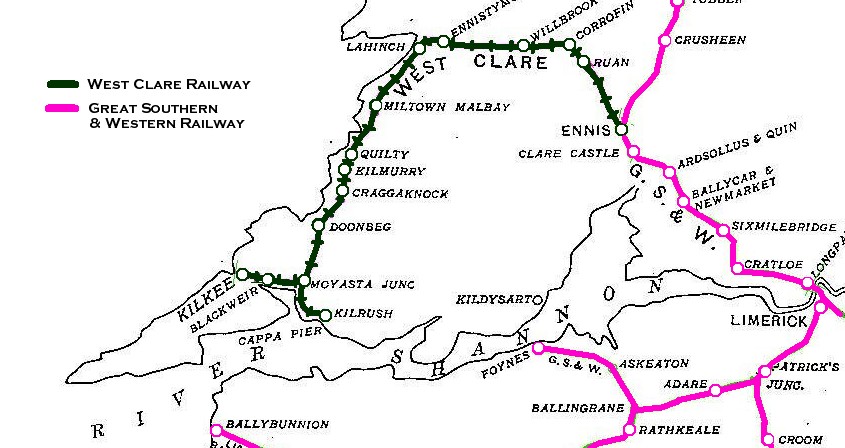
But you can’t even offer that excuse, in the case of one of the great villains of Irish history, Captain William Henry O’Shea. The reason O’Shea didn’t make the trains run on time, was that he was one of the great parliamentary champions of the notoriously dilatory West Clare Railway. This narrow-gauge iron road ran, if that particular word doesn’t suggest far too much urgency, between Ennis and Moyasta, and thence west to Kilrush, or east to Kilkee, whichever was your preference. It travelled the route via Ennistymon, Lahinch and Milltown Malbay. It was the last operating narrow-gauge passenger railway in the country. The problem is that it just wasn’t very reliable.

train-clare[1].jpg

Despite its lack of length—it was only twenty-seven miles long when it opened in 1887—it was actually two railways, the West Clare and the South Clare, which met at Milltown Malbay. Hardly comparable to the iconic junction of America’s Union Pacific and Central Pacific Railroads at Promontory Point in Utah, but very exciting for the good citizens of Clare nonetheless, who now found it much easier to get around and to connect with the country’s main rail network at Ennis. The line was later extended to forty-eight miles in overall length.

Although work had already started the previous November, the sod was not officially turned on the original construction site until January 1885. O’Shea, the semi-detached Nationalist MP for Clare, wanted his pound of flesh, after months of lobbying parliament to ensure that funds were made available for the project, so the party leader himself, Charles Stewart Parnell, was recruited to pop over from his unwedded bliss with O’Shea’s wife Katharine in London, and do the needful with a shovel. Also in attendance was the man chosen to build the railway, one William Martin Murphy, who would have his own days in the sun during the infamous Dublin Lockout of 1913.

Of course, the railway was immortalized by its hilarious brush with the songwriter and performer Percy French. He successfully sued the line for loss of earnings, after arriving four and a half hours late for an engagement in Kilkee, on 10 August 1896 thanks, he alleged, to the rather relaxed attitude of the railroad employees to the joys of timetabling. He won £10 and costs at the Ennis Quarter Sessions in January 1897.

Now most sensible corporations, when in a hole, stop digging. But not the West Clare Railway. They appealed the decision at the next Clare Spring Assizes, held before the formidable jurist, Chief Baron Palles. French might have forfeited the case, as he arrived an hour late for the hearing. But his explanation—‘I took the West Clare Railway here, your honour’—probably sealed the case in his favour, though unless he was travelling from coastal Clare it was a humorous porky.

In the course of his contribution French offered a couplet that suggested he had a certain composition in mind already. He informed the Chief Baron that, ‘If you want to get to Kilkee / You must go there by the sea’. The lines didn’t actually make it into his final revenge on the hapless railway line ‘Are you right there Michael’ which begins:


You may talk of Columbus’s sailing

Across the Atlantical Sea

But he never tried to go railing

From Ennis, as far as Kilkee


Incidentally, on the same day as Percy French’s court appearance, one Mary Anne Butler from Limerick was also suing the railway, alleging that she had been attacked by a malevolent donkey on the platform in Ennis.

The line closed down in 1961, but thanks to a group of local enthusiasts the West Clare Railway lives once more. Part of the line, between Moyasta and Kilkee, has been restored, and one of the original engines, the exquisite Slieve Callan, is back in use.

The national press reported, that the first sod of the West Clare Railway was turned by Charles Stewart Parnell, one hundred and thirty-two years ago, on this day.


img_5685_0.jpg


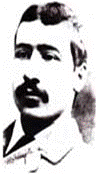
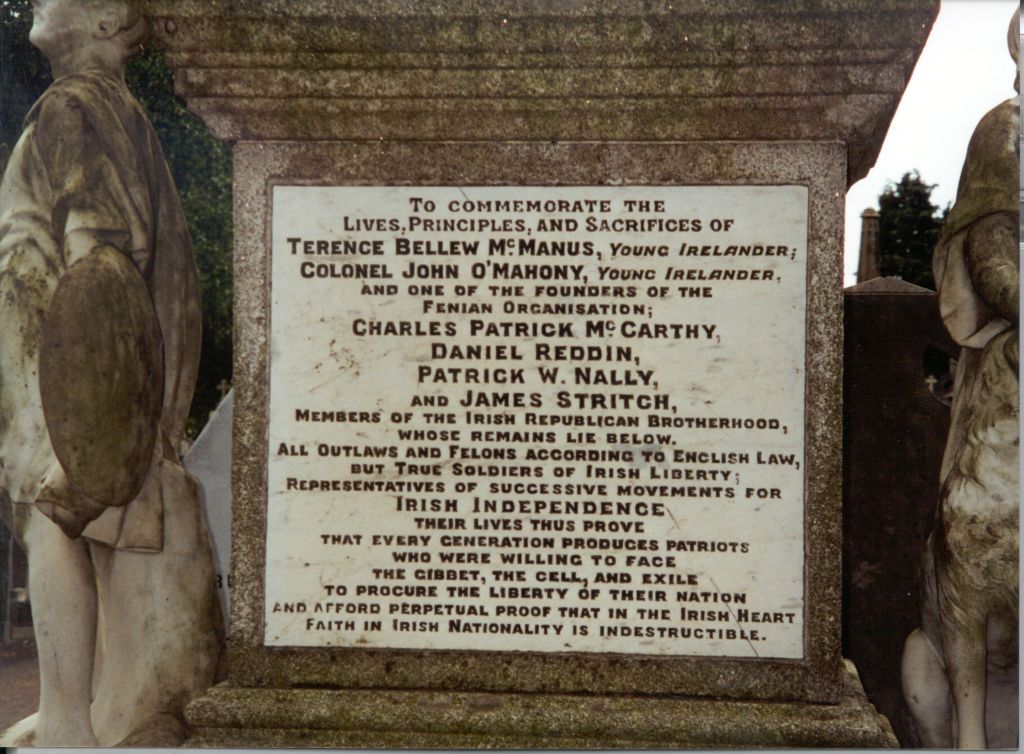
On This Day – Drivetime – 13.3.1856 Birth of P.W.Nally

pwnallySgtMcCarthy

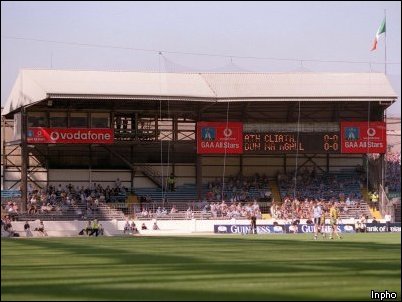
In September 2003 the redevelopment of Croke Park led to the demolition of the old Nally Stand and the creation of the Nally Terrace, adjacent to Hill 16. While people would be well aware that the stadium’s Hogan stand was called after the best known victim of the Black and Tans’ unwelcome visit to Croke Park in November 1920 on Bloody Sunday, and that the Cusack Stand was named in honour of one of the GAA founders, how many people would know the story behind the man for whom the old Nally Stand was dedicated in 1952?

Patrick W.Nally, as you might expect, was one of the motive forces behind the creation of the GAA in 1884, though for reasons that will become clear, he was not present at the pivotal meeting in Thurles that established the new body. He was, himself, a well-known athlete who began discussions with Michael Cusack in the 1870s about forming an organisation devoted to the promotion of Gaelic Games.

However, his motives were not entirely sporting in nature. Nally was, at the time, a member of the Supreme Council of the revolutionary nationalist organisation the Irish Republican Brotherhood which he had joined in his early twenties. He managed to keep his republican activities – his job was to import firearms into Connaught – secret from the local Mayo RIC by condemning agrarian outrages. This was, somewhat surprisingly, perfectly consistent with IRB policy. So much so that when he applied for a gun licence the local RIC Inspector advised his superiors that it was safe to grant the request, asserting that Nally ‘would lead a useful and loyal life’. Indeed he did, but not quite in the way the senior policeman anticipated.

With the Land War raging in 1880, Nally’s IRB activities came to the attention of spymasters in Dublin Castle and London. To avoid arrest he left the country for two years, returning in 1882. He was arrested on conspiracy to murder charges the following year – this was a favoured Dublin Castle ploy for jailing people it didn’t much approve of. He was implicated by an informer, another common procedure at the time. Nally was convicted, and sentenced to ten years penal servitude.

Half way through his sentence his father, W.R.Nally, sought assistance from an apparently unlikely source, Captain William O’Shea, husband of Katharine and later Parnell’s nemesis. However, O’Shea, though a conservative nationalist and a bona fide charlatan was a political opportunist with a history of murky associations with the IRB. O’Shea’s self-serving efforts to secure Nally’s early release came to nothing.

Nally did not, in the end, actually serve his full term. But that was only because he died, aged 36, in Mountjoy Prison, days before he was due to be released in November 1891. Efforts had been made by Dublin Castle, with a promise of clemency and other rewards, to get him to implicate Charles Stewart Parnell in the organisation and encouragement of agrarian crime at a Special Commission of Inquiry tasked with investigating such allegations. He is said to have responded to these blandishments “not all the gold or honours that the Queen could bestow would induce Patrick Nally to become a traitor.”

The official cause of Nally’s death was typhoid fever – some, however, suspected foul play. A Dublin coroner’s jury held that his ‘naturally strong constitution’ had been broken by ‘the harsh and cruel treatment to which he was subjected … for refusing to give evidence … at the Special Commission.’

He was pre-deceased by four weeks by the man he had refused to betray to secure his release. At his funeral the same green flag was draped over Nally’s coffin as had enveloped that of Parnell himself a month before.

Patrick W.Nally, revolutionary nationalist and sportsman, was born 159 years ago, on this day.

481525120a5444254371l

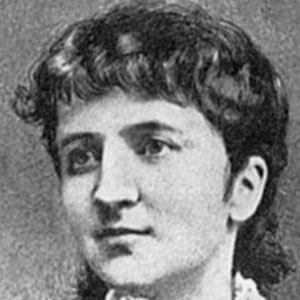
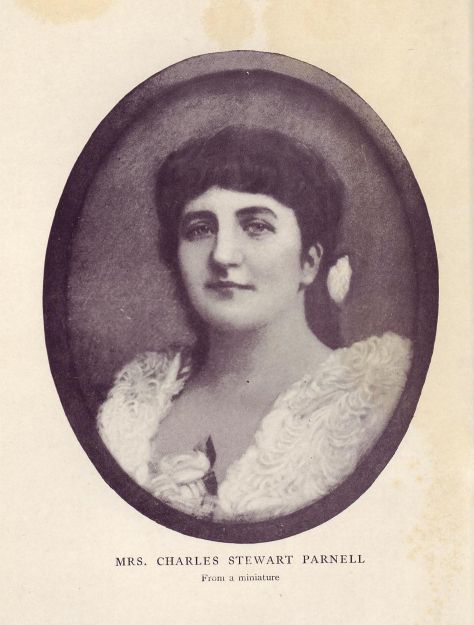
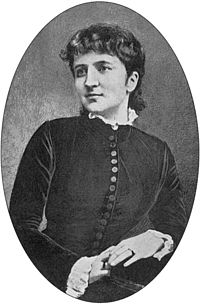
On This Day – Drivetime – 30 January 1846 – Birth of Katharine O’Shea (Parnell)

200px-KittyOSheaCharles_Stewart_Parnell_-_Brady-Handy

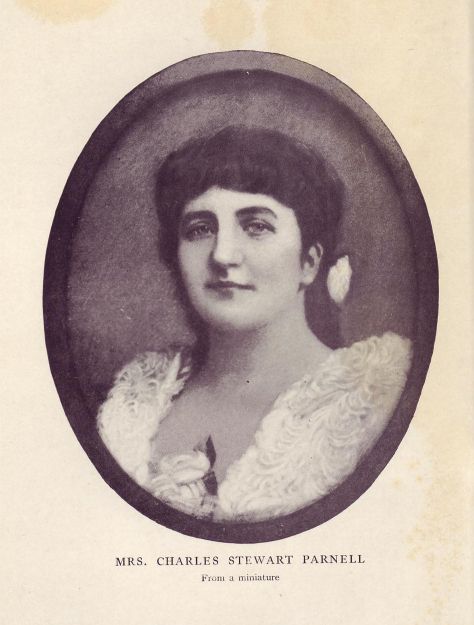
To this day she is known as Kitty, though her friends, family and London society in the late 19th century knew her as Katharine, or Kate. Although the name is innocuous today during the Victorian era it was meant to sting – in those times ‘kitty’ was a euphemism for a prostitute.

She is at the heart of one of the great ‘what ifs’ of Irish history, as in ‘what if Katharine O’Shea and Charles Stewart Parnell had never met?’

But they did. She was the wife, probably estranged, of one of the great Irish chancers of Victorian London, Captain William Henry O’Shea, once a dashing Hussar but more familiar today as a talentless political opportunist. Had O’Shea not been a failed banker he might well have found other ways in which to discommode his native country. As it was it was his failure as a politician that was to have more serious ramifications than his inadequacies as a financier.

In 1880 O’Shea was a rookie Irish MP, Parnell was the new leader of the Irish Parliamentary Party. O’Shea had an attractive wife and he obliged her to make herself useful in the advancement of his political ambitions. She was instructed to invite Parnell to a number of political soirees she organized on her husband’s behalf, or, more likely to keep the dodgy O’Shea at a disrtance. He pronounced his name O’Shee by the way, presumably to distinguish him from his common or garden countrymen of the same name. Parnell, however, was not one for the banality of opening invitations, or indeed letters in general, so to press her invitations she went in person. That, according to her own account, was when they fell in love. Parnell didn’t leave any account. He was as good at writing letters as he was at opening them.

The relationship blossomed rapidly and soon, they were, in effect, man and wife. She became his ‘Queenie’, he became her ‘King’. O’Shea rarely darkened the door of his wife’s boudoir but found out about their trysts rather quickly. He challenged Parnell to a duel but when, to his surprise, the Irish party leader accepted the challenge, the former Hussar backed down. He contented himself thereafter with squeezing every drop of political nectar he could from his wife’s lover and partner.

He looked away as the couple had three children together. His incentive, in addition to political advancement, was a hefty share in a large sum of money his estranged wife stood to inherit from an aged aunt. When the elderly lady finally passed on, and he was neatly cut out of the inheritance, he stopped looking away. He sued for divorce, no doubt full of the festive spirit, on Christmas Eve 1889.

The resulting court proceedings destroyed Parnell’s career. In the middle of a year of huge controversy in 1891 he only made things worse for himself politically when he married Katharine after the divorce was finalized. Humiliated by a series of futile and debilitating by-election campaigns an exhausted Parnell died in their house in Brighton in October, a month the highly superstitious Parnell always considered ill-starred.

Katharine Parnell, as she now was, then did a great service to a country she had never visited and much of whose population considered her to be a scarlet woman or an English spy who had destroyed their leader. In an act of generosity she waived her right to have Parnell buried in a south of England graveyard where she could join him when her own life ended. Instead she allowed him to be returned to Ireland and interred in Glasnevin cemetery in perhaps the biggest funeral the country had ever seen.

Katharine O’Shea, or Katharine Parnell as she chose to be called, was born five months before her second husband, Charles Stewart Parnell, 169 years ago, on this day.

Katherine_O_Shea