GLOSSARY: A-K ‘Land is all that matters: the struggle that shaped Irish history’.

Agistment

The process of bringing livestock to pasture. In 1735 the House of Commons effectively removed the ‘tithe of agistment’ thus ensuring that beef and milch cattle were exempt from tithes. This had the effect of shifting the burden from wealthy graziers to tillage and subsistence farmers.

Approver

An accused party offering evidence against his co-conspirators in a crime, in return for full or partial amnesty.

Back to the Land

A co-operative movement that emerged in the early years of the 20th century, raised its own finance, and purchased estates for division among small farmers and landless labourers. 

Bailiff 

An official whose function was to effect the eviction of a tenant and, if required, sequestration of the tenant’s ‘removables’ (furniture etc.). 

Bessborough Commission

Appointed in 1881 to inquire into the working of the 1870 Land Act and chaired by Frederick Ponsonby, 6th Earl of Bessborough. Its books of evidence offer a valuable insight into rural Ireland during the Land War. The Commission essentially offered support for the Land League (qv)  demands for the 3Fs (qv), the only dissenting commissioner being the landlord representative, the idiosyncratic Arthur McMurough Kavanagh, the limbless former MP and Lord Lieutenant of Carlow.  

Frederick Ponsonby, 6th Earl of Bessborough

Blackfeet

A Whiteboy variant that emerged in south Leinster in the 1830s. 

Board of Works

Established in 1831 the Board of Works spent £49m on public works projects up to 1914.

Boycotting

The despatch of an obnoxious tenant, agent, landlord or ‘grabber’ (qv)  to a ‘moral Coventry’. A process of ostracization generally seen to have been initiated in 1881 but actually a longstanding tactic in Irish agrarian campaigns. Individuals were cut off by their neighbours from all social and economic intercourse. Named for the Mayo land agent Captain Charles Boycott who was its most prominent victim during the Land War of 1879-82 (qv). 

Captain Charles Boycott

Canting

The sale by auction to the highest bidder of a farm with a recently evicted tenant or a tenant in the process of being evicted. 

‘Captain Moonlight’

A (mostly) 19th century euphemism for agrarian outrages. On being jailed in October 1881 Charles Stewart Parnell famously said that his place at the helm of agrarian agitation would be taken by ‘Captain Moonlight’. 

‘Captain Rock’

The mythical figure supposedly behind the Rockite disturbances of the 1820s. During that period many threatening letters bore the signature of ‘Captain Rock’ or ‘John Rock’. 

Caravats, the

An agrarian secret society whose antagonism was aimed not at landlords as such, but at large farmers. Their activities from 1806-11 were based in south Leinster (Kilkenny) and east Munster (Limerick, Tipperary, Waterford and Cork) and were opposed by a society of wealthy farmers known as the Shanavests (qv).  

Carders, the

An early 19th century agrarian secret society that took its name from the vicious practice of carding (qv). 

Carding

An atrocious punishment meted out by members of agrarian secret societies in which nails are driven through a board and this is then drawn across the back of a victim. This method was so extreme that it was eventually abandoned as it was deprecated by most of the supporters of even militant agrarian activism. 

Caretaker

A person or persons left to occupy a house after an eviction. The function was sometimes undertaken by bailiffs (qv) or ‘emergency men’ (qv) but often, where an eviction had been carried out largely as a warning to a tenant in arrears, the tenant himself would be left in situ as caretaker.  This practice partly accounted for the disparity between permanent evictions and tenant readmissions.

Carrickshock

A townland in County Kilkenny, near Knocktopher where a fracas in December 1831 during the Tithe War led to the deaths of a process server, a dozen policemen and three anti-tithe protestors.

Cattle driving

The practice, particularly notable during the Ranch War (19060-09) (qv), of stealing cattle and ‘driving’ them a considerable distance. Used as a form of protest and intimidation during the Ranch War. 

Cess

A tax levied by county Grand Juries for the upkeep of roads and bridges. Excess levels of cess in certain counties or baronies often sparked militant action by agrarian secret societies. The word is still a term of abuse in some parts of rural Ireland, as in ‘bad cess to you!’

Clachán

The community at the centre of land held under the rundale system (qv).  

Conacre

The act of renting a small area of land and planting a single crop, generally potatoes. 

Congested Districts Board 

Established by Tory chief secretary, Arthur Balfour, in 1891 to alleviate poverty in ‘congested’ regions of high population density and few resources in the west and northwest of Ireland. The CDB was dissolved by the new Irish Free State in 1923. An integral element of the Tory policy of ‘killing Home Rule with kindness’ in the 1890s.  

Congests’

The name often applied to impoverished tenants in general, but in particular to those from areas under the aegis of the Congested Districts Board (qv).

Cottier

Sometimes represented as ‘cottar’, these were generally agricultural labourers or small farmers who rented small plots (c. 1 acre) and planted potatoes thereon in return for their labour. Almost wiped out by the Great Famine. 

Cowper Commission

A commission of inquiry into Irish land tenure named for its chair, the former Lord Lieutenant, Earl Cowper, and established by the Tory government of Lord Salisbury. It reported in 1887, recognising that the fall in agricultural prices since the passage of the 1881 Land Act  had reduced the ability of tenants to pay even Land Court arbitrated rents.  

7th Earl Cowper

Deasy’s Act

Legislation passed in 1860 which altered the relationship of landlord and tenant, to the benefit of the latter. Passed through parliament without amendment, its central principle was that ‘The relation of landlord and tenant shall be deemed to be founded on the express or implied contract of the parties, and not upon tenure or service.’

Devon Commission, the  

Its full title was the ‘Royal Commission on the state of the law and practice relating to the occupation of land in Ireland’. It was chaired by the Co. Limerick landlord, William Courtney, 10th Earl of Devon. The commission gathered evidence and compiled its report between 1843 and 1845. Its central recommendation, that ‘tenant right’ be formally recognised by the payment of compensation to outgoing tenants for any improvements made to their farm, was not enacted into law.   

Distraint

The seizure of farm produce or implements, for subsequent sale at auction to meet the financial obligations of tenants in arrears to their landlords.

Down Survey

The Cromwellian-era mapping of Ireland under the supervision of Sir William Petty. 

Sir William Petty

Driver

A bailiff employed to drive distrained cattle to the pound. The term could also apply to a Ranch War-era moonlighter (qv) who ‘drives’ a grazier’s cattle from pasture land onto the roads. The former was generally reviled by small tenant farmers, but operated within the law. The latter did not, but was generally revered by small tenant farmers.  

Duty days

An obligation sometimes owed by a tenant to a landlord. The tenant was required to work on a set number of days per annum. A particularly vindictive landlord would demand his duty days at a time when a tenant needed to bring in his own harvest, in order to pay his rent. The fictional Thady Quirk refers to such punishments in Castle Rackrent by Maria Edgeworth.

‘Eleven month’ system

A device frequently used to get around the tenant-oriented land legislation of the 1880s and 1890s. Land was auctioned on an annual basis and the highest bidder was then allowed the use of the land for eleven months. The system encouraged wealthy merchants and professionals to purchase, graze and sell herds of livestock.  

Emergency men

A generic term for those offering their services as bailiffs (qv), or often as caretakers left in the houses of evicted tenants to ensure that their former occupants were unable to re-possess. The name is derived from one of the landlord bodies, the Orange Emergency Committee, which opposed the activities of the Land League during the Land War, and those of the Irish National League during the Plan of Campaign.   

Enclosure

The act of fencing off common land previously available to all members of a community. Most common land in Ireland and Britain had been enclosed by landowners by the end of the eighteenth century. 

Encumbered Estates Acts

Passed in 1848 and 1849 this legislation established the Encumbered Estates Court, which allowed the sale of the estates of landlords rendered insolvent by the Great Famine. Designed to encourage a new wave of British owners of Irish land, in fact much of the almost five million acres that changed hands went to wealthy Irish Roman Catholic landlords, often Dublin-based professional men. 

‘English tenant’

This has nothing to do with nationality but referred to a tenant who was required to pay his rent on the day it was due, rather than on a ‘gale day’ (qv) six month in arrears, as was the Irish custom. It could be used, for example, as a punishment by a landlord in the case of a tenant who had not voted as instructed in an election. He could be required to become an ‘English tenant’, i.e. immediately pay six months arrears of rent.  

Gale days

The bi-annual period during which tenants paid their rent, generally to a landlord’s agent. The two annual gale days tended to be in May and November. 

‘Grabber’

Or ‘land grabber’. Generally a tenant farmer who took over the land vacated by an evicted tenant. Many were threatened, injured or murdered. The phrase acquired particular currency during the Land War (1879-82). It later came to be applied to those illicitly seizing land during the Anglo Irish War and the subsequent Civil War.

Graziers

Farmers (and non-farmers) who rented extensive tracts of pasture land and raised cattle or sheep. This type of husbandry was anathema to small farmers and landless labourers because of the usage of what might otherwise have been arable land, available to rent. Graziers were also known (and not in a positive way) as ‘ranchers’.

‘Griffith’ valuation

Named after Richard Griffith, Commissioner of Valuation in Ireland from 1827 until 1868. Griffith was the man primarily responsible for mapping and valuing, for taxation purposes, the land of Ireland from the 1830s to the 1860s.
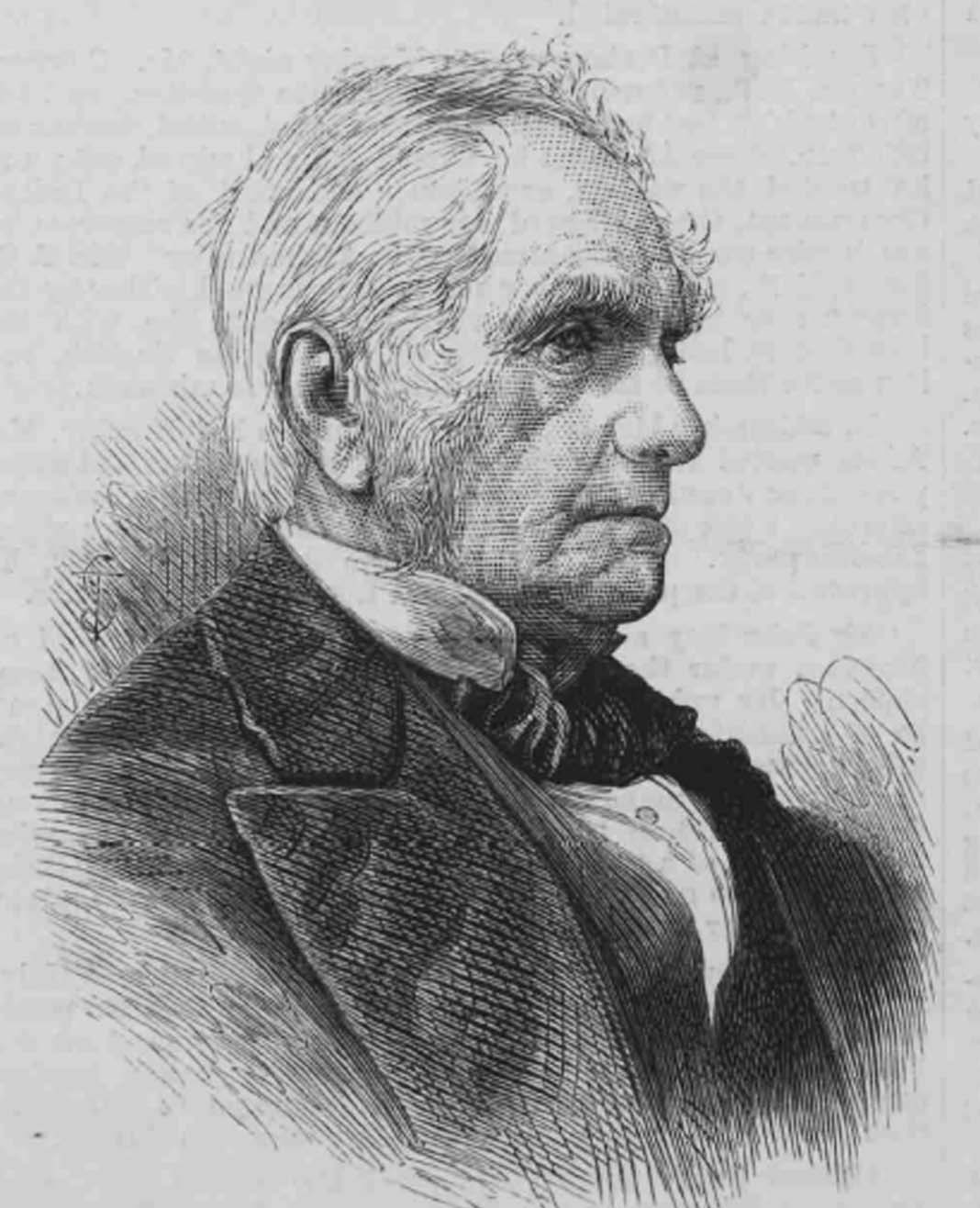
Richard Griffith, Commissioner of Valuation (1827-68)

Hanging gale

The first six month period (May-November or November-May) of a tenancy after which the tenant was obliged to pay his first portion of rent.  

Hearts of Oak

An 18th century agrarian secret society that emerged in Armagh in 1763 in opposition, at first, to a legal obligation on the part of tenants to work on road construction. After a few weeks of protest activities and muted violence the ‘Oakboys’ disbanded in the face of military opposition.  

Hearts of Steel

A more sustained—it continued in existence for three years—and coherent movement than the ‘Oakboys’ which emerged in Antrim and Down and was originally founded in opposition to ‘fines’ imposed on the estate of Lord Donegall on tenants who wanted to renew their leases. The ‘Steelboys’ often operated openly and they successfully attacked a Belfast barracks (1770) and Gilford Castle (1772).   

Heriot

A landlord right, deriving from an old medieval custom, to the use of a tenant’s horse at short notice. 

Houghers

An early agrarian secret society (1711-12) based in Connacht and opposed to the use of land for the purpose of grazing livestock. Named for one of their favoured methods of protest, the maiming of cattle.

Houghing 

Maiming cattle in order to intimidate their owner. The cattle would be lamed by severing their hamstring tendons. 

Improving landlords

Something of a ‘catch-all’ phrase covering everything from landlords wishing to divest themselves of tenants in order to ‘work’ their own estates, to landlords intent on either enhancing the lot of their tenants by undertaking ‘improvements’ to their land, or the introduction of progressive and more scientific farming methods. ‘Improving’ landlords (the term often appears in quotation marks to suggest a degree of historiographical scepticism of the breed) were often as welcome to the tenant as a bad toothache.   

‘Kilmainham Treaty, the’

An unofficial agreement brokered by Captain William O’Shea between the incarcerated Charles Stewart Parnell and British prime minister William E. Gladstone. The Liberal government agreed to introduce an act of parliament allowing tenants in arrears access to the newly established Land Courts, and Parnell agreed to use his ‘influence’ to end agrarian disorder and ‘outrage’. 

Captain William O’Shea

Out now from Head of Zeus

Some of the long term psychological effects of Bloody Sunday – 21 November 1920

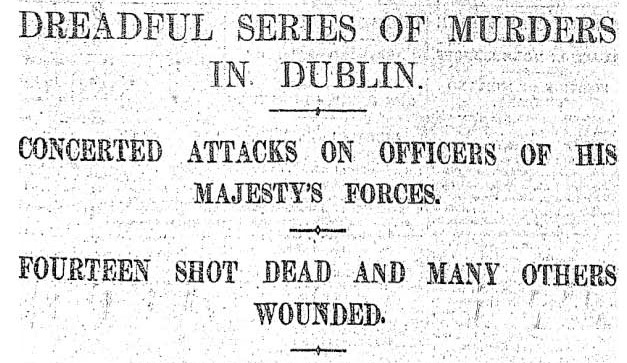
As we, fittingly, commemorate the centenary of the tragic and violent events of Bloody Sunday in Dublin (21 November 1920) it is worth bearing in mind some of the long term effects of that traumatic day.

A caveat before you begin to read this blog. It deals only with the psychological impact of the killings of alleged British agents in Dublin, on the morning of 21 November 1920, on two of those who took part in those events – one of the killers themselves and a young intelligence officer who accompanied them. It does not attempt to measure the long-term trauma that was undoubtedly experienced by the wives and children of some of the victims who witnessed the violent deaths of their husbands and fathers. Neither does it deal with the trauma that must have been experienced by many hundreds of the survivors of the vicious Crown forces retaliation in Croke Park on the afternoon of 21 November.

The witness statements, autobiographies and media interviews of members of the IRA intelligence cadre around Collins often convey an impression of dedicated, ruthless and even callous spies and assassins (just read Vincent Byrne’s Witness Statement for corroboration). But there was an inevitable cost involved in the intelligence war. For many IRA Volunteers and British agents it was their lives. But for the men and women working under Michael Collins, many of whom were still in their teens, there was often a hidden and belated psychological cost. 

CHARLIE DALTON – IRA INTELLIGENCE OFFRICER GHQ – MILITARY SERVICES PENSION COLLECTION FILE 24SP1153

Charlie Dalton joined the Volunteers in December 1917. In February 1920 – at only seventeen years of age – he was assigned to the GHQ Intelligence unit, reporting for duty to Liam Tobin, IRA Deputy Director of Intelligence in Crow Street. One of Dalton’s jobs was to liaise with some of the spies of Collins within the Dublin Metropolitian Police. Charlie Dalton’s Bureau of Military History witness statement was taken in 1950. It is cogent, clear and betrays no frailities of any kind. However, a decade before, in a disability pension application, submitted in May 1940 by his wife, Theresa, we see a very different Charlie Dalton, one whose War of Independence experience has left him psychologically scarred. It is clear from, for example, a letter from the Medical Superintendent of St. Patricks Hospital dated 3 April 1941, that Dalton is dangerously paranoid. He has been an inmate of St. Patrick’s since November, 1938. The letter informs the referees in his case that Dalton is ‘undergoing treatment for a serious form of mental breakdown. Although he has improved somewhat since admission, the outlook in his case is very grave. From the beginning he has been in a constant state of fear – afraid of being shot, and that he is wanted by the authorities for various crimes. He is acutely hallucinated – hearing voices which accuse him of murder. In my opinion the nature of Mr. Dalton’s delusions and hallucinations clearly point to his experiences in the Irish War as the cause of his mental breakdown.’ Also included in his file is a letter from another mental health professional, Dr. Harry Lee Parker, who has obviously been assigned by the pension referees to examine Dalton on their behalf. 

MSPC FILE 24SP1153

‘On 7 July I personally examined Charles F. Dalton. I had seen him professionally on numerous occasions during the preceding three years and consequently I am very familiar with his case. I have also studied carefully the file provided me covering all his history.

            Charles F. Dalton is at present completely and permanently insane. He has delusions of being shot, executed and that all around him are conspiring to kill him. He hears voices urging his destruction and his whole delusional state is definitely linked up with his previous military experiences.

            In my opinion such experiences this man has had during military service and particularly his own active part have preyed on his mind and conscience so that in the following years he has gradually lost his reason. I must therefore unequivocally attribute his present state to his military service and I consider him totally and permanently disabled.’

The next document in Dalton’s file is an extraordinary letter from future Taoiseach Sean Lemass. In 1941 he was Minister for Supplies, a crucial role during World War 2. He found time to write a five-page letter on behalf of Dalton’s wife which offers some clues as to the genesis of the former IRA Intelligence officer’s psychological difficulties. Bear in mind that in 1920 Dalton was only seventeen years old. Lemass, at the time, was all of twenty-one years of age.

‘I was associated with your husband during the latter part of 1920. At that5 time he, I and some others were lodging  together at the dispensary building, South William Street. All those lodging there were on active service but not with the same unit. Your husband, Charles Dalton, was, I understand, engaged in intelligence work. He was of highly string disposition and on more than one occasion I came to the conclusion that the strain of his work was telling on his nerves. I first became seriously concerned about him, however, on the evening of Sunday November 21st 1920 (since called Bloody Sunday). On the morning of that day a number of British government agents in Dublin were shot. It was your husband’s to accompany a party of IRA to one house occupied by four of those agents, all of whom were shot. He returned subsequently to the billet at South William Street and I realised that he had become unnerved by his experiences of the morning. So obvious was his condition that I and one of the others took him out for a walk although it was an undesirable and risky thing to do and might have drawn attention to the billet. It did not improve his condition and during that night he was, on occasions, inclined to be hysterical. I recollect that a tap in the dispensary was leaking and making a gurgling noise. This noise apparently reminded your husband of a similar noise he had heard when the four men were shot. He shouted to us several times to stop the noise of the tap and it was with difficulty that he was quietened.

            At this period your husband was very young and his experiences could not but have left a permanent mark on him. I recollect speaking to some of his senior officers subsequently and urging that he should get a rest or a transfer to another area.’

Lemass’s letter is followed by a statement from Dalton’s intelligence colleague Frank Saurin, who played a similar role on Bloody Sunday. 

‘He endured a certain amount of physical hardship being, ‘on the run’ from the British for some three years, but the real hardship must have been mental. You must remember that he was a mere school-boy when he commenced his career as a ‘gun-man’. The continual strain of being sought after and raided for, taking into consideration his youth, must have had a terribly adverse effect on his mental balance; the culminating effect of which, I believe, is responsible for his present condition – I know of no other reason.

            A couple of years ago when he first commenced to show symptoms of his complaint I was present at a pitiable incident which occurred at his home. He became obsessed with the idea that his house was surrounded by men out to “get him”. He bolted and locked all his doors and went as far as to climb the stairs on his hands and knees, thereby avoiding throwing his shadow on a drawn blind to that he would not present a target to his imaginary potential; executioners. When he subsequently was placed in a Nursing Home, a friend, with the undersigned, was obliged to stand outside armed, in his view (he had to be shown the guns) for the purpose of dealing with the same imaginary enemies.’

In March 1942 Charles Dalton, now a resident of Grangegorman Mental Hospital, became a ward of court and his wife, Theresa, was given disposition of the disability pension. Happily in 1944 he was sufficiently recovered to be discharged from wardship and could assume control of his own pension. His Bureau of Military History statement was taken in 1950. He died in 1974 in St. Patrick’s Hospital. 


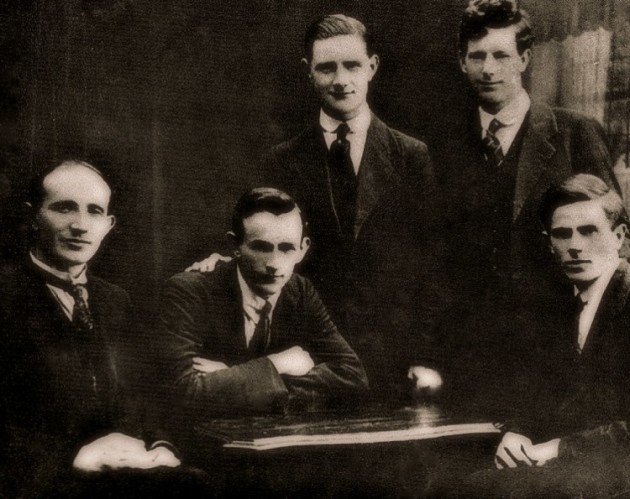
Mick McDonnell (far left) and some of the original members of The Squad. Vincent Byrne is standing, in the middle of the group. McDonnell had already departed for the USA before Bloody Sunday and Paddy O’Daly (second from right) had taken command of the Twelve Apostles.

JAMES PAUL NORTON – DUBLIN BRIGADE  

Included in the massive Military Service Pension Collection at the Military Archives in Cathal Brugha Barracks in Rathmines is the disability application of James Paul Norton who was involved in the Bloody Sunday shootings of a British Army officer named McLean, and his Irish landlord, Thomas Smith at 117 Morehampton Road.

James Paul Norton was twenty years of age when he took part in the Morehampton Road shootings. Norton was later jailed for his IRA activities and was mistreated in prison. The effects of his IRA service led to a rapid decline in his mental health. An unsigned statement in his application for a disability pension outlines the psychological impact of his activities. Norton spent much of his adult life in mental institutions and died in Grangegorman in 1974.

‘As a result of his experiences on active service, culminating in the events of Bloody Sunday 21st November 1920, in which [the] applicant was personally responsible as one of the firing party for the shooting of three British Intelligence officers, two of whom were killed and one seriously wounded in the presence  of their screaming wives and children, the applicant’s mental condition showed gradual deterioration during the months following, until complete mental breakdown was reached by July 1921 when [the] applicant single handed, and without orders, got in the middle of a roadway at the Custom House, armed with a revolver [and] attempted to capture a tender of British troops, armed and carrying full war equipment. [The] applicant was then taken prisoner and subsequently sentenced to fifteen years imprisonment but was released at the general amnesty in January 1922 a complete mental wreck as a result of the harsh treatment he received in Dartmoor prison.’

A dubious guide to US election terminology

US ELECTION GLOSSARY 

With just two weeks to go until US election day this might be a useful guide to some of the phrases you will be hearing a lot over the next fourteen days. Americans don’t do things the way we do in ‘Yurp’. The most obvious case in point is that merely winning a clear majority of the popular vote doesn’t mean you are entitled to be President. That’s because they didn’t actually abandon the notion of ‘states’ rights’ after the Civil War. In the USA they have something called the Electoral College. In Ireland this would be a fee paying second level school designed to give your child an edge in the Leaving Certificate. In America it’s designed to give an edge to Presidential candidates who lose the popular vote – of which there have been two, both Republican, in the last twenty years.

For example, a vote in Wyoming or Montana is not just any ordinary vote. In those two states around a million voters get to decide the destination of six electoral college votes. California has a population of 40 million people. So, you might expect that it would have 240 Electoral College votes, right? As in 6 X 40 = 240. But it doesn’t work like that. California has 55 Electoral College votes based on its 53 members of the House of Representatives and 2 Senators. So, a Presidential vote in Montana or Wyoming is worth quite a bit more than in California when it comes to influencing the outcome. 

Anyway – you probably know all that already. Below, in alphabetical order, are some other concepts to get your head around. 

Blue’ States and ‘Red’ States: In Europe blue tends to be a colour associated with a ‘conservative’ political outlook while ‘red’ usually indicates a progressive or left of centre philosophy. In the United States, as with so many things, those colours are reversed. The more conservative Republican party has long since appropriated the colour red, and the Democrats own the colour blue. This will make things far more confusing for a European audience. 

Blue shift: The opposite of ‘Red Mirage’ (see below). This is where postal ballots are counted and alter the ‘in person’ vote tally. Historically more Democrats than Republicans opt for postal ballots, a phenomenon likely to be accentuated because of the pandemic and because they don’t want to destroy the US Postal Service. Blue shift is where these Democratic postal ballots impact upon (but do not necessarily alter the result of) the election. For example, in the swing state (see below) of Pennsylvania in the past four Presidential elections there has been a ‘blue shift’ of 20,000 votes after the postal ballots have been counted. This could be considerably higher in 2020 with far more postal ballots being cast in the state, and could be enough to counter-balance a ‘red mirage’ whereby President Trump finished ahead of Joe Biden in the ‘in person’ vote. 

A data firm called Hawkfish (associated with the Democratic party) has predicted that the Election Night results (some of which will include postal ballots where they have been counted before 3 November) will show Trump in the lead and on course for a phenomenal 408 Electoral College (see below) votes. By 7 November, with 75% of ‘mail-in’ votes (see below) counted Biden will take the lead in the Electoral College with 280 votes. When all the votes are counted (sometime in 2034) Biden will have 334 Electoral College votes. What Hawkfish haven’t predicted is what the Republicans will do between 3-7 November to ensure that as few ‘mail-in’ votes are counted as possible.  

The Electoral College: Here you need to get out of your heads any idea of young people in their teens or early twenties staging drinking parties, using words like ‘sophomore’ and ‘varsity’ and shouting ‘Go Trojans’ through funnel-like megaphones. The Electoral College is a mechanism whereby the people of the USA do not directly elect their own President and ensures that smaller (generally more rural and more Republican) states are not overwhelmed by the much larger voting populations of the bigger states. Quite the contrary, as a matter of fact, thanks to the system installed by the ever wise and sagacious Founding Fathers (the ones who concluded that a slave was ‘three-fifths of a person’ ) smaller states have a voice in the Electoral College out of all proportion to their size. Part of the problem (if you’re a Democrat) is that all but two states operate a ‘winner take all’ system, so that if you win the state by a single vote you get all that state’s Electoral College votes. (Does it remind anyone of the equally democratic UK ‘first past the post’ system?)

Mail-in ballots:   These, according to President Trump, are the spawn of the devil, except when they are absentee ballots, in which case they are just fine because he uses them himself. The precise difference is so hard to explain that it’s hardly worth the effort. An absentee ballot tends to be something you apply for because, for some valid reason, you are unable to vote in person on election day. Except that it’s not. Thirty-six of the fifty states offer ‘no excuse’ absentee ballots for which you can apply without offering a reason why you’re really sorry but you won’t be able to show up at an actual polling station. You can merely be washing your hair that day and they’ll give you one. You then fill it out and post it off and it has the same status as the absentee ballots of which President Trump approves. What really pisses him off though are the states (Hawaii, Oregon, Washington, Colorado, Utah) that operate a universal ‘mail in’ voting system in elections and which automatically send a ballot out to each registered voter. Then it’s up to you whether or not to use it to vote or to make a paper aeroplane.   

Poll Watchers: You should be able to recognise them on election day because they are likely to be wearing MAGA baseball caps, QAnon tee-shirts and toting automatic weapons as they valiantly attempt to hold back the wave of fraudulent Democratic voters casting ballots on behalf of people who died in the 19th century and who last voted for Grover Cleveland. 

Red Mirage: The opposite of ‘blue shift’ (see above). This is the phenomenon where President Trump (and other Republican candidates) win a plurality of ‘in person’ votes and appear to have won a state on the night of the election. However, in some states where postal ballots are not counted until after ‘in person’ votes are tallied, the postal ballots are expected to show a significant Democratic party majority (far more registered Democrats (69%) have indicated that they will vote by mail than is the case with registered Republicans (19%) ). Hence the notion that the Republican ‘in person’ plurality is a temporary phenomenon only and is therefore a ‘red mirage’. In Florida in the 2018 mid-term elections, for example, the significant leads of many Republican candidates proved illusory as ‘mail in’ vote was counted, and Florida is a state that actually permits ‘mail in’ votes to be counted before election night. 

Safe harbo(u)r: 

Q: Does this refers to …

a) where we hope to be from Inauguration day 2021 to, at least, Inauguration Day 2025 (when we could end up with President Tucker Carlson or President Tom Cotton)  

b)  the final date by which states must have completed their counts and certified the winner of the Presidential poll in their jurisdiction. 

c) Canada

d) Secession

A:  b) – though the other three options are more attractive.

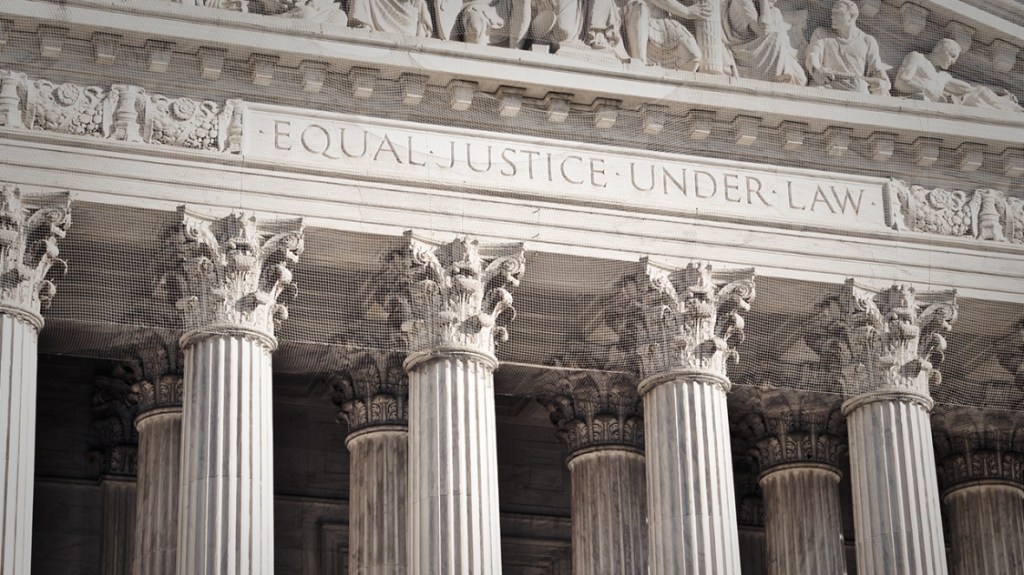
SCOTUS: The acronym for Supreme Court of the United States. Where the result of the entire Presidential election, like the 2000 Florida contest, is likely to end up and where most of the Justices have been appointed by Republican presidents who did not manage to secure a majority of the votes of the American electorate and have been confirmed by Republican-majority Senates where 70% of the membership represent 30% of the electorate. The almost inevitable appointment of Judge Amy Coney Barrett next week will have a pivotal impact. The eight-person SCOTUS recently split evenly on a lower court ruling that allowed the State of Pennsylvania three days leeway on the acceptance of ‘mail-in’ ballots. The even divide meant the lower court decision stood. The introduction of President Trump’s third SCOTUS nominee in three years will ensure, at the very least, that there will be no more split decisions. Is a Republican SCOTUS nominee more likely to make a ruling favourable to a Republican President? Is the Pop …? … just watch this space.

Swing states:  This has nothing whatever to do with intra-marital sex. The idiosyncratic Presidential election system in the USA has put two of the last three Presidents (both Republican) in the White House despite their losing the popular vote, though George W.Bush was re-elected in 2004 with a popular majority. The Electoral College system almost guarantees that a small number of states (around half a dozen) where Presidential races are traditionally tight, have a disproportionate influence on the result of the contest and, therefore, attract a disproportionate amount of the candidates’ campaigning time and advertising revenue. These states include Florida, Pennsylvania, Michigan, Wisconsin, Minnesota and North Carolina. In times past Ohio and Iowa might also have been included. Current polls show Joe Biden ahead in most ‘swing’ states, although in the case of Florida and North Carolina, his lead is well within the margin for error.    

Voter suppression:  This take many forms and, traditionally, is a parlour game in which Republicans try to ensure that as few people of colour as possible are allowed to vote because it is assumed that they are too smart to vote against their economic interests (i.e. Republican). Obstacles put in the way of potential voters are the necessity to produce picture-ID at polling stations (widespread), the withdrawal of the franchise from convicted felons (Florida), the menacing presence of white men with armbands hanging around polling stations calling themselves the National Ballot Security Task Force (New Jersey Gubernatorial election, 1981), and Russian Facebook ads designed to discourage people of colour from voting because their candidate secretly hates them (The Internet). Added to the above list in 2020 will be the disqualification of absentee ballots because they have not been properly perfumed before despatch and don’t bear the legend ‘SWALK’. 

How the Electoral College votes are distributed – (this bit may actually be useful on the night!)

SCOTUS, POTUS AND ALLOFUS

SCOTUS

Does history suggest that the US President has the moral right to appoint a new Supreme Court Justice in an election year?

First off, let’s not kid ourselves by using the word ‘moral’ in the same sentence as ‘US President’, especially not in 2020. Appointing a Supreme Court justice has always been a plum to be plucked from the eponymous fruit tree by any incumbent of the Oval Office. With a third appointment looming, President Trump is hoping to have enough fruit for a jar of plum jam before the end of this year.    

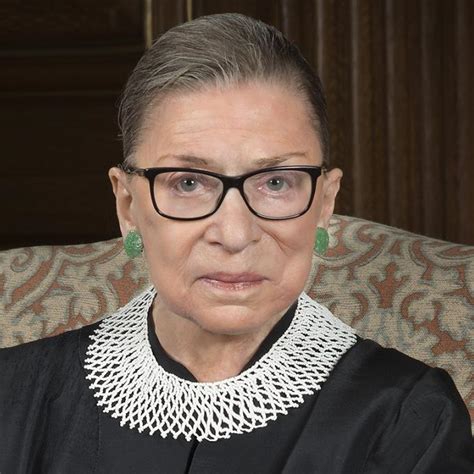
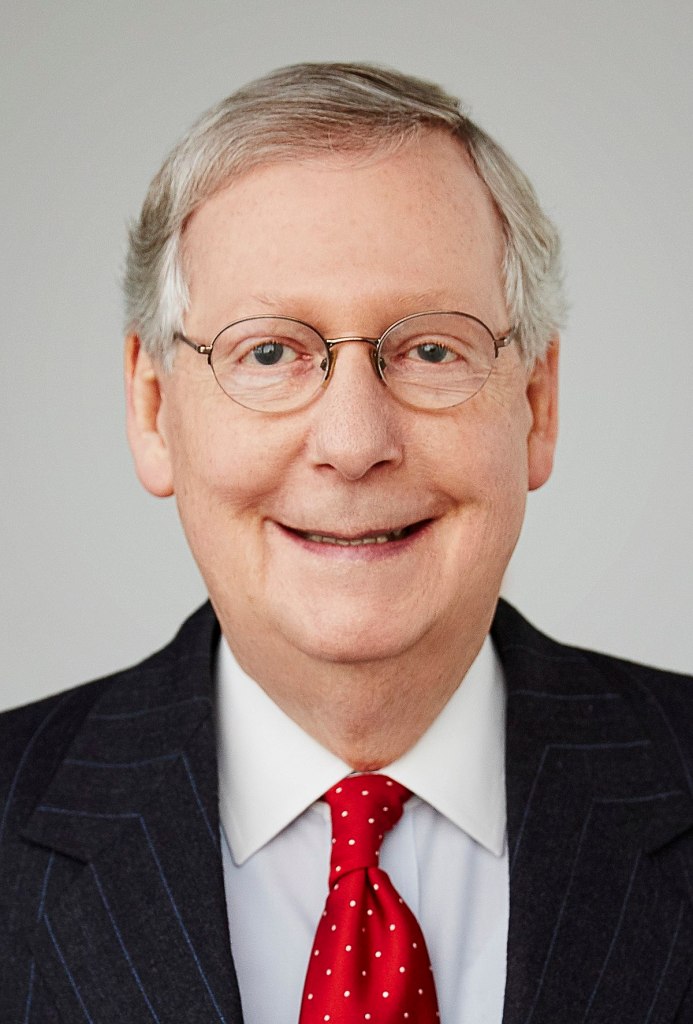
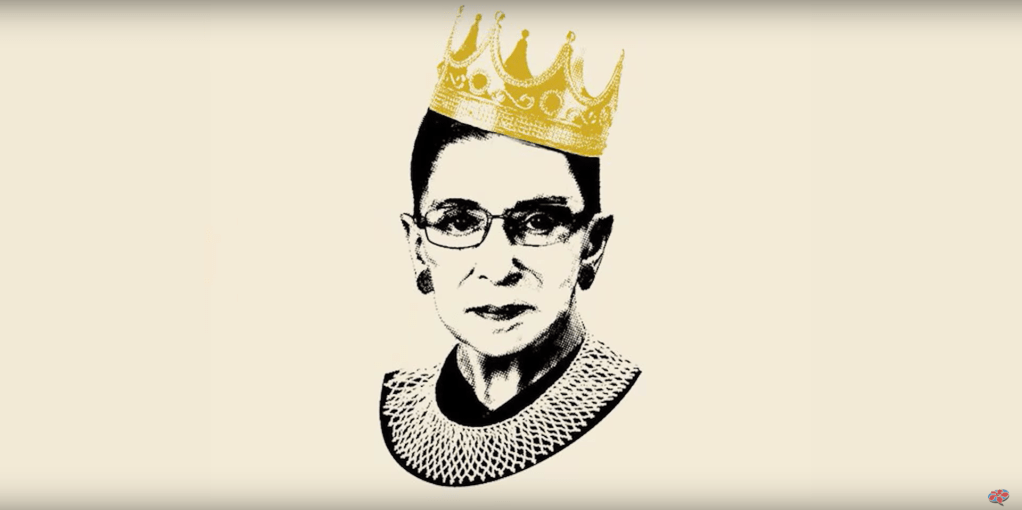
The answer to the question posed above seems to depend on whether a) the President in question is a Republican or a Democrat b) which party controls the Senate, and c) just how much cynicism and utter shamelessness Senate Majority leader Mitch McConnell (R-Ky) can muster. Given that he didn’t even bother to wait until rigor mortis had set in before announcing that the Senate was ready to replace Ruth Bader Ginsburg by Sunday brunch, his lack of self-reflection runs even deeper than any previous diagnosis indicated.    

The Notorious RBG

Back in 2016, according to Senator McConnell, it appears to have been morally repugnant to appoint a Democratic nominee, Merrick Garland, as an Associate Justice of the Supreme Court of the United States (SCOTUS – they do love their acronyms!) in March of a Presidential election year – i.e a full eight months before the 8 November polling date. But, in 2020 it seems to be just dandy to start the same process less than eight weeksbefore another Presidential election. 

Of course the two situations are entirely different. The truth can be found in the Chinese Zodiac.

Chinese papercut art in for the year of the monkey 2016.

2016 was the Year of the Monkey while 2020 is, with a certain poetic inevitability, the Year of the Rat. Everyone knows that in a Year of the Monkey (1932, 1944, 1956, 1968, 1980, 1992, 2004, 2016) it is not permitted, under an obscure amendment to the US Constitution of which only the senior Senator from Kentucky seems to have had sight, for the incumbent President (provided he is a Democrat) to appoint a new Associate Justice to a Supreme Court vacancy. These rules change completely, however, during any given Year of the Rat (1936, 1948, 1960, 1972, 1984, 1996, 2008, 2020). The Founding Fathers knew exactly what they were doing (as with the right to bear arms against pre-school children and the fabulously democratic Electoral College) when they favoured a rodent over a primate in framing this ‘lost’ amendment to the Constitution. It appears to have been re-discovered by the Senate Majority leader hidden underneath the original document in the National Archives where it had been carelessly placed by an absent-minded Alexander Hamilton who was late for a production meeting with Lin Manuel Miranda. Chapeau Senator!  

If Mitch has the brass neck to try and push through Trump’s nominee (probably female and due next week) it will mean the 45th President will have manged three picks in a single term. That would be a good strike rate, but not overly impressive if we look at the history of Supreme Court appointments.  

Some Presidents got to nominate a hell of a lot of justices. Obviously George Washington is the Olympic gold medallist in this particular discipline because he appointed all the members of the very first Supreme Court (there were six back then). He has a personal best of eleven appointees over eight years. Franklin Roosevelt comes next, largely because he was in office for most of the 20th century. His PB was nine, over almost a dozen years in the White House. He tried really hard to beat Washington’s total though (see below). William Hoard Taft holds the record for a one-term President with six appointees, before becoming Chief Justice himself (he wasn’t one of his own nominees by the way – he was appointed by half-term President Warren Harding in 1921). 

If Trump succeeds in appointing a replacement for Ruth Bader Ginsburg and, in the process, changes the political complexion of the Court for a generation, would a newly elected Joe Biden have any possible comeback? Indeed he would. There have been nine SCOTUS justices on the Supreme Court bench since the passing of the Judiciary Act of 1869 – before that the number varied between six and ten. The total is determined, not by the President, the Court itself, or the Constitution, but by Congress. So, nothing like a time-consuming and unwinnable constitutional amendment (requiring the ratification of 38 states) is needed to change the status quo.

In 1937 Franklin D. Roosevelt, frustrated at having many of his New Deal reforms stymied by adverse Supreme Court decisions against the constitutionality of many of his measures proposed to, in effect, ‘pack’ the Supreme court with a majority of his own nominees. He sought to introduce legislation which might have had the effect of increasing the number of justices to fifteen. He wanted the power to appoint a new justice for every incumbent who opted not to retire at the age of seventy. In this particular political sleight of hand he was thwarted by members of his own party and the exclusive (male) club remained nine strong. It has done so to this day.

Mitch

However, given the ’tradition’ that Senator McConnell established in 2016 and will conveniently ignore in 2020 (I won’t insult your intelligence by mentioning the Jesuitical reasoning by which he has informed his conscience, so that it allows him to flout his own ‘rules’) it should be in order for President Biden and a Democratic Congress to restore some political balance to the SCOTUS by adding one, or even two new, credible, and suitably qualified posteriors to the bench. That would make up for the SCOTUS pick denied President Obama in 2016, and newly elected President Biden (God that sounds soooo good) in 2020. 

And in case you are worried about having an even number on the court if he stops at one new appointee, fear not. In the event of a tied decision all cases go into overtime as the concept of a draw is not recognised in any truly American sport. Actually that’s not true, in the event of a tied vote the decision of the lower court being challenged in the high court, is duly confirmed. 

So, even if the handful of Republican Senators who have voiced opposition to a promotion to the SCOTUS during an election year are cajoled, bullied or intimidated into resiling from  the position held to so fervently by their own Majority leader in 2016, there are historical precedents for the Supreme Court bench to number more than nine Justices and there is no impediment to Congress adopting that course of action in 2021, the Year of the Ox.