On This Day – 1.5.1837 Birth of Mother Jones

00-mother-jones-01-05-12

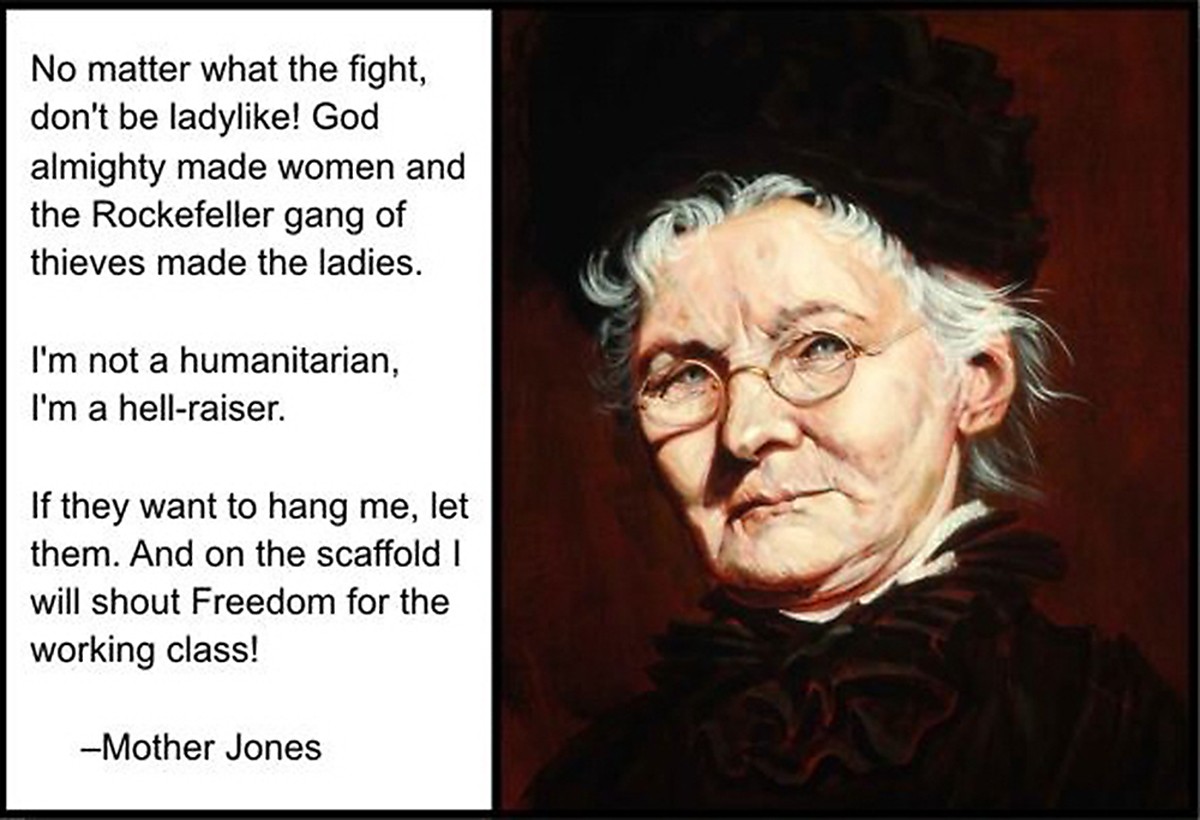
When your entire family, a husband and four children, die from yellow fever and then your business is destroyed in the Great Chicago fire you might be tempted to just give up. But not Mary Harris Jones, who instead, went on from extreme adversity to become ‘Mother Jones’ ‘the most dangerous woman in America’. That, at least, was how American mine owners saw her and she gave them good cause for their animosity.

Mary Harris was born in Cork City in 1837 emigrating to Canada with her family as a teenager. Later, as a qualified teacher, she moved to the USA and married George Jones, a union organizer, in Memphis, Tennessee. There she abandoned teaching and became a dressmaker.

It was in Memphis that she lost her family to disease. All her children were under five years of age. After that unthinkable tragedy she moved to Chicago and established a dress making business there. In 1871 a huge fire that killed 300 people and destroyed 9 square kilometres of the city took her business and her house with it.

After that she threw in her lot with organized labour and some of the most iconic unions in American history, the United Mine Workers, the Knights of Labour and the Industrial Workers of the Worker, better known as the Wobblies. Given her personal trauma her philosophy and personal motto ‘pray for the dead, and fight like hell for the living’ is particularly poignant. She travelled the USA organizing, speaking and motivating workers and their families to take action to improve their lot.

She was ardently opposed to the use of child labour. In 1903 she organized children to march in their thousands from Philadelphia to the New York home of President Theodore Roosevelt bearing banners with the slogan ‘We want to go to school and not the mines.’

During a West Virginia miners strike she ignored a court order secured by the mine owners and in her subsequent trial the District Attorney, appropriately named Blizzard, declaimed that ‘There sits the most dangerous woman in America … She comes into a state where peace and prosperity reign … crooks her finger [and] twenty thousand contented men lay down their tools and walk out.’

You might well have expected a female radical like Mother Jones to be a suffragist, but she wasn’t. She was opposed to votes for women or female participation in politics. Her philosophy was “You don’t need the vote to raise hell!”. She was of the opinion that men should earn sufficient money to allow their wives to bring up children. Equally unusually she claimed to be considerably older than she actually was, possibly in the interests of self protection, hence the nickname ‘Mother’ Jones.

She became so influential that, in the case of a mining strike in Colorado she was able to force the infamous ‘robber baron’ John D. Rockefeller into a face to face meeting and extract significant concessions from him on behalf of the moners.

Denounced in the Senate as the ‘grandmother of all agitators’ she responded by saying ‘I hope to live long enough to become the great grandmother of all agitators’. This she did, dying at the age of 93

Mary Harris ‘Mother Jones’, labour activist and champion of the working man was born 178 years ago on what, appropriately, has become International Labour Day.

mother-jones-master

On This Day 17.4.1920 – Inquest verdict Tomás MacCurtain murder

150px-Tomasmacurtain

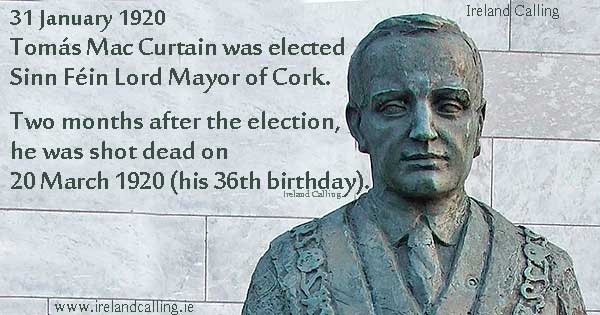
There is a street in Cork named after him and he was the first of two consecutive fatalities among Lord Mayors of Cork. The murder of Tomás MacCurtain on 2o March 1920 was followed seven months later by the death of his successor, Terence MacSwiney, after a hunger strike in Brixton prison.

MacCurtain, was born on 20 March 1884, and was, therefore, shot dead on his 36th birthday. Of more consequence was that the assassination took place in front of his wife and one of his sons. His background was similar to that of many other republican figures of the early 20th century. He was a member of the Gaelic League and a founding member of the Irish Volunteers, siding with the anti-war element when the organisation split in 1914.

MacCurtain would have been ‘out’ in 1916 but for the failure of his force of 1000 Cork Volunteers to receive orders to that effect from the Dublin rebels. After the Rising he received his further education in revolutionary nationalism in Frongoch prison in North Wales. After his release in 1917 he took up the position of Brigadier in the Cork IRA and was unsuccessful in an attempt in the early months of the Anglo-Irish war to assassinate Sir John French, the British Lord Lieutenant. In January 1920 he was elected to Cork City Council and was later elected Lord Mayor by his Sinn Fein party colleagues.

MacCurtain lived with his family in the Blackpool area of Cork. On 20 March 1920 a number of men – up to eight in all – with blackened faces ransacked his home and shot MacCurtain dead. It was one of a number of reprisal killings to take place on both sides. It has been suggested that McCurtain’s killing was in retaliation for the murder, earlier that day, of Police Constable Murtagh on Pope’s Quay. Whether organized retaliation would have occurred that quickly, within two hours of Murtagh’s killing, is a moot point.

But who actually shot the Sinn Fein Lord Mayor of Cork. The jury at his inquest had no doubt. The coroner, James.J.McCabe, examined 97 witnesses in all, 64 being members of the RIC. The inquest took nearly a month. The jury, unimpressed by conflicts of evidence among senior RIC officers in the city issued a verdict of ‘wilful murder’ against British Prime Minister Lloyd George and against a number of policemen, some named, but with the actual killers described as ‘unknown members of the RIC’.

More extra-judicial killings followed. Michael Collins made it his business to take revenge on any of the RIC officers alleged to have been involved in the assassination. The most prominent of these, RIC District Inspector Oswald Swanzy, the man accused of having ordered the attack, was himself murdered while leaving church in Lisburn in August 1920. In a highly symbolic act MacCurtain’s revolver was used to shoot Swanzy dead. The killing, however, sparked retaliatory action against the Catholic residents of the town.

The jury in the inquest into the assassination of Tomás MacCurtain, Lord Mayor of Cork, delivered its telling verdict 95 years ago, on this day.

1_31_Thomas_mac_curtain_Kglavin_CC3-600

PHILIP ORR TO GIVE INAUGURAL FRANCIS LEDWIDGE MEMORIAL LECTURE AT GALLIPOLI 100 IN KELLS ON 24 APRIL

Main_HistoryIrelandDebateAtCityHall28853_2033.jpgoct20-2004 Ledwidge Pics

As part of the Gallipoli centenary commemorations in Kells, Co.Meath – co-sponsored by the Hay/Kells Festival and RTE Radio 1’s The History Show – distinguished World War 1 historian will give the inaugural Francis Ledwidge Memorial Lecture on ‘Ireland and Gallipoli’ in St. Columba’s Church of Ireland Church at 7.30 on Friday 24 April.

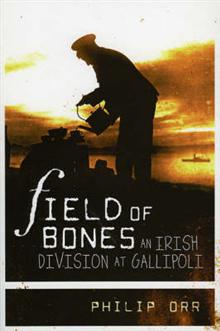
Philip Orr is the author of The Road to the Somme an account of the experience of the 36th Ulster division on 1 July 1916 and Field of Bones, a narrative of the 10th (Irish) division at Gallipoli in August 1915.

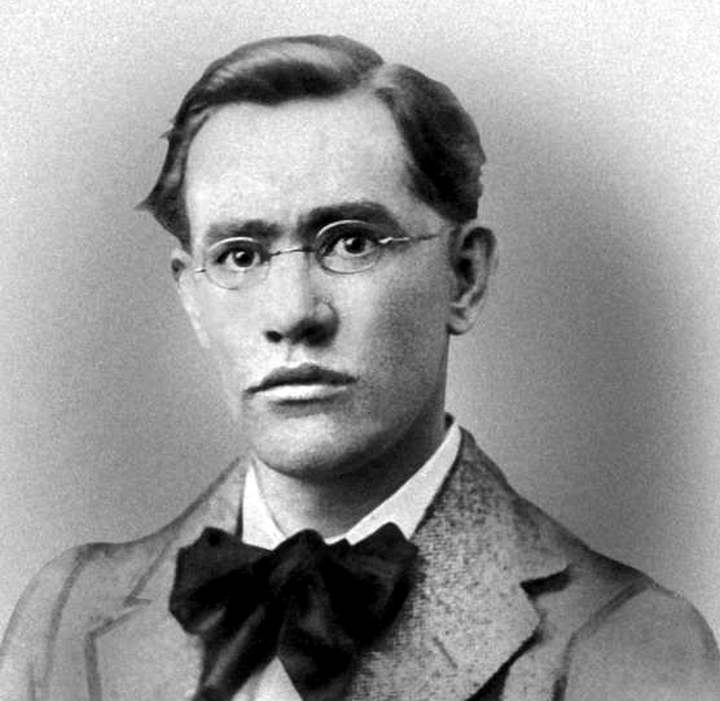
Francis Ledwidge, poet and nationalist, was a member of the 10th (Irish) division during the Gallipoli campaign and died in Belgium in 1917.

The lecture will begin a weekend of commemorative events and lectures to mark the centenary of the start of the Gallipoli campaign where more than 4000 Irish lives were lost.

In future years the Francis Ledwidge Memorial lecture will form part of the annual Hay/Kells Literary Festival.

The weekend will also include an examination of the role of journalism and poetry in the war in a day of lectures entitled The first draft of history? Journalism and poetry in the Great War, a day of talks on Ireland and Gallipoli on Sunday 26 April and a concert of WW1 music and anti-WW1 songs from Declan O’Rourke at 8.00 on Saturday 25 April.

There will also be memorabilia and genealogical experts (Tom Burnell and Gordon Power) available for consultation and a WW1 tour of the town led by archaeologist and historian Damien Shiels.

FOR MORE INFORMATION CONSULT THE RTE RADIO 1 HISTORY SHOW WEBSITE – http://www.rte.ie/radio1/the-history-show/

For tickets to all Gallipoli100 events phone 046-9240055

Gallipoli 100 is funded with the assistance of the Department of Foreign Affairs, Reconciliation Fund and the Department of Arts, Heritage and the Gaeltacht.

philip-orrcover_image-1311848490-96179

ASK THE EXPERTS AT GALLIPOLI 100 IN KELLS, 24-26 APRIL

imagesUnknown

As part of the centenary commemoration of the start of the Gallipoli campaign – one of the most costly in terms of Irish lives in WW1 – the Hay/Kells Festival and RTE Radio 1’s History Show, co-sponsors of the event, invite the public to consult some of the country’s best-known military historians about aspects of the Great War that interest them.

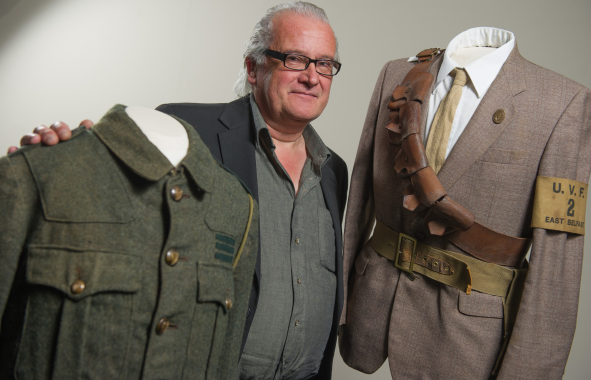
Available for consultation in St.Columba’s Church of Ireland church on the afternoon of Saturday 25 April will be military genealogist Gordon Power. Gordon can guide you in your search for information on a family member who took part in the war and also has a vast fund of knowledge on WW1 artefacts, such as medals and uniforms.

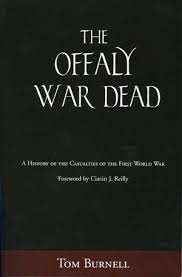
On Sunday, at the same venue, from 2-6 pm will be military historian Tom Burnell who has written a series of works on the WW1 war dead of a number of different counties. You will have access to Tom’s detailed database if you want to trace an Irish ancestor who died in the conflict.

In addition military archaeologist / historian Damien Shiels will take members of the public on a World War 1 tour of the town of Kells, stopping off at places associated with the conflict. The tour is open to all comers and will begin from the gates of St.Columba’s church at noon on Sunday 26 April.

All the above events are be free of charge.

The weekend will also include the inaugural Francis Ledwidge Memorial Lecture to be given by Philip Orr on Friday 24 April, an examination of the role of journalism and poetry in the war in a day of lectures entitled The first draft of history? Journalism and poetry in the Great War, and a day of talks on Ireland and Gallipoli on Sunday 26 April and a concert of WW1 music and anti-WW1 songs from Declan O’Rourke at 8.00 on Saturdat 25 April.

FOR MORE INFORMATION CONSULT THE RTE RADIO 1 HISTORY SHOW WEBSITE – http://www.rte.ie/radio1/the-history-show/

For tickets to other Gallipoli100 events call 046-9240055

hedstone

On This Day – Drivetime – 10.4.1918 – British Parliament proposes conscription in Ireland


1914-19181914-1918

In late 1917 the British satirical magazine Punch, the Charlie Hebdo of its day, printed a cartoon, the context for which was the progress – or lack of it – of the First World War. It depicted two men with a large comb divided into equal parts marked ‘England, Ireland, Scotland and Wales.’ The Irish section was toothless. The magazine, not noted for its admiration of ‘John Bull’s other island’ was suggesting that this country was not sending enough of its young men to stop machine-gun bullets on the Western Front and that it was high time the government did something about it. Compulsory military service for men between 18-40 had been introduced in Britain in early 1916.

A few months after Punch’s barb Lloyd George’s administration, which had hesitated to bring conscription to Ireland, finally grasped the nettle with the introduction in the House of Commons of an amendment to the Military Service Act. This raised the age limit to fifty and ended Ireland’s exemption.

The move came, essentially, as a panic measure in the wake of the crippling and humiliating German offensive of 21 March 1918.

The Home Secretary, Sir George Cave, in proposing the extension of compulsory military service to Ireland observed that ‘we are advised that it will yield a large number of men.’ The doubly bereaved Irish MP and British Army officer, Captain William Archer Redmond, who had lost his father and uncle in the preceding nine months, inquired ‘May I ask the right hon. Gentleman who advised him?’ The implication was clear. The Irish, who had volunteered in respectable if unspectacular numbers, were not going to be forced to join the British Army.

Cave was then interrupted by a passionate interjection from the Irish Party MP for Kerry North, Michael Flavin who shouted, ominously, at the government benches, ‘You come over and try it.’

1914-1918

John Dillon, leader of the Irish party since the death the previous month of John Redmond, pointed out that the raising of the military age and the extension of conscription to this country would have no impact on the military disaster that was the German Spring offensive in terms of manpower. It would take months to train the new conscripts by which time it looked then as if the Germans would be drinking champagne on the Champs Elysee and accepting the surrender of France and Britain. As it happens, by the time the debate began the German offensive had already begun to peter out and it would not be long before the Allies rolled back the German gains and made huge advances of their own that ended the war in November.

That they did so without any Irish conscripts was a function of a concerted and determined campaign in Ireland. A national strike, the opposition of the Roman Catholic hierarchy, a series of massive public meetings and the temporary shelving of the political differences between the moderate nationalist Irish Parliamentary and the more radical Sinn Fein ensured that the British government concluded it would cost more troops to enforce conscription than would be raised.

Had they not done so, and in the unlikely event that they had been successful in forcing Irishmen into the Army the death toll of Irish soldiers might well have greatly exceeded the 35,000 who did perish in the ironically titled ‘war to end all wars’.

The proposal to extend compulsory military service to Ireland was brought to the floor of the House of Commons 97 years ago, on this day.