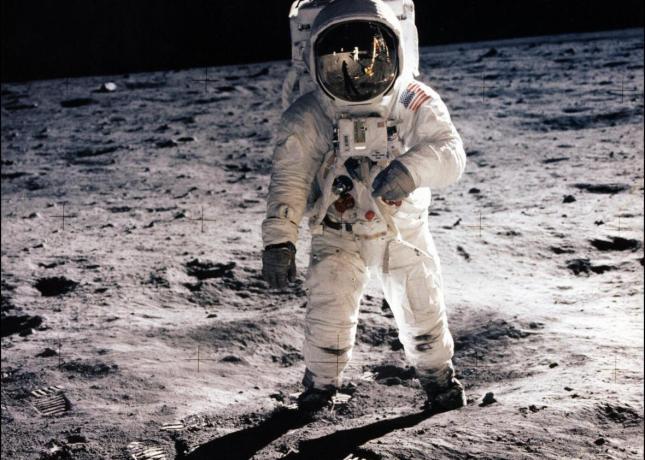
Fake Histories #29   The lunar landings of the 1960s and 70s were all faked by NASA?

iu.jpeg

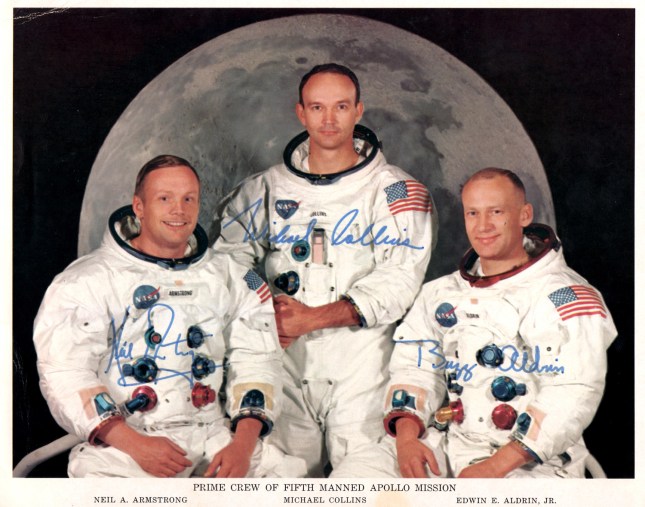
It gave us satellite TV, laptops, carbon monoxide detectors, the Black and Decker Dustbuster, Teflon, Neil Armstrong, Buzz Aldrin and Michael Collins—not the one who was left cooling his heels while the real action was taking place a few hundred miles away, that was Eamon de Valera.

I’m talking about the space race of the 1960s between the USA and something called the Soviet Union. It culminated fifty years ago this week in the landing of two Americans on the surface of the moon. Or did it? Was the whole enterprise an elaborate fake? For years dedicated fake scientists have argued that the entire Apollo programme was one gigantic hoax.

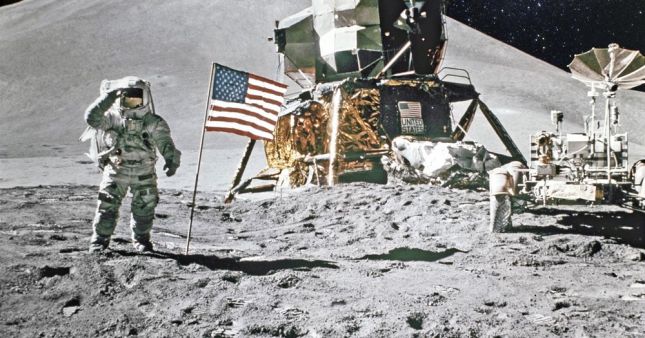
Exhibit A for the conspiracy theorists is the planting of the American flag by Buzz Aldrin. Like many expensive Dublin restaurants, the moon has no atmosphere worth speaking about. But when Aldrin stuck the Stars and Stripes in the lunar surface it appeared to move. This, the Apollo Eleven deniers conclude, indicated the presence of wind. As anyone who did Junior Cert science can tell you, there is no such thing as a breezy vacuum. Not only that, the flag managed to stay aloft throughout the lengthy extra-vehicular activity of Armstrong and Aldrin.

Therefore, Dr. Strangelove director Stanley Kubrick filmed the whole thing in the Hollywood Hills for NASA. Why? because the USA was miles behind the Russians in the space race, and if they lost that they would lose the Cold War, six-love, six-love. They also wanted to distract American citizens from the ‘Good Morning Vietnam’ War with some good news about the billions being spent on their behalf to land a dozen astronauts on a dust-covered rock. Furthermore, Gus Grissom, Edward White, and Roger Chafee were murdered by the American aeronautic ‘deep state’ when Apollo 1 went on fire before take-off in 1967. They were executed because they were going to spill the beans about this massive conspiracy and cause huge embarrassment to the Johnson administration.        NASA’s spurious insistence that the movement of the flag was caused by the very act of planting it in the moon dust, has been dismissed out of hand by all right-thinking conspiracy theorists. They also reject the proffered explanation for the continued erect state of the flag. The best NASA could come up with, was that it had been equipped with a traversal pole along the top in order to prevent it from hanging loose. Phooey!
shutterstock-285636983.jpg

The whole flag episode was dusted off for different reasons in 2018 when ultra-patriotic Americans, always on the lookout for cheese-eating surrender monkey slurs—men like the Florida Republican Senator, Marco Rubio—went out of their way to be outraged that the planting of the flag was ignored in the film First Man. This was the biopic of Neil Armstrong, starring Ryan Gosling. So now we know why. The director, the highly suspect French-American, Damian Chazelle, just wanted to avoid a lunar Twitterspat. If he depicted the planting of the flag, he was damned if there was no breeze, and he was damned if there was.

But that’s just Exhibit A. There’s much much more. Some of it is really exciting. Where are the stars, for example? All that dark lunar sky and not a single star to be seen.  You can safely ignore the astronomical fabrication which claims that the reflection of the sun’s light on the lunar surface would have been intense enough to eliminate all traces of starlight. Then there’s the rock with the letter ‘C’ painted on it. This was clearly left lying around by a set dresser or a ‘best boy’ – whatever they are. It features in one of the photographs released by NASA. Pay no attention whatever to their desperate explanation that it’s merely an imperfection on the photographic negative. Baloney.

Finally, there’s the unmistakable appearance in the top right-hand corner of another photograph of Brian O’Driscoll in hiking boots. OK, I just made that one up.

Apparently, it would have required up to 400,000 people to maintain silence for any or all of these conspiracy theories to be true – and what’s so incredible about that? There must have been at least that many people working in the Irish banking sector in 2008

So, were all the Apollo moon landings grotesque, but artistically successful fakes, directed by Stanley Kubrick and perpetrated by the US National Aeronautics and Space Administration? Oh, for God’s sake, grow up!
iu-2.jpeg


Fake Histories #28   Did King Billy give the Pope a bloody nose on 12 July 1690 at the Battle of the Boyne?


iu-2.jpeg

Today was a day for celebrating a two-hundred-year-old tradition in Northern Ireland. The Orange Order, founded in 1795, has been celebrating the Twelfth of July since 1796. They don’t hang about when it comes to a good march. Mostly, in the two hundred and twenty three years since the first parade, they have gone off peacefully enough, with the worst unrest taking place at the notorious clash at Dolly’s Brae, near Castlewellan, in 1849, when a contested procession led to a skirmish which resulted in an unknown number of dead Catholic protestors, possibly as many as thirty, though this figure is disputed by historians.

Orange marches are usually seen by one side as an expression of their culture, and by the other as a blatant sectarian provocation. But the event they commemorate should be known as the ‘Glorious Twelfth’ because of its very own glorious complexities.

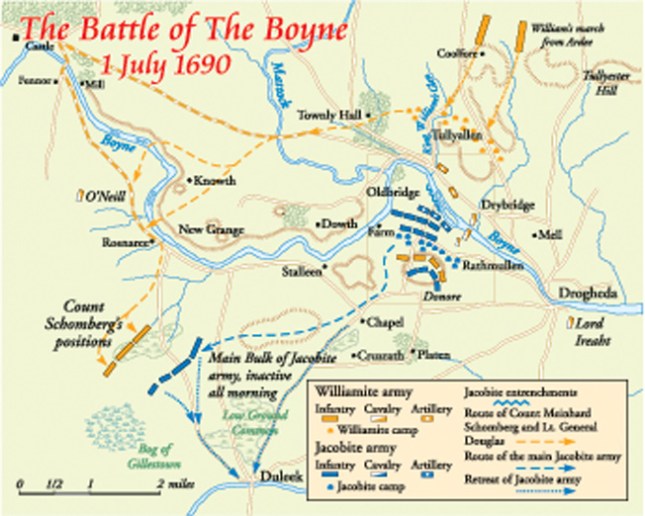
The fact is that when members of the Orange Order parade on 12 July in honour of the victory of King William at the Battle of the Boyne, they should keep a couple of things in mind. First, they might ask themselves are they commemorating the scuffle at the Boyne in 1690, or the far more significant Battle of Aughrim in 1691? Because Aughrim, the battle that finally ended Jacobite resistance in Ireland, was actually fought on 12 July, whereas the far less important Battle of the Boyne was fought on 1 July.

This is because of a Pope and a Roman Emperor. At the end of the 17thcentury, Ireland still went by the old Julian calendar, a survivor from the halcyon days of the Roman empire. The British Protestant administration which governed the country had rejected the new Gregorian calendar, adopted in 1582 because it was the brainchild of a servant of the antichrist himself, Pope Gregory XIII.

iu-1.jpeg

So, initially at least, celebrations of the ‘Glorious Twelfth’— not to be confused with the open season on harmless Scottish grouse with which it shares its name—were meant to commemorate 1691, not 1690. Then, sometime around the middle of the 18thcentury, Ireland finally adopted the Gregorian calendar and suddenly the anniversary of the Battle of Aughrim fell on 22 July. No problem to the highly adaptable Orange Order, we’ll celebrate the Boyne instead, because its anniversary now falls on the Twelfth!

Then there’s the second more awkward consideration for revelling Orangemen. Technically they should find some room on their banners for Pope Alexander VIII, because, back in 1690, he was an ally of William of Orange! Let me repeat that in case it was drowned out by the beating of a Lambeg drum … the Pope and King Billy were on the same side.

Allow me to explain this mightily inconvenient fact. The Battle of the Boyne was actually part of a much larger global conflict known as the Nine Years War. This began in 1688 and, no prizes for guessing ended in 1697.  It was also called The War of the Grand Alliance, the War of the League of Augsburg and, in North America, King  William’s war. It was fought between France and … just about everybody else. James II of England, being a good Catholic, was an ally of the French. William, a good Protestant, and an even better Dutchman was King Louis XIV’s sworn and implacable enemy.

So where does the Pope come into all this? Well Pope Alexander VIII, ruler of the Papal States, was an enemy of King Louis XIV. As we all know the most basic mathematical equation in realpolitik and war is, ‘the enemy of my enemy is my friend’. That made King Billy and Pope Alex very big buddies indeed. The corollary of that equation is ‘the friend of my enemy, is my enemy too’. This meant that King James II, for all that he was a staunch Catholic, was not on the same side of the quarrel as his own Pope. It also meant that the Catholic Irish opponents of William of Orange were not only fighting for an English King, but they were also doing so in opposition to the Pontiff in Rome.

When news of the Williamite victory over the Jacobites reached Rome, the Pope ordered that the bells of the Vatican City should be rung in celebration. It’s just possible this may not have come up in the speeches of various Grand Masters after today’s parades.

So, in answer to the question did King Billy give the Pope a bloody nose on the 12th July 1690 at the Battle of the Boyne? N,o he didn’t. It was 1 July, and they were on the same team. That’s fake history.

iu.jpeg

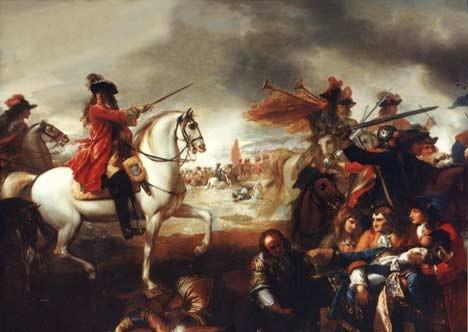
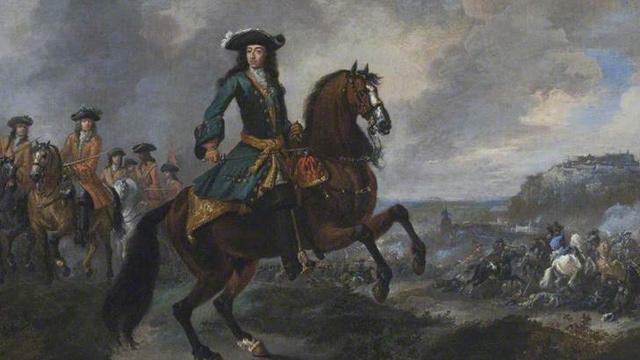
BTW – King Billy didn’t go into battle on white charger either. That’s fake history too!

Fake Histories #27  Christopher Columbus discovered America?


christopher-columbus-wc-9254209-2-raw.jpg

Yesterday America did what it does best, parades. Lots and lots of them. It’s hard to beat an American parade, whether it’s celebrating St. Patrick’s Day, the Chinese New Year, or Independence Day, with marching bands, baton twirling and expressions of love and loyalty to motherland, or fatherland, depending on your gender preference.

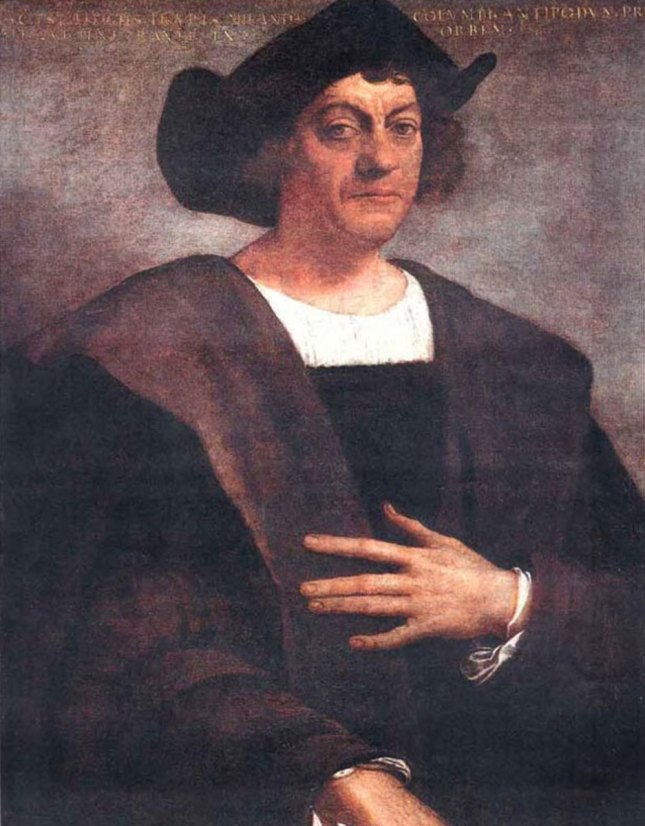
So with the focus on the USA this week it’s worth asking the thorny old question, was Christopher Columbus the first to locate America, and if he didn’t why does everyone give him credit for the discovery?

First of all, let’s sort out what we mean by ‘discover’. After all, it’s not like he found it down the side of the couch. There were plenty of people there before him. In the Eurocentric world of the fifteenth century you ‘discovered’ something when you were the first European to get there and begin the process of eliminating any indigenous peoples who had been around for the previous few millennia and had the cheek to assume ownership.

As is well known, when Columbus sailed out into the Atlantic in 1492 he was hoping to hit the eastern suburbs of Asia. Instead, he landed in the Bahamas, travelled on to Cuba and Hispaniola, kidnapped a few natives, and headed back to Spain to figure out how to exploit his good fortune. This is why America isn’t called Columbia, and the best the USA could do for him was call Columbus Day (12 October), and a few cities, after him. A later Italian explorer, Amerigo Vespucci, figured out that what Columbus had ‘discovered’ was nowhere near Asia. He realised it was an integral land mass and won the naming rights – hence the Americas, north AND south are called after Amerigo. Roll over Columbus. I suppose Americans should consider themselves lucky, Amerigo could have insisted on the place being called North and South Vespucci.

Of course, neither of those peripatetic Italian gentlemen even came close to being the first Europeans to land on any part of the continent of America. There are numerous prior claimants, some fanciful and some proven beyond doubt. Let’s take them in order of appearance, or invention. Starting with our own St. Brendan the Navigator, the world’s most famous Kerryman. Brendan, a sixth-century monk, is reputed to have built a variation of a traditional currach and sailed westwards with a crew of fellow monks to what is described in an 8thcentury text as the Isle of the Blessed.

Until 1976 it was generally believed to be impossible to sail something as relatively flimsy as a currach across the Atlantic Ocean until the explorer Tim Severin did just that. Severin didn’t prove that Brendan had got there–the possibility that he reached Iceland is more likely—but he did demonstrate that it was possible.

Which brings us to the Vikings. Their ancient sagas told of an adventurer named Erik Thorvaldsson, or Erik the Red who became the first permanent European settler of Greenland. Obviously, he hadn’t ventured too far inland before he gave the new snow and ice covered landmass a name.

Erik the Red had a son named Leif, assumed to have been born in Iceland. Leif Erikson was as adventurous as his father and journeyed even further westward, to a place he called Vinland because of the profusion of wild vines and grapes. In the 1960s the Norwegian explorer Helge Ingstad, and his wife Anne, an archaeologist, identified a site on the northern tip of Newfoundland which showed evidence of Norse settlement five hundred years before the voyage of Christopher Columbus. According to the Icelandic sagas, Leif Erikson didn’t remain long in Vinland, relations with the indigenous tribes of the area were not good, the Norsemen felt outnumbered and insecure and abandoned to settlement. Who knows, some of them may even have made it all the way back to Dublin in time for the Battle of Clontarf in 1014.

The work of the Ingstads in uncovering the Viking settlement offered confirmation of the Icelandic sagas and the European ‘discovery’ of North America around the end of the first millennium. In 1969 the United States Congress conferred recognition on the Norse role in the settlement of North America by establishing 9 October as Leif Erikson day.

Which secures the Viking claim to have got there first, until such time as some enterprising Irish archaeologist discovers the site of St. Brendan’s first American monastery and consigns Leif Erikson to the dustbin of history. Should that come about the Irish government should immediately petition the United Nations for the USA to be renamed, West Kerry.

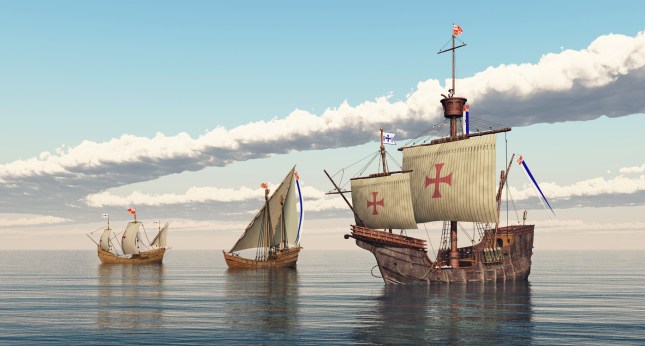
But did Columbus get to America first, with the Nina, Pinta and Santa Maria in 1492? Not by half a millennium, that’s fake history.

iStock-638225164.jpg


Fake Histories #26  American Independence was declared on the Fourth of July?


iu.jpeg

Next Thursday Americans the world over, but mostly in America itself, will mark their national day with all the fuss and razamatazz that they normally reserve for the celebration of Ireland’s national day. Americans are, justifiably, commemorating the day on which they, as a nation, declared their independence in 1776. The celebrations are entirely justified. Every nation should honour its Founding Fathers.

But why, one wonders, did the future US President, John Adams, writing to his wife Abigail, on 3 July 1776 predict that, ‘from now on the 2 July 1776 … will be celebrated by succeeding generations as the great anniversary festival …’? Was he looking at a 1775 calendar or something? And why did the Pennsylvania Evening Post write on the night of 2 July 1776 that ‘This day the Continental Congress declared the United Colonies free and independent states’. Because we all know that the Declaration of American Independence was signed on 4 July 1776.

Except that it wasn’t, and we’re all wrong!

What actually happened on 4 July that year was that the document which approved the declaration made two days previously was adopted by the Continental Congress. So, basically, the press release has, for nearly two hundred and fifty years, taken precedence over the actual declaration.

So we should really be singing …


‘I’m a Yankee Doodle Dandy,

Yankee Doodle do or die

A real live nephew of Uncle Sam

Born on the second of July’


Which doesn’t really scan all that well and probably would have had the composer, George M. Cohan, tearing his hair out trying to write a marching song with an irregular rhythm. Ironically Cohan, whose birth took place on the 3 July 1878, always believed he’d missed being born on Independence Day by a mere twenty-four hours. He did, but he was actually a day late!

The first real Independence day celebration, by the way, took place in Philadelphia … on 8 July. The soldiers of George Washington’s army had a party of their own when they got the good news, on … 9 July. News finally reached London on 30 August. But they didn’t party very much. Funny that.

And that’s not all the myth-making that surrounds American Independence Day. Take the magnificent John Trumbull painting that hangs in the Rotunda of the Capitol building in Washington D.C. It is thought by most to depict the signing of the Declaration of Independence by the American founding fathers. But it is actually the presentation of the draft Declaration to the Continental Congress. To further complicate matters this took place on 28 June. Forty-two of the fifty-six men who signed the document are included. Trumbull doesn’t even leave out fourteen of the signatories because they weren’t present on 28 June, but because he didn’t know what they looked like!

Among those depicted are Thomas Jefferson,  John Adams and Benjamin Franklin. Jefferson and Adams later wrote about formally signing the document on 4 July, with Jefferson even recalling vividly the flies circling over his head as he appended his signature.

Except that he didn’t, at least not on 4 July, or even on 28 June. What was presented on the latter date, by the five-man drafting committee, was not a clean copy, so no one signed it. On 2 August a corrected copy was made available and that was when most of the

signatures were added.

Furthermore, the famous Philadelphia Liberty Bell never rang out from the tower of the Pennsylvania State House to mark the occasion, or indeed any of the many occasions which make up the convoluted appearance of the independence declaration. That was a story invented for children in the middle of the nineteenth century, in a book with the apt title Legends of America.

Is that enough already? Or do you want more? If you do then how about the fact that the name Liberty Bell has nothing whatever to do with American Independence or liberation from colonial rule. It was so-named in the early 19thcentury by anti-slavery abolitionists in Pennsylvania.

So, in answer to the question, was American independence declared on 4 July 1776, no it wasn’t, that happened two days earlier. It’s fake history.


iu-1.jpeg


Fake Histories #25   Did Oxford, Bacon or Shakespeare write the works of Shakespeare?


iu.jpeg

It’s Midsummer’s night tonight, the longest night of the year, so more daylight than usual for champions of Edward de Vere, 17thEarl of Oxford, or Francis Bacon, 1stViscount St. Alban, to browbeat you into finally accepting that William Shakespeare did not, in fact, write A Midsummer Night’s Dream. Or Hamlet, or the Scottish Play, or King Lear… the list goes on.

Apparently it is just not credible that someone who didn’t go to Oxford or Cambridge, preceded by attendance at a public school—which, as we know, is the English name for what is really a private school—could possibly have written the enduring works ascribed to the humble, unknowable Bard of Stratford upon Avon. Therefore, so the theory goes, all the sonnets, and the plays performed at the Globe Theatre must have been written by a toff with a title.

When you get fed up with the Kennedy assassination, the faked moon landings, or the US government’s 9/11 conspiracy, you should give this one a try.

Shakespeare deniers, or skeptics, have included Mark Twain, Sigmund Freud, Henry James, Charlie Chaplin, Orson Welles and the actors Mark Rylance and Derek Jacobi.  There are organisations out there which cater to the doubters, like the Shakespeare Authorship Coalition—which, who knows, may end up running candidates for the European Parliament. There are also dozens of websites where you can be burned at the stake for Shakespearean heresy. These include DoubtAboutWill.org, where you can even sign a petition, the Declaration of Reasonable Doubt about the Identity of William Shakespeare.

Edward-de-Vere-1575.jpg

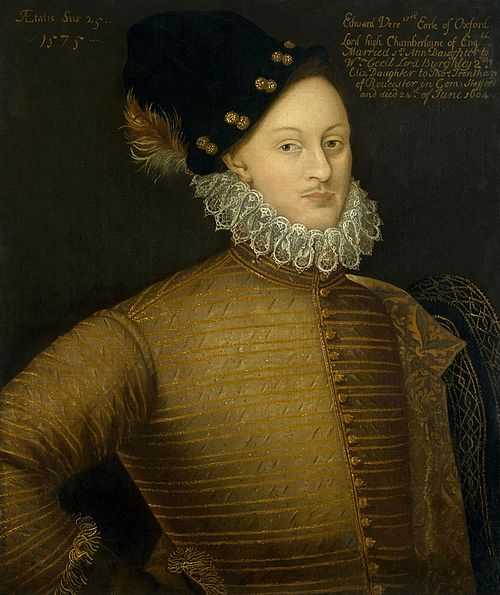
Edward de Vere – Earl of Oxford

Like many of these arcane topics the level of abuse being hurled between the competing parties approaches a 7.5 on the Richter scale. As always, levels of academic vituperation are at their highest when there is absolutely nothing at stake. While most scientists agree on a vital issue like climate change, they will tear out someone’s liver and eat it in front of their children when it comes to a topic like the authorship of Shakespeare’s plays. To the engaged the world is divided into Stratfordians (who believe Shakespeare wrote Shakespeare’s works), Oxfordians, who champion de Vere, Baconians and Marlovians – we’ll come back to them later.

The entire Shakes-sphere seems to have begun midway through the 19thcentury with a man called Schmucker—yes, as in the superlative of ‘schmuck’—who got fed up with people denying the existence of Christ, and in a satiric thrust decided to call the authorship of Shakespeare’s work into question. He intended it as a joke. He’s probably the last person to have approached the subject with any trace of a sense of humour.

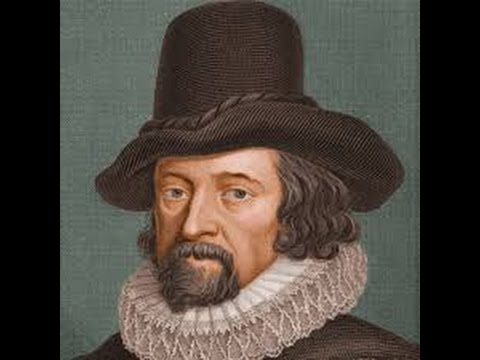
Take the case for Francis Bacon, which was initially made by someone called … Delia Bacon. Well, she would wouldn’t she? Actually, they weren’t related. Bacon is an über toff in that he was a philosopher, a viscount, and served as English Lord Chancellor, so, far better qualified to be a famous playwright than a working-class lad from Stratford about whom no one knows very much, except that he might have been a decent writer.

Delia Bacon was described recently by a Stratfordian on the doubtaboutwill.org website as having ‘come to believe she was the Holy Ghost and died in a lunatic asylum’. Nice!

The candidacy of Edward de Vere, Earl of Oxford, was first advanced in the 1920s by a man named J.T.Looney. I’ll pause there for a second or two in order to allow that one to sink in. Freud is also a supporter of de Vere’s cause but I absolutely refuse to sink to the level of the normal Stratfordian-Oxfordian debate by pointing out that Freud would have had a natural affiliation to someone called Looney. Incidentally, although JT’s name is spelled L-O-O-N-E-Y, he pronounced it ‘Loney’. Once again, it must be said, well he would, wouldn’t he?

Then there’s the cabal that believes the plays were written by Christopher Marlowe, author of Tamburlaine and The Jew of Malta. Marlowe was a contemporary of … I’m even scared to mention his name now. He died in a barroom brawl in 1593. Now if you’re good on dates you’ll spot the major flaw in the Marlovian theory, as in the fact that Shakespeare’s plays continued to appear until 1614. No problem to the Marlovians! Marlowe, they theorise, had fallen foul of the authorities and found it necessary to fake his own death.

So, did the Earl of Oxford or Francis Bacon, or Christopher Marlowe, or a costermonger named Kevin, write the plays and sonnets ascribed to one William Shakespeare, well, you might say that, I couldn’t possibly comment, because some of the more enthusiastic controversialists might find out where I live. You decide whether or not it’s fake history.

hqdefault.jpg

Francis Bacon