On This Day – 27.7.1897  Belinda Mulrooney opens Fairview Hotel in Dawson


iu.jpeg

It took courage, or desperation, to want to prospect for gold in the Yukon river valley in Alaska in the 1890s. There were a hundred ways of dying before you even got got there. It was an even more forbidding environment if you were one of the tiny handful of women who took their chances in such an overwhelmingly male world. But Belinda Mulrooney was well up to the task.

She was born in Sligo in 1872 and came to the USA as a 13 year old. She made her first sizeable sum in the restaurant business at the 1893 Chicago Exposition, which was supposed to celebrate the four hundredth anniversary of the arrival of Christopher Columbus in America in 1492 but didn’t actually get going until the four hundred and first anniversary.  After that she moved to San Francisco where she lost her first fortune at the age of 20. She had the ill-luck to put her savings into a city lot that was burned down when a dodgy neighbour torched hisproperty for the insurance money. Belinda wasn’t insured, and watched her investment go up in smoke. It was scant consolation that this meant she wasn’t around for the massive 1906 earthquake.

Then came the famous Klondike gold strike of 1897. That brought her to the frigid tundra of Alaska from the rather more balmy and hospitable San Francisco. But she came armed with some useful and lucrative calling cards, in the form of hot water bottles for sale to frozen miners. She made a six hundred percent profit on the deal, and used the money to buy herself a diner. Working the tables in her new restaurant she kept her ears open and bought a number of claims on the strength of gossip she heard from her hungry customers. The successs of a number of these meant that she quickly graduated from a lowly diner to a twenty-two room upmarket hotel, the Fairview, in Dawson.

This boasted steam-heated rooms, electric lights, a dining-room with linen tablecloths, sterling silver knives, bone china and steam baths. The lobby was decked out with cut-glass chandeliers, and boasted a full-time orchestra. She reckoned that newly rich miners would be prepared to pay handsomely for these unaccustomed luxuries. She was right.

Belinda Mulrooney was also as tough and hard as they come, a real ten minute egg. She was not a woman you crossed in a business deal – one story goes that an erstwhile partner double crossed her and left her with hundreds of pairs of unsaleable rubber boots on her hands. Shortly thereafter his mine mysteriously flooded (presumably by accident!!) and he was forced to buy the boots back from her at twenty-first century Nike prices of one hundred dollars a pair. That’s not far short of three thousand dollars today, acceptable for a couple of Jimmy Choos perhaps, but a regular rip off for cheap gum boots. She was also prone to resorting to violence to achieve her ends, an unfortunate teamster who got on the wrong side of her once was beaten up for his pains.

Mulrooney shared the Klondike with another formidable Irish businesswoman, the legendary Nellie Cashman from Cork. They crossed paths (and swords) at least once. Cashman offered Belinda a share in a disputed mine provided she used her influence over a mining inspector who was adjudicating Cashman’s claim. Nellie’s information was that Mulrooney was having an affair with the Inspector. She wasn’t, but she took the share anyway and did nothing to earn it.

However Mulrooney herself was conned by a scam artist named ‘Count’ Charles Eugene Carbonneau. He had about as much claim to the title of Count as Casimir Markievicz. She married Carbonneau in 1900 and he almost succeeded in ruining her by implicating his wealthy wife in a number of fraudulent enterprises. She divorced him in 1906. Given her record he was probably lucky to escape with his life.

Mulrooney eventually settled in Seattle, acquired a modest property portfolio and died there at the age of 95 in 1967! So, despite her association with the old American West, there are probably a number or people listening who shared the planet with her. Her character features in the recent Discovery Channel TV series Klondike where she was depicted by the Australian actor Abbie Cornish. Ms. Cornish, who is exceptionally easy on the eye, was photographed in a tin bath for a publicity still for the series. Clearly the producers were trying to convey the message that, despite the rough and tumble nature of the society in which she thrived, Belinda Mulrooney, was always concerned about her personal hygiene.

Belinda Mulrooney established the Fariview Hotel in Dawson, Alaska, one hundred and twenty-one years ago, on this day.

iu-1.jpeg


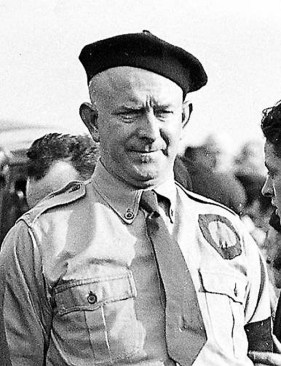
On This Day – 20.8.1933   Eoin O’Duffy becomes leader of the Army Comrades Association


iur.jpeg

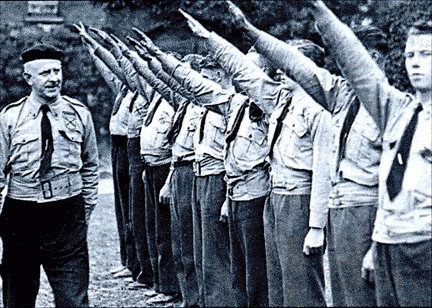
It all sounds pretty innocuous. I mean what harm would you expect from an organisation called the Army Comrades Association?  Doesn’t it conjure up images of old codgers who served in uniform together meeting up for the odd drink, a game of darts or snooker maybe, then home to bed after a nice warm cup of cocoa.

That might well be the case today. But back in 1933 the Army Comrades Association had a nickname based on the colour of their apparel. They were better known as the Blueshirts, and they were led by a man who was lost in admiration for the Italian dictator Benito Mussolini. His name was Eoin O’Duffy, and his career was far more vivid than the colour of the chemise worn by his supporters.

In 1922 he had, briefly, been Chief of Staff of the IRA, and had then fought alongside Michael Collins as a general in the pro-treaty forces during the Civil War. He was the youngest general in Europe, at the tender age of twenty-eight, until an even younger Spanish chisler was promoted to that rank in 1926. You may have heard of him, his name was Francisco Franco.

In September 1922 O’Duffy became the second Commissioner of the Garda Siochana. Eleven years later he became the first Garda Commissioner to be dismissed. Newly elected Taoiseach, Eamon de Valera, decided that O’Duffy’s Civil War loyalties would make it difficult for him to serve the new Fianna Fail administration. As O’Duffy had been advocating that W.T.Cosgrave’s defeated government should refuse to hand over power to Fianna Fail, you have to think that Dev might well have got that one right.

O’Duffy wasn’t idle for long. The soft and mushy sounding Army Comrades Association was formed in 1933, ostensibly to defend public meetings of the defeated Cumann no nGaedheal party. O’Duffy became its leader and changed the name to the far less fluffy National Guard. Neither name stuck, and they were rarely known as anything other than the Blueshirts, the colours brown and black having already been taken, by the Nazis in Germany and the Fascisti in Italy.

A month after the name change the Blueshirts announced plans for a huge demonstration to commemorate the all-important eleventh anniversary of the deaths of Michael Collins and Arthur Griffith. The whole scheme sounded just a little bit too much like Mussolini’s infamous 1922 March on Rome—albeit with a greater risk of squally showers. It was after the March on Rome that Il Duce had seized power in Italy. De Valera, not unreasonably, banned the demonstration, and then declared the National Guard an illegal organisation. O’Duffy cleverly got around the ban by changing the name of the Blueshirts to the League of Youth. The organisation then merged with Cumann na nGaedheal, to form Fine Gael—you may have heard of them too—and the Blueshirts underwent another name change, now becoming the Young Ireland Association. One can only imagine what Thomas Davis and John Mitchel would have made of thatact of plagiarism.

O’Duffy found Fine Gael just a bit too stuffy and left-wing for his liking and he lasted only a year in the new party. By then the Blueshirts were beginning to fall apart as well, and O’Duffy generously raised a brigade to go and fight for Franco in the Spanish Civil War, despite the fact that the generalissimo had taken away his heavyweight ‘youngest general in Europe’ title a decade before. The mythology surrounding the Irish Brigade in Spain is that seven hundred men travelled there, twiddled their thumbs for twelve months or so, and came home without having heard a shot fired in anger. It’s an unfair version of the actual facts, but not that unfair.

When World War Two broke out O’Duffy, who in the interim had founded the far from cuddly-sounding National Corporate Party, made overtures to Germany, and offered to organise a volunteer brigade to fight on the Russian front. The Germans didn’t take him seriously and, by then, no one in Ireland did either. He died in 1944, aged only fifty-two, and was given a state funeral. It certainly beat freezing to death somewhere near Stalingrad. I should also point out, that Micheal McLiammóir claimed to have had a brief affair with O’Duffy, which, if true, would not have gone down well in the pietistic Catholic circles in which he lived and moved. But then McLiammóir had a puckish sense of humour and might just have been spreading scandal about someone he had little cause to like.

Eoin O’Duffy, a serious fan of the colour blue, took command of the Army Comrades Association eighty-five years ago, on this day.

iur.gif

On This Day – 6 July 1865 The founding of ‘The Nation’ magazine


iu-1.jpegiu.jpeg

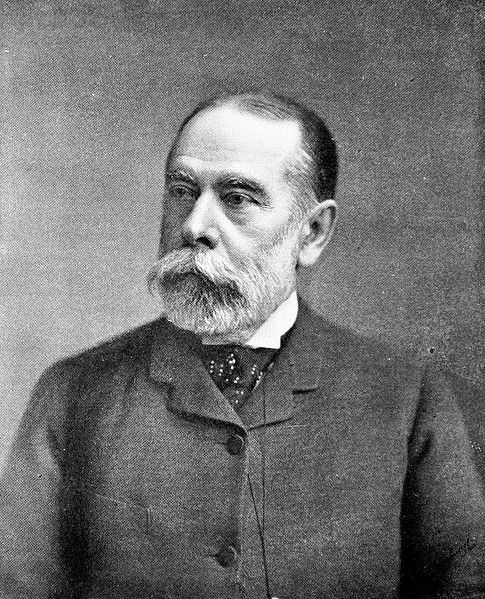
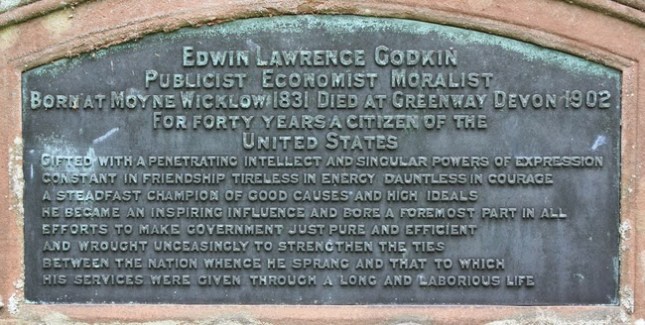
It’s the oldest continuous weekly magazine in the USA. It was founded to ‘wage war upon the vices of violence, exaggeration and misrepresentation by which so much of the political writing of the day is marred’. So not that much has changed since the Irish journalist Edwin Lawrence Godkin became the first editor of The Nationin July 1865, just a few months after the  end of the most destructive and divisive war in American history.

Godkin was from Moyne, Co.Wicklow, the son of a Presbyterian clergyman who lost his position when he publicly supported the Young Ireland movement. He then went on to become editor of the Dublin Daily Express newspaper. Had he not done so his son might well have ended up as a clergyman, rather than a ground-breaking journalist.

Godkin junior studied law at Queens University Belfast, and then headed for London in his early twenties. Like another celebrated Irish journalist, William Howard Russell of the Times, Godkin first made a name for himself as a Crimean War correspondent, in his case, for the, now defunct, London Daily News. He got the job—at the tender age of twenty-two— by writing to the editor and asking for it! The experience of Crimea imbued in the young Godkin a lifelong loathing of warfare.

iu-2.jpeg

After his stint as a war correspondent he emigrated to the USA, where one of his first assignments was touring the southern states, and writing about slavery for the Daily News. When the Civil War broke out he supported the Union, and wrote for the New York Times,while also editing the rather esoteric Sanitary Commission Bulletin. So, based in New York, he spent the Civil War alternating between writing about political and actual sewers.

The Nation, Godkin’s enduring achievement, emerged during the era of ‘reconstruction’, when the Disunited States of America began to put itself back together again. Godkin was prevailed upon to set up the magazine by a number of political progressives and former abolitionists, who were anxious to ensure that the South was not enabled to slide back towardsad hocslavery. They also wanted to expose the rank corruption that characterised big city American politics, and that of the post-Civil War administrations of Andrew Johnson and Ulysees Grant.

One of the entrenched organisations that Godkin took on with a vengeance was the Tammany Hall / Democratic party ‘machine’ that dominated the politics of New York. Although it was populated at grass roots level by many of his own fellow countrymen, Godkin and the Nation regularly lacerated the shady leadership of the organisation. His journal was inundated over the years with libel actions threatened by his opponents, none of which ever came to court.

Godkin, who had called the Nation after the famous Young Ireland publication of the same name, was a committed and enthusiastic Irish nationalist who, in the 1880s, actively supported and wrote about the Home Rule movement. As a liberal progressive his only blind spot was his consistent opposition to female suffrage, at a time when individual American states, like Wyoming, were giving women the vote.

In 1881 Godkin sold out his interest in his weekly journal to the New York Evening Post, but remained on as editor of the Nation until 1899. He died three years later.

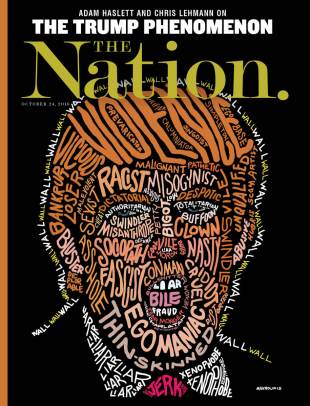
The job he began in 1865 continues to this day with the Nation, a rare enough left of centre mass circulation newspaper, still selling around one hundred and fifty thousand copies a week. It has consistently supported unpopular causes in the twentieth and twenty-first centuries. The Nation advocated US entry into World War Two long before Pearl Harbour forced  America into the fight against Fascism. It was one of the earliest and most vociferous opponents of the anti-Communist witch hunts of Senator Joseph McCarthy in the 1950s. In January 2016 the magazine supported the campaign of Bernie Sanders for the American Presidency, declaring his candidacy to be ‘an insurgency, a possibility, and a dream that we proudly endorse’. Edwin Godkin probably purred in his grave.

Recent regular contributors have included Noam Chomsky, Naomi Klein and Christopher Hitchens. The paper today relies for a third of its revenue on supporters who subscribe over and above the cost of their weekly read. Only ten per cent of its revenue comes from advertising.

Edwin Godkin, Wicklow-born son of an Irish newspaper editor, established the campaigning Nation magazine one hundred and fifty-three years ago, on this day.

hasel2a.jpg

On This Day- Irish professional Baseball players


usa_today_10730551.0.jpg

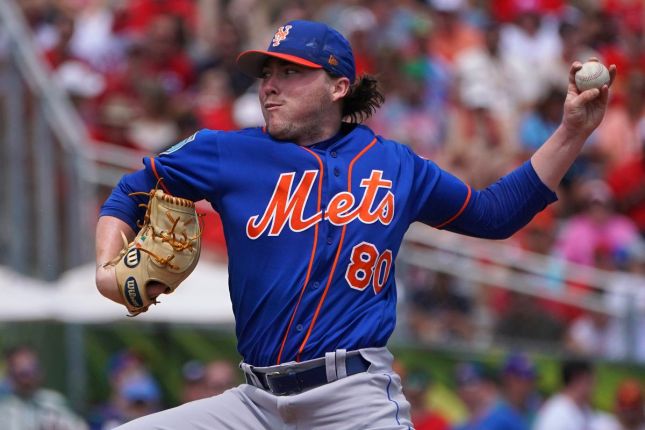
When twenty-one year old Belfast-born P.J. Conlon was drafted by the New York Mets in 2015 he became the first Irish-born player to be associated with a Major League Baseball franchise since Corkman Joe Cleary, nicknamed ‘Fire’, in 1945.

There was a time when there were so many Irish-born or Irish-American professional baseball players that there was a theory the Irish were ‘peculiarly adapted’ to the sport, a very Darwinian notion indeed. The ‘golden era’ for Irish baseball players was from 1870-1900, which coincided with a huge influx of Irish immigrants, and the ‘coming of age’ of the post-Famine wave of Irish migrants. In the 1880s, for example, it is reckoned that up to a third of all professional ball players were Irish or of Irish extraction

Ireland boasts a total of forty-seven officially and statistically recognised Major League Baseball players, that’s more than any other country in Europe. Only Britain, with forty-three, is even close.

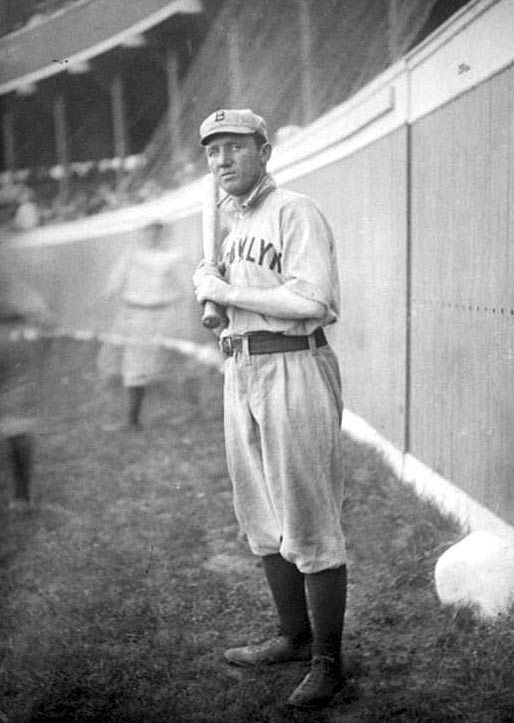
One of the best was Patsy Donovan, from Cobh, although it was known as Queenstown when he made his Major League debut in 1892. He played for a number of teams, including the Pittsburgh Pirates and the St. Louis Cardinals. He played in the big leagues for eleven years, before he went into management, where he took charge of the Boston Red Sox for a couple of season. After he left their organisation he spotted a kid named George who, he thought, had potential. He persuaded the Red Sox to sign George. A few years later they traded him to the New York Yankees. You might know George by his more familiar nickname, of Babe Ruth. Donovan went on to coach a high school team, St. Phillip’s Academy in Andover, Massachusetts. There, one of the young players under his charge, although no Babe Ruth, was of considerable significance. He name was also George, as it happens, George Herbert Walker Bush.

Irish ball players tended to be colourful. They had names like Curry Foley, Cyclone Ryan and Sleeper Sullivan. Or they played with one arm, like the pitcher Hugh Daily. He lost his left hand in a gun accident. He had a special pad made to cover the hand, and caught balls by trapping them between the pad and his throwing hand. He once punched his catcher for tossing a ball back to him too hard.

Then there was first baseman ‘Dirty’ Jack Doyle, from Killorglin in Kerry, who played for seventeen seasons for teams like the New York Giants (now in San Francisco), and the Chicago Cubs. He was called ‘Dirty’ because he was constantly getting caught up in fights, with opponents, umpires, fans, and even his own teammates. He regularly waded into the stands to attack fans who were abusing him, and was arrested for this on a couple of occasions. He also hit twenty-six career home runs, so he could play bit as well.

46db27a9f7b91b609988a9eb59f9e297.jpg

The Irish Baseball League recognises Cavanman Andy Leonard as the most accomplished Irish-born Major Leaguer. He was a member of the 1869 Cincinnati Red Stockings, America’s first professional team, and the Irish League’s Most Valuable Player Award is called after him.

By the time of the Great War Irish professional ball players had almost died out. Paddy O’Connor from Kerry was the last. He played for ten years. His final game was with the Yankees in July 1918.

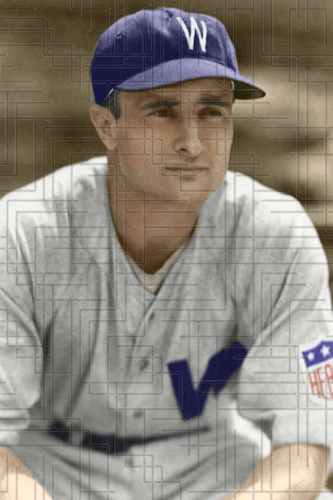
Then, in 1945, the drought ended when Joe Cleary, pitched in a game for the Washington Senators, against the Boston Red Sox. It was a memorable inning. But for all the wrong reasons. Cleary came on as a relief pitcher in the fourth inning of the second game of a doubleheader.So, he was probably a lot fresher than the players around him, but it didn’t show. He holds the unenviable record of having the highest career ERA of any pitcher ever to toss a ball over home plate in Major League Baseball. I won’t even begin to explain what an ERA means, but it’s a way of measuring how good a pitcher is and it’s a bit like a golf score, the lower the better. Top baseball pitchers would be hoping for a career ERA of between three and four. Joe Cleary’s, based on a single inning, was one hundred and eighty-nine.

He gave up a total of seven runs in one third of an inning. As if that wasn’t bad enough when he was dragged from the pitcher’s mound he was replaced by a man called Bert Shepard, who only had one leg. Cleary later owned a bar in New York and to his dying day, in 2004, was never allowed to forget his five minutes of fame in the big leagues. His response was always a simple ‘at least I was there’.

Jack O’Neill, one of two brothers from Maum in Co. Galway to play for the St. Louis Cardinals, and one of forty-seven Irish-born Major League baseball players, died eighty-three years ago, on this day.

Joe Cleary store.png

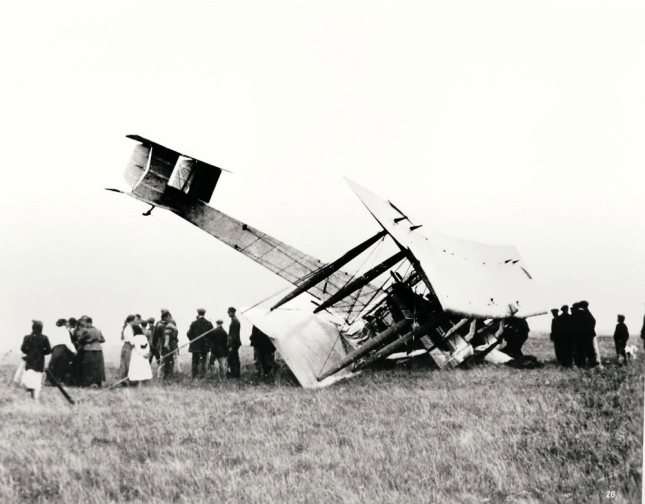
On This Day – 15 June 1919 – Alcock and Brown land in Ireland


alcockbrown.jpg

In April 1913 the Daily Mail, then a brash teenager, offered the substantial prize of £10,000 to ‘the aviator who shall first cross the Atlantic in an aeroplane in flight from any point in the United States of America, Canada or Newfoundland to any point in Great Britain or Ireland’. Nowadays if you wrote something as dull and long-winded as that for the Mail you would be fired before you had lit your pipe and started into the Times crossword.

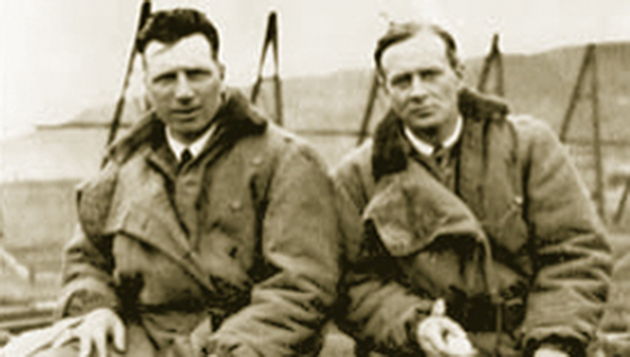
Back in 1913 aerial flight was in its infancy and thanks to the intervention of the Great War there were no takers for the prize until well after the 1918 armistice. During the conflict two British prisoners of war, John Alcock from Manchester and Arthur Whitten Brown born in Glasgow, but also a Mancunian, had plenty of time to think about that £10,000 and what they might do with it.  Alcock had come to grief in an air raid over Turkey, Brown was a guest of the Kaiser after having been shot down over Germany. Given the state of health and safety in Great War aviation, they were lucky to be alive.

Both men became involved with the Vickers corporation in the post-war competition to be the first to make a non-stop transatlantic flight. Alcock was taken on first, as a pilot. Brown was then added to the crew as navigator.  Their main rival was a team from the Handley Page company. The relationship between the two companies was of a Tony Blair-Gordon Brown character, without the spin. Spinning is not good in aviation. The Vickers crew adapted a Vimy twin-engined bomber for the race, replacing the bomb bays with additional gasoline tanks. They carried nearly nine hundred gallons of aviation fuel.

Alcock and Brown took off from Lester’s Field, Newfoundland at 1.45pm on 14 June. They flew at between sea level and twelve thousand feet, depending on weather conditions. Brown’s navigational instincts were vital for their survival as their airspeed indicator malfunctioned early on and he had to estimate the distances being covered every hour in order to avoid flying miles off course.

They made landfall after less than sixteen hours in the air, spotting what they thought was a green field near Clifden in County Galway. It turned out to be bog. Both men emerged unscathed from the experience, having covered more than three thousand kilometres in an average speed of one hundred and eighty-five kilometres per hour.  One of the first locals to greet them was reporter Tom Kenny owner of the Connaught Tribune, who grabbed an interview before the Daily Mail correspondent could reach Derrygimlagh bog and ask the two men ‘how do you feel?’ The scoop went worldwide. Kenny’s son Des later established the world-famous Kenny’s Bookshop in Galway.  News of the successful flight was relayed from the Marconi transatlantic wireless station just a few hundred yards from where Alcock and Brown had made landfall.

The pilot and navigator were feted internationally. They did well to survive the hospitality of their Clifden hosts, and within days they were knighted by King George V. Alcock did not live very long to enjoy his share of the fame and the prize money. He died the following December at an air show in France at the age of twenty-seven. Brown lived through World War Two and died in 1948 at the age of sixty-two.

They weren’t actually the first to fly the Atlantic. A fortnight beforehand the ocean had been successfully negotiated by a US navy flying boat piloted by Lt.Commander Albert Cushing Read. But that had taken twenty-three days and involved half a dozen stops, so it didn’t qualify for the Daily Mailprize.

John Alcock and Arthur Whitten Brown set off into the unknown, for a date with history, and crash-landed in a Clifden bog, ninety-nine years ago, on this day.

Alcock-and-Brow.jpg