On This Day – 10 November 1861 The funeral of Terence Bellew McManus

Terence_Bellew_McManus_(Young_Ireland)


Say what you like about the Irish republican movement since the 1860s but you’d have to concede, they do great funerals. There would have been no … ‘The fools, the fools, they have left us our Fenian dead’, from Patrick Pearse in 1915, had the IRB not transported the body of Jeremiah O’Donovan Rossa from New York, to have him buried in Glasnevin. That was one of the reasons why the British authorities were quick to dispose of the bodies of the executed 1916 leaders ‘in house’. The last thing they wanted was fourteen Dublin funerals.

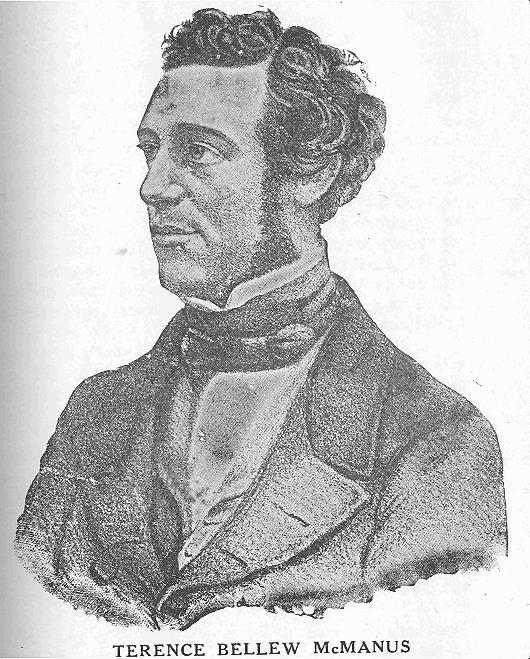
But the obsequies of Rossa were merely an expert copy, convincing but unoriginal. The first great Fenian funeral was that of a relatively obscure Young Irelander, Terence Bellew McManus. He was no Thomas Davis, no John Mitchel, not even a Thomas Francis Meagher. But he had occupied a prominent position in the mid-1850s generational conflict between the romantic nationalists of the Young Ireland movement, and the waning Daniel O’Connell. And he died, in San Francisco, at just the right time.

McManus was a friend of one of the founders of the Nation newspaper, Charles Gavan Duffy. He had made a fortune exporting wool, and then lost most of it in the mid-1840s investing in railroad stock. An enthusiastic British-based Young Irelander he travelled back to this country in 1848, after the authorities declared martial law in anticipation of a rebellion. He was one of the few members of the movement who actually took up arms. He participated in the only military action of the 1848 rising, the infamous skirmish at the Widow McCormack’s cottage in Ballingarry, Co. Tipperary. He eluded capture in Ireland, and returned to Britain. There he was declared bankrupt and just managed to get on board a ship bound for the USA before he was arrested.

The trouble was that the ship on which he was travelling was called back to port, he was hauled off, and tried for treason. His famous statement, that he had acted as he did, ‘not because I loved England less, but because I loved Ireland more’ cut no ice. He was sentenced, like most of his fellow leaders, to be hanged, drawn and quartered—an appalling penalty that remained on the statute books for the crime of high treason. A petition seeking clemency for the convicted Young Ireland leaders, with one hundred and fifty thousand signatures appended, was presented by the Lord Mayor of Dublin to the Lord Lieutenant. The barbaric capital penalties were diluted to transportation. By October 1849 he was settling into life in the penal colony of Tasmania, or van Diemen’s Land

Like a number of his colleagues, McManus managed to escape from captivity—in his case with Thomas Francis Meagher—and made his way, in 1851, to San Francisco. After which McManus disappeared from sight, abjured most political activity, and tried to build up a respectable business, though without much success.  He suffered a fatal accident in January 1861, died and was buried in San Francisco. And that should have been the last we ever heard of Terence Bellew McManus.

However, a campaign began to raise money to put a monument over his grave in Lone Mountain cemetery. But the IRB had a better idea. Instead of a monument, McManus got a two-month one-way trip back to Ireland, via Panama, New York and Cobh. This was followed by a huge funeral in Dublin, skillfully organised and exploited by the Irish Republican Brotherhood. The organisation had not existed when McManus was in his pomp, but included some of his former Young Ireland chums, like James Stephens.

The Cardinal-Archbishop of Dublin, Paul Cullen, was allergic to Fenians, and refused to allow McManus’s coffin to lie in the Pro-Cathedral. So, instead, he lay in state in the Mechanic’s Institute, from where his remains were taken, in solemn procession, to Glasnevin cemetery, watched by thousands of Dubliners.

Whether or not this indicated growing support for the nascent Fenian movement, or just confirmed the Irish attachment to a good funeral, it emboldened the IRB and greatly vexed their constitutional nationalist opponents as well as most of the Roman Catholic hierarchy.

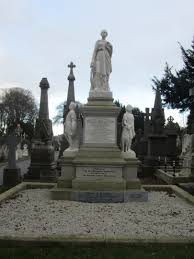
McManus eventually got his monument, but not until well into the twentieth century. Funds had been raised to build it by 1895 but the inscription was considered too political and the Glasnevin Cemetery Committee refused to allow it to be erected until 1933. He now shares his grave with, among others, Patrick W. Nally, after whom the Nally Stand in Croke Park was named.

Terence Bellew McManus, emerged from relative obscurity to become the central figure of the biggest funeral in Dublin since Daniel O’Connell’s, one hundred and fifty-six years ago, on this day.
 

Unknown.jpeg


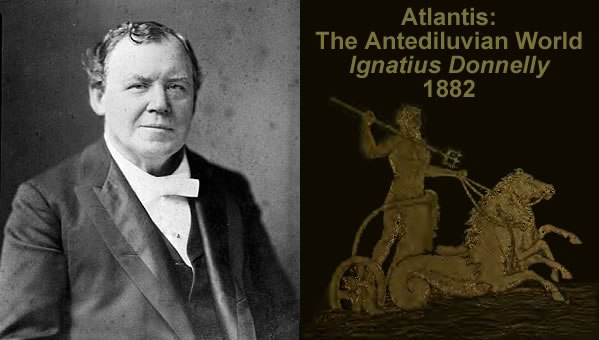
On This Day – 3 November 1831 Birth of Ignatius Donnelly


Talking about the Aryan race was actively discouraged until recently. Then we discovered the so-called ‘alt.right’. It could become unpopular all over again if the ideas of Ignatius Donnelly are correct. His theory was that Aryans were from the lost island of Atlantis, and that their red-haired blue eyed descendants were Irish. So, eat shamrock Breitbart.com!

Ignatius Loyola Donnelly was born to an Irish father, and Irish-American mother, in Philadelphia in 1831. He became a lawyer in his twenties, but devoted most of his life to politic,s and to what would today be described as ‘pseudo-science’ but which, in the nineteenth century, had a significant constituency.

Donnelly was something of a utopian socialist. In the 1850s he co-founded a commune in Minnesota which went spectacularly bust after one of the cyclical financial downturns of nineteenth century America. This was the ‘panic of 1857’ – son of the ‘panic of 1837’ and father of the ‘panic of 1873’.  You could almost set your alarm clock by them.

After that Donnelly, who had acquired something of a reputation for financial impropriety, entered politics, the last refuge of the scoundrel. He was a Congressman for the Minnesota Second District from 1863-69, an advocate of female suffrage, and a radical champion of freed slaves. So, not that much of a scoundrel after all. We’ll come back to the politics later.

But he was also celebrated, in the late nineteenth century for his writing, especially his explorations of the legend of the lost city of Atlantis in his book Atlantis: the antediluvian world. He had an intense Platonic relationship with his subject, as in, he took as gospel everything the Greek philosopher Plato had written about the place. Atlantis wasn’t a fable to Donnelly or Plato, it was real.  It was where man first rose from barbarism to civilisation. It was destroyed by a natural disaster that gave rise to the biblical stories of the Flood. There’s a lot more besides. It’s all very ‘New Agey’, and led to Donnelly being dubbed by some ‘The Prince of Cranks’. In a subsequent work he speculated that the cataclysmic event that had destroyed Atlantis had been caused by a meteor strike. While his work may have been wacky and alternative it sold very well.

Donnelly also had a bee in his bonnet about William Shakespeare. He was one of many who tried to debunk the notion that the plays ascribed to Shakespeare, had actually been written by the humble thespian from Stratford upon Avon. His theory was that they were actually the work of Francis Bacon, the seventeenth century English philosopher. He theorised that Bacon had inserted a code in the works of Shakespeare, which only clever people like Ignatius Donnelly were capable of deciphering. The ‘Bacon as Shakespeare’ theory had a lot of enthusiastic adherents at the time.  It still does today.

In 1891 Donnelly wrote a dystopian science fiction novel which predicted the invention of radio, TV, the internet and poison gas. Caesar’s Column is set in 1988, in an America ruled by a ruthless financial oligarchy. So, well off the mark there! The book is about an insurrection against capitalism.

Politically, Donnelly moved leftwards as he got older, from the anti-slavery Republican party of the Civil War, to the People’s Party of the 1890s. The latter was a coalition of mid-western agricultural and labour interests which sought an eight-hour working day, the abandonment of the gold standard, and the reining-in of the massively wealthy and predatory railway interests. Donnelly was responsible for much of the formulation of the political platform of this short-lived ‘third’ party.

In 1900, a few months before his death, he was nominated as the Vice Presidential candidate for the People’s Party in that year’s general election.

Ignatius Loyola Donnelly, who, despite being called after the founder of the Jesuit Order renounced his Irish Catholicism early in his life, was born one hundred and eighty six years ago, on this day.


ignatius-donnelly


On This Day – The Bryan Guinness / Bruno Hat hoax – 1929

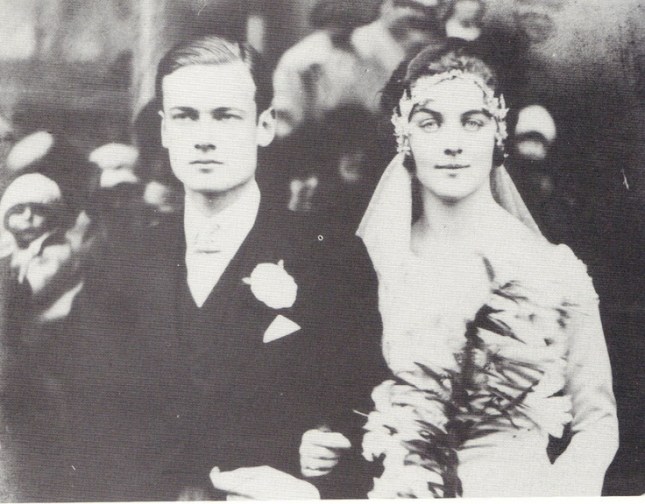
1929 was quite an eventful year for twenty-four year old, Bryan Guinness. He married one of the most controversial Englishwomen of the twentieth century, and he perpetrated one of the liveliest artistic hoaxes ever seen in London.

Guinness was born, in 1905, with a silver spoon in his mouth. He was an heir to part of the extended family brewing fortune and was also due, at some point, to inherit Daddy’s title and become Lord Moyne. He went to Eton, followed by Oxford, and, was called to the Bar in 1931. So far so predictable. Except for 1929.

When everyone around him was having a meltdown as the value of their shares plummeted after the Wall Street Crash, Bryan was settling into wedded bliss with one of the famous Mitford sisters. Unfortunately, he chose one of the ‘bad uns’, Diana. He might have chosen Debbie, who, instead went on to become a Duchess. Or he could have opted for the obscure Pamela, a great lover of poultry, or Jessica, a campaigning investigative journalist. We won’t talk about Unity—that would have been almost as bad. But, of course, he had to get hitched Diana. Today he could have married the only male sibling, Tom, but in the 1920s that wasn’t really an option.

88a8177f51a215941eaa22acf9098e5d.jpg

Now the reason you’ve probably heard of Diana Mitford is not because she married Bryan Guinness, and became Lady Moyne, because she didn’t. She married him all right, but then she took up with the Nigel Farage of the 1930s, Oswald Mosley, leader of the British Union of Fascists. As there were too many people in the marriage, Bryan wisely decided to drop out of the arrangement. He divorced Diana, who then went on to marry Ozzie, befriend Hitler, and make a complete ass of herself on Desert Island Discs in 1989 by publicly doubting that her mate Adolf had murdered as many as six million Jews, but that’s a whole different story.

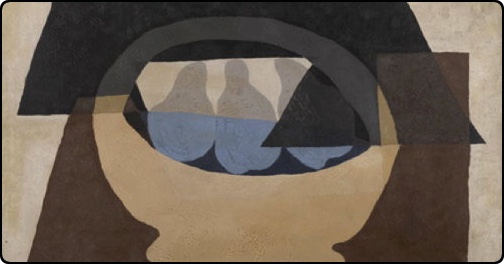
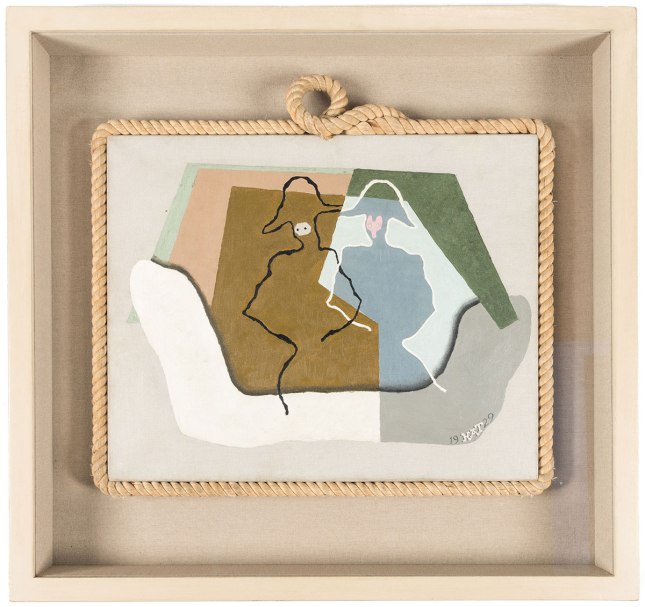
Now Bryan and Diana, when they were an item, were on matey terms with the writer Evelyn Waugh. His great comic novel Vile Bodies is dedicated to them. Waugh based the character of Anthony Blanche in Brideshead Revisited on a 1920s dilettante named Brian Howard, an aspiring artist. Howard and Guinness were both part of the London social set of the 1920s known as the ‘Bright Young People’. Both thought it would be a great idea to play a trick on some of the other Bright Young People, who happened to be art critics, by trying to convince them of the boundless talent of an untutored painter they had discovered, with the unlikely name of Bruno Hat. Hat, unlike the useful headgear of the same name, was entirely fictional.

13-bruno-hat-napoleon-1929-photo-maggs-books

Howard provided the paintings, Guinness came up with the gallery—his own London house. Diana Mitford’s brother Tom was dressed up as the heavily accented Bruno. The catalogue notes for the exhibition, entitled ‘Approach to Hat’ were written by Evelyn Waugh. Waugh, in exuberantly pretentious mode, compared Hat to an unschooled Picasso and wrote that:


He is the first natural, lonely, spontaneous flower of the one considerable movement in painting to-day … Bruno Hat is the first signal of the coming world movement towards the creation of Pure Form.


At the opening Bruno was almost exposed when someone addressed him in German, but the fast-thinking Tom Mitford, unlike his siblings Diana and Unity, denounced Germany, and insisted on speaking ‘Englisch’.

The problem was that the paintings weren’t half bad. Only the future Labour MP, Tom Driberg, writing for the Daily Express, didn’t fall for the elaborate hoax. He called it ‘an excellent hat-trick’. Boom boom!

Bryan Guinness, who served as a major in the British Army during World War Two,  became Lord Moyne in 1944 in tragic circumstances. His father, who was working in the Middle East in a diplomatic capacity, was assassinated in Cairo. As the second Lord Moyne, in the 1940s and 50s, he was in the vanguard of the struggle to have the paintings of the Hugh Lane Bequest returned to Dublin, and was instrumental in the negotiation of the 1959 compromise which saw them alternate between Dublin and London.

Bryan Guinness,  Baron Moyne, was born one hundred and twelve years ago, on this day.


On This Day – 20 October 1881 The Land League is outlawed


ass46

It began with a renewed threat of famine in the west of Ireland in 1879, and ended when the Irish National Land League proved so successful and annoying, that it was banned by the British government.

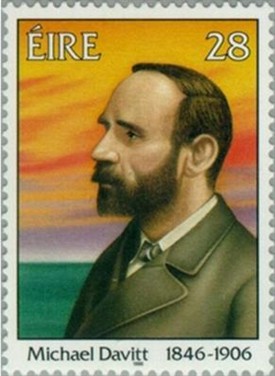
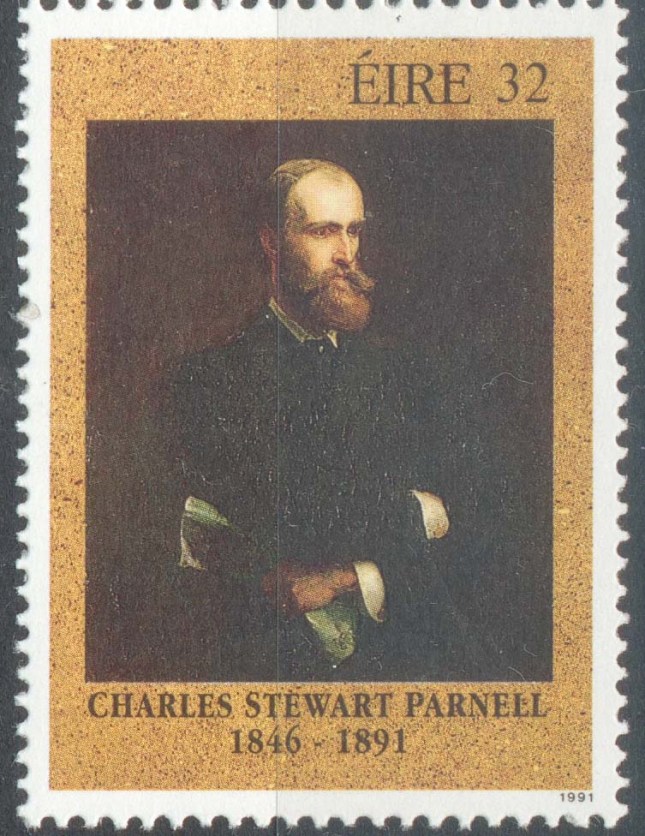
The 1870s, like their twentieth century namesake, the 1970s, was not a good decade. It was marked by a financial panic in 1873, followed by a long economic depression. Add to that, three consecutive years of heavy summer rainfall in Ireland, from 1876, and the country’s tenant farmers, especially those in Connaught, were at the end of their tether. Many were staring starvation in the face. Enter Michael Davitt, who, with some help from an aspiring nationalist politician, Charles Stewart Parnell, formed the Land League in October 1879, and began the fightback which became known as the Irish Land War.

This was fought against the ten thousand-strong Irish landlord class, using innovative and legitimate tactics, such as the ‘boycott’, as well as other, less wholesome responses, involving the use of boiling water against bailiffs and policemen coming to evict, or guns against landlords and their agents threatening dispossession. For two years, the country was in a state of uproar, where something that looked very like martial law was in force.

It would be incorrect to see the Land League purely as a widespread rebellion of small tenant farmers, determined to throw off the yoke of quasi-feudalism once and for all. That was only part of the truth. If you look closely at the organisation you will find within its ranks a number of members of the secret and conspiratorial Irish Republican Brotherhood, which had its own separatist agenda. Although the Fenian aristocracy, men like Charles Kickham, saw the Land League as an irritating distraction from revolutionary nationalism, many rank-and-file Fenians were tired of waiting for the Holy Grail of a nationalist uprising, and were happy to be ‘distracted’ by the Land War, even as a hobby. If they couldn’t shoot British soldiers, they could keep their hands in by shooting landlords and their agents. They were, after all, in a phrase popular at the time, the eyes and ears of Dublin Castle.

Then there was Davitt himself, the ex-Fenian, who generally carried a gun, against the day that some of the more doctrinaire of his former comrades, might decide to shoot him. He gave them even more reasons for doing so when he began to espouse land nationalisation, taking rather too literally for most, the slogan of the agrarian movement ‘the land for the people’. Davitt, a committed socialist, chose to interpret the phrase as meaning that, after the landlords were dispossessed, the land of Ireland would belong to ALL the people, not just those currently working it as tenant farmers.

At the other extreme were the Land League supporters, many in executive positions at local level, who had never walked behind a plough or a cow in their lives. These were the shopkeepers and merchants of rural Ireland, based in the towns and villages. They tended to be supportive of the notion of rent strikes. This was because, given the inadequate resources of the average tenant farmer, especially in the straitened times of the 1870s, he would be unable to pay his bill at the local store and his landlord as well. So, the shopkeepers had a simple solution. Forget about paying rent to the landlord, pay for the goods you’ve been buying on tick from us instead.

Half way through the Land War, the Tory government of Benjamin Disraeli had been replaced by a Liberal administration led by William Gladstone. Gladstone had done his best to placate Irish tenants by disestablishing the Church of Ireland (a major landlord in its own right) and passing a major Land Act in 1870. But his best wasn’t good enough for Parnell, Davitt and the Land League. Eventually, in October 1881, a totally fed-up Gladstone brought in new legislation that allowed him to arrest the leaders of the agrarian agitation, and throw them in jail, without the formality of a trial. This he duly did, after first banning the Land League. Before his arrest Parnell had made a prediction, that, if he was incarcerated, his place at the helm of proceedings would be taken by someone he called, graphically, ‘Captain Moonlight’. There was, of course, no such person. It was a euphemism for the violence wrought by rural secret societies, many of them armed by sympathetic Fenians.

Parnell proved to be right. The Land War merely intensified. The murder rate soared. Gladstone was forced to come to terms in May 1882. After the deal was done Parnell made no shift to revive the Land League in its previous form. He had new Home Rule fish to fry. The cause of the tenant farmer had become a ‘distraction’. Now where had we heard that one before?

The Irish National Land League was outlawed by the Liberal government of William Gladstone, after barely two years in existence, one hundred and thirty-six years ago, on this day.


‘On This Day 2’ hits the shops just in time for …

DJcc_ByXUAAJotT.jpg

It’s here! – two more years worth of RTE

Drivetime’s  ‘On This Day’ feature.


More than one hundred stories from Irish history and the Irish diaspora – almost all of them accurate, many of them stranger than fiction.

Only one is completely fabricated – and it shouldn’t take too long to figure out which one. (Hint – just check the date of transmission)

Cheap and cheerful in a bookstore near you.

Thanks to all at New Island Books.

MD