On This Day – 7 October 1582 – The Gregorian Calendar

julius_caesar2.jpgPope-Gregory-XIIIZ.jpg


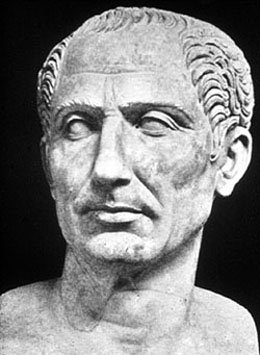
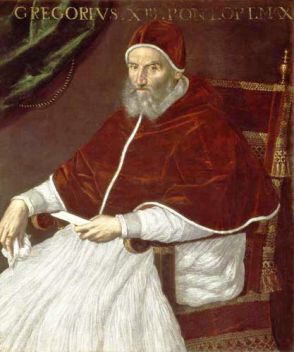
Depending on your point of view today is either 7 October 2016 or 27 September. If you are a big fan of Julius Caesar and swear by his mathematical calculations, then it’s the latter. If, however, you go along with Pope Gregory XIII, then it’s the former.


Without wishing to cause offence or any unnecessary hurt to Caesarians most of us tend to go along with the Pope on this one. It all depends on how you calculate time. In 45 BC Julius Caesar, the one who died on the Ides of March – whatever they were – introduced a calendar that had 365 days and allowed for a leap year every four years. And what’s wrong with that, you might ask?


Nothing, except that Caesar’s year was three hundred and sixty-five days and six hours long. Whereas the length of the year is actually three hundred and sixty-five days, five hours, forty-eight minutes and forty- six seconds. A difference of eleven minutes and fourteen seconds, so about as long as a heavy metal guitar solo.


Given that Julius Caesar was stabbed to death by Brutus, Cassius and one or two others the following year he never realised that because of this slight discrepancy, over the years that followed, time got a bit out of whack. For one thing Easter, the ultimate movable feast, was getting later every year. At some point it would inevitably coincide with Christmas Day. Action was required and Pope Gregory XIII got off his Vatican throne and did something about it. Accordingly, across most of Europe, people went to bed on 4 October, 1582 and woke up on the 15th.


However, in a rather significant Brexit the English decided that they would have nothing to do with a calendar devised by the Antichrist himself. Instead they decided to render unto Caesar the things that were Caesar’s – starting with his calendar. As the English Crown claimed Ireland, a gift from the Pope in 1155, we were stuck with the old calendar too.


Of course things got really confusing when it came to Irish rebellions. As the rebels were invariably Catholic their wars were fought according to the new calendar devised under the auspices of Pope Gregory. This, presumably, made it easier to identify an Irish Catholic rebel. You just asked him the date.


So, for example, the Battle of Kinsale was, according to the English side, fought on Christmas Eve 1601. But the clash contested and lost by the forces of Hugh O’Neill and Hugh O’Donnell, as well as their Spanish allies, didn’t even take place the same year. The Irish fought the Battle of Kinsale on 3 January 1602.


The English, and by extension the Irish, didn’t come into line with the Gregorian Calendar until 1752. Don’t be too shocked if they suddenly change their minds some day and revert to the Julian calendar.


Not that the Irish are wedded to ancient history or anything like that but the calendar switch is often cited as having huge philosophical significance in the context of the first day of the Battle of the Somme. On that occasion, 1 July 1916, the 36th Ulster Division went over the top at Thiepval. More than two thousand of them never came back. The date became part of Ulster Unionist folklore. However, it was pointed out at the time that if you ignored the Pope’s calendar – something your average unionist didn’t have much of a problem with – the 1 July 1916 was actually the anniversary of 12 July, 1690 when King William led his Protestant forces to victory against the Catholic Army of King James. The battle had actually had been fought on the First of July 1690, according to King Billy and his followers.


Because of his decision to toss out the calendar of Julius Caesar, and the consequent loss of ten days, Pope Gregory XIII ensured that absolutely nothing happened four hundred and thirty four years ago, on this day.
 

calendar.jpg


On This Day – 30 September 1598 – The English poet Edmund Spenser is appointed Sheriff of Cork


Edmund_Spenser_oil_painting.JPG

When someone uses the word ‘sheriff’ we tend to think of a tall, grizzled man with a wide brimmed hat and a revolver. Gary Cooper in High Noon. Now there was a sheriff. But closer to home the word itself originally comes from ‘shire’, meaning county and the role has had many different definitions over the years. Think ‘Sheriff of Nottingham’ – Robin Hood’s antagonist – at one end of the spectrum and the man who sends the bailiffs to take back that couch you can’t pay for, at the other.


Probably the most unfortunate sheriff in Irish history is a man who had a distinguished literary career in England. In his most celebrated work he spent six books brown nosing Queen Elizabeth 1. This was a very healthy thing for a poet to do. Less healthy was being an English planter in Ireland in the late 16th century living on land confiscated from Irish rebels.


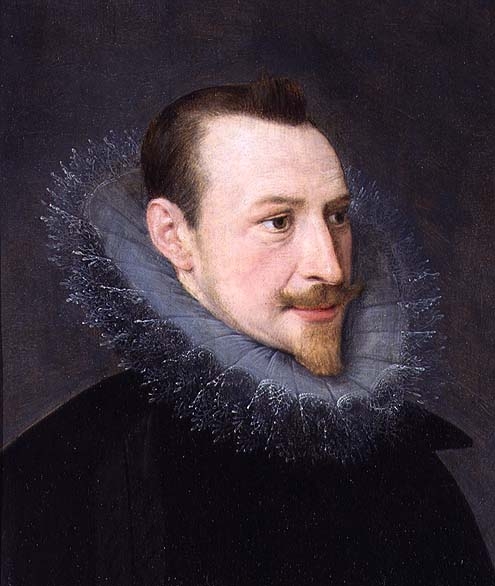
The sheriff in question was the writer Edmund Spenser whose long poem, The Faerie Queene, is still one of the most highly regarded works in the English language.


But Spenser had a whole other side to him, far removed from poetic sensibility. Born in London, probably in 1552, he came to Ireland at the age of twenty-eight in the service of the Lord Deputy, Lord Grey. He fought alongside Walter Raleigh at the siege of Smerwick in Kerry during the rebellion of James Fitzmaurice Fitzgerald in 1580. At the end of the siege Grey had five hundred of the Spanish and Italian defenders of Smerwick fort butchered. Only the officers were spared. Noblesse oblige, don’t you know.


Like and enterprising carpetbagger Spenser benefitted from the subsequent plantation of Munster. He settled on the Kilcolman estate near Doneraile in Cork. He also acquired land overlooking the Munster Blackwater where he is said to have written some of the Faerie Queen under an oak tree. The oak was destroyed by lightning in the 1960s.


Spenser published the first three volumes of his most famous work in 1590 and duly received a pension of £50 a year from the Faerie Queene herself. If he was hoping to get a job out of sucking up to Her Majesty he probably shouldn’t have antagonized her hatchet man Lord Burghley with his next piece of work Mother Hubberd’s Tale. Getting into Burghley’s bad books meant that it was back to Ireland for Spenser. There his first wife died in 1594 and he married Elizabeth Boyle, a relative of Richard Boyle, the 1st Earl of Cork, one of the great survivors of Irish Elizabethan history.


Just because most of Spenser’s income came from his Irish estates rather than his pension or his poetry didn’t mean he had to like the native Irish. And he duly obliged by disliking them and almost everything about them. In a pamphlet entitled A View of the Present State of Ireland he essentially adopted the position that the peasants were revolting and the only way to stop them revolting was to destroy their language and customs. He also had a high opinion of a scorched earth policy in the event of war with the Irish. This would helpfully deprive said revolting peasants of food and sustenance.


So it was ironic that Spenser himself was the one who was scorched in the Nine Years War. Shortly after his appointment as Sheriff of Cork in 1598 the forces of Hugh O’Neill burned the poet’s castle. He was obliged to return to London. There he fell on hard times and died at the age of forty-six. He is buried in Poet’s Corner in Westminster Abbey.


Although the author of many celebrated works he’s possibly best remembered for a quatrain written when his annual pension was overdue, it goes …


I was promis’d on a time,

To have a reason for my rhyme:

From that time unto this season,

I receiv’d nor rhyme nor reason.


Edmund Spenser was appointed Sheriff of Cork four hundred and eighteen years ago, on this day.


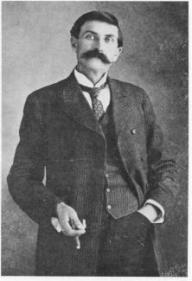
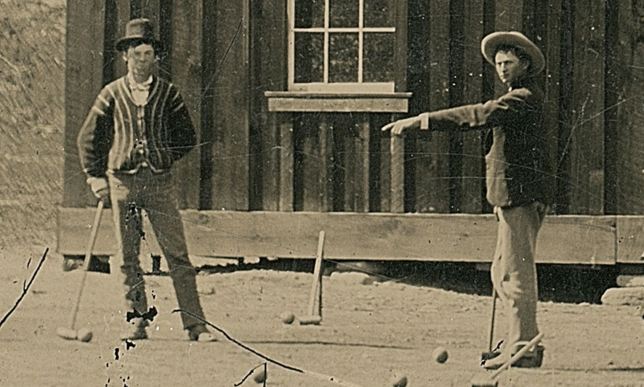
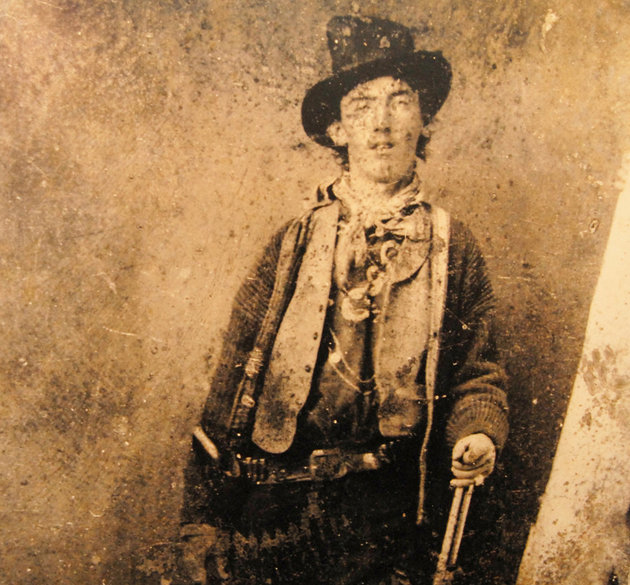
On This Day – 23 September 1875 – Billy the Kid is arrested for the first time

Unknown.jpegSheriff-pat-garrett.jpg

While he has Irish connections of his own it is the involvement of William Henry McCarty in an Anglo-Irish war that is of most Irish interest. Not THE Anglo-Irish war, also known as  the War of Independence, you understand but AN Anglo-Irish war – of sorts. This one was fought out in New Mexico in the 1880s.


So who is William Henry McCarty? Well he also went under the name of William Bonney. And if that doesn’t ring any bells his nickname probably will. He was best known as Billy the Kid.  It’s hardly unusual in the USA that a violent antihero and probable psychopath should be viewed with reverence. But the Kid has had more books written about him,  more films made about him, and more porkies told about him – some by himself –  than any other Western outlaw.


He was born in New York City, probably in 1859, to an Irishwoman, Catherine McCarty, whose maiden name was Devine. No other parent’s name is listed on his birth certificate though his father may have been a Patrick McCarty.  Billy was brought up in the lower east side of the city in the area known as the Five Points – made famous in the Martin Scorsese movie Gangs of New York.


By 1873 Catherine McCarty and her new husband, William Antrim were living in New Mexico. In 1874 Catherine Antrim died. The following year her son became involved in petty crime. In September 1875 he robbed a Chinese laundry in Silver City, New Mexico, was arrested, escaped from jail and went on the run. He was fifteen years old. He didn’t have long left.


The most celebrated and persistent myth about the Kid is that he killed a man for every year of his short life (he was dead by the age of twenty-one). This tall tale may have come from the Kid himself to counteract his youthful appearance and enhance his aura of invincibility but it is well wide of the mark. He is known to have been personally responsible for the deaths of four men and was complicit in the killing of four more.


His first victim was a thirty-two-year-old Irishman, Frank Cahill, a native of Galway.  The two men met, and fought, in Arizona. Cahill came off worse. The Kid was immediately arrested but, once again, displayed his knack for escaping custody. Facing a murder charge in Arizona, he returned to New Mexico. There he became involved in what is known today as the Lincoln County War. This was a power struggle for economic and political domination of southern New Mexico fought out between a group of dodgy Irish businessmen, farudsters and rustlers, Lawrence Murphy, John Riley and Jimmy Dolan on the one side, and an equally dubious young English opportunist  John Henry Tunstall as well as his Scottish-American partner Alexander McSween. The Kid enlisted on the ‘British’ side of the conflict when he took a job as one of Tunstall’s hired thugs.


His career as a practicing psychopath reached new depths in February 1878 when Tunstall was murdered by members of a posse sent out by the Sheriff of Lincoln County, William Brady from Cavan. The Kid claimed his second Irish victim a few days later when he, and at least two more of Tunstall’s former employees, gunned down Sheriff Brady in Lincoln.


The Kid went on the run again but after numerous brushes with the law, and a lot more violence, he was captured by the new Lincoln County Sheriff, Pat Garrett. He was tried and found guilty of the murder of Brady in April 1881. He was taken to Lincoln jail to await hanging but escaped yet again, this time killing two of Garret’s deputies, Bob Ollinger and James Bell as he made his getaway.


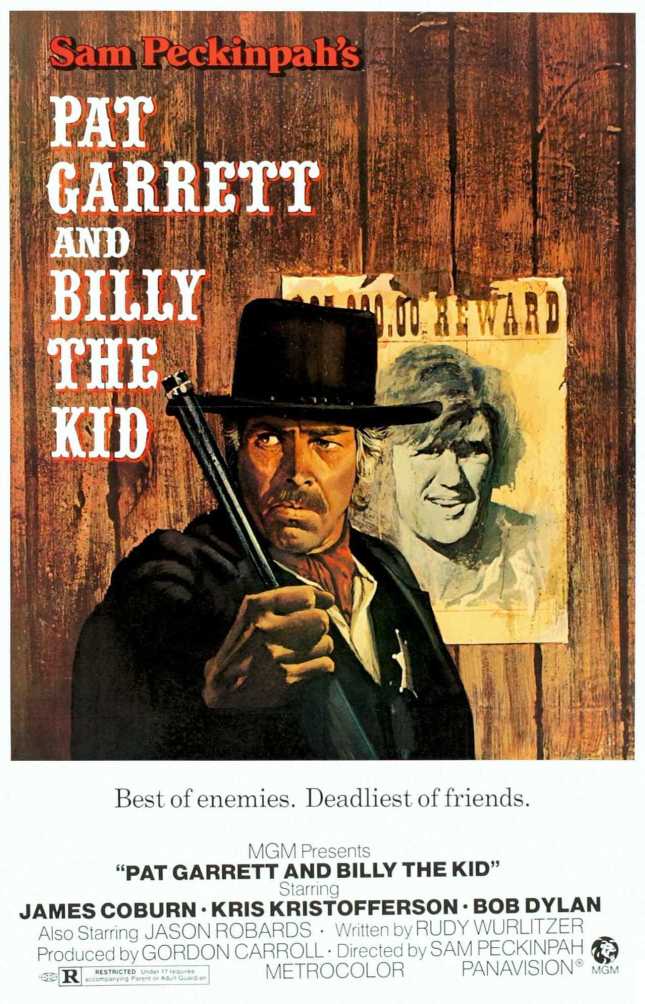
New Mexico Governor Lew Wallace, the author of Ben Hur, put a $500 reward on Billy the Kid’s head and Garrett went in pursuit again. He tracked the Kid down in July 1881 and shot him dead in Fort Sumner, New Mexico. Later Garrett, who had been a friend of McCarty – or Bonney, or Antrim – capitalized on their association by writing a suitably self-serving biography, The Authentic Life of Billy the Kid. As with Jesse James, Jim Morrison and Elvis Presley, there were many reports of sightings of the Kid after his apparent demise. As he would now be more than one hundred and fifty years old we can be fairly confident that he is actually dead. But his legend lives on. So far he’s been played by Audie Murphy, Roy Rogers, Paul Newman, Kris Kristofferson and Emilio Estevez, among many others.


Billy the Kid was arrested for the first time after robbing a laundry one hundred and forty one years ago, on this day.


Photo_of_Billy_the_Kid_(left).JPG

PAT-GARRETT-BILLY-EL-NIÑO-Sam-Peckinpah-1973-Pat-Garrett-Billy-el-Niño.jpg

UCD History Course – The American West -presented by Myles Dungan

Unknown.jpeg


THE AMERICAN WEST 1820-1920  (And the Irish who made it)

University College Dublin / National Library of Ireland  – Lifelong Learning

Where: National Library, Kildare Street

When: Wednesdays 10.30 – 13.00  October 5, 12,19 November 2, 9, 16, 23, 30

Fee: €195.00


http://www.nli.ie/en/programme-and-events-further-education.aspx


http://www.ucd.ie/t4cms/Adult%20Education%20Brochure%202016-2017.pdf

561e10d11200002e007e50f3.jpeg

Yes there was Billy the Kid – but he wouldn’t have become a legend but for Murphy, Dolan and Riley!

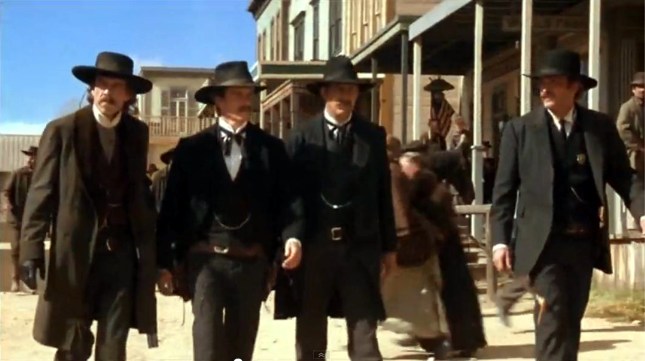
mfw-wyatt-earp-doing-the-walk.jpg

Nellie Cashman did a lot more for Tombstone than Wyatt Earp!

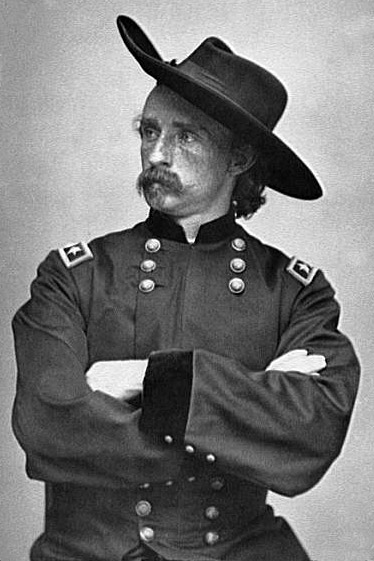
jb_recon_custer_1_e.jpg

George Custer was a dashing cavalryman but Phil Sheridan was his boss!

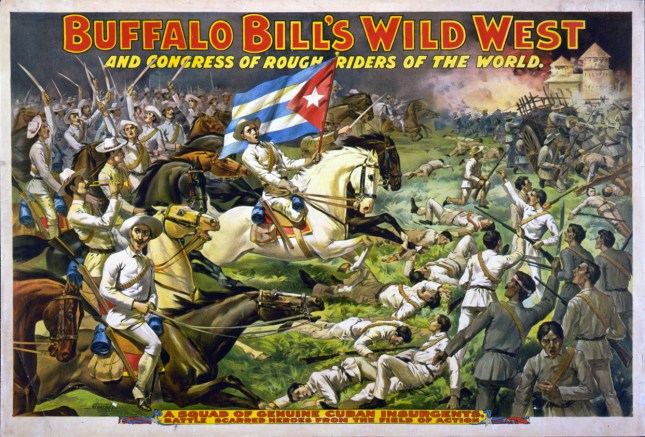
Buffalo_bill_wild_west_show_c1898.jpg

Tom Fitzpatrick had more of an impact on the ‘real’ West than Buffalo Bill!


Come and find out about the dozens of Irish adventurers, entrepreneurs and lawmen who helped create the American West


You’ll find out about Sitting Bull, the Union Pacific, the Gunfight at the OK Corral, the Battle of the Little Bighorn but also about Belinda Mulrooney, William Mulholland, Myles Keogh and a host of other extraordinary Irish characters.

On This Day – 9 September 1831 – Irish National Education


m6s6aicjogoampxnh1a9dzzq7k4g1nn$gefpq13e39x8952mk1nqpzgurv2nwwy.png8011-004-FE178E9F.jpg

Education in Ireland at primary and secondary level has traditionally been the preserve of the main religious denominations in the country and one in particular. That was not quite the intention of the prime movers back when a formal education system was first established in this country in 1831. That year £30,000 was allocated to establish a national system of elementary education in Ireland.

There is a myth that prior to this date Irish children were largely taught in what were known as ‘hedge schools’. While such informal and occasionally al fresco establishments did exist in the 1700s education had become rather more professionalized by the 19th century.  The Society for Promoting Elementary Education among the Irish Poor, better known in its much shorter form as the Kildare Street Society was in receipt of government funds from 1812 and ran almost fifteen hundred schools with over one hundred thousand students by 1825.

Despite the fact that there were allegations made against the Society of proselytism the influential Roman Catholic Bishop of Kildare and Leighlin, James Doyle – an ally of Daniel O’Connell – saw nothing objectionable to Catholics in the schools. Doyle was more concerned with low educational standards elsewhere than he was with any perception that the Kildare Street institutions might be trying to convert Catholics to Protestantism.

Others were not quite so sanguine and deprecated the practice in Kildare Street schools of scripture reading or ‘unaided private interpretation of the Sacred volume’ which was ‘peculiarly obnoxious’ to other members of the Catholic hierarchy.

It was, in part at least, to, as he put it himself,  ‘banish … even the suspicion of proselytism’ that in October 1831 the Chief Secretary Earl Stanley – later British Prime Minister Lord Derby –  wrote a letter to the Duke of Leinster outlining a system of education more closely associated with the state than the looser regime that prevailed at the time.  The government, the Chief Secretary informed the Duke, would fund the building of schools (with a small amount of local financial input), and would pay the salaries of teachers. Stanley’s letter was meant to convey to the Duke and to the Kildare Street Society that the government was no longer prepared to farm out education to an organization that was, in part, privately funded. It then proceeded to do just that all over again.

The main object of the new regime was to ‘unite in one system children of different creeds.’ The Board of National Education was told to look most favourably on applications for assistance from schools jointly managed by Roman Catholics and Protestants. But the policy of introducing a system of non-denominational, religiously integrated education was quickly abandoned as the Commissioners of Education caved in to demands from the main churches for rigidly denominational, segregated education. Within twenty years only 4% of national schools were not associated with a single religious denomination. The Dublin Castle administration didn’t always buckle to the realities of Irish life but in this instance it opted for pragmatism over principle.

The sum of £30,000 was allocated for the development of a new system of national education one hundred and eighty five years ago, on this day.

UK434_Teachers_&_Pupils_Of_Rathgormack_National_School.jpg