On This Day –2 September 1865, birth of William Rowan Hamilton


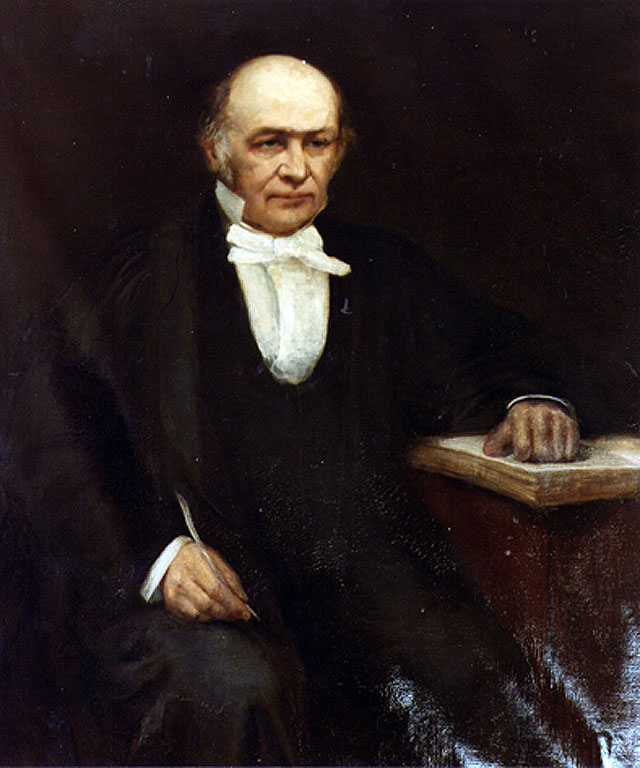
William_Rowan_Hamilton_painting.jpg


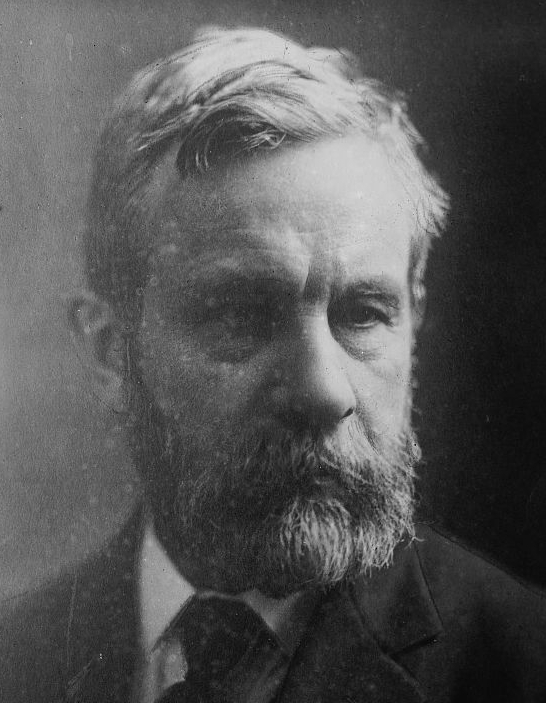
It was perhaps the most important example of anti-social behaviour in scientific history. What today might merely have merited an ASBO for the scraping of a piece of incomprehensible graffiti, back in 1843 was the breakthrough that William Rowan Hamilton needed to come up with the concept of something called the quaternion.


No one could have predicted at his birth that the son of Sarah Hutton and Archibald Hamilton, a Dunboyne, Co. Meath solicitor, would emerge as Ireland’s  most significant mathematician – other than Eamon de Valera – and one of the world’s foremost scientific minds.  But pretty soon after his birth it was clear to the extended Hamilton family that young William was a bit different.


He was sent at the age of three to live with his uncle James, a teacher and cleric, in Trim and there began to collect languages as a hobby. Before his teens he had already acquired a dozen. In addition to the predictable European tongues he had also picked up Hindustani, Sanskrit and Malay. Clearly the curriculum in Uncle James’s school was an interesting one.


It was a sobering experience at the age of eight that caused young William to wise up and stop messing around with foreign languages. Also something of a whizz at mental arithmethic in 1813 he was pitted against the visiting American mathematical genius Zerah Colburn in a head to head contest. Half the rakes of Dublin probably had money on the outcome. But it wasn’t a happy experience for young Hamilton. In this early Ryder Cup of Hard Sums – or ‘math’ as the young American would probably have called it – he lost out to Colburn. Realising he needed to up his game if he wanted to wanted to become a famous mathematician William Rowan Hamilton abandoned the acquisition of languages in favour of the solving of equations.


He entered Trinity College in 1823 and was appointed Professor of Astronomy in 1827. This was pretty rapid progress as he had yet to even graduate. That same year he took up residence in Dunsink Observatory and spent the rest of his life there.


Which brings us to his famous walk. It took place on 16 October 1843 when he and his wife left Dunsink to go for a stroll along the banks of the Royal Canal. We can only assume that they either walked in silence or that Hamilton, as is sadly the case with a lot of husbands, was paying little or no attention to what his spouse was saying, as they neared Broom Bridge in Cabra. Now while most men, in such circumstances, might have been idly poring over in their heads the advisibility of Manchester United, Chelsea, Kerry or Dublin acquiring a new head coach, Hamilton’s mind was concentrated on higher things – something called quaternions. These I am forced to concede, I know nothing whatever about and can’t even comprehend sufficiently to offer a passable Idiot’s Guide.


As the couple approached Broom Bridge Hamilton began to behave in a fashion that must have caused his wife some concern. He took out a penknife and carved

the following legend in the superstructure of the bridge


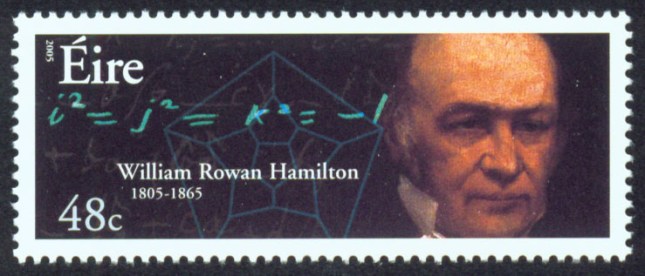
i² = j² = k² = ijk = -1


And, no, I’m very sorry but I don’t understand it either. This, it transpired, was the discovery of the quaternion, which apparently extends the range of complex numbers. One can only agree with the use of the word complex. The knowledge that her husband had discovered quaternions and was not simply vandalizing the bridge must have come as a great relief to Mrs. Hamilton.


Of course the moral of the story is, if you are a budding astronomer or mathematician who wants to make a difference, you should never leave the house without carrying a knife.


William Rowan Hamilton, mathematician and astronomer, died one hundred and fifty one years ago, on this day.
 

hamilton3.jpg


THE AMERICAN WEST – UCD/NLI COURSE

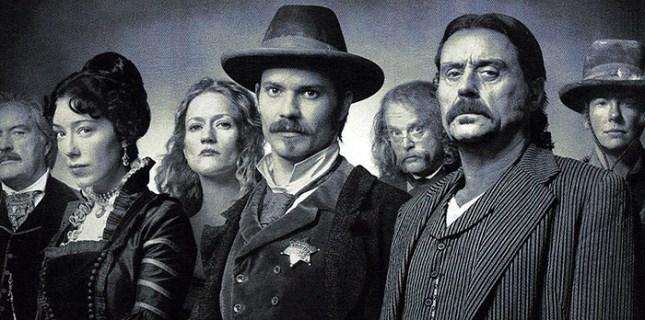
Deadwood1-700x348.jpg

THE AMERICAN WEST 1820-1920  (And the Irish who made it)

University College Dublin / National Library of Ireland  – Lifelong Learning

Where: National Library, Kildare Street

When: Wednesdays 10.30 – 13.00  October 5, 12,19 November 2, 9, 16, 23, 30

Fee: €195.00

http://www.nli.ie/en/programme-and-events-further-education.aspx

Click to access Adult%20Education%20Brochure%202016-2017.pdf


cody_film_landing.jpg

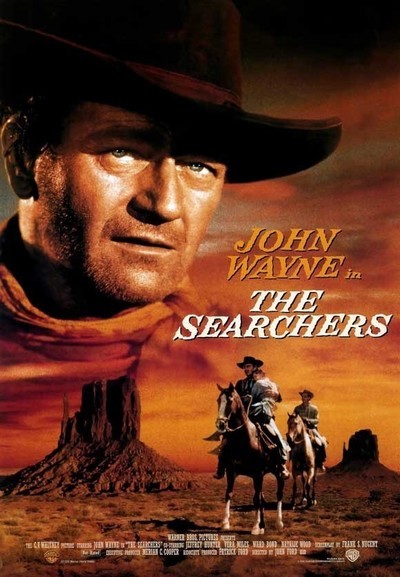
‘This is the West sir, when the legend becomes fact print the legend’ (The Man Who Shot Liberty Valance)

The history of the American far West has been romanticised and mythologised in popular culture to a point where it is difficult to disentangle truth from fiction. Its icons (usually heavily armed) tend to be male, Caucasian, charismatic and violent. There is little room in the classic Western narrative for women, immigrants and persons of colour. Indigenous peoples, while included, usually get short shrift and fill the role of perennial and unsuccessful antagonist.

The actual narrative of the trans-Mississippi region in the late 19th century is far more complex and multi-faceted than the mythology propogated by Hollywood and the dime novel. It has been aptly described as ‘a past that never was and always will be’. It is an integral part of the U.S. foundation myth and of America’s sense of itself as a rugged, independent, self-reliant, free-thinking nation.

MTE1ODA0OTcxNzg2MDc3NzA5.jpgCuster_Portrait.jpg

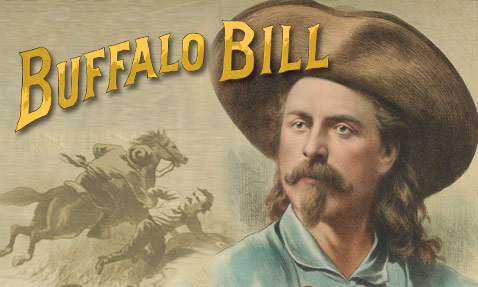
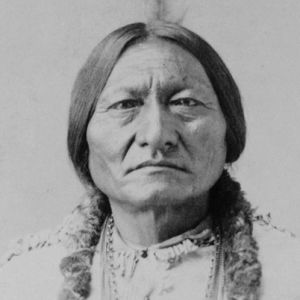
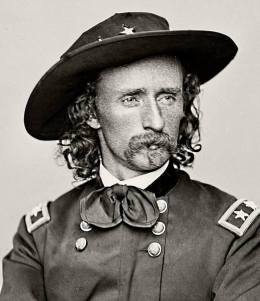
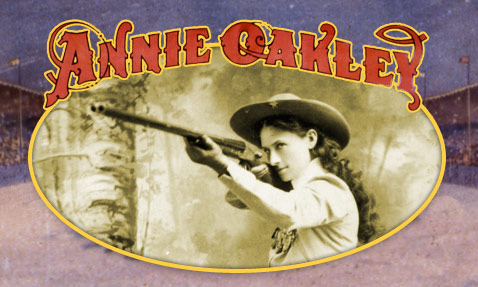
‘The American West, 1820-1920’ while acknowledging and addressing the romance and myth, aims to de-glamourise the ‘Frontier’ era and challenge some of the received wisdom that has gone largely unchecked in the popular imagination. While icons like Billy the Kid, George Armstrong Custer, Sitting Bull, Crazy Horse, Wyatt Earp, Jim Bridger, Lol Montez, Buffalo Bill Cody, Annie Oakley will all feature so too will Thomas Fitzpatrick, Nellie Cashman, William Mulholland and Jasper O’Farrell from Ireland, the Boo How Doy of San Francisco’s Chinatown, John Sutter from Baden in Germany and Londoner John Tunstall.

oakley_film_landing2.jpg

There are many mansions in this particular house and quite a few surprises behind the doors of those mansions. There will also be a multitude of locations (including the Little Bighorn, Deadwood, Dodge City, South Pass, Donner Pass, Chilkoot Pass), forms of transport (horse, wagon, buggy, Shank’s mare, railroad), armaments (the longbow, Colt 45, Winchester 73, the Gatling gun, the Bowie knife) and occupations (preacher, prostitute, lawman, cattleman, miner, labourer, teamster, assassin, schoolteacher, farmer).

large_9Qzl6R2LJw6CNJpDbMje2gbQpXJ.jpg

Where appropriate the course will point to the significance of Irish emigrants in the far West. The ‘two-boat’ Irish exerted a far greater influence on the work, politics, law, military affairs and cultural life of the region than is generally acknowledged.

Among the topics for discussion will be the era of the fur trapper, the emigrant trails, the building of the transcontinental railroad, the rise of the city of San Francisco, the Gold Rush and mining for precious metals, bringing water across the deserts, violence and gun law, the frontier Army, the wars with Native America and the Hollywood treatment of all the above.

‘There’s no law west of Dodge and no God west of the Pecos’  (Chisum)

FullSizeRender.jpgIMG_5056.JPG

MYLES DUNGAN: Holds a PhD from Trinity College, Dublin and is the author of a number of books, including How the Irish Won the West (New Island, 2006). He also compiled and presented the RTE radio series True West in 2003.


On This Day – 26 August 1725 – Smallpox

300x300.jpg

Its effects were feared for centuries before it was finally declared to have been eradicated by the World Health Organisation in 1980. The last recorded case of this dreadful disease was in Somalia in 1977. Good riddance smallpox, which plagued this country for generations.

Ireland has more than a nodding acquaintance with smallpox. It originally got its name in the 15th century to distinguish it from ‘great pox’ aka syphilis. Around one third of its victims died. Many survivors were left with the scars of the disease in the form of permanently pock-marked skin. As recently as half a century ago, in 1967, two million people died of smallpox worldwide.

The disease inspired particular dread in Ireland where smallpox and its ugly sisters, cholera, typhoid and dysentery made themselves at home for hundreds of years and exploited extreme poverty and ignorance to devastating effect. The symptoms of the disease were high fever, headache, pain in the back and muscles. Children might also experience vomiting and convulsions.

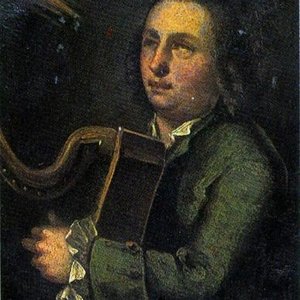
If you didn’t die of smallpox in 18th and 19th century Ireland you probably went blind. The next time you hear the music of the great harpist Turlough O’Carolan from Nobber in County Meath think of smallpox. It blinded him at the age of eighteen in 1688 making him virtually useless for any occupation until he developed a talent as a harpist and a facility for musical composition. Many other itinerant harpists had been similarly afflicted.

The disease, which was highly contagious and infectious, is believed to have caused about one fifth of all deaths in the city of Dublin between 1661 and 1746. About a third of all child deaths were probably caused by smallpox. Although it mainly afflicted the poor it was no respecter of rank. The children of the rich could die of the disease just as quickly as those closer to the breadline.

Hope emerged towards the beginning of the 18th century when the efficacy of inoculation started to become apparent. Inoculating people with small doses of the virus had apparently been practiced in China since the 10th century but didn’t really begin to make inroads in Europe for almost another eight hundred years. In Ireland the technique was first tried on a number of, presumably unwilling, prisoners in Cork Jail in 1721. Four years later the experiment was extended to five children in Dublin.

As the effectiveness became clear the better off began to use inoculation to protect themselves and their children.  During periodic epidemics in the mid to late 18th centuries the survival rate among the wealthy families who had engaged in the practice encouraged its more widespread use. The South Infirmary in Cork even initiated a programme to inoculate the poor.

Naturally where there was money to be made there were charlatans. Travelling inoculators with a very basic grasp, if any, of what they were doing, competed for trade. In Donegal in 1781 all but one child of a group of fifty-two died when one unqualified practitioner purported to inoculate them.

Whatever inroads were being made in Ireland against the disease came to virtually nothing with the onset of the Great Famine of the 1840s when smallpox returned with a grim vengeance. Even for sufferers who survived the recovery period of the disease ensured that many were pauperized and died anyway with breadwinners unable to work.

It was only from the 1880s onwards that the disease began to be more rapidly eradicated in Ireland. In the 1870s more than seven and a half thousand people died of smallpox. By the first decade of the 20th century that figure was down to sixty-five. Between 1901 and 1910 almost a million Irish people were vaccinated against the disease.

A global campaign by the World Health Organisation begun in 1967 bore fruit and now smallpox can only return via the insanity of chemical warfare.

Five Dublin children received the first voluntary smallpox innoculations in Ireland
 two hundred and ninety one years ago, on this day.


On This Day – 19 August 1876 – The Catalpa arrives back in the USA


4814310-16x9-700x394.jpg

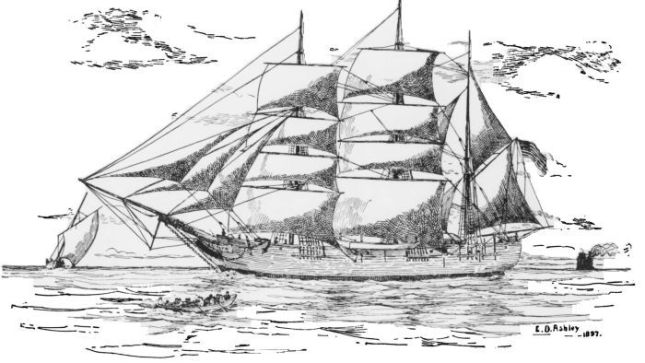
Anyone who has ever had the pleasure of seeing Donal O’Kelly’s memorable one man show about the 1876 voyage of the whaling barque, the Catalpa, will be unlikely to forget the significance of that event.  It was The Great Escape crossed with Papillon to create one of the most unorthodox and daring prison breaks in the history of incarceration.

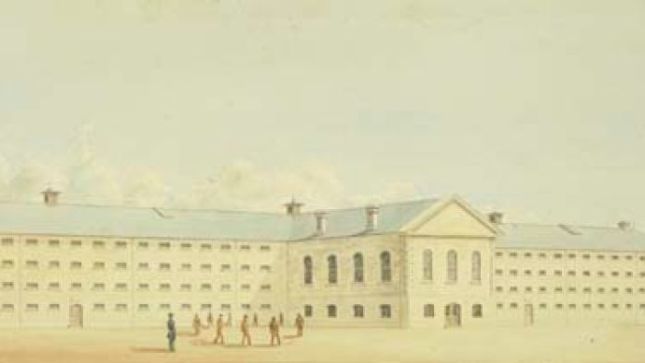
The back-story begins with the abject failure of the Fenian rebellion of 1867. In its wake more than sixty IRB prisoners were transported after treason-felony and rebellion convictions to the penal colony of Western Australia. Over the years most of the prisoners were amnestied or released so that by the mid 1870s only a small handful of Fenians remained in Freemantle prison on the Australian west coast not far from the city of Perth.

In 1873 one of the men who remained in jail, James Wilson, managed to get a letter to John Devoy of the Irish revolutionary organisation, Clan na Gael, in New York. Wilson asked Devoy to launch an operation to free the remaining prisoners. It was a former Fenian transportee Thomas McCarthy Fennell who came up with the unorthodox but highly imaginative plan that was put into operation the following year.

The Clan bought a New Bedford whaling barque the Catalpa for $5500 in 1874.  A ship’s captain, George Smith Anthony, agreed to help. He recruited twenty-two sailors who were not in on the secret. The ship sailed from Massachusetts in April 1875. In the meantime two senior members of the Clan, John Breslin and Tom Desmond had been sent ahead to Western Australia to prepare for the rescue. Breslin, posing as an American mining speculator, ingratiated himself with the British governor of the colony while Desmond secured transport for the prisoners and devised a means of cutting telegraph lines to impede communications.

A faulty chronometer meant that Captain Anthony had to use his own navigational skills for the first leg of the Catalpa’s journey. The vessel also lost much of its crew when it landed in the Azores. But the deserters were replaced and the whaling ship finally arrived off the coast of Western Australia in April 1876.  There it dropped anchor in international waters and waited.

On 17 April six Fenian inmates working outside Freemantle prison walls absconded from their work party. The group included James Wilson. They met up with Breslin and Desmond and were driven to reconnoitre with Captain Anthony. They were then taken on board a small whaleboat. At this point the alarm was raised by a local man and the search for the escaped prisoners began in earnest. A storm initially prevented Anthony from transferring the freed Fenians from the small whaleboat to the Catalpa. It was hours before the storm abated and they could begin to row towards safety.

As Captain Anthony’s whaleboat neared the Catalpa, moored more than three miles off shore, he noticed a steamer, the Georgette, approach the whaling ship. This had been commandeered by the Western Australian governor. Anthony’s First Mate refused to allow the Catalpa to be boarded as it was anchored in international waters. The Georgette, short on fuel, withdrew for the moment and this allowed Anthony to smuggle the six Fenians on board his ship.

However the Georgette returned the following day and attempted to force the Catalpa back into Australian waters. A shot was fired across the bow of the small whaling ship. Anthony then raised the US flag and warned the pursuing steamer that any interference with the Catalpa would constitute an act of war. The police on board the Georgette had been told by the colonial governor not to create an international incident.  They were forced to allow the American vessel to escape into the Indian Ocean.

After its return to the USA the Catalpa was gifted by the grateful Fenians to its captain and leading crew members. Anthony, who courted arrest if he returned to sea, published an account of the operation in 1897 entitled The Catalpa Expedition.

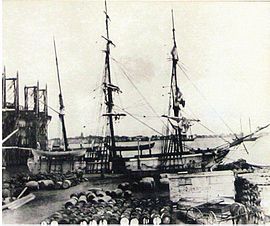
The New Bedford, Massachusetts whaling ship, the Catalpa, sailed into New York harbour to a rapturous Irish-American welcome one hundred and forty years ago on this day.


4814288-16x9-700x394.jpg


270px-Catalpaindock.jpgJohn_Devoy.jpg


On This Day- 12 August 1773 – Robert King X 2 and the murder of Henry Fitzgerald


Mary-Wollstonecraft-x-162279570.jpg

Mary Wolsttonecraft  – peripheral to the story but more famous than the protagonists – hence the pic

When the members of the Irish House of Lords tried a fellow peer they did it in style. Such was certainly the case with Robert King, tried for murder in 1798. His proper title was the 2nd Earl of Kingston and he was being tried for the killing of the nephew of his wife. Elsewhere, his son, also called Robert was tried for the same offence, the murder of Colonel Henry FitzGerald.

The 2nd Earl had married well. His wife, Caroline Fitzgerald, was one of the wealthiest heiresses in Ireland when she was married off to Robert King, who was worth a few shillings in his own right, when they were both 15 years old, in 1769.  They settled into the family home in Mitchelstown, Co.Cork. The couple was probably more distinguished for one of their governesses than for anything they every accomplished themselves. Hired to educate their children was Mary Woolstonecraft, novelist, historian, 18th century feminist and the mother of the woman who wrote Frankenstein, Mary Shelley.

She would have been hard put to devise the narrative that saw her employer and one of her  pupils arraigned for murder.

This all came about because of the acceptance into the King family of a nephew of Caroline Fitzgerald, one Henry FitzGerald, a child born out of wedlock. There were, indeed, rumours to the effect that Henry was not actually Caroline’s nephew, but her illegitimate half-brother, the result of a liaison involving her own father.

Henry Fitzgerald, who went on to become a colonel in the military, rewarded the generosity of the King family by seducing one of Caroline’s daughters – who may of course, have been his half-niece. When Henry Fitzgerald’s body was discovered and the truth of the seduction came to light, Robert King junior and senior were both charged with his murder.

The Dad, as a peer of the realm, faced his own peers in May 1798, in the Irish House of Lords, a building still preserved intact in the Bank of Ireland in College Green in Dublin.  The symbolism of the occasion, to paraphrase, W.S. Gilbert, fitted the crime. During the trial an executioner stood beside Kingston with an immense axe, painted black except for two inches of polished steel. This served to remind their Lordships of the fate the Earl of Kingston faced, should they find him guilty. Though his actual fate would have been to be hanged by the neck until dead. Only afterwards might his head have been separated from his body. However, it never came to that. No witnesses appeared for the prosecution, and Kingston was acquitted. One can’t help suspecting that while the Kings had actually done in the bounder Henry anyone who was anyone figured that he’d got what was coming to him. The aristocracy is a another country, they do things differently there.

An interesting footnote. The Directory of the United Irishmen had discussed using the occasion of the trial to kill key members of the government. But the vote of one Francis Magan, a leading member of the organisation, caused the scheme to be abandoned. Magan, it later emerged, was a government agent.

While Robert King Senior was tried in splendor by his peers R.King Junior, was arraigned before the more mundane Cork Assizes on the same charge. Once again no witnesses came forward so the future Viscount Lorton of Boyle, Co.Roscommon was duly acquitted. The magnificent Boyle Museum, King House, is named after the family

The dramatic and colourful trial of the 2nd Earl of Kingston took place two hundred and eighteen years ago, while his son and fellow accused, also called Robert King was born, was born two hundred and forty three years ago, on this day.

300px-Mitchelstown_Castle.jpg

Mitchelstown Castle – one time home of the Earls of Kingston – below is King House on Boyle, now a museum and well worth a few hours of your time.