On this day –Drivetime – 22 January 1879 James Shields elected Senator for Missouri

shields.jpg

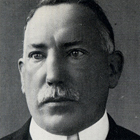
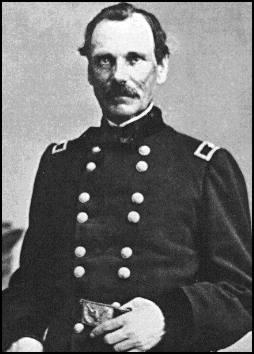
James Shields from Co.Tyrone was an extraordinary Irishman though his name is virtually unknown in his native country. He had an uncle of the same name who emigrated from Ireland and became a U.S. senator for Ohio. Not to be outdone James Shields Jr. left Ireland at the age of twenty and went on to represent not one but three states in the U.S. Senate. A unique achievement unlikely ever to be repeated.

He started in Illinois – where he had also been a State Supreme Court justice. From 1849 he served one term as a US Senator. His election was helped by what came to be known as the ‘lucky Mexican bullet’. This he had stopped while a brigadier general in the Mexican-American war in 1846. His opponent for the Illinois seat was the incumbent Sydney Breese, a fellow Democrat. A political rival wrote of Shields’s injury “What a wonderful shot that was!  The bullet went clean through Shields without hurting him, or even leaving a scar, and killed Breese a thousand miles away.” He is also unusual in that he replaced himself in the Senate. When he was first elected it emerged that he had not been a citizen of the USA for the required nine years. He had only been naturalized in October 1840. So his election was declared null and void. However, he would have been entitled to take his seat after a special election was called to replace him, as he had, by then, been naturalized for the required period. So he stood again and won the seat for a second time.

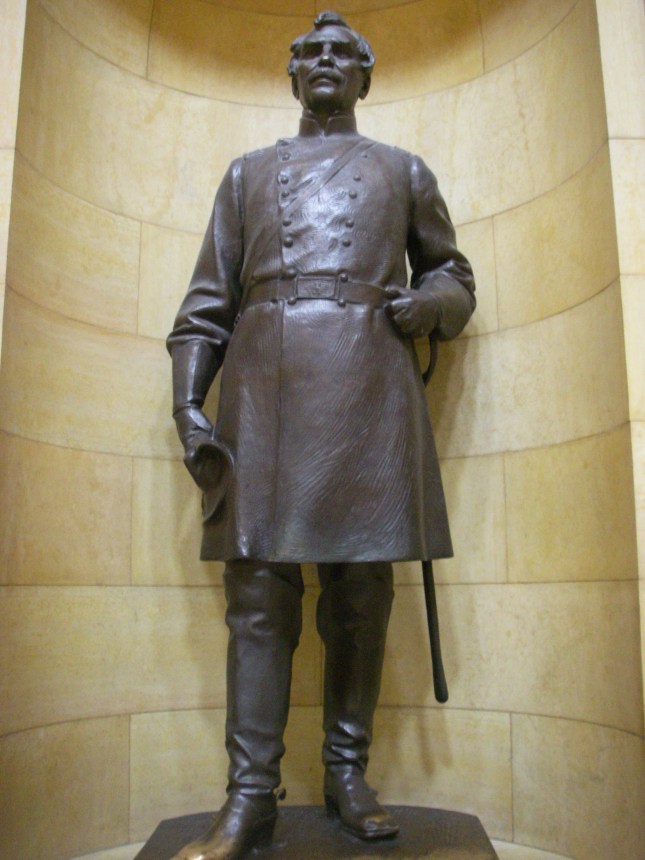
Failing to be re-elected six years later he moved to what was then the Minnesota ‘territory’ from where he was returned in 1858 as one of the new state’s first two senators after Minnesota achieved statehood. Later, during the Civil War he distinguished himself as a Union General and then settled in Missouri.

He had obviously taken a liking to the Senate chamber because he contrived to get re-elected to that house from Missouri in 1879 at the age of 73. He died shortly after taking office.

But Shields is possibly even more important for something he didn’t do.

In 1842 he was already well-known in his adopted home of Illinois. He was a lawyer and was serving in the state legislature as a Democrat. After one of those periodic economic recessions hit the nation in the 1840s Shields, as state auditor, issued instructions that paper money should no longer be taken as payment for state taxes. Only gold or silver would be acceptable. A prominent member of the Whig party, one Abraham Lincoln, took exception to the move and wrote an anonymous satirical letter to a local Springfield, Illinois newspaper in which he called Shields a fool, a liar and a dunce. This was then followed up by his wife-to-be, Mary Todd, with an equally scathing letter of her own. When Shields contacted the editor of the newspaper to find out who had written the second letter Lincoln himself took full responsibility. A belligerent Shields, accordingly, challenged the future US president to a duel. The venue was to be the infamous Bloody Island in the middle of the Mississippi river, dueling being illegal in Illinois.

Lincoln, having been challenged, was allowed to choose the weapons and set the rules. He did this to his own considerable advantage, opting for broadswords as opposed to pistols. While Shields was a crack shot he was only 5’9” in height, as opposed to Lincoln’s towering 6’4”. When the rivals finally met on 22 September 1842 Lincoln quickly demonstrated his huge reach advantage to Shields by ostentatiously lopping off a branch above the Irishman’s head with his weapon of choice.

When the seconds, and other interested parties, intervened peace was negotiated between the two men, though it took some time to placate the pugnacious Shields and persuade him to agree to shake hands with Lincoln.

The man who might have abruptly ended the life and career of Abraham Lincoln, and radically changed the course of American history, James Shields from Co.Tyrone, was elected as Senator from Missouri, 136 years ago on this day.
Major_General_James_Shields.JPG


On This Day – Drivetime – 15.1.1825 Suicide of banker Thomas Newcomen


77_big.jpg

In case you thought Irish banking failures and inquiries were peculiar to the 21st century – think again. As Woody Guthrie pithily put it …


Some men rob you with a gun

And some with a fountain pen


… and the Irish banker has been ruining himself and his customers as well as cleverly socializing his losses since the early 1800s.


Let’s look at a few of the most spectacular Irish banking collapses of the 19th century. Most of them involve politicians as well. Strange that.


For example, there was the scandal of the Tipperary Joint Stock Bank in 1856. It was run by the Irish Liberal MP for Carlow John Sadlier, and his brother James, MP for Tipperary. When it ran out of money John Sadlier took the easy way out and committed suicide on Hampstead Heath, leaving James to face the music. This he did for a while before he absconded. He ended his days in Switzerland, the natural home of the dodgy banker. Investigations revealed that the reason for the collapse of the bank was that John Sadlier had been embezzling on an outrageous scale. Before he shuffled off his mortal coil he’d removed nearly £300,000 from the vaults. The whole episode is said to have provided Charles Dickens with the inspiration to create the dubious financier Mr. Merdle in Little Dorritt. The book was being serialized when the scandal erupted.


Fast forward to 1869 and yet another example of Ireland’s capacity to forgive a scoundrel. In this instance it was another MP, James McNeale McKenna who, in the 1850s and 60’s was Chairman and MD of the National Bank of Ireland – so he combined in one person the roles later held by Sean Fitzpatrick and David Drumm in Anglo Irish Bank. Either Seanie and David were total slackers or James Mac Mac was an absolute hive of fiduciary energy.


He successfully ran the bank into the ground on foot of a number of unwise investments in pursuit of growth and greater market share. Aren’t we fortunate that our bankers shrugged off that bad habit a century and a half later. By the time he resigned, accused of cronyism and paying himself too much – other habits utterly alien to the modern equivalent – the National Bank of Ireland had debts of almost £400,000. Miraculously it survived. McKenna, MP for Youghal, lost his seat, but much later re-invented himself as a Parnellite and was re-elected in South Monaghan This bears out the suspicion that if Parnell had nominated a pile of pigeon droppings for a nationalist constituency they would have won the seat with a thumping majority.


Another flawed banker, however, was not so lucky where the Uncrowned King of Ireland was concerned. William Shaw, briefly, held the leadership of the Irish party after Isaac Butt died. But then in 1880 he got the bum’s rush when Parnell stood against him. Interestingly Shaw was supported in the leadership vote by one James McNeale McKenna. These banker/politicians stick together. Shaw, was also founder and Chairman of the Munster Bank. In 1884 he resigned, having received loans to the value of £80,000 – twice the exposure of the rest of the directors combined. Again, we are fortunate that this practice was completely stamped out before the 20th century. The bank didn’t outlive his Chairmanship long. It went bust the following year.


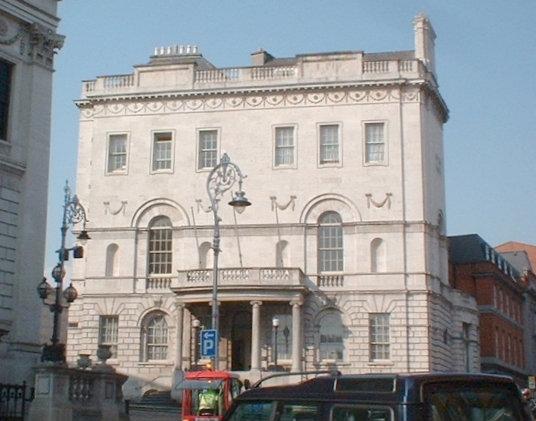
Finally we quickly rewind to the 1820s and Thomas Newcomen, a Viscount and, surprise surprise, a politician. He inherited the Newcomen bank, voted for the Act of Union in 1800, spent much time in his bank’s fine new headquarters – now the rates office beside Dublin Castle – and proceeded to drive the family business into the ground, taking many depositors with him. Newcomen was described as a reclusive Scrooge-like figure who ‘it was widely whispered, gloated over ingots of treasure with no lamp to guide him but the luminous diamonds which had been left for safe–keeping in his hands.’


Thomas Newcomen, driven to distraction by the collapse of his family bank, took his own life 190 years ago, on this day.


On This Day -8.1.1871 Birth of James Craig


James_Craig_Viscount_Craigavon.jpg

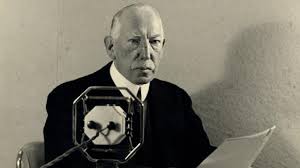
The most familiar photograph of James Craig is of a rather startled looking but steely-eyed elderly man with rapidly receding hair and a thick prominent grey moustache. He looks like someone you wouldn’t want to mess with. In this instance looks were not deceptive.


Craig was born in Belfast in 1871, son of a distiller. He was a millionaire by the age of 40 – much of his money coming from his adventures in stockbroking. This meant that he had plenty of opportunity and resources to devote to his favourite pastime, keeping Ulster out of the Union. This he was very good at indeed.


As did many a younger son of a well-established family he first distinguished himself in the Army. Everybody had enjoyed the first Boer War so much that they decided to do it all over again and from 1899 Craig served as an officer in the 3rd Royal Irish Rifles. He was, at one point, imprisoned by the Boers and was finally forced home by dysentery in 1901.


His name is, of course, as indelibly associated with that of Edward Carson as is Butch Cassidy’s with that of the Sundance Kid. Craig came into his own in 1912 in the organisation of unionist opposition to the prospect of Irish Home Rule. He was central to the creation of the Ulster Volunteer Force and the promulgation of the Ulster Solemn League and Covenant in which Ulster said ‘no’ with an emphatic flourish. While Carson made the speeches and was the most public opponent of Irish devolution Craig was seen as the organizational genius who developed the muscular element to back up Carson’s rhetoric. Craig was, for example, one of the men behind the Larne gun running of 1914, which brought 20,000 rifles to the UVF.


Unlike Carson, Craig was perfectly content at the exclusion from Home Rule of the six counties of what became, in 1920, Northern Ireland. The Government of Ireland Act that year gave Ulster, somewhat ironically, a Home Rule parliament of its own. In February 1921 Craig succeeded Carson as leader of the Ulster Unionist party. He fought the 1921 election later that year asking unionist supporters to ‘Rally round me that I may shatter our enemies and their hopes of a republic flag. The Union Jack must sweep the polls. Vote early, work late.’ If you were expecting ‘vote often’ there … well that wasn’t Craig’s style. In June 1921 he became the first Prime Minister of Northern Ireland.


His most famous speech was made in the Northern Ireland parliament in 1934 and, we are told, is often misquoted. He did not actually refer to that assembly as a ‘Protestant parliament for a Protestant people’. What he did say was ‘my whole object [is] in carrying on a Protestant Government for a Protestant people.’ You might well be forgiven for wondering what’s the difference.


He also reflected on one occasion in the Northern Ireland House of Commons that ‘It would be rather interesting for historians of the future to compare a Catholic State launched in the South with a Protestant State launched in the North and to see which gets on the better and prospers the more. It is most interesting for me at the moment to watch how they are progressing. I am doing my best always to top the bill and to be ahead of the South.’ Arguably he achieved that ambition during his tenure as Prime Minister, though large-scale fiscal transfers from London and the Anglo-Irish Economic War of the 1930s undoubtedly helped the Northern Irish economy keeps its nose ahead of that of the under-performing Irish Free State.


Craig was almost obsessive about having Northern Ireland treated as an integral part of the United Kingdom, to such an extent that he occasionally acted contrary to the apparent interests of its population. This can be seen most clearly in his insistence in 1940 that conscription be introduced in Northern Ireland when WW2 broke out. Wisely Winston Churchill passed on that particular poisoned chalice, fearing the inevitable backlash from the sizeable nationalist population – not to mention the reaction in the Irish Free State.


Towards the end of his days Craig began to take on an uncanny physical resemblance to the man who, in later life, would become the Rev. Ian Paisley. When he died in November 1940, aged 69, he was still Northern Ireland Prime Minister.


Captain James Craig, later 1st Viscount Craigavon, was born 144 years ago, on this day.

Unknown.jpeg


On this day – 18.12.1878 Hanging of John Kehoe of the Molly Maguires


marchpottsville.jpg

Their Irish origins are mysterious, though they were almost definitely a 19th century agrarian secret society. Their name may have emanated from a tradition that was not just Irish – the Welsh were party to it as well in the so-called Rebecca riots – where male activists disguised themselves as women before engaging in illegal activity up to and including murder. They may have also have been associated with the main Roman Catholic rival to the Orange Order, the Ancient Order of Hibernians.


But it wasn’t in Ireland that the Molly Maguires made a name for themselves. It was in the anthracite mines and on the rail-roads of Pennsylvania. Here, the tactics used against landlords and land agents in Ireland, were applied in bitter labour disputes, with the Ancient order of Hibernians, an organisation that originated in the USA, acting as a legitimate front for the illegal activities of the Mollies. Then again there are historians who do not believe this shadowy conspiracy ever existed on the scale that was claimed by the owners and shareholders of the mines and railways in late 19th century Pennsylvania. That is a point of view that was widely held at the time as well.


Immigrant labour offered a glorious opportunity for Pennsylavania capitalists to undercut the wages being paid to American-born miners. Wages for Irish migrants were low and conditions were brutal. ‘On the job’ fatalities and injuries ran into the hundreds each year. The so-called ‘panic of 1873’ – not a million miles removed from the stock market crash of 1929 and the sub-prime crisis of 2007 made a bad situation even worse for the mine and railroad workers.


Just as every crisis brings opportunity, mostly for the unscrupulous, the President of the Philadelphia and Reading Coal and Iron company, Franklin Gowen, son of an Irish immigrant and the richest man in the region, decided it was high time to crush the burgeoning trade union activity in the state, represented by the Workingmen’s Benevolent Association. While the ‘Molly Maguires’ may have been the convenient invention of Gowen himself there is no doubt that perceived enemies of the Pennsylvania mineworkers were being killed by the dozen. In one of the six main anthracite-mining counties there had been 50 such murders between 1863-67.


Gowen, with the co-operation of his fellow mine owners, engaged the services of the yet-to-be-famous detective agency run by Scottish immigrant Allan Pinkerton, to help break a general strike in the anthracite fields. In 1875 he despatched an agent, Armagh-born James McParland, to the area. Posing as ‘James McKenna’ the Pinkerton detective infiltrated the Benevolent Association and claimed also to have insinuated himself into the confidence of the Molly Maguires. Information gathered by McParland was, in the first instance, passed on to vigilante elements who happened to share Gowen’s union-bashing objectives. When suspected ‘Mollies’ were murdered in their own homes McParland threatened to resign from the Pinkerton organisation but was persuaded to remain in place. After six months the strike ended and most of the miners returned to work having agreed to a 20% wage cut. However, Irish-born members of the Ancient Order of Hibernians refused to concede and fought on. Attacks on overseers, strike-breakers and police continued until information supplied by McParland led to a number of arrests.


The Armagh Pinkerton, who had, by his own account, been a trusted collaborator of the leadership of the Mollies, testified against a number of those accused of murder. Demonstrating the extent of his political power within the state of Pennsylvania Gowen managed to have himself made special prosecutor and actually conducted some of the cases against the Mollies. The accused included the alleged ringleader of the organisation John ‘Black Jack’ Kehoe. McParland’s testimony sent ten men to the gallows. Many of them, including Kehoe, loudly proclaimed their innocence of the crimes of which they had been convicted. In 1979 the state of Pennsylvania pardoned Kehoe posthumously after an investigation by its Board of Pardons at the behest of one of his descendants.


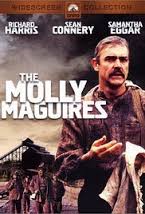
The Molly Maguires have passed into legend. Arthur Conan Doyle based a Sherlock Holmes mystery, The Valley of Fear on their alleged activities. The 1970 film The Molly Maguires, starred Sean Connery as Kehoe and Richard Harris as McParland.


John ‘Black Jack’ Kehoe, the last of the Molly Maguire defendants was hanged in Pennsylvania 137 years ago, on this day.

mollymaguire.jpg


Unknown.jpeg


Two ‘On This Day’ reading sessions in Meath


Bookmarket Café, Kells – 6.30 Tuesday 15 December

Blackbird Books, Navan – 6.00 Tuesday 22 December


On this Day cover idea no rte logo.jpg