On This Day -Drivetime – 11.4.1866 Fenian invasion of Canada

Image

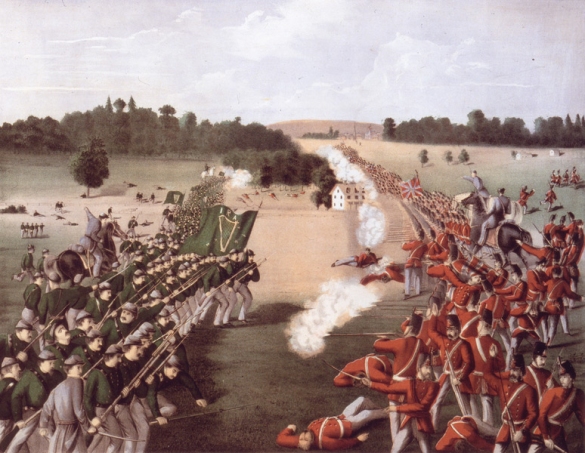
The Battle of Ridgeway, 1866.


Between 1866 and 1871 American Fenians – mostly veterans of the Civil War – attempted, on no less than five occasions, to invade Canada with some nebulous idea of seizing what was known through most of the 1860s as British North America and only giving it back when Ireland was granted an independent republic. Most of their efforts were cack-handed and disorganised. The raid on Campobello Island, New Brunswick, in April 1866 is typical. Led by one of the founders of the movement, John O’Mahony, this attempt landed 700 Fenians on the Canadian island which adjoined the state of Maine. The small force, however, sensibly placed discretion ahead of valour when it was informed that British warships were on the way. The occupation of the island was painlessly brief.

Another raid in 1870 was betrayed by the most famous English spy in the American Fenian ranks, Thomas Beach, who posed, for many years, as a French Canadian Henri le Caron, but whose information ensured that the British and Canadian authorities were well-informed about what the Fenians were up to.

The Fenian raids are generally represented as pathetic and disorganised fiascos. This is true of four out of the five – but not of the second raid, in June 1866.

The plan for this incursion was put together by former Union General Thomas William Sweeney, a Corkman known as ‘Fighting Tom’. The force, of about 1,300 Fenians, was led by former Union Army Colonel John O’Neill. It managed to cross the Niagra River without any American interference. A US gunboat – the Michigan – tried to stop them. But it had been sabotaged by a Fenian member of its crew and didn’t crank up until fourteen hours after most of the Fenian rebels had already made the crossing.

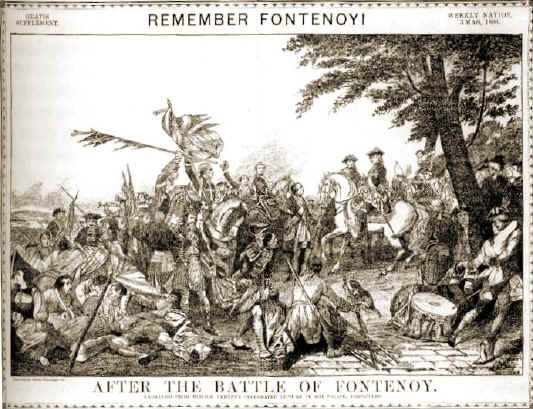
O’Neill’s men defeated a Canadian militia force at the Battle of Ridgeway. The Canadian defenders were boys before men – they were mostly inexperienced and badly armed troops facing well-equipped Irish veterans of the American Civil War. The result was the first Irish victory against a British force since Fontenoy in 1745.

The following day that first success was repeated at Fort Erie, a lakeside stronghold described, flatteringly, by the New York Times as a ‘deserted dunghill’.

The Times was just as complimentary towards the Fenian force itself, describing its members as ‘heroes of the stamp who bravely led the retreat at Bull Run’. The paper then advised the British-Canadian forces ‘not to spare them on our account . . They would be lying and stealing here if they were not raiding there.’

The Fenians described themselves as the Irish Republican Army – some went into battle wearing uniforms bearing the legend ‘IRA’ – it was the first time the letters are known to have been used in a context other than that of the accumulation of an American pension fund.

The USS Michigan finally managed to extract the Irish spanner from its works and get moving. It stopped Fenian reinforcements crossing into Canada. Rather than wait for the arrival of a vastly superior British regular force O’Neill withdrew and evacuated his men by barge back across the Niagra to Buffalo. There the Fenians surrendered to US forces. A little known fact – included among the Irish invaders was a small force of Mohawk Indians and a smaller group of Black Civil War veterans.

In a mopping up operation the U.S. army was instructed to arrest anyone ‘who looked like a Fenian’. Raising the obvious question – how do you look like a Fenian? The Americans took the whole affair very seriously indeed. General Sweeney, the Civil War hero, was arrested for his part in the invasion. Oddly though he continued to serve in the US Army until he retired in 1870. Or maybe that was his punishment.

One effect the raid did have was that it hastened the formation of the Confederation of Canada – so the Fenians can, in a sense, claim to be Canada’s Founding Fathers.

In a far less successful incursion two months beforehand Fenian forces led by John O’Mahony briefly occupied Campobello Island, New Brunswick, 148 years ago, on this day.


On This Day – Drivetime – 4 April. 1818 – Thomas Mayne Reid: novelist


Image

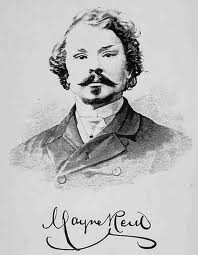
Born in 1818, a native of Ballyroney Co. Down and the son of a Presbyterian minister, Thomas Mayne Reid was an adventurer before he became a highly successful writer. His father intended him for the Church, but like a lot of sons Reid had ideas of his own. Despite spending four years training to be a minister he failed to graduate and follow his father’s footsteps. 

He entered the USA via New Orleans in 1840 and quickly became involved in the activities of hunters and fur traders. He lasted six months in Louisiana and was, so the story goes, forced to leave the state for refusing to horsewhip a slave. He later set one of his books, the anti-slavery novel The Quadroon, in the South.  While living in his next port of call, Philadephia, and working as a journalist, he became a drinking companion of Edgar Allen Poe. The great American mystery writer later remarked of the Irishman’s conversational talents that he was ‘a colossal but most picturesque liar. He fibs on a surprising scale but with the finish of an artist.’

 He fought in the Mexican–American War, where he was double-jobbing as he was also covering the conflict for a New York newspaper as its war correspondent.  Reid was badly wounded at the Battle of Chapultepec, where the Mexican defenders of the town included members of the famous San Patricio battalion, Catholic Irishmen fed up with nativist anti-Catholicism who had switched sides to fight with Mexico. Reid was promoted while most of the surviving San Patricios were hanged.

 After spending just over a decade in the USA, mostly in the West, he returned to Europe and began to harvest his American experience as a writer. There is, however, scant evidence that he ever actually spent much time in that part of the world where much of his work is located, the American west. Between 1848 and his death in 1883 he wrote more than seventy adventure novels and, ironically as an Irishman writing mostly in Britain, played a huge part in the mythologising of the West, even amongst Americans. Theodore Roosevelt was an avid fan of Reid’s novels as a young boy and later went in search of the West that Reid wrote about. If he didn’t actually find it he certainly pretended to.

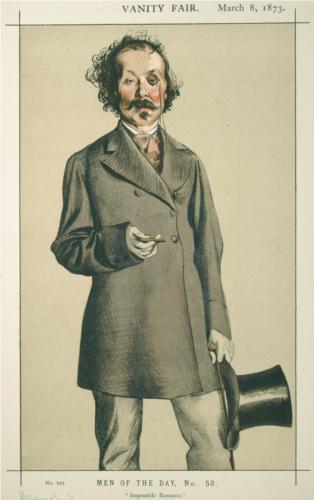
 Reid cultivated a rather foppish appearance. He liked to wear lemon yellow gloves and clothes that were guaranteed to attract attention. He also wore a monocle, giving rise to the myth that he had a glass eye. Almost inevitably the story is told that when Reid and some other authors once met for a drink the Irishman’s glass eye fell into his beverage and had to be fished out.

 The thrust of his approach to the West can be gauged from the titles of some of his more famous novels, many of which did not actually appear in American editions until well after his death. The Scalp Hunters, written in 1851, was one of his earliest and most successful efforts. Other classic ‘dime novels’ included The Headless Horseman written in 1866, later read enthusiastically in a Russian translation by a young Vladimir Nabokov. It doesn’t, however, appear to have greatly influenced Lolita.  In all Reid wrote 75 novels as well as numerous short stories.

 Thomas Mayne Reid, novelist and teller of tall tales was born one hundred and ninety six years ago on this day. 

 Image


On this Day – Drivetime – 28.3.1820 – Birth of William Howard Russell, the ‘father of war reporting’.


                                                                                        Image


A certain Lt.Charles Naysmith can probably be said to be the father of professional war journalism . . . by default. He was an officer with the East India Company’s Bombay Artillery and as meant to be sending reports on the war in the Crimea to the Times in London. However, he lacked one great quality of any decent newsman, a sense of urgency, so the newspaper of record decided to send one of its own, an Irishman from Tallaght in Co. Dublin, a graduate of Trinity College named William Howard Russell, not, as is often the case, because an Irishman is more expendable, but because he was already near the top of his profession


Russell’s reporting from the bungled war in the Crimea aroused the ire of, among others, Prince Albert. Queen Victoria’s consort wrote of Russell that ‘the pen and ink of one miserable scribbler is despoiling the country’. So we have to assume that he was doing something right.  The myth of Russell is that he was a campaigning polemicist who exposed the incompetence of the British High Command and whose blistering indictment of the Army’s derisory medical facilities, which were killing far more ordinary soldiers than the Russians, led to the arrival of Florence Nightingale in Crimea. This resulted in the consequent increase in the average life expectancy of the average soldier and the birth of a caring legend. As with most myths some of it is actually true.


Disease and abysmally inadequate hygiene were indeed far greater killers than Russian cannon or musketry in the Crimea. But it was not Russell who brought this to the attention of the readers of the Times but the paper’s Constantinople correspondent Thomas Cheney.  Neither was Russell the only correspondent in Crimea.  He faced competition from his equally accomplished but much younger fellow Irishman Edwin Godkin of the Liberal London newspaper The Daily News.


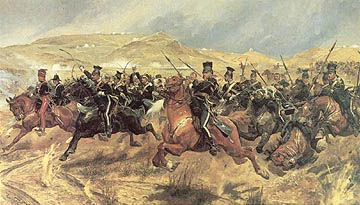
Russell, however, was hugely influential in turning public opinion against the conduct of the Crimean campaign. He spent almost two years covering the war but most of his published work tended to emphasise the qualities of bravery and dash displayed by the soldiers rather than the muddle headed, in-bred, casual incompetence of their Generals. When describing one of the most celebrated disasters in what was a regular downpour of military ineptitude, the infamous Charge of the Light Brigade, Russell wrote in a florid and heroic style worthy of The Battle of Maldon


‘The first line is broken, it is joined by the second, they never halt or check their speed an instant . . with a halo of flashing steel above their heads, and with a cheer that was many a noble fellow’s death cry, they flew into the smoke of the batteries . . ‘


It was an era of romanticism, so mundane and meaningless death was not permitted, not even to readers of the Times. Alfred, Lord Tennyson, duly took note and futile gesture became enduring myth in one of his most famous poems.


But the salient part of Russell’s own myth is true. He did make a difference. He was subjecting military incompetence to independent scrutiny for the first time. He had great moral courage because he had to put up with the hostility of many of the members of the officer corps. He was blacklisted and Lord Raglan, the British commander, advised his officers to have nothing to do with Russell. Furthermore he established the campaigning credentials of the Times – earning its nickname The Thunderer – and set a standard in war reporting which would not fully erode until just over half a century later with the onset of World War 1. 


William Howard Russell, the acknowledged father of war correspondence, a term, incidentally, which he loathed, was born in Tallaght one hundred and ninety four years ago on this day.


                                                                    Image

OTD – DT – 21 March 1656 – Death of James Ussher – the man who calculated the date of the creation of the universe.


‘Big Bang’ – what Big Bang?

Image


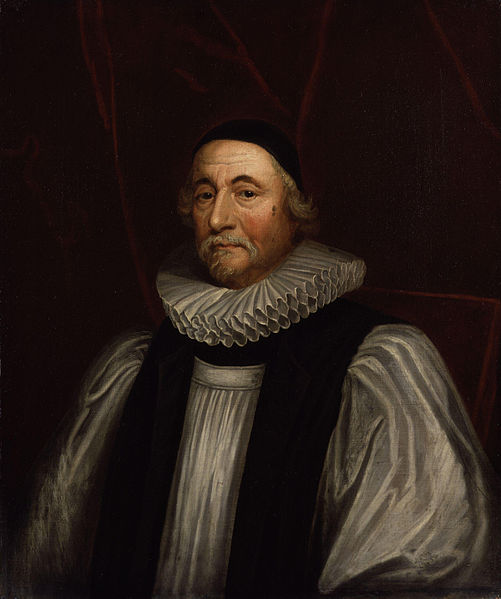
In case you ever wondered about the date on which the universe was created it was, apparently, 23 October 4004 BC. That may seem a trifle recent to many of us – given that the dinosaurs are reliably reported to have ruled the earth millions of years ago, but it was the carefully deduced calculation of the 17th century Church of Ireland Archbishop of Armagh, James Ussher.

Ussher was born in 1581 into a wealthy Anglo-Irish family. He was one of the first students of Trinity College Dublin. It was established in 1591, he became a student there in 1594 at the tender age of thirteen. His callow youth would today result in him being rejected by the computer in the CAO application process but going to college in your early teens was not that unusual in the 16th century. He left his mark at Trinity in that one of the college libraries is named after him.  He also occupied the post of Professor of Theological Controversies there. That would be an extremely interesting position for a committed creationist today.

He became primate of all Ireland in 1625 and occupied the position until his death in 1656 – so he served during interesting times. However, he left Ireland in 1640 for what turned out to be the last time. The rebellion of 1641 saw him lose his home and income at the hands of Catholic rebels.

Even before losing much of his personal wealth he wasn’t a great fan of Roman Catholicism and was not in favour of allowing Catholics to exercise their religion freely. He once wrote that … ‘The religion of the papists is superstitious and idolatrous; their faith and doctrine erroneous and heretical’ So not much ecumenical wriggle room there. It may come as a surprise, therefore, to learn that Ussher’s own mother was a Catholic.

During the English Civil war he was forced to choose sides. He chose the wrong one. Although something of a Puritan himself he opted to remain loyal to King Charles. Only the protection of influential friends allowed him to remain unscathed in London after the victory of the Parliamentarians. From the roof of the Countess of Peterborough’s house he watched the execution of the King, but is reported to have fainted before the axe fell.

It was in 1650, in The Annals of Old Testament, that he published the result of his calculations as to the date of the creation of the world, a feat also attempted by the way, by Isaac Newton. His rationale was that Christ had actually been born in 4 BC and that the world had been created precisely 4000 years earlier with God starting at sunset on 22 October and finishing the job the following day. As Solomon’s temple had been built 1000 years before the birth of Christ and as it had been constructed 3000 years after the act of creation that meant 4004 was the year of Genesis. He also claimed that Adam had been created at the same time. His theory is still popular with many who don’t hold with the theory of evolution or the science of carbon-dating. Clarence Darrow raised Ussher’s calculations in his cross-examination of William Jennings Bryan at the famous Scopes trial, the so-called ‘Monkey trial’ in 1925 where a teacher was on trial for teaching the theory of evolution to his students.

Despite his support for the King in the Civil War Ussher, possibly because of his latent Puritanism, was held in such high esteem that he was buried in Westminster Cathedral, with the approval of Oliver Cromwell.

James Ussher, bishop, theologian and philosopher died three hundred and fifty-nine years ago, on this day.

On This Day – Drivetime – 14 March 1738 – John Beresford, unionist politician, is born in Dublin


Image

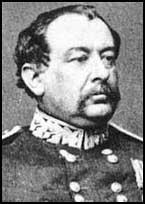
Beresford is a name that used to have quite a bit of clout in Waterford. The most prominent member of the household of that name, John Beresford, was born in 1738 and represented the county in the Irish parliament for nearly forty years. Which was no mean achievement, even though his family pretty much ‘owned’ the constituency.

Born on the Abbeville estate near Dublin, in more recent times home to an equally powerful Irish political magnate, one Charles J.Haughey, Beresford had a typically aristocratic education at Kilkenny College and Trinity.

His first wife, a French lady named Constantia Ligondes, died in 1772 and two years later he married the society beauty Barbara Montgomery, who had been one of the models for the famous painting of the Three Graces by Sir Joshua Reynolds. It was a good career move, but not as good as hitching his wagon to the train of the Tory politician William Pitt who seems to have been Prime Minister for most of the 18th century.

Beresford wielded enormous power in Ireland from the relatively modest position of a seat on the board of the revenue commissioners. After his promotion to the position of first commissioner of revenue in 1780 – making him the 18th century equivalent of Josephine Feehily – he brought about a number of key reforms to make the collection of taxes more efficient and more lucrative for the government, for which I’m sure we’re all very grateful.

Beresford also took an interest in the architecture and streetscapes of Dublin. It was due to his influence that the Custom House was built – it took ten years and cost £400,000 – and that Sackville St and the Quays were widened and extended.

When William Pitt became Prime Minister of Britain in 1783 at the tender age of 24 – though this was not why he was known as Pitt the Younger – Beresford’s influence on Irish affairs, already huge, became even greater. He was, however, courteously loathed by the so-called ‘Patriots’ in the Irish parliament, led by Henry Grattan, the men who had extracted major concessions on a very basic form of Home Rule from the British government in 1782. The feeling was mutual, by the way.

When, in 1795, that government made an even greater concession to Grattan and his followers by sending the conciliatory Earl Fitzwilliam over to Dublin as Lord Lieutenant the beacon fires of warning were lit on the Beresford estates in Waterford. Fitzwilliam, finding that he could not operate in government without the approval of Beresford, rapidly fired him.  Although he left him in possession of his salary of £2000 a year it was not a clever move. Beresford whined to William Pitt, now an elder lemon of 36, and Fitzwilliam himself was quickly fired in his turn.

Some time later, comments made by Fitzwilliam about Beresford being guilty of ‘maladminstration’ resulted in the Irish politician challenging the English earl to a duel. The two were due to meet in Kensington, where today such encounters take place over the bargain bin in Harrods, but the police got there first and the duel was abandoned. Beresford’s honour was restored when Fitzwilliam agreed to apologise.

Beresford was, at first, opposed to the Act of Union, but, like a number of Irish notables, allowed himself to be persuaded that it was a very good idea. There is, of course, no suggestion that any money changed hands in persuading him to abandon his opposition. Catholic Emancipation, however, which was supposed to be introduced at the same time, was a bridge too far. Beresford was utterly opposed to Catholics getting any more rights and privileges than they had already acquired and his joy was unconfined when the King agreed and refused to allow Pitt to legislate for the entry of Catholics into Parliament.

So it was fitting that it was a Beresford – George  – whose defeat by an emancipation candidate in the Waterford by-election of 1826 paved the way for Daniel O’Connell to win a seat in Clare two years later. By then John Beresford had gone to his reward collecting revenues in the next world.

John Beresford, landowner, politician, intriguer and tax collector was born 276 years ago, on this day.