On This Day – Drivetime – 7.3.1594 Grace O’Malley

Image

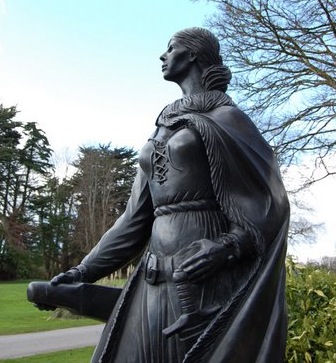
Grace O’Malley, born in 1530, was from a seafaring family based around Clew Bay in Co.Mayo. Seafaring being a bit of a euphemism for piracy.  Her family, with its main stronghold on Clare Island, reserved to itself the right to levy all vessels fishing off their coastline, no matter where they came from. Whether that was tax collecting or piracy is a moot point. To this day there are those who still see little distinction between the two pursuits anyway.

The only child of Eoghan Dubhdara and Maeve O’Malley, Grace was a bit of a tom-boy to say the least. She was flamboyant and belligerent. As a child she earned her famous nickname ‘Granuaile’ by cutting off her hair when her father refused to take her on an expedition to Spain on the spurious pretext that her long tresses might catch in the ship’s rigging. Thereafter she became known as ‘Bald Grace’ or Grainne Mhaol.

She was married twice and was rumoured to have had many lovers, although this was an accusation regularly levelled against powerful women during the 16th century.  Her first husband was Donal an Cogaidh O’Flaherty – Donal of the Battle – whom she married at the age of 16.  After his death Grace set her cap at the wealthy and influential Richard Bourke. He was known as Risteard an Iarainn either because he always insisted on wearing a coat of mail inherited from his Norman ancestors or because he controlled much of the iron manufacturing in Connacht. Or both.

Grace and Richard married under the Brehon Law, which, as it happened allowed a wife to divorce her husband.  And, as it happened, that appears to have been exactly what happened. Grace, installed in Bourke’s ancestral pile, Rockfleet Castle, ended the marriage by the simple device of telling her husband ‘Richard Bourke I dismiss you’.  But  she cleverly kept the Castle.

Grace and her first husband, Donal O’Flaherty, didn’t make themselves very popular with the merchants of Galway who complained to the English court that the O’Malleys and O’Flahertys were behaving like pirates. Not that Granuaile confined her activities to her own back yard. Her revenue raising exercises ranged all along the south and west coasts.

She was, by and large, a supporter of rebellion, though she was not averse to helping out the English administration in Ireland when it suited her.

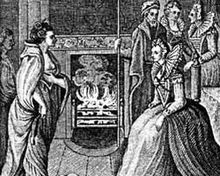
However, when her sworn enemy, the English governor of Connacht, Richard Bingham, kidnapped two of her sons and her half-brother in 1593 she took the unusual step of sailing to England to make the case for their release directly to Queen Elizabeth herself. It was, by all accounts, a memorable occasion with Grace dressed in the 16th century equivalent of creations by John Rocha and Phillip Treacy. The essential difference being that she also sported her own concealed dagger, de rigeur in the Tudor period, but calculated to ruin the line of a piece of 21st century couture.

Elizabeth was impressed by the Irish pirate Queen, politically empowered women being thin on the ground at the time. An accommodation was reached which didn’t last very long and resulted in a fleet being despatched to seek and destroy Granuaile’s power base. Between the time of her meeting with Elizabeth 1 and her death, probably in 1603, Grace threw her support behind the forces gathered by O’Neill and O’Donnell in the Nine Years War.

O’Malley has been feted in prose, poetry and music by artists as diverse as Shaun Davey, Patrick Pearse and the Sawdoctors. The Commissioners of Irish Lights have named not one but three vessels after her though the fact that the Asgard carried a figurehead of Grace didn’t stop it sinking in 2008.

An English expedition prepared to leave Galway to take on the might of Grace O’Malley, aka Granuaile, aka the Pirate Queen, 420 years ago, on this day.

Image

On This Day – Drivetime – 28 February 1799 – William Dargan, Irish Engineer

Image


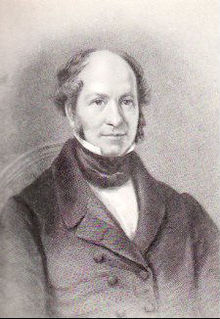
Not many people see statues unveiled to themselves in their own lifetimes. William Dargan, however, was one such person. Born into the family of a tenant farmer in Co.Carlow in 1799 and educated in a local hedge school, he went on to become the most important Irish engineer of the 19th century and one of the country’s most significant entrepreneurs and philanthropists.

Showing early promise as a mathematician he trained as a surveyor thanks to the generosity of, among others, the MP Henry Parnell. Later he found work with the famous Scottish engineer Thomas Telford in the building of the London to Holyhead road in the early 1820s. Moving back to Ireland he earned the large sum of  £300 for his work on a new road from Raheny to Sutton near Dublin. This served the Howth mail-packet station. The money was used as seed capital to fund many future projects. These included the building of Ireland’s first railway line in 1831, from Dublin to what was then Kingstown and what is now Dun Laoghaire.

While Dargan did not acquire the same sort of reputation as an employer as another well-known Irish railway builder, William Martin Murphy, he did manage to antagonize some of his workers into a week-long strike during the construction of the Dublin-Kingstown line. The strike ended when he agreed to pay his employees based on their productivity. Unconnected with the strike, Dargan’s workers managed to scandalize some of the delicately nurtured inhabitants of South County Dublin by bathing in the sea during their lunch breaks in what was described as ‘an indelicate state’.

Dargan was responsible for the construction of almost 1000 miles of railway line in Ireland and for the building of, amongst other huge projects, the Ulster Canal between Lough Erne and Lough Neagh. He also reclaimed land in Belfast Lough on which now stands the Harland and Wolff shipyard. 

Dargan, although well insulated by his growing wealth, lived through the horrors of the Great Famine. He was instrumental in restoring some of the country’s morale in the wake of that catastrophe when he spent £100,000 on the Dublin Industrial Exhibition of 1853 located on what is now Leinster Lawn, overlooking Merrion Square. The exhibition ended up costing him £20,000. At its conclusion a new National Gallery was built on the site. Today the gallery contains a Dargan wing, and that statue of the great engineer, which was erected near the front entrance and unveiled in 1863. The iconic Luas bridge in Dundrum, completed in 2004, is also named after him. The Nine Arches viaduct in Milltown, still used today in running the Luas line, is yet another Dargan construction.

As would William Martin Murphy in 1907, Dargan declined a knighthood more than half a century before. In 1853, on one of her four visits to the country Queen Victoria actually came to call on Dargan in his mansion at Mount Anville. She sought to make him a baronet. Again he declined the offer.

Dargan was renowned for his humanity and his generous dealings with businesses on the brink of extinction during and after the Famine. This may not have been entirely altruistic. He is reputed to have observed on occasions that ‘A spoonful of honey will catch more flies than a gallon of vinegar.’ When he died in 1867 he had acquired a reputation as ‘The Workman’s Friend’ having provided employment to thousands – his funeral was, reportedly, the largest in Dublin since that of Daniel O’Connell twenty years before.

 William Dargan, railway builder, businessman and philanthropist was born 215 years ago, on this day.


On This Day – Drivetime – 21 February 1922 – Recruitment begins for An Garda Siochana

Image


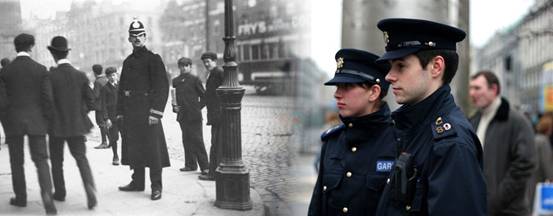
An Garda Siochana are in the jobs market again. Although only 250 trainees will be taken on, already there is no shortage of young men and women keen to join.

There was no doubt, in early 1922, in the minds of the country’s founding fathers that one of the first colonial institutions to go would be the paramilitary Royal Irish Constabulary. The Dublin Metropolitan Police, an unarmed force, some of whose members had provided Michael Collins with valuable intelligence, was left intact for the time being. Among the agents of Collins was Ned Broy – who subsequently became Garda Commissioner –making a remarkable recovery from having been murdered in Neil Jordan’s Michael Collins movie. The DMP wasn’t subsumed into the newly created an Garda Siochana until 1925.

New recruits had to sit an exam in reading, spelling and arithmetic.  They had to be 5 foot 9 inches tall and between 19 and 27 years of age to become cadets. The very first Civic Guard – the name originally chosen for the force – was, as it happens, an ex-RIC man P.J.Kerrigan.

The second Garda Commissioner was the infamous Eoin O’Duffy, founder of the Blueshirts. O’Duffy was dismissed by the newly elected Fianna Fail govt in 1933. There have been 19 Commissioners to date.

Perhaps the most famous Guard was Dubliner Jim ‘Lugs’ Branigan, who regularly used his fists, officially and unofficially, in the course of his duties. Branigan was in his pomp at the time of the so-called Animal Gangs in 1930s and 40s. In May 1940 at the so-called Battle of Baldoyle, Branigan (and other Guards) were forced to wade in and disarm gang members equipped with bayonets, butchers knives, swords and razors. Challenged on their way to the confrontation they had claimed to be going to a wedding.  Injuries included a knife through the lung of one gang member and a rusty bayonet through the thigh of another. It appears that while there were plenty of grooms and best-men the bride never showed.

Branigan retired on 6 January 1973. He received many tributes, but was particularly touched by a canteen of cutlery and a set of Waterford glass from a group of Dublin prostitutes, who regarded him as something of a father figure.[ii]

According to the Garda Roll of Honour a surprising 86 members of the Force have died on active duty. While some deaths were accidental many Guards have been murdered since the force was established. One of the earliest was Henry Phelan on 14 November 1922. Garda Phelan was killed by armed men when he went to a shop in Mullinahone, Co. Tipperary to purchase hurleys.

In the early days of the Troubles, in 1970, Garda Richard Fallon pursued armed members of the Republican splinter group Saor Eire and was fatally wounded when shot by one of the raiders. Two years later Inspector Sam Donegan was conducting searches on the Cavan/Fermanagh border when he was killed by a booby-trap bomb in a country lane.

The Scott medal, awarded to Gardai for bravery, has become something of a yardstick of troubled times in Ireland. In the 1970s when paramilitary activity was at its height there were 96 Scott Medals awarded. Contrast that with a total of six between 1951-60

A recruitment drive for the Civic Guards began 92 years ago, on this day.


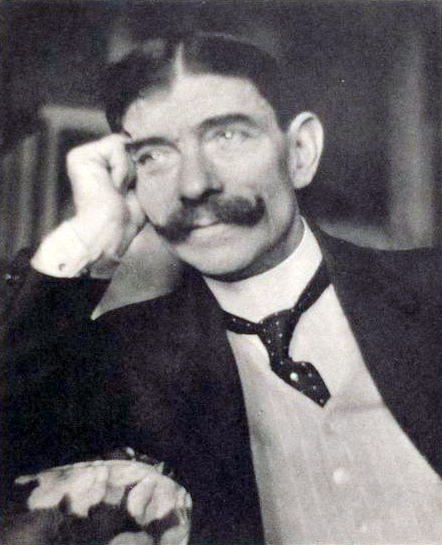
On This Day – Drivetime – 14 February 1856 – Frank Harris, cowboy, editor, biographer, and bon vivant

Image


Around the time of the foundation of the Irish state it would probably have come as a surprise to many Irish people that the author of ‘that filthy book’ My Life and Loves, the notorious Frank Harris, was a compatriot. But indeed he was. The only mitigating factor in his otherwise unrelievedly Irish origins was that his parents were Welsh, his father being a naval officer from Fishguard. Though this probably had little to do with his voracious sexual appetite and his repeated committal of his sexual history to paper. He had a reputation in the 1890s of being ‘the best talker in London’ at a time when Oscar Wilde, George Bernard Shaw and Winston Churchill provided stiff competition for the title.

Harris, feted by a few as a writer who pushed out the boundaries of journalism and loathed by many as a rampant pornographer, was born in 1856 in Galway. It was his departure from Ireland at the tender age of twelve that began the process that would result in the publication of My Life and Loves. He was sent to school in Wales, didn’t like it, and ran away after a year. Most callow teenagers would have headed for Cardiff …  or London if they were more adventurous. Harris, however, travelled instead to America. There he held down a number of menial jobs before finding his feet in the American west in the 1870s by working as a cowboy.

He was inveigled into that hazardous profession by a man known only as Mexican Bob.  The dangers of the open range included weather, wildlife (literally and metaphorically), water, women, weapons and wrongdoing. Despite his subsequent notoriety Harris managed to avoid the metaphorical wildlife, his youth meant he steered clear of cow-town women and a range of colourful and painful venereal diseases. But he almost succumbed to the literal variety when bitten by a rattlesnake. Only the attentions of two colleagues kept him alive. As in much of his literary output Harris was prone to exaggerate his western adventures. He describes, for example, one incident in which he claimed that he and four other cowboys managed to hold off a one hundred strong raiding party of Native Americans.

Returning to the UK Harris became a successful journalist, his greatest achievement probably being his editorship of the Saturday Review, a periodical which included H.G.Wells and George Bernard Shaw as contributors.

Harris became an American citizen in 1921 and the following year travelled to post-war Berlin where he began publishing, privately, the four volumes of biography / erotica for which he is most notorious.  His descriptions of his alleged sexual encounters, highly graphic for the time and accompanied by illustrations that left nothing to the imagination, resulted in the book being widely banned. Inevitable comparisons were made with D.H.Lawrence’s Lady Chatterly’s Love.  In the US and Britain the ban lasted for over forty years. In addition to describing and probably greatly exaggerating his own sex life he also discussed the nocturnal activities of, amongst others, Charles Stewart Parnell, Randolph Churchill and William E.Gladstone.

Harris numbered Oscar Wilde among his friends. He, sensibly as it turned out, advised Wilde against suing the Marquis of Queensberry for defamation in the trial that destroyed the Irish playwright. Wilde had dedicated his play An Ideal Husband to Harris. So ill-suited was Harris to that particular designation, he was married three times, that we might well assume the playwright had his tongue firmly in his cheek when he did so. Harris also wrote a, not entirely favourable, biography of Wilde. He died, in 1931, of a heart attack at the age of 75.

Frank Harris, cowboy, editor, biographer, and bon vivant was born 158 years ago on this day.

Image

On This Day – Drivetime – 7 FEBRUARY 1940 – Brendan Behan jailed for IRA activity

Image


Brendan Behan was born in Dublin’s inner city in 1923. He inherited his love of literature from his father, a house-painter who had fought in the War of Independence, and much of his Republicanism from his mother Kathleen, a sister of Peadar Kearney, the man who wrote Amhran na bFhiann.

Behan was politically active from an early age and was also publishing as a teenager. He was one of the youngest contributors to the Irish Press, for example, with his poem, Reply of a Young Boy to pro-English verses.

At the age of 16 he joined the IRA and decided, apparently of his own volition, that it would be a good idea to bomb Liverpool docks. The result was his arrest in England for possession of explosives. His explanation to the court for the contents of the bag with which he was discovered was that the potassium chlorate found in his luggage was medication for his ears. He even claimed to have a doctor’s note to that effect. The Judge was not impressed. Pronouncing sentence he told Behan that, but for his youth, his prison sentence would have been much longer. He was committed to borstal for three years. Soberingly, on the day he was sent down two IRA volunteers, Peter Barnes and William McCormick, were hanged in Winston Green prison in Birmingham for their involvement in an explosion in Coventry in 1939 which had killed five people.

Behan’s sojourn in prison would become the inspiration for his autobiographical novel Borstal Boy.

On his return to Ireland Behan was jailed once again, sentenced to fourteen years for the attempted murder of two Irish detectives. He was released in a general amnesty in 1946. While he maintained a healthy disrespect for the forces of law and order, once observing that, ‘I have never seen a situation so dismal that a policeman couldn’t make worse’ his militant Republican activities had ended by his mid 20s.

His first major commercial and artistic success was his prison play The Quare Fellow. This started life in the Pike Theatre in Dublin before the famous English director Joan Littlewood took it to London. The play was an instant success and transferred to the West End.  Behan did the cause of the play no particular harm, whatever about his own reputation, when he appeared drunk on a BBC TV interview with the rather self-important Malcolm Muggeridge. Sceptics, unwilling to accept Behan’s credentials as a writer, claimed, unfairly, that it was really Littlewood who had crafted The Quare Fellow, prompting the gibe that ‘While Dylan Thomas wrote Under Milk Wood, Brendan Behan wrote under Littlewood.’

Further success followed with The Hostage in 1958, an English language version of his play An Giall which was first produced in the Damer theatre on Stephen’s Green. Though some claim that the resemblance between the two is a passing one. The appearance of Borstal Boy the same year further enhanced his growing reputation.

Unfortunately, coinciding with this success, Behan was becoming almost as well known for his drinking as for his writing. He once described himself as a ‘drinker with writing problems’ and one bon mot ascribed to him on a visit to North America was the observation that ‘I saw a billboard saying ‘Drink Canada Dry – so I did’. Like another famous Celtic roisterer, the aforementioned Dylan Thomas, Behan would have a short life. He developed diabetes in his thirties and it hastened his death. He collapsed in a Dublin bar in 1964 and died in the Meath Hospital. He was only forty-one years old.

Brendan Behan, two days short of his 17th birthday, was sentenced to 3 years in Borstal at Liverpool Assizes 74 years ago, on this day.