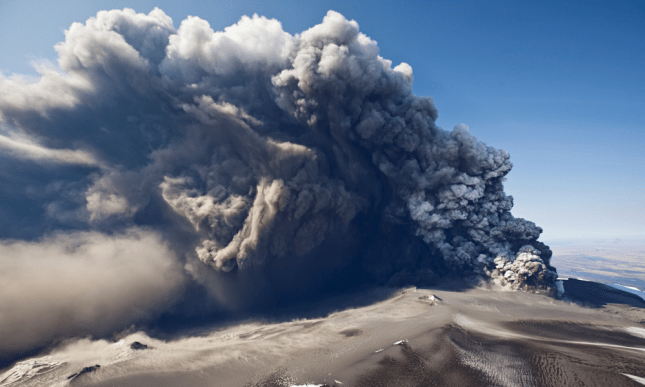
Fake Histories #15   12.4.2019 The Icelandic Eyjafjallakökull eruption of 2010 was the most disruptive volcanic event in modern history?


iu.png

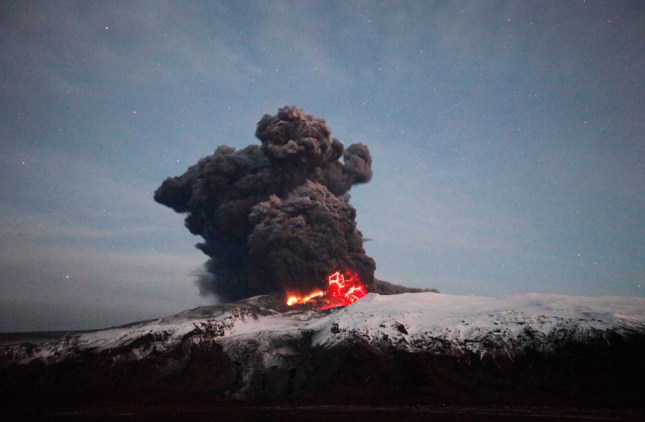
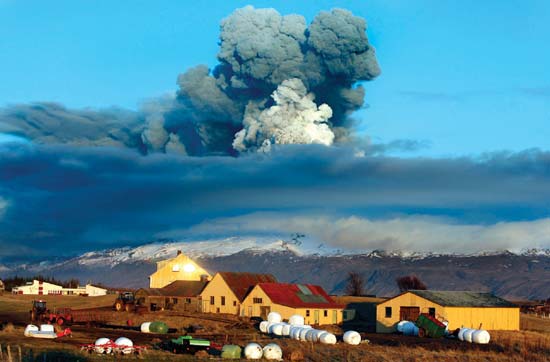
Who can forget that week in April 2010 when a mountain in Iceland closed the airspace of 20 countries and left millions of travellers stranded.

Eyjafjallakökull   [eye-ah-flatla-yokill] hereinafter referred to, for obvious reasons, as the Icelandic volcano, or Eye-ah for short, blew its top and spewed tonnes of volcanic ash into the atmosphere.

The jet stream obligingly moved location until it was directly over the mountain so that the powerful volcano could just mainline straight into the planetary wind system of the northern hemisphere. The jet stream at the time also happened to be pointing in just the right direction for maximum havoc. It might have been facing north-west, towards Greenland? But no, it was contentedly pointing south-east, straight for mainland Europe. Nothing without feathers could fly for a week.
iu.jpeg

Among those inconvenienced was actor and comedian John Cleese who forked out around €4000 for one of the longest taxi rides in history. When his flight from Norway was cancelled he got a cab driver to take him from Oslo to Brussels, passing through six countries en route. Thus Cleese proved himself just as capable of doing a silly drive as a silly walk. Then there was the international rugby match between Switzerland and Lithuania that had to be cancelled as well. Which was quite astonishing really as, prior to that, nobody even knew that Switzerland and Lithuania had the vaguest notion what the game of rugby was about.

The crisis came to an end, in part at least, when a thoroughly fed up Willie Walsh, CEO of British Airways and a former Aer Lingus pilot, decided the authorities were being over-zealous in grounding flights, so he went up in a BA 747 which flew into the remnants of the cloud to prove that it could be done without causing death and destruction. In doing so Walsh went some way towards atoning for the debacle of the opening Heathrow’s Terminal Five two years earlier.

But was that mid-Atlantic volcanic event the most disruptive in modern history? If you were one of the 20 million air passengers whose flights were dumped you would be tempted to think so. But spare a thought for the victims of the Mount Tambora eruption of 1815. The Icelandic volcano with the uncomfortably long name killed no one, although it ruined lots of sun holidays and business trips. The Tambora event directly killed 10,000 and was indirectly responsible for the deaths of thousands more all across the planet.

Tambora was a volcanic mountain on the island of Sumbawa in what is now Indonesia. It had been dormant for several centuries before it erupted in April 1815, with such force that the noise could be heard on Sumatra, more than 2000 kilometres away. The explosion was four times the magnitude of the famous Krakatoa eruption seven decades later. The ash that was hurled into the atmosphere was carried across the entire globe and the strange yellow skies of the summer of 1815 were recorded in England by the great British landscape artist J.M.W.Turner.

But it didn’t stop there. With the particles of ash remaining in the atmosphere, summer of the following year simply never materialised. In the northern hemisphere, average temperatures fell by half a degree Celsius. 1816 became the infamous ‘Year Without a Summer’. Snow fell in June, frost was reported in August. In Hungary brown snow fell, in Italy it was red. Europe was especially badly afflicted as it was attempting to recover from the effects of the Napoleonic Wars. Almost 100,000 are believed to have died as an indirect result of the consequential disruption of crops. Many of those were in Ireland, where the plummeting summer temperatures resulted in one of the many famines of the 19thcentury as the wheat, oats and potato harvests all failed.

So cold was the weather in the summer of 1816 that a small group of English travellers in Switzerland spent most of their walking holiday indoors. They devised a method of staving off boredom by writing ghost stories. One of the tourists was a certain Mary Shelley. Her story went on to achieve some notoriety as Frankenstein.

So, was the eruption of Eyjafjallakökull [eye-ah-flatla-yokill] the most disruptive volcanic event in modern history? Not by a lava flow. That’s fake history.
iu-1.jpeg


Fake Histories #14 –  The song ‘Dixie’ originated in the American South?​   


iu.jpegiu.png

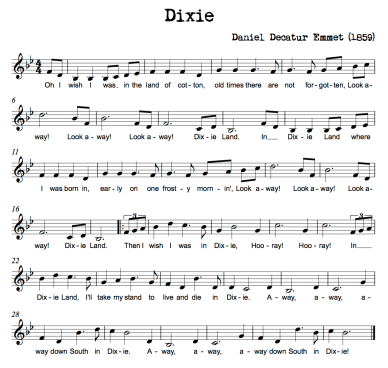
I wish I was in the land of cotton, old times there are not forgotten

Look away, look away, look away, Dixieland

In Dixieland where I was born in, early on a frosty mornin’

Look away, look away, Look away, Dixieland

Thus begins a song that was premiered this week in 1859, two years before the vicious conflict that made it famous. Dixie, a sentimental ballad about the joys of life below the Mason-Dixon line, resonated with southerners then and still does today. Which makes it doubly ironic—given its often dubious modern association with white supremacists—that is was written not only by a northern supporter of Abraham Lincoln, but an Irish-American at that, and one who worked for a music hall act led by two Irish brothers.

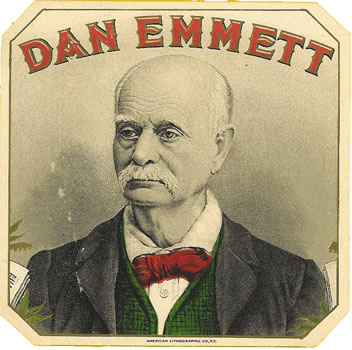
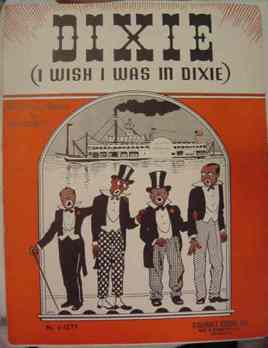
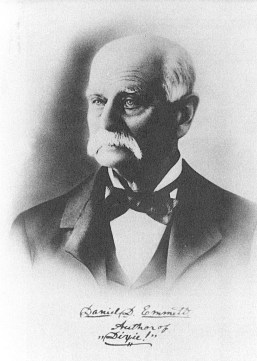
Dixie could hardly be less ‘southern’ than if it had been born in Hawaii to a Kenyan father and a Kansan mother. It emerged from the American tradition of the ‘blackface’ minstrel. These were white performers, who like the thoroughly modern Ali G, liked to pretend they were black. Among their number was an Irish-American singer/performer from Ohio named Daniel Decatur Emmett. He was a member of a troupe of music hall singers led by a pair of New York Irish brothers named O’Neill. The song quickly became a rousing closer for their touring show. It became a popular favourite all over the USA. A presidential candidate, Abraham Lincoln, used it at his rallies to get the crowds going. By the time Dan Emmet died more than thirty people were claiming they had written the song.

iu-1.jpegiu-2.jpeg

Many years later Emmet ruefully observed that ‘If I had known to what use they were going to put my song I’ll be damned if I had written it’. ‘They’ were the soldiers of the Confederacy. In the case of the song Dixie it would appear that origins were of no consequence, context was paramount, and melody conquered all. Of course, context is relative. If taken literally, the song is a nostalgic celebration of southern culture. Except that it was intended by Emmet as a satirical take on slavery. The song is sung in the voice of a freedman who misses the plantation on which he was enslaved. Southerners didn’t get the joke. Or maybe they did, and the joke was on Dan Emmet.

Despite the subversive connotations, after it was quickly conscripted as an anthem of the Confederacy, Lincoln never quite lost his love for the song – it was just so damn catchy. He ordered it to be played when he was informed that General Robert E. Lee had surrendered his army at Appomattox. Or maybe that was just his way of rubbing Southern noses in their defeat. The speech he made at the time was typical of his wry sense of humour.

I thought “Dixie” one of the best tunes I ever heard …  our adversaries over the way attempted to appropriate it. I insisted yesterday that we had fairly captured it … I       presented the question to the Attorney-General, and he gave his opinion that it is our lawful prize … I ask the Band to give us a good turn upon it

Which the band duly did. Certainly, Lincoln’s troops had no great affection or reverence for the piece. Union troops sang the song frequently, but with amended lyrics. These went …

Away down South in the land of traitors,
Rattlesnakes and alligators
Right away, come away, right away, come away.
Where cotton’s king and men are chattels

Union boys will win the battles,
Right away, come away, right away, come away

Emmet died in 1904. His gravestone bears the legend ‘his song Dixieland inspired the courage and devotion of the southern people and now thrills the hearts of a reunited nation.’ Which today comes across as someone optimistically ‘whistling Dixie’.

So, was that great anthem of the Confederacy written in the Old South? No, it wasn’t, it was written by a Yankee Irish-American. That’s fake history.


Fake Histories #13 – 29.3.2019   The last major Brexit took place because Henry VIII rejected a corrupt, anti-Christian Roman Catholic Church?


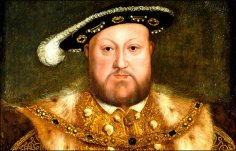
iu-1

HENRY VIII

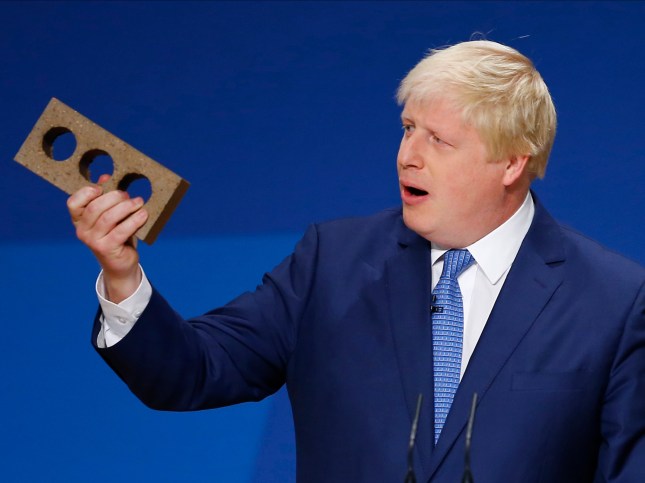
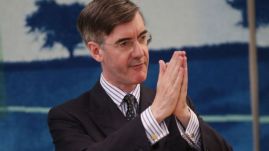
A cheery welcome to 29 March 2019 – a date long embroidered on the pillows and silk handkerchiefs of Jacob Rees Mogg and Boris Johnston.

I’m sure we’re all pleased things have worked out so well for them.

iu-2

BORIS I

Cheeringly there is a precedent for the chaos of Brexit – back in a time when a Catholic, like Mr Rees Mogg, might well have found himself tied to a stake and burned alive. I refer to the sixteenth century and the reign of that most portly of Tudor monarchs, King Henry VIII.

Now Henry, whatever his other failings, undoubtedly had a great affection for the institution of marriage. Connubiality would have been his middle name except that it was too long to fit on the royal seal. Generally, however, the notion of connubiality revolves around a strong affiliation to the same wife. Harry, however,  seemed to just like marrying.  Maybe he had a weakness for wedding ceremonies or, more likely, he wanted a son and heir and had limited patience with any of his queens who failed to provide same. Either way, he married six times.

There was a mythology in ‘ye olde Englande’ that Henry parted ways with the European Union of its day—the Holy Roman Empire—and the Pope himself, because of his disgust with the abuses and corruption that plagued the Roman Catholic Church and had been highlighted by Martin Luther. These included the sale of indulgences to facilitate entry into heaven for those who could afford them, and a clergy many of whom thought of priestly celibacy as a quaint optional extra.

While the Roman Catholic Church in general, and the Papacy in particular, was desperately in need of reform in the sixteenth century, that was not quite the reason Henry VIII split from Rome, dissolved the monasteries, and established the Church of England. He did it for those most elemental reasons of all, sex and money. Far from having an issue with the Church of Rome his 1521 work Defence of the Seven Sacraments was an anti-Lutheran polemic that supported the supremacy of the Pope and earned him the official title Defender of the Faith. The British monarchy still likes to rub the Vatican’s nose in that one, by keeping it on their coins.

But this was one of those moments where the club chairman makes a staunch case for the team manager and fires him three weeks later. When the Pope of the day, Clement VII, said ‘no, grazie’ to Henry’s request for a divorce from his first wife Catherine, so that he could marry the lovely Anne Boleyn (whom he later beheaded) Henry severed the Roman connection. Clement could consider himself lucky that the severing did not involve his cranium. Henry then declared himself head of the Church of England, with benefits. He set about realising the value of dozens of Catholic monasteries by asset stripping the lot and putting the proceeds into his Post Office savings account. Previously much of the surplus funds from the monasteries had been channelled towards Brussels … sorry, I meant Rome.

Had he split from the Vatican on the basis of a principled campaign against the venality of the 16thcentury church you might expect that he would shelter and support the English followers of Martin Luther. But Protestant reformers suffered just as much under Henry after the so-called ‘English reformation’ as did supporters of Pope Clement (perhaps let’s not call them Clementines).

So, did Henry VIII bring about a principled and morally sound separation from Rome in the 1530s because of rampant sleaze in the upper echelons of the Catholic Church? Sadly not. He took back control, but his motives were rather less exalted. To suggest otherwise is fake history.

iu.jpegiu-4.jpeg

Fake Histories #12 – 22.3.2019   Did the UK imposed a border on the island of Ireland in the 1920s, after the creation of the Irish Free State?


iu-2.jpeg

There has been a lot of talk about borders in Ireland lately. Hard, soft, invisible, frictionless, technological, in fact, the only kind of North-South border no one seems to discuss is herbaceous. This is probably because, according to the Guinness Book of Records, the longest herbaceous border in the world is just over 200 metres in length. So, although a herbaceous border between North and South would be very attractive and eye-catching it might not stretch all the way from the east coast up to Lough Foyle.

There is a preconception in what is now the Republic of Ireland that it was partition, brought about by the creation of a Dublin and Belfast Parliament in the 1920 Government of Ireland Act, that caused the creation of the border. In fact, it wasn’t. It was us. Or at least our grandfathers, back in 1923. I use the term grandfathers advisedly because in 1923 our grandmothers didn’t so much as get a look in. Maybe if they had there wouldn’t have been a border.

It happened thus. After Stormont was established, the parallel 26 county state which had also been created by the UK government, stubbornly refused to come into existence and indulged itself in the minor matter of a three-year war of independence, followed by a civil war. When the latter ended many down south suddenly had the time and the inclination to turn their attention northwards again, towards the ‘separated brethren’ or the ‘fourth green field’.

The Free State government, now led by W.T.Cosgrave after the deaths of Arthur Griffith and Michael Collins, had a few small problems. First off, it was stony broke. In 1923 it was heading towards a soaring budget deficit of … £4m. Yes, I know, isn’t that so sweet?

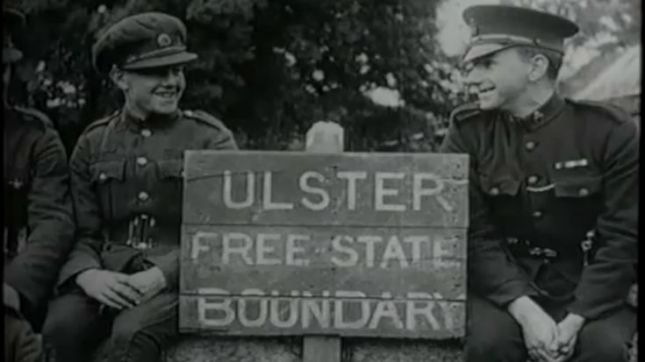
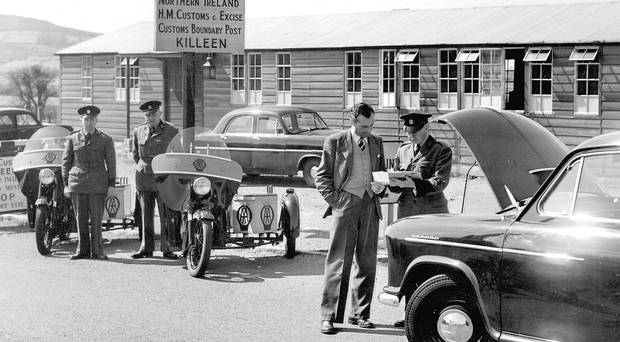
Secondly, in order to defeat the anti-Treaty Republican forces, the Free State had acquired a standing army of 55,000 men. Even though the Civil War was almost over they expected to get paid and they were none too keen on the prospect of being demobilised just yet because there were no alternative jobs for them to go to. Someone in Cosgrave’s government got the bright idea for an inspired ‘twofer’. Since the end of the Anglo-Irish war the Free State government had been sharing in the various customs and excise revenues being diligently collected by His Majesty’s Government (said Majesty at the time being a ‘him’ – King George V). What about, MacIavelli suggested, if we impose our own tariffs on goods coming from Northern Ireland, build border posts to enforce the new duties, and avoid a military coup by sending a third of the members of our grumpy army to man those posts?

This same bright spark also suggested that the resulting stress on the economy of Northern Ireland would probably bring down the Stormont government and end partition, so we wouldn’t even have to wait for the report of the Boundary Commission which would bring it tumbling down anyway! Voila! Job done! So, where’s my Christmas bonus?

iu.jpeg

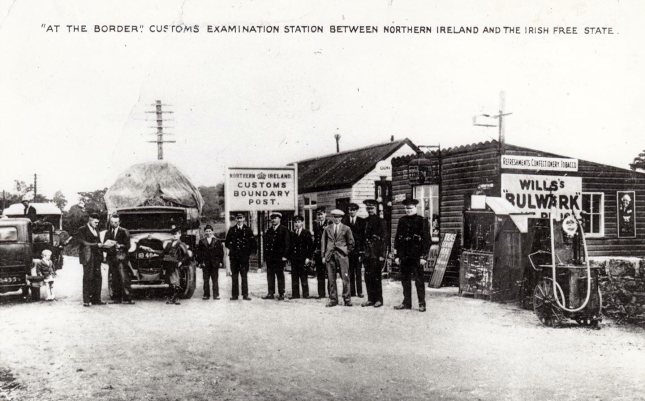
And that’s what they did. They declared all but seventeen of the five million major and minor roads crisscrossing the border counties, to be ‘unapproved’. They stuck customs posts on the rest and began to supplement the income of the Irish Free State by levying duties on goods incoming. Shock, horror – this even included a tariff on rosary beads. That was when the Law of Unintended Consequences inevitably popped up from its hiding place and started making mischief.

To give just one example. Suddenly the Great Northern Railway became a sort of scaled-down Orient express. It traversed no less than seventeen international boundaries. Or at least it crossed the border between the Irish Free State and Northern Ireland seventeen times.

And guess what, there were political consequences as well. Sir James Craig, the Northern Prime Minister, couldn’t believe his luck. The Free Staters had just copper-fastened partition. Voila! Job done!

So how did it all work out—other than for the membership of the Loyal Order of Smugglers who were even more pleased than Sir James? Not that well actually.  Declaring hundreds of cross border roads to be ‘unapproved’ was rather like Moses ordering the parting of the Red Sea, except that Moses was a lot more successful. Most border county residents were perfectly happy to weather the ‘disapproval’ of the Free State and come and go as they pleased, on any road they pleased. This, however, did not please Free State customs officers. They spoiled the party by closing many of the roads. That’s when you started to hear the word ‘hinterland’ coming into play. As in ‘we’ve been completely cut off from our hinterland’.

To make matters worse the new customs regime began, well obviously, on 1 April.

So, did the UK government erect customs posts along the Irish border and establish a network of ‘unapproved’ roads? No, they didn’t. We did. That’s fake history.


iu-1.jpeg


Fake Histories #11  15 March –  St. Patrick brought Christianity to Ireland?

iu.jpeg

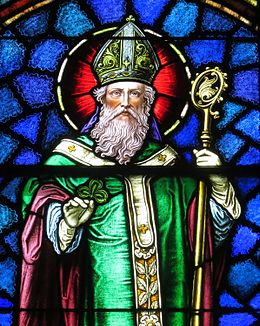
Two days from now we will all quietly celebrate the life and work of a self-sacrificing Christian man who brought comfort and the word of God to thousands of Irish people one and a half millennia ago.

Like hell we will.

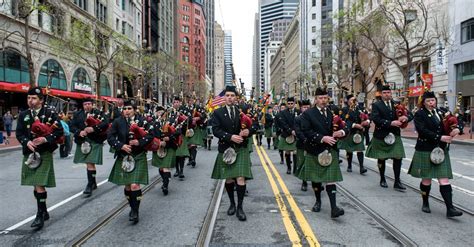
Instead, we will eat, drink, parade, turn the Chicago River green, get thousands of normally staid tourists blind drunk before selling them their family tree, and stand four rows back with small children on our shoulders trying to catch a glimpse of a parade. Welcome to St. Patrick’s Festival time. Like a modern Irish wedding what used to take a day now takes three times as long, as we remember the man who brought Christianity to Ireland.

Or did he?

We don’t know a lot about him, other than his autobiographical Confessions. We think he might have come from Wales but we’re not really sure. He could have come from another part of Roman Britain, or even from continental Europe. At least we can be pretty sure he didn’t come from anywhere west of us, despite the enthusiasm with which New York celebrates his feast day.

St. Patrick is supposed to have arrived in Ireland in 432. While he may well have converted a number of prominent and humble Irish folks to Christianity he was not working on a greenfield site. There was already in existence, for example, the Catholic diocese of Ossory, whose first bishop, St. Ciaran, died thirty years before Patrick even got here.

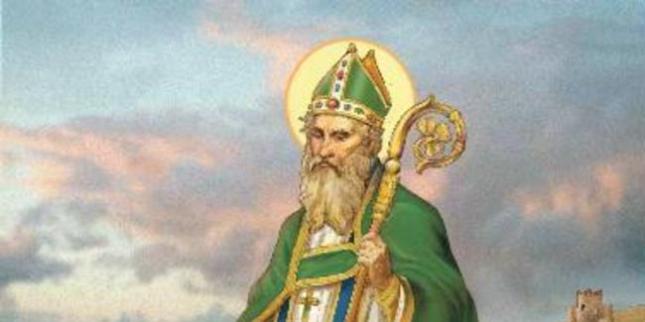
In fact not only was Patrick sent to minister to Irish Christians who had already been converted—as opposed to converting an entirely pagan Ireland— but he didn’t even get here first. It appears that at least a year before Patrick arrived he was preceded by a missionary bishop named Palladius, sent in 431 as, according to a contemporary document, the ‘first bishop to the Irish believing in Christ’. That’s the Irish believing in Christ, not the bishop – there would not have been much point in sending him had he been a pagan or an atheist. Palladius was despatched to Scotland and Ireland by Pope Celestine the First. Back in the Fifth Century Popes obviously did not necessarily have to have bloke’s names.

iu-1.jpeg

It appears that Palladius may well have done most of his work in Leinster and Munster, while Patrick thrived in Ulster and Connacht. The potential confusion led at least one scholar, T.F.O’Rahilly, to propose the ‘Two Patricks’ theory – suggesting that somehow the work of Palladius had been conflated with that of Patrick and there were, technically, two Patricks, not one.  Back in the day if you wanted to get a history degree you had to learn it off by heart.

The very name ‘Patrick’ adds weight to this theory. It’s common in Ireland now but the original version would have been the Latin ‘Patricius’. Back in the fifth century, the word Patricius denoted someone of aristocratic birth, or a ‘patrician’. It was actually used as a prefix, a title or an honorific. Today the equivalent would be ‘Lord’ Snooty or ‘Sir’ Political Contribution. So is it conceivable that our patron saint’s name wasn’t Patrick at all, but merely the posh preliminary for his actual name?

Just in case you’re wondering, neither Patrick had anything to do with banishing the snakes from Ireland. That’s because there never were any snakes in Ireland, at least not since the last Ice Age, and back then there would have been no one around to do a serpent census. The Irish have never shared this island with reptiles, other than a drunken conga line in Coppers on New Year’s Eve. So, St. Patrick’s supposed feat would be like banishing penguins from the snowy wastes … of northern Canada.

One more thing. The seventeenth of March is not his birthday either! Not that we would have a hope in hell of being able to work that one out. Saint’s feast days are assigned to mark the day they commence the noble art of pushing up daisies. It’s actually his death day.

So, did our beloved patron saint, whom we will over-celebrate in two days time, bring Christianity to Ireland. I’m afraid not. It was already here. That’s fake history.

iu.jpeg