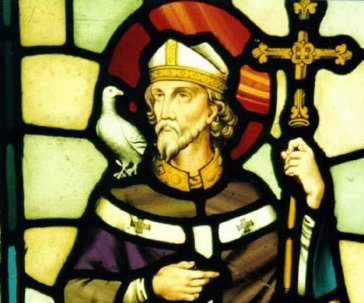
Fake Histories #11  15 March –  St. Patrick brought Christianity to Ireland?

iu.jpeg

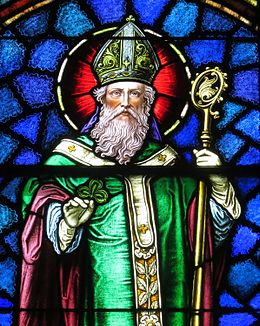
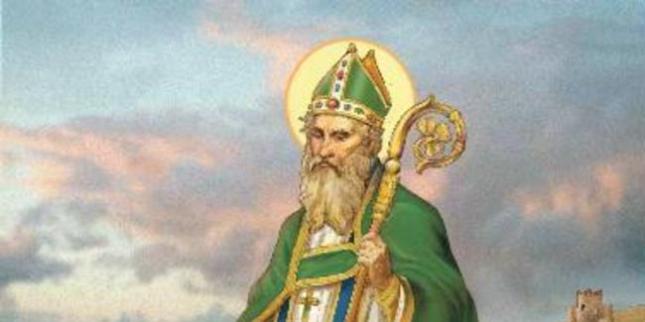
Two days from now we will all quietly celebrate the life and work of a self-sacrificing Christian man who brought comfort and the word of God to thousands of Irish people one and a half millennia ago.

Like hell we will.

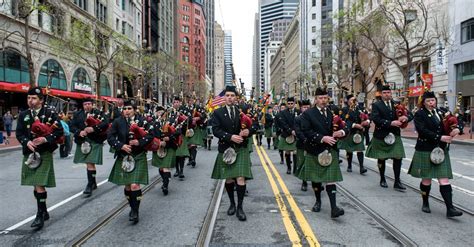
Instead, we will eat, drink, parade, turn the Chicago River green, get thousands of normally staid tourists blind drunk before selling them their family tree, and stand four rows back with small children on our shoulders trying to catch a glimpse of a parade. Welcome to St. Patrick’s Festival time. Like a modern Irish wedding what used to take a day now takes three times as long, as we remember the man who brought Christianity to Ireland.

Or did he?

We don’t know a lot about him, other than his autobiographical Confessions. We think he might have come from Wales but we’re not really sure. He could have come from another part of Roman Britain, or even from continental Europe. At least we can be pretty sure he didn’t come from anywhere west of us, despite the enthusiasm with which New York celebrates his feast day.

St. Patrick is supposed to have arrived in Ireland in 432. While he may well have converted a number of prominent and humble Irish folks to Christianity he was not working on a greenfield site. There was already in existence, for example, the Catholic diocese of Ossory, whose first bishop, St. Ciaran, died thirty years before Patrick even got here.

In fact not only was Patrick sent to minister to Irish Christians who had already been converted—as opposed to converting an entirely pagan Ireland— but he didn’t even get here first. It appears that at least a year before Patrick arrived he was preceded by a missionary bishop named Palladius, sent in 431 as, according to a contemporary document, the ‘first bishop to the Irish believing in Christ’. That’s the Irish believing in Christ, not the bishop – there would not have been much point in sending him had he been a pagan or an atheist. Palladius was despatched to Scotland and Ireland by Pope Celestine the First. Back in the Fifth Century Popes obviously did not necessarily have to have bloke’s names.
iu-1.jpeg

It appears that Palladius may well have done most of his work in Leinster and Munster, while Patrick thrived in Ulster and Connacht. The potential confusion led at least one scholar, T.F.O’Rahilly, to propose the ‘Two Patricks’ theory – suggesting that somehow the work of Palladius had been conflated with that of Patrick and there were, technically, two Patricks, not one.  Back in the day if you wanted to get a history degree you had to learn it off by heart.

The very name ‘Patrick’ adds weight to this theory. It’s common in Ireland now but the original version would have been the Latin ‘Patricius’. Back in the fifth century, the word Patricius denoted someone of aristocratic birth, or a ‘patrician’. It was actually used as a prefix, a title or an honorific. Today the equivalent would be ‘Lord’ Snooty or ‘Sir’ Political Contribution. So is it conceivable that our patron saint’s name wasn’t Patrick at all, but merely the posh preliminary for his actual name?

Just in case you’re wondering, neither Patrick had anything to do with banishing the snakes from Ireland. That’s because there never were any snakes in Ireland, at least not since the last Ice Age, and back then there would have been no one around to do a serpent census. The Irish have never shared this island with reptiles, other than a drunken conga line in Coppers on New Year’s Eve. So, St. Patrick’s supposed feat would be like banishing penguins from the snowy wastes … of northern Canada.

One more thing. The seventeenth of March is not his birthday either! Not that we would have a hope in hell of being able to work that one out. Saint’s feast days are assigned to mark the day they commence the noble art of pushing up daisies. It’s actually his death day.

So, did our beloved patron saint, whom we will over-celebrate in two days time, bring Christianity to Ireland. I’m afraid not. It was already here. That’s fake history.
iu.jpeg

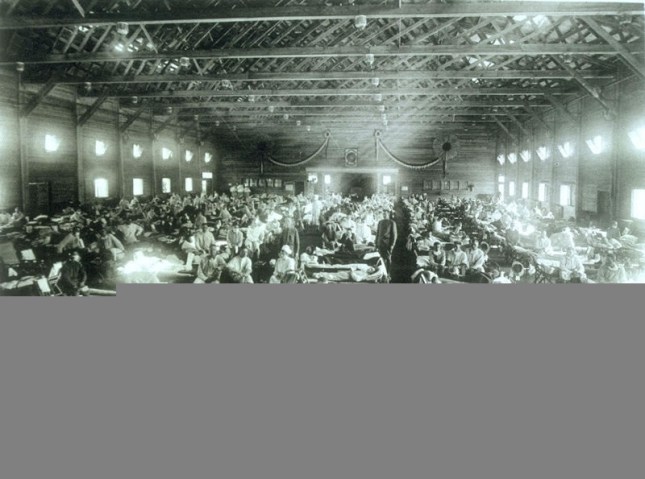
Fake Histories #10 – The Spanish flu of 1918-19 is so-called because it originated in Spain?


iu-2.jpeg

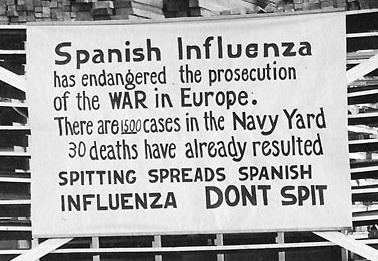
To put it in perspective. Anything up to ten times the numbers who died in World War 1 would succumb to influenza in 1918 and 1919. More people died of flu in one year than had been killed by the infamous Black Death from 1347 – 1351. And it was a highly democratic, equal opportunities, virus. It did not just plague the very old and the very young. The death rate among 15-34-year-olds worldwide, during the fleeting visit of the H1N1 virus, was ten times the normal rate. Spanish flu couldn’t be faulted for originality either – it was entirely new. Its very novelty meant that no one had time to build up immunity.

While the arrival of the armistice on 11 November 1918 was a welcome reprieve for millions of soldiers who didn’t have to risk life and limb any more, it may have had the opposite effect on the civilian population. The very celebrations that marked Armistice Day all across Europe offered a rare and wonderful opportunity for the bug to increase and multiply among the cheering crowds. Then the return from the front a century ago of millions of demobbed soldiers brought on another wave of the disease.

Average life expectancy in the USA suddenly plummeted by twelve years – more US WW1 soldiers died of influenza than died in battle. This was despite the efforts of their commander, General Pershing, to inflict as many casualties as possible on his own troops and probably kill his way to the Presidency.  There were no anti-flu vaccines back in those days. The first such vaccine wasn’t marketed until the 1940s, just in time for the sequel to the Great War – the Even Greater War of 1939-45

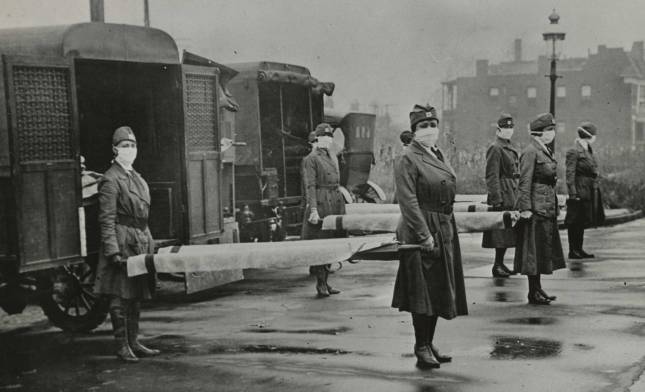
Aggravating the problem was the fact that the world was yet to breed or design medical practitioners who were completely immune to the diseases they were called upon to treat. The flu bug delighted in infecting doctors and nurses just as much as it did soldiers and dockers

A childish rhyme emerged from the pandemic – children would merrily skip to the words …


I had a little bird

Its name was Enza

I opened the window

And in-flu-enza

iu-1.jpeg

The first recorded case of Spanish flu occurred this week just over a century ago. Obviously, with a name like Spanish flu it was first documented in Madrid, or maybe Malaga, or perhaps even Barcelona–with the authorities resolutely refusing to call it Catalan flu. Actually, it was none of the above. The first case of Spanish flu was noted in Fort Riley, Kansas. That’s not Kansas in Andalucia, that’s the Kansas that Dorothy so badly wanted to get back to in The Wizard of Oz,  the one in the United States of America. So why, you might well wonder, did the Kansan doctors decide to designate this particular strain of influenza as ‘Spanish’? Was the first patient of Hispanic origin? Did the medical staff share the apparent aversion of the 45thPresident of the United States for ‘bad hombres’ who spoke the dominant language of Central and South America? Again, the answer is ‘none of the above’. They didn’t actually call it Spanish flu at all. In the beginning, nobody did.

That designation is a function of the war that was being fought over much of western Europe at the time. The military authorities in both sets of trenches—not that the actual authorities themselves spent much time in the line of fire—kept a tight rein on information coming from the front. It was distributed with all the largesse and generosity of a White House press conference today, insofar as such things still exist. Not telling the truth was deemed good for morale. This meant no one had a clue that thousands of troops, packed into trenches and susceptible to every cough and splutter, were dying of the disease.

Spain, however, was sensibly neutral and unlimited information was coming out of the Iberian peninsula. Spanish newspapers were even allowed to report the grave illness from the disease of their own King, Alfonso XIII.  This gave the impression that influenza had originated amongst the unfortunate Spaniards and, like some dedicated anti-Hispanic virus, was killing them alone. As the medical staff in Fort Riley, Kansas and thousands of other military and civilian hospitals worldwide could attest, such was not the case.

So, was the virulent Spanish flu, first detected this week in 1918, so-called because it originated in Spain? Not a bit of it. That’s fake history.

iu.jpeg

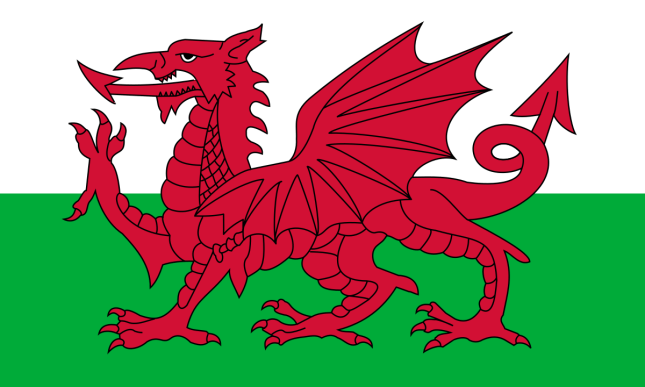
Fake Histories #9 – 1 March 2019 The flag of St. David of Wales is green and white with a red dragon?

iu.png

Happy St. David’s day, or as the Welsh might put it themselves, dydd gwyl Dewi hapus [deedth goo-eel …] It’s a day when thousands of small Welsh girls are asking their mothers, ‘Do I really have to wear this funny hat?’ and ‘Why can’t I just be cool, like Cerys Matthews?’

Today is the day that Welsh people celebrate the birth of their native saint, just as we Irish will celebrate our own St. Patrick in a couple of weeks. Except, of course, that St. Patrick was probably also a Welshman, kidnapped by marauding Irish gangsters in the early fifth century. Happily, the generous Welsh are content to let us pretend he was Irish and don’t seem overly concerned that he exiled the snakes here while leaving them to their own devices in Wales. If he had that Harry Potter-like power he could at least have banished them across Offa’s dyke to England.

The reason the Welsh are so laid back about St.Patrick is that they have St. David, who died on 1 March 589, hence the feast day. St. David’s day is, of course, indelibly associated with the daffodil. However, given the pace of climate change and the growth of daffodils in December, the Welsh now have the option of moving his feast day to the 1 January and sharing Hogmanay with the Scots.

iu.jpegiu-1.jpeg

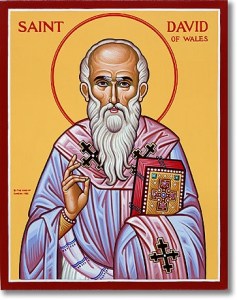
St.David, or Dewi in Welsh,  established up to twelve monasteries across Wales in the sixth century and was canonised in 1120 at a time when the Welsh were trying to resist the incursions of the Normans. Half a century later they had given up the ghost on that one and it was the Irish who were trying to beat back the forces of the Norman/Welsh adventurer, Strongbow, Earl of Pembroke. Call it sweet revenge for kidnapping St.Patrick.

Welsh people like to celebrate St. David’s Day by eating traditional food, dressing up in national costume (which includes those distinctive hats I was talking about) and beating England in the Six Nations championship. Of course, they are not unique in that respect. Everyone likes beating England in the Six Nations. But no one sings quite like the Welsh as they do so. Even St. David himself, who has, after all, been dead for one and a half millennia, sits up and takes notice when a Welsh rugby crowd launches into the stirring and haunting Hen Wlad Fy Nadau [Hane wlad vee nadhai] or Land of My Fathers which somehow always manages to eclipse God Save the Queen even at Twickenham.

The English haven’t always enjoyed Welsh celebrations of St. David’s Day. Back in the days of the celebrated diarist Samuel Pepys he recorded how Welsh celebrations in London would give rise to caustic English reactions, which often led to the lynching—thankfully in effigy only—of life-sized Welsh characters. A century later the English also liked to bake cute little gingerbread confectionery figures of a Welshman sitting astride a goat. These became known as ‘taffies’, which is why today Welsh people appreciate being called ‘Taffy’ by an Englishman about as much as an Irish person just longs to be called ‘Paddy’.

One thing the Welsh have so far not managed to achieve is to turn St. David’s Day into a national holiday, even though, in 2000, the Welsh Assembly voted unanimously for this to happen. Apparently Tony Blair wasn’t keen on the idea, obviously, it was insufficiently Third Way-ish, and couldn’t be farmed out to the private sector.

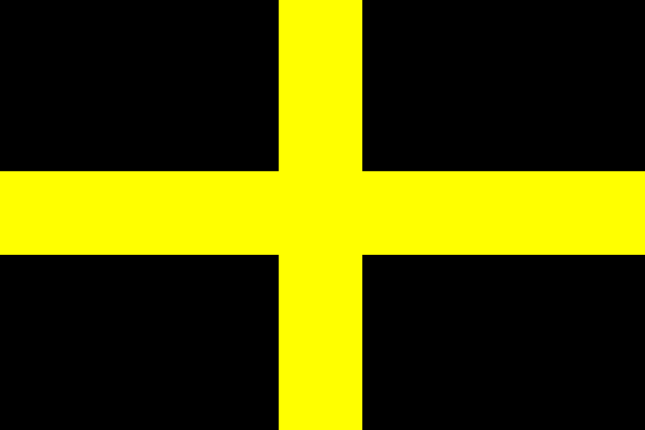
Now when it comes to the Welsh flag there is an assumption that the distinctive banner of a red dragon on a green and white background, is the symbol of St. David himself. But that flag has nothing whatever to do with the Welsh national saint and doesn’t include any of his iconographies. He has that in common with his fellow countryman Patrick, whose traditional colour is St. Patrick’s blue, which doesn’t feature in the Irish flag. St. David’s symbol is a dramatic golden cross on a black background. The Welsh flag is actually, and ironically, the emblem of a line of British kings and queens, albeit one that originated in Wales, the Tudors. In  1485 one of the members of that house, Henry Tudor, Earl of Richmond, defeated King Richard III at the Battle of Bosworth Field, under the banner of the red dragon, and became Henry VII of England and Wales.

In much the same way as the Irish green, white and gold tricolour superseded the more traditional golden harp on a green background, the Tudor flag became the acknowledged emblem of Wales ahead of St. David’s golden cross on a black background.

So, is the rampant red dragon the flag of the patron saint of Wales? I’m afraid not. That’s fake history.

iu-1.png

FAKE HISTORIES#8 – 22.2.19 The Oscar statuette has a commercial value of only $1?


iu.jpeg

Next Monday night in Los Angeles the filmmaking community will gather for its annual orgy of mutual backslapping and backstabbing, known as the Academy Awards. The orchestra will drown out speeches that stray beyond forty-five seconds in length. The TV audience will get bored and go to bed half-way through. And there will be tears, boy will there be tears! Some of them will be shed onstage as Oscars are accepted with becoming humility or unseemly gloating. Others will be blinked back by the four rejected candidates in the major categories.

But it’s probably fair to say, given the sums of money lavished on Hollywood stars, that there probably won’t be too many of the successful nominees looking at their statuettes and thinking, ‘I wonder how much I can get for this on eBay?’. That’s because the Academy of Motion Picture Arts and Sciences long ago devised a mechanism to ensure that every second pawn shop in downtown LA wasn’t selling Academy Award statuettes hocked by winners in the ‘best supporting’ categories, who then succumbed to the infamous Oscar Curse, and couldn’t get any more work. It may well be because of their ‘buy back’ policy that a persistent myth has arisen. This suggests that the statuette itself is worth only $1!

Should you find yourself in need of a bit of spare cash, or maybe the golden statuette clashes with your new curtains, you can’t just sell it on the open market. For all Oscars won after 1950 you first have to offer the statuette back to the Academy for a single dollar. It serves to discourage a brisk trade in Oscar as a collectable. So, in that sense at least certain statuettes could be said to be only worth one dollar.

But the cut-off date of 1950 means that there actually is a brisk trade in Oscar as a collectable. In 1999 the late Michael Jackson paid more than one and a half million dollars for the Gone With the Wind Best Picture Oscar from 1939. Vivien Leigh’s Best Actress statuette from the same film fetched half a million dollars.

And that doesn’t even take into consideration the intrinsic value of the post-1950 statuettes in terms of raw materials and labour. They weigh around four kilos each, are 24 carat gold-plated, over copper and nickel silver, and are reckoned to cost around $400 each to produce. They are just over 34 cms tall and their official name is the Academy Award of Merit.

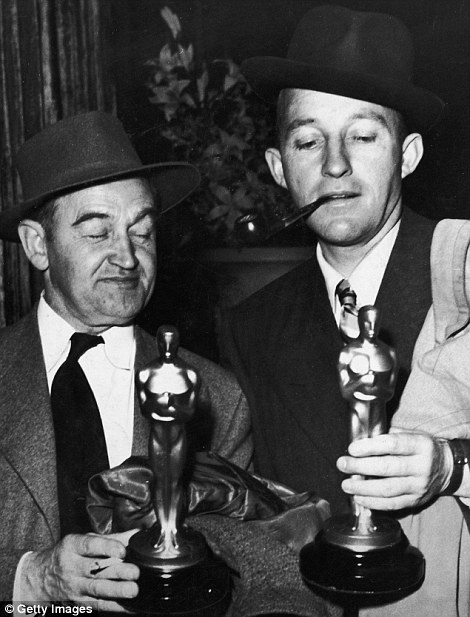
Another contributory factor to the myth that they are only worth a dollar might have come from the World War 2 period. From 1942 to 1945 they had other uses for metal in the USA, so the Oscar statuettes were made from gold-painted plaster. After the war recipients of Academy Awards during those three years were invited to redeem their plaster saints for the real thing. One winner was particularly grateful for that indulgence. The Irish character actor, Barry Fitzgerald won the 1944 Best Supporting Actor gong for his portrayal of a grumpy Irish priest in the Bing Crosby vehicle, Going My Way. Fitzgerald, like the star of the film, was a keen golf fan and managed to shatter his ersatz Oscar taking an indoor practice swing.

iu-2.jpeg

The Academy always has a few spare statuettes handy on the night of the awards ceremony, just in case of a tie. It has happened on a number of occasions over the years that two candidates have received exactly the same number of votes. In fact, in times gone by, if there was only a single vote between the top two nominees, the generous academy would deem the result a tie and give each of them an Oscar.

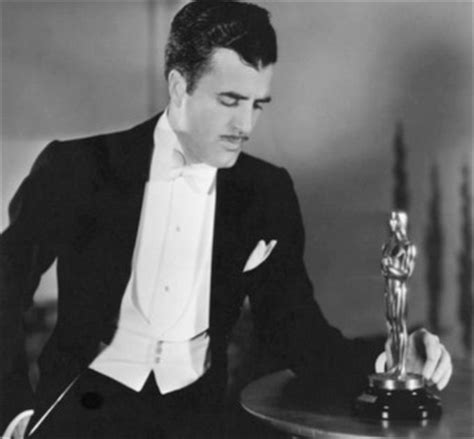
As to the name ‘Oscar’ itself – in keeping with the prevailing mythology, it does actually appear to have come from the Academy’s librarian Margaret Herrick, who said, when she first saw the statuette, designed by Dubliner Cedric Gibbons, ‘It looks just like my Uncle Oscar’. So at least that famous story is not a myth. The Academy itself gave up the ghost and started officially calling the statuette after Uncle Oscar in 1939.

But, is the Oscar statuette only worth a dollar? No, it isn’t. That’s fake history.


iu-1.jpeg

Cedric Gibbons with Oscar


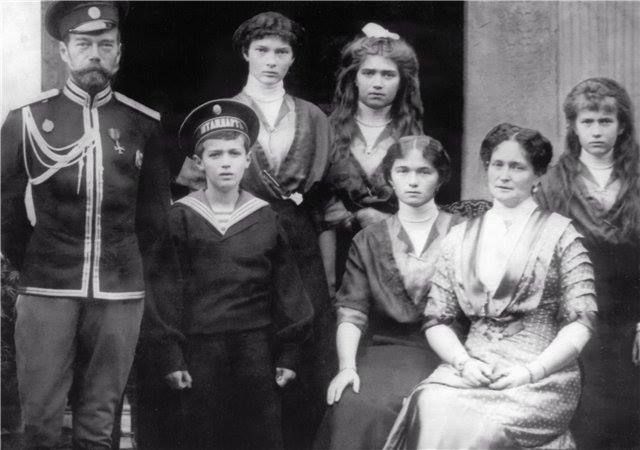
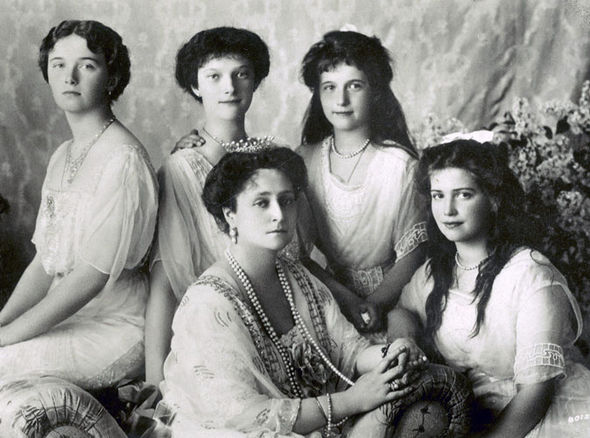
Fake Histories #7 – 15.2.2019  Duchess Anastasia, daughter of Tsar Nicholas, survived the assassination of the Romanovs?


iu-1.jpeg

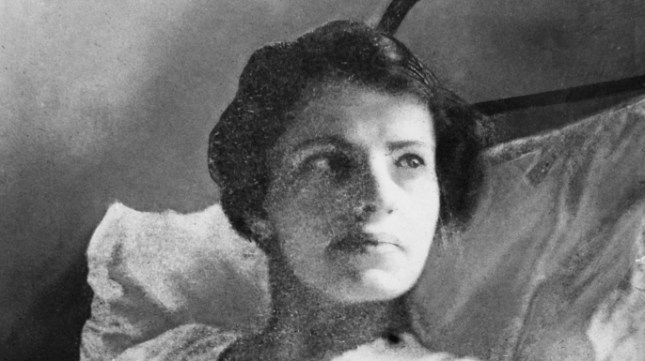
Thirty-five years ago, this week, a woman named Anna Anderson died in Charlottesville, Virginia, aged eighty-seven. She was cremated and her ashes were carried across the Atlantic and buried in the grounds of a Benedictine Monastery in Bavaria.

But her name wasn’t really Anna Anderson. She was originally Franziska Schanzkowska, a Polish factory worker born in East Prussia in 1896, and she was probably the best-known imposter of the twentieth century. Anna Anderson, aka Franziska Schanzkowska claimed to be the Grand Duchess Anastasia, daughter of Tsar Nicholas II of Russia. Contrary to reports coming out of the Soviet Union in July 1918 she had, or at least so she claimed, not been murdered along with the other members of her family by a Bolshevik firing squad.

Anderson had first come to public attention in 1920 when she was stopped from throwing herself off a bridge in Berlin. She was admitted to a German psychiatric hospital as Fraülein Unbekannt (‘Miss Unknown’). It was another inmate who first claimed that the unidentified woman was a daughter of the Tsar. From 1922 onwards the legend of Anastasia seemed to grow, aided by emigré Russians whose cause would have been greatly assisted by a surviving member of the Romanov dynasty.

Anna’s own cause received a boost when Tatiana Melnik, the daughter of the Romanov private physician, Dr. Eugene Botkin, positively identified her as Anastasia in 1926. Melnik, whose father had been gunned down along with the Russian Royal family, had met Anastasia when the Duchess was sixteen years old. Melnik then took Anna under her wing, filling in what she described as ‘gaps’ in Anna’s memory by coaching her in many of the domestic details of the Romanov’s lives. All perfectly above board, course.

iu.jpeg

Surviving relatives of the Tsar, however, were more difficult to convince. Prince Felix Yusopov, for example, the man responsible for the murder of the so-called ‘Mad  Monk’, Grigori Rasputin (no relation to Vladimir Rasputin) and the Tsar’s nephew by marriage, described Anna as ‘an adventuress, a sick hysteric and a frightful playactress’. The late Tsar’s family had her claims thoroughly investigated and were able to identify her as Schanzkowska in 1927.

However, Anna had many Russian emigré supporters in the USA. These included the composer Sergei Rachmaninov. When she travelled to New York in 1928 Rachmaninov booked her into a New York hotel under the pseudonym ‘Anderson’ and she adopted it from that time onwards. Anna became the fulcrum of a Russian emigré civil conflict with the warring sides either championing her cause or dismissing her claims as fantasy.

After eighteen months in New York Anderson began to display once more some of the self-destructive behaviour for which she had been noted in Germany. This included wandering naked around rooftops. A New York Supreme Court judge, Peter Schmuck (I kid you not) signed an order committing her to a sanatorium. In 1932 she was allowed to return to Germany where she lived until 1968. Then in 1984 she returned to the USA where she married a fellow eccentric, a Virginia history professor and genealogist, Jack Manahan. He, thereafter, described himself as ‘Grand-Duke in waiting’. As she grew older Anna’s mental health problems continued and she was often institutionalised. On one occasion Manahan kidnapped her from a hospital and the couple evaded capture by driving around the state of Virginia for three days, subsisting on purchases from convenience stores, thus proving that such a thing is physiologically possible.

Anna Anderson’s claims were disputed, litigated, scorned and buttressed but they were finally laid to rest in 1991 after the collapse of the Soviet Union, by which stage Anna had been dead for seven years. A common grave near Yekaterinburg in Russia was identified as the final resting place of nine members of the Romanov family and their entourage. In 1992 samples were taken from fragments of the teeth and bones of the nine skeletons. These were checked against the DNA of Prince Philip, maternal grandson of Tsarina Alexandra’s sister. The DNA test proved that one of the bodies was that of the Grand Duchess Anastasia.

This finally gave the lie to any notion that Anastasia had somehow managed to survive assassination by the newly installed Bolshevik regime. That was fake history.


iu-2.jpeg