On This Day – 19 August 1876 – The Catalpa arrives back in the USA


4814310-16x9-700x394.jpg

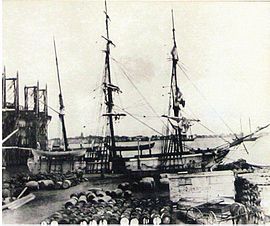
Anyone who has ever had the pleasure of seeing Donal O’Kelly’s memorable one man show about the 1876 voyage of the whaling barque, the Catalpa, will be unlikely to forget the significance of that event.  It was The Great Escape crossed with Papillon to create one of the most unorthodox and daring prison breaks in the history of incarceration.

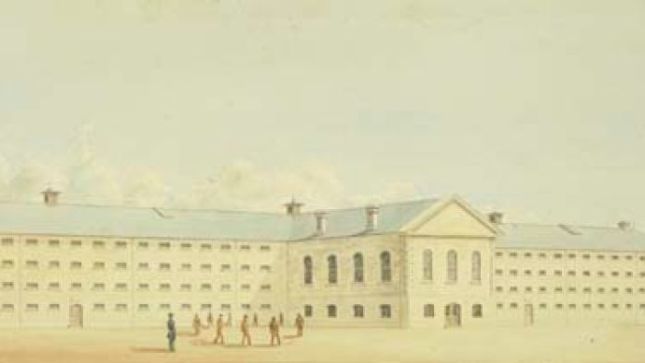
The back-story begins with the abject failure of the Fenian rebellion of 1867. In its wake more than sixty IRB prisoners were transported after treason-felony and rebellion convictions to the penal colony of Western Australia. Over the years most of the prisoners were amnestied or released so that by the mid 1870s only a small handful of Fenians remained in Freemantle prison on the Australian west coast not far from the city of Perth.

In 1873 one of the men who remained in jail, James Wilson, managed to get a letter to John Devoy of the Irish revolutionary organisation, Clan na Gael, in New York. Wilson asked Devoy to launch an operation to free the remaining prisoners. It was a former Fenian transportee Thomas McCarthy Fennell who came up with the unorthodox but highly imaginative plan that was put into operation the following year.

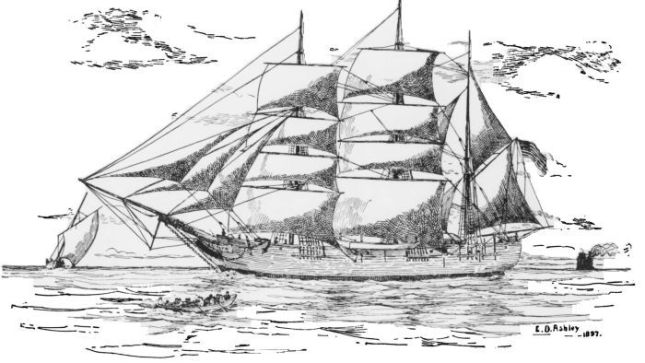
The Clan bought a New Bedford whaling barque the Catalpa for $5500 in 1874.  A ship’s captain, George Smith Anthony, agreed to help. He recruited twenty-two sailors who were not in on the secret. The ship sailed from Massachusetts in April 1875. In the meantime two senior members of the Clan, John Breslin and Tom Desmond had been sent ahead to Western Australia to prepare for the rescue. Breslin, posing as an American mining speculator, ingratiated himself with the British governor of the colony while Desmond secured transport for the prisoners and devised a means of cutting telegraph lines to impede communications.

A faulty chronometer meant that Captain Anthony had to use his own navigational skills for the first leg of the Catalpa’s journey. The vessel also lost much of its crew when it landed in the Azores. But the deserters were replaced and the whaling ship finally arrived off the coast of Western Australia in April 1876.  There it dropped anchor in international waters and waited.

On 17 April six Fenian inmates working outside Freemantle prison walls absconded from their work party. The group included James Wilson. They met up with Breslin and Desmond and were driven to reconnoitre with Captain Anthony. They were then taken on board a small whaleboat. At this point the alarm was raised by a local man and the search for the escaped prisoners began in earnest. A storm initially prevented Anthony from transferring the freed Fenians from the small whaleboat to the Catalpa. It was hours before the storm abated and they could begin to row towards safety.

As Captain Anthony’s whaleboat neared the Catalpa, moored more than three miles off shore, he noticed a steamer, the Georgette, approach the whaling ship. This had been commandeered by the Western Australian governor. Anthony’s First Mate refused to allow the Catalpa to be boarded as it was anchored in international waters. The Georgette, short on fuel, withdrew for the moment and this allowed Anthony to smuggle the six Fenians on board his ship.

However the Georgette returned the following day and attempted to force the Catalpa back into Australian waters. A shot was fired across the bow of the small whaling ship. Anthony then raised the US flag and warned the pursuing steamer that any interference with the Catalpa would constitute an act of war. The police on board the Georgette had been told by the colonial governor not to create an international incident.  They were forced to allow the American vessel to escape into the Indian Ocean.

After its return to the USA the Catalpa was gifted by the grateful Fenians to its captain and leading crew members. Anthony, who courted arrest if he returned to sea, published an account of the operation in 1897 entitled The Catalpa Expedition.

The New Bedford, Massachusetts whaling ship, the Catalpa, sailed into New York harbour to a rapturous Irish-American welcome one hundred and forty years ago on this day.
 

4814288-16x9-700x394.jpg


270px-Catalpaindock.jpgJohn_Devoy.jpg


On This Day- 12 August 1773 – Robert King X 2 and the murder of Henry Fitzgerald


Mary-Wollstonecraft-x-162279570.jpg

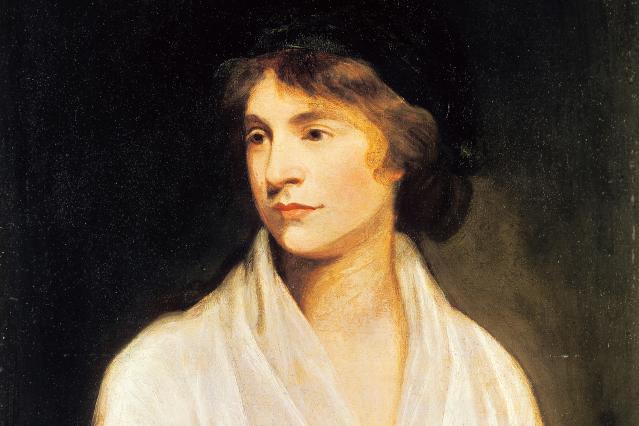
Mary Wolsttonecraft  – peripheral to the story but more famous than the protagonists – hence the pic

When the members of the Irish House of Lords tried a fellow peer they did it in style. Such was certainly the case with Robert King, tried for murder in 1798. His proper title was the 2nd Earl of Kingston and he was being tried for the killing of the nephew of his wife. Elsewhere, his son, also called Robert was tried for the same offence, the murder of Colonel Henry FitzGerald.

The 2nd Earl had married well. His wife, Caroline Fitzgerald, was one of the wealthiest heiresses in Ireland when she was married off to Robert King, who was worth a few shillings in his own right, when they were both 15 years old, in 1769.  They settled into the family home in Mitchelstown, Co.Cork. The couple was probably more distinguished for one of their governesses than for anything they every accomplished themselves. Hired to educate their children was Mary Woolstonecraft, novelist, historian, 18th century feminist and the mother of the woman who wrote Frankenstein, Mary Shelley.

She would have been hard put to devise the narrative that saw her employer and one of her  pupils arraigned for murder.

This all came about because of the acceptance into the King family of a nephew of Caroline Fitzgerald, one Henry FitzGerald, a child born out of wedlock. There were, indeed, rumours to the effect that Henry was not actually Caroline’s nephew, but her illegitimate half-brother, the result of a liaison involving her own father.

Henry Fitzgerald, who went on to become a colonel in the military, rewarded the generosity of the King family by seducing one of Caroline’s daughters – who may of course, have been his half-niece. When Henry Fitzgerald’s body was discovered and the truth of the seduction came to light, Robert King junior and senior were both charged with his murder.

The Dad, as a peer of the realm, faced his own peers in May 1798, in the Irish House of Lords, a building still preserved intact in the Bank of Ireland in College Green in Dublin.  The symbolism of the occasion, to paraphrase, W.S. Gilbert, fitted the crime. During the trial an executioner stood beside Kingston with an immense axe, painted black except for two inches of polished steel. This served to remind their Lordships of the fate the Earl of Kingston faced, should they find him guilty. Though his actual fate would have been to be hanged by the neck until dead. Only afterwards might his head have been separated from his body. However, it never came to that. No witnesses appeared for the prosecution, and Kingston was acquitted. One can’t help suspecting that while the Kings had actually done in the bounder Henry anyone who was anyone figured that he’d got what was coming to him. The aristocracy is a another country, they do things differently there.

An interesting footnote. The Directory of the United Irishmen had discussed using the occasion of the trial to kill key members of the government. But the vote of one Francis Magan, a leading member of the organisation, caused the scheme to be abandoned. Magan, it later emerged, was a government agent.

While Robert King Senior was tried in splendor by his peers R.King Junior, was arraigned before the more mundane Cork Assizes on the same charge. Once again no witnesses came forward so the future Viscount Lorton of Boyle, Co.Roscommon was duly acquitted. The magnificent Boyle Museum, King House, is named after the family

The dramatic and colourful trial of the 2nd Earl of Kingston took place two hundred and eighteen years ago, while his son and fellow accused, also called Robert King was born, was born two hundred and forty three years ago, on this day.

300px-Mitchelstown_Castle.jpg

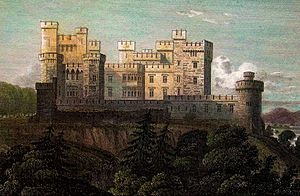
Mitchelstown Castle – one time home of the Earls of Kingston – below is King House on Boyle, now a museum and well worth a few hours of your time.

OTD – 5  August 1901 Peter O’Connor sets the first World Long Jump record


Unknown-1.jpegPeterOConnor_1.jpg

Long jump records often stick around for quite a while. On May 25 1935 Jesse Owens jumped over twenty-six feet eight inches (8.13 metres) in Ann Arbor, Michigan creating a new world record. It stood for twenty-five years. For good measure within an inspired spell of forty-five minutes Owens also broke two other world records and equalled a fourth.  At the Mexico Olympics in 1968 Bob Beamon leaped a phenomenal twenty-nine feet two and a half inches to break the previous record by almost two feet. When he was told what he had done he collapsed in a heap and had to be helped to his feet by fellow competitors. That record stood for almost twenty-three years before being broken by Mike Powell.


So a record that lasted a mere two decades isn’t a lot to get excited about. Unless you’re Irish. And even if you are you’ve probably never heard of Peter O’Connor. But he won two Olympic medals in 1906, one of them gold. As far as O’Connor was concerned he won them for Ireland but they are down in the record books as United Kingdom medals.


O’Connor was from Ashford in Wicklow, though he was born in England to an Irish family. A talented athlete he joined the GAA as a twenty-four year old in 1896 and three years later won All Ireland medals in the long jump, high jump and triple jump – then called the ‘hop, step and jump’. In those days the GAA did not just cater forwhat we now call Gaelic Games. Over the next decade O’Connor beat all comers, including the best Britain had to offer. In 1900 he was invited to join the UK Olympic team. He declined to invitation as his wish was to represent Ireland internationally.


His opportunity finally appeared to come in 1906. In that year the International Olympic Committee organized what were formally called the Intercalated Games in Athens. This was because the 1900 and 1904 Olympics in Paris and St. Louis had both been overshadowed by the parallel international expositions or World Fairs. The first games in 1896 in Athens had been the only truly successful ones up to that point. The idea was that the Olympics would return to their spiritual home in Greece every two years and would then be staged at some other international venue two years later. It never quite worked out and the experiment was only tried in 1906.


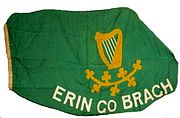
But it looked as if the Intercalated Games would accept the inclusion of an Irish team. So the rival GAA and Irish Amateur Athletic Association jointly nominated O’Connor, along with two other athletes, Con Leahy and John Daly, to compete under an Irish flag. This was a golden harp and shamrock on a green background bearing the legend ‘Erin go Bragh’. However the IOC reneged and permission for the three men to compete for Ireland was withdrawn. When they travelled to Athens and registered they were told they would have to represent the United Kingdom. With great reluctance the three athletes bowed to the inevitable.


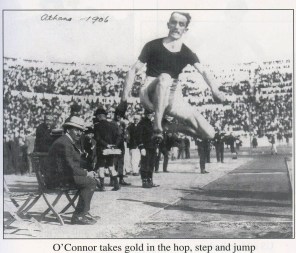
O’Connor went to the Games as long jump world record holder. He had leaped almost twenty-five feet in Dublin in 1901. In the Athens event, however, he was opposed by the previous holder of the world best mark, Myer Prinstein of the USA. The only judge at the event just happened to be the American team manager. O’Connor protested but was ignored. Prinstein won the gold, O’Connor finished second. At the medal ceremony O’Connor saw red … white and blue as the Union Jack was raised to mark his silver medal. Carrying the Irish banner he had brought to Athens he climbed up the pole and replaced the offending Union flag with the ‘Harp and Shamrock’. His compatriots Con Leahy and John Daly stood at the bottom of the pole just in case anyone might try and stymie the gesture.


Later O’Connor competed against Leahy in the hop, step and jump, his teammate having taken gold in the high jump. Here O’Connor won a gold medal of his own, Prinstein, champion in 1900 and 1904 was not placed.


O’Connor, by then thirty-four years old and clearly past his best, did not compete in any further Olympic Games. Undoubtedly his nationalism, which did not permit him to represent the United Kingdom until forced by circumstances to do so, denied him numerous Olympic medals in 1900 and 1904.


He settled in Waterford working as a solicitor and became a founder member of the Waterford Athletic Club. He died there in 1957 at the age of 85. His long jump world best set in 1901 stood as an Irish record until 1990, when it was finally broken by Carlos O’Connell. The first British competitor to beat O’Connor’s mark was the legendary Welsh athlete and Olympic gold medallist Lynn Davis, who didn’t lower it until 1962.


Peter O’Connor set a new long jump world record of twenty-four feet, eleven and three-quarter inches at the RDS in Dublin one hundred and fifteen years ago, on this day.


180px-Erin_Go_Bragh_flag.jpg41CB63YFD0L._SX331_BO1,204,203,200_.jpg


On This Day – 10 June 1997 Jimmy Kennedy is inducted into the Songwriters’ Hall of Fame


51jnMbJP75L._SY344_BO1,204,203,200_.jpg


It’s always interesting to discover the genesis of a popular and memorable poem or piece of music. You assume, for example, that William Wordsworth actually based his poem about daffodils – the one that begins with the immortal line ‘I wandered lonely as a cloud’ on a field of the bright yellow blooms. And you wouldn’t be too far off.


Then there’s the sultry pop song from the 1930s ‘South of the Border’ which simply has to have been written by someone after a romantic trip to Mexico. But that’s where you’d be wrong. Its inspiration was a postcard from Tijuana. The recipient of the card was Northern Ireland songwriter Jimmy Kennedy. The song may been voted one of the top 100 Western songs of all time by the Western Writers of America but Jimmy Kennedy was closer to Tyrone than Tijuana when he wrote it.


Kennedy was born near Omagh in 1902, son of a member of the Royal Irish Constabulary, as the force was known at that time. The family later moved to Portstewart in Derry, the seaside town that would inspire another of the writer’s classic numbers. He graduated from Trinity College in Dublin, taught for a while in England and then joined the Colonial Service. But he also moonlighted with a music publisher called Bert Feldman as a pen for hire. By the end of a career that lasted half a century he had written the lyrics for over 2000 songs, many of which became international hits. For a number of years he was the most successful non-American songwriter in the USA before being supplanted in the 1960s by a pair of young Liverpool composers named Lennon and McCartney.


One of his earliest successes was with ‘Red Sails in the Sunset’. The song was inspired by the colourful sails of the yacht Kitty of Coleraine which Kennedy would often see off from his home sailing off the Derry coastline. One of the first recordings of the song, in 1935, was by Bing Crosby. Vera Lynn had a version the same year, Louis Armstrong in 1936, and Kennedy was on his way.


In 1907 a composer named John Walter Bratton had written a musical piece which his publishers entitled ‘The Teddy Bears Picnic’. But nobody thought to add lyrics until Kennedy got hold of it in 1932 and turned it into one of the most popular children’s songs of all time.


Kennedy spent the years 1939-1945 in the British Army – serving in the Royal Artillery where he reached the rank of Captain. German defences in 1939 included a chain of fortifications known as the Siegfried Line. Early in the war Kennedy wrote the comic song ‘We’re Going to Hang out the Washing on the Siegried line’ as a morale booster. The British didn’t actually get near the line until 1945 but the song was hugely popular with the troops and on the ‘home front’.


Kennedy won two Ivor Novello awards for his contribution to the music industry and an OBE in 1983. He died the following year aged 81.


Jimmy Kennedy songwriter extraordinaire was posthumously inducted into the Songwriter’s Hall of Fame nine years ago on this day.


images.jpeg


On This Day – 3 June 1836 – death of Barry Edward O’Meara, surgeon to Napoleon.

Unknown.jpeg


One of the most familiar quotes with which he is credited was ‘l’etat c’est moi’ – or ‘I am the state’. But by 1816 the state over which he ruled had shrunk to a corner of the small volcanic island of St. Helena in the South Atlantic. This was all that Napoleon Bonaparte could call his own after his escape from Elba, the raising of a new French Army and his final defeat at the hands of Wellington and Blucher at the Battle of Waterloo in 1815.

Sharing Napoleon’s exile in St. Helena was an Irishman, Barry Edward O’Meara, a British Navy surgeon. O’Meara was born in Newtownpark House in Blackrock, Co. Dublin in 1786. He studied medicine at Trinity and the Royal College of Surgeons and joined the army as a medic in 1804. He distinguished himself in fighting in Sicily before being court-martialled for his part in a duel in 1807. He had acted as a second to one of the participants and was kicked out of the army. What’s a young man to do? Well obviously … join the Navy. This he did almost immediately. He was still a naval surgeon in 1815 when he found himself in the right place at the right time.

Napoleon Bonaparte had been defeated at the Battle of Waterloo and was trying to escape to America where he would probably have made a fortune on the lecture circuit. Finding his way barred by a naval vessel called the HMS Bellerophon he surrendered to the commander of that ship. The vessel’s surgeon was Dr. Barry Edward O’Meara. The unemployed Emperor was impressed by the young Irishman’s linguistic and medical skills and invited him to act as his physician in the exciting new opportunity he was being offered by the British government on St. Helena. O’Meara accepted and over the next three years the two men became good friends.

O’Meara did not enter the arrangement wide-eyed and innocent. During his time with Napoleon he kept a diary with a view to future publication. The two men fared well enough on their new volcanic home under the first two post-war governors of the island. But then in April 1816 a fellow countryman of O’Meara’s. Sir Hudson Lowe from Galway, took over the position and proved himself to be a Francophobe martinet. He introduced a more spartan regime than that of his predecessors that only became even more restrictive when rumours reached the island of a plot to spring Napoleon yet again. O’Meara’s relationship with Lowe deteriorated rapidly and when he was asked to spy on Bonaparte by the Governor he returned to England.

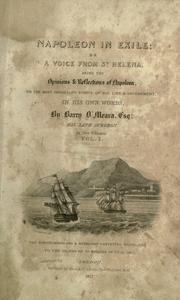
There in 1822 he wrote Napoleon in Exile, or A Voice From St. Helena in which the hero is the late emperor (Napoleon had died the previous year possibly of stomach cancer, possibly of arsenic poisoning) and the villain is Hudson Lowe. The volume led to his name being removed from the list of naval surgeons but also attracted much support, including that of Lord Byron.

O’Meara is believed to be the only doctor to have performed a surgical procedure on Napoleon. He extracted one of the Emperor’s wisdom teeth in 1817. When he died in 1836 the tooth was auctioned and fetched seven and a half guineas. It was sold again in 2005. This time it cost the buyer £13,000.

After his St. Helena experience O’Meara became a dental surgeon, married a sixty-six year old heiress at the age of thirty-seven and was one of the founders of the Reform Club in London. He died of complications following a chill contracted while attending a fund-raising meeting organized on behalf of fellow Reform Club member Daniel O’Connell. Some accounts have him catching his death of cold at one of O’Connell’s Monster meetings – a much less mundane demise I’m sure you’ll agree.

Dr. Barry Edward O’Meara, briefly and controversially physician to Napoleon Bonaparte died one hundred and eighty years ago, on this day.

5621421-M.jpg