On This Day – Drivetime – 27.11.1857 Birth of Thomas H.Parke


P5093631.jpg

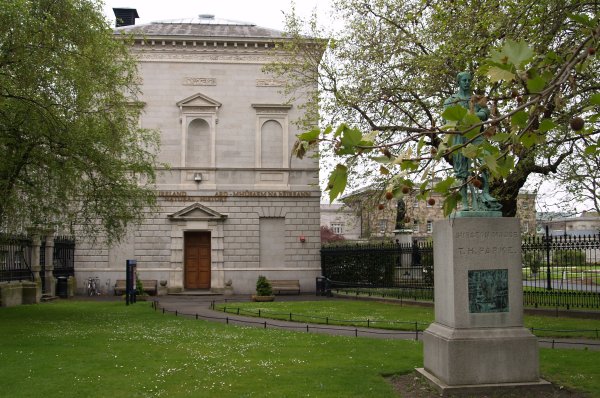
Nestling in the grounds of the Natural History Museum in Dublin, on a lawn in front of the much-loved Dead Zoo, is the statue of an Irish surgeon. On a bronze plaque on the pedestal is depicted the image of two men in what might appear to be an intimate moment. In fact one is a surgeon and he is in the act of sucking poison from an arrow wound in the chest of the other.


The man doing the sucking (one hesitates to describe him as a ‘sucker’) is an Irish physician named Thomas H.Parke. The ‘suckee’, who survived to tell the tale of how he might well have died from a native African arrow in August 1887, was one Captain William Stairs. Both men were, at the time, employed on an expedition by the notorious explorer, adventurer, colonizer and opportunist William Morton Stanley, the man reputed to have uttered the immortal words ‘Dr. Livingstone I presume’ and who then proceeded to rape much of central Africa at the behest of genocidal European monarchs like King Leopold of Belgium.


Thomas H. Parke was born in Clogher House in Kilmore, Co. Roscommon, in 1857 and brought up mostly in Carrick on Shannon in Co. Leitrim. He attended the College of Surgeons in Dublin and joined the British Army as a medical officer in 1881. Much of his military career was spent in Africa. He served in Egypt and was with the column that belatedly fought its way to the non-relief of the ill-fated and already deceased General Gordon in Khartoum in 1885.


But it was his association with Stanley that brought him fame and a modicum of fortune – though not from his boss. He enlisted as medical officer on one of Stanley’s infamous ventures – the so-called Relief of Emin Pasha Expedition. It was part of the fallout of the Gordon debacle and emanated from pressure on the British government not to repeat the delay in sending assistance to the beleaguered Gordon in Sudan.


When Parke offered his services they were, at first, rejected. But he was quickly taken on anyway under not very generous terms. He was to receive an allowance of £40 for the purchase of suitable clothing, £15 for medical supplies and no pay for three years. Stanley recorded at the time that Parke was ‘an extremely handsome young gentleman, diffident somewhat, but extremely prepossessing’. Parke also had to sign a non-disclosure clause. There was to be no best-selling memoir until six months after the official report of the expedition was published. In other words he was to remain silent until Stanley had taken all the credit for any successes and made a small fortune from publishing his account of the expedition.


Parke didn’t have an easy time of it. There was an early outbreak of smallpox which he had to deal with. Then there was the matter of his accommodation. This he shared with the twelve wives of an Arab expeditionary Tippu-Tib. He appears to have had difficulty in tactfully pointing out to their doubtless adoring husband that the standards of hygiene in his harem might have been higher. The expedition spent 33 months in the African interior, during which time Parke reckoned – in the memoir he was eventually permitted to write – that each of the Europeans experienced at least 150 attacks of malaria. So he was a busy man.


He must also have been conscious that, although he had the distinction of being the first Irishman to traverse the continent of Africa, he was also travelling through a region where the native population, in times of need, were prone to the practice known as ‘facultative anthropophagy’ – in other words, to you and me, they were cannibals. Attacks on the expedition were regular and many members were lost to disease and military action.

During his three years in the interior Parke purchased a pygmy girl – not the sort of thing they’re used to in Roscommon. She helped him through his own frequent bouts of malaria but the relationship, whatever its precise nature, ended when he was forced to leave her in the forest as her eyes were unable to adapt to the sunlight of the coastal regions.


Stanley thought very highly indeed of Parke – somewhat of a mixed blessing, as, no doubt, did the man whose life he saved in 1887, William Stairs. He did get to publish a memoir after returning home. The snappily titled My personal experiences in Equatorial Africa, was published in 1891. The more influential A Guide to Health in Africa followed shortly after.


They did, by the way, find Emin Pasha, a German physician, who apparently was getting on just fine thank you and didn’t need to be rescued. Stanley sold 150,000 copies of his memoirs before he came under fire for presiding over the deaths of hundreds of his men in yet another spurious ‘smash and grab’ effort in Africa.


Parke did not long outlive the end of the expedition. He died in 1893 and is buried in Drumsna in Co.Leitrim.


Thomas H.Parke, surgeon, soldier and naturalist was born 158 years ago, on this day.
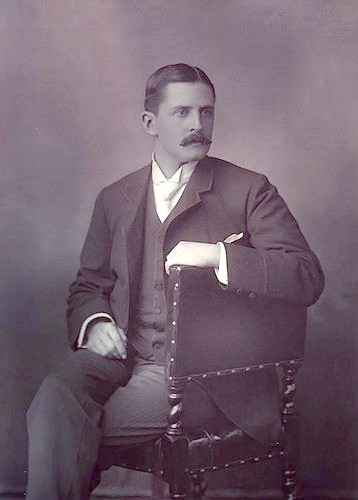
 

Thomas_Heazle_Parke,_by_Herbert_Rose_Barraud.jpg


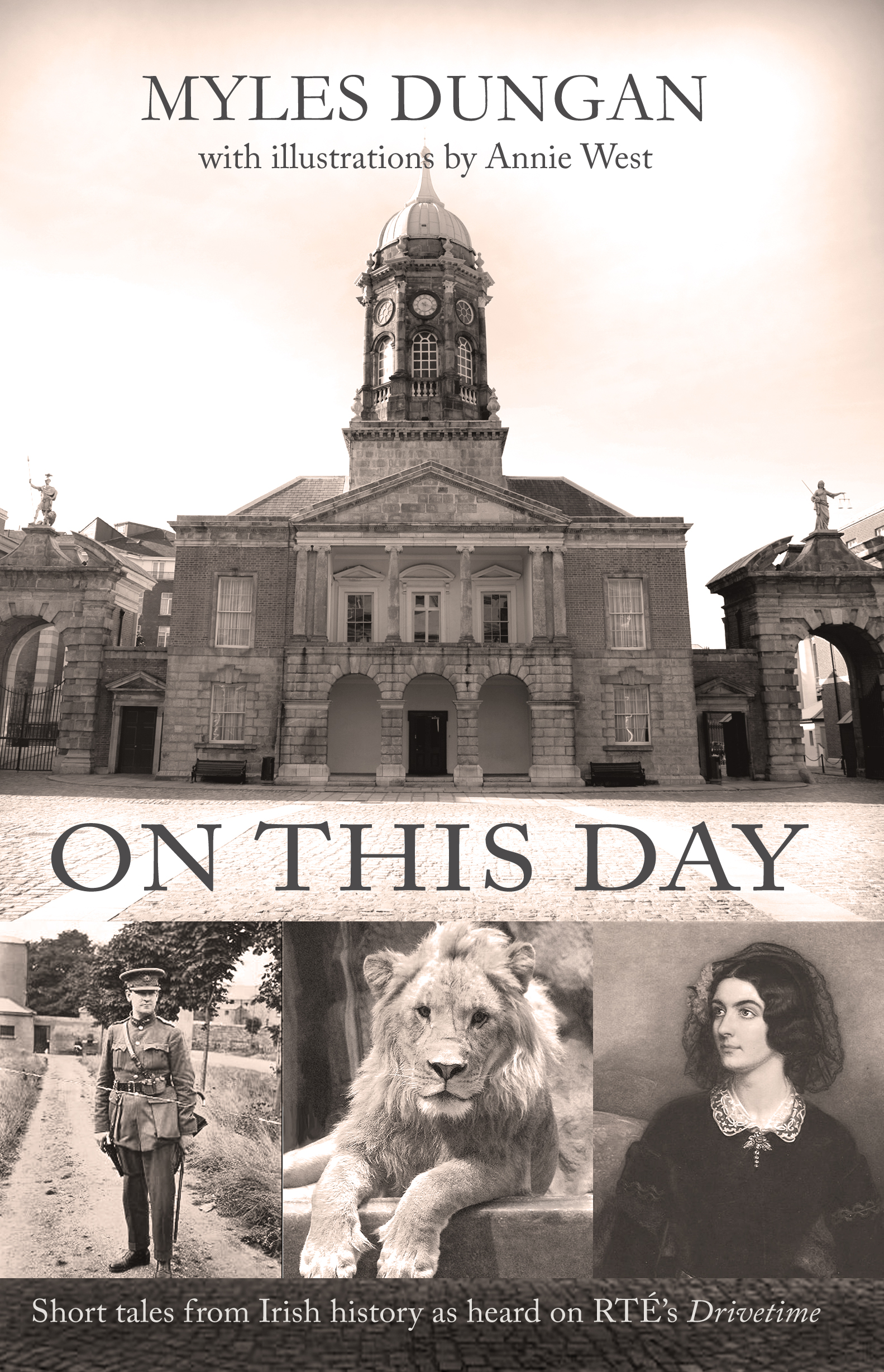
‘On This Day’ at your fingertips. New Island publish the collected radio columns. In shops now.

On this Day cover idea no rte logo10 October OTD

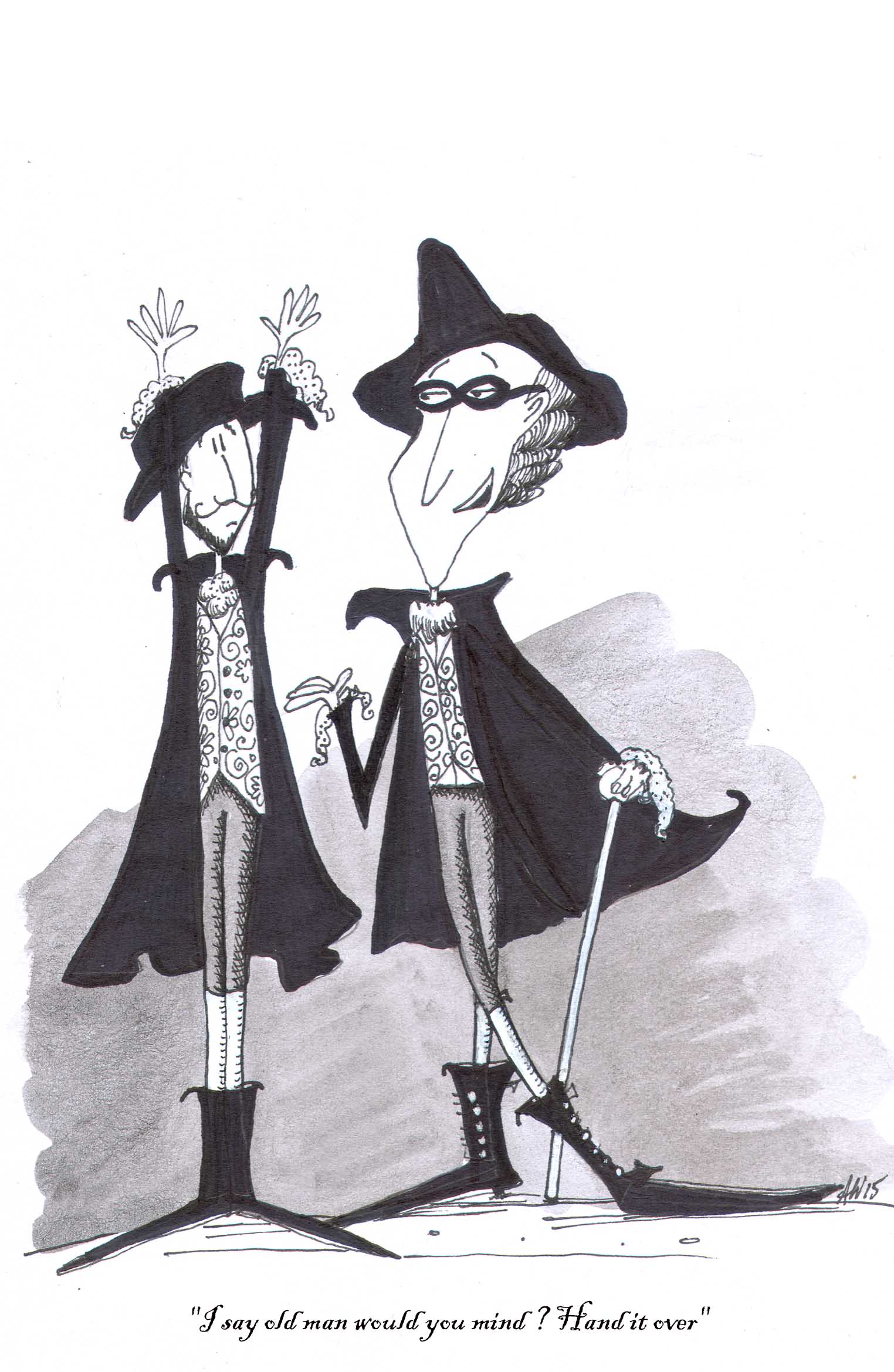
With twelve great cartoons from Annie West.

[What the publishers say]

In this entertaining and engaging book, based on the popular ‘On This Day’ segment from RTÉ’s Drivetime, Myles Dungan delivers little-known episodes from the history of Ireland, and Irish people at home and abroad, bringing fresh perspectives on the lives of both the renowned and the notorious.

The book features a diverse mix of Irish luminaries, from giants of Irish history such as Charles Stewart Parnell, Michael Collins and Grace O’Malley, to literary legends Brendan Behan, W. B. Yeats, Francis Ledwidge and Maria Edgeworth, to Cork-born champion of the working man, Mary Harris a.k.a. ‘Mother Jones’, as well as a diverse mix of rebels, courtesans, composers and bandits.

These stories are imbued with renewed vigour and energy. Featuring pieces from as early as the thirteenth century and from as late as the mid-twentieth century, this distinct work is an original and accessible account of the trivial and tremendous moments from Irish history.

Myles Dungan is a broadcaster and historian. He presents The History Show on RTÉ Radio 1 and his weekly ‘On This Day’ column for Drivetime is in its second year. He has also compiled and presented a number of award-winning historical documentaries. He is the author of a dozen works on Irish and American history and holds a PhD from Trinity College, Dublin.

On This Day -6.11.1929 The Gaelic League bans ‘foreign dances’ and the ‘Down with Jazz’ campaign begins

turnham_631

We are a nation given to bans and boycotts. The latter expression, famously, has its origins in the Land War of the early 1880s. For many years the Gaelic Athletic Association maintained a ban on members playing soccer, rugby, hockey and cricket. During the so-called ‘Economic War’ of the 1930s we were encouraged to ‘burn everything English except their coal’ – a phrase that dates back to Jonathan Swift in the 1720s. But few campaigns can have been as bizarre as the hysterical antipathy towards jazz music in the 1920s and 30s.

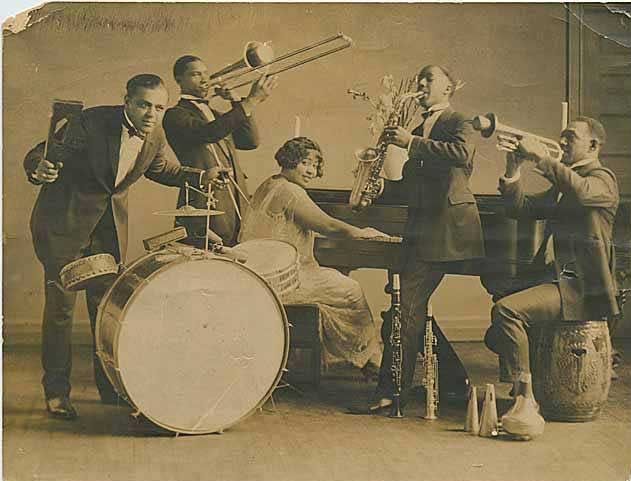
The Great War, in which millions died, was, not unnaturally, followed by a period of anti-establishment moral and political lassitude. On the basis of what had gone on between 1914-18 many young European and American citizens chose to spend the next decade operating on the basis of the axiom ‘eat, drink and be merry for tomorrow we die’. The trenches and industrialised killing gave way to the Charleston, bobbed hair and shorter skirts. It was, to many older citizens who had spent the war in their clubs and drawing rooms, the collapse of civilization as they knew it. Critics of modern music and dance saw nothing particularly untoward in mass slaughter but were appalled at the excesses of the depraved Black Bottom and incendiary jazz music.

In Ireland post-war mass unemployment, abject poverty and wholesale emigration seemed to be of less significance to our legislators and the Roman Catholic hierarchy than stopping people listening and, far worse, dancing, to the devil’s music. The Cumann na nGaedhal government even set up a committee of investigation (the Carrigan Committee) which consulted expert witnesses on how the morality of Irish youth might be safeguarded against such corrupting foreign influences as Louis Armstrong and Glen Miller.

County Leitrim emerged as the last bastion of Gaelic civilisation when the parish priest of the village of Cloone, Father Peter Conferey lambasted jazz from the pulpit and urged people to sing Irish songs and wear home spun clothing only. A demonstration under the auspices of the Gaelic League was organized in Mohill. It was reported to have been attended by 3000 people, some of whom carried banners with slogans such as ‘Down with Jazz’ and ‘Out with paganism’. A supportive message was read at the meeting from the Catholic Primate of Ireland Cardinal McRory who described jazz dancing as ‘suggestive … demoralising [and] a fruitful source of scandal and of ruin.’ The Cardinal speculated that listening to such debauched music had been ‘the occasion of irreparable disgrace and life-long sorrow’ for many young Irish women. Given that jazz had been barely a decade in Ireland the ‘life long’ bit was probably something of a stretch

At the same meeting the Secretary of the Gaelic League, Sean Óg O’Ceallaigh, attacked no less a personage than the rather ascetic Fianna Fail Minister for Finance Sean McEntee. He was condemned for permitting Radio Eireann to play jazz music occasionally. O’Ceallaigh said, rather improbably, of the austere McEntee that ‘Our Minister for Finance has a soul buried in jazz and is selling the musical soul of the nation … He is jazzing every night of the week.’

In January 1934 the Leitrim Observer fulminated editorially against what it called ‘Saxon’ influences. ‘Let the pagan Saxon be told that we Irish Catholics do not want and will not have the dances and the music that he has borrowed from the savages of the islands of the Pacific.’ The racist theme was later taken up by Fr. Conefrey when he described jazz as being ‘borrowed from the language of the savages of Africa’ – so quite a geographical spread there. He then went on to attack the Gardai insisting that many members of the force were guilty of organizing depraved all night jazz dances. A far cry indeed from the Policeman’s Ball.

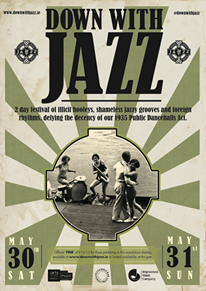
The campaign had the effect of forcing the introduction of the 1935 Dance Halls Act requiring all those who wished to organize such an event to apply for a licence. This, ironically, had the side-effect of making Irish traditional dances in rural homes illegal. Be careful what you wish for.

The Gaelic League decreed that anyone attending ‘foreign’ dances where jazz music was played, risked expulsion, 86 years ago, on this day

Below proof that some campaigns can, laced with irony, prove very useful

dwj-2015

On This Day – Drivetime – 30.10.1751 – Birth of playwright and politician Richard Brinsley Sheridan

5415-1-h.tif

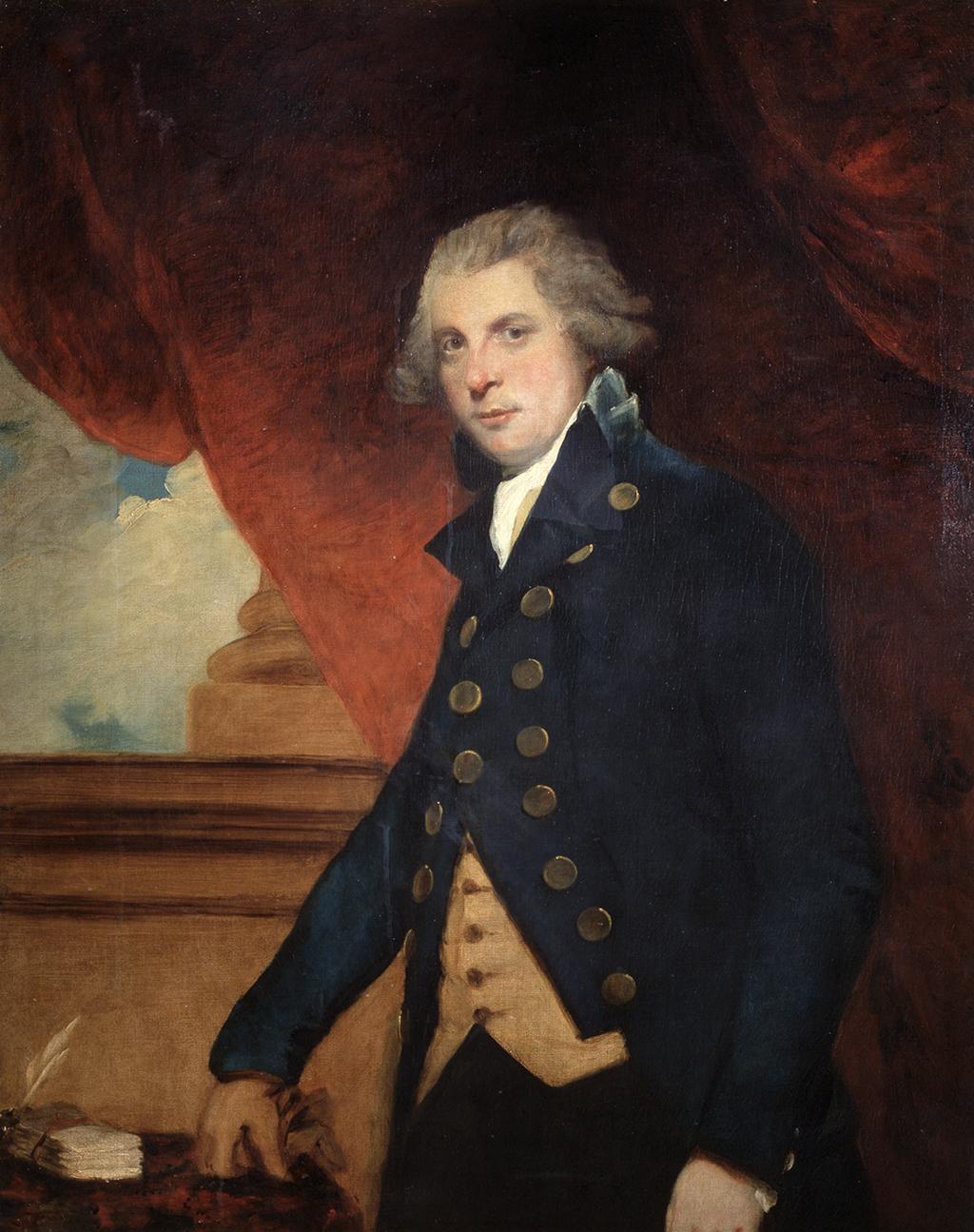
He was one of the outstanding English playwrights and politicians of the 18th century. Except like many other exceptional exponents of the benign art of theatre and the dark arts of politics he wasn’t English – he was Irish.

Richard Brinsley Sheridan was born in Dorset Street in Dublin in 1751. His surroundings were slightly more fashionable then than they are now. He was probably born to write for the theatre. His mother, Frances was a playwright and novelist, his father Thomas was, for a long time, an actor-manager.

His budding theatrical and political careers almost failed to get off the ground, however. Sheridan, to defend the honour of his future wife, Elizabeth Linley, was obliged to fight a duel against one Thomas Matthews, a rival for Elizabeth’s affections, who also happened to be married. Matthews had churlishly defamed her in a newspaper article when she rejected his advances.

The two men met twice in 1772. Swords were the weapons of choice on both occasions. At the first encounter, in London, Matthews posed few difficulties for the Irishman. He was quickly disarmed, begged for his life and was forced to retract the defamatory article. However, Matthews insisted on a rematch and Sheridan decided to oblige him. The second meeting, in Bath, was a much bloodier affair that Sheridan barely survived. According to contemporary accounts he was borne from the field with his opponents broken sword sticking from his ear and his whole body covered in wounds.

Sheridan survived and three years later produced his first play The Rivals a sparkling comedy that included the character of a hot-blooded and mean-spirited Irish duelist Sir Lucius O’Trigger. The comedy, coincidentally, is set in Bath. There is more than one way of gaining revenge on a loathsome adversary.

However, the most memorable character in the play was the sublime Mrs. Malaprop, a lady much given to hilarious verbal solecisms. Hence such infamous howlers as her reference to ‘an allegory on the banks of the Nile’ and ‘he can tell you the perpendiculars’. She also refers to another character as ‘the very pineapple of politeness.’

His greatest work, which appeared two years later, in 1777, was The School for Scandal – still performed today it matches and surpasses most of Oscar Wilde’s comedies of manners with it’s acid observations on contemporary social mores and the endless capacity for evil gossip in 18th century London society.

In 1780 Sheridan essentially bribed his way into the House of Commons, as you often did in those days. The franchise in his constituency was fortunately small as each vote cost him a reported five guineas. In parliament he allied himself to the Whig faction led by Charles James Fox and sided with the American Colonials in their disputes with England. In one celebrated and highly theatrical aside in 1793 his fellow Irishman Edmund Burke was ranting about French revolutionary spies and saboteurs. After a rhetorical flourish to emphasise the dangers of allowing Johnny Foreigner access to England Burke threw a knife onto the floor of the Commons. This drew the retort from Sheridan ‘where’s the fork?’

Although he was an accomplished parliamentary orator and briefly held political office one of Sheridan’s reasons for retaining his seat in the Commons was probably to evade his creditors. When he lost his seat in 1812 they pounced. He died in poverty three years later but is buried in Poets Corner in Westminster Abbey.

Sheridan is responsible for many memorable, pithy and witty phrases. He once said of a political opponent that ‘the right honourable gentleman is indebted to his memory for his jests and to his imagination for his facts.’ In his 1779 play The Critic he has one of his characters make the very politically apposite observation that ‘the number of those who undergo the fatigue of judging for themselves is very small indeed.’

Richard Brinsley Sheridan, playwright, politician and sometime duelist, was born 264 years ago, on this day.

On This Day – 9 October 1913 – The Birth of golfer Harry Bradshaw

0805IrishHarryBradshaw

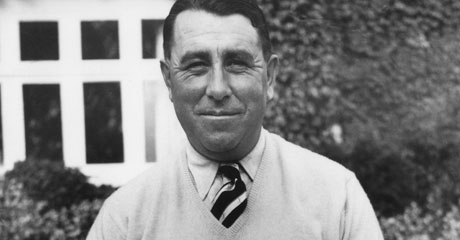
He was the son of a professional golfer and three of his brothers followed the same calling. Harry Bradshaw was Ireland’s first golfing superstar, a proven winner with a jovial personality that endeared him to one and all and helped popularize the professional game in this country

Bradshaw played his golf out of the picturesque Delgany club in Co. Wicklow, where he was treated with respect and admiration. However, it was not always thus where professional golfers were concerned in those days. Even today golf would not be noted for its egalitarianism. In the 1940s and 1950s – when Bradshaw was in his pomp – it was a thoroughly elitist sport and many of those in its professional ranks were working-class men who often came to the game via the caddying route. They would serve their apprenticeships humping bags for well-heeled club members, sneak in as much practice as was tolerated, become assistant professional and fix the clubs and shoes of the same members. They would then, if they were fortunate, become fully-fledged professionals and play occasional tournaments for filthy lucre. This did not, of course, entitle them to admission to the clubhouse. They were, after all, mere employees. To enter the holy of holies they would usually have to be accompanied by a member. There is an enormous social, cultural and sporting gap between Harry Bradshaw and Rory McIlroy.

Bradshaw, dominated the Irish professional golfing scene from the time of his first Irish PGA championship victory in 1941. He went on to win it for the next three years, and took first prize ten times in all.

But it was on the international scene that he really made his mark. In the days prior to any notion of a PGA European Tour the Irish Open championship was a significant event. Brad first won it in 1947 and again two years later. He took the prestigious Dunlop Masters in 1953 and again in 1955. He played on three Ryder Cup teams during this period as well, taking on the Americans in 1953, 1955 and 1957 – the latter event, at Lindrick in England, giving Britain and Ireland its first win in the tournament since 1933.

In 1958, along with Christy O’Connor Sr. he shared in an Irish world championship victory when they combined to win the Canada Cup – now the World Cup – in Mexico. This despite the fact that Bradshaw suffered nosebleeds because of the altitude.

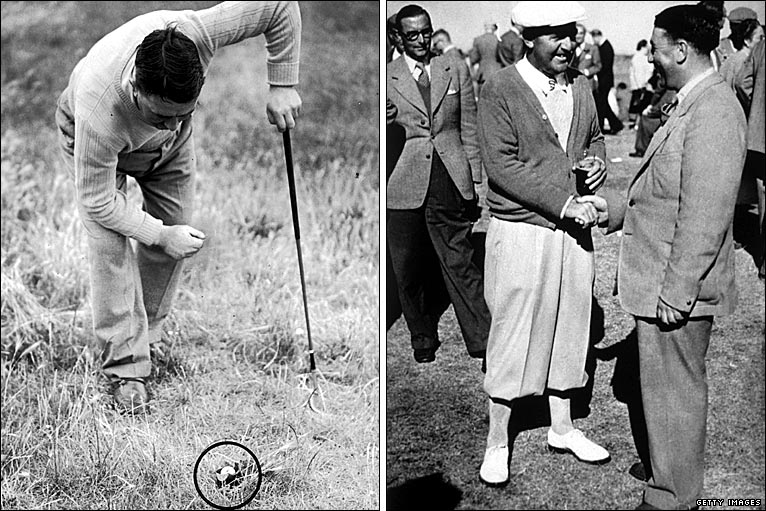
But his greatest achievement was also his greatest tragedy. In the 1949 Open Championship at the Royal St. George’s course in Sandwich in Kent he was inspired and took the great South African Bobby Locke to a play-off. It has always been argued that, but for a rush of blood to the head during the second round, Bradshaw would have won that tournament. He had driven off the 5th tee and was walking down the fairway towards his ball when he realized that it had come to rest against a large piece of glass from a broken bottle. He could probably have dropped without penalty, he could well have waited for a ruling, but, somewhat rashly, though in the spirit of the game at the time, he opted to play the ball as it lay and duffed it. Had he been more patient he might well have won the tournament outright. Sadly, he lost the playoff to Locke who went on to win three more British Opens.

A few weeks later in the Irish Open Golf Championship at Belvoir Park in Belfast Locke was part of a distinguished field. This time, however, Bradshaw had the measure of the great South African and took the trophy. It was revenge of a sort but scant consolation for his failure to take the British Open. Bradshaw must rank alongside Christy O’Connor Senior as the greatest Irish golfer never to have won a Major. However, his heyday was at a time when the notion of ‘Majors’ was not as well developed as it is now and it was virtually impossible for Irish pros to play in the big money tournaments in the USA

Harry Bradshaw, the ebullient, trailblazing Irish professional golfer was born in Delgany, Co. Wicklow 102 years ago, on this day.

_54009400_locke49