HOW MANY IRISHMEN DIED IN WW1 WHILE SERVING IN NON-IRISH UNITS?

Dungan-Cover-300x450


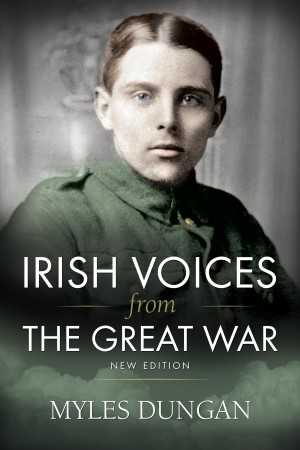
[Note: This survey is intended as a supplement to some conclusions drawn on fatalities in the afterword of the new revised edition of my book Irish Voices from the Great War]


A SEARCH OF THE IRISH NATIONAL WAR MEMORIAL RECORDS

OBJECT :

To ascertain how many Irish-born names are included who fought with non-Irish units and to deduct these from the Irish-born total of 30,986 (source: www.findmypast.ie)


PURPOSE:

To establish how many fatalities occurred among those whose service originated in Ireland. To establish a fatality / enlistment ratio for purely Irish recruits – i.e. those Irishmen who joined up in Ireland or those Irishmen already in Irish regiments like the Royal Dublin Fusiliers, i.e. in the regular army or reserve.


A caveat – some of the Irish-born soldiers who died in British or non UK units may also have enlisted in Ireland. In, for example, a random sample of 1000 deaths of Irishmen who died serving in English regiments c.3.5% had transferred from Irish units and may well have been recruited in Ireland.


An additional caveat – the numbers recorded in the INWMR of those Irish-born soldiers who died in British units may not be exhaustive. There may be other Irishmen who died in British regiments whose names are not recorded.


METHODOLOGY:

Use of the invaluable Ireland’s Memorial Records page on the ‘In Flanders Fields’ website [imr.inflandersfields.be/search.html]


Basic search terms such as ‘Canada’ ‘USA’ ‘Lancashire’ ‘Royal Engineers’ etc. were entered and these were used to identify the numbers of Irish-born soldiers in British, Colonial and American units who have been included in the Irish memorial records


In the records of some soldiers there is an indication of previous units in which they served. Only units with which soldiers were serving at the time of their deaths were counted – this was to avoid the risk of double-counting


Where no place of birth was indicated [7405 instances] the soldier in question was not included in any count.


TABLE – IRISH-BORN SERVING WITH UNITS FROM OTHER COUNTRIES


ENGLAND                              6044

SCOTLAND                             1290

WALES                                280

USA                                  13

CANADA                               53

INDIA                                11

AUSTRALIA                            20

NEW ZEALAND                          14

SOUTH AFRICA                         10


TOTAL                                7735


This means that 7735 names must be deducted from the total of 30,986 names in the Irish National War Memorial Records, designated as having been born in Ireland, in order to arrive at a tentative figure for Irish dead whose service actually originated in Ireland itself. As noted above this figure could err on the low side by around 3.5%.


30986

7735

———

23,251


However, it should also be noted when arriving at a tentative figure (no definitive figure is possible) that a significant percentage of the 7405 names in the INWM Records whose place of birth is not noted, were actually born in Ireland. On the basis of a ratio of 3:1 (Irish:Non Irish) for those whose country of origin is known we might well surmise that three-quarters of those 7405 men (5554) were born in Ireland.


This would give us an actual total of Irish-born of around 36,540 (30,986 + 5554)


From this we need to subtract 7735 – giving us a total of Irish-born serving in Irish units who died in the Great War of 28,805 – in other words an Irish fatality ratio of 1:7 – somewhat higher than the UK average of 1:8 (720,000 dead out of a serving complement of 5.7 million). It is worth noting that this figure is not far removed from the statistic of 27,405 given by the Irish Registrar General in the 1926 census as the number of Irish soldiers, excluding officers, who died on active service outside the UK between 1914-18. If deceased officers are added in the figure of 28,805 becomes even more plausible.


This of course does not take into account Irish fatalities in ‘colonial’ forces or in the US forces. The only figure that has, thus far, been independently researched, is that of Irish enlistment (c.6,000) and fatalities (c.900) in Australia undertaken by Prof Jeff Kildea. Work yet to be verified by this writer suggests that the equivalent US figure is 1200.


BREAKDOWN OF NATIONALTIES IN IRISH NATIONAL WAR MEMORIAL RECORDS

(SOURCE: WWW.FINDMYPAST.IE –   http://www.findmypast.ie/articles/world-records/full-list-of-the-irish-family-history-records/military-service-and-conflict/irelands-memorial-record-world-war)


IRISH                      30,986

ENGLISH                    9,162

NONE GIVEN                 7,405

SCOTTISH                   1,357

WELSH                      314

INDIA  N                   82

USA                        41

CANADIAN                   36

AUSTRALIAN                 21

SOUTH AFRICAN              12
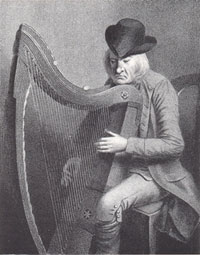
On This Day -Drivetime -11 July 1792-Belfast Harp Festival

hempson_woodcut


Denis Hampson would have been a rarity in 19th century Ireland if only for his longevity. He died in 1807 but he had been born in the 17th century, probably in 1695. He is, therefore, one of the few men to have lived through the 18th century in its entirety.

But Hampson has another claim to fame, he was one of the great practitioners of an ancient Irish art which was dying out as he drew his last breath in the year Napoleon first made war on Russia and the Slave trade was abolished throughout the British Empire. Hampson was a harpist, a man who made his living collecting, composing and playing tunes for wealthy patrons.

What made his life even more extraordinary is that, like a number of the men who followed his trade, he had been blinded by smallpox at the age of three. Hampson was from the Magilligan area in Co.Derry and was first taught to play the harp by a woman named Bridget O’Cathain. He acquired a harp of his own at the age of 18 and spent most of his 20s travelling and playing in Ireland and Scotland. Many years later, on a return trip to Scotland, in 1745, he performed before Bonnie Prince Charlie, the pretender Charles Stuart. The harp, which became known as the Downhill harp after his last patron, Frederick Hervey, 4th Earl of Bristol and Bishop of Derry, who built the Downhill estate, is on display at the Guinness hop-store in Dublin having been bought by the company in the 1960s.

Hampson was also notorious for a swelling or a ‘wen’ on the back of his head. In 1805, when he was more than a hundred years old, Hampson was visited by the Rev. George Vaughan Sampson of Magilligan who wrote that ‘the wen on the back of his head is greatly increased; it is now hanging over his neck and shoulders, nearly as large as his head.’ Towards the end of his life Hampson was actually nicknamed “the man with two heads.”

He married at the age of 86, a lady described only as ‘a woman from Inishowen’, by whom he had a daughter and several grandchildren. Hampson once said of the marriage ‘I can’t tell if it was not the devil buckled us together, she being lame and I blind.’

In 1792 at the age of 96, Hampson was prevailed upon to attend the Belfast Harper’s Assembly, organized by, among others, United Irishman Henry Joy McCracken. It was the first such assembly for six years. A young Edward Bunting, who would go on to collect and record hundreds of traditional tunes, was engaged to notate the music played by the ten Irish and one Welsh harper, who gathered for the festival. Hampson was described as playing with long, crooked fingernails

Hampson was not a fan of the most celebrated Irish harpist and composer of harp music, Turlough Carolan from Meath. While much of Carolan’s repertoire featured at the Belfast Festival Hampson himself resolutely refused to perform the work of his great and more famous contemporary.

Denis Hampson graced the Belfast Harper’s Assembly with his presence, at the tender age of 96. The festival began 222 years ago, on this day.

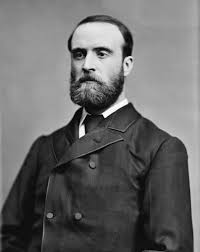
On This Day-Drivetime – 27.6.1846 – Charles Stewart Parnell, is born


ImageImage


No one could have predicted that the hesitant, almost inarticulate candidate for the Irish parliamentary party in the by-election in Dublin in 1874 would go on to be proclaimed as the Uncrowned King of Ireland and then brought to earth by the same people who had deified him in the first place.

For most of the first thirty years of his life Charles Stewart Parnell was a member of the family who were the benevolent landlords of Avondale in Co.Wicklow – an estate of 4000 acres that produced a modest income by the standards of the late 19th century. Parnell did what most of the members of his class did. He rode to hounds in the winter and played cricket in the summer – he was a decent batsman and wicketkeeper.

Then, suddenly, at the age of 28, he offered himself to the Irish parliamentary party, then led by Isaac Butt, as a candidate for the vacant seat in County Dublin. As he could afford to pay for his own campaign and didn’t have to worry about loss of earnings should he win the seat – ordinary MPs were not paid until the early 20th century – he got the nod from the party bosses. They quickly regretted their decision. The young Charles Stewart Parnell was a dreadful candidate. He could hardly put two words together and was so nervous as a public speaker that he could do little more than stammer on the hustings. The electorate was unimpressed and he was easily defeated.

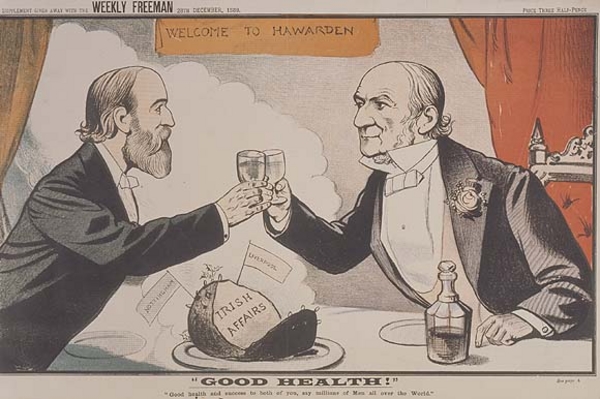
He was given a second chance and did better the following year winning a by-election in Meath. For two years Parnell kept his own counsel in the House of Commons. He watched and waited. Then, in a move apparently out of character with his social status, he threw in his lot with a group of converted Fenians and blocked much House of Commons business by filibustering – making long speeches on very little indeed – much to the annoyance of the British MPs and most of the Irish ones as well.

Parnell would go on to lead his party, deliver some significant land reform, and significantly advance the cause of Home Rule before his involvement in the divorce of Katharine O’Shea brought him crashing to earth. She was, by the way, only called ‘Kitty’ by her adversaries, the name was a term of abuse reserved for Victorian prostitutes.

Parnell, though briefly beloved of the nationalist Irish, was not held in such high esteem by many of his party colleagues. He was seen as aloof, arrogant, and often lazy. Unlike, for example, other Victorian politicians, who were enthusiastic correspondents, Parnell would not have been good on email. He treated the reams of correspondence that arrived for him on a daily basis with utter contempt. He rarely opened a letter, leaving that to others to do on his behalf. He was very superstitious, with a particular aversion for the month of October. Naturally, that was the month, in 1891, in which he died at the age of 45. Bizarrely, for someone who led the Irish constitutional nationalist movement for a momentous decade, he also loathed and feared the colour green.

Charles Stewart Parnell, politician, Uncrowned King and chromophobe, was born 168 years ago, on this day.


Image

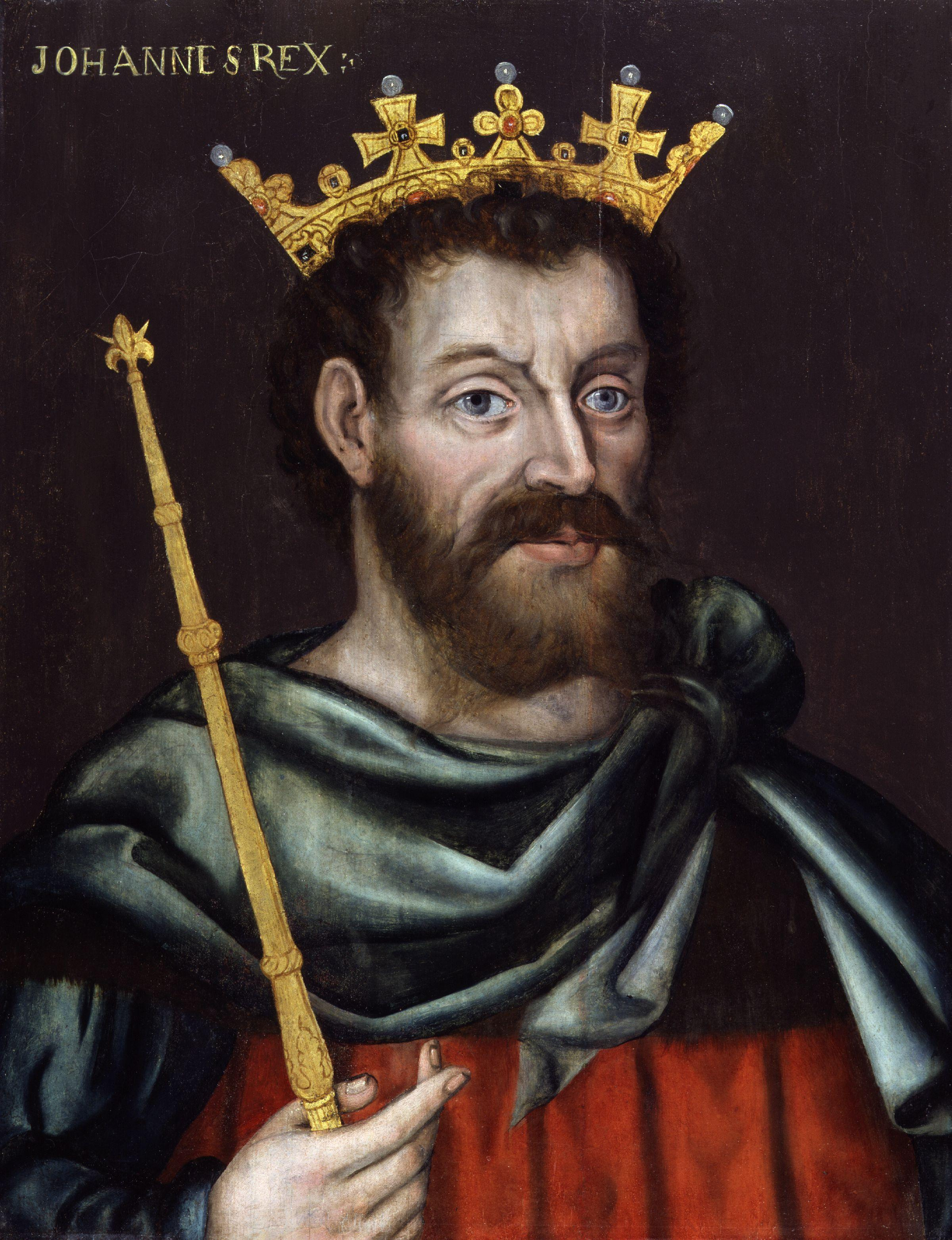
On This Day -Drivetime -20.6.1210 – King John lands at Waterford.

Image


King John has had a pretty bad rap from history. To some extent he deserved it but he was hardly worthy of the intense vilification of future generations. In popular mythology he is the villain-in-chief of the Robin Hood legends, in cahoots with the Sheriff of Nottingham to rob simple peasants of their livelihoods. He is the evil younger brother of the valiant Richard the Lionheart who spent most of his reign in the service of Christianity engaged in retaking the shrines of the Holy Land from Muslim invaders. In the movie about his rather interesting family, The Lion in Winter – he was one of the sons of Eleanor of Aquitaine and King Henry II– he tends to snivel and skulk quite a lot

That’s the mythology. The reality is quite different. For a start there probably was no Robin Hood and even if there was he was just as likely to have lived up to his surname as he was to have robbed from the rich and given to the poor. As for Richard the Lionheart he spent most of his reign as King of England ignoring his subjects while pursuing his hobby of killing Muslims. He got the money for this by selling public offices to the highest bidder. Eventually he cost his subjects a shed-load of money when he got himself captured by Duke Leopold of Austria and was ransomed by the German Emperor Henry VI.

King John’s reputation was acquired because he spent much of Richard’s ten-year reign plotting against his big brother. But then what’s a guy supposed to do? They weren’t particularly fraternal to begin with and then Richard abadons the family store and leaves it wide open to shoplifters. Then there was the whole ‘Lionheart’ thing. Red rag to a royal bull really.

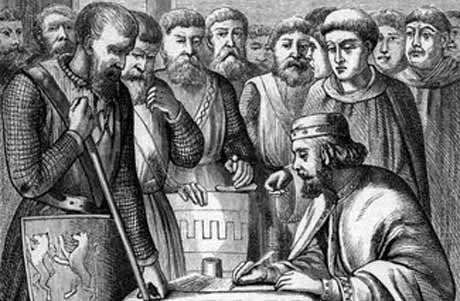
Of course John was neither a popular nor a successful King. He managed to lose most of England’s French dominions and in trying to get them back annoyed the barons. This led to the Magna Charta being forced down his throat after a successful rebellion. The Great Charter, signed at Runnymede in 1215, was the first negotiated curb on kingly power in England.

Five years before he submitted to the barons he went after one of their number in Ireland. King John landed here with an army in 1210 in an attempt to put manners on the de Lacy’s – Walter, the Earl of Meath and Hugh, Earl of Ulster. He landed at Crook in Co.Waterford, giving rise to some confusion about the origins of the phrase ‘by hook or by crook’. One version has it that had John not landed in Crook he would have come ashore nearby at Hook Head – hence his invasion of Ireland would have taken place ‘by hook or by crook’. There are, however, umpteen other versions of how the phrase originated. John’s visit was fairly successful and the De Lacy’s ceased to be a major irritant for him as a result.

Six year’s later he died, after reneging on the Magna Charta and going back to war with his barons. He claimed that he had signed it under duress. He is said to have died of dysentery, not the kind of thing you associate with the deaths of Kings.

King John, the only English monarch of that name, landed in Ireland 904 years ago, on this day.


Image


On This Day -Drivetime – 13.6.1865 – Birth of W.B. Yeats in Dublin


Unknown5746941_130392795052


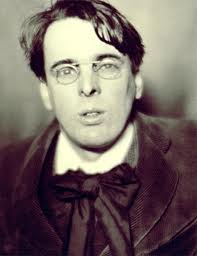
William Butler Yeats, Ireland’s first Nobel Literature laureate – he received the award in 1923, two years before George Bernard Shaw – was born in Sandymount in Dublin in 1865. However, he spent much of his early life in County Sligo, which he considered to be his spiritual home. Painting rather than poetry was more in the Yeats bloodline. His father and brother, both called John, were distinguished painters as was his ancestor Jervis Yeats, a Williamite soldier who benefitted from the defeat of King James in 1690.

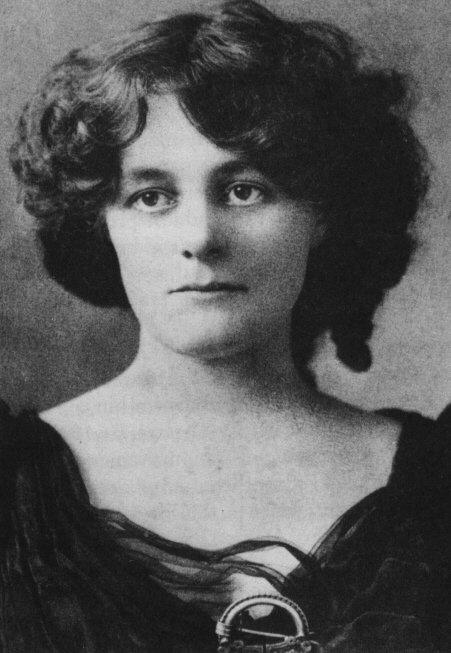
Despite his impressive corpus of poetry and the fact that people constantly quote some of his best lines – how many ‘Terrible Beauties’ have been born since he wrote Easter 1916? – Yeats is probably best known, in popular consciousness at least, for his doomed relationship with Maud Gonne.  They met in 1889. According to Yeats she brought into his life ‘a sound, as of a Burmese gong’. Presumably that was intended as a compliment but it was hardly designed to set the pulses of the 23 year old beauty racing. He first proposed to her in 1891. Sh refused him. He waited for another eight years before trying again. With the same result. He popped the question for a third time in 1900. Again, her answer was ‘no’. Proving that he was a perennial optimist or someone who didn’t take no for an answer he tried again in 1901. He got no for an answer. Instead, a few years later she horrified Yeats by marrying fellow Irish nationalist John McBride and, to his additional chagrin, became a Catholic into the bargain. The marriage, to Yeats’s intense satisfaction, was a disaster.

In 1908 Yeats had the even greater satisfaction of finally, after almost twenty years of forbearance, consummating his relationship with Maud Gonne. How well it went from her point of view can possibly be surmised from the letter she sent him in January 1909 suggesting that artists who abstained from sex would reap the rewards in their work. Either way they never re-consummated their relationship.

Yeats was very much a public figure throughout the early part of the 20th century. His co-founding of the Abbey Theatre, his aristocratic nationalism – which apparently included membership of the revolutionary organisation the Irish Republican Brotherhood – and two stints as a Senator of the newly formed Irish Free State, ensured that he lived much of his life far from the stereotype of the secluded, reclusive poet.

After the execution of  Major John McBride in 1916 he proposed to Maud Gonne for a fifth time. Again he was rejected. He then turned his attention to her daughter Iseult with the same result. Eventually Yeats did find happiness in his marriage to Georgie Hyde-Lees, who, although only half the poet’s age, became his accomplice in some strange spiritualistic  experiments and an excellent partner for the ageing artist.

W.B.Yeats, a man whose tangled love life inspired some wonderful poetry, was born 149 years ago, on this day.