On This Day – Drivetime, RTE Radio 1 – 3 January 2014 – The recruitment of the Black and Tans

ON THIS DAY – 001 – Drivetime, RTE Radio 1
Image

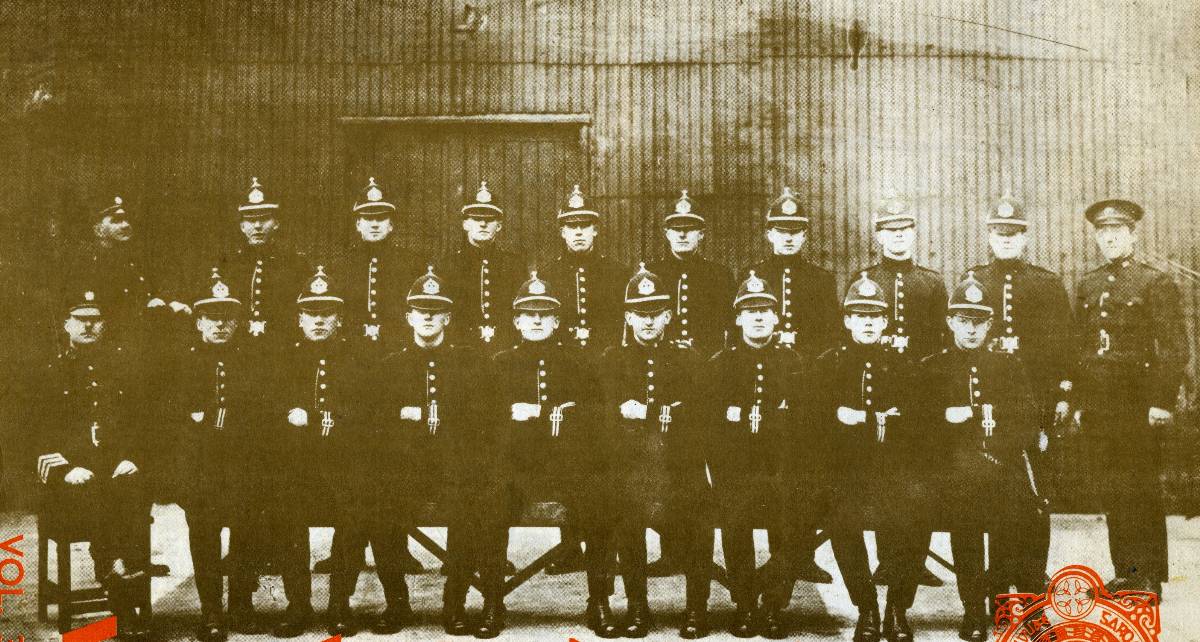
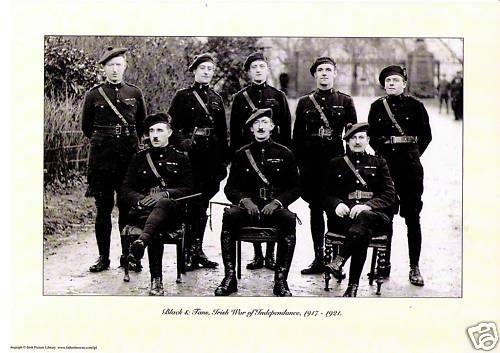
3 January 1920 – Recruitment begins for the Black and Tans

In January 1920, the British government placed advertisements in British newspapers for men who were willing to “face a rough and dangerous task”. The jobs on offer were as Temporary Constables in the Royal Irish Constabulary, a force by then coming under intense pressure from the IRA.

The target market for the ads was unemployed ex-servicemen, men who knew how to handle weapons and who had survived the horrors of the Great War. Recruits, around seven thousand altogether, were trained for about three months and then sent to Ireland. Such a large influx caught the RIC unawares and a lack of uniforms meant the temporary constables were dressed in khaki trousers and dark police tunics. Their attire reminded a Limerick journalist, Christopher O’Sullivan, of the colouring of the Kerry Beagles that made up the famous Black and Tan hunt on the Limerick/Tipperary border – the name stuck. They were paid ten shillings a day plus board and lodging at a time when the pay for a British Army private was little more than a shilling a day.

Never noted for their military discipline, despite their backgrounds, the RIC Temporary Constabulary took to the unofficial reprisal with gusto. It was Black and Tan units who torched Balbriggan and (with some outside assistance) the centre of Cork, burning more than 300 buildings in the southern capital. In the latter instance those responsible proudly displayed burnt corks in their caps for a time thereafter.

A few myths have grown up about the Tans. For a start they were not all British. At least 10% of the members of the force were Irish-born. Neither were they responsible for the shooting of civilians on Bloody Sunday in Croke Park, that was largely the work of the even more vicious RIC Auxiliary Division, the notorious ‘Auxies’. Neither did Tom Barry ‘lay all the Black and Tans low’ at the Kilmichael ambush in 1920, as the words of the song would have it. The 17 security force fatalities on that day were also Auxiliaries.

But during the War of Independence, better known at the time as ‘the Tan war’, no one really made too many distinctions between the various forces who terrorized the towns and villages of the country. Their philosophy, insofar as they can be described as philosophers, was encapsulated in the address of an RIC Commander to Listowel policemen in June 1920. He insisted that suspicious looking persons should be shot on sight. ‘You may make mistakes occasionally’ he continued, ‘and innocent persons may be shot, but that cannot be helped, and you are bound to get the right parties some time.’

In a gesture of sweet irony the  “Cogadh na Saoirse” medal, awarded since 1941 by the Irish government to IRA veterans of the War of Independence, includes a ribbon with two vertical bands, the stripes are in black and tan.

The name itself is still to be found in use in various forms in the USA. In 2006 Ben and Jerry’s got themselves in hot water when they created a new ice cream called Black and Tan. It doesn’t appear to have caught on. Two years ago Nike thought better of referring to a new brand of trainer as a ‘Black and Tan’ after protests from Irish-American groups.

Recruitment advertisement for the infamous RIC temporary constabulary were up and running in British newspapers 94 years ago, on this day.

Song – Come out ye Black and Tans
 

Irish-Australian history programme ‘An Dubh ina Gheal (Assimilation)’ – TG4, 30 December

Image


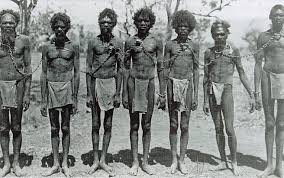
An Dubh ina Gheal (Assimilation) explores the relationship between the Indigenous Australians and the Irish in Australia.  At a time when many Irish people have emigrated to Australia, the connection between the two countries is as strong as ever, and stories about the Irish in Australia have never been more topical. This documentary offers a unique portrayal of Australia that is quite different from the stereotypes we often see on television.


The Irish poet Louis de Paor is the presenter and co-writer and his poetry is incorporated into the narrative. He lived in Australia for ten years in the 1980s where he composed Didjeridu and An dubh ina gheal (Assimilation). These poems have powerful things to say about indigenous Australians, whom he feels a natural affinity with as an indigenous Irishman. Yet, as Didjeridu acknowledges, the Gael, as a founding people in the story of white Australia, were also complicit in the dispossession of Aboriginal people.


In this documentary, against the backdrop of a colonial history with devastating consequences for indigenous Australians, Louis explores the complex relationship between Aboriginal people and the Irish. At the heart of this exploration is the story of the Stolen Generations, mixed race children who were taken away from their families under assimilation policies. 


On this journey Louis meets with many Indigenous men and women including; political activist Gary Foley who was one of the ‘Shamrock Aborigines’ and instrumental in the civil rights movements of the 1970s, Bill Brock Byrne who was taken away from his Aboriginal mother when he was only 7 years old and Kev Carmody, another child of Aboriginal and Irish descent who became a member of the Stolen Generations. Kev, who is a singer/songwriter appeared on a list of the top 100 Irish Australians which was published by the Irish Echo, a list that included Ned Kelly

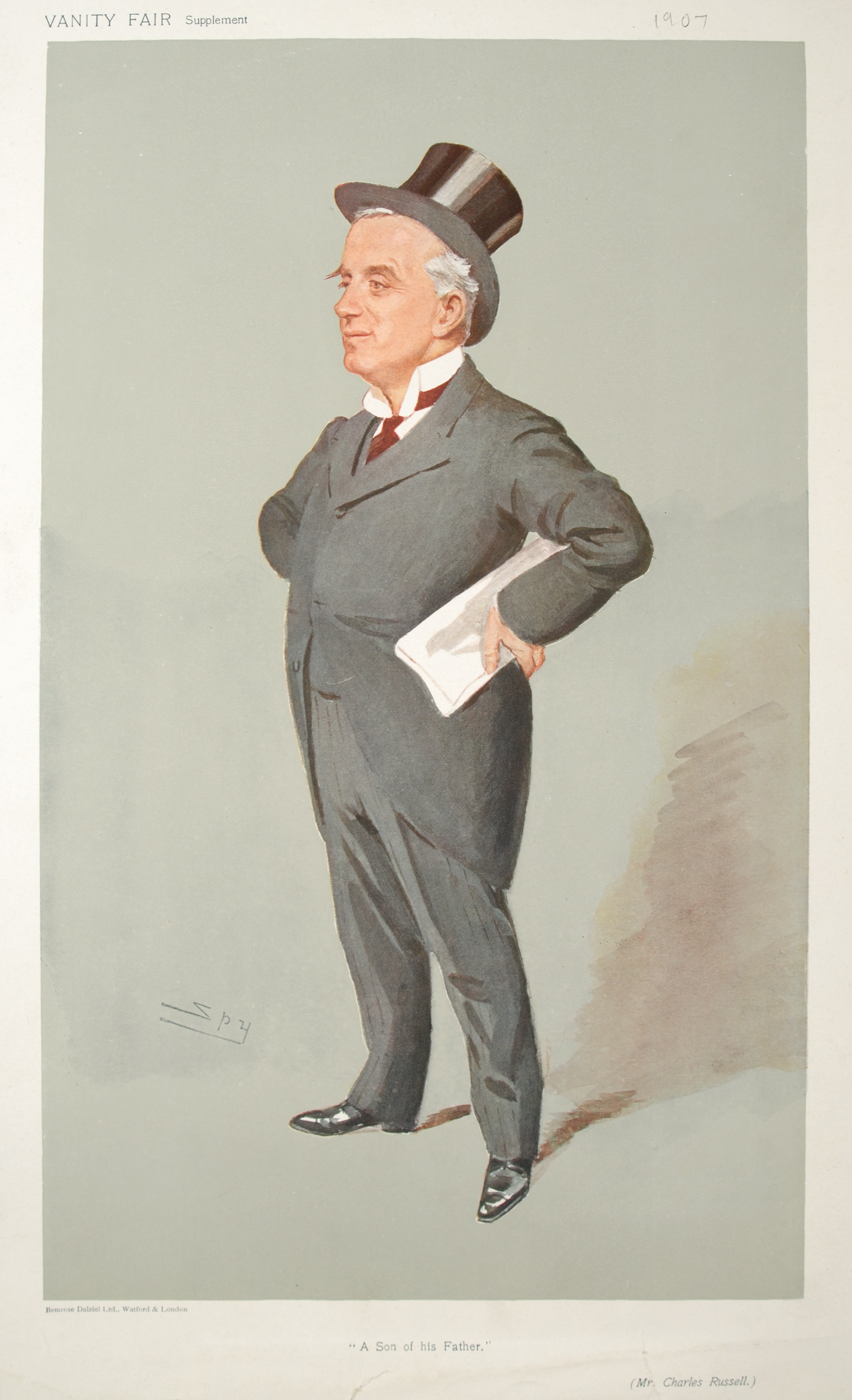
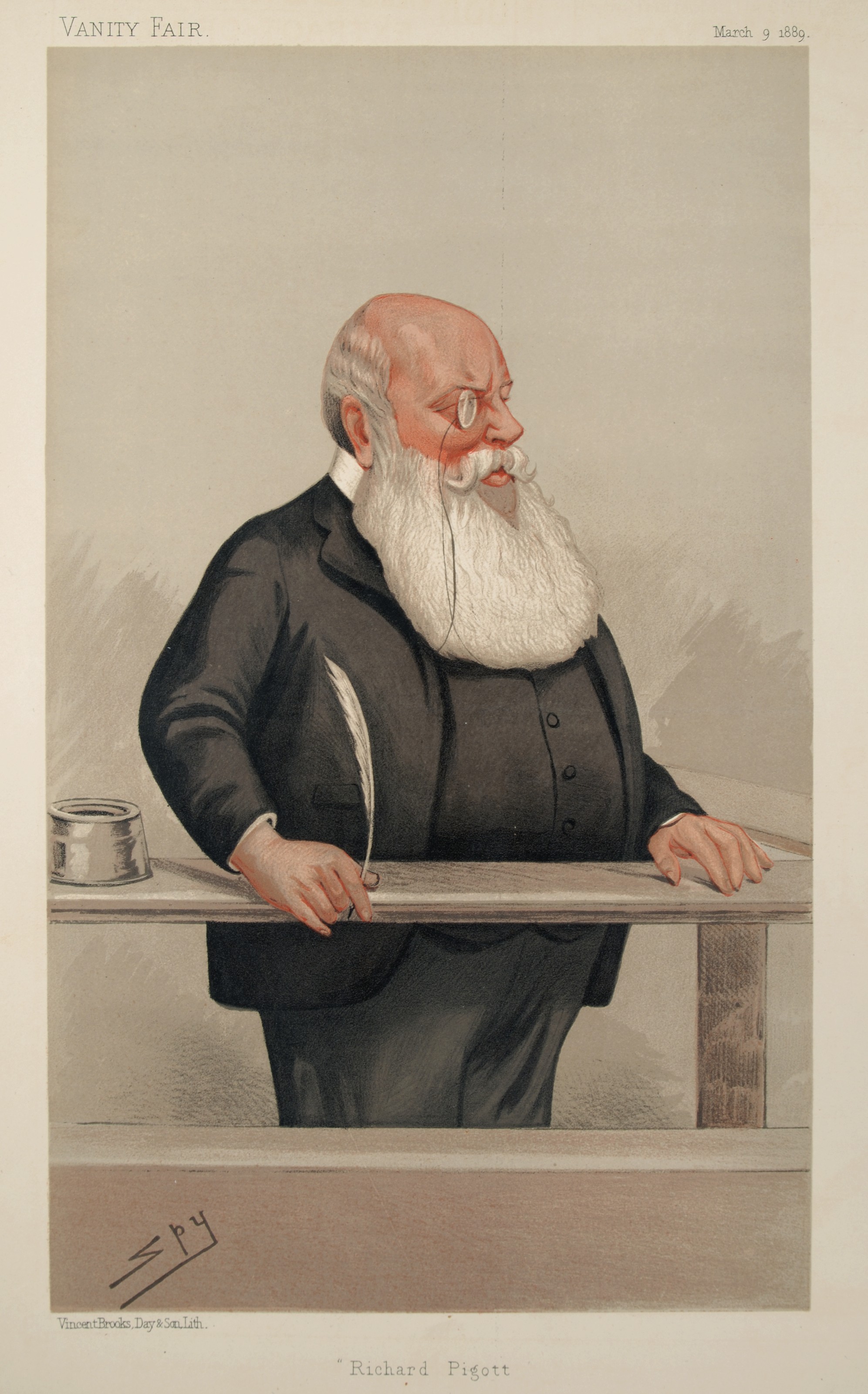
Russell v Pigott – Times Commission, 1889 – On this day – 10 November, 1832 the birth of Russell

Image Image


Born plain Charles Russell, in Newry, Co.Down, the man who would become Baron Killowen and who would torment Richard Pigott in the witness box in his defence of Charles Stewart Parnell, was one of five children. He was also the only sibling in the Russell family who did not enter the religious life. His three sisters all became nuns, his brother a Jesuit priest.

He was a highly successful QC in London, a moderate nationalist MP, and rose to become Lord Chief Justice of England, the first Catholic t hold the office in centuries. However, it is for his forensic grilling of the dubious journalist, turncoat and pornographer Richard Pigott at the Times Commission hearings in February 1889 that he is justly celebrated.

Pigott had sold the Times a pup … at least twice over.  He had passed on, for payment, a letter that suggested Parnell supported those who carried out the brutal Phoenix Park murders of Chief Secretary of Ireland, Lord Frederick Cavendish, and Under Secretary Thomas H.Burke in May 1882. Parnell vehemently denied the veracity of the letter. A Commission was established which, in essence, pitched the Times newspaper against Parnell and most of the senior members of his party.

The letter in question, published in facsimile by the Times in April 1887, was one of a number that had been forged, quite cleverly, by Pigott himself.  He had, however, left a couple of hostages to fortune in the material he had supplied to the Times. Pigott was not quite as literate as one might have expected a former newspaper editor to be. He was a dreadful speller.  Observers who closely examined the cache of correspondence he had provided to the Times noted a couple of howlers.  In one case, for example, he had spelt the word ‘hesitancy’ as h-e-s-i-t-e-n-c-y.

When he began his cross-examination of this crucial Times witness Russell puzzled the onlookers by handing Pigott a sheet of paper and asking him to write a number of words on it. One of those was ‘hesitancy’. He then casually took back the paper, glanced at it, and ignored it for most of the next two days.

It was only after reducing Pigott to a gibbering wreck and catching him out in his elaborate system of lies, that Russell returned to the mysterious paper. After a few more barbed questions he pointed out that in one of the letters retained by the Times the word hesitancy had been misspelt. The erroneous spelling, he demonstrated, was precisely that chosen by Pigott the previous day when asked to do so by Parnell’s counsel. Pigott went a couple of stages beyond gibbering wreck and no one in the court had any doubt but that he had forged all the letters upon which the Times depended to make its case.

Pigott fled shortly after the court adjourned, admitted his guilt in a letter to the tribunal and shot himself dead in Madrid. Parnell subsequently sued the Times for defamation in a London libel court and won £5000. In future years at public meetings when a heckler wished to suggest that a platform speaker had ‘sold out’ or betrayed his cause, the aggrieved party would yell ‘spell hesitancy’ at the top of his voice.

Charles Russell, inquisitor extraordinare and nemesis of the hapless Richard Pigott was born 181 years ago on this day.

Bring out your old police photos, artefacts or memories – Dublin Castle, 16 November.

Image


Saturday November 16th at the Bedford Tower Dublin Castle sees the Garda Historical Society hosting a unique event!!   We want you to bring along your old Police photos and artefacts of your DMP, RIC and early Garda relatives. We can photograph them, you can tell us a little about your Police relative and you then bring all your stuff home.

 We will also have free lectures beginning at 12 noon by Mr. Padraig Yeates on ‘The Lock Out’;

at 2pm by Dr. Myles Dungan; ‘The Theft of the Irish Crown Jewels’

& at 4pm by Prof. Eunan O’Halpin; ‘Spying on Ireland – The Intelligence War during WWII. 

This is a free event and runs from 10am until 6pm!

Please see www.PoliceHistory.com or email gardahistoricalsociety@gmail.com .  You can follow us on facebook, just look for ‘garda historical society’.

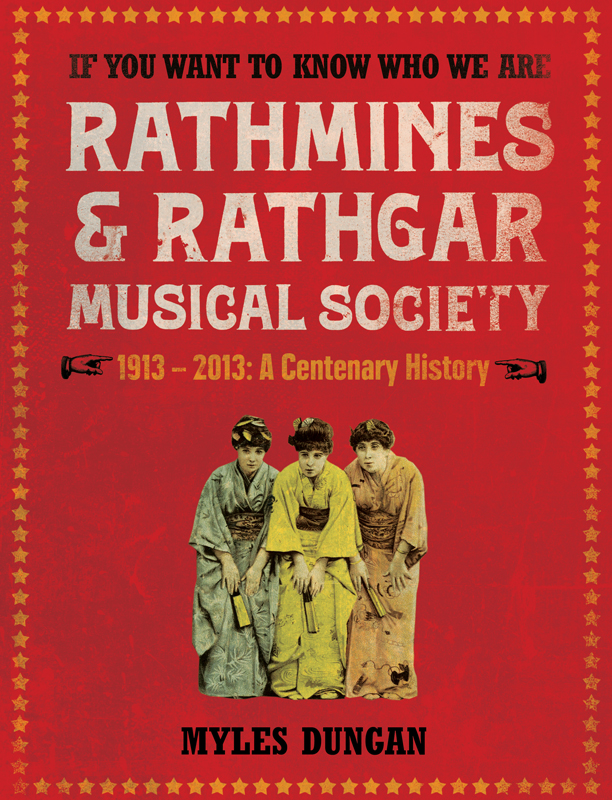
‘If you want to know who we are’ Rathmines and Rathgar Musical Society 1913-2013: A centenary history

Image

From the Introduction … 

It could almost be an examination question. ‘Account for the survival and continued artistic success of the Rathmines and Rathgar Musical society between 1913-2013?’ (History, Leaving Certificate, 2013)


In his or her response on why this organization has outlived two world wars, a war of independence, a civil war, a cold war and more than a few invasions of Afghanistan, the discerning and well-informed student might be expected to refer to the ‘three C’s’ – not lower, middle and upper on the piano keyboard – but, ‘continuity, competence and camaraderie.’


Readers who persevere to the end of this volume will come across a number of recurring names. It would be tedious now to anticipate their introduction into the narrative but it was their constant presence and guidance that gave the R&R the kind of continuity that secures permanence.


What this commemorative record sets out to establish is that it was by no means inevitable that the fledgling musical society that began its life in Rathmines on 23 April 1913 was destined to last at least a hundred years. Had a number of dedicated people not brought the professionalism of their workplace into their hobby the R&R, as it soon became known, would have gone the way of the Austro-Hungarian empire.


However. No amount of administrative stability or aptitude would have sustained the R&R had the whole project not been approached with a certain joi de vivre. Companionship and laughter have been at the heart of this one-hundred year odyssey. Continuity and competence may have shaped the structure and the engine of the vehicle but camaraderie provided the propulsion.


Up to the date of publication, and including the centenary Mikado at the National Concert Hall in November 2013, the R&R has staged 292 separate productions, compilations or entertainments at the Queen’s, Olympia or Gaiety Theatres, and the National Concert Hall over a one-hundred year period. That oeuvre has included critical and financial flops, deficient productions that have still managed to avoid deficits, as well as acclaimed and exceptional shows worthy of many professional companies.


What follows is an attempt to record the triumphs and disasters and to convey some sense of why the Rathmines and Rathgar musical society remains in existence and continues to offer outstanding entertainment and the (very) occasional letdown. While it has become an institution on the Dublin music scene it has refused to atrophy and has always managed to re-invent itself when the urgent need for change has arisen.