On this day – 21 June 1877 – The hanging of four members of the ‘Molly Maguires’

the-molly-maguires


Their Irish origins are mysterious, though they were almost definitely a 19th century agrarian secret society. Their name may have emanated from a tradition that was not just Irish – the Welsh were party to it as well in the so-called Rebecca riots  – where male activists disguised themselves as women before engaging in illegal activity up to and including murder. They may have also have been associated with the main Roman Catholic rival to the Orange Order, the Ancient Order of Hibernians.

But it wasn’t in Ireland that the Molly Maguires made a name for themselves.It was in the anthracite mines and on the rail-roads of Pennsylvania. Here, the tactics used against landlords and land agents in Ireland, were applied in bitter labour disputes, with the Hibernians, an organisation that originated in the USA, acting as a legitimate front for the illegal activities of the Mollies. Then again there are historians who do not believe this shadowy conspiracy ever existed on the scale that was claimed by the owners and shareholders of the mines and railways in late 19th century Pennsylvania. That is a point of view widely held at the time as well.

Immigrant labour offered a glorious opportunity for Pennsylavania capitalists to undercut the wages being paid to American-born miners. Pay for Irish migrants was low and conditions were brutal. On the job fatalities and injuries ran into the hundreds each year. The so-called ‘panic of 1873’ – not a million miles from the stock market crash of 1929 and the sub-prime crisis of 2007 made a bad situation even worse for the mine and railroad workers.

Just as every crisis brings opportunity, mostly for the unscrupulous, the President of the Philadelphia and Reading Coal and Iron company, Franklin Gowen, son of an Irish immigrant and the richest man in the region, decided it was high time to crush the burgeoning trade union activity in the state, represented by the Workingmen’s Benevolent Association. While the ‘Molly Maguires’ may have been the convenient invention of Gowen himself there is no doubt that the perceived enemies of the Pennsylvania mineworkers were being killed by the dozen. In one of the six main anthracite mining counties there had been 50 such murders between 1863-67.

 MollyMaguire

Gowen, with the co-operation of his fellow mine owners, engaged the services of the yet-to-become-famous detective agency run by Scottish immigrant Allan Pinkerton, to help break a general strike in the anthracite fields. In 1875 he despatched an agent, Armagh-born James McParland, to the area. Posing as ‘James McKenna’ the Pinkerton detective infiltrated the Benevolent Association and claimed also to have insinuated himself in to the confidence of the Molly Maguires. Information gathered by McParland was, in the first instance, passed on to vigilante elements who happened to share Gowen’s union-bashing objectives. When suspected Mollies were murdered in their own homes McParland threatened to resign from the Pinkerton organisation but was persuaded to remain in place. After six months the strike ended and most of the miners returned to work having agreed to a 20% wage cut. However, Irish-born members of the Ancient Order of Hibernians refused to concede and fought on. Attacks on overseers, strike-breakers and police continued until information supplied by McParland led to a number of arrests.

The Armagh Pinkerton, who had, by his own account, been a trusted collaborator of the leadership of the Mollies, testified against a number of those accused of murder. Demonstrating the extent of his political power within the state of Pennsylvania Gowen had himself made special prosecutor and conducted some of the cases against the Mollies. The accused included the alleged ringleader of the organisation John ‘Black Jack’ Kehoe. McParland’s testimony sent ten men to the gallows. Many of them, including Kehoe, loudly proclaimed their innocence of the crimes of which they had been convicted. In 1979 the state of Pennsylvania pardoned Kehoe posthumously after an investigation by its Board of Pardons at the behest of one of his descendants.

The Molly Maguires have passed into legend. Arthur Conan Doyle based a Sherlock Holmes mystery, The Valley of Fear on their alleged activities. The 1970 film The Molly Maguires, starred Sean Connery as Kehoe and Richard Harris as McParland.

Four members of the alleged Molly Maguires conspiracy, Alexander Campbell, John Donohue, Michael Doyle and Edward Kelly were hanged in Pennsylvania 134 years ago, on this day.
SMTheMollyMaguires

On this day – 18 June 1831 – The Newtownbarry massacre, the Tithe War

shapeimage_1


In the grand scheme of things in 19th century Ireland, dominated by Daniel O’Connell, Parnell, the Fenians, the Land War and Home Rule, a bitter land conflict of the 1830s, the Tithe War, seldom gets a look in. This is partly because it produced no charismatic leaders and ended in something of a fudge rather than a glorious victory or a tragic defeat.

Tithes were levies paid by certain farmers, not to their landlords, but to the Church of Ireland, the Established Church, so-called, until Gladstone finally separated it from the state in 1869.

Needless to say this form of taxation was bitterly resented, not just by Roman Catholics, but by Presbyterians mostly based in Ulster. While no one liked paying rent to landlords at least you got something in return. Catholics and Presbyterians got nothing back from the money paid out in tithes. What made things worse was that in certain parts of the country the local CofI rector might well have sold on his interest in the proceeds of the tax to a wealthy local called a ‘tithe farmer’. Many of these were Catholics. Even more inequitable was the fact that, by and large, tithes were a tax on crops rather than livestock. Only the most prosperous of landholders could afford to devote their farms to pasture, but if they did so they were exempt from tithes until a new Act of Parliament in 1823.

Between 1830 and 1838 an agrarian conflict erupted which had a nasty sectarian quality to it. Catholic peasants, disillusioned that the hard fought campaign for Catholic emancipation had brought about no improvement in their lot, fastened on tithes as an iniquitous imposition, which indeed they were, unless you happened to be a member of the Church of Ireland anxious to support your local clergyman in some considerable luxury.

In something of a dress rehearsal for the Land War of the 1880s the Tithe War began in Kilkenny, Wexford and Tipperary with public meetings of men carrying hurley sticks which could be represented as sporting occasions. Soon farmers were refusing to pay tithes.

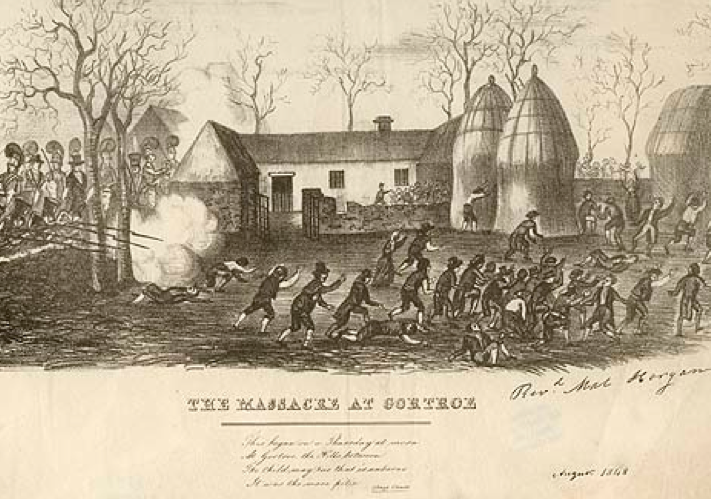
One of the worst incidents of the Tithe war took place on 18 June 1831 in Newtownbarry in Co.Wexford. There the local Anglican rector, supported by his bishop, insisted on the seizure of the livestock of farmers who had refused to pay the tax. At the auction of the distrained cattle some of the beasts got loose and when their owners attempted to reclaim them they were fired on by the yeomanry, a local Protestant militia. They refused to cease firing even when ordered to do so. When the shooting finally stopped eighteen people had been killed.

The violence was, however, not entirely one-sided. In December of 1831 a force of 38 armed constables and a process server delivering summonses to tithe defaulters was set upon by local people in Carrigshock, Co.Kilkenny. An attempt was made to force the process server, Edmund Butler, to eat the summonses. He was hit by a rock from the crowd and the police were then attacked by a hail of missiles. Thirteen of them, as well as Butler, were stoned to death, or killed with pitchforks.

The Tithe War finally ended with a compromise in 1838. The much-loathed tax would no longer be paid by Roman Catholic tenants, but by their landlords, most of whom, outside of Ulster, were members of the Church of Ireland. It was, however, mostly a fudge, as the landlords simply passed the payment on to their tenants in higher rents.

The killing of eighteen members of the community of Newtownbarry, Co.Wexford, took place 182 years ago, on this day.

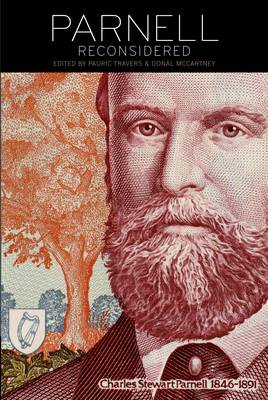
‘Parnell Reconsidered’ – Pauric Travers and Donal McCartney – published by UCD press

Image

Each year at the Parnell Summer school (and the Spring Day) deals with a current topic of interest – in recent years the Irish media and education in Ireland have been considered. But space is also left for one or two papers annually devoted to further investigations of Parnell, Parnellism or of the period when ‘The Uncrowned King of Ireland’ was in his pomp. A number of those papers has now been collected by Professor Pauric Travers of St.Patrick’s, Drumcondra and Professor Donal McCartney (professor emeritus UCD) in a new volume Parnell Reconsidered and published by UCD Press.

In the words of the UCD Press website:

‘Among the questions reconsidered are what Parnell understood by Home Rule; his attitude to separatism and his position in the nationalist spectrum; his extraordinary relationship with Gladstone; the context and significance of his famous ne plus ultra speech delivered at Cork in January 1885 and his defiant manifesto ‘To the Irish people’, issued after the O’Shea divorce scandal; and the role of the United Ireland newspaper in his career and his sometimes troubled relationship with the Press generally. New and revealing perspectives are offered on Parnell’s attitude to religion; the impact of scandal on his career and reputation; the telling of national myth and the challenge to male authority presented by Anna Parnell and the Ladies Land League; the role of Paris in Parnell family history; and the part played by the drink trade in the nationalist movement and Parnell’s skilful response to conflicting demands in this area.’

The essay on the Parnellite newspaper United Ireland, entitled ‘Mr.Parnell’s rotweiler’ was written by yours truly and is a rather more pithy version of a Trinity College PhD thesis. It could also stand as an abstract of a book on the subject of William O’Brien’s newspaper that will be published by Irish Academic Press in 2014.

My thanks to Pauric and Donal for being wonderful, patient editors and to Donal for reading the damn thesis before it was submitted.

Link to UCD press website here

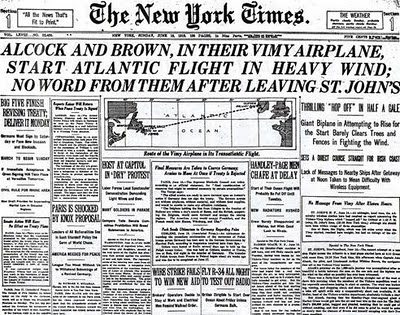
Alcock and Brown’s first transatlantic crossing – On this day, 14 June 1919.

Alcock_and_brown_NYT        images-1


https://soundcloud.com/irishhistory/on-this-day-14-june-1919


In April 1913 the Daily Mail offered the substantial prize of £10,000 to ‘the aviator who shall first cross the Atlantic in an aeroplane in flight from any point in the United States of America, Canada or Newfoundland to any point in Great Britain or Ireland’.

At the time aerial flight was in its infancy and thanks to the intervention of the Great War there were no takers until well after the 1918 armistice. During the conflict two British prisoners of war, John Alcock from Manchester and Arthur Whitten Brown born in Glasgow but also a Mancunian, had plenty of time to think about that £10,000 and what they might do with it.  Alcock had come to grief in an air raid over Turkey, Brown was a guest of the Kaiser after having been shot down over Germany.

Both men became involved with the Vickers corporation in the post war competition to be the first to make a non-stop transatlantic flight. Alcock was taken on first, as pilot, Brown was then added to the crew as navigator.  Their main rival was a team from the Handley Page company. The Vickers crew adapted a Vimy twin-engined bomber for the race, replacing the bomb bays with additional gasoline tanks. They carried nearly 900 gallons of aviation fuel.

Alcock and Brown took off from Lester’s Field, Newfoundland at 1.45pm on 14 June. They flew at between sea level and 12,000 feet, depending on weather conditions. Brown’s navigational instincts were vital for their survival as their airspeed indicator malfunctioned early on and he had to estimate the distances being covered every hour in order to avoid flying miles off course.

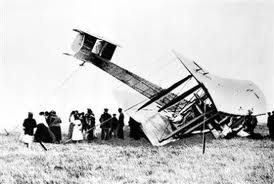
They made landfall after less than sixteen hours in the air, spotting what they thought was a green field near Clifden in County Galway. It turned out to be bog. Both men emerged unscathed from the experience, having covered more than 3000 kilometres in an average speed of 185 kph.  One of the first locals to greet them was reporter Tom Kenny owner of the Connaught Tribune, who grabbed an  interview before the Daily Mail correspondent could reach Derrygimlagh bog. The scoop went worldwide. Kenny’s son Des later established the world famous Kenny’s Bookshop in Galway.  News of the successful flight was relayed from the Marconi transatlantic wireless station just a few hundred yards from where Alcock and Brown had made landfall.

The pilot and navigator were feted internationally. They did well to survive the hospitality of their Clifden hosts and within days they were knighted by King George V. Alcock did not live very long to enjoy his share of the fame and the prize money. He died the following December at an air show in France at the age of 27. Brown lived through World War 2 and died in 1948 at the age of 62.

They weren’t actually the first to fly the Atlantic. A fortnight beforehand the ocean had been successfully negotiated by a US navy flying boat piloted by Lt.Commander Albert Cushing Read. But that had taken 23 days and involved half a dozen stops, so it didn’t qualify for the Daily Mail prize.

Alcock and Brown set off into the unknown for a date with history and a Clifden bog 94 years ago, on this day.

images

There was a real Copper Face(d) Jack – On this day, 8 June 1739

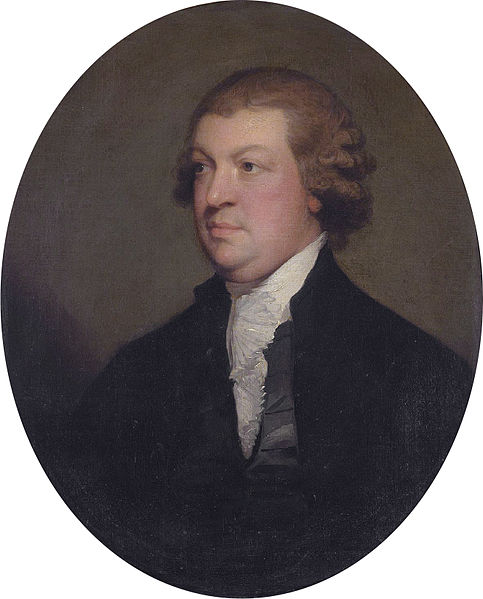
 483px-John_Scott,_1st_Earl_of_Clonmell_by_Gilbert_Stuart


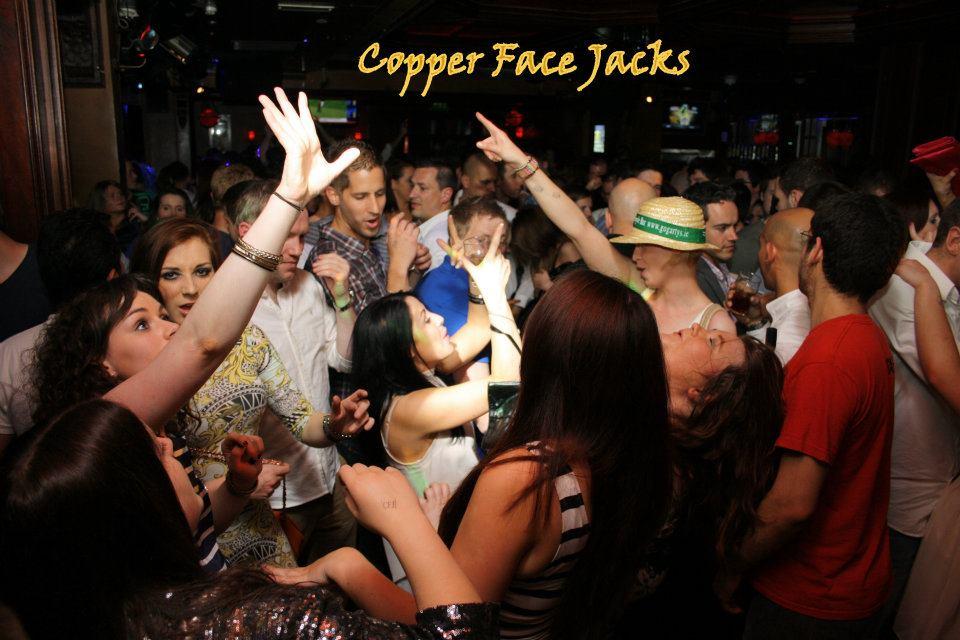
It’s the most famous night club in Ireland. By day it’s an innocuous basement in Harcourt Street, by night it’s frequented by people out to have a good time, or to get drunk, or both. The legend of Copper Face Jacks has not dimmed despite the supposed impoverishment of the entire island of Ireland since 2007. But who exactly was Copper Face Jack.

Actually he was the grammatically more accurately Copper-faced Jack, and his real name was John Scott, 1st Earl of Clonmel and Lord Earlsfort

Scott was born into a landed family in Tipperary in the mid 18th century and was educated in Kilkenny College. While there he came to the defence of a fellow pupil, Hugh Carleton, who was being tormented by another student. Carleton was the son of Francis Carleton, a wealthy merchant from Cork. When he heard of Scott’s courage and generosity Francis Carleton took the young man under his wing and paid for Scott to study at Trinity College with his son. Carleton’s support, however, turned out to be a mixed blessing because, shortly after Scott was called to the Bar in 1765 the Cork merchant prince went bankrupt. It fell to John Scott to support him to the tune of a hefty £300 a year until Hugh Carleton was in a financial position to do so.

Scott became an Irish barrister at a time when they were anything but a rarity. In the late 18th century Ireland had over 700 barristers when England and Wales had only 600. The Irish population would have been just over half that of England and Wales combined. Ireland was a litigious nation then, as now, and court cases offered cheap and respectable entertainment for the upper classes of Dublin.

Scott was highly successful at the profession and used some of the sizeable income he made in the Four Courts to get himself elected to the Irish parliament as member for Mullingar in 1769. Between 1774 and 1783 he was either Solicitor General or Attorney General for Ireland.  In 1784 he became Lord Chief Justice of the King’s Bench in Ireland. Although he was close to Henry Grattan and dismissed from his position as Attorney General for opposing the incursions of English officials on the small measure of Irish sovereignty obtained in 1782, he was not beloved of those revolutionary nationalists the United Irishmen. One of their supporter, William Todd Jones once wrote to Wolfe Tone of his ‘contempt and detestation’ of Scott.   (Tone’s letters)

Were Scott to have read the comment he might well have challenged William Todd Jones to a duel. He fought four in his lifetime, at least one over his involvement with another man’s wife, a Mrs. Cuffe. (Kelly p149) and almost fought a fifth against a political opponent for remarks made in the House of Commons in 1773. Despite his exalted legal position he even defended duelling in certain instances where there was no recourse to the law. ‘In cases of this complexion’, he observed, ‘the courts will never interfere.’

By the 1790s Scott, by now the Earl of Clonmel, had an income of about £20,000 per annum from a variety of different sources. He had at least one thing in common with the venue that is called after him, he enjoyed life to the full. As his income expanded so did his waistline. His diary suggests that he realized the need to lead a more modest lifestyle but he never quite got around to it. The increasingly corpulent Clonmel finally succumbed to his own excesses at the early age of 57. In so doing he missed out on the United Irishmen’s rebellion and the Act of Union, either of which might have killed him anyway.

Some authorities suggest that his nickname came about because his incessant consumption of alcoholic beverages left him red-faced, others insist that he had a complexion that was unusually tanned for his day. Either way he was stuck with the unflattering nickname ‘Copper-faced Jack’, which might have been expected to vanish with his passing. Given his elevated status in 18th century Ireland he would be unlikely to be unduly flattered that his nickname has lived on in the way that it has.

John Scott, aka the Earl of Clonmel, aka Copper-faced Jack, was born 274 years ago, on this day.

03922dd6d1c6bbad65525060e1ecc9c0