The story of the prison break to end all prison breaks
2026 marks the 150th anniversary of one of the most spectacular escapades in modern Irish history, the Catalpa rescue of 1876. This was the prison break to end all prison breaks, a long-odds plan to rescue six Fenian prisoners still mouldering in the remote and supposedly impregnable Fremantle prison on the distant west coast of Australia almost a decade after the 1867 Fenian rebellion. In a well-planned and precise operation (which still went badly wrong at times) the Irish American nationalist leader, John Devoy, and members of his organisation Clan na Gael, purchased and fitted out an American barque, The Catalpa; recruited a friendly captain, the courageous George Anthony; despatched agents to Western Australia months before the ‘snatch’ and then successfully engineered the escape of the six Irish prisoners. Not, however, before being forced to confront the might of the British colonial authorities on the high seas and overcoming dozens of obstacles and inevitable mishaps. If you made it up no one would believe it!
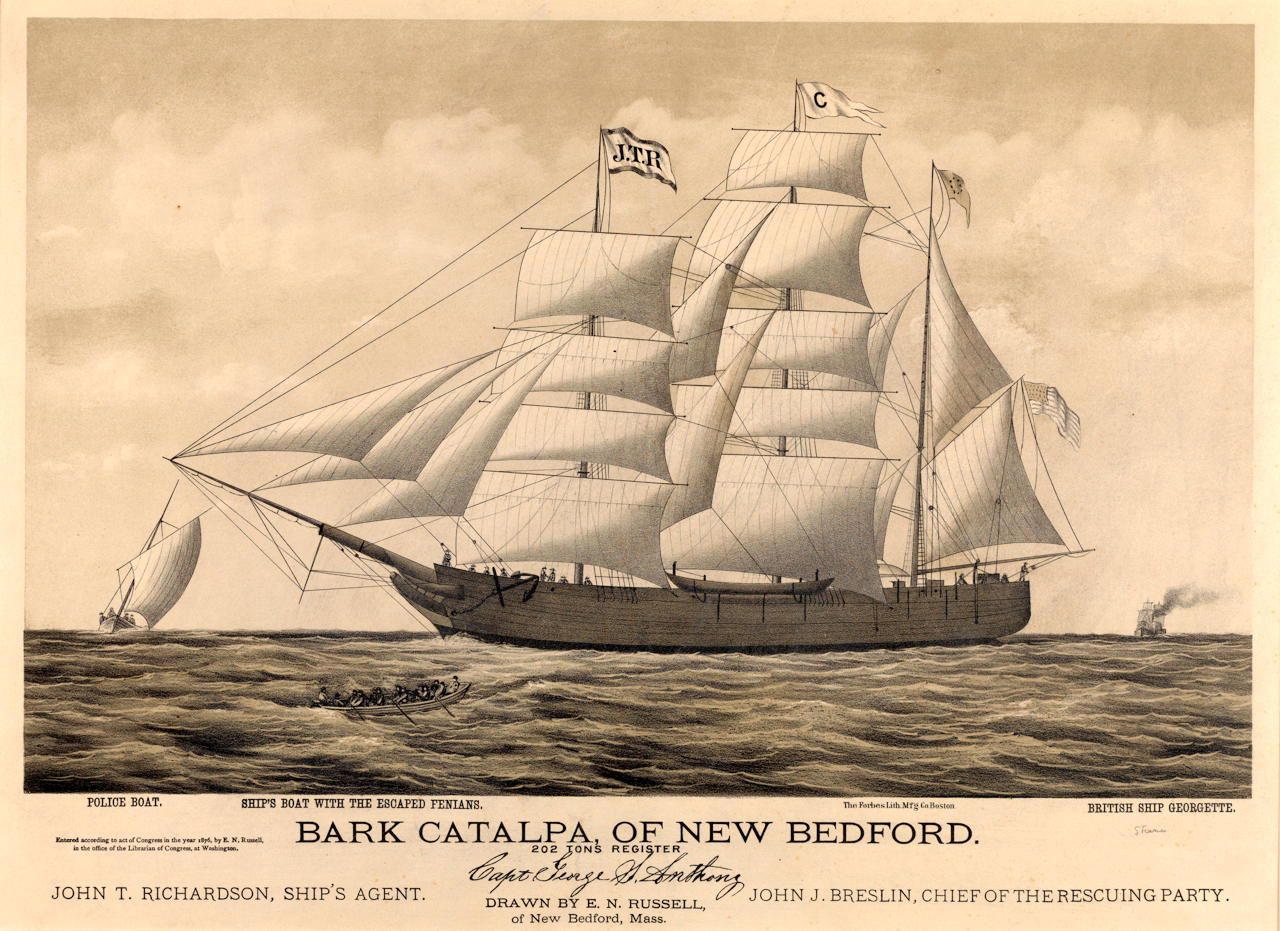
#1 The Catalpa Rescue: ‘A voice from the tomb’
If ever a man was deserving of whatever is the Irish equivalent of the description ‘righteous gentile’ it has to be Captain George Anthony, a man that few Irish people have ever heard of and one OF the least likely collaborators with a noteworthy Irish nationalist project. He was well compensated for his efforts on behalf of the Fenian movement, but he earned every dollar, and it was dollars in which he was paid. More on George Anthony later.
One thing you can say for the Fenians is that, while they may not have been top notch organisers of rebellions—which was really their raison d’etre—think the 1867 Rebellion which the Irish Constabulary (before they became ‘Royal’) were able to handle on their own, and the 1916 Rising, a military disaster that paid off in the longer term because of the knuckle-headedness of the British response.
But boy could those Fenians organise a stonking prison break.
They got James Stephens, their leader (‘Head Centre’) out of Richmond Gaol in Dublin in 1865 when he’d barely had time to unpack his toothbrush. Then in 1919 the IRB top dog, one Michael Collins, engineered the escape of Eamon de Valera from Lincoln Prison. But the greatest Fenian breakout of all time took place 150 years ago this week, the spectacular Catalpa rescue.
It all began with a letter.
This was a poignant missive sent by a jailed Fenian, James Wilson, to the New York Herald journalist and Clan na Gael leader, John Devoy, in New York. It began with the ominous words ‘Dear Friend, remember this is a voice from the tomb’.
Let’s backtrack. Who was James Wilson? Who was John Devoy? Where was ‘the tomb’?
Devoy and Wilson were both former members of the Irish Republican Brotherhood. They were also connected in that Devoy’s job within the IRB had been to recruit Irish soldiers in the British Army into the Fenian movement. Wilson, although not sworn in by Devoy himself, was one of sixteen British Army veterans who participated in the 1867 Rising (among them was the great Irish-American journalist John Boyle O’Reilly, later editor of The Boston Pilot) who were captured, court-martialled and sentenced to death. The sentences were later commuted to transportation. Within four years of the rebellion most of the Fenian veterans jailed—or transported to Australia—the so-called ‘civilian prisoners’, had been released or amnestied. These included Devoy himself who was exiled to the USA on board the ship the Cuba, becoming one of the ‘Cuba Five’. The fiery and erratic Jeremiah O’Donovan Rossa was one of the other members of the ‘Cuba Five’. They were obliged to remain in exile until their original prison terms would have naturally expired.
However, an exception was made by the British government of the ‘military prisoners’, the small cohort of former British soldiers who had been transported on board the last transport ship, the Hougoumont, sent from Britain to Western Australia (by then the only Australian province still taking prisoners from Britain). They had been given life sentences and they were going to die of old age in one of the most fearsome gaols in Australia, Fremantle Prison.
Fremantle might just as well have been Alcatraz, the famous Federal prison in San Francisco Bay from which there were no confirmed escapes[*]. Its impregnability was helped by the fact that it was surrounded by the frigid waters of the Bay. Fremantle was on the western Australian coast, so escape westwards was circumscribed by thousands of miles of empty sea and an equal number of hungry sharks. To the east was the great Australian bush in which only the indigenous Aboriginals had the nous and the guile to survive for more than a couple of days.
In 1874, writing on his own behalf and on behalf of five other ‘military’ prisoners with no hope of release from Fremantle, James Wilson managed to smuggle a twelve plage letter out of the prison. It struck an emotional chord with Devoy. The letter went as follows:
Dear friend,
Remember this is a voice from the tomb. For is not this a living tomb? In the tomb it is only a man’s body that is good for worms, but in the living tomb the canker worm of care enters the very soul. Think that we have been nearly nine years in this living tomb since our first arrest and that it is impossible for mind or body to withstand the continual strain that is upon them. One or the other must give way. It is in this sad strait that I now, in the name of my comrades and myself, ask you to aid us in the manner pointed out… We ask you to aid us with your tongue and pen, with your brain and intellect, with your ability and influence, and God will bless your efforts, and we will repay you with all the gratitude of our natures… our faith in you is unbound. We think if you forsake us, then we are friendless indeed. —James Wilson
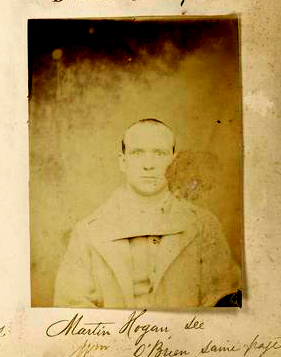
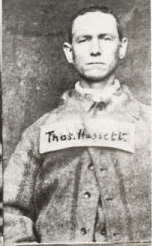
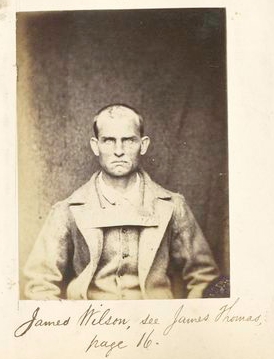
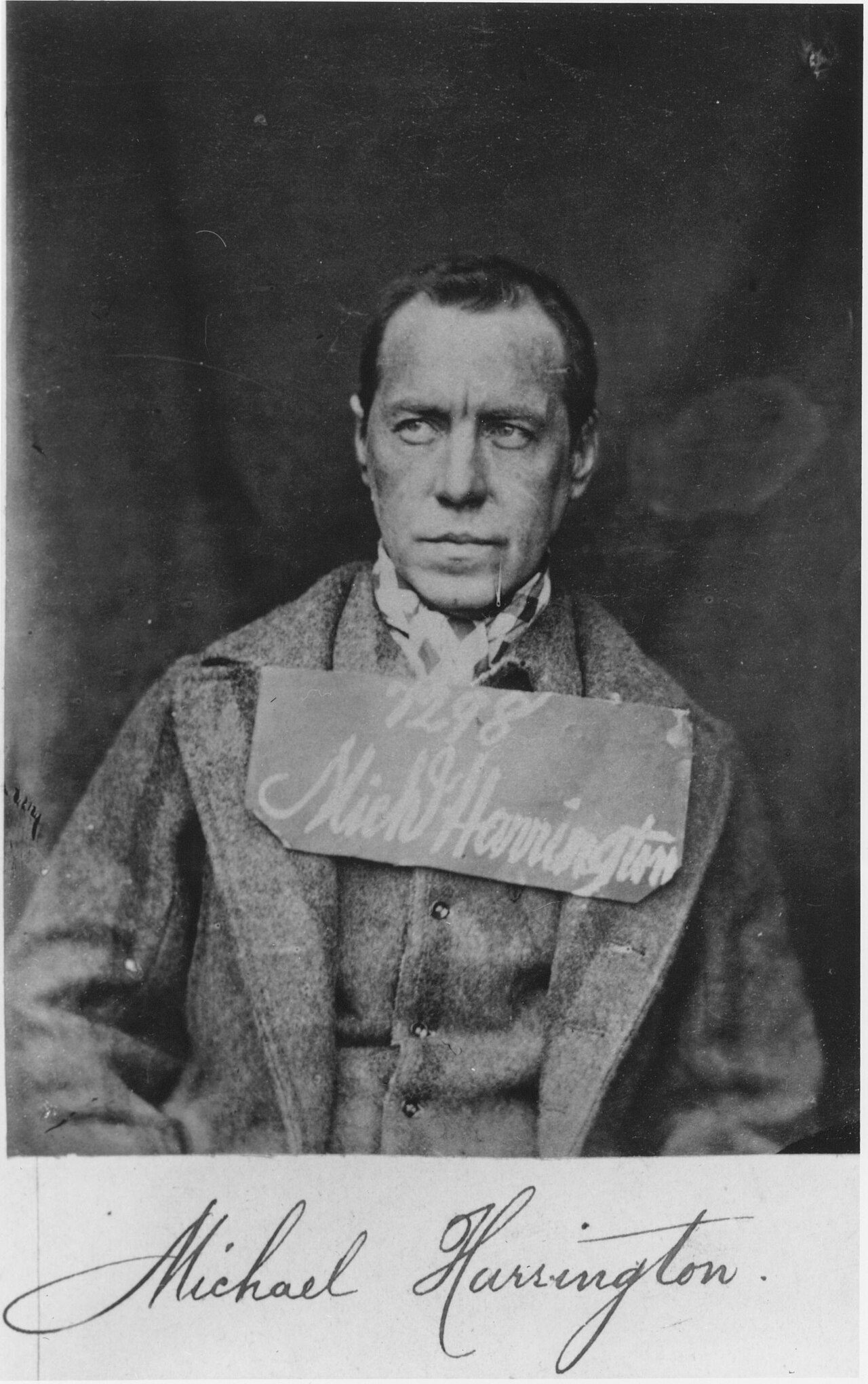
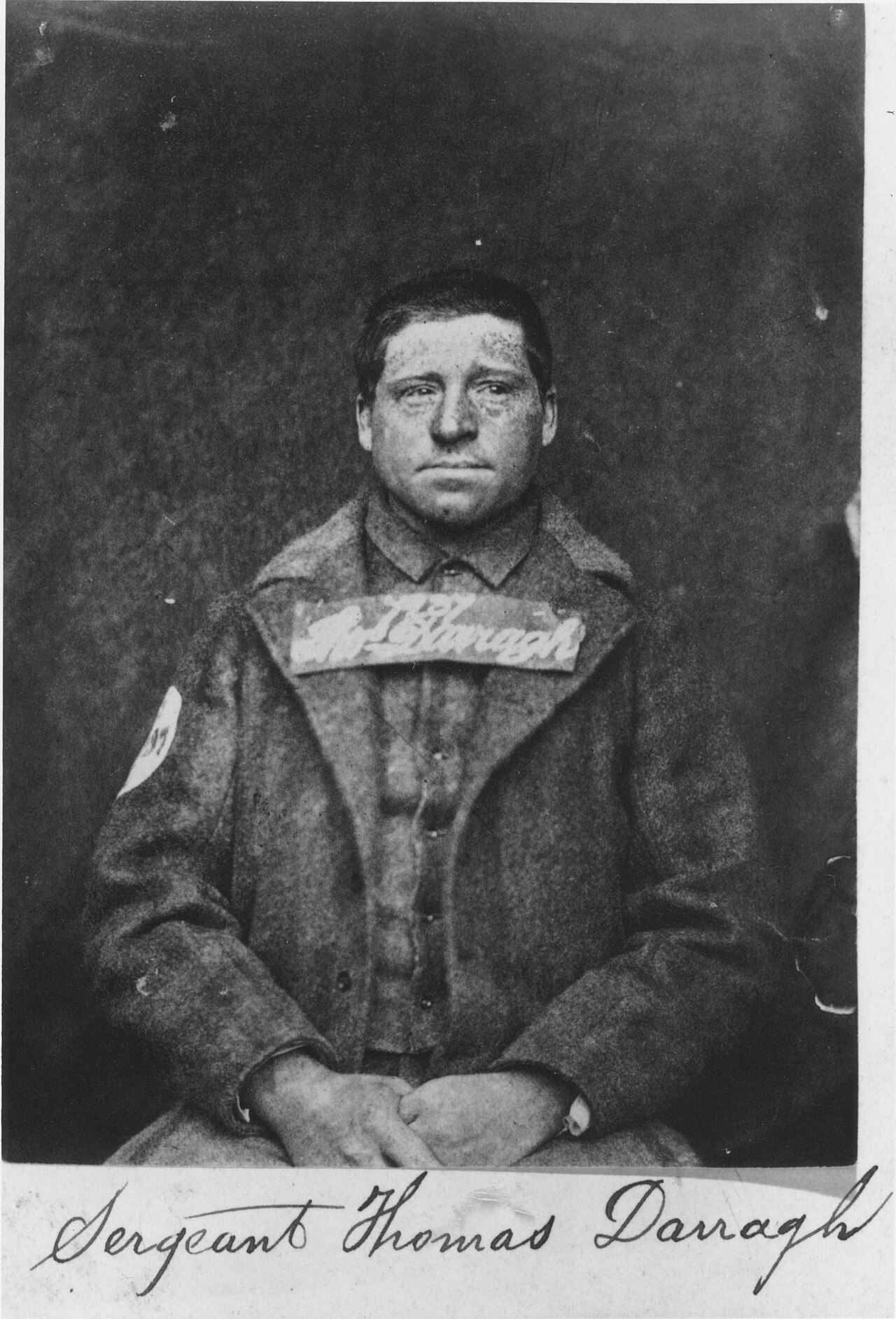
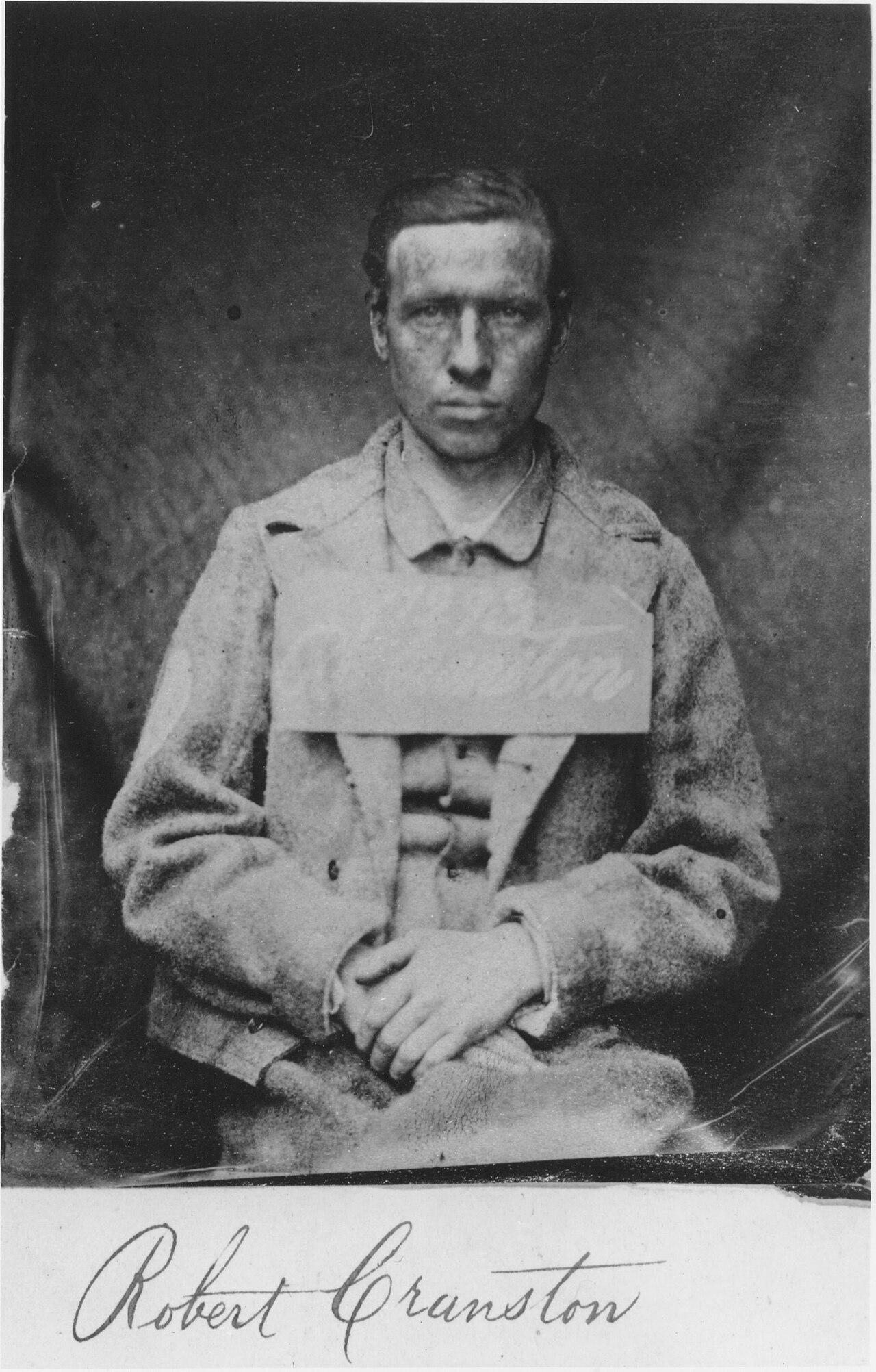
The Fremantle Six
James Wilson was one of six Fenians still mouldering in Fremantle Jail with little or no prospect of amnesty. The others were Thomas Darragh, Martin Hogan, Michael Harrington, Thomas Hassett, and Robert Cranston.[†] Devoy was conscious of the fact that the awful fate of the ‘military prisoners’ was, in part, attributable to his own recruiting efforts in the 1860s. The question was what, if anything, was he going to do about it? He could use his journalistic platform, and his prominence in the Irish-American republican organisation Clan na Gael, to start a concerted propaganda campaign aimed at the USA in an attempt to embarrass the British government into releasing the ‘military’ prisoners. Or, he could formulate and execute a daring plan that would secure the release of the prisoners from under the noses of the British colonial authorities. Devoy chose the latter option. James Wilson didn’t know it, but his letter had struck home.
Help was on the way.
#2 The Catalpa Rescue: The Plan
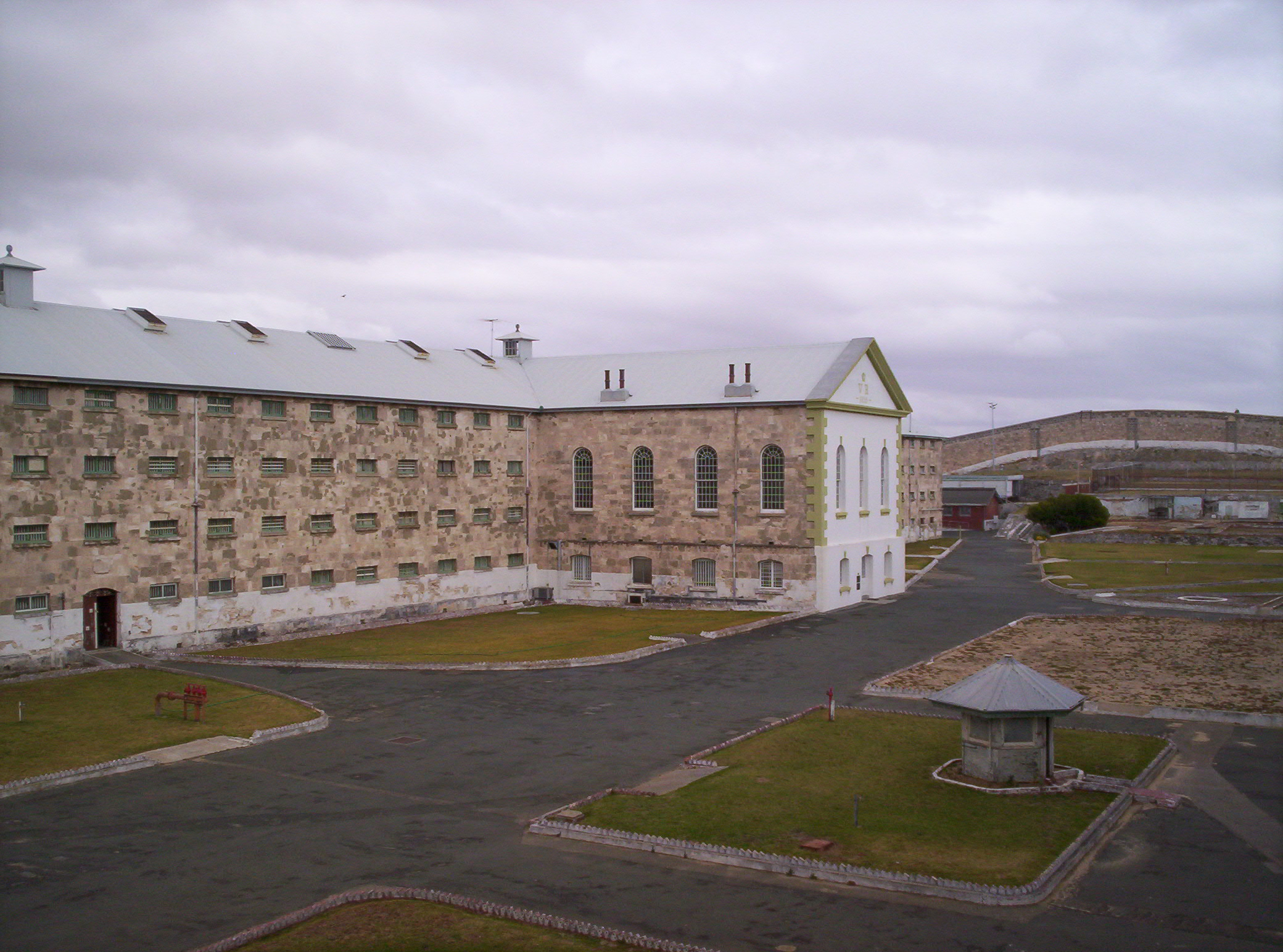
Fremantle Prison
When it came to extracting six Irish political prisoners from a jail 10,000 miles away in remote Western Australia John Devoy began with a card up his sleeve, Meathman John Boyle O’Reilly. It wasn’t an ace, more like two threes, but it was better than nothing. Frank Lee Morris and the Anglin Brothers may or may not have escaped successfully from Alcatraz in 1960, but John Boyle O’Reilly definitely DID escape from Western Australia in 1869. He had arrived there on board the last convict ship, the Hougoumont the previous year. With the help of an Irish priest, Fr Patrick McCabe, O’Reilly managed to get away on board an American whaler, The Gazelle. If it had worked once it could work again. Devoy had consulted among the leadership of the highly secretive (but legal in the USA) Clan na Gael where a plan evolved to send a team of Fenians to Fremantle to blast their way into the jail and free the prisoners. A conversation with John Boyle O’Reilly persuaded Devoy that this was a very bad idea. O’Reilly had spent most of his time in Western Australia in the coastal village of Bunbury, about 100 miles south of Fremantle, but he had also been a prisoner in the forbidding jail. He assured Devoy that it would take an army, not a small Fenian active service unit, to get anywhere near the prisoners.
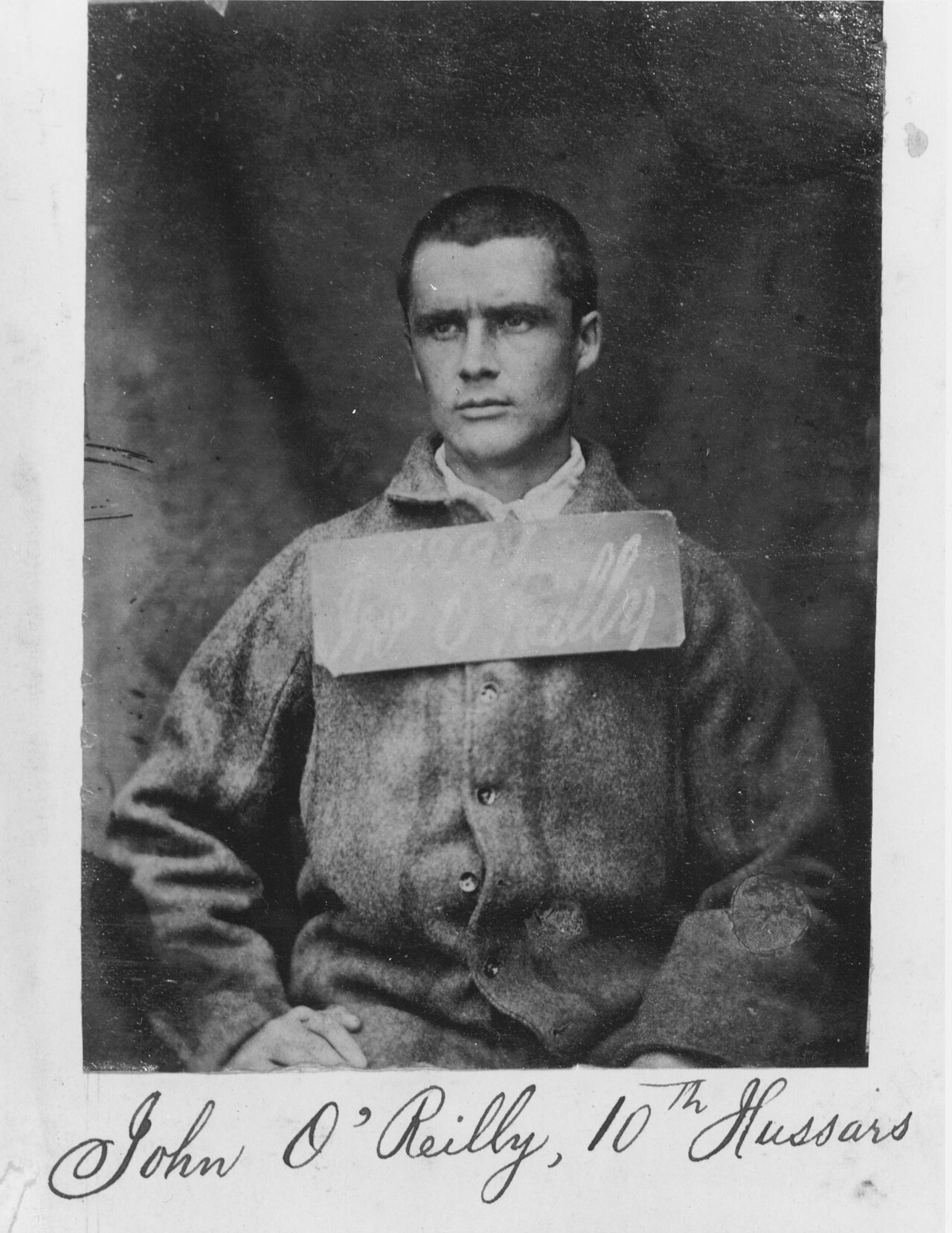
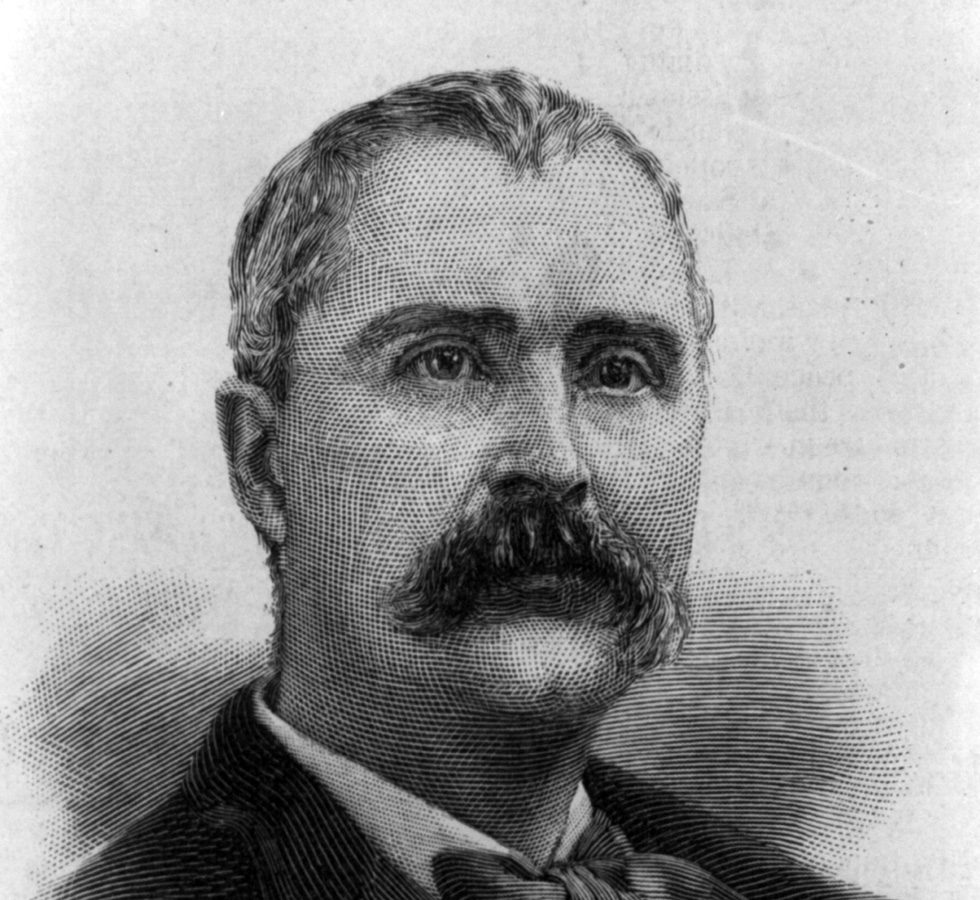
John Boyle O’Reilly – in prison garb and in later life
With the advice of O’Reilly, and another former Fenian prisoner in Western Australia, Thomas McCarthy Fennell, and with the approval of a wide circle of influence within the Clan, Devoy set about developing a plan and raising the huge sum of money required to carry it out. In so doing he risked a repeat of the debacle of the Fenian Rising of 1867. The IRB had been heavily infiltrated by informers and spies (Pierce Nagle and J.J. Corydon being the two who probably did the most damage) who gelded its effectiveness as a revolutionary force. Devoy was fortunate that the numerous British informers within the Clan[‡] (there were many and some feature in my next book The Plot Against Ireland (Head of Zeus/Bloomsbury) coming out in August) did not get wind of his plans and reveal them to their British Consular overseers in New York or Philadelphia. The reason why Devoy took the chance of widening the inner circle in the first place was because he knew he needed to raise hundreds of dollars to get the rescue attempt off the ground.
With John Boyle O’Reilly’s escape in mind Devoy and McCarthy Fennell settled on a whaling ship for the task of springing Wilson and his compatriots. A whaler would not be noticed in transit to Australia from the USA and should not attract undue suspicion when it reached Fremantle. He was also bargaining on the complacency of the British authorities in the town. Western Australia in general and Fremantle prison in particular, they believed, were fortresses from which there was no escape. O’Reilly’s flit had been an aberration. He had, after all, broken a gentleman’s agreement (called a ‘ticket of leave’) which granted him certain travel privileges based on offering his solemn word that he would not attempt to escape. As O’Reilly was no English gentleman and saw himself as a political prisoner he had no compunction in breaking his ‘bond’. From the safety of Boston he was thoroughly content with his status as a pariah from decent English society.
At Devoy’s instigation—after a fund-raising campaign that involved contributions ranging from a few cents to the mortgaging of a home—he, McCarthy and O’Reilly secured a barque, a former whaling ship The Catalpa, in the port of New Bedford Massachusetts for the sum of $5,250 (around $160,000 today). Because in more recent days the ship had been used for trading with the West Indies it had to be restored, at additional cost, to function again as a whaler.
Buying a ship was one thing. Securing a complaisant and resourceful captain was something else again.
Devoy was fortunate. He was pointed in the direction of George Smith Anthony.
#3 The Catalpa Rescue: Captain George Smith Anthony, ‘righteous Republican’
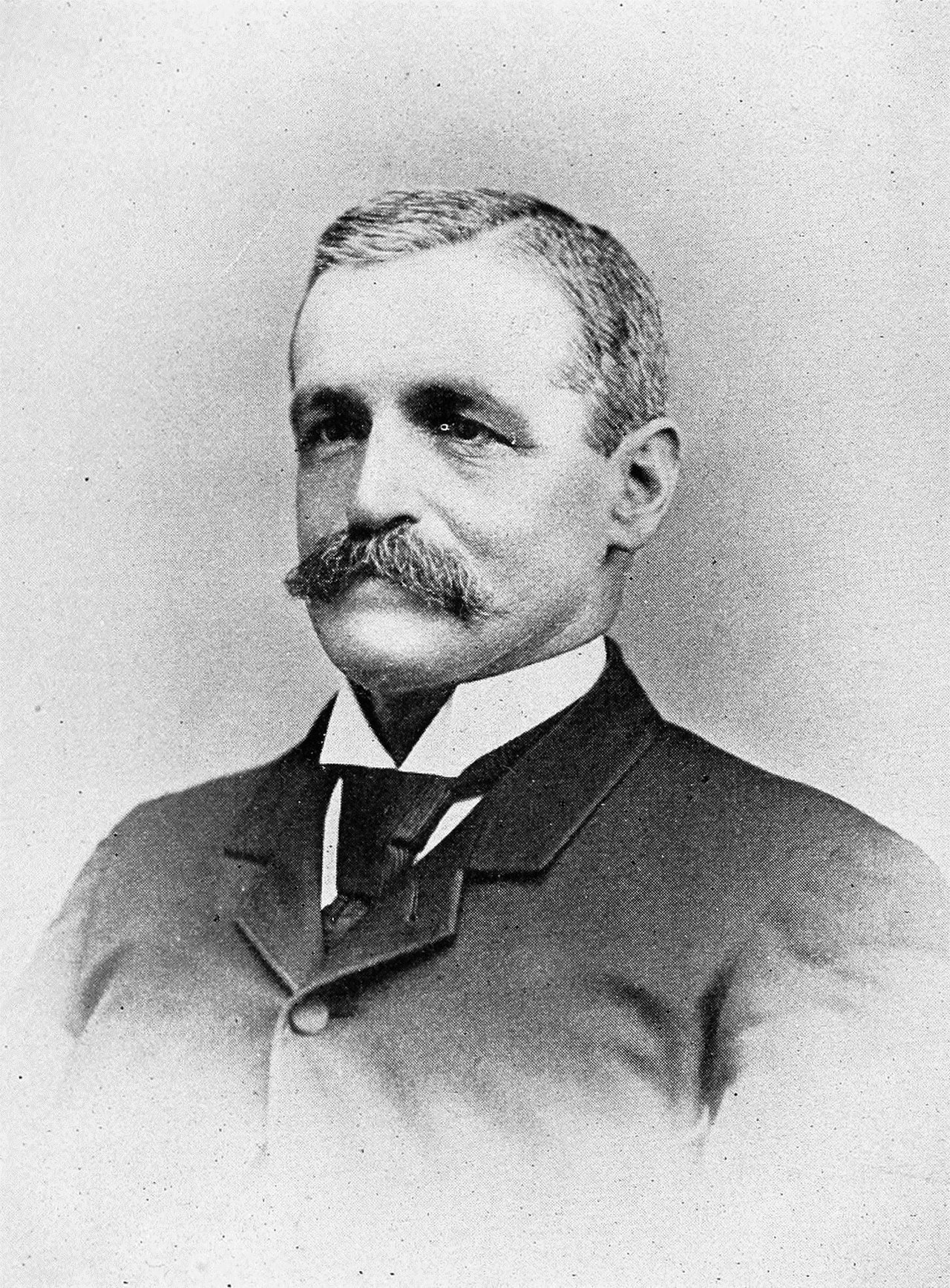
Captain George Smith Anthony
When John Devoy began to ask around New Bedford about recruiting a captain for his newly acquired whaling ship, The Catalpa, it was fortunate in the extreme that he was directed towards George Anthony. He was pointed in Anthony’s direction by the senior New Bedford policeman Henry C. Hathaway, a friend of John Boyle O’Reilly. Hathaway recommended that Devoy approach Anthony, a local sailor. To begin with Anthony might not have seemed to Devoy like an ideal fit. He had never risen above the rank of first mate during a long career—now behind him—at sea. He also had not a drop of Irish blood and, on the face of it, as a Yankee Protestant, was unlikely to offer the sort of passionate commitment that might be required in a cause with which he had no emotional connection.
However, working in Devoy’s favour was the fact that Anthony was already disillusioned with life and work on land and was hankering for a return to his old maritime haunts. He was also the younger brother of an American Civil War hero, a sailor who had played a major role in preventing the incursions of British privateers into Confederate ports in the 1860s, and he was a cousin of the celebrated American feminist, suffragist and abolitionist Susan B. Anthony. Accused of attempting to destroy the institution of marriage in her own lifetime Susan B. Anthony, seven decades after her death, became the first female citizen to be depicted on U.S. coinage when her portrait appeared on the 1979 dollar coin.
Whatever he might have thought of campaigning cousin Susan B, George Anthony had vague ambitions to emulate his older brother and had no high opinion of Her Majesty’s Navy. Devoy was entirely honest with his quarry about what might be required of him and convinced the New Bedforfd sailor that he was not being asked to spring half a dozen common criminals, but Irishmen who, like his older brother, had fought against British imperialism and were now paying an excessively high price. The project appealed to Anthony’s more radical instincts (Cousin Susan would have approved), besides, he was being paid for his services and for the danger he would inevitably face, and he was getting far too twitchy on land anyway. He signed on for the duration and set about recruiting a crew of experienced whalers, none of whom would be in on the actual purpose of the mission. Only a ship’s carpenter, Clan na Gael member Denis Duggan was privy to the secret. Not even Anthony’s first mate, the reliable and highly competent Samuel Smith was trusted with the information.
The Catalpa was repurposed from its former career as a cargo ship and was ready to set sail in April 1875. In order to keep the crew in the dark, and to raise some money to pay for the real mission, the ship was expected to engage in whaling before it arrived off the western coast of Australia.
It was not, to put it mildly, all plain sailing.
The first bit of bad luck can probably be ascribed to Anthony himself. He was late in spotting that the Catalpa’s marine chronometer was faulty. He was going to have to navigate without the aid of this vital instrument. By the time the barque reached the Azores, four months into the voyage, and offloaded more than 200 barrels of sperm whale blubber, Anthony suffered a personnel crisis. More than half the crew deserted. This was not an altogether unusual occurrence at the time, these were, after all, merchant not naval seamen and the Azores was generously populated with sailors (some of whom had abandoned other merchantmen) prepared to sign on for the remainder of the journey, to round the Cape of Good Hope and sail for the Australian continent. The third strike against Captain Anthony was a factor over which he had no control, the weather. Adverse conditions brought lengthy delays and the barque did not drop anchor off Bunbury in Western Australia until the end of March, three months later than expected.
Anthony was aware, however, that despite all the vicissitudes he had already faced, his problems were likely to be just beginning.
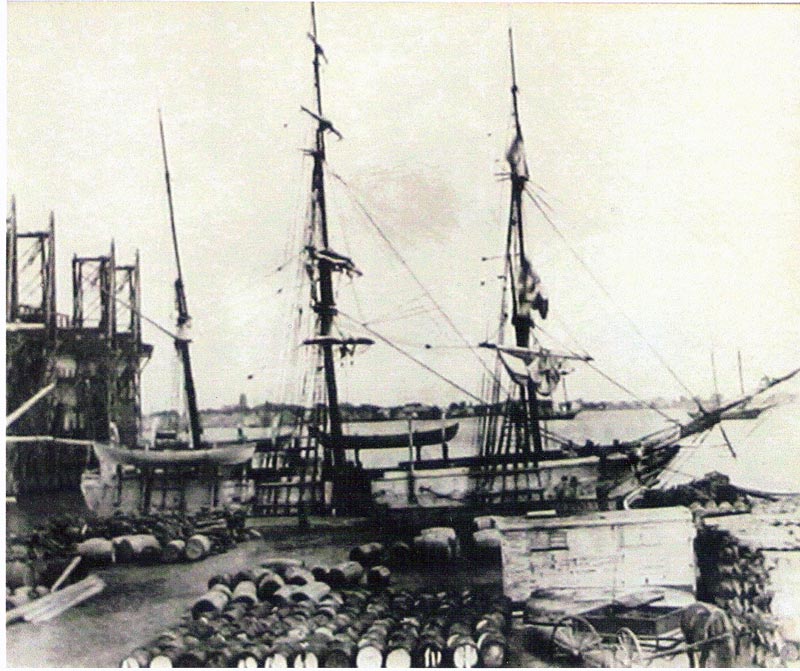
The Catalpa in dock in New Bedford
#4 The Catalpa Rescue: The Inside Men
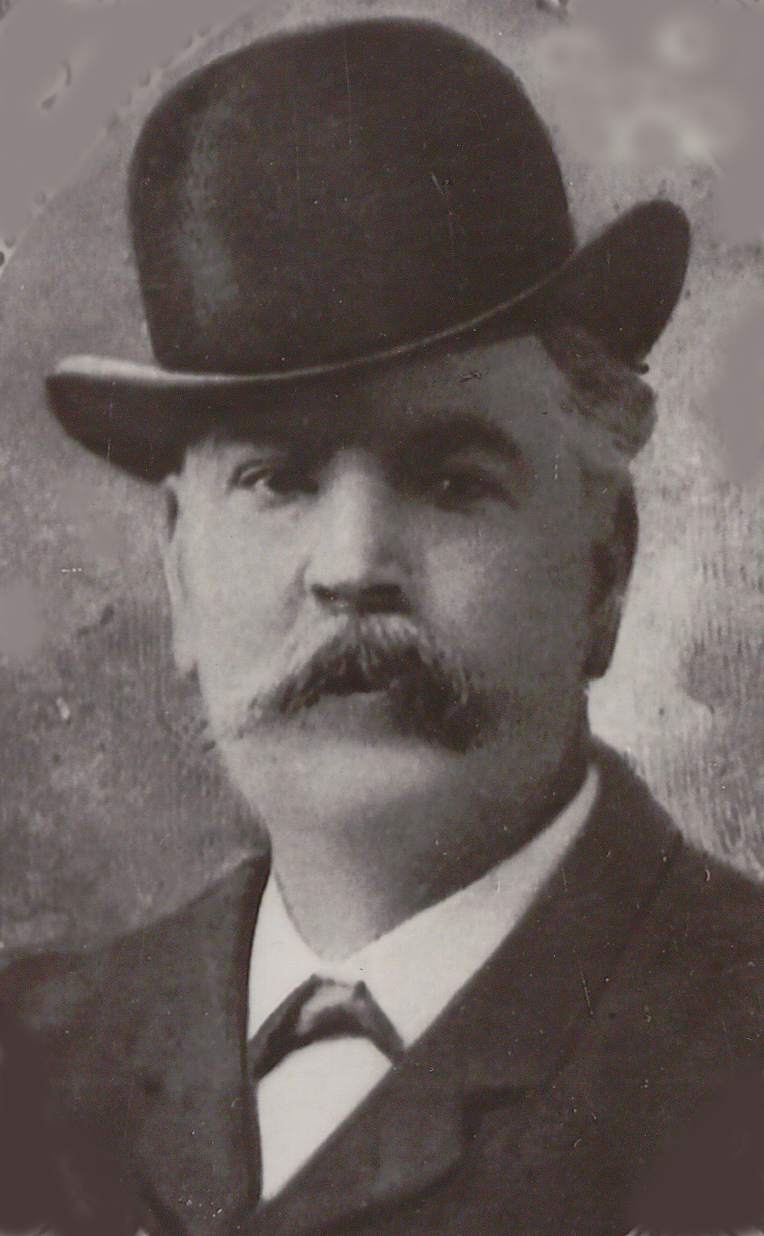
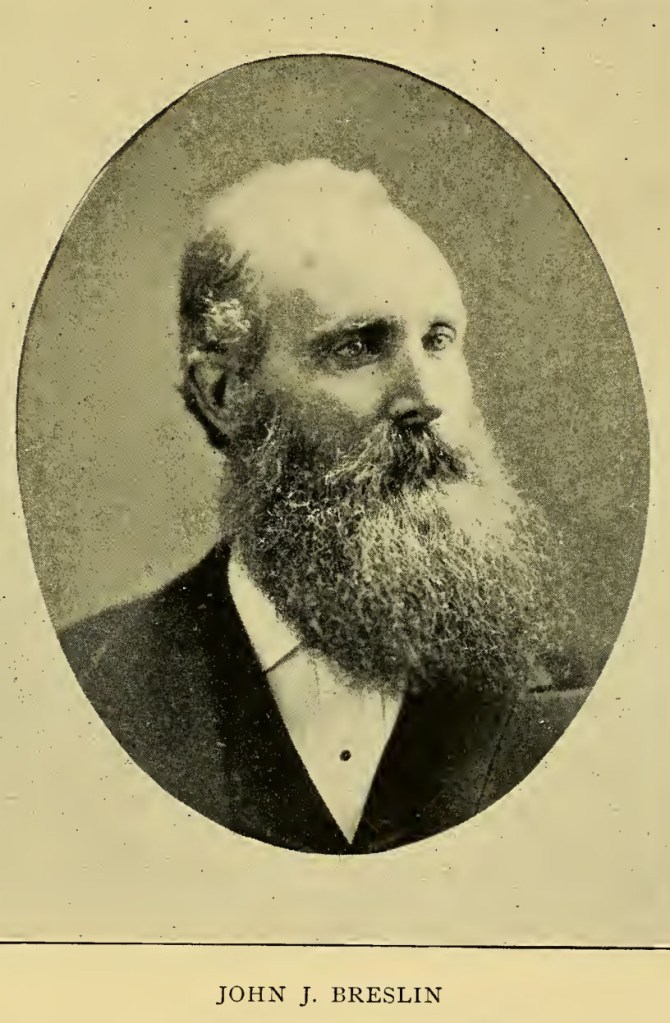
THOMAS DESMOND (‘JOHNSON’) and JOHN J. BRESLIN (‘JAMES COLLINS’)
While the Catalpa was at sea, the second leg of the operation to rescue the Fremantle Six was in process. This involved two Irish American agents of the Clan, Thomas Desmond of San Franciso and John J. Breslin of Boston.
John Devoy and J.J. Breslin had ‘previous’. Back in 1865 both had been involved in the successful plan to spring IRB leader James Stephens from Richmond Prison. Whether that was a profitable exercise, given the conspiratorial Stephens’s all round haplessness, is a discussion for another day. But Breslin’s resourcefulness had impressed Devoy, capabilities that he was to display over and over again in the months that followed as the original plans threatened to go seriously awry and Breslin was required to improvise.
The two men sailed together from San Francisco in September 1875 on the mail steamer Cyphranes, arriving in November 1875. Well, not quite travelled together! Breslin was in first class, Desmond was in third class. Why the segregation? It was designed to chime with their respective cover stories. Breslin was posing as an American millionaire visiting Western Australia to seek out business investment opportunities. Desmond was playing the part of a humble wheelwright/carriage maker, hence his journey in steerage. Desmond, who became ‘Johnson’ in Australia, needed access to horses and carriages. Breslin, masquerading as the ostentatiously wealthy ‘James Collins’, and lodging in the appropriately named Emerald Isle Hotel in Fremantle, just needed the kind of access that the whiff of thousands of American dollars might offer. He played his part superbly, becoming acquainted with the Governor of Western Australia himself, William Cleaver Robinson and even being offered a tour of Fremantle Jail by that institution’s superintendent on the basis that Mr. Collins might be employing prison labour when he finally parted with his money. This ‘inspection’ served as a warning to him that any attempt to break into the prison to free the ‘Six’ was doomed to failure. They could only be rescued if all of them were on work details outside the prison. He also identified a local man (a former inmate of the prison, the Fenian William Foley) who had access to the jail and who could open lines of communication with James Wilson and the others. Meanwhile Desmond ensured that he could secure transport on the day of the break and he also recruited several Irishmen living locally to cut the telegraph wires to Perth on the anointed day.
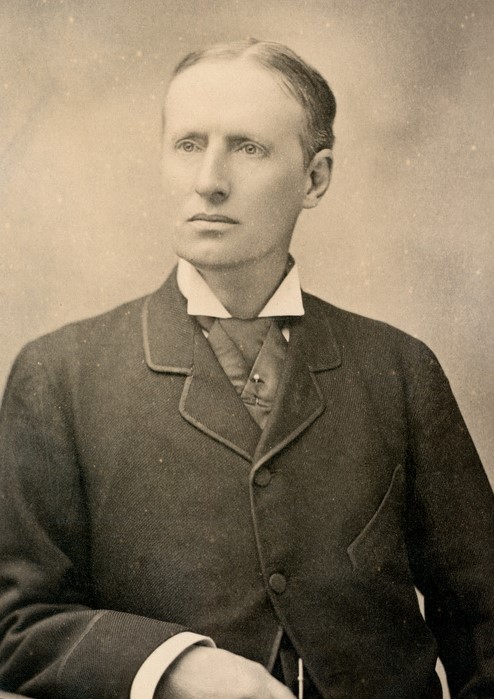
William Cleaver Robinson, Governor of Western Australia
However, no extreme Irish nationalist conspiracy is ever uncomplicated, and this one almost went off the rails through over-elaboration. At some point in his peregrinations around Western Australia Breslin became aware of two men who crossed his path once too often. He began to suspect that the British were wise to his mission and were tailing him. He was wrong. Eventually the two men, Denis McCarthy and John Walsh (later a founder member of the Invincibles who murdered Burke and Cavendish in Phoenix Park) managed to make contact with Breslin. It turned out that they were members of the Irish Republican Brotherhood and had been sent from Ireland to see if they could organise a prison break! As if that wasn’t enough a local Fenian, John King, was also organising his own rescue plan. Breslin was able to fold all three plans into one and recruit King, McCarthy and Walsh.
A further complication was more of a personal nature. Breslin, because of the belated arrival of the Catalpa(expected in January it did not arrive until March, seriously straining Breslin’s ‘investor’ cover story) had just a little bit too much time to kill and he spent some of it involved in an affair with a chambermaid in the Emerald Isle Hotel, Mary Tondut, who became pregnant. She gave birth to their child in Sydney in December 1876.
A little more on the two principal ‘inside men’ Desmond and Breslin.
Breslin had impressed Devoy with the coolness he displayed in the 1865 Stephens’ escape from Richmond jail-where Breslin was employed as a hospital steward. He even went back to work there after the escape, only being forced to flee to the USA a year later. He settled in Boston and became an associate of John Boyle O’Reilly after his own escape from Western Australia. O’Reilly described Breslin as being, ‘In thought and appearance eminently a gentleman; in demeanour dignified and reserved; in observance, rather distrustful, as if disappointed in his ideal man; somewhat cynical perhaps, and often stubbornly prejudiced and unjust’. So, not entirely a paragon of virtue. (Breslin’s Dictionary of Irish Biography entry is here)
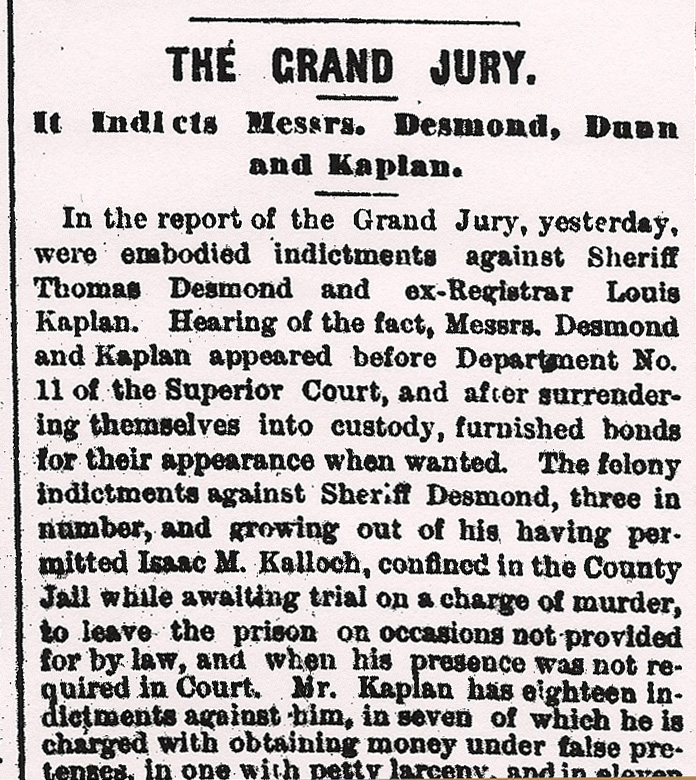
The same could be said for Thomas Desmond, with one or two knobs on. Desmond would go on to hold the office of Sheriff of San Francisco City and County for a single term from 1879-1881 under the banner of the Workingmen’s Party of California, which is not nearly as innocuous a body as it sounds. The WPC was a toxic pottage of bigotry whose leader was a fellow Corkman (Desmond was born in Cobh) Denis Kearney and whose main political platform involved the repatriation of Chinese residents from the city of San Francisco under the slogan ‘The Chinese Must Go’. Desmond subscribed to this policy and behaved accordingly while sheriff. During his tenure he was indicted three times on felony charges but avoided conviction. (Desmond’s entry in the San Francisco Sheriff’s Department website is here)
Because of his involvement in the Catalpa rescue (which did him no harm with the many Irish-born San Franciscan voters in 1879) Desmond’s grave has become an Irish American Republican shrine with a wreath-laying ceremony in Colma cemetery every year. Presumably those who take part are ignorant of Desmond’s post-Catalpa activities.
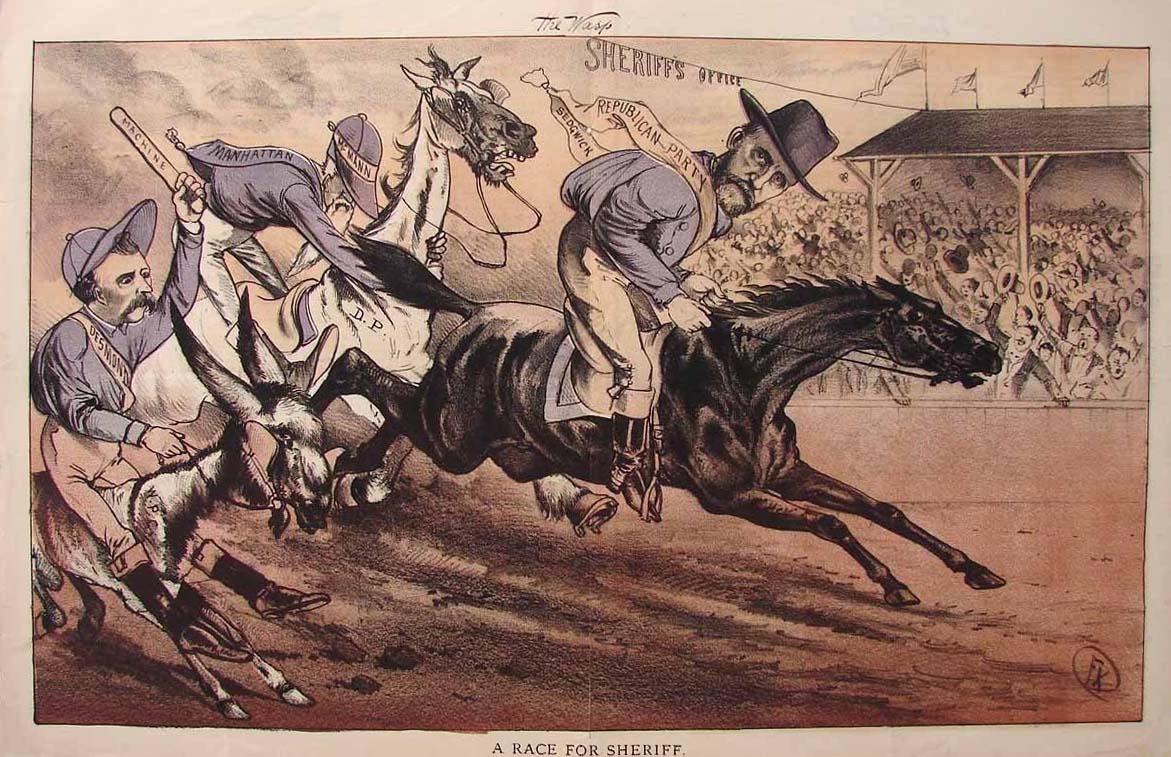
Wasp cartoon depicting Desmond losing the 1881 San Francisco Sheriff’s race.
#5 The Catalpa Rescue: The Escape
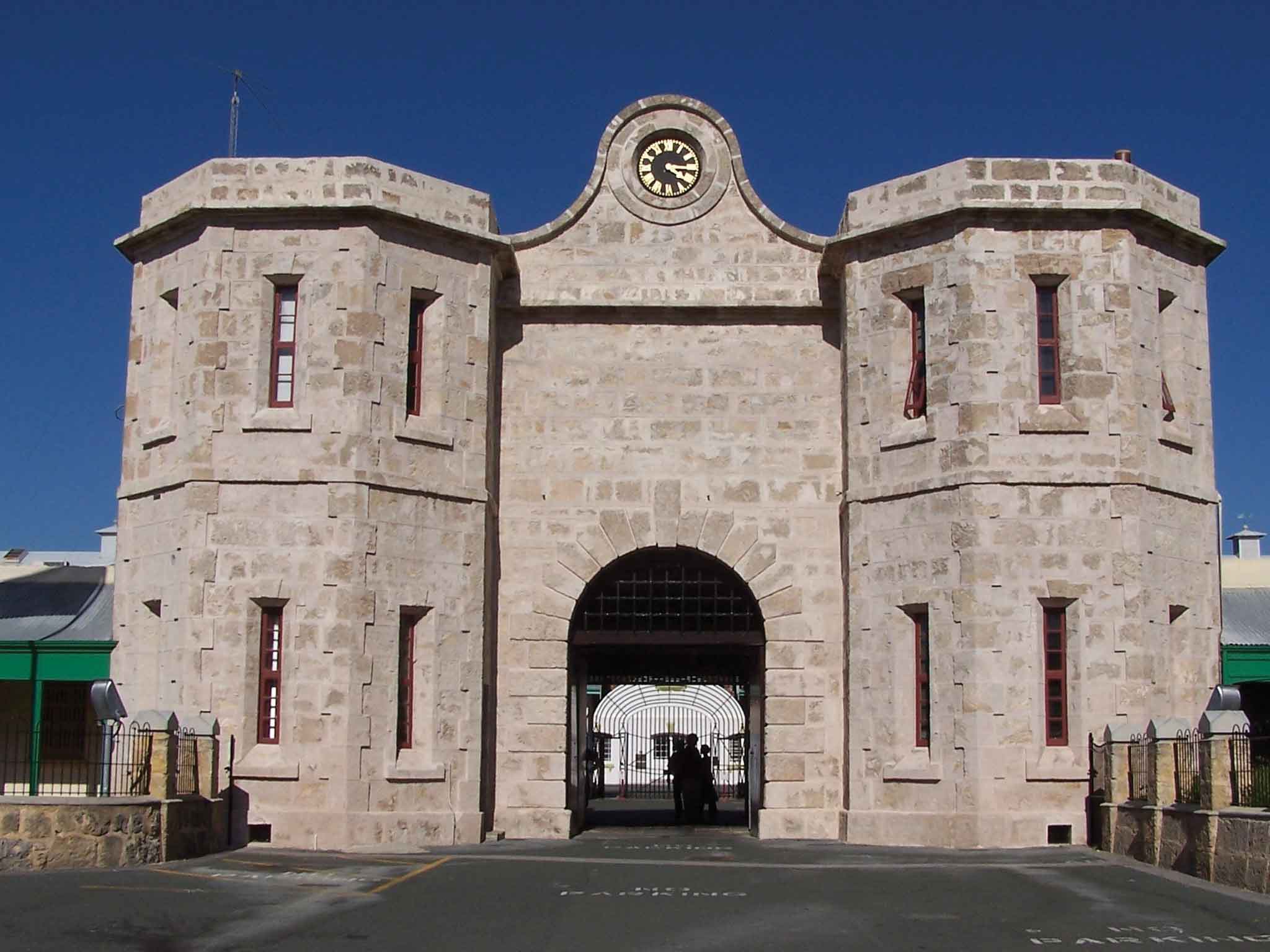
The entrance to Fremantle Prison
On 28 March 1896, months later than expected, the Catalpa finally dropped anchor off twe town on Bunbury, south of Fremantle. As soon as he became aware of the barque’s arrival Breslin met with Anthony and honed the plan for the escape. Breslin told Anthony that Rockingham Beach, twenty miles south of Fremantle, a couple of hours by buggy, was where the sailors and the rescuers would rendezvous. In a development that went beyond irony the two men travelled to Fremantle on board the local mail steamboat, the SS Georgette, with which both would become far more intimately acquainted in the days ahead. It’s even more appropriate that the journey took place on April Fool’s Day 1876. All the more so as another complication presented itself when the two men walked up the jetty to board the Georgette. This presented itself in the form of an over-enthusiastic Irish American Fenian named William Brennan.
Brennan had been obsessively anxious to be involved in the rescue and lobbied to be included among the Catalpacrew. The Clan, however, had decided that Duggan was to be the only Irish crew member. This was a precaution taken in order not to arouse British suspicions. Unwilling to take no for an answer, Brennan decided to stow away on board the ship before it left New Bedford. He wasn’t much of a stowaway, however, because he literally missed the boat. He arrived in New Bedford a day after the Catalpa sailed. Not to be outdone Brennan then took ship for the Azores and tried to join the Catalpa there. Once again he failed. Lesser human beings might have studied the tea leaves and given up at this stage but not Brennan. He made his way (circuitously) to Western Australia and was already in Bunbury, and on board the Georgette, when Breslin and Anthony presented themselves for boarding. The two men had no option but to agree to the participation of the supernumerary Brennan in the rescue attempt. On board the Georgette Breslin/Collins, the soi-disant millionaire American businessman became friendly with the Georgette captain, a man named O’Grady. It was not the last time their paths crossed.
The staging of the Perth Yacht Club Regatta in mid-April was chosen for the escape because (rather like seniorBritish Army officers attending Fairyhouse Races on Easter Monday 1916) the eyes of the establishment at Fremantle Prison were likely to be elsewhere on Regatta days. The delay of more than two weeks was also dictated by the presence of a British gunboat in Fremantle harbour, due to leave some days later. The delay did Anthony no favours, as the presence of the Catalpa off Bunbury (it was due to sail to Rockingham shortly before the planned escape) was likely to arouse suspicion and his crew were getting restless. Anthony did not want to allow them ashore in case of desertion. Four of them actually stole a boat and made for shore but three of them were returned to the Catalpa and clapped in irons. It was around this time that Anthony took his loyal first mate, Samuel P. Smith into his confidence and revealed the real purpose of the expedition. Fortunately Smith was sympathetic. Before leaving Bunbury Anthony had to deal with the impounding of his ship for a customs violation and the stowing by the crew of a random ‘ticket of leave’ absconder. Although obviously sympathetic Anthony had no option but to hand over the convict to the authorities for fear of jeopardising the mission.
The plan was for Anthony, with half a dozen members of his crew, to row to Rockingham beach aboard a whaling boat, while Smith, his first mate, took charge of the Catalpa which would be anchored off Rockingham in international waters. The whaling boat was built to accommodate six rowers but would be required to transport more than twice that number. Breslin even did a test run from Fremantle to Rockingham and timed the journey at two hours and twenty minutes.
Breslin was able to convey the message to Wilson personally that the escape was planned for Monday 17 April. The prisoner was working on the Fremantle docks a couple of days before the hammer was due to come down on the operation. Breslin passed close to him, and surreptitiously muttered two words ‘Monday morning’. He hoped that Wilson had got the message and had passed it on to the other five Fenian prisoners. It had been impressed on all six that they were to avoid confrontation of any kind with the prison authorities. If anyone was in solitary on 17 April they were, like Brennan in New Bedford, going to miss the boat.
Fortunately discipline prevailed and all six men were working outside the prison at around 8.00 am on the Monday morning. Wilson, Cranston and Harrington arrived at the rendezvous point first and were ordered onto a carriage being driven by Thomas Desmond. Cranston had managed to extract Wilson and Harrington by conning the warden into believing the two convicts were needed for work in the Governor’s house. When Darragh, Hogan and Hassett arrived a few minutes later they boarded Breslin’s carriage. The convoy took off helter skelter for Rockingham.
Meanwhile Anthony, with his six oarsmen had reached Rockingham beach in the small whale boat that was to transport the prisoners and their ‘escorts’ to the Catalpa. Their arrival, however, had not gone unnoticed. A curious and suspicious Rockingham man, working in a nearby timber station, approached the boat and began to ask questions of the Catalpa captain. Was he expecting to catch any whales onshore? Maybe he was only interested in beached whales? (For the pedantic amongst you, those were two bad jokes, who knows what exactly they discussed).
Anthony explained the boat’s presence on the beach by claiming that he and his crew members were on their way to Fremantle in search of a new anchor. Their interrogator didn’t fall for that one. He speculated that Anthony and his crew were either deserters who had stolen a boat to come ashore or, more fancifully, were on a rescue mission to spring a local man who had recently been arrested for murder. In the course of the conversation, which was, if anything, perfectly amiable, Anthony was also told that the Georgette was on its way to collect timber from the yard where the man worked. That did not augur well for the success of the mission. The Georgette, although a civilian vessel, if pressed into service by the authorities (which it eventually was) was a steamer that could run down a rowing boat within minutes. Anthony wished it to be anywhere but Rockingham.
Just then the first trap, driven wildly by Brennan, arrived on the scene. He had no prisoners on board, just the luggage of John King, Thomas Desmond and J.J. Breslin. When he saw the inquisitive ‘civilian’ he went into overdrive and insisted that the man posed an enormous threat and should be shot immediately. Anthony, regretting that they had ever allowed Brennan to become involved with the escape plan, quoshed the notion right away. No one was going to be shot while he was in charge. Fifteen minutes later Breslin and Desmond arrived with the escaped prisoners. Each of the six was armed and as they rushed towards the boat the sailors, mostly Malays, panicked, thinking they were under attack. One even produced a knife before Anthony calmed them and the escapees and their escorts were able to clamber into the boat.
Before taking his place in the whale boat Breslin attached to a float a message for the Governor.
Rockingham, April 17, 187
To His Excellency the British governor of Western Australia. This is to certify that I have this day released from the clemency of her most gracious majesty Victoria, Queen of Great Britain, six Irishmen, condemned to imprisonment for life by the enlightened and magnanimous government of Great Britain for having been guilty of the atrocious and unpardonable crimes known to the unenlightened portion of mankind as ‘love of country’ and ‘hatred of tyranny’ … In the service of my country,
John J. Breslin.
The alarm had already been raised in Fremantle and the pursuers arrived on the beach when the boat was only half a mile offshore. The Fremantle Six had been freed, but they were far from being home free.
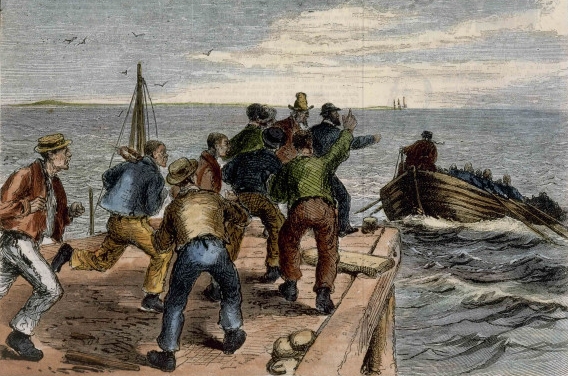
Painting of the Fenians escaping to the distant Catalpa on a whaleboat (artist unknown)
#6 The Catalpa Rescue: Stand off on the high seas.
Say what you want about the personality of Captain William Bligh, but after the Bounty mutineers cast him off, along with those remaining loyal to him, in the ship’s launch, he displayed navigational and seafaring skills of the highest order in sailing more than 6,000 kilometres to the safety of Timor.
While George Anthony and his small crew on the Catalpa whale boat had only a tiny fraction of that distance to cover, the New Bedford seaman encountered, as luck would have it, the most appalling conditions as he attempted to reach the Catalpa, anchored about a dozen miles offshore. Rescuers and rescued were barely in the water when a huge storm blew up. ‘The boat began to jump and jar until it seemed that she might lose her spar or mast step. The seas commenced to comb and break across the stern, or, running the length of the boat would tumble in soaking the men and threatening to swamp the little craft.’ The sailors rowed, everyone else on board the overcrowded boat bailed out. Anthony kept his cool and summoned a lifetime of experience to his aid. Bear in mind that there was an added complication. The whale boat, built to accommodate six or seven sailors, was low in the water as there were sixteen men on board. Anthony said afterwards that he was convinced they would never reach the Catalpa. The fates had been conspiring to bring about the failure of the escape plan from the outset, now the elements were collaborating enthusiastically.
But, through sheer good luck, as well as Anthony’s seamanship, they survived the storm. But as they escaped the tempest, another threat beckoned. As the sun rose on Tuesday 18 April Anthony could see the Georgette bearing down on the Catalpa, at anchor in international waters. The steamer had, predictably, been commandeered by the authorities and there was a detachment of well-armed soldiers aboard. Fortunately for the party on board the whale boat they had, perhaps fortuitously as it transpired, lost their mast overnight. Although the steamer passed within half a mile of them they were mistaken for flotsam. All sixteen on board were hunkered in the bottom of the boat to avoid detection and their luck held. As they gained on the Catalpa they were spotted by its crew and the barque bore down on them, arousing the suspicions of the force on board the Georgette. Samuel Smith, the first mate, manoeuvred the ship so that it was between the whale boat and the steamer. The prisoners, sailors, Anthony, Desmond, King and Breslin were able to climb on board the barque without interference. Once on board the prisoners made no secret of that fact to their former jailers aboard the Georgette, rushing to the side and mocking their pursuers. The Georgette, low on fuel, was forced to turn back to shore. But the chase was far from over. The breeze dropped and the Catalpa was becalmed. Although outside the Australian territorial limit it wasn’t going anywhere until the wind rose again.
At daybreak on 19 April the Georgette was back. A small cannon had now been loaded on board and the military presence had been augmented. A shot was fired across the bow of the Catalpa. Just then a light breeze began to fill the sails of the small whaling ship. As it did so the Georgette drew alongside and the officer commanding the military detachment, a British army Colonel with the delightfully bucolic name of Harvest, demanded that Anthony hand over ‘the escaped prisoners on board that ship’. ‘You’re mistaken,’ Anthony responded. ‘There are no prisoners aboard this ship. They’re all free men.’ The standoff continued as the wind rose still higher, with the Georgette blatantly attempting to manoeuvre the Catalpa back into Australian territorial waters. Boarding threats were issued, which the prisoners, Breslin, Desmond and King determined they would resist with the pistols and rifles they had managed to bring on board the barque. Eventually Harvest issued his final threat. ‘I’ll give you fifteen minutes in which to heave to,’ he told Anthony,’ and I’ll blow your masts out unless you do so. I have the means to do it.’
He had the means all right, but not the will. Pointing to the Stars and Stripes flapping overhead in the rising wind Anthony played his trump card, or bluffed outrageously.
‘This ship is sailing under the American flag,’ he shouted, ‘and she is on the high seas. If you fire on me, I warn you that you are firing on the American flag.’ At this point the two vessels were almost eighteen miles off shore and the Georgette hadn’t a prayer of manoeuvring the Catalpa back into Australian waters. Firing on the Stars and Stripes was well above Harvest’s pay grade. His own bluff had been called. The steamer gave up the chase. Now all the Catalpa had to do was to sail off and avoid the British navy and the gales of the southern ocean. This it did successfully, crossing the equator on 10 July.
Not that all was hunky dory on board the good ship Catalpa on the return journey. Anthony had financial responsibilities towards his employers and was anxious to conduct at least some whale hunting on the way home. The complaints of the Fremantle Six dissuaded him. They were not happy with conditions on board the whaler, some even complaining churlishly that they had been better off in Fremantle prison. Anthony, while he must have bridled at the ingratitude after all the dangers that had been faced by he and his crew, agreed to sail directly for New York.
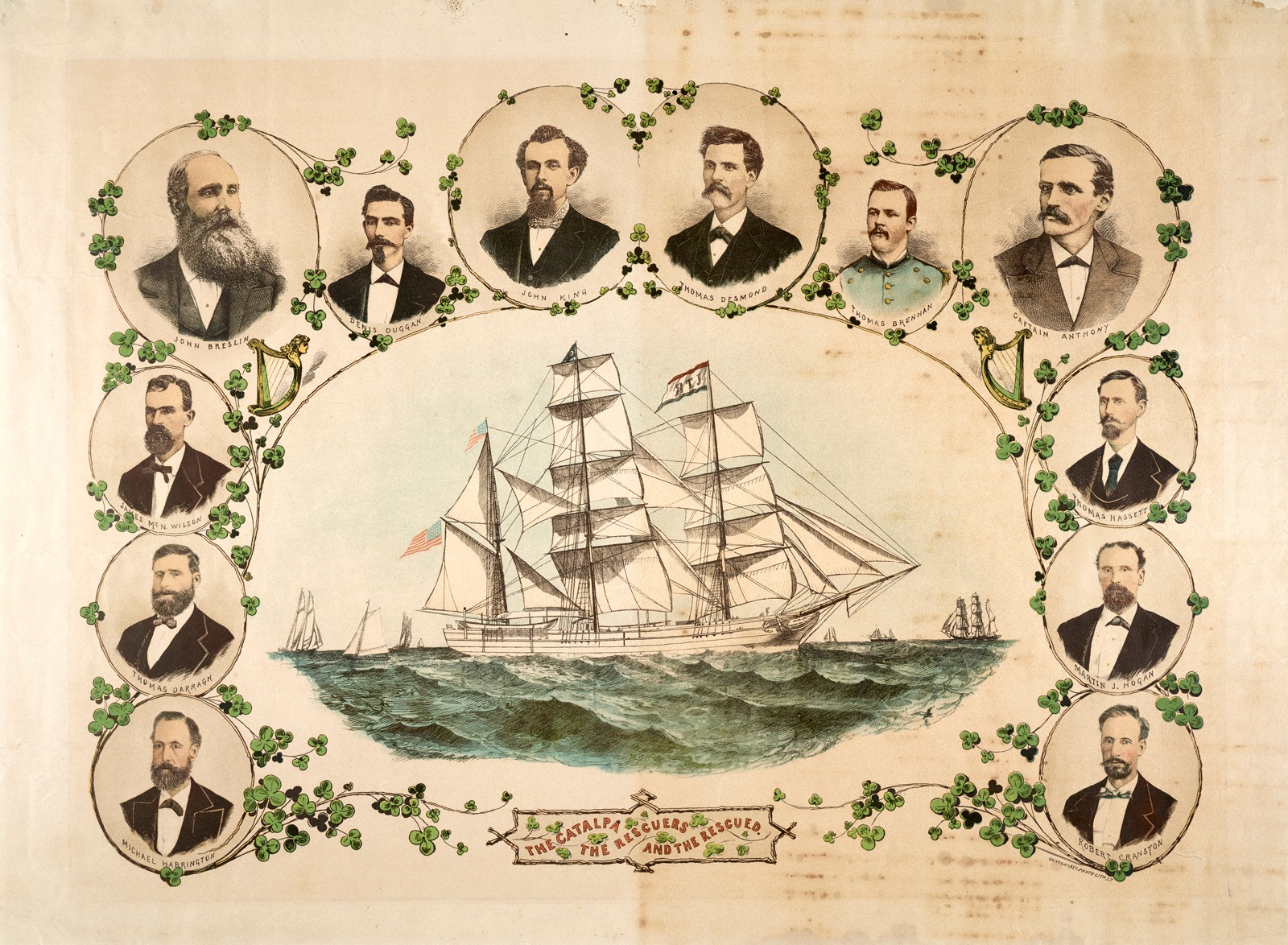
The ‘Fenian’ barque arrived there on 19 August to be greeted by what must have seemed to Breslin and Desmond to be all of Irish America. Thousands thronged the harbour to welcome back the escaped prisoners. Devoy, basking in the success of the expedition, ordered that all six of the former prisoners were to have new suits made (at a cost of just under $50 each) before the ceremonial victory photograph (below) was taken.
Devoy’s stock in Clan na Gael rose to stratospheric levels as a result of the success of a plan that probably owed as much to John Boyle O’Reilly and Thomas McCarthy Fennell as to his own genius, and to an operation that would never have succeeded without the initiative and tenacity of Breslin and Anthony. Naturally, this being an Irish narrative, the begrudgers began to emerge at first light. Although Breslin was rightfully lionised in Irish America and was awarded $1000 for his efforts Clan factions (there were many) opposed to the rise and rise of John Devoy criticised Breslin for spending $25,000 in freeing the Fremantle Six. Perhaps he now had second thoughts about having prevented Anthony from hunting for whales on the return journey. But all of that was merely academic. The Fremantle Six were safely on American soil and their jailers had been given a bloody nose.
The Clan/IRB – lousy at rebellions, inspired at prison breaks.
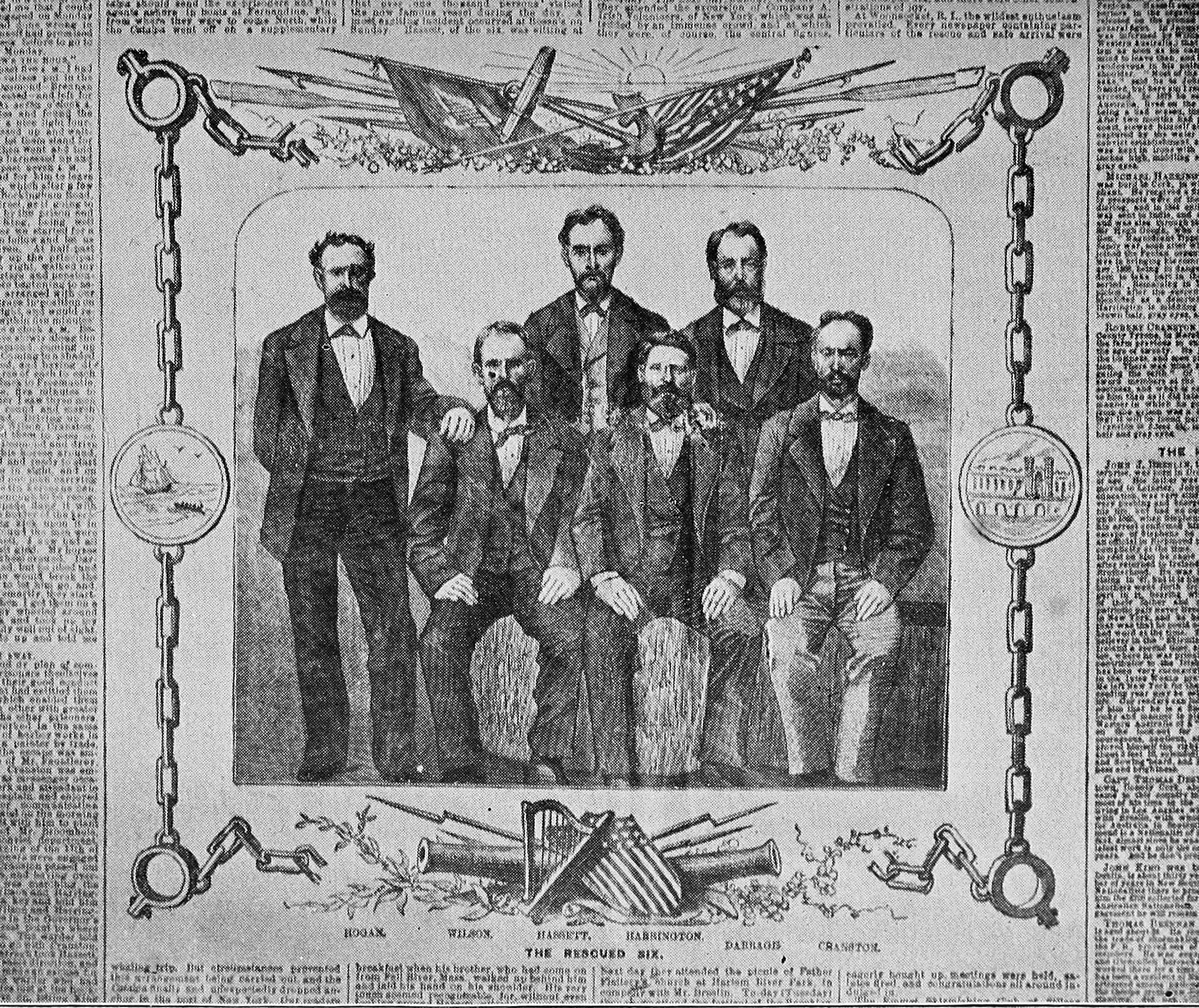
The Fremantle Six photographed in New York after the purchase of new suits by Devoy.
#7 The Catalpa Rescue: Coda
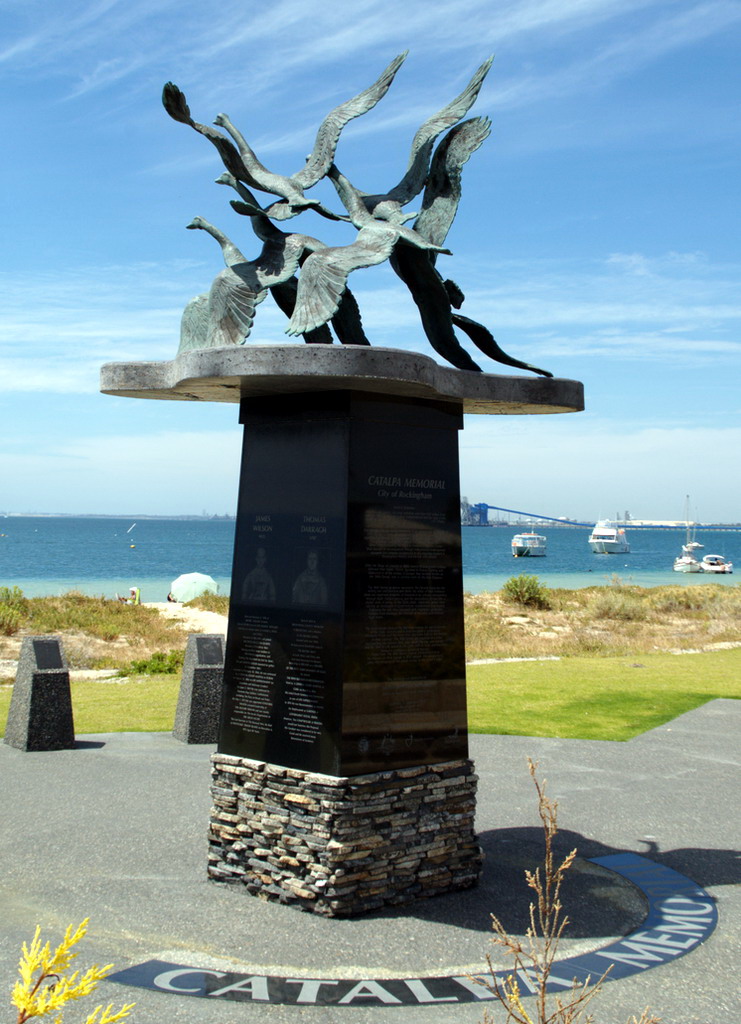
Catalpa Memorial in Rockingham, Western Australia
COMMEMORATIVE EVENTS
Sadly there seems to be a lot more interest in the Catalpa rescue in Australia than in Ireland.
If you happened to be on the Australian west coast on 5 April you might have taken part in this. They even organised a Catalpa Dash (by bicycle rather than buggy) from Fremantle to Rockingham on 6 April. If you’re in the vicinity later in the year you could do worse than drop in on this exhibition in the old Fremantle prison.
When it comes to Irish events here is the answer in Dáil Éireann given by Minster for Culture, Patrick O’Donovan on Irish plans to commemorate the rescue.
The National Museum is displaying the Catalpa flag in the Palatine Room at Collins Barracks – because it is truly enormous and would take hours to mount, the decision has been taken to lay it flat on the ground for exhibition purposes—but only for two days! 18-19 April. Which seems a pity, given the importance of the event and the significance of the anniversary.
The utterly stupendous news is that the actor Donal O’Kelly will be staging a revival of his magnificent one-person play Catalpa on 19 August in the Civic Theatre in Tallaght. If you’ve never seen it (and even if you have) I would urge you to get a ticket. Donal and the script are both amazing. I’ve already bought my tickets here and I can see from the website that they are already beginning to go even without a breath of publicity.
Might the National Library, not like to display this for a few days at least? It’s the twelve page letter from James Wilson to John Devoy, dated 15 June 1874, and is part of the Devoy collection in the Manuscript Room of the NLI. If you have a National Library card you can go and order it up yourself – MS 18,013/13/2
VIEWING AND LISTENING
The History Show (RTÉ Radio 1) will feature a lengthy item on the rescue on Sunday 19 April, the week of 150thanniversary of the escape of the Catalpa from the Georgette on the high seas. Shortly after 7.00 pm the podcast of the programme will show up here …
The really excellent 2007 TV documentary The Catalpa Rescue written and directed by Lisa Sabina Harney can be viewed on You Tube
FURTHER READING
Probably the earliest account of the rescue (other than, for example, a newspaper interview by George Anthony) was The Catalpa Expedition by Zephaniah Pease, written largely from Anthony’s perspective and published in 1897. It’s available on www.archive.org
https://archive.org/details/catalpaexpeditio00peas/page/n12/mode/1up
Sean O’Luing’s excellent Fremantle Mission (1965) is also available on www.archive.org.
https://archive.org/details/bwb_KV-144-064
John Devoy’s Catalpa Expedition, (2006) edited by Phillip Fennell and Marie King, tells the story from Devoy’s point of view, incorporating his private papers (deposited, as mentioned above, in the National Library of Ireland) and the ship’s logs. It is also available on www.archive.org
https://archive.org/details/johndevoyscatalp0000devo/page/n1/mode/1up
Vincent McDonnell’s The Catalpa Adventure: Escape to Freedom (2010) is also available on www.archive.org.
https://archive.org/details/johndevoyscatalp0000devo/page/n1/mode/1up
The Voyage of the Catalpa: A Perilous Journey and Six Irish Rebels’ Escape to Freedom (2002) by Peter F. Stevens is available on www.archive.org
https://archive.org/details/johndevoyscatalp0000devo/page/n1/mode/1up
The most recent work, written from the perspective of an Australian historian is The Catalpa Rescue: The gripping story of the most dramatic and successful prison break in Australian history (2019. It’s a great read and is the work of author, broadcaster – and former rugby international – Peter Fitzsimons.
A SONG
‘The Fenians’ Rescue’
(Australian folk tune. Probably from the early 1900s)
A noble fine ship and commander,
Called the Catalpa, they say,
Bore down on the shores of West Australia,
And took six bold Fenians away.
Chorus.
Then come all ye “screws,” warders and gaolers,
Remember Perth Regatta day.
Take care of the rest of your Fenians,
Or the Yankees will take them away.
The Perth boats were racing for prizes,
And sporting about all the day,
When the Yankee came close up behind them,
And took six bold Fenians away.
Chorus.
The “Georgette” gave chase with brave warriors,
With orders this Yank to arrest.
When he hoisted his star-spangled banner,
Saying “You’d better not touch us, I guess.”
Chorus.
For seven long years they had served
And seven more they had to stay.
For defending their country, Old Ireland.
And for this they were banished away.
Chorus.
Now they are in the States of America
And they have said to the prison, “Goodbye,”
And they’ll wear the green flag and shamrock,
And shout for Old Ireland “we’re ready to die.”
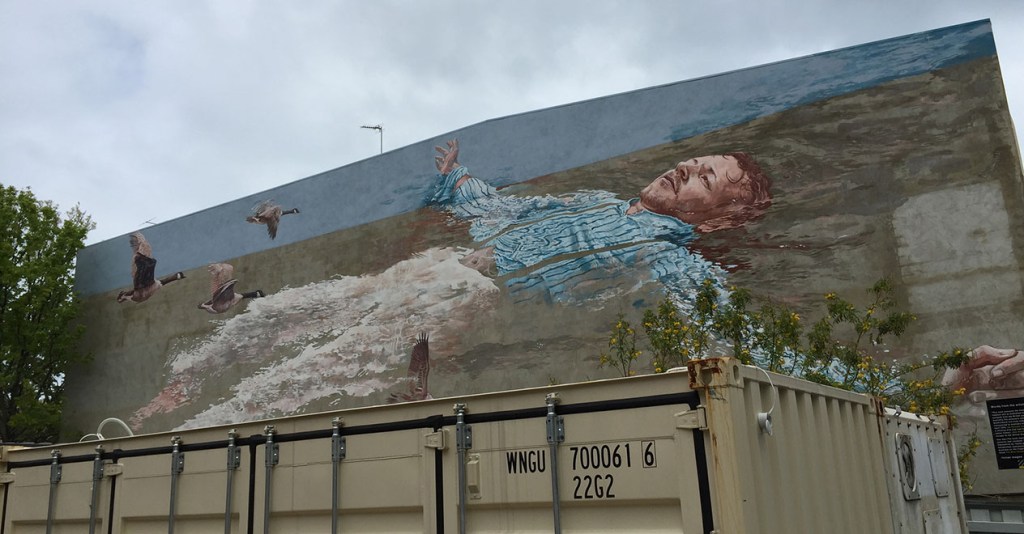
Mural commemorating the Catalpa rescue in Fremantle
[*] Frank Lee Morris and the Anglin Brothers may or may not have escaped successfully from Alcatraz in 1960 so let’s not have a fight about it.
[†] There was a seventh ‘military’ prisoner but he was persona non grata among his fellow Fremantle Fenians because he had offered to name a number of participants in the 1867 Rising in return for clemency. The offer was refused by the government but Wilson and the others were aware of it and shunned him. He would pay for his treachery by being excluded from the escape plans.
[‡] Warning: Blatant Plug Alert


You must be logged in to post a comment.