Fake Histories #36   Jack the Ripper was a member of the royal family?

iu.jpeg

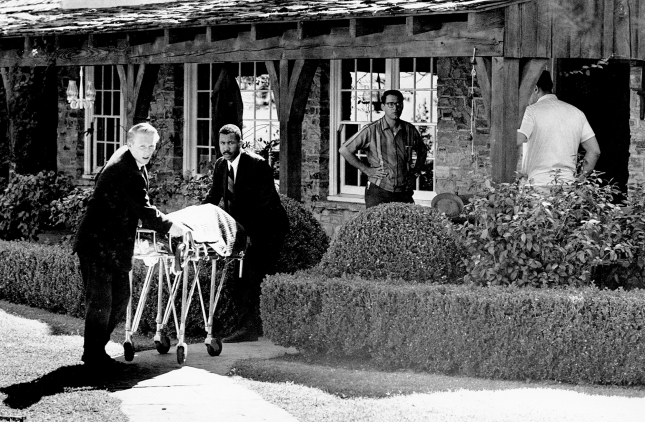
Imagine you are a woman living in the poverty trap of the East End of London in the autumn of 1888. Queen Victoria is on the throne, Lord Salisbury is Prime Minister. But high politics are of little interest to you. Making ends meet is a more pertinent concern. That, and avoiding a serial killer, stalking the Whitechapel district, who is about to be given a name, Jack the Ripper. A week ago the body of the first of his five victims, Mary Anne Nicholls was found. Two days from now he will kill Annie Chapman. Then there will be two more, Elizabeth Stride and Catherine Eddowes, at the end of this month, before a gap of almost six weeks to his final victim, Mary Jane Kelly.

If you do fall to the knife of Jack the Ripper there is an excellent chance you will go down in history as a prostitute, although there is no solid evidence that three of the Ripper’s five victims were ever involved in that line of work. So, although you will be immortalised by hundreds of ‘true-crime’ writers, each convinced they have identified your killer, there will be an implicit question in all of their writing. What were you doing wandering around the streets of Whitechapel late at night? As we are unable, definitively, to blame your killer for his crimes, it is almost as convenient to blame you for your own death.

Behind the Whitechapel murders of 1888, there was undoubtedly a form of lunacy, but the frenzy exhibited by Jack the Ripper has been almost matched by the craziness unleashed in thousands of ex post facto attempts to identify him. Never has a subject given rise to so much special pleading, dodgy theses, outright lies, and ingenious hoaxes.

Welcome to the Rippersphere!  Not an arena for the faint-hearted. Ripperology might sound like an intellectual discipline but it’s actually a blood sport, where, it would appear, you identify your Ripper in advance and get the facts to fit afterwards.  You then defend your position with as much venom as possible, a phenomenon greatly facilitated these days by the unidentifiable basement trolling of social media. The internet, as we know, was developed purely for the proliferation of cute cat videos, and to encourage the multiplication of even more outrageous Jack the Ripper narratives.

The Rippersphere is a realm where your choice of the guilty party might well depend on your politics. So that Boris Johnson’s Ripper would probably be one of the thousands of immigrants who populated the East End of London in the 1880s. While Jeremy Corbyn’s would be a deviant member of the privileged upper classes.

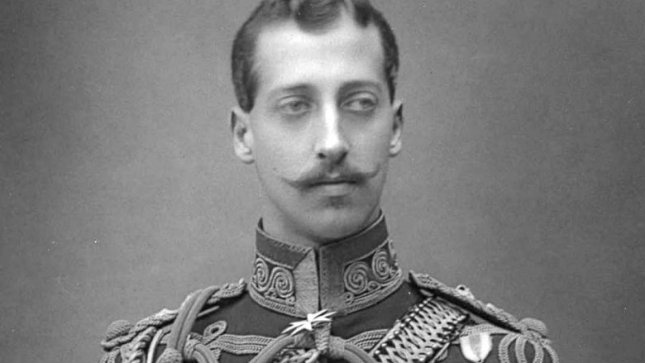
While there is every likelihood Corbyn would be spot on, there is one particular myth that has grown and festered over the years, that is not worthy of the gallons of printer’s ink that have been expended on it. A constant Ripperological theme has been the ‘Royal Conspiracy’ theory.  This holds that the Duke of Clarence, Albert Victor, was the killer. Known to his family as ‘Eddie’ he was the eldest grandson of Queen Victoria, and next in line to the throne after his father, Edward, Prince of Wales.

            This canard began to emerge as late as the 1970s when a Dr Thomas Stowell published an article in a magazine called The Criminologist implicating the Duke of Clarence without actually naming him. Stowell claimed that a royal family member he called simply ‘S’  had been driven insane from syphilis. He further claimed that the Royal family was aware of the killings, and interfered with the investigation of the crimes. ‘S’ was quickly identified as Clarence and the chase began.

The Duke of Clarence pre-deceased his father in an influenza epidemic in 1892, but Ripperologists who subscribe to the Royal Conspiracy theory have him dying of syphilis.

Even a cursory examination of Royal court records blows the entire ‘Clarence the Ripper’ theory out of the water. It can easily be established that Eddie was well away from London, in Yorkshire and Scotland, at the time of the first four murders. He was at his father’s birthday party on the night of the murder of Mary Kelly. All alibis which, of course, were ingeniously fabricated by Buckingham Palace, according to the more deluded Royal Conspiracy theorists.

So, did the Duke of Clarence go on a murderous rampage in the East End of London over a seventy day period in 1888 and brutally murder five women? No, he did not, that is fake history.

iu-1.jpeg

Fake Histories #35 The All Ireland Football Final has always been played in Croke Park in September?

iu-1.jpeg


The three-year GAA trial which sees the All Ireland finals pulled back by three weeks each has its champions and its detractors. They will all get their opportunity soon enough to debate the efficacy of the experiment and, after 2020, we may see things returning to the normality to which we’ve all become accustomed.

But it was not ever thus! Tradition, by definition, takes a while to become established—except on social media when fifteen minutes or so does it nicely—and so it was with the All Ireland schedule.

The Gaelic Athletic Association has been around since 1884 and after a decidedly rocky start in life became a stable fixture in the 1890s and started to move towards national treasure status thereafter. The part it played in the achievement of Irish nationhood is unchallenged, and its subsequent role in entertaining and exasperating the people of Ireland is equally incontestable. If you doubt me, just wander into any public space during an Irish summer and eavesdrop on the conversations. If you don’t hear the Dublin football team being slagged off outside of the Pale then you need your hearing tested.

iu-2.jpeg

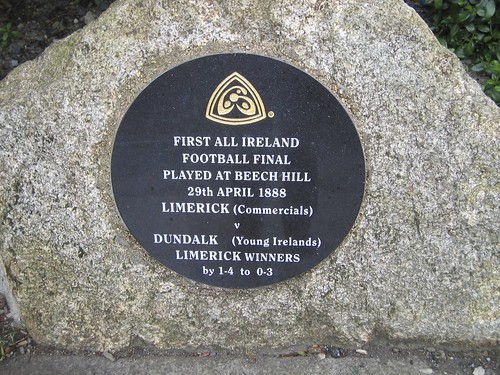
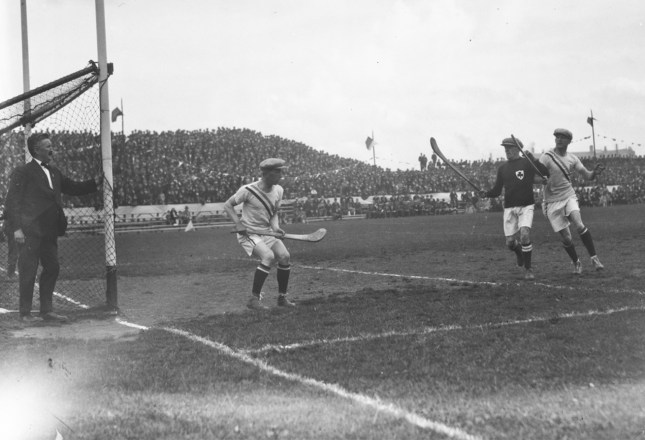
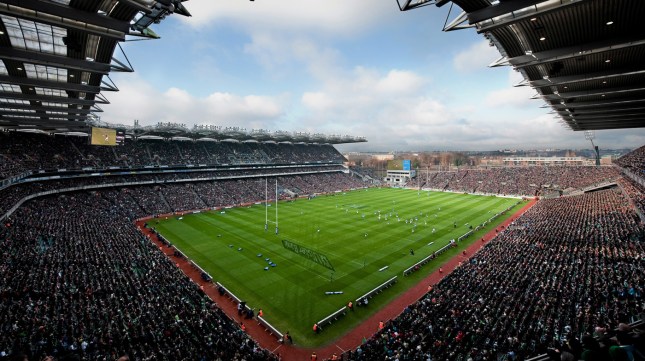
The first fixture described as the All Ireland Football final was played three years after the formation of the GAA at a meeting in Thurles attended by seven men. Quite an oak has grown from that little acorn. The match was staged on 29 April 1887 in the iconic confines of … Beech Hill in Clonskeagh on the fringes of Donnybrook. It was contested between Commercials of Limerick and Young Irelands of Louth, both winners of their respective county championships. There were forty-two players involved as each had had twenty-one players. Think of the teams and the benches of today all on the pitch at the same time. It must often have resembled the only recently abandoned Donnybrook Fair, whose own ‘robust exchanges’ had caused it to be brought to an end. For the record Commercials won, making Limerick the first-ever All Ireland FOOTBALL champions. Now there’s an interesting and unusual sentence. Though, in fairness to the Treaty County they won it again in 1896. Since then they’ve been a tad better at the old hurling!

Over the next five years of the football championship, it was decided at a variety of Dublin venues, including Phoenix Park in 1893. No one, however, seemed to care that much, with crowds never topping five thousand. Until that is, it returned, in 1895, for the 1894 final—don’t ask, it got a bit out of kilter in 1890—to the home of the GAA, Thurles, Co. Tipperary. There ten thousand people saw Dublin take their third title, beating Cork—well, sort of. The game was a replay after a drawn match in Dublin and it never actually ended. Some of the Dublin players were attacked by Cork supporters and the match was abandoned. The GAA awarded the trophy to Dublin, although, as Cork were leading at the time, inhabitants of the Rebel County still claim that one to this day.

The following year the final moved to a location on a Dublin thoroughfare known as Jones’ Road. You may be familiar with it! However, the so-called City and Suburban Racecourse was not yet exclusive to the GAA. Bohemians soccer club played their home games there in the 1890s, and in 1901 it hosted the Irish Football Association final between Belfast’s Cliftonville (still with us today) and Freebooters F.C. from Sandymount in Dublin, who have sadly migrated to that great changing room in the sky. The football final kept moving around until the ‘venue that would be Croke Park’ became exclusive GAA territory in 1908.

Even after that, there was one celebrated break in a tradition that now goes back over a century. This came in 1947 when the All Ireland final wasn’t even played in Ireland. It moved to the Polo Grounds in New York for the encounter between Cavan and Kerry. Cavan had become the first Ulster team to win the All Ireland in 1933. In a four-point win over Kerry, they became the first Ulster team to win two All Irelands. Nobody outside Kerry had much sympathy for the vanquished Munstermen. They already had sixteen titles to their credit and Bomber Liston wouldn’t even be born for another ten years.

Incidentally, the first September All Ireland final wasn’t played until 1902, and the September date didn’t become fixed until the late 1920s.

So, the notion that the All Ireland football final has always been played in the vicinity of Jones’s Road in September, is way off the mark.


iu.jpeg

FH#34   ‘Stockholm syndrome’ is the mutual attachment of hostage and kidnapper in an abduction?


iu-3.jpeg

It’s an odd coincidence. On 23 August 2006 an eighteen-year-old Austrian woman, Natascha Kampusch, freed herself from eight years of often brutal captivity.  On the same date, in Sweden in 1973 a convict on parole, Jan Erik Olsson, made a botched attempt to rob one of the biggest banks in Stockholm.

How are these events connected? By something called ‘Stockholm syndrome’.

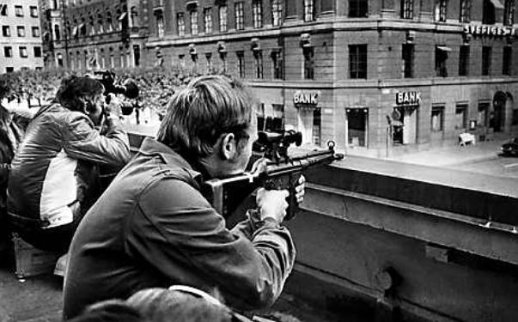
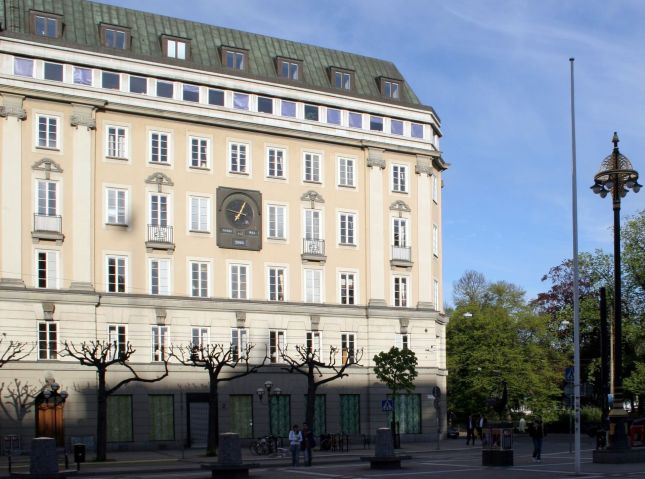
Olsson’s failed bank robbery of the Kreditbanken on Norrmalmstorg Square led to a six-day stand-off during which he held four employees (three women and a man), hostage. One of his first demands to besieging police was for the release from prison of his friend Clark Olofsson, who was brought to the bank and became Olsson’s accomplice. Hostage negotiation was in its infancy in the 1970s and the Swedish police often behaved in a fashion that would hardly be in keeping with best practice today. For example, Olsson was allowed to phone the Swedish Prime Minister Olof Palme, threaten to kill the hostages, and even grabbed one of the three women in a headlock causing her to scream as the Prime Minister listened on.

The following day one of the hostages called up Palme and demanded that he allow them and their two abductors to go free. The four hostages, constantly threatened with being killed, were subjected to mental and physical ill-treatment. Arguably the worst torture was the fact the Olsson walked around the bank vault in which they were all imprisoned, singing the same song, Roberta Flack’s Killing me Softly, an ominous choice of tune. On 28 August, after six days, the authorities got fed up and used tear gas to end the crisis.

iu-4.jpeg

So far, so relatively mundane. A bank robbery goes wrong, unfortunate bank officials are taken hostage, after a few initial missteps the police effect a rescue without loss of life. But it was the aftermath that was the astonishing part.

When Olsson and Olofsson were put on trial their four hostages didn’t exactly help the prosecution case by refusing to testify against their captors. Not only that, they actually began to raise money to assist the defence cases of Olsson and Olofsson. Despite their lack of co-operation, Olsson was jailed for ten years while Olofsson was released after an appeal.

A distinguished Swedish criminologist and psychiatrist, Nils Bejerot, gave a name to this unexpected development. He dubbed the empathy that had built up among the kidnapped for their kidnappers as ‘Norrmalmstorg syndrome’. The description stuck in Sweden itself, but not outside Scandinavia. Instead, internationally, the phenomenon has become known as ‘Stockholm syndrome.’

iu-1.jpeg

Fast forward to Vienna in March 1998. A ten-year-old girl, Natascha Kampusch goes missing. After a while, the search for Natascha ends, memories of her kidnapping begin to fade. It is generally assumed that she has been murdered. Her memory is kept alive only by her family, friends and neighbours. But she is still alive, imprisoned in the basement of a house, located about half an hour from Vienna, by her abductor, Wolfgang Priklopil. There she is held for eight years, subjected to regular abuse, as well as acts of kindness and contrition, until she manages to escape. Knowing that he is about to be arrested her abductor kills himself.

After such a traumatic experience you might think that Natascha Kampusch would want nothing further to do with the house in which she had been imprisoned for much of her childhood and adolescence. However, she is now the owner of the house, albeit the tiny basement in which she was incarcerated has been filled in.

Not that purchasing Priklopil’s house makes Kampusch a Patty Hearst, who famously, became an integral part of the illegal activities of the Symbionese Liberation Army in 1974 after they had kidnapped her to extract a ransom from her wealthy family. Her defence lawyer, F. Lee Bailey, who later defended O.J.Simpson, was not allowed to use Stockholm syndrome as a defence in court.

But ‘Stockholm syndrome’ is a one-way street. It denotes a degree of sympathy or empathy of the kidnapped for their kidnappers. Its reverse is often called ‘Lima syndrome’, a phrase coined by a Peruvian psychiatrist Mariano Querol who was himself abducted for more than a fortnight. It is also applied to the 1996 mass hostage-taking at the Japanese Embassy in Lima. There many of the dozens of those taken were quickly released and the abductors appointed to kill the remaining hostages were unable to do so.

So, the phenomenon first identified in Sweden in 1973 and dubbed ‘Stockholm syndrome’ does not denote a mutual affection between hostages and abductors.  It’s meant to denote a largely one-sided relationship only.

iu-2.jpeg

Fake Histories #33  Is Elvis still taking care of business?

iu.jpeg

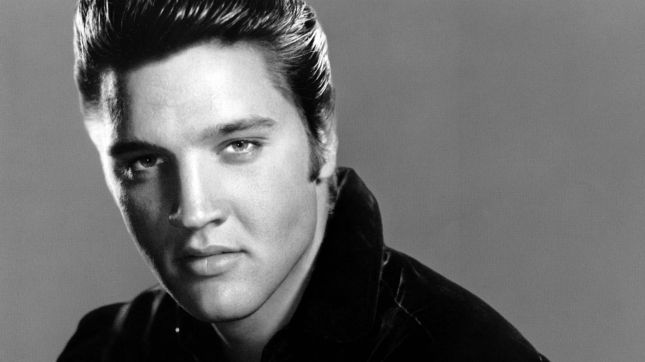
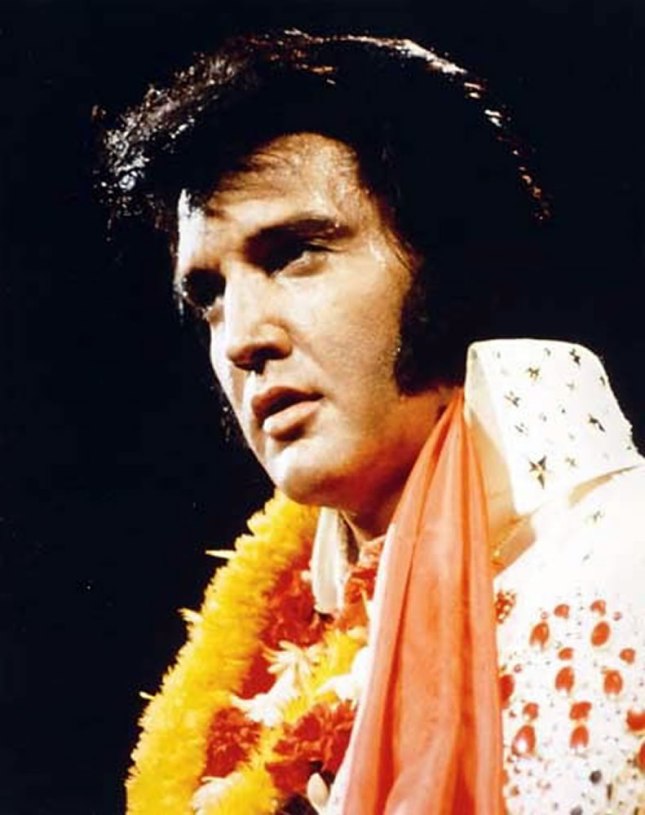
Depending on when you were born, Elvis Presley—who died forty-two years ago today—was the King of Rock and Roll and a practising demi-God, or a morbidly obese Las Vegas cabaret singer who didn’t even write his own songs. It largely depends on whether you were born in the forties—in which case he was a genius—or the fifties—in which case you were more of a Beatles type anyway.

Falling squarely into the latter category I was one of those people who was puzzled at the mawkish outpouring of grief when Elvis died on 16 August 1977 and those spangly white costumes, which latterly had almost been painted on to his frame, were no more. Personally, I was more affected by the death of the great Groucho Marx the same week.

As is the case with most icons there are many myths surrounding the life, times and music of Elvis Presley. Among these is the notion that Presley and Oprah Winfrey are related. Which occasionally morphs into the narrative that Oprah’s ancestors were once slaves on the Presley estate. This, however, is hard to reconcile with the idea of Elvis being descended from an impoverished line of Mississippi sharecroppers who were forced to shoot, skin and eat squirrels to stay alive. Plantation owners were more of the ‘mint julep on the porch’ variety.

Then there is the rumour that Elvis had a pet chimpanzee named Scatter who died of alcoholic poisoning. Well, this one definitely has at least an element of truth about it. Elvis had a lot of pets, and one of them was a chimpanzee named Scatter who often dressed, like his owner, in Hawaiian shirts. Whether or not he was spoon-fed liquor and died as a result, however, remains merely a nasty rumour.

But, of course, the abiding myth that surrounds Elvis is that he is still ‘taking care of business’, holed up somewhere with that other great immortal Jim Morrison. Neither man, thousands of people fervently hold as an act of blind faith,  ever left the building.

Apparently, the King’s Graceland mansion included a secret tunnel dating back to the days of the Underground Railroad, when slaves were smuggled out of the South to freedom in the North. Elvis is supposed to have abandoned his career by means of this nineteenth-century convenience, rather than actually having died of a heart attack on his own twentieth-century convenience. He is then alleged to have purchased a ticket to Buenos Aires in the name of John Burrows the day after his faked death. Why is this significant, you ask? And I will tell you, as breathlessly as possible. The man who bought the ticket looked very Elvish and the alias ‘John Burrows’ was often used by Presley’s management team when booking hotel rooms for him anonymously.

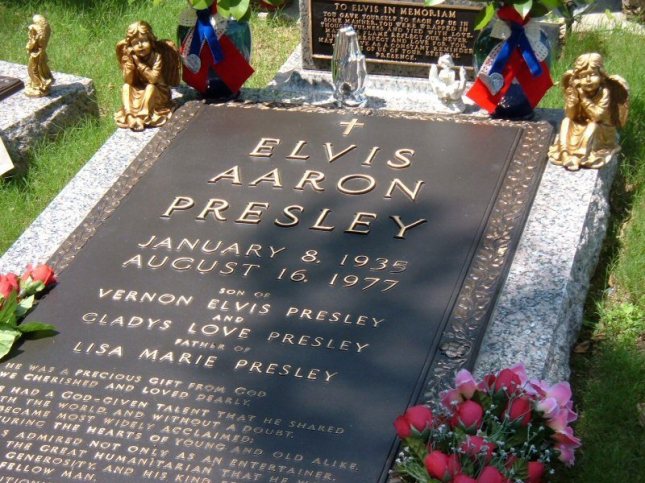
Presleyean conspiracy theorists also point to the misspelling of his middle name on his gravestone as a clear indication of an intention to simulate his own demise. Now when you look at this gravestone it clearly reads ‘Elvis Aaron Presley’, the spelling being all present and correct. Except, apparently, Elvis’s middle name on his birth certificate was spelt ‘A-R-O-N’ as opposed to the more conventional ‘A-A-R-O-N.’ Which monumental typo, obviously demonstrates a clear intent to leave a wax dummy in your open coffin and do a bunk for Argentina where your savings would immediately have been eroded by rampant inflation.

The wax dummy theory, by the way, is lent credence by the weight of the coffin, which clocked in at nine hundred pounds. This was, supposedly, because it housed an air conditioning unit to prevent the wax from melting in the August Tennessee heat. Clearly, it had nothing to do with the fact that Elvis himself weighed almost nine hundred pounds at the time of his death.

iu-1.jpeg

Between 1977 and 1981 six of his new releases became top ten singles. This prompted people unfamiliar with the concept of ‘recording’ or ‘archive’ to assume that he was still active in the music business. He was also said to have appeared as an extra in the film Home Alone thirteen years after his faked death. Sightings of him are now more frequent than those of the much older and more credible Loch Ness monster. You can expect him to turn up soon doing tours of Graceland, and for the first miracles to be cited in his name.

So, is Elvis still alive somewhere, possibly working as a vaquero on the Argentinian Pampas, at the grand old age of eighty-four? Well, we should probably assume that he was dead when an autopsy was performed on his body and, tentatively and regrettably, accept this as fake history.

iu-2.jpeg

Fake Histories #32   Beachboy Dennis Wilson barely escaped being murdered by the Manson gang in 1969?


iu-2.jpegiu.jpeg

According to the writer Joan Didion the 1960s may have ended fifty years ago today. Technically she was out by four months and twenty-two days, but Didion was writing about a shocking event that banished the optimism, playfulness, and naivety of that decade. Because it was half a century ago today that a promising young actor named Sharon Tate, wife of film director, Roman Polanski, was murdered in Los Angeles. She wasn’t the only victim, four others were slaughtered along with her, as was her unborn son.

They were the victims of a  demented cult or a devious group of psychopathic killers covering up a crime committed by one of their members, that’s depending on which account you read. They were, or so the California courts were told, under the guidance and tutelage of a quasi-Messianic figure named Charles Manson, a petty criminal released from prison in March 1967. A number of personal and second-hand accounts have been written about the rampage of Manson’s acolytes—including the best-selling ‘true crime’ novel of all time, Helter Skelter by Vincent Bugliosi, who was one of the team that prosecuted Manson in 1970. Their accounts are contradictory and in the case of cult members trying to impress parole boards with the level of their penitence, utterly unreliable.

Ironically, Manson was not present at Tate crime scene, much of the murderous work was carried out by two of the memoirists, Susan Atkins and Charles ‘Tex’ Watson. In addition to the five so-called ‘Tate’ murders, the Manson gang went on to kill a Los Angeles couple, Leno and Rosemary La Bianca and were also found guilty of two more killings, a body count of nine over a period of three weeks.

And it didn’t all end in 1970 when many of the members of the cult were jailed for life, or handed hefty prison terms. Another member of the group, Lynette Fromme, nicknamed ‘Squeaky’, who avoided jail in 1970, made a name for herself in 1975 when she attempted to assassinate President Gerald Ford with a .45 semi-automatic pistol. Twelve years later she broke out of prison and, apparently, went in search of Manson who, she had heard, had been diagnosed with testicular cancer. She was recaptured within two days and was released in 2009 after thirty-four years in jail. Manson died in prison in 2017 after being incarcerated for forty-eight years.

But amid the horror of their crimes one, often overlooked, episode in the preamble to the murders was the relationship between the so-called Manson ‘family’ and the mercurial Dennis Wilson, drummer, and co-founder of the Beach Boys. Wilson had picked up two female members of the family hitchhiking, brought them to his home, and left for a recording session. When he returned it was to find Manson, and a number of his followers, ensconced in his house. Instead of calling the police Wilson befriended Manson, who saw himself as a budding rock star. Wilson was sufficiently impressed with Manson’s songwriting abilities to record him in his brother Brian’s studio. Wilson even persuaded the Beach Boys to cover one of Manson’s songs—originally entitled ‘Cease to Exist’ – this was changed to the more innocuous ‘Never Learn Not to Love’—as a B-side. When Manson was not credited on the record the relationship turned sour. Manson is said to have threatened to kill Denis Wilson and was beaten up by Wilson as a result.

But to allege that Wilson might have been a specific target for the murderous activities of the Manson gang is something of a stretch. It presupposes a level of organisation, and homicidal mentoring on the part of Manson himself, that doesn’t appear to exist outside of the myth-making of Vincent Bugliosi’s best-selling Helter Skelter. While Manson, and many of his acolytes, were undoubtedly evil, they were not evil geniuses. Neither did they necessarily kill at the behest of Manson himself. Their atrocities, far from being commanded by a charismatic guru figure, may have been ‘copy-cat’ murders designed to convince LA Police that they had arrested another ‘family’ member, Robert Beausoleil, in error, for the killing of a drug dealer.

Wilson certainly forked out a lot of money to the Manson ‘family’—much of to treat the STDs of the famously promiscuous cult members—he even walked out of his own house and left Manson in situ when their relationship turned nasty. But there is no evidence that Manson had any plans to do away with Beach Boy drummer Dennis Wilson. That’s fake history.

iu-1.jpeg