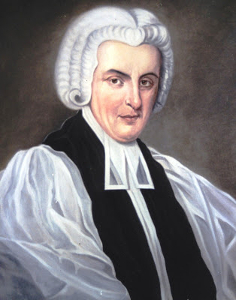
On This Day – Bishop Joseph Stock’s diary of the 1798 Rebellion


joseph-stock

The United Irishmen’s rebellion of 1798 was over—except that it wasn’t. Not quite. There would be a sting in the tail for the British authorities, who had already savagely put down the main uprisings in Antrim and Wexford, and minor eruptions elsewhere. They had been royally assisted by spies and informers, like Francis Magan and Francis Higgins, in anticipating the rebellion in Dublin. Their luck had held out in the winter of 1796 when a French fleet had been unable to land, due to adverse weather conditions at Bantry Bay.

But there was a fairer wind off the coast of Mayo on 22 August 1798 when, two months after the United Irishmen had otherwise been defeated, shot, piked, hanged, drawn and quartered, the French arrived in the form of a force of around 1000 men, led by General Jean Joseph Humbert. A little bit trop tard but better than jamais. The great Irish-American writer Thomas Flanagan called it The Year of the French in his epic novel. In reality it was much closer to ‘The Fortnight of the French’, a designation that lacks a bit of punch and drama. The intervention, initially successful, was all over by 8 September.

The French invasion force—dispatched on the basis of that age-old axiom that ‘the enemy of my enemy is my friend’—begat the short-lived Republic of Connacht, under the Presidency of the Mayo landowner John Moore. But it also spawned a fascinating captivity memoir, written by the incumbent Church of Ireland Bishop of Killala, Joseph Stock.

Stock, a fluent French speaker, was born in Dublin in 1740. The son of a wealthy merchant he was educated at Trinity College. He became a clergyman, and was briefly headmaster of Portora Royal School in Enniskillen, before becoming a bishop in January 1798. In 1776 he had published a biography of the great Irish cleric and philosopher, Bishop George Berkeley, a few years after his death.

Stock had the misfortune to be in the wrong place at the wrong time, when the French force arrived. He was captured, along with the British defenders of Killala. That evening he met Humbert. The encounter was extremely revealing. It was clear that Humbert had been led to believe that there would be considerable Irish aristocratic support for the invasion. He actually asked an establishment figure like the Church of Ireland Bishop of Killala if, as Stock puts it, ‘he chose to embrace the fortunate opportunity at once of serving himself and liberating his country.’ Stock politely declined the offer and chose to become a prisoner.

The French experienced initial success, notably in overpowering a British force at Castlebar in a skirmish that became known as ‘The Races of Castlebar’, because of the rapidity of the British retreat. This victory prompted uprisings in Longford and Westmeath. These were quickly put down by British troops and loyal Irish militia units. But, no poetry intended, it all came unstuck at Ballinamuck. There Humbert’s force, augmented by Irish rebels, was soundly defeated. The captured French were later exchanged for British prisoners of war, but many of the Irish were immediately executed. Stock demonstrated his personal loyalties by referring in his narrative to 8 September 1798 as ‘a day memorable for the victory at Ballinamuck.’

Humbert was later repatriated in a prisoner exchange, rejoined Napoleon’s army, and even fought against the British, alongside Andrew Jackson, in the American war of 1812. A street in Ballina is called after him, on it stands a monument erected in his honour.

Stock’s narrative of the rebellion was remarkably nuanced and even-handed for someone who was a Bishop of the Established Church, and who had been a prisoner of the rebels. He emphasised that there was little retribution of any kind on the part of the Irish rebels allied to the French force. The only killings took place in pitched battles. There was some looting and arson, but Stock points out that the depredations of the British forces were far greater than those of the United Irishmen. Stock chose to publish the memoir anonymously in 1800, which was, in retrospect, a wise move. All references to himself, or ‘Monsieur l’Eveque’, as Humbert called him, are in the third person. But he was quickly identified as its author, and subsequent imprints bore his name. His relative fairness probably did him no favours when it came to his subsequent clerical career.

Bishop Joseph Stock, author of a fascinating memoir of one of the most colourful episodes of the 1798 rebellion, was born two hundred and seventy-seven years ago, on this day.
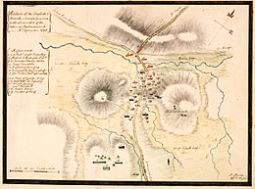
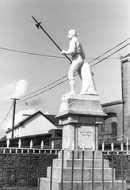
 

260px-Battle_of_Ballinamuck,_1798_(9675655157).jpgBallinamuckmemorial.jpg


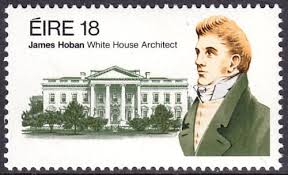
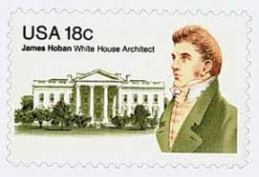
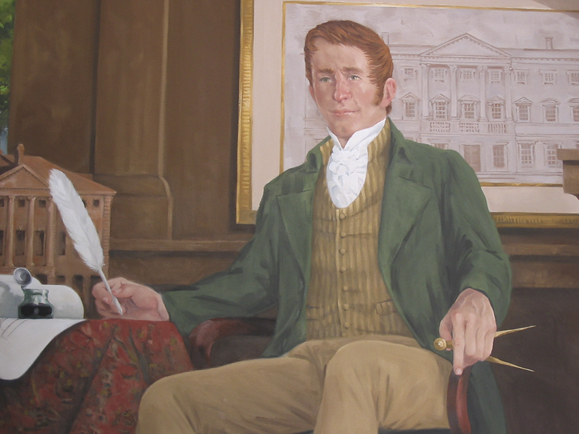
On This Day – 8 December 1831  Death of James Hoban, the architect of the White House

UnknownUnknown-1


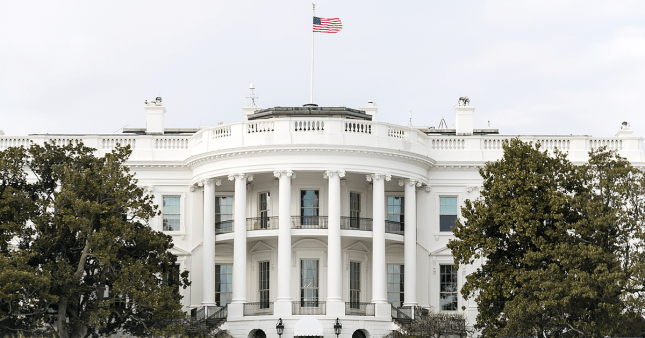
It’s one of the most celebrated addresses in the world—1600 Pennsylvania Avenue, North West, Washington D.C.—a large neo-classical building, bigger now than in its original incarnation, and it was designed by an Irish architect. The White House and James Hoban, are inextricably linked.

Hoban was born in 1755, in Callan, Co. Kilkenny—his actual date of birth was only definitively established last year with the release of millions of Irish Catholic baptismal records online. He worked as a wheelwright and a carpenter until he was in his twenties. When he showed promise as a scholar he was offered a place to study drawing and architecture in the Dublin Society’s Drawing School on Grafton Street. He worked on James Gandon’s Custom House project as an artisan, before emigrating to the USA in 1785. There he quickly established himself as an architect in Philadelphia, and later in South Carolina.

In 1791 the first US President, George Washington, then based in Philadelphia, had been impressed by the Charleston, South Carolina, County Courthouse, designed by Hoban, when he saw it while on a southern tour. He asked to meet the architect. The following year he chose Hoban’s design for the new Presidential mansion from among nine proposals, one of which had been submitted anonymously by Thomas Jefferson, his own Secretary of State.

JamesHoban-Architect-of-the-White-House.jpg

Hoban’s original competition entry, for which he won $500, and which does not survive, did not entirely meet with the approval of the man after whom the new Federal capital would be named. Washington asked Hoban to remove the third floor he had envisaged, and to widen the building from nine to eleven bays. Hoban, in putting together his final drawings, was influenced by the design of the town house of the Dukes of Leinster on Kildare Street in Dublin. Today we know this humble mansion as Leinster House. So, the annual delivery of a bowl of shamrock is not the only Irish influence on the White House.

Construction began in October 1792, with much of the manual labour being performed by slaves, at least three of whom belonged to the architect himself. Hoban was employed to supervise the construction, and used mostly immigrant Scottish craftsmen to build the sandstone walls. A layer of whitewash finished the job, giving the house its distinctive, though far from unique, colour. It took eight years to build, at a cost of $230,000 (around $3.5m today) and was ready for occupation, though still incomplete, in November 1800. This meant that John Adams, rather than its putative architect, Thomas Jefferson, became the first US President to work in the building. Washington, although he played a major role in its development, never lived there. Adams managed only four months in possession, and thought the mansion was too big. It wasn’t until the presidency of Theodore Roosevelt that the building became officially known as The White House.

The original construction, other than the façade, didn’t last long. The Americans fell out with their colonial masters in 1812, and went back to war. In 1814, the British set fire to the White House during their occupation of Washington D.C. It was rebuilt, again under Hoban’s supervision, and re-occupied, by President James Monroe in 1817, though the reconstruction wasn’t finally completed until two years before the architect’s death.  Hoban wasn’t responsible for the West Wing, or the iconic Oval office, which were much later additions.

His reputation being well-established in Washington Hoban saw no reason to leave the city, and he set up a lucrative practice there. He wasn’t at all hindered by his establishment of the first masonic lodge in Washington, with one J. Hoban as master. He went on to supervise the construction of the Capitol Building, and design the Great Hotel. Despite his stature, more than half a dozen of his signature buildings have been demolished, most in the eighteenth or nineteenth centuries. But despite the British in 1814, and Al Qaeda’s plans for United 93 back in 2001, the White House is still intact.

James Hoban, Kilkenny-born architect, and designer of the one of the world’s most iconic buildings, died, one hundred and eighty-six years ago, on this day.

og-image.png


On This Day – 1 December 1848 The Londonderry tragedy


angortamor.jpg

The great Irish emigration song ‘Paddy’s green shamrock shore’, popularized by Paul Brady, begins with the lines:


From Derry quay, we sailed away on the twenty-third of May

We were boarded by a pleasant crew bound for Amerikay


The song tells us that those passengers ‘safely reached the other side in three and twenty days’. What follows is a very different story of Derry quay, one that ended in the tragic deaths of seventy-two emigrants.

In the mid nineteenth century, the paddle-steamer Londonderry, belonging to the North-West of Ireland Steam Packet Company, and manned by a largely Scottish crew, plied a regular route between Sligo and Liverpool. Most of her passengers were set to sail onwards from Liverpool to North America.

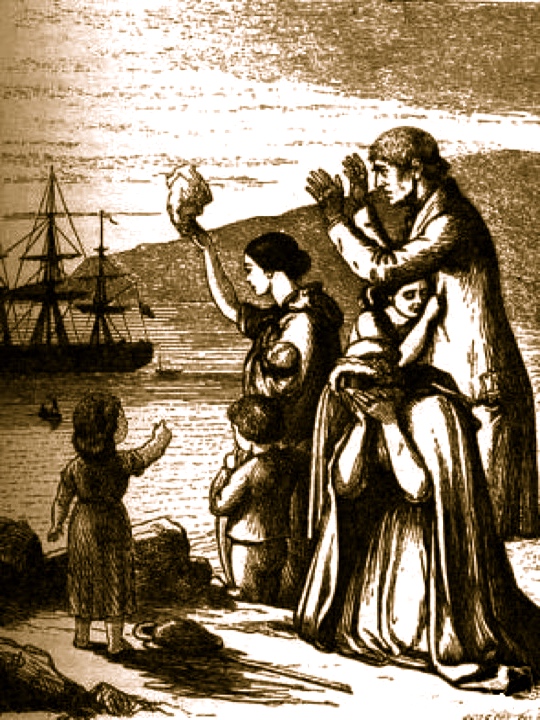
In late November of 1848 the steamer was approaching Derry, on the first leg of its journey to England, with around one hundred and eighty passengers—mostly in steerage—and twenty-six crew. The bulk of the passengers were impoverished Mayo and Sligo farmers, and their families, fleeing the ravages of the Great Famine.

A sudden storm prompted the Captain, Alexander Johnstone, to order his crew to force all the passengers into a small aft cabin, measuring about eighteen feet in length and, at most, twelve feet wide. More than one hundred and seventy men, women and children were crammed into this tiny space. The situation was exacerbated when the only ventilation available was covered with a tarpaulin, to ensure that water did not get into the cabin. As a result, many of the passengers began to suffocate. Finally, one of them managed to escape and tell the first mate that the steerage passengers were dying from want of air. A reporter from the Belfast Newsletter described what the crew found when the cabin door was opened:


‘There lay, in heaps, the living, the dying, and the dead, one frightful mass of mingled agony and death. Men, women, and children, were huddled together, blackened with suffocation, distorted by convulsions, bruised and bleeding from the desperate struggle for existence which preceded the moment when exhausted nature resigned the strife.’


All told, seventy-two passengers, thirty-one women, twenty-three men and eighteen children, had died horribly. Wild rumours began to circulate when the steamer pulled into Derry. It was reported that:


A large number of passengers had been barbarously butchered by a band of robbers, who took passage with them for the sake of plundering the poor emigrants, and, in short, that one of the most frightful massacres on record had been perpetrated.


The authorities were initially inclined to blame criminality for the tragedy. The official narrative that emerged was of belligerent Irish passengers rioting and killing each other. The full truth came out at the inquest, where survivors accused the Scottish crew of extreme cruelty, and the captain insisted in his defence that he had given orders for the decks to be cleared for the safety of the passengers.

One fortunate survivor, Michael Branan from Sligo, told the inquest that he had been on deck when one of the crew cursed him and forced him down below, where, as he put it;


‘The place was so thronged that, while those at the sides were obliged to sit down, there was no sitting room for those in the centre, and they were moved to and fro with every motion of the vessel.’


A local doctor giving evidence, compared the steerage accommodation to the Black Hole of Calcutta. Other witnesses alleged that cattle being transported from Sligo had been better treated than the steerage passengers.

The Captain and two mates were found guilty of manslaughter by the inquest jury. The jurors also called the attention of proprietors of steamboats to what it called:


‘The urgent necessity of introducing some more effective mode of ventilation in steerage and also affording better accommodation to the poorer class of passengers.’


However, the call fell on deaf ears, and no remedial legislation followed.

In 1996 six coffins were found by workmen on a building site in the Waterside area of Derry, in grounds close to the former workhouse. They were believed to be the remains of some of the poverty-stricken travellers from the ill-fated paddle steamer.

The Londonderry pulled into Derry quay, with seventy-two dead passengers on board, one hundred and sixty-nine years ago, on this day.


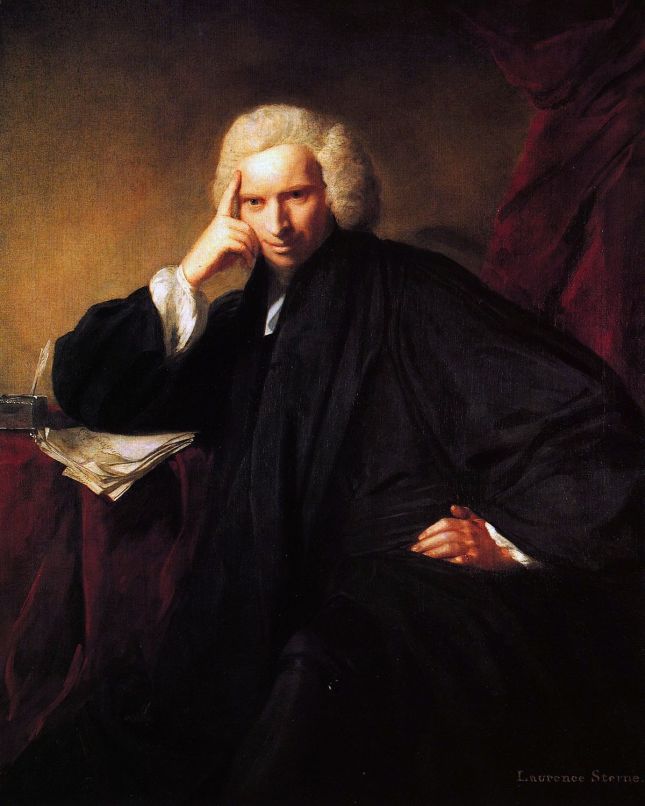
On This Day – 24 November 1713 Birth of Lawrence Sterne

1200px-Laurence_Sterne_by_Sir_Joshua_Reynolds.jpg


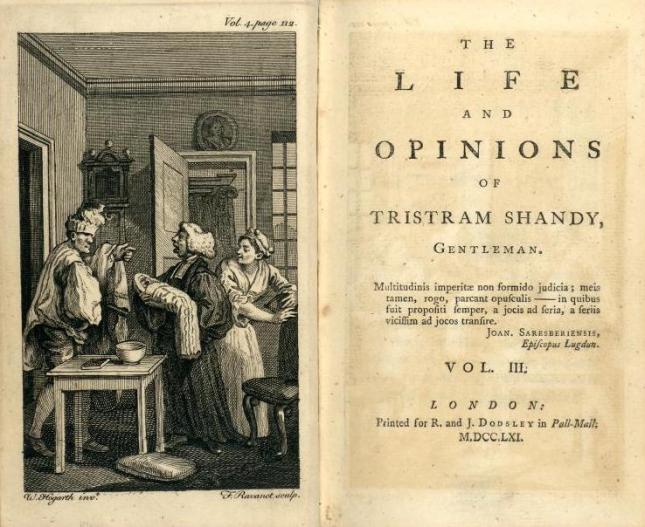
In this autobiographical novel—in an incident which typifies its lewd humour—the protagonist is accidentally circumcised when a sash falls as he is urinating out a window. The book is full of digressions, to the extent that the author doesn’t get around to describing his own birth until volume three. One page is entirely black. A post-modern classic of some kind? Actually, The Life and Opinions of Tristram Shandy, Gentleman, was published between 1759 and 1767.

It is the master work of, perhaps, the greatest, but most eccentric, novelists of the eighteenth century, Laurence Sterne. He’s one of the most accomplished English writers of that golden era. Except, of course, that like many other literary giants of the period, Richard Brinsley Sheridan and Oliver Goldsmith, for example, he’s not English, but Irish.

Sterne was born in Clonmel, Co. Tipperary in 1713, the son of a British Army officer with Irish family connections. The Sterne family moved around the country a lot—at different times Sterne lived in Clonmel, Wicklow, Dublin, Drogheda, Castlepollard and Carrickfergus. That’s an awful lot of blue plaques for one man. During these peregrinations Sterne lost four siblings in an era of horrendous child mortality.

Sterne eventually moved to England, at the age of ten, where, in the 1738, he was ordained as a clergyman. In 1759 he intervened in a row among clerics in Yorkshire by publishing a satirical work on the subject, entitled A Political Romance. This turned out to be both a wise, and unwise, move. On the positive side, it revealed Sterne’s comic and literary talents. However, the novel aroused so much animosity amongst his clerical peers that it ensured he would never become a bishop. Furthermore, at the behest of some of his scandalised and influential colleagues, copies of the book were burnt. Only a handful survived and most of those did not emerge until long after his death.

Sterne, who had tried to supplement his clerical income by farming—he was no good at it—now concentrated on writing. Despite suffering from tuberculosis from his mid-forties, he managed to write at prodigious speed, and produced more than a volume a year of the lengthy Tristram Shandy, until it was completed in 1767. The book brought him international renown. However, when it was discovered that the, often bawdy, novel, was the work of a parson, Sterne was subjected to opprobrium in equal measure.  Even the publication of two books of sermons failed to satisfy his prurient critics. This may have had something to do with the fact that a mischievous Sterne chose to publish them under the title The Sermons of Mr. Yorick, the name of a priest in Tristram Shandy.

For the good of his health, he left England for France in 1762. It can’t have been an entirely healthy move, because Britain and France were at war at the time. Nonetheless, Sterne’s reputation preceded him, and he was treated as a celebrity, rather than a spy, wherever he went. Some of his travels were incorporated into the later volumes of the life of Tristram Shandy, and into his last novel, A Sentimental Journey through France and Italy.

After his death, Sterne became the central character in a macabre gothic tale not of his devising. He died at the height of the era of the grave-robber, or ‘resurrectionist’. These were men whose business it was to provide corpses to the growing number of medical training establishments. Aspiring surgeons could only legitimately practice their anatomical skills on the bodies of hanged men and women. Because of the popularity of transportation as a humane alternative to capital punishment, legally acquired corpses were in shorter supply.

Sterne died in 1768, at the age of fifty-four, shortly after A Sentimental Journey was published, and was buried in the churchyard of St. George’s in Hanover Square. But he didn’t rest in peace for long. His body was stolen by grave-robbers, and sold to the University of Cambridge. There, however, it was recognised by a surgeon, and quietly re-interred in an unknown plot in the original cemetery. A skull, believed to be that of Sterne, emerged when the churchyard was re-developed in the late 1960s, which is highly ironic for someone who extracted so much humour from the name Yorick.

Laurence Sterne, author of Tristram Shandy and probably a century and a half ahead of his time, was born in Clonmel, two hundred and four years ago, on this day.


9030c1.jpg


On This Day – 17 November 1930 The first Irish Hospital Sweepstakes draw takes place

Irish_Hospitals_Sweepstake_-_Nurses_holding_up_the_picked_tickets_1946


For decades it offered people the hope, or the illusion, of potential riches. It appeared to be a benevolent charity that was channelling vast sums into an underfunded Irish medical system. Granted, it caused ructions around the globe because it was a popular but illegal lottery, but there was something poetic, or ironic at least, in the idea of British and American gamblers funding the Irish health service.

Of course, like so many apparently altruistic Irish institutions, it was mostly a sham, a money-grabbing masquerade designed to enrich a small number of already wealthy individuals. The Irish Hospital Sweepstakes, bears out the axiom that if something is too good to be true, it’s probably not true.

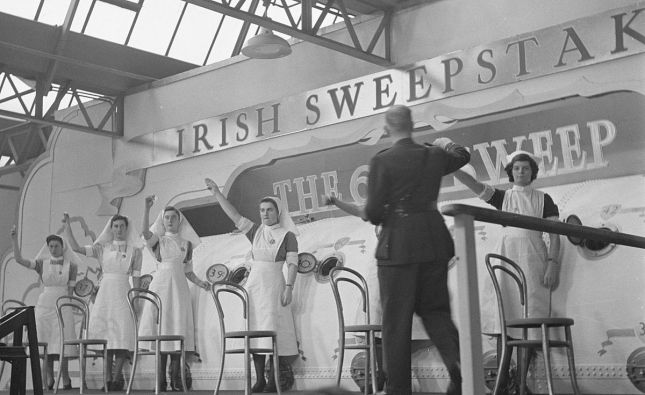
The first draw, in November 1930, was, in retrospect, utterly distasteful, but wonderfully stage-managed by the organisation’s own P.T. Barnum, Spencer Freeman. Two young boys from St. Joseph’s School in Drumcondra, both blind and wearing placards bearing the names ‘Willie’ and ‘Peter’, were supervised by Garda Commissioner, and future Fascist, Eoin O’Duffy, in drawing the winning tickets. Later the blind children would be replaced by smiling nurses. Three delighted Belfast men shared an astronomical and life-changing prize fund of £208,792. The Sweepstakes was well on its way to becoming the employer of up to four thousand people. The surplus was destined, after the deduction of appropriate administration costs, of course, to heal the sick. Everyone was a winner.

Except that everyone wasn’t. Less than ten percent of the turnover—still a considerable sum of money— found its way to the funding of Irish hospitals. Employees, mostly female, were badly paid, and much of the turnover enriched the stakeholders in the private company that ran the enterprise.

The Irish Hospital Sweepstakes was the brainchild of Dublin bookmaker Richard Duggan, War of Independence veteran Joseph McGrath, and Welsh-born Captain Spencer Freeman, a man with a flair for the theatrical. By 1932, after two years of clever marketing, illegal sales, and excessive point shaving, all three were millionaires.

The Sweepstakes also affected political relationships between Ireland and, in particular, Britain and the USA, where the sale of lottery tickets was illegal, but widespread. For their part, the British governments of the 1930s were not best pleased that millions of pounds were leaving the country illegally, bound for Eamon de Valera’s Irish Free State, in the midst of an economic war between the two countries.

In America McGrath’s erstwhile political ally, the veteran Republican Joe McGarrity, was in charge of operations. He wrote in his memoir that he used much of his own considerable personal profits from the venture, to purchase IRA guns. This was at a time when that organization was collaborating with Nazi Germany. Recently opened Secret Service files in London revealed that MI5 had fears that the same thing was happening in Britain.

Among the abuses of which the operators stood accused was a sort of ‘past-posting’ scam. Exploiting the time difference between Europe and the USA, the operators purchased shares in winning tickets from their unwitting holders, and claimed some of the prize money themselves. In 1936 Spencer Freeman, armed with the results of races, used this system to purchase half-shares in eight successful American tickets. He netted nearly a quarter of a million pounds in winnings from his own lottery. By the 1970s the directors had creamed off more than a hundred million pounds in profits.

And, surprise surprise, some of the proceeds from the Sweepstakes were allegedly used to fund the campaigns of friendly Irish politicians.

One distinctly unfriendly politician was Justice Minister Des O’Malley, who, in the 1970s, sought information on the allocation of the turnover from the lottery. So powerful was the Sweepstakes that he was pressurized into minding his own business. The government was reminded that any adverse publicity or punitive action against the directors would lead to the loss of hundreds of jobs. When, in 1973, the journalist Joe McAnthony finally exposed some of the dubious activities of the lottery in the Sunday Independent, all the Sweepstakes’ advertising in the newspaper was pulled.

When An Post was awarded the franchise to run the new National Lottery in 1986, that was the end of the Irish Hospital’s Sweepstakes. Its employees—mainly elderly women—were discarded, with virtually no provision being made for them.

The notion that it was all ‘great craic’ and, from a hospital’s point of view, better than a poke in the eye from a sharp stick, has its champions. However, at the very least, it is yet another example of the fledgling Irish State farming out vital services to bodies with an agenda of their own. In this case, that of making large fortunes for themselves.

The first winning tickets were drawn in the Irish Hospital Sweepstakes lottery, eighty-seven years ago, on this day.
 

9537768._UY400_SS400_.jpg


[Read this book if you want to know more]