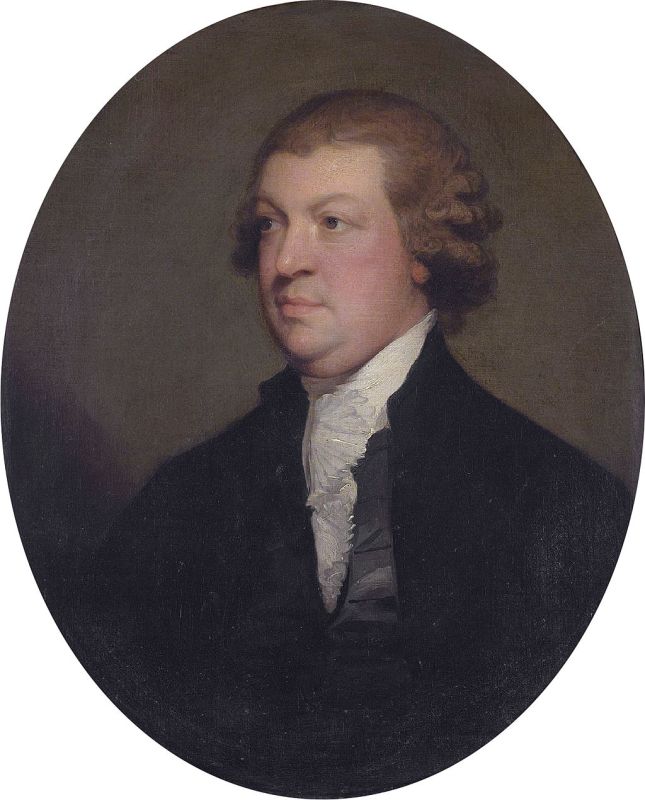
On this day – 9 June 1739   The real Copper-face Jack

John_Scott,_1st_Earl_of_Clonmell_by_Gilbert_Stuart.jpg


It’s the most famous night club in Ireland. By day it’s an innocuous basement in Harcourt Street, by night it’s frequented by people out to have a good time, or to get drunk, or both. The legend of Copper Face Jacks has not dimmed despite the supposed impoverishment of the entire island of Ireland since 2008. But who exactly was Copper Face Jack?

Actually, he was the grammatically more accurate Copper-faced Jack, and his real name was John Scott, 1st Earl of Clonmel and Lord Earlsfort

Scott was born into a landed family in Tipperary in the mid 18th century and was educated in Kilkenny College. While there, he came to the defence of a fellow pupil, Hugh Carleton, who was being tormented by another student. Carleton was the son of Francis Carleton, a wealthy merchant from Cork. When he heard of Scott’s courage and generosity Francis Carleton took the young man under his wing, and paid for Scott to study at Trinity College, Dublin with his son. Carleton’s support, however, turned out to be a mixed blessing because, shortly after Scott was called to the Bar in 1765 the Cork merchant prince went bankrupt. It fell to John Scott to support him to the tune of a hefty £300 a year until Hugh Carleton was in a financial position to do so.

Scott became an Irish barrister at a time when they were anything but a rarity. In the late 18th century Ireland had over seven hundred barristers when England and Wales had only six hundred between them. The Irish population would have been just over half that of England and Wales combined. Ireland was a litigious nation then, as now, and court cases offered cheap and respectable entertainment for the upper classes of Dublin.

Scott was highly successful at the profession, and used some of the sizeable income he made in the Four Courts to get himself elected to the Irish parliament, as member for Mullingar in 1769. Between 1774 and 1783 he was either Solicitor General or Attorney General for Ireland.  In 1784 he became Lord Chief Justice of the King’s Bench in Ireland. Although he was close to Henry Grattan, and was dismissed from his position as Attorney General for opposing the incursions of English officials on the small measure of Irish sovereignty obtained in 1782, he was not beloved of those revolutionary nationalists, the United Irishmen. One of their supporters, William Todd Jones, once wrote to Wolfe Tone of his ‘contempt and detestation’ of Scott.

Were Scott to have read the comment he might well have challenged William Todd Jones to a duel. He fought four in his lifetime, at least one over his involvement with another man’s wife, a Mrs. Cuffe, and almost fought a fifth against a political opponent for remarks made in the House of Commons in 1773. Despite his exalted legal position, he even defended duelling in certain instances, where there was no recourse to the law. ‘In cases of this complexion’, he observed, ‘the courts will never interfere.’

By the 1790s Scott, by now the Earl of Clonmel, had an income of about twenty thousand pounds per annum from a variety of different sources. He also had at least one thing in common with the venue that is called after him, he enjoyed life to the full. As his income expanded, so did his waistline. His diary suggests that he realized the need to lead a more modest lifestyle, but he never quite got around to it. The increasingly corpulent Clonmel finally succumbed to his own excesses at the early age of fifty-seven. In so doing he missed out on the United Irishmen’s rebellion, and the Act of Union, either of which might have killed him anyway.

So what about the famous nickname. Some authorities suggest that this came about because his incessant consumption of alcoholic beverages left him red-faced. Others insist that he had a complexion that was unusually tanned for his day. Either way he was stuck with the unflattering moniker ‘Copper-faced Jack’, which might have been expected to vanish with his passing. Given his elevated status in 18th century Ireland he would be unlikely to be unduly flattered that his nickname has lived on in the way that it has.

The birth of John Scott, aka the Earl of Clonmel, aka Copper-faced Jack, was noted by a breathless nation’s newspapers, two hundred and seventy-eight years ago, on this day.

 

From-the-files-of-the-DIB...Copper-faced-Jack-1.jpgIMG_9574.jpg

On This Day 2 June 1891 The penalty kick is born


20160625-penalty-kick.jpg

In order to break a stubborn deadlock trade unionists, employers, diplomats and politicians could do worse than adopt the policy of the football world, and go to penalties. This would, of course, greatly benefit Irish politicians involved in trying to end a log jam, as many were elected to office based on their sporting prowess rather than any obvious political nous.

As a punishment for bad behaviour, or a mechanism to end a stalemate, it’s fiendishly simple. The ball is placed on a marked spot eleven metres from the goal line and two negotiators, one at a distinct physical disadvantage, face each other. The principal agent in the process, known as the ‘penalty taker’, is expected to succeed in achieving his goal, which, of course, puts the party of the second part, known as the ‘goalkeeper’, at a huge psychological advantage.

Footballing nerds will be familiar with the fact that in 1986 the astronomically unfancied Steaua Bucharest won the European Cup—now the Champion’s League—beating Barcelona in the process. What may have been forgotten is that their victory was largely down to the fact that their goalkeeper, Helmut Duckadam, saved four consecutive penalties in the shootout after extra time. Penalties have a conversion rate of about 80-85%, but a missed penalty is not always as a result of a goalkeeper’s intervention (Roberto Baggio, Neymar, Chris Waddle and David Beckham take a bow at this point). So, go figure the odds against a keeper saving four in a row.

But where did it all begin?  Well actually in Milford, in County Armagh. And who came up with the idea? Surprisingly, an Irish-born goalkeeper.

William McCrum was the son and heir of a linen millionaire, who was so bad at organising the family business when his turn came, that he eventually ran it into the ground and was relegated. Of more significance, however, was his sporting life. He played rugby, cricket and soccer. In the case of the latter he was goalkeeper for Milford Football club during the 1890/91 season, when Milford played in the Irish Football League. It wasn’t a good year for them, and he can’t have been much of a goalkeeper, because Milford lost all fourteen of their games, and conceded an impressive sixty-two goals. That’s close to four goals per match. For the record, they scored ten. You can see why they finished last.

And that would have been it for William McCrum, a lousy goalkeeper on a lousy football team, had he not made a suggestion to his friend Jack Reid. Reid was the Irish Football Association’s representative on the International Football Association Board. That’s the nineteenth century FIFA, by the way, only not nearly as evil and corrupt. McCrum’s idea was a way of preventing Victorian defenders from chopping down opponents within inches of the goal line, or cynically handling the ball to prevent a score.

Like all great ideas it was simple and direct. Such transgressions would be punished by allowing the victims a virtually free shot at goal.

You’d have thought the idea would have been hailed as a stroke of genius, and the triumph of fair play, especially as it was the brainchild of a goalie, who obviously had no vested interest in the matter.  Instead McCrum’s idea was derided. Harrumphing Victorians lost their monocles in outrage at the suggestion that gentlemen would behave so unsportingly. Clearly the hacking of players about to score an open goal was always a tragic accident. The proposal became known as the ‘Irishman’s motion’ – ‘Irishman’ being a term of abuse in those days.

The legendary C.B.Fry, captain of the great Corinthians club—membership for gentlemen only—was apopletic at the notion, observing that it was:

‘A standing insult to sportsmen to have to play under a rule which assumes that       players intend to trip, hack and push opponents and to behave like cads of the most unscrupulous kidney.’

Then, on 14 February 1891, in an FA Cup Quarter final between Stoke and Notts County (anyone remember them?) an indirect free kick given after a deliberate hand ball was not converted. Fair play had been stood on its head, and McCrum’s idea gained currency in England. Shortly thereafter it became football’s Rule No. 13—unlucky for some, mostly goalkeepers like McCrum.

The next time England are, inevitably, defeated in a penalty shootout, it might be an idea to remind any grieving English friends that the penalty is an invention of the devil … an Irishman.

A proposal to introduce the penalty kick into the game of association football was adopted one hundred and twenty-six years ago, on this day.

0006f29c-1500.jpg


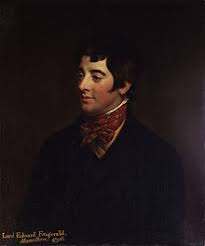
On This Day – 19 May 1798 Francis Magan betrays Lord Edward Fitzgerald


Unknown.jpegUnknown-1.jpeg

Today neither a birth nor a death, but an act of supreme betrayal.

Everyone knows that a variety of Irish revolutionary organizations were, over the years bedeviled by informers. Contrary to Brendan Behan’s famous axiom, it would appear that the first item on the agenda of such groups was not ‘the split’ but the decision on who would be the most effective government spy.

One of the most enthusiastic of those was Francis Magan—his most distinguished victim was the charismatic and highly romanticized United Irishman leader, Lord Edward Fitzgerald. Fitzgerald was the almost anonymous Magan’s polar opposite, aristocratic, idealistic and captivating. He had fought in the British Army in the American War of Independence, journeyed down the Mississippi river with an escaped African-American slave, Tony Small, who had saved his life on the battlefield, was elected to the Irish parliament as a supporter of the ‘Patriot’ leader, Henry Grattan, and joined the United Irishmen. Fitzgerald, despite his elevated social status, was pledged to the establishment of an Irish Republic, along French lines. In the planned rebellion of 1798 Fitzgerald was to lead the Dublin-based rebels.

Magan, born in 1774, was a lawyer who had come into a decent inheritance and was a man of independent means, but not fabulously wealthy like Fitzgerald, son of the Duke of Leinster. However, Magan didn’t exactly want for money, so his betrayal of the United Irishmen’s cause cannot be explained away simply by the pursuit of thirty pieces of silver. He joined the United Irishmen in 1792, and became a prominent member of the organisation’s Dublin committee.

Magan’s conduit to the government was the infamous Francis Higgins. Known as ‘The Sham Squire’ Higgins was the proprietor of Dublin Castle’s favourite newspaper, The Freeman’s Journal, and a long-standing government agent. Higgins informed the Under Secretary, Edward Cooke, Britain’s spymaster in Dublin, about Magan’s availability and his unrivalled access to the revolutionary plans of the United Irishmen. Cooke immediately recognized that the lawyer could prove to be an invaluable asset. He wasn’t far wrong. After negotiating a nice little earner for himself—£1000 for information leading to the arrest of Fitzgerald—Magan went to work.

In order to help him locate Fitzgerald, Magan organized a meeting of the Dublin United Irishmen in his own house, on the night of 17 May 1798. Lord Edward may even have spent the night in Magan’s home, at No. 20 Usher’s Island on the south quays. The authorities failed to apprehend Fitzgerald on that occasion, however. Time was running out for the Castle. On 19 May Fitzgerald was due to lead more than a thousand rebels in an attempt to seize the capital city. Enter Magan one more time. He kept the Castle informed of Lord Edward’s whereabouts—he wasn’t too far away from them, on Thomas Street—and this time they got their man. Fitzgerald was wounded in the attempt to arrest him, lingered for a few days, and died in Newgate Prison, on 4 June. The rebellion of the United Irishmen, as a consequence, failed utterly in Dublin.

The spies, however, fell out amongst themselves. In 1802 Higgins died without having handed over the £1000 that had been promised to his protégé. The Castle had been under the illusion that Magan had been paid off, and were dismayed when he sued the Higgins estate. They did not particularly want their machinations being discussed in open court, so the erstwhile informer was bought off with an award of £500.

Magan got away with it in his own lifetime. He died in 1834, and prior to that had been an active member of Daniel O’Connell’s Catholic Association. There is no evidence that his career as a ‘spook’ was extended into the 19th century, though he did offer to rat out a few more rebels in 1801. He was not outed as an informer until 1859, by the historian William J.Fitzpatrick, who also exposed Francis Higgins as a gifted but corrupt ‘supergrass’. Fitzpatrick, unaware that Magan was a relatively wealthy man, assumed that his actions had been prompted solely by greed.

Francis Magan successfully betrayed Lord Edward Fitzgerald to the British authorities two hundred and nineteen years ago, on this day.


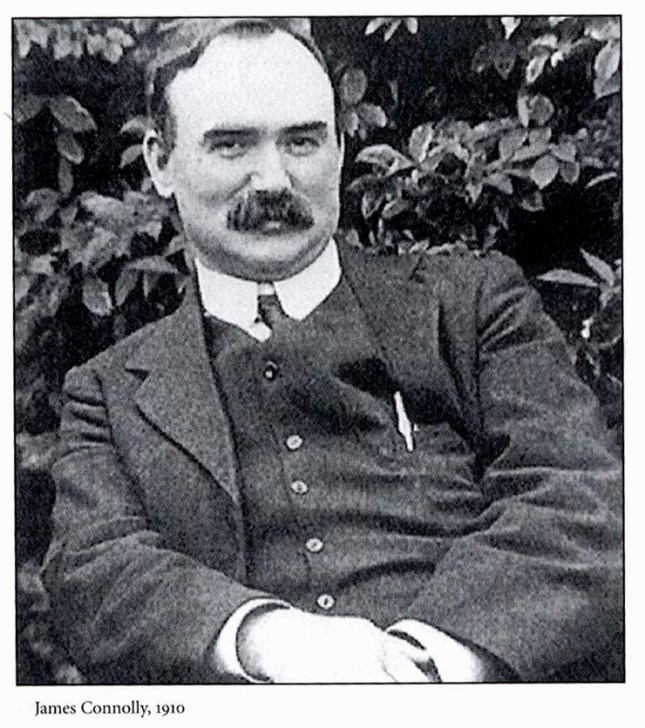
On This Day – 12 May 1916 Execution of Connolly and McDermott


James Connolly.jpg

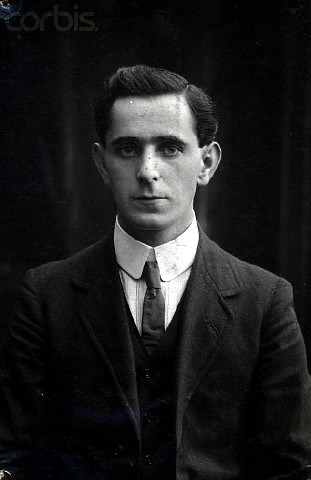
They couldn’t have come from more different personal and political backgrounds. One was born in an urban Scottish slum, the other in a small rural Irish village. One was a lifelong socialist, committed to proletarian revolution. The other was an equally committed Irish nationalist, and a member of the conservative Catholic organisation, the Ancient Order of Hibernians. But both died on the same day, and in the same cause. James Connolly and Sean McDiarmada were signatories to the 1916 proclamation of independence.

Connolly was born in the dismal Cowgate district of Edinburgh, of Irish parents, in 1868. He lied about his age—fourteen— and joined the British Army. He served in Ireland for seven years. He was to become involved with Keir Hardie in the Independent Labour party, and James Larkin in the Irish Transport and General Workers Union. He lived in the USA for seven years during which time he worked with the famous  trade union organisation, the Industrial Workers of the World, better known as the Wobblies. He co-founded the Irish Labour Party in 1912, and the Irish Citizens’ Army during the 1913 Lockout. It was this small group, of about 200 men and women—both genders enjoying equal status—that he led into the 1916 Rising alongside those members of the Irish Volunteers who showed up on Easter Monday after the debacle of Eoin MacNeill’s countermanding order.

Connolly, as well as being a man of action, was also a prolific writer and a Marxist intellectual. His most influential work, Labour in Irish History, is a clear-headed socialist assessment of the Irish narrative from the late 17th century. It contains the following gem.


The Irish are not philosophers as a rule, they proceed too rapidly from thought to action.


Sean McDiarmada was born in Kiltyclogher in Co. Leitrim in 1883. He moved to Dublin in 1908 where he became involved in a number of cultural and political organisations, including Arthur Griffith’s Sinn Fein, and the Gaelic League. He also became a covert member of the revolutionary nationalist organisation, the Irish Republican Brotherhood.

At an early stage in his revolutionary career he was taken under the wing of the old Fenian Thomas Clarke, and it was these two men, more than any others, who plotted and planned for the insurrection in 1916.

The manner of James Connolly’s death was probably the last straw for many Irish people who had initially opposed the Easter Rising. Connolly had been wounded in the fighting and was kept in an emergency medical facility in Dublin Castle after the surrender. He was probably within a few days of death when the British military commander, General Sir John Maxwell, aware that Prime Minister Herbert Asquith was on his way to Dublin to put an end to the executions, ordered that the court martial’s death sentence be carried out on the last surviving signatories of the proclamation.

Connolly was brought to Kilmainham jail in an ambulance, carried to the execution yard on a stretcher, and shot by firing squad while tied to a chair. It was the least astute political move on Maxwell’s part, in a week that can most generously be described as ‘counter-productive’.

McDiarmada, owing to the debilitating effects of polio, played little actual part in the Rising itsef. In fact he almost escaped detection and execution. He might not have been identified as a signatory of the proclamation, and one of the prime movers of the rebellion, had he not been spotted by a Dublin Metropolitan Police detective, Daniel Hoey. Hoey was later shot dead by members of the assassination squad of Michael Collins.

Other than their Irish nationalism the two men had little in common. Had they survived a successful Rising—rather a big ‘what if’—they might well have found themselves on opposing sides in a subsequent European-style class conflict. But that was not permitted to happen, due to the desire of Maxwell to eliminate any future threat from the leaders of radical and militant Irish nationalism and socialism.

James Connolly and Sean McDiarmada were executed separately in Kilmainham Jail one hundred and one years ago, on this day.


sean-mcd.jpg

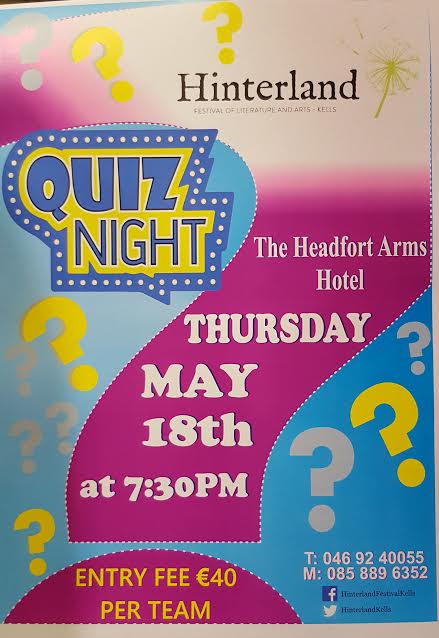
Hinterland Table Quiz, 18 May, Headfort Hotel, Kells, Co. Meath

Suitable for all ages, dispositions, interests!

‘Terrific’ @realDonaldTrump


QUIZ POSTER.jpg