Subterranean Barack Blues or Hey Mister Tangerine Man


obamabasketball4.jpg05098f648aaf09a12b0a06d1c69dc9ad.jpg


Ten years ago, I found myself living for six months in Berkeley, California. A recently announced candidate for the Democratic Party’s Presidential nomination was due to hold a rally in nearby Oakland, on St. Patrick’s Day. Like most people living in the USA in 2007 I was intrigued by this young, gifted and black politician (actually, as half-white and half-black he could just as easily be described as ‘white’). Of course, he hadn’t a hope against the Clintonafia but he was definitely one for the future.


It was a toss-up. The San Francisco St. Patrick’s Day Parade, or Barack Obama. Curiosity won out. I put my ‘Kiss Me I’m Irish’ tee-shirt back in the drawer, and took the BART to Oakland. It was one of the best decisions I ever made.


There is no need to describe how electrifying he was. Everybody knows the man is a rhetorician non pareil. He stood on a dais projected into the crowd, and introduced himself. He spoke for about twenty minutes without notes. Afterwards he shook hands with anyone who wanted to press his flesh. There were green tee-shirts on sale bearing the legend ‘🍀’Bama for President—St. Patrick’s Day, 2007, Oakland, California.’ I’m a sucker for commemorative tee-shirts, so I bought one. I still have it, though I was a bit surprised when the young vendor insisted on getting my email address before she sold it to me. Since that day I’ve had a decade of personal emails from the man himself. Where does he get the time?


He inherited a nightmare dreamed up by neo-liberals and deficit Republicans. He leaves with approval ratings touching sixty-percent (George W. Bush was at thirty-nine). His finger has been in the dike for eight years. When he withdraws it—forced into doing so by the twenty-second amendment—his successor’s fist will gleefully smash through the hole Obama has been protecting.


Granted, he campaigned in dizzying poetry and often governed in leaden prose. He has disappointed his progressive constituency. He acted as judge and jury on a number of Middle Eastern radicals, left the vultures of Wall St alone or strengthened, kept Guantanamo open, disregarded the misery of Aleppo.


Perhaps his greatest achievement—aside from the now-imperilled Affordable Care Act—was incumbency. While he was in the White House, albeit gelded by a resentful Congress, he was a bulwark against the regressive forces that have now been released.


If we apply the Monty Python test—‘What has Obama ever done for us’—he has bled, read, healed, smiled, cried, soothed, embraced, turned the other cheek repeatedly (perhaps too often) and exercised a level of adult self-control unfamiliar in once and future presidents. His grace, example, open-mindedness, charm, articulacy, folksiness, intelligence, humour and calmness were provocations to those affronted by the sight of a black man in the White House.


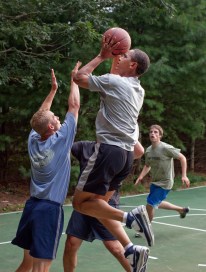
And what about that jump shot?


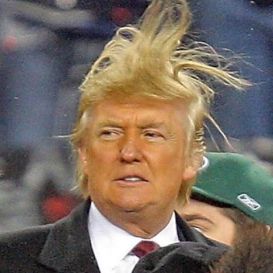
On 9 November 2016 anyone with even vague pretensions to progressivism or leftism experienced the pain felt by Breitbart-man on 2 November 2008.  We can only hope that four years from now (please let it not be eight) the right will be as disappointed with the actual results of a Trump presidency as the left is with Obama’s. They certainly won’t be disappointed by Trump’s style. I wonder. Is this the first time an incoming President has read fewer books than his predecessor has written?


As usual Shakespeare has it covered. Act 3 Scene Four of Hamlet. The Prince of Denmark is closeted with his mother. He presents her with a picture of the late King, her husband. Simply substitute the word ‘President’ for ‘husband’ and away we go.


Look here, upon this picture, and on this,
The counterfeit presentment of two brothers.
See, what a grace was seated on this brow;
Hyperion’s curls; the front of Jove himself;
An eye like Mars, to threaten and command;
A station like the herald Mercury
New-lighted on a heaven-kissing hill;
A combination and a form indeed,
Where every god did seem to set his seal,
To give the world assurance of a man:
This was your husband. Look you now, what follows:
Here is your husband; like a mildew’d ear …


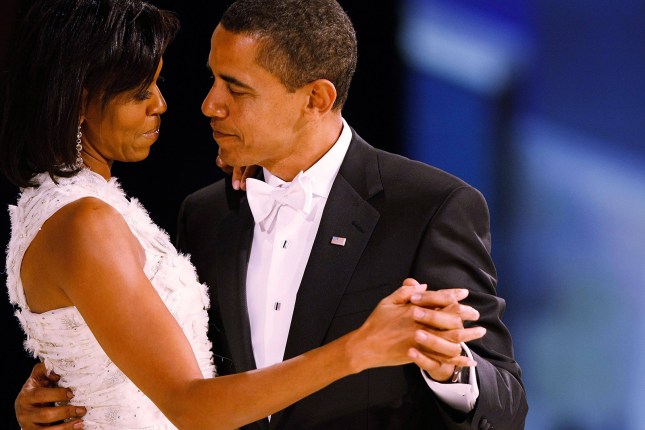
Let’s hope for some 2020 vision. Best case scenario, four years from now Barack Obama returns to 1600 Pennsylvania Avenue as consort of the first woman President.
Obama-and-Michelle-Obama-Dance-The-Trent.jpg


Glasnevin Winter Lecture series -Francis Ledwidge and Head Wyn – ‘Poets of the Black Chair’


220px-Francis_Ledwidge_edited-copy.jpgHedd_Wyn_01(a-dg).JPG

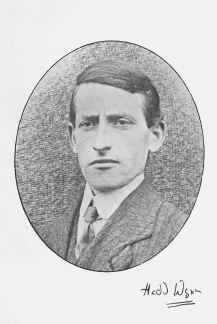
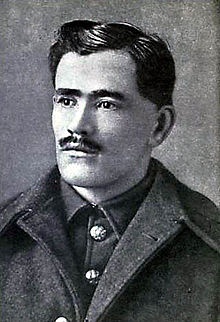
There is no evidence they ever met, or knew of each other, but the Meath poet Francis Ledwidge and the Welsh language poet Ellis Humphrey Evans (Head Wyn) have much in common and shared a similar fate.

Both were born in rural communities in 1887 and died on the same day, 31 July 1917, at the start of the Battle of 3rd Ypres (Passchendaele). They are buried a few rows apart in the Artillery Wood Cemetery in Flanders. Both were influenced by the great Welsh epic poem The Mabinogion. Both, for different reasons, came to resent their involvement in the war machine of 1914-18.

They will be the subject of a talk to be given by myself, and Dr. Nerys Williams of the UCD School of English, in Glasnevin Cemetery Museum, as part of their Winter Lecture series, on 9 February. The talk will include translations of the work of Hedd Wyn by Dr. Williams, who is also an award winning English-language poet (Sound Archive, 2011, winner of the Strong Poetry Prize 2012)

The series also includes talks on a variety of subjects related to 1917 to be given by Brian Hanley, Michael Kennedy, Conor Kostick, Liz Gillis and Kate O’Malley.

All lectures start at 7.00 pm at the Museum’s Milestone Gallery.

glasnevin-lecture-poster-2017

On This Day 6.1.1839 – The Night Of The Big Wind

The-night-of-the-big-wind-in-Ireland-1839-1.jpgcapture.jpg

Snow fell over much of the country on 5 January 1839, but then as often happens in Ireland the weather changed completely, temperatures rose and the snow rapidly melted. For a few hours the country basked in unseasonable warmth. No one had the slightest idea of what lay in store.

Gradually, during the day, the winds rose. The first area affected was County Mayo where a strong breeze and heavy rains swept in from the Atlantic at around midday. Nollaig na mBan, the religious feast of the Epiphany, wasn’t going to be that pleasant a day after all.

There was a belief among the impressionable that the world would come to an end, that the Apocalypse would descend, on 6 January and one Nollaig na mBan would finally prove to be the day of Final Judgment. And that was before the Apocalypse of the Night of the Big Wind.

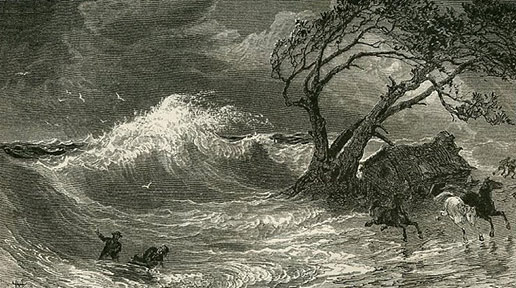
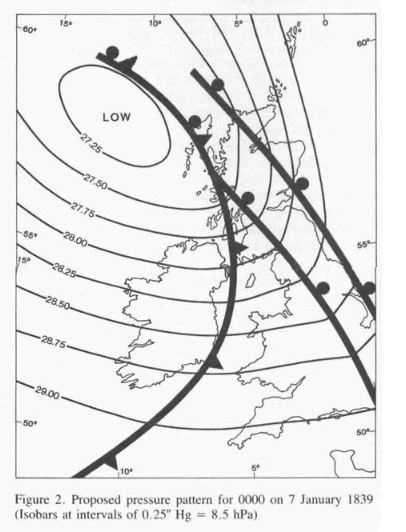
The squally weather that first appeared on the west coast quickly moved eastwards, and worse followed in its wake. The storm began to gather strength. Soon it was powerful enough to blow down the steeple of the Anglican church in Castlebar. As it moved across the midlands the wind was gusting at over a hundred knots – around  a hundred and eighty five kilometers an hour. According to the scale devised by the Navan born hydrographer and naval officer, Sir Francis Beaufort in 1805, that was a force 12 – hurricane force.

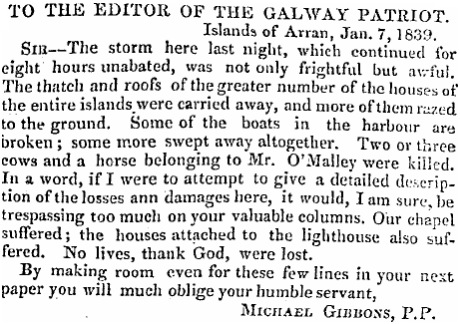
It was the most destructive wind to hit Europe in more than a century – another hurricane in 1703 had largely bypassed Ireland. But our geographical position on the western periphery of the continent meant that this time early Victorian Ireland caught the main brunt of nature’s awe-inspiring strength. By the time the wind had blown itself out upwards of three hundred people were dead, many at sea. Forty-two ships had sunk either sheltering or vainly attempting to reach shelter. Most of the shipping damage was on the badly hit west coast. So strong were the surging winds that some inland flooding was caused by sea-water.

The Big Wind spared no one. Well-built aristocratic homes and military barracks were destroyed or badly damaged, as were the bothies and cottages of the rural poor. Exposed livestock was vulnerable, not only to the Big Wind itself but to the starving aftermath as crops and stores of fodder were obliterated.

Ironically, given the prevailing conditions, much of the damage was caused by fire. The winds fanned the embers of turf fires abandoned overnight in hearths. The sparks set fire to thatched roofs. These conflagrations were then spread to adjacent roofsespecially  in small towns like Naas, Kilbeggan, Slane and Kells. Seventy-one houses were burned in Loughrea, over a hundred in Athlone.

The County of Meath was right in the path of the wind and the Dublin Evening Post reported that ‘the damage done in this county is very great. Not a single demesne escaped, and tens of thousands of trees have been snapped in twain or torn up by the roots, and farming produce to an immense amount destroyed.’

The city of Dublin didn’t escape either. The tremendous gusts devoured a quarter of the buildings in the capital before the wind raced across the Irish Sea to Britain and continental Europe before finally dissipating. The river Liffey rose and overflowed the quays in the centre of the city. A noon service at the Bethesda Chapel in Dorset street had given thanks on 6 January for deliverance from a potentially destructive fire – that night the wind whipped up the embers of the fire and consumed the church.

One of the unexpected consequences of the Night of the Big Wind came almost seventy years later after the British government introduced an old age pension for the over seventies. As the formal registration of births in Ireland had only begun in 1863 many septuagenarians, legitimately entitled to a pension, had no birth certificates to prove their age. One of the ways of ascertaining their entitlement devised by civil servants was to ask the question  ‘Do you remember the Night of the Big Wind’. If they did they got their pension.

Hurricane force winds destroyed property, and killed hundreds of people and animals as ‘The Night of the Big Wind’ struck Ireland one hundred and seventy-eight years ago, on this day.

aran.png

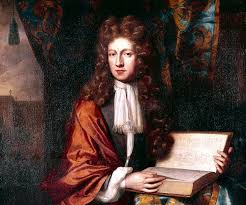
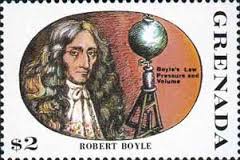
On This Day – 30.12.1691 – Irish scientist Robert Boyle dies


Unknown.jpegUnknown-1.jpeg

You’d think that someone who published a work with the words ‘touching the spring of the air’ in the title was probably some class of a poet. But in the case of Robert Boyle you would be wrong. The full title of what was actually a scientific paper was New experiments physico-mechanical, touching the spring of the air and its effects

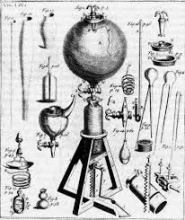
Boyle was one of the most extraordinary and influential Irish-born scientists – in the paper with the semi-poetic title he was experimenting with a vacuum chamber and assessing the impact of the withdrawal of air on light, flame and living creatures. Not very healthy in the latter case would have been one of the conclusions, no doubt.

Boyle was the fourteenth child and seventh son of the Great Earl of Cork, Richard Boyle, buccaneer, con-man, adventurer, consummate politician and soldier. Born in the picturesque surroundings of Lismore Castle in Waterford the young Boyle was dispatched to Eton at the age of eight and, thereafter, spent only a few years in Ireland. While Dad was cheating, lying, bullying and finagling his way to a huge fortune and almost unparalleled political influence young Robert was playing with his chemistry set. Out of this work came recognition as the first modern chemist and the formula for which he is best known and which is named after him, Boyle’s Law – of which more anon.

Boyle, along with a private tutor, Robert Carew, with whom he could converse in Irish, did the Grand Tour of Europe in his mid-teens in an era well before the Grand Tour became the norm for aristocratic families. In the course of his extended vacation he visited Florence in 1641 where he may have met an elderly Galileo Galilei. As an aspiring scientist he did try to live and work in Ireland but gave up in 1654, describing the land of his birth as ‘a barbarous country where chemical spirits were so misunderstood and chemical instruments so unprocurable that it was hard to have any Hermetic thoughts in it.’

From the early 1650s Boyle devoted himself to science and to a variety of potential inventions – according to his own notes his experiments included research into  ‘the prolongation of life’, ‘the art of flying’, ‘perpetual light’, ‘a certain way of finding longitudes’ and ‘potent drugs to alter or exalt imagination’ – had he been able to paint he might have been a new Leonardo da Vinci, had he been born a few hundred years later – given the latter topic –  he might have been Timothy Leary.

In 1662 he used an air pump built by his assistant Robert Hooke to come up with the axiom that bears his name – It goes thus –  ‘For a fixed amount of a gas kept at a fixed temperature, pressure and volume are inversely proportional.’ – and that’s as deeply as we are going to go because I’m already well outside my comfort zone. In coming up with Boyle’s Law he got in fourteen years ahead of the French scientist Edme Mariotte who came to the same conclusion, otherwise the principle would today be known as Mariotte’s Law and Robert Boyle would be familiar only to chemists as an early innovator.

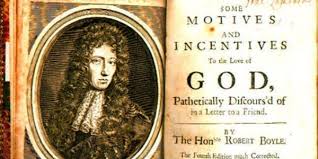
As if all that wasn’t enough Boyle was also a philosopher and theologian – though his work in those areas did attract a certain amount of opprobrium. His 1665 Occasional Reflections upon Several Subjects was lampooned by Jonathan Swift in his own Meditation Upon a Broomstick.

But of probably greater significance was the work he produced in 1661, the year before the publication of Boyle’s Law, this was called The Sceptical Chemist in which he hypothesized that matter consisted of atoms and clusters of atoms in motion. Not bad for someone writing more than three and a half centuries ago. The Boyle Medal for Science has been presented in his honour since 1899.

Robert Boyle, the Father of Chemistry, died three hundred and twenty five years ago, on this day.

Unknown-2.jpegimages.jpeg


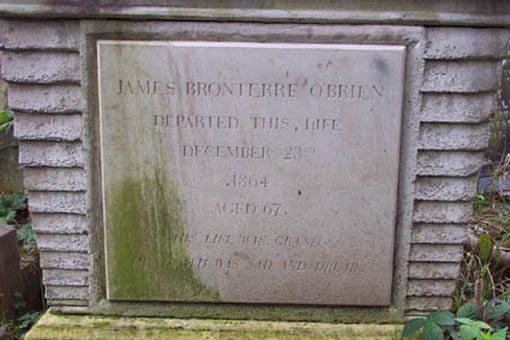
On This Day – 23.12.1864 Death of Chartist James ‘Bronterre’ O’Brien


d110chrtst.jpg

james_bronterre_obrien.jpg


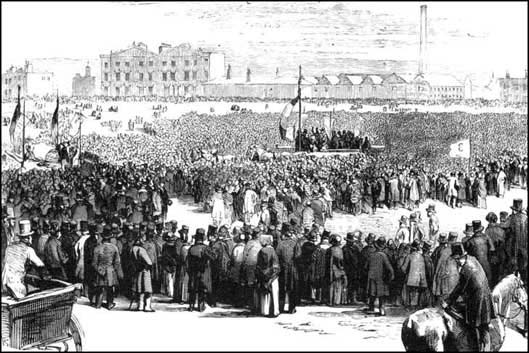
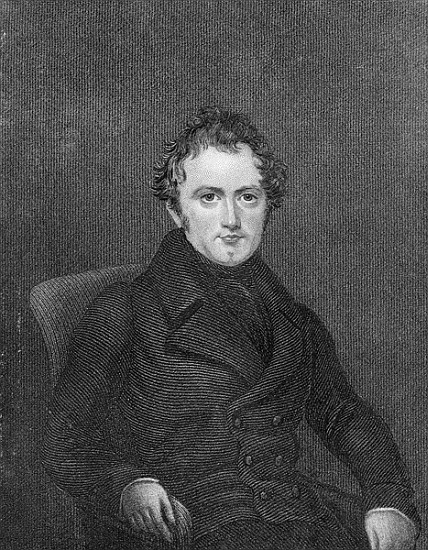
It was Brendan Behan who is supposed to have observed that the first item on the agenda of any Irish radical movement was ‘the split’. But it wasn’t just true of the Irish. The great British quasi-revolutionary organisation of the 1840s, the Chartists, also fell victim to vicious factionalism. But Behan wasn’t too far wrong, because at the centre of the dissension were two Irish journalists.


James O’Brien was born near Granard, Co. Longford in 1804 or 1805. Feargus O’Connor, born in 1794 or 1796, was from West Cork. Both studied at Trinity College and both are noted for the radical English newspapers they helped establish. In O’Brien’s case it was the Poor Man’s Guardian to which he contributed articles under the pseudonym ‘Bronterre’, before eventually adopting the nom de plume or nom de guerre as his middle name. O’Connor was the long-time editor of the much more celebrated Northern Star, named in tribute to the famous newspaper of the Ulster United Irishmen and for its home town of Leeds. Both men became central to the organisation and campaigning of one of the most important radical movements in British 19th century history.


The Chartists sought six basic demands –  universal male suffrage for all men of sound mind over the age of twenty-one, the secret ballot, the abolition of property qualifications for MPs, the payment of parliamentarians, constituencies of equal size and annual elections.


The organisation drew its name from the 1838 People’s Charter, the document that encapsulated the six demands. Public meetings and demonstrations were held around the country but the original petition – with 1.3 million signatures – was rejected by parliament in 1839. A second petition, this time with three million signatories, followed in 1842. It too was rejected. An economic depression then led to strikes and violence, both of which became associated with the Chartist movement. In 1848, with a wave of revolutions taking place across Europe Chartism re-emerged in England and Wales as a vibrant radical force. The previous year Feargus O’Connor had been elected as MP for Nottingham. A new petition was prepared, the Chartists claiming it contained five million signatures. It may, however, only have amounted to around two million and many of those were proven to be bogus.   The movement foundered when repressive legislation was introduced by the government and many of its leaders were arrested and deported.


Charged with sedition in 1840 James O’Brien served eighteen months in jail, during which time his wife and four children were virtually destitute. Feargus O’Connor was charged with seditious libel via the pages of the Northern Star in 1839 and also served eighteen months in prison. The split between the two men came about after their release from incarceration when O’Connor advocated support for the Tories against the incumbent Whig government in a general election of 1841. Their differences became intensely personal and were conducted in the columns of their respective newspapers. O’Brien referred to his compatriot as ‘The Dictator’-  which was actually not a grossly unreasonable assertion –  while O’Connor cruelly dubbed O’Brien, ‘The Starved Viper’.


Neither came to a good end. O’Brien died in his late fifties an impoverished alcoholic. O’Connor suffered poor mental health, possibly exacerbated or caused by syphilis. When he physically attacked a fellow MP in 1852 he was committed to an asylum. He died three years later, also in his late fifties.


Although Feargus O’Connor’s impressive ego was blamed by many contemporary commentators for the collapse of the Chartist movement few modern historians accept that the personality of one man could have had such a malign influence.  By the end of WW1 all six points of the People’s Charter of 1838, other than annual elections, had been implemented, with the considerable bonus of female suffrage thrown in for good measure.


James Bronterre O’Brien, radical journalist and Chartist, died one hundred and fifty two years ago, on this day.

1926_1020383383.jpg