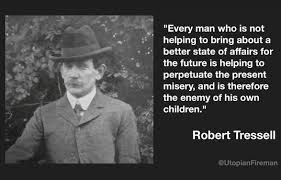
OTD – 3 February 1911 – The death of Robert Tressell


250px-Tressell.jpgUnknown.jpeg

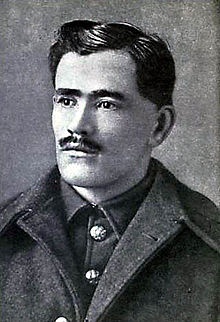
He was something of a contradiction – he had a number of different names for a start, was an avowed socialist who sent his only child to private schools while he could afford it, and, despite writing one of the definitive working class novels of the early 20th century, once had a black manservant.

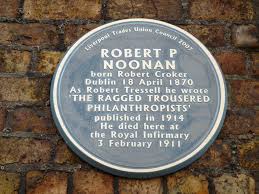
We know him as Robert Tressel, author of one of the most influential left-wing novels of the last 100 years, The Ragged-Trousered Philanthropists. But his original name was Robert Croker. He was the product of an extra-martial relationship between his mother, Mary Noonan and a Royal Irish Constabulary Inspector, Samuel Croker, who died five years after his birth.

He was born in Wexford Street in Dublin in 1870 and, largely thanks to his mother, whose name he later adopted, he was well-educated up to the time he left Ireland, at the age of sixteen. By 1890 he was in South Africa, working as a signwriter, and writing articles for Cape Town newspapers.  He had one child, Kathleen, from an unhappy and short-lived marriage there. He moved them both to Johannesburg in 1897, where he became involved with the centenary commemoration of the 1798 rebellion. He also became acquainted with Irish nationalists John MacBride and Arthur Griffth in the Transvaal, and later helped to establish the Irish Brigade, which fought against the British Army in the Boer War. Whether or not he actually participated in the conflict himself, is one of the many imponderables of his short life.

He returned to England in the early 1900s, settling down on the south coast, and working as a signwriter and house painter. Here he joined the Social Democratic Federation, a forerunner of the Independent Labour Party. It was during this period that he began work on what was to be a hugely significant novel.

The Ragged-Trousered Philanthropists, which may originally have been intended to be called The Ragged-Arsed Philanthropists, was finished in 1910, and amounted to a virtually unpublishable 400,000 words. It was rejected by the first three publishing houses Noonan approached. Thoroughly depressed, and also suffering from tuberculosis, he is said to have attempted to burn the manuscript. His daughter Kathleen, who played a huge part in the novel’s eventual status, apparently rescued it from destruction.

The Ragged-Trousered Philanthropists is set in the southern coastal town of Mugsborough—Hastings in disguise. The names of many of the characters are as subtle as the naming of the location. They include Botchit, Grinder, Leavitt, Starvem, Crass and Slyme. The philanthropists in question are house painters—the nom de plume chosen by Noonan is a pun on one of their essential pieces of equipment, the trestle table. Their philanthropy, according to the main character, the socialist Frank Owen, lies in the offering of their services to their employers for such low wages—‘benefactors in ragged trousers who willingly hand over the results of their labour … to the rich’—as Frank Owen puts it himself.

Having failed to secure a publisher for his work, Noonan decided to emigrate to Canada in 1911, but only made it as far as Liverpool. He died en route, of pulmonary tuberculosis. He was only forty years of age.

And that might have been the end of the road for The Ragged-Trousered Philanthropists, were it not for Noonan’s devoted daughter. Kathleen managed to persuade the writer and journalist Jessie Pope, infamous for some awful patriotic WW1 poetry, to look at the manuscript in 1913. She recommended it to her publisher, and undertook to edit the volume herself. In the process, she redacted much of the socialist content, and produced a highly bowdlerized version of the material. A second edition, published in 1918, was also abridged, but was closer to the original source.

A 1940 Penguin edition of the work, was widely read by British soldiers of the Second World War, and is said to have influenced the outcome of the 1945 General Election, which returned Labour to power. Though that’s quite a claim for a mere book. The Ragged-Trousered Philanthropists didn’t appear in its original form until 1955. Since then it has been adapted many times for radio and TV.

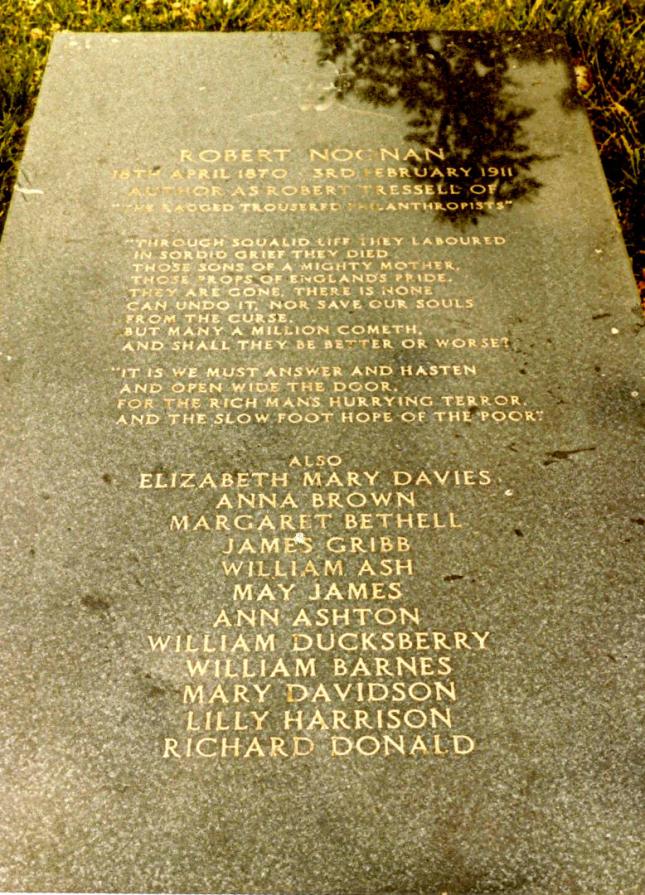
Noonan, or Tressel if you’d prefer, was buried in an unmarked grave in Liverpool, and his final resting place was not identified until 1968. It now bears a memorial, as does the house of his birth in Dublin.

The author of The Ragged-Trousered Philanthropists died one hundred and six years ago, on this day.


Drivetime podcast 3/2/2017

http://www.rte.ie/radio1/drivetime/podcasts/
 

14739278_120873137096.jpg


images.jpeg


27 January 1885 
- Parnell turns the first sod on the West Clare Railway


perpost.gifWClareMap.jpg

In extenuation for his many crimes, it was once suggested that at least Benito Mussolini, the Italian Fascist leader, ‘made the trains run on time’. It’s hardly enough to erase the invasion of Abyssinia, and his alliance with Nazi Germany, nor the liquidation of a number of inconvenient political opponents.

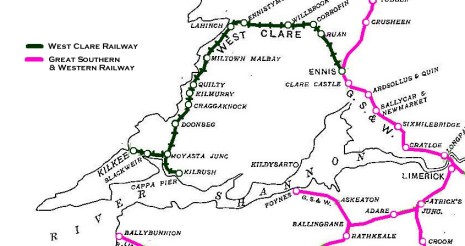
But you can’t even offer that excuse, in the case of one of the great villains of Irish history, Captain William Henry O’Shea. The reason O’Shea didn’t make the trains run on time, was that he was one of the great parliamentary champions of the notoriously dilatory West Clare Railway. This narrow-gauge iron road ran, if that particular word doesn’t suggest far too much urgency, between Ennis and Moyasta, and thence west to Kilrush, or east to Kilkee, whichever was your preference. It travelled the route via Ennistymon, Lahinch and Milltown Malbay. It was the last operating narrow-gauge passenger railway in the country. The problem is that it just wasn’t very reliable.

train-clare[1].jpg

Despite its lack of length—it was only twenty-seven miles long when it opened in 1887—it was actually two railways, the West Clare and the South Clare, which met at Milltown Malbay. Hardly comparable to the iconic junction of America’s Union Pacific and Central Pacific Railroads at Promontory Point in Utah, but very exciting for the good citizens of Clare nonetheless, who now found it much easier to get around and to connect with the country’s main rail network at Ennis. The line was later extended to forty-eight miles in overall length.

Although work had already started the previous November, the sod was not officially turned on the original construction site until January 1885. O’Shea, the semi-detached Nationalist MP for Clare, wanted his pound of flesh, after months of lobbying parliament to ensure that funds were made available for the project, so the party leader himself, Charles Stewart Parnell, was recruited to pop over from his unwedded bliss with O’Shea’s wife Katharine in London, and do the needful with a shovel. Also in attendance was the man chosen to build the railway, one William Martin Murphy, who would have his own days in the sun during the infamous Dublin Lockout of 1913.

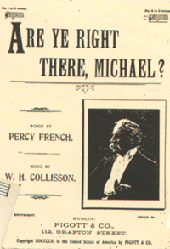
Of course, the railway was immortalized by its hilarious brush with the songwriter and performer Percy French. He successfully sued the line for loss of earnings, after arriving four and a half hours late for an engagement in Kilkee, on 10 August 1896 thanks, he alleged, to the rather relaxed attitude of the railroad employees to the joys of timetabling. He won £10 and costs at the Ennis Quarter Sessions in January 1897.

Now most sensible corporations, when in a hole, stop digging. But not the West Clare Railway. They appealed the decision at the next Clare Spring Assizes, held before the formidable jurist, Chief Baron Palles. French might have forfeited the case, as he arrived an hour late for the hearing. But his explanation—‘I took the West Clare Railway here, your honour’—probably sealed the case in his favour, though unless he was travelling from coastal Clare it was a humorous porky.

In the course of his contribution French offered a couplet that suggested he had a certain composition in mind already. He informed the Chief Baron that, ‘If you want to get to Kilkee / You must go there by the sea’. The lines didn’t actually make it into his final revenge on the hapless railway line ‘Are you right there Michael’ which begins:


You may talk of Columbus’s sailing

Across the Atlantical Sea

But he never tried to go railing

From Ennis, as far as Kilkee


Incidentally, on the same day as Percy French’s court appearance, one Mary Anne Butler from Limerick was also suing the railway, alleging that she had been attacked by a malevolent donkey on the platform in Ennis.

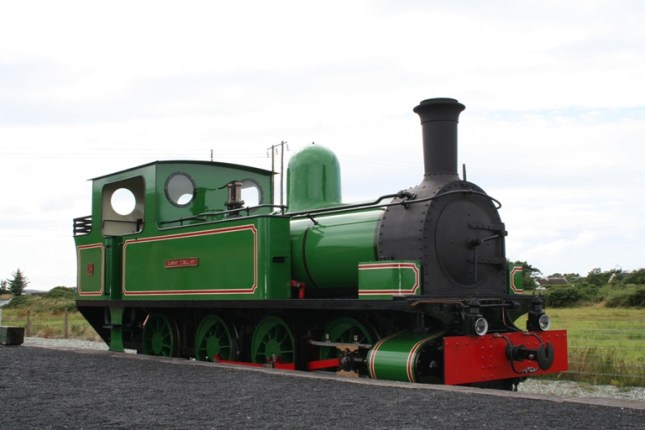
The line closed down in 1961, but thanks to a group of local enthusiasts the West Clare Railway lives once more. Part of the line, between Moyasta and Kilkee, has been restored, and one of the original engines, the exquisite Slieve Callan, is back in use.

The national press reported, that the first sod of the West Clare Railway was turned by Charles Stewart Parnell, one hundred and thirty-two years ago, on this day.


img_5685_0.jpg


Subterranean Barack Blues or Hey Mister Tangerine Man


obamabasketball4.jpg05098f648aaf09a12b0a06d1c69dc9ad.jpg


Ten years ago, I found myself living for six months in Berkeley, California. A recently announced candidate for the Democratic Party’s Presidential nomination was due to hold a rally in nearby Oakland, on St. Patrick’s Day. Like most people living in the USA in 2007 I was intrigued by this young, gifted and black politician (actually, as half-white and half-black he could just as easily be described as ‘white’). Of course, he hadn’t a hope against the Clintonafia but he was definitely one for the future.


It was a toss-up. The San Francisco St. Patrick’s Day Parade, or Barack Obama. Curiosity won out. I put my ‘Kiss Me I’m Irish’ tee-shirt back in the drawer, and took the BART to Oakland. It was one of the best decisions I ever made.


There is no need to describe how electrifying he was. Everybody knows the man is a rhetorician non pareil. He stood on a dais projected into the crowd, and introduced himself. He spoke for about twenty minutes without notes. Afterwards he shook hands with anyone who wanted to press his flesh. There were green tee-shirts on sale bearing the legend ‘🍀’Bama for President—St. Patrick’s Day, 2007, Oakland, California.’ I’m a sucker for commemorative tee-shirts, so I bought one. I still have it, though I was a bit surprised when the young vendor insisted on getting my email address before she sold it to me. Since that day I’ve had a decade of personal emails from the man himself. Where does he get the time?


He inherited a nightmare dreamed up by neo-liberals and deficit Republicans. He leaves with approval ratings touching sixty-percent (George W. Bush was at thirty-nine). His finger has been in the dike for eight years. When he withdraws it—forced into doing so by the twenty-second amendment—his successor’s fist will gleefully smash through the hole Obama has been protecting.


Granted, he campaigned in dizzying poetry and often governed in leaden prose. He has disappointed his progressive constituency. He acted as judge and jury on a number of Middle Eastern radicals, left the vultures of Wall St alone or strengthened, kept Guantanamo open, disregarded the misery of Aleppo.


Perhaps his greatest achievement—aside from the now-imperilled Affordable Care Act—was incumbency. While he was in the White House, albeit gelded by a resentful Congress, he was a bulwark against the regressive forces that have now been released.


If we apply the Monty Python test—‘What has Obama ever done for us’—he has bled, read, healed, smiled, cried, soothed, embraced, turned the other cheek repeatedly (perhaps too often) and exercised a level of adult self-control unfamiliar in once and future presidents. His grace, example, open-mindedness, charm, articulacy, folksiness, intelligence, humour and calmness were provocations to those affronted by the sight of a black man in the White House.


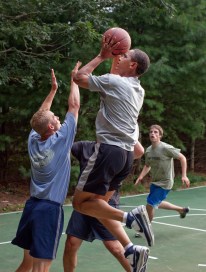
And what about that jump shot?


On 9 November 2016 anyone with even vague pretensions to progressivism or leftism experienced the pain felt by Breitbart-man on 2 November 2008.  We can only hope that four years from now (please let it not be eight) the right will be as disappointed with the actual results of a Trump presidency as the left is with Obama’s. They certainly won’t be disappointed by Trump’s style. I wonder. Is this the first time an incoming President has read fewer books than his predecessor has written?


As usual Shakespeare has it covered. Act 3 Scene Four of Hamlet. The Prince of Denmark is closeted with his mother. He presents her with a picture of the late King, her husband. Simply substitute the word ‘President’ for ‘husband’ and away we go.


Look here, upon this picture, and on this,
The counterfeit presentment of two brothers.
See, what a grace was seated on this brow;
Hyperion’s curls; the front of Jove himself;
An eye like Mars, to threaten and command;
A station like the herald Mercury
New-lighted on a heaven-kissing hill;
A combination and a form indeed,
Where every god did seem to set his seal,
To give the world assurance of a man:
This was your husband. Look you now, what follows:
Here is your husband; like a mildew’d ear …


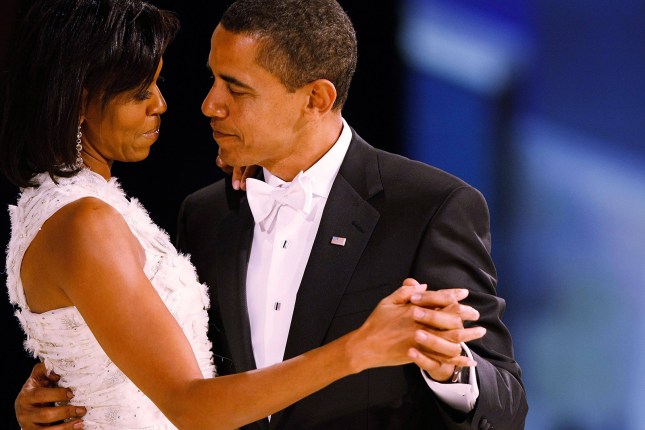
Let’s hope for some 2020 vision. Best case scenario, four years from now Barack Obama returns to 1600 Pennsylvania Avenue as consort of the first woman President.

Obama-and-Michelle-Obama-Dance-The-Trent.jpg


Glasnevin Winter Lecture series -Francis Ledwidge and Head Wyn – ‘Poets of the Black Chair’


220px-Francis_Ledwidge_edited-copy.jpgHedd_Wyn_01(a-dg).JPG

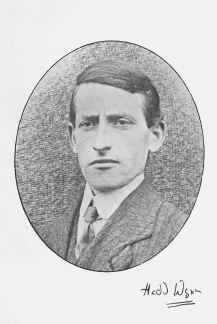
There is no evidence they ever met, or knew of each other, but the Meath poet Francis Ledwidge and the Welsh language poet Ellis Humphrey Evans (Head Wyn) have much in common and shared a similar fate.

Both were born in rural communities in 1887 and died on the same day, 31 July 1917, at the start of the Battle of 3rd Ypres (Passchendaele). They are buried a few rows apart in the Artillery Wood Cemetery in Flanders. Both were influenced by the great Welsh epic poem The Mabinogion. Both, for different reasons, came to resent their involvement in the war machine of 1914-18.

They will be the subject of a talk to be given by myself, and Dr. Nerys Williams of the UCD School of English, in Glasnevin Cemetery Museum, as part of their Winter Lecture series, on 9 February. The talk will include translations of the work of Hedd Wyn by Dr. Williams, who is also an award winning English-language poet (Sound Archive, 2011, winner of the Strong Poetry Prize 2012)

The series also includes talks on a variety of subjects related to 1917 to be given by Brian Hanley, Michael Kennedy, Conor Kostick, Liz Gillis and Kate O’Malley.

All lectures start at 7.00 pm at the Museum’s Milestone Gallery.

glasnevin-lecture-poster-2017

On This Day 6.1.1839 – The Night Of The Big Wind

The-night-of-the-big-wind-in-Ireland-1839-1.jpgcapture.jpg

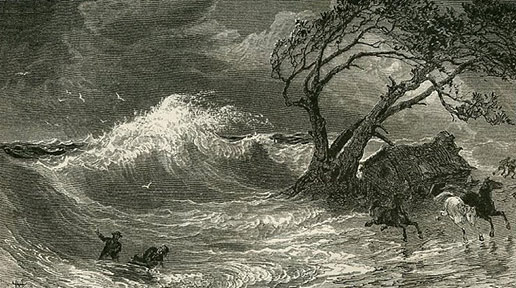
Snow fell over much of the country on 5 January 1839, but then as often happens in Ireland the weather changed completely, temperatures rose and the snow rapidly melted. For a few hours the country basked in unseasonable warmth. No one had the slightest idea of what lay in store.

Gradually, during the day, the winds rose. The first area affected was County Mayo where a strong breeze and heavy rains swept in from the Atlantic at around midday. Nollaig na mBan, the religious feast of the Epiphany, wasn’t going to be that pleasant a day after all.

There was a belief among the impressionable that the world would come to an end, that the Apocalypse would descend, on 6 January and one Nollaig na mBan would finally prove to be the day of Final Judgment. And that was before the Apocalypse of the Night of the Big Wind.

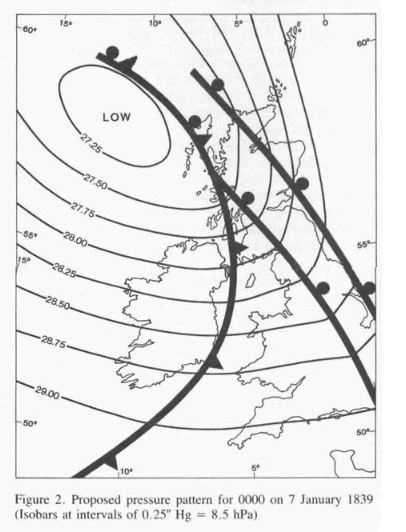
The squally weather that first appeared on the west coast quickly moved eastwards, and worse followed in its wake. The storm began to gather strength. Soon it was powerful enough to blow down the steeple of the Anglican church in Castlebar. As it moved across the midlands the wind was gusting at over a hundred knots – around  a hundred and eighty five kilometers an hour. According to the scale devised by the Navan born hydrographer and naval officer, Sir Francis Beaufort in 1805, that was a force 12 – hurricane force.

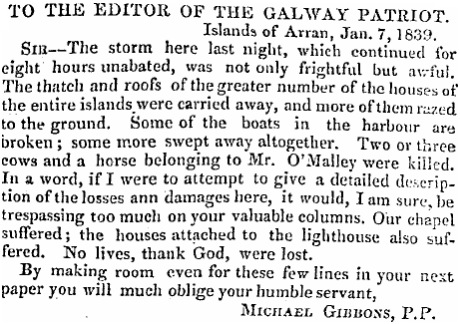
It was the most destructive wind to hit Europe in more than a century – another hurricane in 1703 had largely bypassed Ireland. But our geographical position on the western periphery of the continent meant that this time early Victorian Ireland caught the main brunt of nature’s awe-inspiring strength. By the time the wind had blown itself out upwards of three hundred people were dead, many at sea. Forty-two ships had sunk either sheltering or vainly attempting to reach shelter. Most of the shipping damage was on the badly hit west coast. So strong were the surging winds that some inland flooding was caused by sea-water.

The Big Wind spared no one. Well-built aristocratic homes and military barracks were destroyed or badly damaged, as were the bothies and cottages of the rural poor. Exposed livestock was vulnerable, not only to the Big Wind itself but to the starving aftermath as crops and stores of fodder were obliterated.

Ironically, given the prevailing conditions, much of the damage was caused by fire. The winds fanned the embers of turf fires abandoned overnight in hearths. The sparks set fire to thatched roofs. These conflagrations were then spread to adjacent roofsespecially  in small towns like Naas, Kilbeggan, Slane and Kells. Seventy-one houses were burned in Loughrea, over a hundred in Athlone.

The County of Meath was right in the path of the wind and the Dublin Evening Post reported that ‘the damage done in this county is very great. Not a single demesne escaped, and tens of thousands of trees have been snapped in twain or torn up by the roots, and farming produce to an immense amount destroyed.’

The city of Dublin didn’t escape either. The tremendous gusts devoured a quarter of the buildings in the capital before the wind raced across the Irish Sea to Britain and continental Europe before finally dissipating. The river Liffey rose and overflowed the quays in the centre of the city. A noon service at the Bethesda Chapel in Dorset street had given thanks on 6 January for deliverance from a potentially destructive fire – that night the wind whipped up the embers of the fire and consumed the church.

One of the unexpected consequences of the Night of the Big Wind came almost seventy years later after the British government introduced an old age pension for the over seventies. As the formal registration of births in Ireland had only begun in 1863 many septuagenarians, legitimately entitled to a pension, had no birth certificates to prove their age. One of the ways of ascertaining their entitlement devised by civil servants was to ask the question  ‘Do you remember the Night of the Big Wind’. If they did they got their pension.

Hurricane force winds destroyed property, and killed hundreds of people and animals as ‘The Night of the Big Wind’ struck Ireland one hundred and seventy-eight years ago, on this day.

aran.png