On this day – 6 May, 1882 The Phoenix Park Murders


ILN1883P190596.jpg

Had it not been for a tight and uncomfortable new pair of boots late 19th century Irish history might have been very different. The boots belonged to Superintendent John Mallon, head of detectives at Dublin Castle. He was on his way to meet an informer near the Viceregal Lodge in Phoenix Park on the afternoon of 6 May 1882. It was warm, and his feet were sore. When he was met near the eastern entrance to the park by one of his officers who told him not to walk through the Park as he had spotted some well-known Fenians in the area, Mallon succumbed to the offending footwear, and the warning, and headed home instead of going to meet his informant.


Had he strolled on into the Park, however uncomfortably, his presence might have prevented one of the most vicious and notorious murders in Irish history. A short while after Mallon did his about-turn the new chief secretary for Ireland, Lord Frederick Cavendish, a nephew by marriage of prime minister William Gladstone, decided, on his first day in Dublin, to walk from his office in Dublin Castle, to his new lodgings in Phoenix park – today it’s the U.S. Embassy. While en route he was passed by the carriage of his under secretary, the Galwayman Thomas H.Burke, effectively the head of the Irish civil service.Burke was a figure not greatly beloved in his own country at a time of repressive measures during the so-called Land War which had bedeviled the country for the three years.


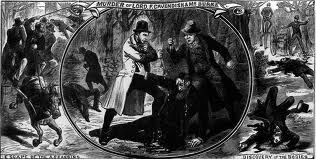
When Burke recognized the lone walker as the new Chief Secretary he stopped his carriage and offered Cavendish a lift. The Chief Secretary declined and Burke sealed both their fates by offering to walk with him instead. As the two men approached the Viceregal Lodge they were accosted by a group of four men who produced surgical knives and proceeded to attack Burke. When Cavendish intervened to defend his Under Secretary he, in turn, was attacked and murdered. Burke’s killers had no idea of the identity or the importance of the man who had tried to defend their intended target.


The intervention of the new Chief Secretary and his brutal murder undoubtedly elevated the status of the crime and increased the intensity of the subsequent investigation. Later that night notes were posted through the letterboxes of the main Dublin newspapers claiming that the assassinations were the work of a shadowy new organisation, the Irish National Invincibles. This was a small, ruthless covert group that emerged from the ranks of the Irish Republican Brotherhood but which maintained no specific ties with that organization.


The timing of the atrocity could not have been worse. It came a couple of days after an agreement between the British government and the Irish party leadership to end the Land War and almost sabotaged the secret diplomacy that promised to terminate that rancorous conflict.


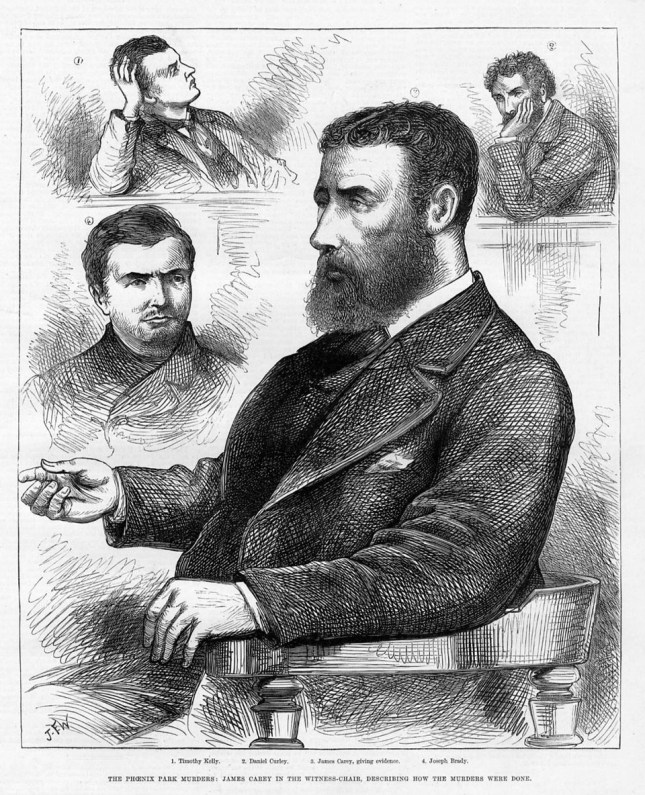
It took almost a year to apprehend and punish the killers of Cavendish and Burke. Six men were hanged for the crime, including two of the main ringleaders, Joe Brady and Daniel Curley. One of the other masterminds behind the assassination escaped with his life by informing on his colleagues. James Carey was one of a number of informers produced by the Crown in the case against his fellow Invincibles, but his evidence was crucial. Superintendent Mallon had essentially hoodwinked Carey into confessing and turning states evidence. While Brady, Curley and their associates were either hanged or jailed for lengthy terms Carey was freed and given a new identity.


Carey’s freedom, however, was short-lived. He was smuggled out of Ireland destined for South Africa a few weeks after the six Invincible hangings. Recognised on board the ship taking him and his family to their new lives he was shot dead by one Patrick O’Donnell when they reached dry land. O’Donnell, was, in turn, hanged for his own crime.


The Phoenix Park murders took place 131 years ago on this day.


killings-phoenix.jpgPunch_Anti-Irish_propaganda_(1882)_Irish_Frankenstein.jpg

On This Day – 29 April 1916 – Patrick Pearse agrees to unconditional surrender


pearse.jpggallery_30.png

With Elizabeth O’Farrell obscured                         Minus Elizabeth O’Farrell entirely


It was never going to be much more than a futile gesture to begin with, but few of those in the know, who gathered in Dublin on Easter Monday, 24 April 1916 for Irish Volunteer manoueuvers, would have expected the rebellion they had planned to last as long as a week. The failure of the German steamer the Aud to land 25,000 rifles and a million rounds of ammunition on Good Friday, the arrest of Roger Casement in Kerry and the decision of Volunteer commander Eoin MacNeill to countermand the order for units to assemble on Easter Sunday, had lengthened the odds against the Easter Rising being anything other than a brief skirmish.

That it lasted almost a week was down to British incompetence as much as it was to Irish luck or pluck. Though there were inefficiencies on both sides. While the rebels famously failed to take the wide-open Dublin Castle, the well-positioned Trinity College and the strategically important Crow Street Telephone exchange, the flower of the British administration in Ireland was enjoying the fleshpots of Fairyhouse Racecourse while they were being made fools of in Dublin.

Two myths among many. Patrick Pearse did not read the proclamation of the Irish republic from the steps of the General Post Office. He read it from in front of the building. The GPO, then, and now, doesn’t have any steps. The document he was reading bore the signatures of the members of the Military Council of the Irish Republican Brotherhood and James Connolly representing the Irish Citizen’s Army. But it was not their death warrant. The document Pearse was reading was of no use to a prosecutor even in the drumhead courts-martial that followed the rebellion. The reason was simple – the names were printed. The authorities would have had to produce a signed original for it to be of any practical assistance in convicting the signatories.

Most of the fatalities incurred, as the British sought to take back the city of Dublin, were civilians, more than 250 of them. Forty of those were under the age of sixteen. One of the civilian fatalities was the pacifist Francis Sheehy Skeffington, brutally murdered on the orders of an insane British officer, Captain J.C. Bowen Colthurst from Cork as he went about thr city trying to prevent looting. 64 members of the Volunteers or the Irish Citizens Army lost their lives, as did 116 British soldiers. Most of those were from the Sherwood Foresters, picked off on Mount Street Bridge by a small unit sent from the nearby Bolands Mills by 3rd Battalion Commandant Eamon De Valera. When the Forester’s disembarked in Kingstown – now Dun Laoghaire – they were surprised to hear people speaking English. They assumed they’d just landed in wartime France.

James Connolly may or may not have claimed that capitalists would never destroy property even to end a rebellion – he is unlikely to have been sufficiently naïve to have ever said any such thing – but destroy it they did. Much of the centre of Dublin was laid waste by the shells of the gunboat Helga and British artillery stationed in Phibsborough and Trinity College.

The Volunteers’ Headquarters in the General Post Office was never actually taken by the British forces – it was abandoned by the Volunteers before its total destruction by shelling. Shortly after the evacuation of the GPO the rebel leadership bowed to the inevitable six days after the Rising began. That began a busy day for Nurse Elizabeth O’Farrell who was given the dangerous job of informing the other garrisons, most of which remained untaken, that the Rising was at an end.

Patrick Pearse agreed to an unconditional surrender one hundred years ago on this day.


On This Day – 22 April 1905 William O’Shea dies


73_small_1252847020-200x300.jpg200px-KittyOShea.jpgparnell.jpg


We don’t use the word cuckold much these days. Neither do we use the expression ‘criminal conversation’ very often. As it happens the two are related. A cuckold is the victim of criminal conversation. He – and it’s always a ‘he’ – is a wronged husband. The fact that the term for the female equivalent, ‘cuckquean’ is utterly obscure, though probably more common numerically, says a lot.

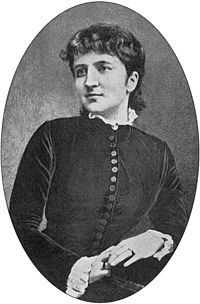
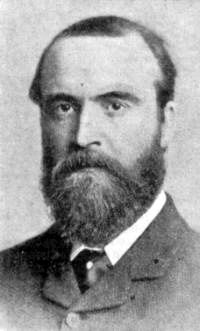
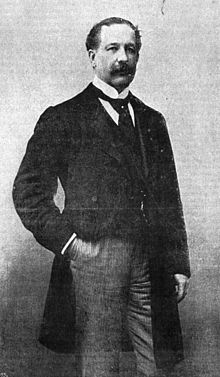
The most famous Irish cuckold – in truth ‘notorious’ is probably a better word – was undoubtedly William Henry O’Shea. His estranged wife, Katharine, entered into a relationship with Charles Stewart Parnell in 1880 that ended with his death in 1891. In the interim O’Shea, who of course played the part of the injured husband in the sensational divorce trial of 1890, turned a blind eye to what was, in effect, a second marriage for Katharine.

O’Shea, son of a Dublin lawyer who bought up a lot of bankrupted estates after the Famine – making him a sort of mid 19th century client of NAMA – was educated in England and then at the Catholic University (later UCD). There he was the despair of the celebrated cleric John Henry Newman who later escaped to become a Cardinal.

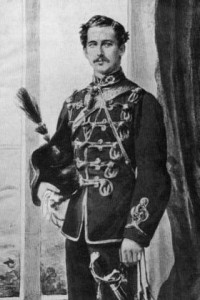
The young O’Shea joined the Hussars and was encouraged by his father to spend a lot of money on entertainment. I’ll repeat that in case you think you misheard. He was encouraged by his father to spend a lot of money on entertainment. What’s a young man to do when a parent is foolish enough to say ‘go waste my fortune on wine, women and song and make as many influential friends as possible.’ Of course it ended in tears when the young O’Shea nearly sent his old man to the same bankruptcy courts which had helped him acquire the basis of his fortune in the first place.

O’Shea never really succeeded at anything very much, other than being an accomplished cuckold and a pompous, self serving politician. In his twenties he tried banking and breeding horses. He failed at both. Then he went into politics, standing as a candidate in Clare in the 1880 general election. After he won a seat in the House of Commons he insisted his wife, from whom he was long separated by then, should invite influential MPs to a series of soirees over which she would officiate.

In 1881 the gallant Hussar found out about his wife’s newly established relationship with Parnell and challenged the Irish Party leader – his political boss – to a duel. When Parnell accepted with a tad too much enthusiasm O’Shea suddenly changed his mind about pistols at dawn and let it slide. From then on he milked as much advantage as he could out of the relationship while waiting for Katharine’s rich aunt to die and leave her a fortune from which he assumed he would benefit.

Between 1881 and 1889 he managed to overlook the fact that his wife and Parnell had three children together and that the Irish leader even moved his horses and beloved scientific equipment into the establishment he kept with Katharine.

It was only when the aged aunt died and left her money to her niece in such a way the he couldn’t touch a penny of it that O’Shea ‘discovered’ – to his utter shock and horror – that Katharine had been carrying on behind his back. Who knew? Well actually half of London knew but we’ll let that go. He sued for divorce on Christmas Eve 1889.

As we know Parnell’s career was destroyed by the divorce case, though he was able to marry Katharine a few weeks before he died unexpectedly in October 1891.

O’Shea lingered on for another fourteen years. His funeral in 1905 was attended by two people, one of whom was his son. He died one hundred and eleven years ago, on this day.


220px-CaptWilliamOShea.jpg


On This Day -15 April 1912 – The Titanic sinks on her maiden voyage

csm_05210__I_RMS_TITANIC_347cc45361.jpg

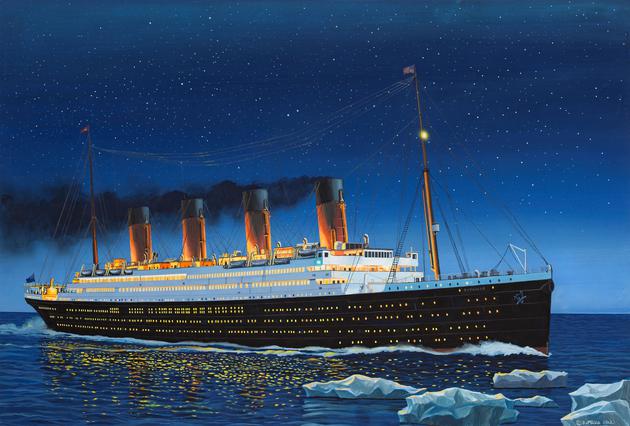
Nowadays we celebrate human disaster almost as much as success, except we call it commemoration. That’s the rationale behind the magnificent Titanic Experience in Belfast. Remembrance = tragedy + time. You’d have thought the citizens of Belfast would not be so keen to remind the world that the RMS Titanic, which sank in 1912 in the North Atlantic with the loss of 1513 lives was built in the Harland and Wolff shipyard in East Belfast. But somebody has to cater for our fascination with this doomed vessel so why not the descendants of the people who built it?

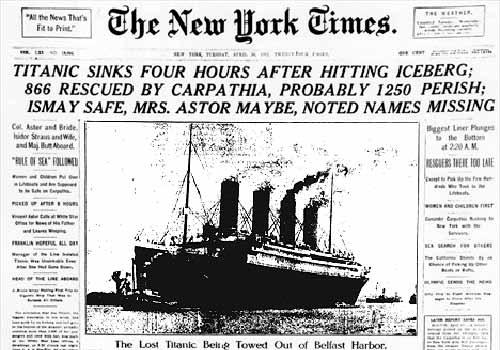
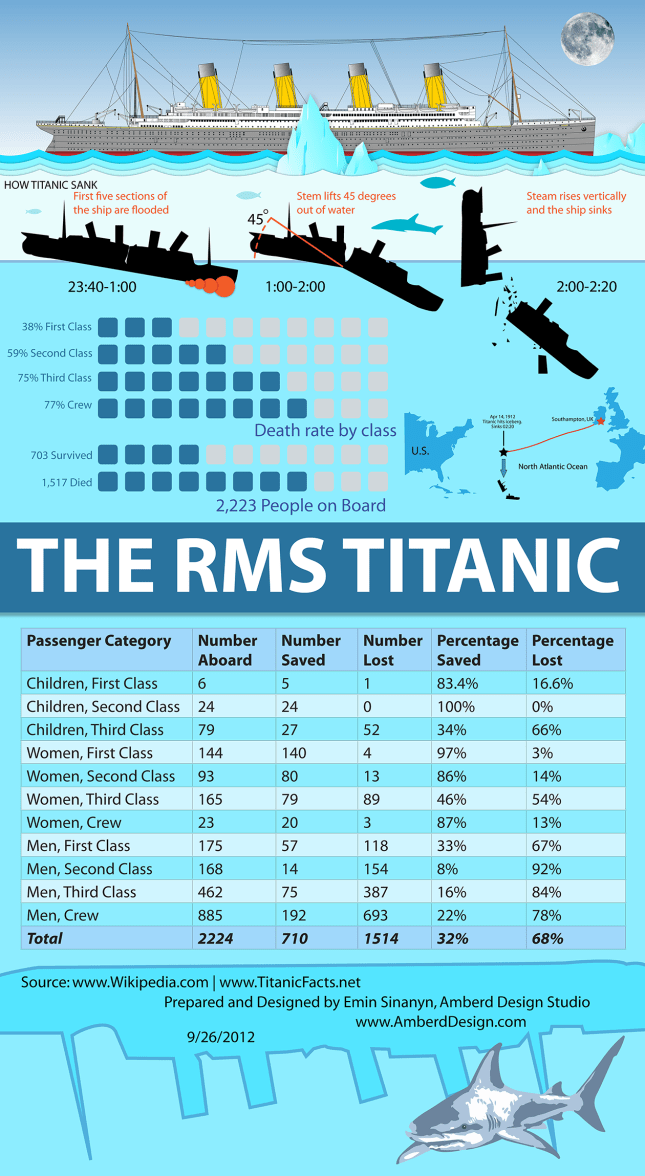
The facts of this marine catastrophe are well-known. The White Star liner R.M.S. Titanic was the largest ship afloat when it collided with an iceberg on its maiden voyage at 11.40pm on 14 April 1912 and, to the shock of all concerned, sank at 2.20 the following morning, bringing the majority of its passengers with it. Just as Belfast is the port associated with its birth Cork is the harbour closest to its demise.

The Titanic arrived in Cork Harbour on its maiden voyage from Southampton on Thursday 11 April. It was too big to land in Cobh so tenders were used to bring passengers on board. One of the travellers who had made the trip from England was the Jesuit priest Father Francis Browne one of the most enthusiastic amateur photographers of the early years of the 20th century. He was only booked for the first leg of the journey and spent most of the trip taking the last pictures ever seen of the ship and many of its passengers. An American couple offered to pay his way to New York and back. Browne telegraphed the provincial of the Jesuit order to seek permission. The response was rapid, terse and probably saved Browne’s life – the telegram read simply ‘Get off that ship’. Think of the amazing pictures we would have lost had Browne’s boss been a fuzzy indulgent type.

Even more fortunate was Titanic stoker John Coffey, a native of Cobh, or Queenstown as it was then known. Stricken by homesickness he sneaked off the ship by hiding among the mailbags being taken back by one of the tenders to the Cobh dock.

Among the more prominent citizens who went down with the ship were its designer, Thomas Andrews, its Captain, Edward Smith, the multi-millionaires John Jacob Astor and Benjamin Guggenheim, and the campaigning journalist W.T.Stead. The gazillionaire J.P.Morgan was also supposed to make the trip but cancelled at the last minute.

One prominent citizen who did not go down with the ship was J.Bruce Ismay, Managing Director of the White Star Line. That meant he was around to field all the awkward questions about how the apparently unsinkable should have succumbed to a mere iceberg. There were also a number of awkward questions about how he managed to survive the sinking to field the other awkward questions.


Most of the Irish passengers were travelling in third class – or steerage – having paid just over £7 for the privilege. Contemporary reports suggest that they were enjoying the trip until rudely interrupted by the iceberg. One account has Irish steerage passengers chasing a rat around the lower decks – presumably it was exercising that unerring rodent instinct and was already on its way to deserting the sinking ship.

In case this all seems like a remote historic event removed from us by over a century it should be pointed out that the last surviving passenger of the ill-fated vessel, Elizabeth Dean, died in 2009 aged 97. She had been a babe in arms when rescued.

Sorry to disappoint but Jack Dawson and Rose Calvert never sailed on the Titanic – they are both merely lucrative figments of the imagination of filmmaker James Cameron.

The R.M.S. Titanic, pride of the White Star line sank to the bottom of the Atlantic Ocean one hundred and four years ago, on this day.


titanic.jpg


titanic-infographic.png


This wonderful infographic has been designed by Emin Sinanyan – if you want to see the full graphic (and more besides) go to …

http://www.amberddesign.com/portfolio/infographics/titanic-infographic.html


OTD – 8 April 1861 – John George Adair evicts 244 tenants on his estate at Derryveagh, Co. Donegal


Adair.jpg

If he is fondly remembered anywhere – a moot point – it is in the USA rather than the country of his birth. John George Adair is the kind of person who did little for his fellow countrymen and for his own reputation. Born in the 1820s, the son of a gentleman farmer from Laois, he once stood as a Tenant Rights candidate in a parliamentary election in the 1850s and was described by the Young Ireland newspaper the Nation as ‘a cultured young squire’. Which is rather ironic because by the 1860s he had journeyed about as far from the Tenant Rights cause as it was possible to travel and still remain on Planet Earth. Another irony was that he once trained as a diplomat. Had he pursued a career in this area he would have been to diplomacy what Donald Trump is to self-deprecation .

One account of his life has him buying up bankrupted post- Famine estates and evicting tenants wholesale. He was certainly responsible for one of the most notorious mass evictions in Irish history.

In 1857 he had begun to acquire land (around 30,000 acres) in the Glenveagh/Derryveagh area of Donegal. Later, in 1867, he would build the magnicent Glenveagh House on the land he had purchased. Exactly what prompted him to clear the estate is disputed. It may have been the murder of his steward, James Murray, in 1861 or it may have been an incident during which he was surrounded and intimidated by tenants while he exercised the hunting rights he claimed over their land. Whatever the cause, the outcome was a bitter and vindictive campaign in the course of which 244 men, women and children from forty-seven families were thrown out of their holdings and left to shift for themselves. Such was the outcry at the time that a charitable organisation, the Donegal Relief Committee, was formed which paid for the passage of most of the evictees to Australia, where they were given plots of land to work.

Tiring somewhat of his status as a member of the Irish landed gentry, and perhaps slightly chastened by the notoriety he had acquired even among his own often rapacious class, Adair established himself in New York in the mid-1860s. He married well – to Cornelia Wadsworth Ritchie of blue-blooded Connecticut stock – and began making a fortune that would enable him to divide his time between the USA and his Donegal estate.

Adair’s fame in America is based on his business association with one of the most significant figures of the American West, Charles Goodnight.

In the 1860s Goodnight, along with his partner Oliver Loving, had brought his cattle herd from the agriculturally depressed Texas as far north as Wyoming in search of a decent market price for his steers. In doing so they created what became known as the Goodnight–Loving Trail. As a rancher Goodnight had frequent need of capital. Adair had plenty of that and in the early 1880s Adair became a business partner of Goodnight in the JA Ranch in Palo Duro Canyon in Texas. Although Adair didn’t know the horns of a steer from the more unpleasant end of his anatomy the spread – which extended for more than 5000 square kilometres – was still given the initials of the Irish money-man.

Although Adair was, by and large, a ‘sleeping’ partner, he had clearly made this particular investment as something of an indulgence, an attempt to identify himself with the romance and adventure of the West. For example he and his wife insisted on accompanying Goodnight on the inaugural trip from Colorado to Texas with the cattle that would form the basis of their herd of over 100,000 steers. In the course of the journey the Adairs reported to their host that they had spotted a party of Indians through their field glass. Upon examination, an exasperated Goodnight discovered that what they had in fact seen was a rather less threatening US cavalry troop.

Adair became the butt of some cowboy practical jokes when the party reached Palo Duro. On one occasion, when he peremptorily ordered that a mount be saddled for him by a group of cowboys who were breaking in some wild horses, the hands picked out the meanest and most untameable beast for Goodnight’s investor. As luck would have it, when Adair mounted him the horse shrugged off the habits of a lifetime and behaved like a sweet natured Shetland pony. The two men fell out and the partnership ended some time before Adair’s death in 1885. The night before his burial a dead dog was thrown into Adair’s grave in his native Co. Laois.

John George Adair began the process of clearing the tenants off his Co. Donegal estate one hundred and fifty five years ago, on this day.


small.jpeg

       CHARLES GOODNIGHT


PaloDuroAmarillo2013-032.jpg

  JA RANCH, PALO DURO, TEXAS


220px-Palodurocanyonjaranchhistoricalsign.jpg