On This Day – 12 FEBRUARY 1848 – John Mitchel publishes first United Irishman newspaper


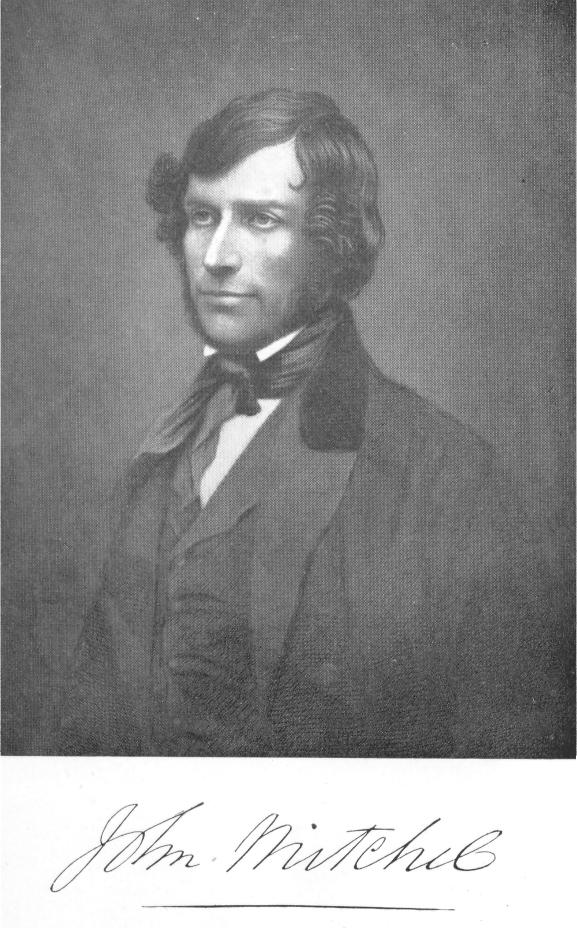
John_Mitchel_(Young_Ireland).JPG

He was one of the great propagandists of his day, although the causes he espoused often placed him on the wrong side of the angels. He was loved and loathed in equal measure. He was one of the few Irishmen to have incurred the wrath of the British government and of the Federal administration of the USA.


John Mitchel was born near Dungiven in Derry in the year of the Battle of Waterloo, 1815. He probably would have been on Napoleon’s side if only because the opposing Army was largely British. Son of a Presbyterian clergyman Mitchel created his own pulpit in a series of journalistic enterprises in Dublin, Tennessee, Virginia and New York.


Mostly raised in Newry in Co. Down Mitchel’s first political association was with the Young Ireland movement of the 1840s and the famous Nation newspaper, founded by Charles Gavan Duffy, Thomas Davis and John Blake Dillon in 1842. But long before the abortive Young Ireland rebellion of 1848 Mitchel had moved on, finding the editorial policies of the Nation rather too bland for his tastes. He founded his own rival nationalist weekly newspaper the United Irishman which, in its inaugural edition, claimed that ‘the world was weary of Old Ireland and also of Young Ireland’ thus attacking both Daniel O’Connell and his younger antagonists with the same broadsword. Mitchel aimed to be an equal opportunities offender and succeeded admirably.


The United Irishman however, was not responsible for the destruction of many trees as it was closed down by the British authorities after a mere sixteen issues. Mitchel was later tried before an elegantly and efficiently packed jury, found guilty of treason-felony, and deported to Tasmania, then known as Van Diemen’s Land. The result was one of the greatest works of Irish political history, The Jail Journal, in which Mitchel wrote about his own experience of deportation and advocated a far more militaristic approach to Ireland’s ‘English problem’ than would have been popular heretofore.


He followed this up, in 1861, with a white hot diatribe The Last Conquest of Ireland (Perhaps) in which he accused the British government of operating genocidal policies in its Irish colony during the Great Famine. The latter work was written in the safety of the USA, as his escape from Tasmania had been engineered in 1853.


So far so good, at least if you are an Irish nationalist, especially one of more militant stripe. But it is from here on in that Mitchell’s career becomes problematic. Settling in New York he established the radical newspaper, The Citizen. He used this publication as a platform for continued attacks on British policy in Ireland but also employed its columns for flood-blooded assaults on advocates for the end of slavery. An abolitionist he was not.


When the American Civil War began he moved lock, stock and barrel to the South, settling first in Knoxville, Tennessee where he published the Southern Citizen. In its pages he attacked the Union, once describing Abraham Lincoln as ‘an ignoramus and a boor’. He also had a go at Irish-American political and military leaders, like his erstwhile Young Ireland ally Thomas Francis Meagher, who fought on the Union side. He compared the South to Ireland and suggested that black slaves experienced better economic and social conditions than Irish tenant farmers. He didn’t reserve all his vitriol for attacking the North either. Confederate President Jefferson Davis was a frequent target, Davis was far too much of an old softy for Mitchell. One of the ironies in all of this was that his advocacy of the Confederacy put him on the same side in the conflict as the British government, which was officially neutral, but for the South.


After the war, however, Mitchel shared the fate of Jefferson Davis, spending a short time in jail for his anti-Union spleen. His imprisonment would have given him plenty of time to reflect on the deaths in the war of two of his sons. A third lost an arm. The latter years of his life were spent in the service of the Fenian movement for whom he worked in Paris, and in standing successfully, albeit in absentia, for election in Tipperary in 1875. His success at the polls was nullified by the authorities on the grounds that he was a convicted felon. In those days you could commit all the felonies you liked AFTER you were elected but not before. Mitchel died suddenly in 1875 at the age of 59. His grandson, John Purroy Mitchel, later became Mayor of New York.


John Mitchel published his political manifesto, in the shape of the first issue of the United Irishman newspaper, one hundred and sixty-eight years ago, on this day.



On This Day – 5 February 1960 – the first commercial screening of Mise Eire

images.jpegseanoriada_i.jpeg

As a young boy in a rather grim Irish boarding school in the 1960s one of the few attempts by the prison authorities to break the monotony was the occasional screening of a film in the school library. These would often be of an ‘improving’ nature, designed to elevate and inform rather than to entertain. So The Song of Bernadette was rather more likely to turn up than the latest James Bond adventure.


One screening which greatly appealed to this particular teenage nerd, though it might not have been quite as well received by some of the less historically oriented students, was a stirring archive-based account of the build up to the 1916 Rising and it’s aftermath. Mise Eire was like nothing we had ever seen before. It combined the talents of two of the country’s greatest ever artists, filmmaker George Morrison and composer Sean O’Riada.


Mise Eire was commissioned in the late 1950s and premiered at the 1959 Cork Film Festival. The feature length documentary, entirely in Irish with suitably portentous narration by Padraig O’Raghallaigh, had been directed or, more accurately, assembled by the legendary Irish film maker George Morrison, then in his thirties. Morrison, who had been a Trinity College medical student before he was eaten alive by the dreaded film bug, visited archives all across Europe and collected 300,000 feet of old, silent, black and white film which he then edited painstakingly into a full length documentary. For this he was, apparently, paid £375 – unfortunately he didn’t haggle for residuals and made nothing further from his efforts. Some compensation for this was his election to Aosdána in 2005 and an Industry Lifetime Contribution Award at the IFTA’s in 2009, when he was 87 years old.


The events represented visually in Mise Eire – the first theatrically released film to be recorded in the Irish language – had already become the stuff of legend long before it was released. It included footage of the 1915 funeral of O’Donovan Rossa, including shots of the old Fenian’s open coffin and the graveside oration by Pearse. It’s probably the only existing moving documentary coverage of either man. There is also unique footage of James Larkin leading a protest march after the 1914 Bachelor’s Walk killings and of the main motive force behind the Rising, the arch plotter himself, Thomas Clarke. Members of the Irish Citizen’s Army are depicted in training. Members of the Irish Volunteers are shown on their way to take up their positions on Easter Monday in Dublin. And then, of course, there is the representation of the Rising itself. We see the impact of the conflict on the fabric of Dublin city centre and the Volunteers, post surrender, being marched off to Frongoch prison in North Wales. Later material, from the War of Independence, includes rare shots of Michael Collins – speaking at the funeral of hunger striker Thomas Ashe, and of Eamon de Valera campaigning in the decisive 1918 General Election.


But of course there is a huge irony at the heart of Mise Eire, because despite the gargantuan achievement of Morrison in collecting and collating all this invaluable material, what sticks in the mind is not so much the images as the music underneath. Because, famously, the score for the film was written by the great Sean O’Riada. Making ingenious use of familiar traditional pieces like Roisin Dubh and Boolavogue, O’Riada created a soundtrack that underlined the significance of the images seen onscreen but also stood on its own as abiding symphonic music. The soundtrack was recorded in the Phoenix Hall on 19 May 1959 with O’Riada conducting the Radio Eireann Symphony Orchestra.


Some trivia associated with the film. It includes one of the earliest photographs ever taken in Ireland, a still dating from the Famine period when photography was in its infancy. George Morrison later wanted to add an English language version of the film’s voice-over. Anglo-Irish film star Peter O’Toole was recruited for the task but, in the face of opposition from the producers Gael Linn, this version was never recorded. Today DVD’s of the film includes English language subtitles.


Mise Eire, blessed by the images collected and assembled by Morrison and the music of O’Riada, had its commercial release fifty six years ago, on this day.

B663-7491.jpg


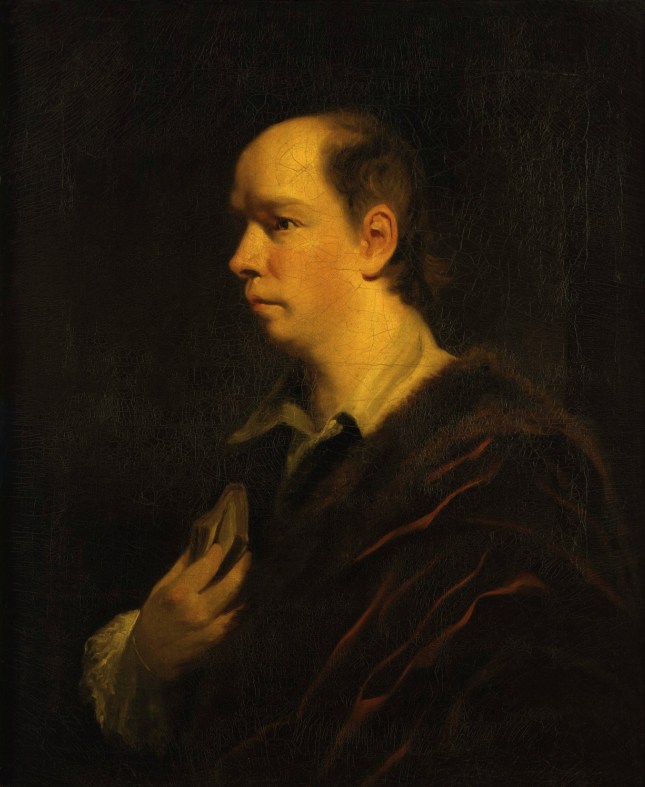
On This Day-29.1.1768 – Oliver Goldsmith’s first play The Good-Natured Man opens in London

Oliver_Goldsmith_by_Sir_Joshua_Reynolds.jpg

Oliver Goldsmith must have been the despair of his mother – his father didn’t live long enough to see him fail at almost everything to which he turned his hand. Eventually he would write one of the finest plays, one of the best novels and one of the most ambitious long poems of the 18th century – but not before he had managed to mess up almost every opportunity that came his way.

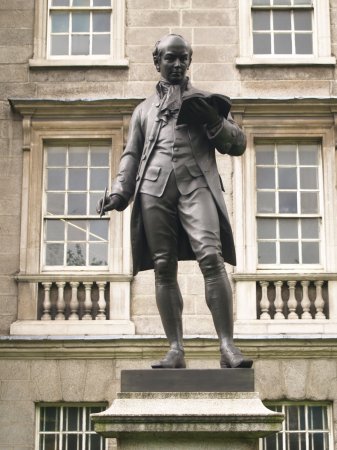
Goldsmith was born either in Longford or Roscommon in November 1728, son of a Church of Ireland curate. In 1730 the family moved to Westmeath when his father was appointed rector to a parish in that county. In 1744 Goldsmith was admitted to Trinity College – there he learned to drink, gamble and play the flute. Although neither he nor the college greatly profited from his brief tenure his subsequent fame has earned him one of the two most prominent statutes in that venerable institution, overlooking College Green.

His father died around the time he graduated and Goldsmith moved back in to the family home so that he could be a burden on his poor mother rather than on himself. He got a job as a tutor, and quickly lost it after a quarrel. He decided to emigrate to America, but managed to miss his boat. He then took fifty pounds with him to Dublin to help establish himself as a student of law, but instead he lost it all gambling. He pretended to study medicine in Edinburgh, but rather than knuckle down he took off on a Grand Tour of Europe, keeping body and soul together by busking with his flute.

Eventually he settled in London and began to churn out hack writing work to keep him gambling in the manner to which he had become accustomed. Because, in spite of himself, he also occasionally published something of merit, he came to the attention of the famous wit and lexicographer Samuel Johnson. He became a founder member of the club of writers and intellectuals unimaginatively entitled ‘The Club’. This included Johnson, his biographer James Boswell, the actor-manager David Garrick, the statesman and philosopher Edmund Burke and the painter Joshua Reynolds. Heady company for a young ne’er do well from Ballymahon.

In 1760 he wrote the epic poem The Deserted Village – elements of which schoolchildren of a certain age were once forced to learn by heart. This tells the story of the fictional village of Auburn that has been laid waste to make way for the ornamental gardens of a local landowner. The poem is a critique of rural depopulation and the seizure of valuable agricultural land by the wealthy.

… The man of wealth and pride

Takes up a space that many poor supplied;

Space for his lake, his park’s extended bounds,

Space for his horses, equipage, and hounds:

The robe that wraps his limbs in silken sloth

Has robbed the neighbouring fields of half their growth

He followed this up with his charming novel The Vicar of Wakefield in 1766 and one of the greatest comic plays in the English language, She Stoops to Conquer, in 1773. Prior to that classic play he had a modicum of success with The Good Natured Man, which bombed on the London stage but, perversely, sold a lot of copies when the text was published.

Success enabled Goldsmith to carry on a style of life that virtually guaranteed an early exit. And so it proved. He continued to gamble and drink on a spectacular scale and ended up in debt and in bad health, simultaneously. He died in 1774 at the age of 45.

Despite all his achievements as a novelist, playwright and poet he’s probably still best remembered today for an inspired piece of doggerel, no pun intended, Elegy on the Death of a Mad Dog – the title gives away the ending but the short verse is a satire on hypocrisy, corruption and pietism in which a man of acknowledged substance, guilty of all three vices, is bitten by a dog and given up for dead by the commentariat – then comes the sting in the tail (and yes, the pun is intended this time)

But soon a wonder came to light,

That showed the rogues they lied:

The man recovered of the bite,

The dog it was that died.


Oliver Goldsmith’s play The Good Natured Man opened in London to less than ecstatic reviews 247 years ago, on this day.

P5252133.jpg


On this day –Drivetime – 22 January 1879 James Shields elected Senator for Missouri

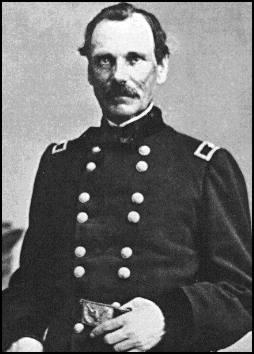
shields.jpg

James Shields from Co.Tyrone was an extraordinary Irishman though his name is virtually unknown in his native country. He had an uncle of the same name who emigrated from Ireland and became a U.S. senator for Ohio. Not to be outdone James Shields Jr. left Ireland at the age of twenty and went on to represent not one but three states in the U.S. Senate. A unique achievement unlikely ever to be repeated.

He started in Illinois – where he had also been a State Supreme Court justice. From 1849 he served one term as a US Senator. His election was helped by what came to be known as the ‘lucky Mexican bullet’. This he had stopped while a brigadier general in the Mexican-American war in 1846. His opponent for the Illinois seat was the incumbent Sydney Breese, a fellow Democrat. A political rival wrote of Shields’s injury “What a wonderful shot that was!  The bullet went clean through Shields without hurting him, or even leaving a scar, and killed Breese a thousand miles away.” He is also unusual in that he replaced himself in the Senate. When he was first elected it emerged that he had not been a citizen of the USA for the required nine years. He had only been naturalized in October 1840. So his election was declared null and void. However, he would have been entitled to take his seat after a special election was called to replace him, as he had, by then, been naturalized for the required period. So he stood again and won the seat for a second time.

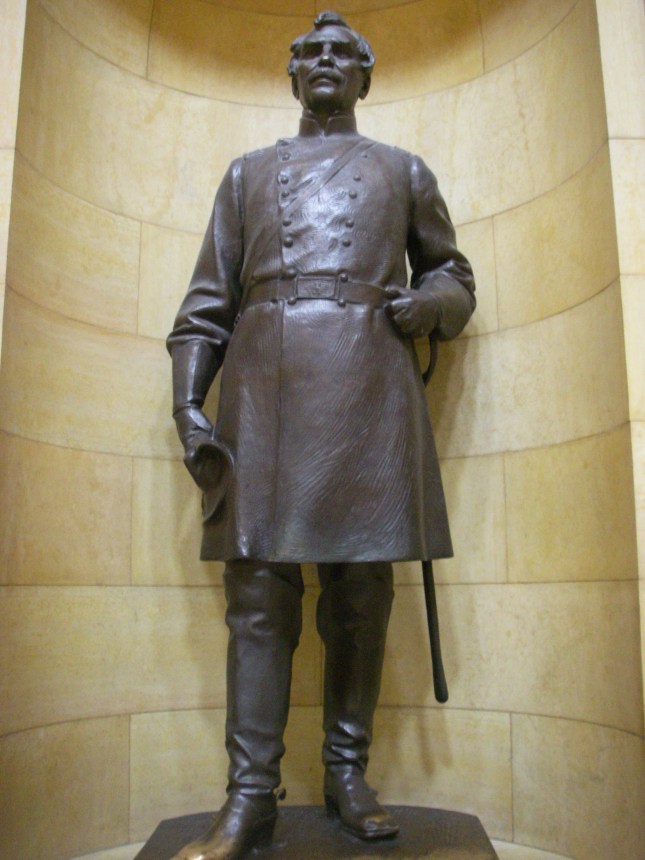
Failing to be re-elected six years later he moved to what was then the Minnesota ‘territory’ from where he was returned in 1858 as one of the new state’s first two senators after Minnesota achieved statehood. Later, during the Civil War he distinguished himself as a Union General and then settled in Missouri.

He had obviously taken a liking to the Senate chamber because he contrived to get re-elected to that house from Missouri in 1879 at the age of 73. He died shortly after taking office.

But Shields is possibly even more important for something he didn’t do.

In 1842 he was already well-known in his adopted home of Illinois. He was a lawyer and was serving in the state legislature as a Democrat. After one of those periodic economic recessions hit the nation in the 1840s Shields, as state auditor, issued instructions that paper money should no longer be taken as payment for state taxes. Only gold or silver would be acceptable. A prominent member of the Whig party, one Abraham Lincoln, took exception to the move and wrote an anonymous satirical letter to a local Springfield, Illinois newspaper in which he called Shields a fool, a liar and a dunce. This was then followed up by his wife-to-be, Mary Todd, with an equally scathing letter of her own. When Shields contacted the editor of the newspaper to find out who had written the second letter Lincoln himself took full responsibility. A belligerent Shields, accordingly, challenged the future US president to a duel. The venue was to be the infamous Bloody Island in the middle of the Mississippi river, dueling being illegal in Illinois.

Lincoln, having been challenged, was allowed to choose the weapons and set the rules. He did this to his own considerable advantage, opting for broadswords as opposed to pistols. While Shields was a crack shot he was only 5’9” in height, as opposed to Lincoln’s towering 6’4”. When the rivals finally met on 22 September 1842 Lincoln quickly demonstrated his huge reach advantage to Shields by ostentatiously lopping off a branch above the Irishman’s head with his weapon of choice.

When the seconds, and other interested parties, intervened peace was negotiated between the two men, though it took some time to placate the pugnacious Shields and persuade him to agree to shake hands with Lincoln.

The man who might have abruptly ended the life and career of Abraham Lincoln, and radically changed the course of American history, James Shields from Co.Tyrone, was elected as Senator from Missouri, 136 years ago on this day.

Major_General_James_Shields.JPG


On This Day – Drivetime – 15.1.1825 Suicide of banker Thomas Newcomen


77_big.jpg

In case you thought Irish banking failures and inquiries were peculiar to the 21st century – think again. As Woody Guthrie pithily put it …


Some men rob you with a gun

And some with a fountain pen


… and the Irish banker has been ruining himself and his customers as well as cleverly socializing his losses since the early 1800s.


Let’s look at a few of the most spectacular Irish banking collapses of the 19th century. Most of them involve politicians as well. Strange that.


For example, there was the scandal of the Tipperary Joint Stock Bank in 1856. It was run by the Irish Liberal MP for Carlow John Sadlier, and his brother James, MP for Tipperary. When it ran out of money John Sadlier took the easy way out and committed suicide on Hampstead Heath, leaving James to face the music. This he did for a while before he absconded. He ended his days in Switzerland, the natural home of the dodgy banker. Investigations revealed that the reason for the collapse of the bank was that John Sadlier had been embezzling on an outrageous scale. Before he shuffled off his mortal coil he’d removed nearly £300,000 from the vaults. The whole episode is said to have provided Charles Dickens with the inspiration to create the dubious financier Mr. Merdle in Little Dorritt. The book was being serialized when the scandal erupted.


Fast forward to 1869 and yet another example of Ireland’s capacity to forgive a scoundrel. In this instance it was another MP, James McNeale McKenna who, in the 1850s and 60’s was Chairman and MD of the National Bank of Ireland – so he combined in one person the roles later held by Sean Fitzpatrick and David Drumm in Anglo Irish Bank. Either Seanie and David were total slackers or James Mac Mac was an absolute hive of fiduciary energy.


He successfully ran the bank into the ground on foot of a number of unwise investments in pursuit of growth and greater market share. Aren’t we fortunate that our bankers shrugged off that bad habit a century and a half later. By the time he resigned, accused of cronyism and paying himself too much – other habits utterly alien to the modern equivalent – the National Bank of Ireland had debts of almost £400,000. Miraculously it survived. McKenna, MP for Youghal, lost his seat, but much later re-invented himself as a Parnellite and was re-elected in South Monaghan This bears out the suspicion that if Parnell had nominated a pile of pigeon droppings for a nationalist constituency they would have won the seat with a thumping majority.


Another flawed banker, however, was not so lucky where the Uncrowned King of Ireland was concerned. William Shaw, briefly, held the leadership of the Irish party after Isaac Butt died. But then in 1880 he got the bum’s rush when Parnell stood against him. Interestingly Shaw was supported in the leadership vote by one James McNeale McKenna. These banker/politicians stick together. Shaw, was also founder and Chairman of the Munster Bank. In 1884 he resigned, having received loans to the value of £80,000 – twice the exposure of the rest of the directors combined. Again, we are fortunate that this practice was completely stamped out before the 20th century. The bank didn’t outlive his Chairmanship long. It went bust the following year.


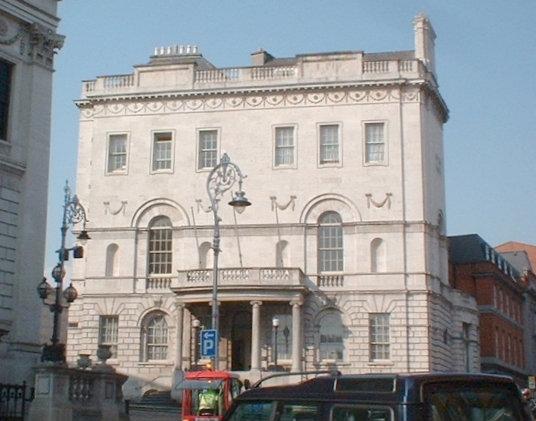
Finally we quickly rewind to the 1820s and Thomas Newcomen, a Viscount and, surprise surprise, a politician. He inherited the Newcomen bank, voted for the Act of Union in 1800, spent much time in his bank’s fine new headquarters – now the rates office beside Dublin Castle – and proceeded to drive the family business into the ground, taking many depositors with him. Newcomen was described as a reclusive Scrooge-like figure who ‘it was widely whispered, gloated over ingots of treasure with no lamp to guide him but the luminous diamonds which had been left for safe–keeping in his hands.’


Thomas Newcomen, driven to distraction by the collapse of his family bank, took his own life 190 years ago, on this day.