On This Day – Drivetime – 2 May 1882 – Kilmainham Treaty.

Image


Charles Stewart Parnell was known as The Uncrowned King of Ireland and Kings used to have the power to make treaties or at least send someone to conclude them in their place. But Parnell, in 1882, was partly responsible for the ‘Treaty That Wasn’t’. It became known as the Kilmainham Treaty, called after the impressive jail of that name rather than the salubrious suburb of Dublin 8.


The background was chaos in the Irish countryside as the eviction of tenants escalated when agricultural depression hit what we would now call ‘the developed world’. Ireland was, at the time, only included within the ambit of the developed world by default, as part of the United Kingdom. Evictions led, inevitably, to agrarian unrest – retaliation in the form of attacks on bailiffs, agents, and, occasionally, landlords themselves by Ribbonmen, members of agrarian secret societies. Not to mention assaults on so-called ‘land grabbers’ who moved onto the farms of families who had been evicted. The murder rate soared and the Royal Irish Constabulary found itself under huge pressure to make arrests and secure convictions in a rural environment where juries were not disposed to convict even the most obviously guilty Ribbonmen.


The British government response was, as always, to take a benign, far-sighted softly softly approach.


That’s actually completely untrue. They did what they normally did and imposed the sort of coercive measures that would never have been tolerated in England, Scotland or Wales. In fairness, however, they would probably have been unnecessary outside of stroppy old Ireland.


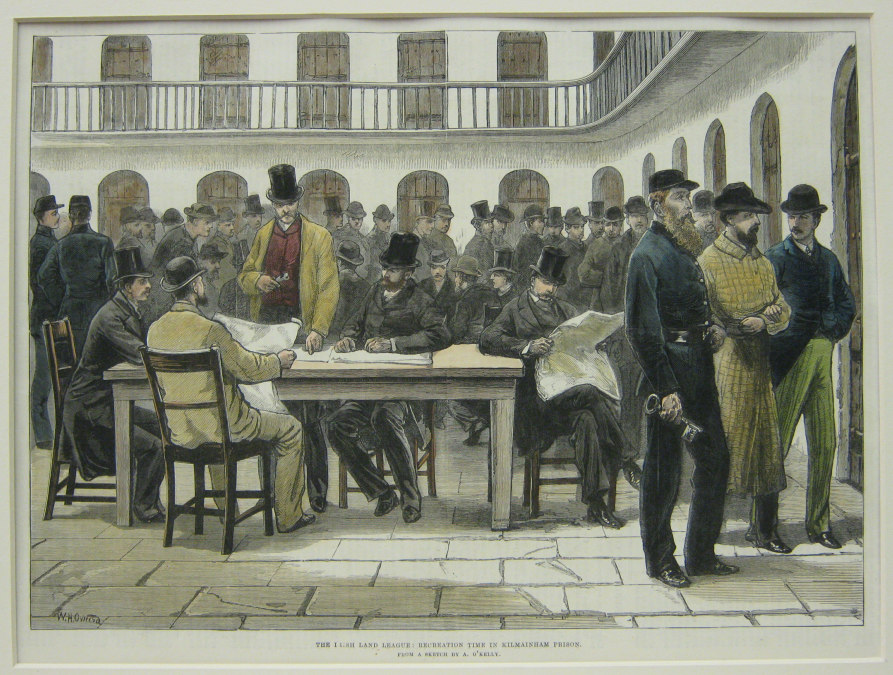
In essence Habeas Corpus was suspended. This meant the government dispensed with the need to bring anyone to trial and produce actual evidence of wrongdoing in order to convict them. It was sufficient merely to suspect that they had been up to no good to throw them in jail. One of the first victims was Parnell himself, arrested in Dublin by the famed Metropolitan policeman Superintendent John Mallon and detained at the pleasure of Her Majesty in Kilmainham Jail.


He resided there for six months, experiencing no difficulty whatever in keeping up a passionate correspondence with his partner of twelve months or so, Katharine O’Shea. Ultimately it was her ambitious husband who sprang the Uncrowned King. Always a man with an eye to the main chance William O’Shea brokered a deal whereby Parnell promised to do his best to rein in the agrarian extremists who were making things unpleasant for the poor landlords, while William Gladstone’s government agreed to introduce remedial legislation to improve the lot of impoverished tenant farmers. The alternative was a continuation of the anarchy that reigned while the entire Irish political leadership was in stir.


As an added extra Parnell tossed in a tasty morsel for the Liberal government in the shape of a potential future political alliance. That was the bit that stuck in the craw of many of Parnell’s supporters and led to both sides denying that the agreement ever existed. Gallons of cold water were poured over allegations that a deal had been done by both Parnell and Gladstone but O’Shea’s preening and the exponential increase in his normal level of smugness told insiders that some sort of compact had been arrived at to allow for the release of Parnell from jail. It was all a monumental waste of time because four days after Parnell got out of Kilmainham the Invincibles murdered Gladstone’s nephew Lord Frederick Cavendish – the new Chief Secretary, and his second in command Thomas H.Burke in Phoenix Park. And it was back to the messy status quo for another few years.


Charles Stewart Parnell was released from Kilmainham Jail on the basis of what might be described today as ‘certain agreed modalities’ but definitely not a treaty of any kind, 132 years ago, on this day.
 

Image

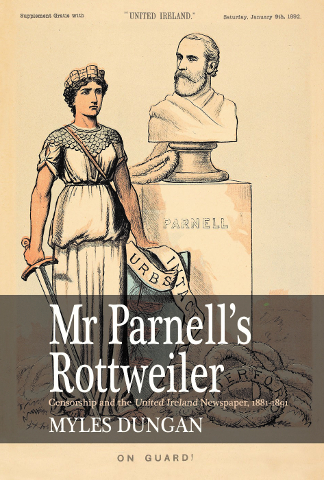
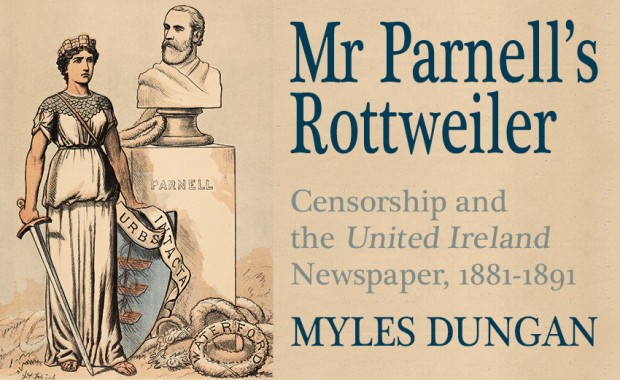
After launch of Mr.Parnell’s Rottweiler author apologizes abjectly for lack of canine content

Image


My thanks indeed to the Press Ombudsman John Horgan, a distinguished newspaper historian, for launching my latest tome last night and being very generous indeed in his comments.

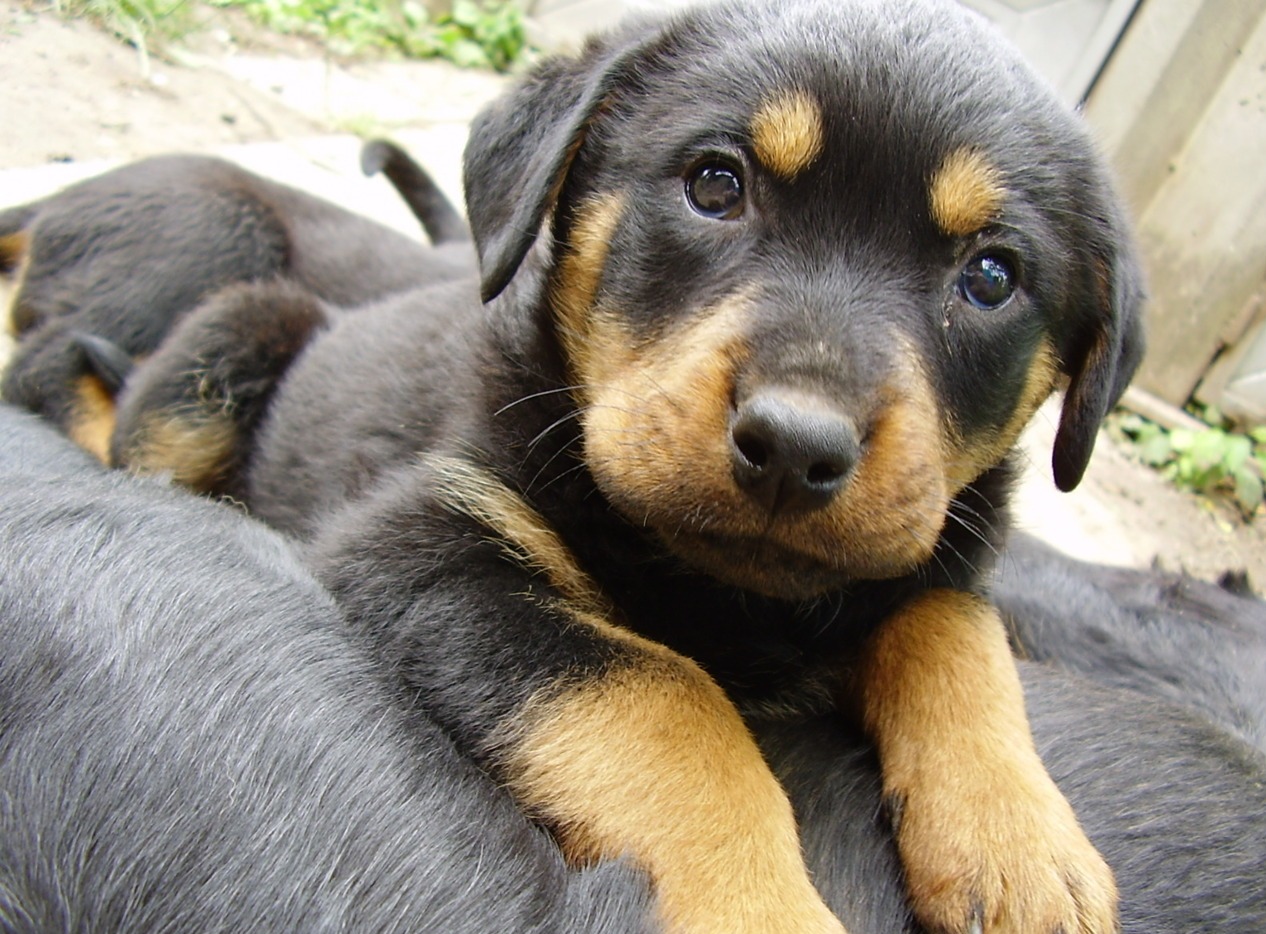
I’d just like to clarify that the book has no canine content whatever and that Parnell did not, in fact, have a rottweiler. He was the owner of a red setter called Grouse. I realize this entirely jeopardizes the credibility of the volume.  The confusion is caused by my puerile attempted homage to the title of Roy Jenkins’s book on the House of Lords Mr.Balfour’s Poodle. Should any rottweiler lovers purchase a copy, assuming it reveals the truth about the relationship between the great Irish nationalist leader and their favourite breed of dog, I will be happy to reimburse them the cost of the paperback. If you bought the hardback you’re on your own. I’m not made of money and you should have checked the index for dog references first.

I would also like to apologize to all rottweilers for the invidious comparison with the Parnellite newspaper United Ireland. Rottweilers are soft, cuddly, pliable and docile when compared with United Ireland. The photographs below clearly illustrate this.


ImageImage


On This Day-Drivetime -25.4.1681 Murder of Redmond O’Hanlon the highwayman, tory and raparee.

Image


Nowadays a Tory is someone who sits on the government benches at Westminster. But three hundred years ago, before the term acquired its political connotation a Tory was a very different class of bandit entirely.


There was a man lived in the north, a hero brave and bold

Who robbed the wealthy landlords of their silver and their gold

He gave the money to the poor, to pay their rent and fee

For Count Redmond O’Hanlon was a gallant rapparee.


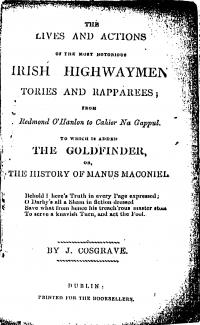
Thus begins Tommy Makem’s account of one of the most illustrious and iconic thieves in 17th century Ireland, Redmond O’Hanlon, the infamous Tory, highwayman, raparree or highway robber. Over the years O’Hanlon has acquired the characteristics of a Robin Hood and a Michael Dwyer – a fervent nationalist who believed in the re-distribution of wealth, other peoples. He was, of course, neither a nationalist or a socialist – the concepts being entirely unknown when he was in his pomp.


O’Hanlon, whose family had been wealthy Gaelic landowners before the intervention of Oliver Cromwell and others, was probably born in the vicinity of Slieve Gullion in South Armagh, and probably in the vicinity of 1640. Like so many members of the old Irish Catholic nobility he saw service in the armies of the King of France and returned to Ireland at the time of the restoration of King Charles II to the English throne. The resumption of the monarchy led to no similar improvement in the fortunes of the O’Hanlon clan so Redmond took to the hills to earn his living off the fortunes of those he saw as having dispossessed his family, the Anglo-Irish nobility.


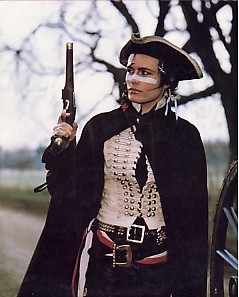
His operation was rather more sophisticated than simply standing in the middle of what passed for 17th century roads and hollering ‘Stand and deliver, your money or your life’ in the style of Adam Ant. He made quite a good living from a primitive protection racket. Those who paid him off were to be immune from the depredations of any of the raparees in his north Louth-south Armagh bailiwick. Should the local tories baulk at Redmond’s racket there was a simple ‘three strikes and you’re out’ policy. Anyone caught robbing one of O’Hanlon’s protectees was first warned off, thereafter they were fined for a second offence, and finally, if they did it again, they were murdered.


Naturally enough the authorities disapproved of this primitive pax Redmondica or perhaps tax Redmondica is more appropriate, and sent troops after him to pierce his protective mantle. O’Hanlon used a number of wily evasion techniques to elude capture, the most celebrated being the practice of reversing his horse’s shoes to send pursuers in the wrong direction. He was also known to reverse his and his accomplices clothing, revealing on the inside a red-coat lining that was good enough to confuse the gullible.


An inability to track Redmond resulted in the price on his head being raised consistently and repeatedly, leading to open season for a new breed of opportunist, the ‘Tory hunter’. This was a class of Wild West bounty hunter except six thousand miles to the east, two centuries earlier and with an Irish accent. When not pursuing Redmond with a view to claiming the considerable reward on his head planter families like the Cootes, of Cootehill in Co.Cavan kept their hands in by hunting and killing Catholic priests for pocket money.


Predictably the death of Redmond was an inside job. He was betrayed and shot by a kinsman Art McCall O’Hanlon who was in it for the reward. Pour encourager les autres Redmond’s head was placed on a spike outside Downpatrick jail after Art imitated nature and succumbed to the blandishment of piles of money.


Redmond O’Hanlon, Tory, raparee, extortionist and folk hero died 333 years ago on this day.


Image

On This Day- Drivetime -18 April 1690 – The first ‘Wild Geese’ sail for France.


Image


When Ireland play France in rugby in Dublin every two years it’s usually an opportunity for thousands of French rugby supporters to fly from Paris and other parts of France to support their team. To ensure that the planes don’t return empty many Irish tourists – presumably not rugby supporters – take advantage of heavily discounted fares to spend a few days in France.


This is something akin to what happened in April 1690 when 5000 Irish soldiers, sailed from Ireland to France on the ships that had bought 6000 French soldiers in the opposite direction.


Louis XIV of France – the famous Sun King – was conducting a war in Holland but had still offered support to the recently supplanted English King, James II, in his struggle with William of Orange for the throne of England. Louis was willing to send French troops to Ireland to assist the cause of the Catholic King James (whose alliance with France, incidentally, made him an enemy of the Vatican – which meant that King Billy and the Pope were actually on the same side in the Williamite wars). However the Sun King was not prepared to forego 6000 men in his fight with the Dutch so he demanded an equivalent number of Irish troops to replace his own men sailing to Ireland.


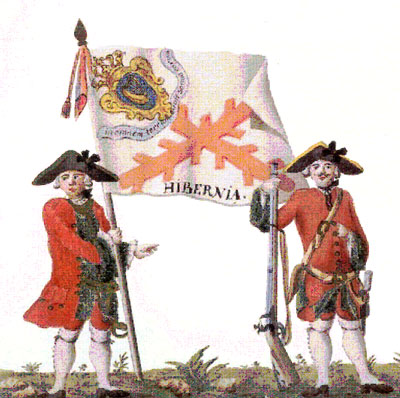
Why not just hang on to your own soldiers rather than making a direct swop? A very good question. The answer will be found in the footnotes at the end of this piece. If you can find the footnotes. The 5000 Irishmen became the basis for the Irish Brigades who fought in the French Army for the next century. This first detachment of the so-called ‘Wild Geese’ was led by Justin McCarthy (aka Lord Mountcashel), Daniel O’Brien and Arthur Dillon. After the Treaty of Limerick and the collapse of the resistance of the Jacobite forces in Ireland they were joined by the celebrated Irish General, Patrick Sarsfield, the Earl of Lucan.


McCarthy was a charismatic individual who had been brought up in France when his father, Donough McCarthy, had left Ireland in the 1650’s because he had incurred the wrath of Oliver Cromwell and it would have been unhealthy for him to remain in Ireland. The confiscated McCarthy estates were returned after the restoration of the crown in England. However when the infamous Titus Oates accused numerous Catholic peers of plotting to murder King Charles II Mountcashel emulated his father and returned to the safety of France. It was a wise decision on his part. More than 20 alleged conspirators were executed before Oates was found guilty of perjury. Although Mountcashel commanded Louis’ Irish Brigade his service to French King was hampered by chronically bad eyesight and a wound received while fighting in the south of France. He died in 1694.


Patrick Sarsfield, created Earl of Lucan by King James when it was too late to derive much benefit from it, had an even briefer career on the continent. Sarsfield had distinguished himself in the Jacobite wars as one of the best generals in the army assembled on behalf of King James. He was, accordingly, commissioned as a Lieutenant General in the army of King Louis and sent to fight in Flanders. There he died of his wounds after the Battle of Landen in 1693. More than a century and a half later, his great great great great grandson, Michael Corcoran, would lead another Irish Brigade, this one serving in the Union Army in the American Civil War.


The first ‘Wild Geese’, a force of 5000 Irish Jacobite soldiers, sailed for France 324 years ago, on this day.


Image

On This Day -Drivetime – 11.4.1866 Fenian invasion of Canada

Image

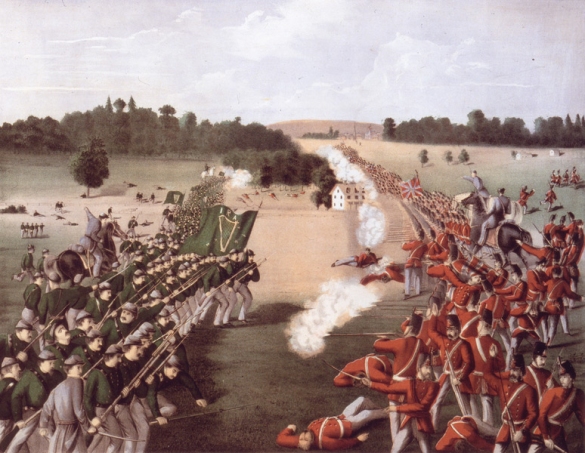
The Battle of Ridgeway, 1866.


Between 1866 and 1871 American Fenians – mostly veterans of the Civil War – attempted, on no less than five occasions, to invade Canada with some nebulous idea of seizing what was known through most of the 1860s as British North America and only giving it back when Ireland was granted an independent republic. Most of their efforts were cack-handed and disorganised. The raid on Campobello Island, New Brunswick, in April 1866 is typical. Led by one of the founders of the movement, John O’Mahony, this attempt landed 700 Fenians on the Canadian island which adjoined the state of Maine. The small force, however, sensibly placed discretion ahead of valour when it was informed that British warships were on the way. The occupation of the island was painlessly brief.

Another raid in 1870 was betrayed by the most famous English spy in the American Fenian ranks, Thomas Beach, who posed, for many years, as a French Canadian Henri le Caron, but whose information ensured that the British and Canadian authorities were well-informed about what the Fenians were up to.

The Fenian raids are generally represented as pathetic and disorganised fiascos. This is true of four out of the five – but not of the second raid, in June 1866.

The plan for this incursion was put together by former Union General Thomas William Sweeney, a Corkman known as ‘Fighting Tom’. The force, of about 1,300 Fenians, was led by former Union Army Colonel John O’Neill. It managed to cross the Niagra River without any American interference. A US gunboat – the Michigan – tried to stop them. But it had been sabotaged by a Fenian member of its crew and didn’t crank up until fourteen hours after most of the Fenian rebels had already made the crossing.

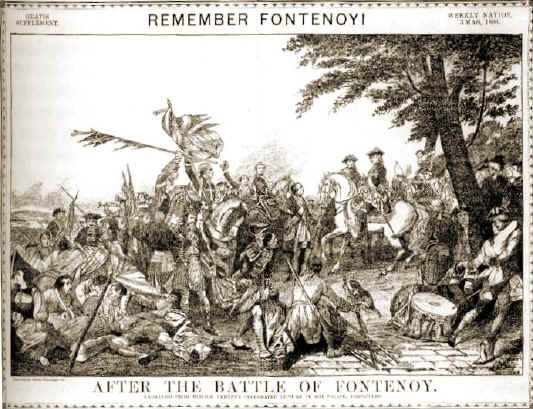
O’Neill’s men defeated a Canadian militia force at the Battle of Ridgeway. The Canadian defenders were boys before men – they were mostly inexperienced and badly armed troops facing well-equipped Irish veterans of the American Civil War. The result was the first Irish victory against a British force since Fontenoy in 1745.

The following day that first success was repeated at Fort Erie, a lakeside stronghold described, flatteringly, by the New York Times as a ‘deserted dunghill’.

The Times was just as complimentary towards the Fenian force itself, describing its members as ‘heroes of the stamp who bravely led the retreat at Bull Run’. The paper then advised the British-Canadian forces ‘not to spare them on our account . . They would be lying and stealing here if they were not raiding there.’

The Fenians described themselves as the Irish Republican Army – some went into battle wearing uniforms bearing the legend ‘IRA’ – it was the first time the letters are known to have been used in a context other than that of the accumulation of an American pension fund.

The USS Michigan finally managed to extract the Irish spanner from its works and get moving. It stopped Fenian reinforcements crossing into Canada. Rather than wait for the arrival of a vastly superior British regular force O’Neill withdrew and evacuated his men by barge back across the Niagra to Buffalo. There the Fenians surrendered to US forces. A little known fact – included among the Irish invaders was a small force of Mohawk Indians and a smaller group of Black Civil War veterans.

In a mopping up operation the U.S. army was instructed to arrest anyone ‘who looked like a Fenian’. Raising the obvious question – how do you look like a Fenian? The Americans took the whole affair very seriously indeed. General Sweeney, the Civil War hero, was arrested for his part in the invasion. Oddly though he continued to serve in the US Army until he retired in 1870. Or maybe that was his punishment.

One effect the raid did have was that it hastened the formation of the Confederation of Canada – so the Fenians can, in a sense, claim to be Canada’s Founding Fathers.

In a far less successful incursion two months beforehand Fenian forces led by John O’Mahony briefly occupied Campobello Island, New Brunswick, 148 years ago, on this day.