On This Day – Drivetime RTE Radio 1 – 31.1.14 -Sinking of the ferry ‘Princess Victoria’

Image


In the early 1950s the roll on roll off ferry was a new and exciting innovation. The M.V. Princess Victoria, a British Railways car ferry steamer, which travelled on a daily basis between Larne in Co.Antrim and Stranraer in Scotland was one of the earliest examples of this new breed of passenger ship. Built in Dumbarton in 1946 it was capable of accommodating up to 1,500 passengers and 40 cars. The ferry was the fourth ship to bear the name Princess Victoria. Ominously as it turned out, the previous version had been sunk in 1939 by a German mine.

On the morning of 31 January 1953 gale force winds battered Western Europe. Even on dry land the storms claimed over 500 lives. At 7.45 that morning the Princess Victoria, under the command of 55 year old Captain James Ferguson, set sail for Larne from Stranraer. The initial part of the voyage, in the shelter of Loch Ryan, may have lulled the captain and crew into believing that the trip would not be too hazardous to complete. However, when the Princess Victoria left the shelter of the Loch, with its 127 passengers and 49 crew, and encountered the ferocious open sea its problems began.

Ferguson decided to head back to the safety of Stranraer shortly before 9.00 am. His luck ran out, however, when a huge wave stove in the stern doors and the ferry began to ship water at an alarming rate. Ferguson changed course again, deciding that sailing to Larne was now the better option.

Two hours into the voyage The Princess Victoria sent its first request for help. There was no radio telephone on board the ship so this was sent via morse code by the undoubted hero of the tragedy about to unfold, radio officer David Broadfoot. He wasn’t even supposed to be on duty that day but had swapped shifts with another crew member.

By 10.30 the car deck was flooded and the ferry was listing dangerously. By 1.00 pm the starboard engine room was completely inundated and fifteen minutes later Broadfoot signalled that the order had been given to abandon ship. The only way that rescuers could get a fix on the stricken vessel was to take a bearing off the morse code signal. Knowing this Broadfoot stayed at his post and continued sending messages, even apologizing as he did so for the deteriorating quality of his signalling. Broadfoot was awarded the George Cross for his bravery, sadly the award was posthumous. Like Captain Ferguson he went down with the ship.

Some of the other heroes that day were on board the Donaghadee lifeboat, whose crew, under coxswain Sam Kelly, faced raging seas but still managed to rescue many of the 43 survivors. None of the women or children on board the ferry was saved. Many made it into one of the lifeboats but a huge wave dashed the craft against the sinking ferry and all on board were lost.

Among the passengers who drowned that day were the Northern Ireland Deputy Prime Minister Major J. M. Sinclair, and Sir Walter Smiles, the Ulster Unionist MP for North Down. Another unsung hero, Nansy Bryson, also perished, as she tried unsuccessfully to rescue a young child.

The tragedy was, at the time, the worst maritime disaster in UK waters since World War II.

The Princess Victoria sank, claiming the lives of 133 passengers and crew, sixty one years ago, on this day.

http://www.youtube.com/watch?v=gAFHWMV9x0g – 

http://www.youtube.com/watch?v=rdmKEj8wVz0

Image

On This Day – Drivetime – Percy French

Image


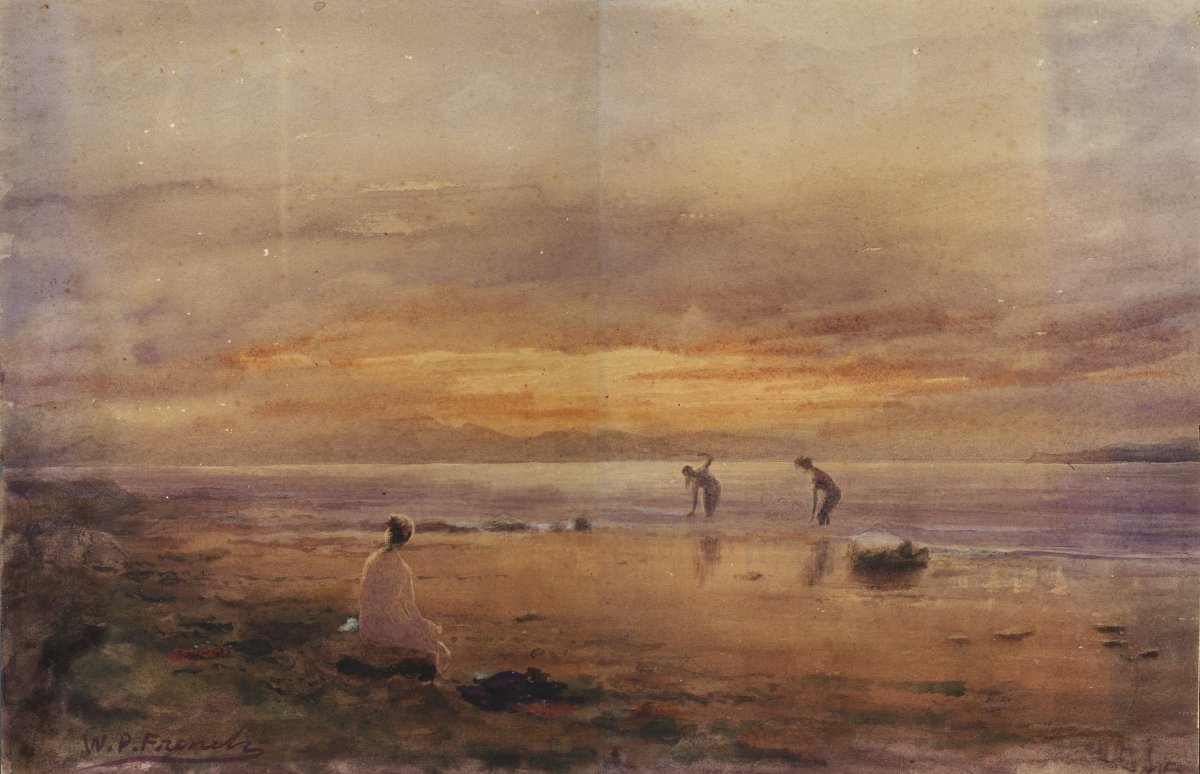
When the singer songwriter Don McClean, creator of American Pie – the song, not the film – had an international hit with The Mountains of Mourne, most of his worldwide fans assumed that he had written it himself. Few, outside of Ireland,  had ever heard of Percy French, humorist, civil engineer, songwriter, landscape painter, banjo player, poet, inspector of public drains, and sometime musical hall performer.

French was born in Cloonyquinn House, Roscommon in 1854, into a landowning family. He wrote his first song, Abdul Albulbul Amir before he even went to university and had an early experience of what it was like to be ripped off when he sold it for £5 and later saw others claim it as their composition.

After leaving Trinity College, Dublin in the mid 1870s he took a job for the Office of Public Works in County Cavan inspecting drains. During his time peering into other peoples sewage he also wrote many of his most famous tunes and painted prodigiously.

His employment with the OPW lasted until 1887. He was laid off when the organization downsized. To keep body and soul together French decided to combine some of his emerging talents and established a comic magazine, The Jarvey. It was when that unhappy enterprise failed after a couple of years that he really launched his career as a songwriter and entertainer.  This was in spite of the huge tragedy of his life when he lost his young wife, Ettie, in 1891. She died in childbirth at the age of twenty and their baby daughter died a few days later. French re-married in 1894 to Helen Sheldon and went on to have three daughters.

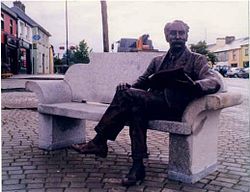
His better-known songs are generally comic or sentimental. The Mountains of Mourne, a story of emigration and nostalgia, was written in 1896. His hymn to the county that first employed him, Come back Paddy Reilly to Ballyjamesduff was penned in 1912. An excellent statue of French can be found sitting on a park bench in the main street of Ballyjamesduff. By the early 1900s he was a popular music hall performer, touring the world with his partner and accompanist Dr.W.Houston Collison.

His most famous comic song was written as sweet revenge. Are you right there Michael famously parodies the notoriously tardy West Clare railway. In 1897 French travelled on the line from an engagement in Sligo to one in Clare – the service was so slow, with the driver making numerous unexplained and unscheduled stops, that by the time French arrived at the venue for the 8.00 pm recital the audience had gone home. He was unsuccessfully sued by the West Clare railway for libel, based on the subsequent ridicule to which they were subjected.

An anecdote, probably apocryphal, but too good not to recount, tells of how French was late for his day in court. On being admonished by the judge he replied, ‘I apologise your honour, but I travelled here by the West Clare railway’.

Percy French, died 94 years ago, on this day.

Image

On this day -Drivetime -17.1.13- the outrageous Lola Montez

Image


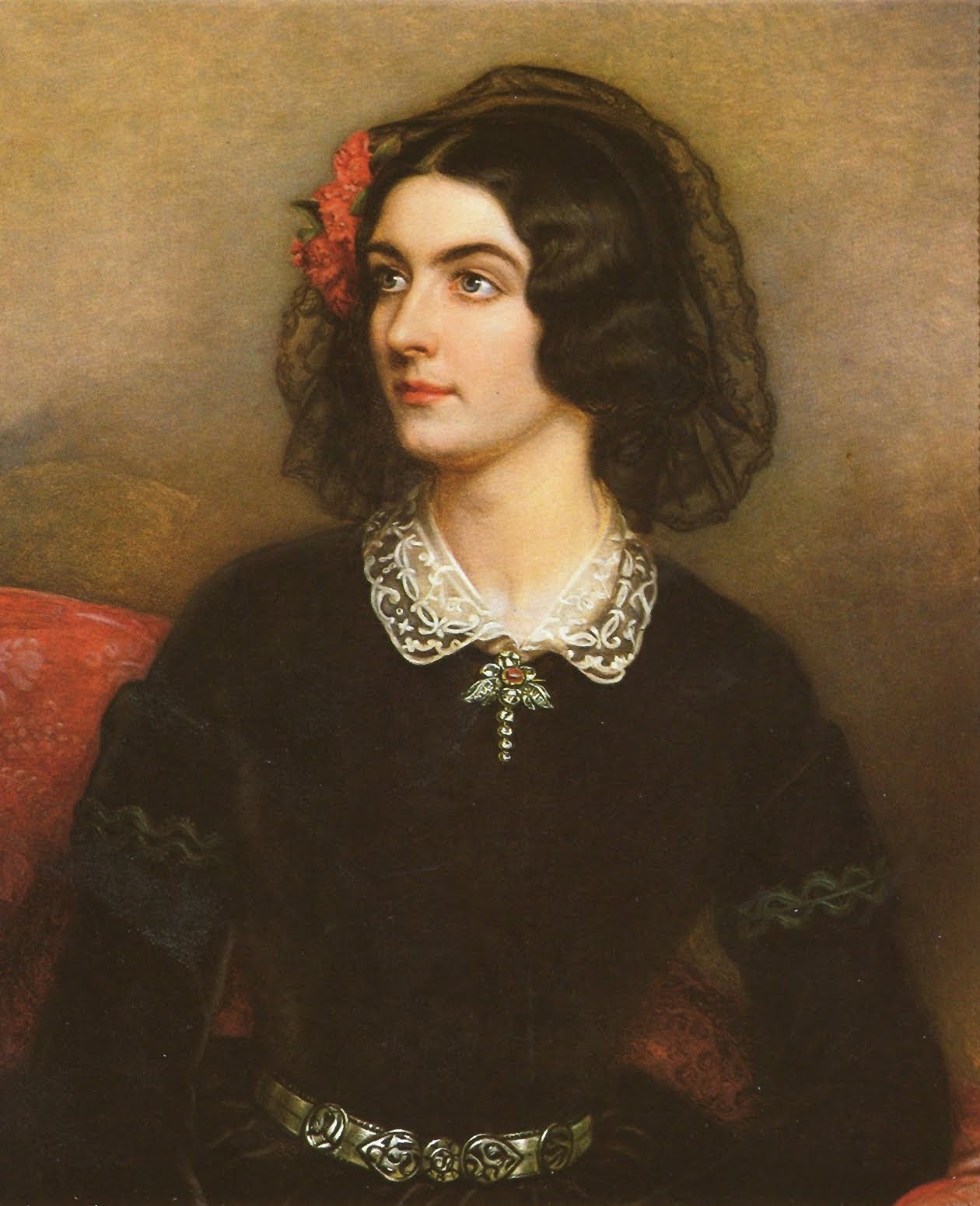
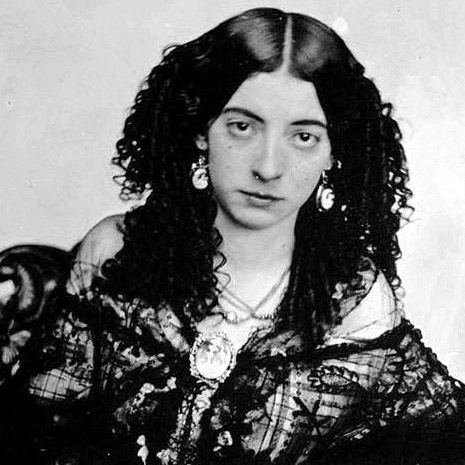
The story of Lola Montez is full of untruths and myths – she made up most of them herself.  Even the time and place of her birth is disputed. She was born in Limerick in 1818 or Grange, Co.Sligo in 1821. It doesn’t help that she consistently lied about her age.

Nominally a dancer (her dancing skills were, apparently, negligible), she was, in fact, one of the most sought after courtesans of her era. Through a combination of good looks, charm and supreme self-confidence she managed to inveigle her way into the upper reaches of 19th century European and American society. Along the way she reinvented herself more often than a nervous chameleon.

Among her celebrated European conquests were King Ludwig of Bavaria, Tsar Nicholas I of Russia and the creator of the Three Musketeers, Alexandre Dumas. Her unique selling point as a performer was the Tarantula Dance (also known as the Spider Dance). This involved the sudden ‘discovery’ in the course of a routine of a large furry spider in her clothes (it was actually made of rubber, cork and whalebone). Her frenzied attempts to remove the spider would, of course, necessitate the removal of much of her clothing as well. This made her very popular indeed with men right across the continent of Europe. [See the Spider Dance here]

Sometime in the 1850s she decamped to the USA and eventually arrived in the burgeoning city of San Francisco. She sought to create a sensation and didn’t have to try very hard. Whenever she ventured out she was accompanied by two greyhounds. A parrot adorned her shoulder. She made good copy.

She quickly snared the publisher and former gold rush miner, Patrick Hull. The attraction, she claimed, was based on his ability to tell a funny story. He must have run out of jokes fairly rapidly as the relationship was quickly on the rocks. When other female artistes began to send up the Spider Dance in their own acts Lola took to the road.

In 1854 she embarked on a tour of the music and concert halls of the mining towns of California. But the boom towns were not as susceptible to Lola’s charms as the slightly more sophisticated San Francisco. Some of the miners, unimpressed by her dancing skills, booed her off the stage. Lola didn’t take all this lying down. A newspaperman who gave her a bad review was threatened with a horsewhipping while a second was challenged to a duel.

In the past Lola had demonstrated that such threats of physical violence were not all aggressive bluster. She had once whipped a theatre manager and had broken the nose of her agent with a heavy brass candlestick.

After an unsuccessful tour Lola settled down near the mining town of Grass Valley in Northern California. One story about her that gained local currency was that she habitually bathed in champagne and dried her much admired body with rose petals. She is also said to have shared her life with a pet bear. It couldn’t last, the money ran out, and she was soon on the road again.

By the end of her life Lola was so far down on her luck that she passed away in a dilapidated boarding house in the notorious Hell’s Kitchen area of New York City. She was forty years old (or thirty-eight, or forty-two).

Lola Montez died 153 years ago, On This Day.

Image

On this day – Drivetime – 10.1.52 – First major Aer Lingus plane crash

Image


When we think of plane crashes and Aer Lingus the one that immediately comes to mind is the mysterious 1968 Tuskar Rock disaster where a Viscount aircraft, named St.Phelim, flight EI-712, fell from the sky as it cruised towards the coast of Wales in circumstances that are, as yet, largely unexplained. For years rumours abounded that the St.Phelim had been downed by a missile launched during a British military exercise. In recent years an investigation has suggested that the reason for the crash was more banal, involving simple structural failure.

But the Tuskar rock crash was not a first for Aer Lingus. The company began operations in May 1936 – it was almost 16 years before its first fatal air disaster, in January 1952. It was one of 65 fatal crashes that year. To put that figure in some perspective, over the last three years, with air traffic having increased exponentially since the 1950s, there has been an average of 35 fatal incidents a year.

On 10 January, 1952 at twenty five minutes past five in the evening the St.Kevin, a DC-3, flight EI-AFL, took off from Northolt Airport near London. Northolt, now an RAF base, was being used by commercial aircraft during the construction of Heathrow. The weather was bad, and got worse as the aircraft approached the Welsh coast. The rain was torrential and the winds were close to gale force

Shortly after seven o’clock the pilot, Captain James Keohane, reported to the Nevin Radio station south of Anglesey that he had reached the Irish Sea and requested permission to descend from 6500 feet to 4500. It was the last ever transmission from the St.Kevin. It’s intended route should have taken it 15 miles south of Mount Snowdon. In fact, far from being over the Irish sea, the plane was heading almost directly towards the 3650ft high peak. A few minutes later it crashed into the bleak and bare Cwm Edno valley a few miles from the highest point in Wales. All twenty passengers on board and the three crew members were killed.

First news of the disaster came with a telephone call to Carnarvon police from two locals who told of having seen and heard a plane crash.

Rescuers reported a scene of utter devastation when they reached the crash site after first light the following morning, having climbed for almost an hour to get there. Sections of the wreckage and many of the bodies had been sucked into the marshy soil of the high valley. One poignant account reported how a child’s doll had been thrown clear of the burning wreckage and how that distressing sight had particularly upset the recovery party. The doll belonged to five-year old Melody Laker. Her parents were also on board, having decided at the last minute to take their daughter with them to Ireland. Her father, Michael was himself an Aer Lingus pilot.

Among the other victims was a 16 year old German girl, Lily Wenman, on her way to Dublin to live with her grandmother, Evelyn Belton, cousin of a former Lord Mayor of Dublin and the 23 year old air hostess, Deirdre Sutton, who had only been working for Aer Lingus for two years.

Accident investigators concluded that ‘the encountering of a powerful down-current of air on the lee-side of Snowdon forced the aircraft down into an area of very great turbulence where the pilots lost control.’

At the time of the accident it was one of the tenth worst in British aviation history – even today it remains in the top thirty.  Twelve of the victims of the crash, including Captain Keohane, Melody Laker and her mother Dorothy, are buried in a communal grave in the parish cemetery of Llanbeblig in Carnarvonshire. Michael Laker’s body, like that of a number of other victims, was never recovered. A stone memorial was placed in the ground close to the crash site at Cwm Edno in the wild and beautiful Snowdonia National Park.

The St.Kevin made its final fateful flight from London to Dublin 62 years ago on this day.

Image


On This Day – Drivetime, RTE Radio 1 – 3 January 2014 – The recruitment of the Black and Tans

ON THIS DAY – 001 – Drivetime, RTE Radio 1

Image

3 January 1920 – Recruitment begins for the Black and Tans

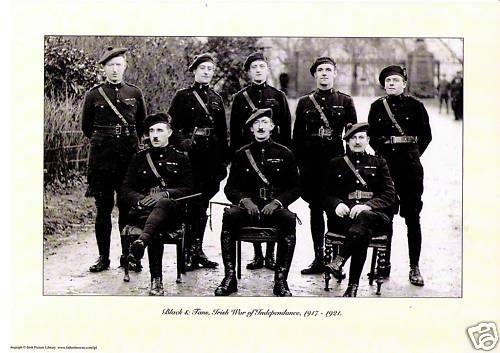
In January 1920, the British government placed advertisements in British newspapers for men who were willing to “face a rough and dangerous task”. The jobs on offer were as Temporary Constables in the Royal Irish Constabulary, a force by then coming under intense pressure from the IRA.

The target market for the ads was unemployed ex-servicemen, men who knew how to handle weapons and who had survived the horrors of the Great War. Recruits, around seven thousand altogether, were trained for about three months and then sent to Ireland. Such a large influx caught the RIC unawares and a lack of uniforms meant the temporary constables were dressed in khaki trousers and dark police tunics. Their attire reminded a Limerick journalist, Christopher O’Sullivan, of the colouring of the Kerry Beagles that made up the famous Black and Tan hunt on the Limerick/Tipperary border – the name stuck. They were paid ten shillings a day plus board and lodging at a time when the pay for a British Army private was little more than a shilling a day.

Never noted for their military discipline, despite their backgrounds, the RIC Temporary Constabulary took to the unofficial reprisal with gusto. It was Black and Tan units who torched Balbriggan and (with some outside assistance) the centre of Cork, burning more than 300 buildings in the southern capital. In the latter instance those responsible proudly displayed burnt corks in their caps for a time thereafter.

A few myths have grown up about the Tans. For a start they were not all British. At least 10% of the members of the force were Irish-born. Neither were they responsible for the shooting of civilians on Bloody Sunday in Croke Park, that was largely the work of the even more vicious RIC Auxiliary Division, the notorious ‘Auxies’. Neither did Tom Barry ‘lay all the Black and Tans low’ at the Kilmichael ambush in 1920, as the words of the song would have it. The 17 security force fatalities on that day were also Auxiliaries.

But during the War of Independence, better known at the time as ‘the Tan war’, no one really made too many distinctions between the various forces who terrorized the towns and villages of the country. Their philosophy, insofar as they can be described as philosophers, was encapsulated in the address of an RIC Commander to Listowel policemen in June 1920. He insisted that suspicious looking persons should be shot on sight. ‘You may make mistakes occasionally’ he continued, ‘and innocent persons may be shot, but that cannot be helped, and you are bound to get the right parties some time.’

In a gesture of sweet irony the  “Cogadh na Saoirse” medal, awarded since 1941 by the Irish government to IRA veterans of the War of Independence, includes a ribbon with two vertical bands, the stripes are in black and tan.

The name itself is still to be found in use in various forms in the USA. In 2006 Ben and Jerry’s got themselves in hot water when they created a new ice cream called Black and Tan. It doesn’t appear to have caught on. Two years ago Nike thought better of referring to a new brand of trainer as a ‘Black and Tan’ after protests from Irish-American groups.

Recruitment advertisement for the infamous RIC temporary constabulary were up and running in British newspapers 94 years ago, on this day.

Song – Come out ye Black and Tans