The Death of Buck Whaley, 2.11.1800

Image


Dublin is a city well used to rakes – those of the gambling, womanizing and carousing kind rather than the garden variety.

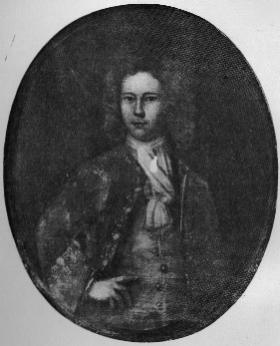
One of the most accomplished of the breed was Thomas ‘Buck’ Whaley, born in 1766 and son of Richard Chapell Whaley. Buck’s father, an affiliate of the infamous Hellfire Club, earned himself the nickname Burn-Chapel Whaley because one of his favourite forms of amusement was to set fire to Catholic churches.

When it came to the exploits of his son Thomas the apple did not fall far from the tree.

In 1788 he accepted a £15,000 bet from William Fitzgerald, Duke of Leinster, that he would not make the perilous journey to Jerusalem and return with evidence of his success in reaching the holy city. The sum of money involved would be worth about £2m today. He set off in October and was back in Dublin by the following summer to collect his winnings and earn himself the nickname ‘Jerusalem’ Whaley.

Whaley once rode a horse out of a third floor window to win a bet. The buck survived with a mere broken leg. The colt wasn’t so lucky.

A member of the Irish parliament for Newcastle, Co.Dublin at the age 18 of his gambling debts forced him to leave the country in 1790. He built a house for himself on the Isle of Man but did so using soil transported from Ireland. This allowed him to claim on another wager that he could ‘live upon Irish ground without residing in Ireland.’

His fortunes improved in 1798, he returned to Ireland and was elected to the House of Commons for the borough of Enniscorthy. He is said to have accepted bribes to vote both for and against the Act of Union. However, he was hardly unique in that respect.

Whaley passed away in 1800. The cause of his death has been ascribed to liver failure brought on by excessive drinking, a knife wound administered by a woman he had ‘won’ in a  bet with the Prince of Wales or the more prosaic rheumatic fever. Before he went to his reward, whatever that might have been, he wrote his highly entertaining memoirs. These were, however, seized by concerned family members and didn’t see the light of day until 1906.

Buck Whaley, bon viveur, gambler, rake and a chip off the old block, died 213 years ago, on this day.

Image

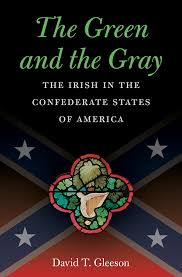
Review of David Gleeson’s book on the Irish in the Confederacy

The Green and the Gray: the Irish in the Confederate States of America

By David T. Gleeson

University of North Carolina Press

307 pp,  $35.00

 Image

It’s the song most associated with the brief existence of the Confederate States of America. Dixie tells the unlikely tale of a freed slave pining for the South (‘I wish I was in the land of cotton/Old times they are not forgotten’). Although a particular favourite of Abraham Lincoln it became the unofficial anthem of the Southern insurgency. It was, however, written by an Irish-American northerner, the composer and ‘blackface’ troupe leader Daniel Emmett, as the closing song of a minstrel show run by the New York Irish O’Neill brothers. As a faux Irish contribution to that traumatic conflict, known south of the Mason-Dixon line as ‘The War between the States’, it has little place in David T.Gleeson’s admirable survey of the Irish contribution to Confederate war effort. There are more than enough vrai Irish Confederates to populate this splendid and absorbing narrative.


Given the lowly status of Irish diaspora history in this country Gleeson’s volume is a welcome addition to a paltry Irish-originated corpus of literature on the topic. This scanty oeuvre has recently been augmented and enhanced by Damien Shiels in his The Irish in the American Civil War (and on http://irishamericancivilwar.com), Ian Kenneally in sections of his Courage and Conflict: Forgotten Stories of the Irish at War and webmasters like Robbie Doyle in www.myleskeogh.org.


Gleeson goes well beyond the merely anecdotal in conveying a sense of what it was to be an Irish immigrant in the southern states that formed the Confederacy between 1861-65. With the 150th anniversaries of all the major set-piece confrontations of the US Civil War being currently marked in an American half-decade of commemoration, this is a timely and superior addition by an Irish scholar to a field normally the preserve of Americans, as the extensive bibliography illustrates. 


Gleeson peels back layers of received wisdom and reveals the complexities as well as the banalities of the Irish experience of the American South. He points out, for example, that some Irish immigrants actually settled in southern cities like Charleston and Savannah in order to escape the nativist Know Nothing bigotry of the rapidly expanding northern conurbations. In the 1840s for example, a freshman Congressman from Mississippi felt compelled to speak out forcefully against nativist attempts to curtail the naturalization of Irish immigrants as American citizens. His name was Jefferson Davis and he went on to assume the Presidency of the Confederacy in 1861.


But Gleeson also acknowledges an ambiguity on the part of many Irish in the South to the ‘peculiar institution’ of slavery. While some, like the Roman Catholic Bishop of Charleston, Patrick Lynch, acquired slaves and others, like John Mitchel, approved of the practice, still more, like Jack McGuigan of Vicksburg, aided the escape of slaves at great cost to themselves. Ten years hard labour in the case of McGuigan.


Some of the southern Irish rationalised the practice of slavery on the dubious basis that slaves were better treated than the Irish peasant or agricultural labourer. In the rubric of the truly ’Confederate’ Irish the crusading ‘Yankee’ morphed into the despised ‘British abolitionist’ and offered further justification for the keeping of human beings as slaves.


John Mitchel had brought with him to the USA notions of Irish exceptionalism characteristic of the Nation newspaper and the Young Ireland movement of the 1840s. The Lord Haw Haw of the Confederacy, through his journalistic work on the Richmond Enquirer, adapted his ideas on race to encompass the validation of slavery. He managed to conclude, in the process, that the South was actually more ‘Celtic’ than the North (although 95% of Irish emigrants settled north of the Mason-Dixon line). Mitchel wrote in 1858 that ‘the South is Ireland’ – by which he meant a beleaguered, agrarian community oppressed by a larger and more powerful industrial neighbour


Gleeson records the departure from New Ross, Co.Wexford in the 1850s of one Patrick Murphy. Murphy moved to Natchez and purchased slaves. The Wexfordman left behind an impressive archive in which he recorded that he was prone to whipping any of his charges who ‘deserved punishment’.  It is chastening stuff for Irish readers who might well prefer to remember his namesake Bridget Murphy. She abandoned Wexford in 1849 in favour of Massachusetts. There she met – or was re-united with – another native of her home county, Patrick Kennedy. In 1963 their great-grandson, John Fitzgerald Kennedy, set about tackling the abiding legacy of slavery with civil rights legislation he never managed to bring to fruition before his assassination.


It appears that the employment of Irish nationalist sloganeering, by recruiters like General Thomas Francis Meagher, was not just a Union phenomenon. Conveniently ignoring the tacit Confederate alliance with Britain, Charleston slave dealer Thomas Ryan deployed some emotive rheortic to recruit Irishmen to the Confederate cause. Seeking to ‘raise a company of IRISH REBELS to enter into Confederate service’ Ryan went for the resonant, claiming that ‘Oliver Cromwell lives again in the person of Abraham Lincoln. Should they succeed in capturing Charleston the butcheries of Drogheda will be repeated on our streets.’  


The most celebrated Irish Confederate military figure, Patrick Ronayne Cleburne, the Cork-born ‘Stonewall of the West’, is given his due. A guest of Her Majesty on Spike Island at around the same time as John Mitchel – Cleburne as a serving soldier, the Young Irelander awaiting transportation – Cleburne was the highest-ranking and probably the most effective Irish-born commander on either side in the Civil War. Robert E. Lee himself said of the Corkman that he ‘shone like a meteor in a clouded sky’. At the age of 21 he emigrated to the USA and settled down in Helena, Arkansas. Like most Irish combatants he did not own slaves and professed to see the issue of slavery as a distraction. To Cleburne the cause of the Confederacy was that of ‘independence’.


He was an unfortunate fatality of the conflict in more ways than one. He was killed at the Battle of Franklin in 1864 but long before that he had originated a proposition to recruit slaves into the Confederate army. Their reward was to be a highly circumscribed form of post-war emancipation. Cleburne’s petition to this effect, signed by a number of other senior officers, was forwarded to Richmond where President Davis curtly rejected the proposal. Cleburne, who had risen through the ranks from private to major general received no further promotions before his death.


This volume is a valuable addition to American Civil War studies.The only vague disappointment is a failure to satisfy this particular reader’s curiosity about the extent of Fenian inflitration of the Confederate army, though the role of the IRB in the immediate post-war environment is well covered.  Such a trivial reservation does not detract one iota from the comprehensive nature of Gleeson’s research and the excellence of his pioneering narrative.


The one-man Irish Hansard – Sir Henry Cavendish – On this day, 29 September 1732

ImageImage


On this day, 29 September 1732.

Given the fact that today’s politicians complain bitterly that there is very little reporting of parliamentary proceedings, and that, if people choose to do so, they can catch elements of pretty much any parliamentary debate on radio, TV or the web it is difficult to get one’s head around the fact that it is only relatively recently that it has been even legal to report the proceedings of the British House of Commons in newspapers. The same was true for the Irish Houses of Parliament for much of their existence prior to their disappearance in 1800.

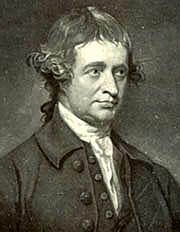
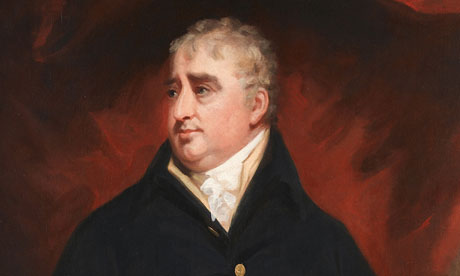
Which makes the achievement of Henry Cavendish of Lismore, member of the aristocratic family that was to provide the Dukes of Devonshire, all the more startling. Cavendish personally recorded 3,000,000 words of debate in the House of Commons in London from 1768-74. Without his furious note-taking the contributions to that parliament of the likes of Edmund Burke and Charles James Fox might have gone unrecorded.

However, Cavendish was not some freelance scribe chancing his arm, he was himself a member of parliament. The journal he kept was for private consumption only. However, had he not filled fifty notebooks, the record of that particular period, including important debates on North America, would have been rather more sketchy. Cavendish had done the same thing when he was an MP in the Irish House of Commons between 1776 and 1789. Using a shorthand system developed by Thomas Gurney Cavendish filled more than 15,000 pages in noting down the speeches of the House of Commons in London.

Cavendish served as a member of the Irish parliament for Lismore for three periods prior to the Act of Union. He also, somewhat bizarrely, was the member for Killybegs for six years between 1791-97. His period as an English MP was spent as representative for one of the most notorious rotten boroughs in the British Commons, Lostwithiel in Cornwall. By the time of its abolition in the great reform act of 1832, it could only muster 24 electors and had long been in the pocket of the Earls of Mount Edgecombe.

While Cavendish didn’t exactly invent shorthand (though he is credited by some with the achievement) he made valuable use of the technique in an astonishing display of energy. The fact that he wasn’t expected to do much for his constituents, numbering in the dozens, gave him considerable freedom to indulge his hobby.

Sir Henry Cavendish, the one man Irish Hansard, was born 181 years ago on this day.

The two Ferriters theory.


ImageImage 


This coming weekend, along with a few hundred others, I will sit in the audience in the Dunamaise theatre and watch Professor Diarmaid Ferriter chair a session of the inaugural James Fintan Lalor Summer School. He will do so with his customary courtesy, firmness, erudition and aplomb. Diarmaid is to chairing what Robin van Persie is to the six yard box.


Like all the others gathered for the session ‘A country in crisis’ I will marvel at his intellect and his energy. I will wonder, not for the first time, how does he do it? We will gaze, and our wonder will grow, that one small head can carry all he knows. Diarmaid is a towering intellect, a skilled and committed commentator, a thoroughgoing and methodical researcher and an apparently effortless writer.      You would hate him with all the ferocity of an Iago if he wasn’t also charming, affable, modest, engaging and funny.


And, as if all that’s not bad enough, he’s only recently had the decency to be forty!


His productivity is staggering, his ubiquity … incredible.


And that is where he has made his first mistake!


Because I am wise to Professor Diarmaid Ferriter, historian, broadcaster, and author of a gazillion books. He cannot fool this clever-clogs any more. He has finally been rumbled. Because if you actually examine his output closely it rapidly becomes clear that this simply cannot be the work of a single person.


I’m not suggesting for one moment that he has a gifted amanuensis hidden away writing every second volume. No, it is far worse than that.


It was while re-reading T.F.O’Rahilly’s The Two Patricks recently that the truth hit me like a Patrician (or Palladian) crozier. Why had I never thought of it before? It is all so breathtakingly simple.


 Clearly there are TWO Professor Diarmaid Ferriters.


Setting aside my penchant for the works of W.S.Gilbert – in which mistaken identity and separated twins are a sine qua non – this is how I think Diarmaid has managed to hoodwink an Irish public eager to believe that one of their own is capable of such Olympian achievements, a sort of intellectual Katie Taylor if you will.


It is my absolute conviction that the man we know of as Professor Diarmaid Ferriter is actually one of a pair of easily interchangeable identical twins. 


My proof is, I must admit, a tad insubstantial. It was while he was filling in for Sean Moncrieff, or maybe it was George Hook during the summer. I was listening idly on my iPhone while wandering towards the National Archives in Bishop St. It was the merest glimpse, more a hint than anything else, a Macavity moment, but as I rounded the corner from Aungier street, I was morally certain that while I was listening to Professor Diarmaid Ferriter performing live on radio, I distinctly saw him darting into DIT. There was a nano-second when I believe he spotted me and immediately aborted yet another trip to the Archive. But by the time I had reached the side entrance to DIT, like T.S.Eliot’s feline master criminal, he had vanished.


I encourage those attending the James Fintan Lalor Summer School to observe him closely for telltale signs – the butterfly tattoo that is obvious on Friday evening but mysteriously absent on Saturday, the strawberry birthmark that migrates from one side of the neck to the other on alternate days.  (Please forgive me, I am straying into The Gondoliers again) Somewhere there is proof of my thesis. Like a roomful of Skibbereen Eagles we simply need to keep our eyes firmly fixed on the star of UCD History.


My anxiety in coming out into the open with this theory at this time is that it will be seized on by the most ardent Ferritophiles and twisted into egregious heresy. Conscious that their hero, already two persons in one, is a mere persona shy of divinity, they will advance the theory of a mythical ‘Holy Spirit’ Ferriter, a dove-like deity who haunts the National Library. This is not to be confused with the many pigeons who do actually frequent the old pile in large numbers.


Another fear is that one or other of the two Ferriters will simply rebel, drained from the ceaseless demands of Vincent Browne, Bryan Dobson, the Royal Irish Academy, University College, Dublin, the Irish Times, Twitter and the oddball in the queue for the 39A who thinks he knows who shot Michael Collins. I am concerned that he will burn out, become disillusioned, suffer the fate of all disenchanted academics and move into an obscure branch of psychology – perhaps making regular appearances with Marian as a cognitive behavioural therapist.


I would urge Diarmaid, as a friend and admirer, to come clean before such a tragedy occurs. Confession can be liberating. It is high time he fessed up. A forgiving nation will not hold such a trifling peccadillo against him. It’s not, after all, as if he’s a banker or something equally Gothic.


I look forward to reading the first chapter in The Transformation of Diarmaid 2013-2014 (Profile books, €28 hardback, €17 trade paperback)


(Professor Diarmaid Ferriter and Dr.Myles Dungan will be chairing sessions at the forthcoming James Fintan Lalor school in Portlaoise on Saturday. Dungan will also be interviewing the aforementioned Lalor on Friday evening – he kids you not – in the Dunamaise theatre.)

 Image

ABRAHAM LINCOLN AND ROBERT EMMET – www.soundcloud.com/irishhistory

ImageImage


On this day – 20 September, 1803

They are two very different orations. One is short, a mere 269 words and lasting barely three minutes. The other is in excess of 3,000 words, and must have taken closer to half an hour to deliver. The earlier speech was given by a man marked for a judicial death, the later by one who would be mown down by an assassin’s bullet within eighteen months.

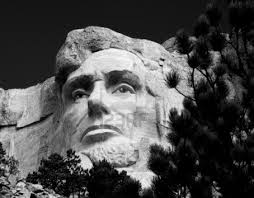
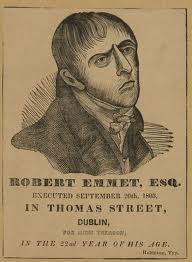
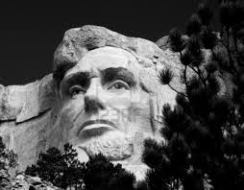
Abraham Lincoln, 16th President of the United States of America, was born five years after the execution of the young rebel United Irishman, Robert Emmet, but the bizarre connections between the two men are compelling and inescapable.

Both were Republicans, both are perceived by their acolytes as martyrs and both have become elements of two distinct Pantheons. Emmet, a post- Enlightenment Irish Republican, atoned for the hapless nature of his one day rebellion on 23 July, 1803 in Dublin by making the single most famous, effective and affecting speech in Irish nationalist history. Lincoln was one of the founder members of the anti-slavery Republican party and its first successful Presidential candidate in 1860. His election precipitated the debilitating four year American Civil War (or the War Between the States if you happen to be a southerner). His Gettysburg address was a model of rhetorical clarity, creativity and brevity. Ironically, the principal speaker on the day was Edward Everett, an unsuccessful Vice Presidential candidate in 1860. His speech was a whopping two hours long. In central Pennsylvania. Outdoors. In November.

Emmet’s speech, made after his conviction for High Treason in Green Street courthouse in Dublin, is famous for its passionate peroration, made as he faced death by hanging the following day.

‘Let no man write my epitaph: for as no man who knows my motives dare now vindicate them, let not prejudice or ignorance asperse them. Let them rest in obscurity and peace, my memory be left in oblivion and my tomb remain uninscribed, until other times, and other men, can do justice to my character. When my country takes her place among the nations of the earth, then, and not till then, let my epitaph be written. I have done.’

Lincoln’s Gettysburg Address, made on 19 November, 1863 at the dedication of the Soldier’s National Cemetry at Gettysburg, Pennsylvania, scene of the decisive battle four and half months earlier, is more famous for its iconic opening line  – ‘Fourscore and seven years ago our fathers brought forth on this continent a new nation, conceived in Liberty, and dedicated to the proposition that all men are created equal.’

Emmet’s speech marked the death of one man – Lincoln’s grieved at the sacrifice of thousands. They do, however, have one thing in common. No one is agreed on what exactly was said. There are five extant versions of the Gettysburg address and as many of Emmet’s Speech from the Dock.

But did Emmet’s speech influence the creation of the most famous short speech in history? Very likely. As a boy in Indiana (where his family had migrated from Kentucky) Lincoln is known to have learnt Emmet’s valedictory off by heart. As a gangly teenager he would often deliver it as a party piece for dignitaries visiting Perry County, where he lived.

More than a quarter of a century later, at the first Republican National Convention, in New York, in 1856 the explorer and ‘pathfinder’ John C. Fremont was chosen as the party’s Presidential nominee. Soundly defeated by William L. Dayton for the Vice Presidential slot was Abraham Lincoln. The Chairman and keynote speaker at the Convention was a New York Judge and politician, Robert Emmet, the Dublin-born son of Thomas Addis Emmet (United Irishman and 1798 revolutionary) and nephew of his celebrated namesake. In his speech Emmet attacked the rival Democratic Party and how its newly chosen standard bearer, James Buchanan, had proven himself to be aligned with slave interests.

In February, 1865 Lincoln, who had been forced to grapple with many grave moral dilemmas during the Civil War, was reviewing the death sentence on a young Confederate spy. He was considering an appeal for the boy’s life from a Delaware Senator, Willard Saulsbury. The identity of the petitioner alone would have been enough for lesser men to have arbitrarily confirmed the sentence. In January, 1863, Saulsbury had referred to the President as ‘a weak and imbecile man, the weakest that I ever knew in a high place.’

Saulsbury was both frank and astute in his appeal to Lincoln. He wrote –  “You know I am no political friend of yours. You know I neither ask or expect any personal favor from you or your Administration . . . All I ask of you is to read the defence of this young man, (Saml B. Davis) unassisted by Counsel, compare it with the celebrated defence of Emmet, and act as the judgment and the heart of the President of the United States should act.”

Saulsbury knew his man. The death sentence was duly commuted.

In 1939 the distinguished playwright Robert Sherwood, friend of Dorothy Parker and one of the original members of the Algonquin Round Table, won a Pulitzer Prize for his play Abe Lincoln in Illinois. It starred Raymond Massey, who later reprised the role in the 1940 film version directed by James Cromwell. Massey, after playing the role 472 times on Broadway, seemed to take on the form and characteristics of Lincoln. He spoke and dressed like him. This caused his friend, the playwright George S. Kaufmann, to observe that ‘Massey won’t be satisfied until someone assassinates him.’  The significance of the play is in Sherwood’s middle name, Emmet. He was the great-great-grandnephew of the executed patriot. It was as if the Emmet family, having accepted the homage of the young Lincoln, was repaying the compliment.

Emmet  would have been proud of the peroration of his celebrated acolyte – ‘ . . we here highly resolve that these dead shall not have died in vain—that this nation, under God, shall have a new birth of freedom—and that government: of the people, by the people, for the people, shall not perish from the earth.’

Robert Emmet, died on a scaffold in Thomas Street in Dublin 210 years ago, on this day