INTRODUCING – FAKE HISTORIES – Weekly on Drivetime – FAKE HISTORIES#1 – January is named after the Roman God Janus.

FAKE HISTORIES#1 – January is named after the Roman God Janus.

iu-1.jpeg

What can you say about January? Why bother saying anything? Everyone in the Northern Hemisphere loathes it. Christmas and Hogmanay are over and there is no getting around the fact that Spring isn’t coming any time soon. It’s the longest month of the year. Granted, it officially shares that status with six other months, but if you live north of the equator everyone agrees it’s the draggiest, darkest, wettest, coldest, most pointless thirty-one days of the year. The Saxons used to call it ‘wolf month’ – which is a bit hard on wolves.

Maybe it’s time for a concerted Jexit campaign to get rid of it, and jump straight from December 31st to the first of February. The main argument against is that there’s no one to negotiate with. Furthermore the Australians might retaliate by campaigning for a Jexit of their own – and we Nordies certainly don’t want to get rid of July.

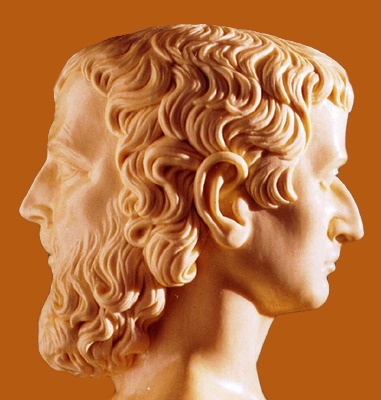
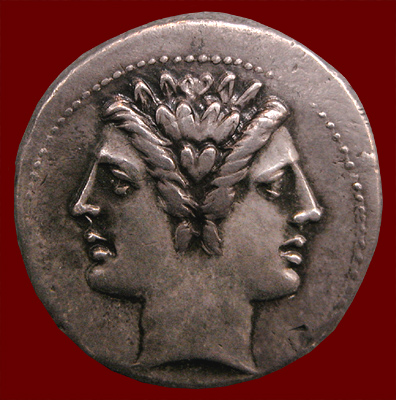
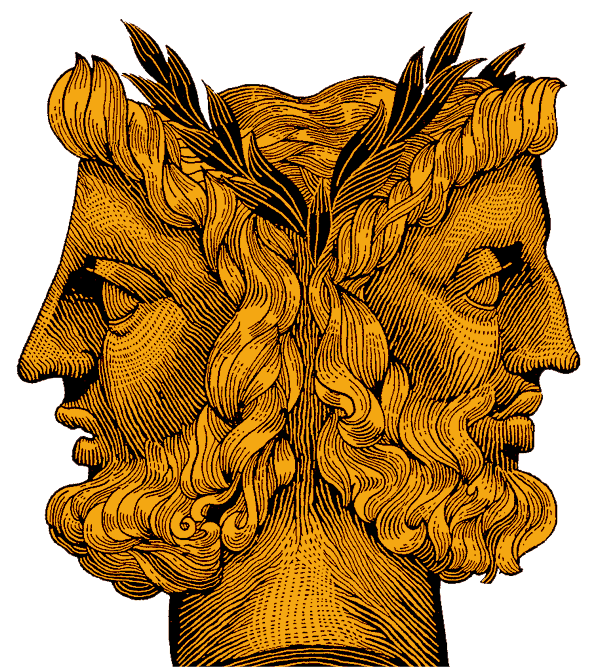
But where did January get its name? The assumption is that it’s called after the Roman God Janus, God of beginnings, gates, transitions, mornings, time, duality, doorways, passages and endings. So, a Godlike being with a packed portfolio of responsibilities—a bit like Britain’s Secretary of State for Exiting the European Union, except that he doesn’t change every few months.

iu.jpeg

Given that Janus is always represented as two-faced, you might think that he deserves to have something unpleasant, like January, named after him. But he actually doesn’t. The Romans did not give him ownership of the entire month,  just New Year’s Day. That’s probably why he is always depicted as having two heads, facing in opposite directions. After New Year’s Eve festivities that’s how many of us feel when we wake up on the first of January.

Poor Janus has always had a bad press. This is inevitable if you are, quite literally, ‘two faced’. Posh politicians, like Boris Johnston or Jacob Rees Mogg, who did Latin at school and like to remind us how erudite they are, will often refer to colleagues of whom they disapprove, as ‘Janus-like’, instead of just calling them ‘two faced’ or ‘double dealing’ like the rest of us. It all reflects very badly on poor Janus. Nowadays a good PR campaign would point out that his double-facedness allows him to look backwards as well as forwards, at a time when we seem doomed to repeat the negative elements of our history because of an ignorance of our past. A well briefed Sarah Huckabee Sanders might also point out that in the Hindu religion there are gods with twice as many faces as Janus, so he’s not really that bad after all.

By the way, you might like to bear in mind that on 9 January every year the Romans used to sacrifice a ram to Janus – so perhaps, unless you are vegan or vegetarian, think about mutton or lamb for dinner that day. If you don’t eat meat or dairy you could just sacrifice a carrot or a woolly jumper.

The truth about the naming of the month of January—which, by the way, didn’t even exist in the original, ten month Roman calendar— is that it is named after the Latin word for door, ianua, because January is the door to the rest of the year – a cold, dark, clammy door with a handle you might stick to, if the Jet Stream  is pointing in the wrong direction. Not to confuse things even further but the Roman God given responsibility for watching out for January was actually Juno. Typical of the Romans to give a really thankless job to a woman.

So, in response to the question ‘Is January named after the Roman God Janus?’, the answer is no. It’s fake history.

iu.png

On This Day – 7 December 1817 Birth of Justice William Keogh


iu-1.jpeg

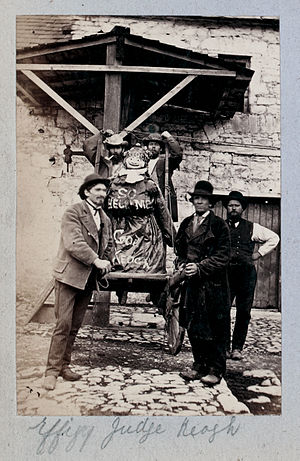
There is probably no such word as ‘effigised’ but in Ireland there really should be. Then when it came to ‘the burning of an improvised model of a reviled political figure which is constructed in order to be damaged or destroyed as a protest’ – the dictionary definition of this popular pastime— we could say that they had been ‘effigised’. Think of how useful it would be in Northern Ireland when the umpteenth effigy of Robert Lundy is burned by Apprentice Boys who are neither apprentices nor really have any legitimate claim to the title ‘boys’.

Aside from Lundy, who was actually a Scottish Protestant who seemed peculiarly anxious to hand over the city of Derry to the forces of the Catholic King James in 1689, who is the most effigised figure in modern Irish history? Someone you’ve probably never heard of and who hasn’t been burned in effigy for more than a hundred years now, William Keogh. But in his day he suffered many a roasting.

Keogh, who in the course of a relatively short life left hardly a principle unbetrayed, was born in Galway in 1817. His mother was a ffrench, from one of those Anglo-Irish families who added a superfluous ‘f’ to the beginning of their names, presumably to avoid being mistaken for a garlic-eating, beret wearing, consonant-dropping inhabitant of the country immediately to the south-east of England on the far side of the Channel.

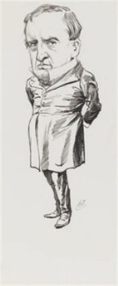
Keogh was a gifted youth who, despite studying science at Trinity College, went on to make a small fortune as a barrister, becoming a Queen’s Counsel at the age of thirty-two.  In caricatures of the man he looks a little like John Redmond but is remembered even less fondly than the leader of the Irish Parliamentary party in the early 1900s. He was, by all accounts, witty, cultured, a highly impressive speaker and excellent company. He was also self-serving, irascible, insensitive and prone to making unpopular decisions in his own political life and later from the Bench.

In 1847 he became MP for Athlone and campaigned against legislation that would have made it illegal for anyone other than a Church of Ireland bishop to hold an ecclesiastical title. He, and his fellow Catholic Irish MPs of the period, became known, as a result of their campaign, as ‘The Pope’s Brass Band’. Keogh also sided with the Tenant League, which fought for the rights of Irish tenant farmers in the 1850s. So far, so popular. Where did it all go wrong?

Keogh’s problems—at least in terms of his legacy—began when he agreed, in 1852, to be bound by a pledge taken by forty Irish MPs not to accept political office but instead to exploit the possibility of holding the balance of power in the House of Commons. However, Keogh, and the equally reviled John Sadleir, quickly jumped ship and accepted plum jobs in the administration of Lord Abrdeen. Keogh became Solicitor General for Ireland, and later Attorney General. He must have wondered, at times, was it worth it. His name, and that of Sadleir, became a by-word for political treachery.

It only got worse when he became a judge in 1855. He was one of the grumpiest justices who ever sat on the Irish bench. His spectacular quarrels with barristers became legendary. The savage sentences imposed on the rather hapless Fenian prisoners who came before him in 1865 added to his lustre as ‘one of the monsters of mankind’, to quote a description of him on the memorial in Tipperary to two brothers he sent to the gallows for murdering a land agent.

In 1872 in a judgment unseating the victorious candidate in the Galway constituency election he formally handed in his tuba and resigned his membership of the Pope’s Brass band when he lacerated the Roman Catholic clergy and hierarchy from the bench for their interference in the campaign, in a legal decision that took nine hours to read. That was when the effigising began in earnest. He certainly hasn’t been burnt as often as Lundy but he probably holds the Irish record for most effigising in his own lifetime.

As time went on Keogh’s behaviour became more erratic. He was described as ‘eccentric’ a term used to cover wealthy and prominent citizens who are actually stark raving mad. Things came to a head the month before his death in 1878 when he attacked his valet with a razor – one of the old-fashioned ones, not the modern safety type. Jeeves would have resigned on the spot and left Bertie Wooster to his own devices. At least Keogh didn’t end up like Sadleir, who committed suicide after the collapse of his Tipperary Bank in 1856.

So bad was Keogh’s reputation that well into the twentieth century, when offered a seat on the Supreme Court by Eamon de Valera, the former Taoiseach, John A. Costello politely declined, citing as his reason a fervent desire not to stand comparison with the place-seeking Justice Keogh.

William Keogh, barrister, politician and popular effigy was born two hundred and one years ago, on this day.


iu.jpeg

On This Day – 30 November  1667 Birth of Jonathan Swift

iu.jpeg

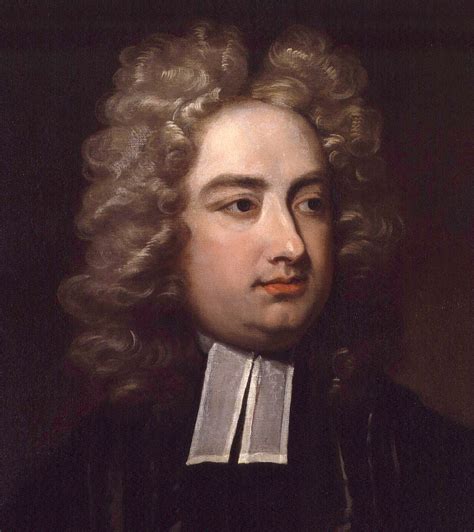
His humour was decidedly ‘Swiftian’ – which is fair enough really because he was Jonathan Swift. He is one of those rarities in the literary world who has a writing style or an entire genre named after them – think ‘Kafkaesque’ and ‘Orwellian’. Then there is that other validation. The one that drives Irish people mad. That’s when he’s described as an ‘English’ or ‘Anglo-Irish’ writer. Swift was born in Dublin, died in Dublin, was educated in Ireland and spent most of his life here. Yes, he spent some years living in England, but his main connection with that entity was his wonderfully satiric use of their language, often employed to tear strips off them.

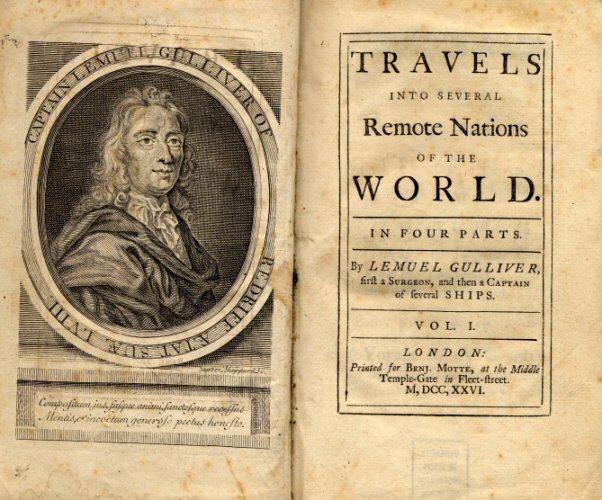
By 1700 Swift, a clergyman who catered for the dozen or so parishioners of the Church of Ireland parish of Laracor in Co. Meath, had plenty of time on his hands to indulge in his hobbies of writing and gardening. His interest in the latter resulted in no tangible legacy, but his abilities as a satirist got him into just the right amount of trouble. Let’s face it if you are writing satire and no one is offended then you can’t be very good. When he was appointed to the Deanery of St. Patrick’s Cathedral in 1713—one of the few meaningful positions to which his enemies in England could not prevent his accession—Swift devoted his pen to a number of Irish causes. He used a variety of pseudonyms to write a series of political pamphlets, satirical essays and allegorical tales, the most famous of the latter being Travels into Several Remote Nations of the World, in Four Parts by Lemuel Gulliver, better known to us as Gulliver’s Travels. Most of what happens in Gulliver’s Travelsrefers to political controversies of Swift’s day. The version read to children bears little or no resemblance to the Swiftian original. This includes a scathing reference to the politics of the day when Gulliver discovers that in the land of Lilliput the main difference between the two dominant political factions is controversy over which end of their breakfast boiled eggs to lop off. The dispute had already resulted in eleven thousand executions.

Swift’s most ‘Irish’ philippic is undoubtedly his A Modest Proposal for Preventing the Children of Poor People in Ireland Being a Burden on their Parents or Country and for Making them Beneficial to the Publick—it wouldn’t go down well as a title today. In A Modest Proposalhe suggests that the Irish poor could make ends meet by raising their children as livestock and selling them to the rich, to be eaten as a delicacy. With anyone else it would be blatantly satirical, but with a misanthrope like Swift there is always a 1% chance that he meant it to be taken literally.

iu-2.jpeg

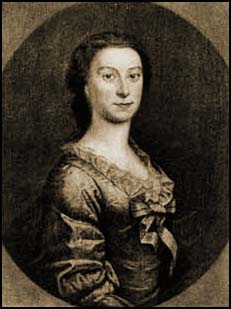
Esther Johnson

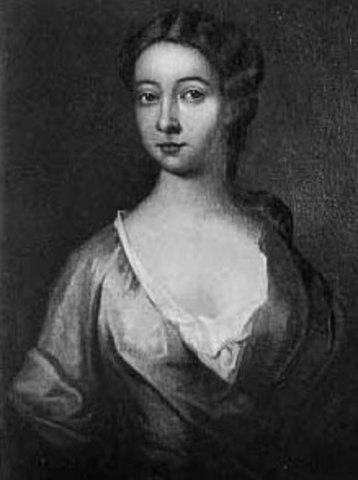
A lot of prurient curiosity surrounds Swift’s relationships with two women. The first was Esther Johnston. Swift had met her in England when she was eight, and he was her twenty-one year old tutor. He called her ‘Stella’ and in 1702, by which time she was twenty years of age, he brought her to Ireland. There were rumours that the two were lovers, even that they had secretly married. Certainly, Swift appears to have been extremely zealous in warding off Stella’s suitors. The second woman in question he also met in England, and her name too was Esther. Swift seems to have had a weakness for women of that name. She was Esther Vanhomrigh, daughter of a Dutch merchant family with property in Ireland and England. He gave her the nickname Vanessa. He corresponded frequently with both. Some of the letters to Johnston were published as Journal to Stella, while Vanhomrigh was the inspiration for the poem Cadenus and Vanessa– Cadenus being an anagram of the Latin word ‘decanus’ which means Dean. Need I say more? The poem popularised the, previously unknown, name Vanessa, something for which the Redgrave and Paradis families must be eternally grateful. When Swift returned to Ireland in 1714 Vanhomrigh followed him, living in the family home of Celbridge Abbey. Before she died, at the age of thirty-five in 1723, she and Swift had fallen out. There were, apparently, too many Esthers in the relationship. Five years later ‘Stella’ herself died, with Swift at her bedside.

iu-3.jpeg

Esther Vanhomrigh

The later years of Swift’s life were a constant struggle with mental illness. His father had died of venereal disease, and, although Swift never knew the man, one can surmise that congenital syphilis was the sole parental gift bestowed by Jonathan Swift senior on his son. Swift died in 1745 at the age of seventy-seven. Most of his fortune-a sum of £12,000—was left for the endowment of a hospital in Dublin for the mentally ill. St. Patrick’s, founded in 1757, is with us today.

Near Swift’s burial site in St. Patrick’s Cathedral is his epitaph, inscribed in Latin, and composed by the Dean himself. The most famous translation was provided by W.B.Yeats – it goes …


Swift has sailed into his rest;

Savage indignation there

Cannot lacerate his breast.

Imitate him if you dare,

World-besotted traveller; he

Served human liberty.


Jonathan Swift, Dean of St. Patricks Cathedral, satirist, poet, essayist and troublemaker, was born three hundred and fifty-one years ago, on this day.

iu-1.jpeg

On This Day – 16.11.1939 – The Birth of Luke Kelly

iur.jpeg

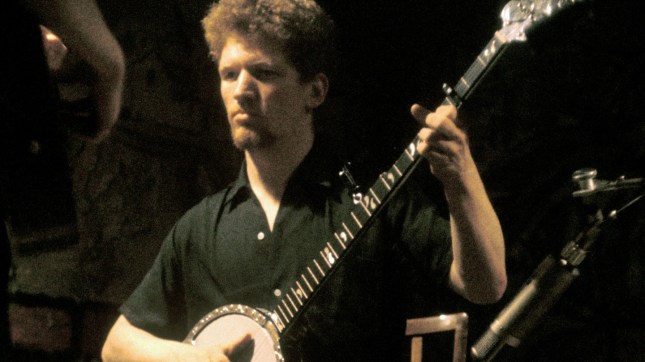
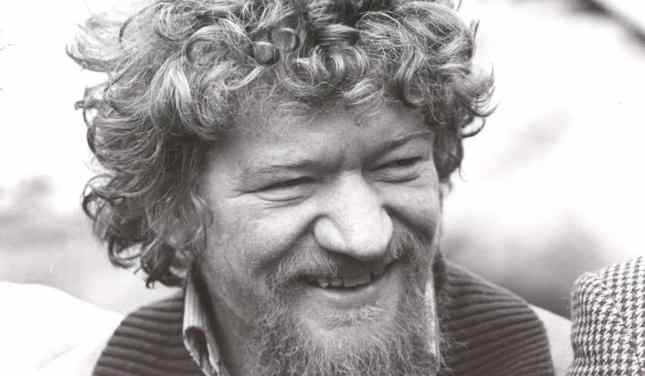
Nobody has ever possessed, or will ever be blessed with, a voice like Luke Kelly’s. He may not have been a choir boy, but he was a one-man choir. He may not have been perfect, but he had perfect diction, and perfect pitch. He was a Dubliner, in the broad and narrow sense of the word. He was born in Ireland’s capital city and he was one of the leading lights of the legendary folk group named after that city. If you’re too young to remember him, think of him as a sort of Christy Moore, but with a banjo, and more hair

Kelly’s date of birth is disputed, his birth certificate apparently claims he was born on 16 December. His mother always insisted that was a mistake and the family celebrated his birthday on 16 November. He came from a working-class background and it was his father, also called Luke, who gave him an early love of music. Kelly was largely self-taught, though he left schools at the age of thirteen he was a voracious reader. He emigrated to England in the late 1950s, lost at least one job when he demanded higher wages, and developed the socialist principles that he never abandoned during his short life. His political convictions helped to inform much of the Dubliner’s repertoire and he was also a vocal supporter of the Irish Traveller Movement and a variety of left-wing causes.

iu-1.jpeg

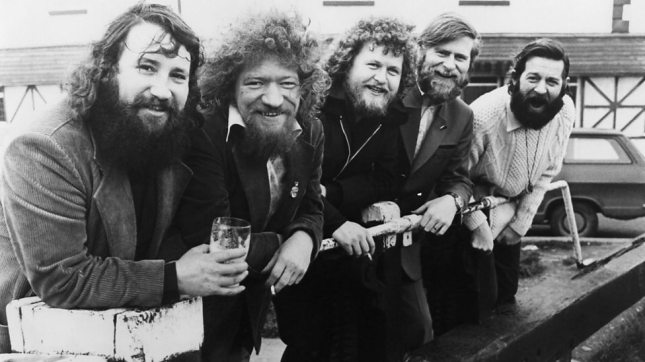
He returned to Ireland in the 1960s an accomplished banjo player, albeit an imitator of the styles of Pete Seeger and Tommy Makem. Although the 60s are noted for the inexorable rise of rock and roll, the folk music scene was also expanding and Kelly decided to try his luck with the ‘ballad boom’. Centered around venues like the Abbey Tavern in Howth and O’Donoghues Pub in Merrion Row, singers and musicians like Ronnie Drew, the Fureys, and Andy Irvine were beginning to shine, and to thrive. The Dubliners began life as The Ronnie Drew Ballad Group—legend has it that for one gig they were even billed as the Ronnie Drew Ballet Group—but they became the Dubliners after the inclusion of Ciaran Bourke and Barney McKenna, and later John Sheahan. The group appears to owe its name to the fact that Kelly was, at the time, reading James Joyce’s famous volume of short stories. Would musical history have been very different had he been reading Jane Austen? We shall never know.

When you have heard Kelly singing certain songs you just couldn’t be bothered ever listening to anyone else singing them again. Even a Scottish song like Peggy Gordon, included in his repertoire in deference to his Scottish grandmother, can hardly be improved on after getting the Kelly treatment. The same goes for the great American socialist anthem, Joe Hill, which Kelly rendered with the utter conviction of a former member of the Young Communist League. I defy anyone to nominate a better version of Raglan Road than Kelly’s (though Glen Hansard comes close). When Patrick Kavanagh heard Kelly sing he urged him to put the poem to music—an old Irish folk song called The Dawning of the Day— and to record it. Thankfully Kelly didn’t just ignore the normally irascible poet.

In his relatively brief career he, and his fellow Dubliners, did it all, Top of the Pops, the Ed Sullivan Show, world tours, getting Seven Drunken Nightsbanned by the BBC, Kelly himself even played Herod in a Dublin production of Jesus Christ Superstar. When Phil Coulter briefly became the Dubliners’ manager his collaboration with Kelly produced two of their most memorable songs, The Town I Loved So Well and Scorn Not His Simplicity.

His life was tragically cut short by a series of illnesses, to which he greatly contributed by consuming copious amounts of alcohol. In that respect he didn’t differ from his fellow band members, but somehow the raucous lifestyle didn’t have quite as adverse an effect on the constitutions of the other Dubliners as it seemed to do on Kelly.

Luke Kelly was born seventy-nine years ago, on this day.

iu.jpeg


On This Day- 9 November 1875 Art collector Hugh Lane is born in Cork.


iu.jpeg

On 12 April 1956 two Dublin students, Paul Hogan and Bill Fogarty, walked into the Tate Gallery in London and stole an old master, Jour d’Êté (Summer’s Day) by the impressionist painter Berthe Morisot. The fact that Hogan arranged to have himself photographed with the painting as he walked out of the Tate suggested this was no ordinary theft. It was not undertaken for profit, neither was it a student prank. Hogan and Fogarty were incensed at the very presence of the Morisot and thirty-eight other paintings in London. As far as they were concerned the entire collection of priceless impressionist pictures should be in a gallery in Dublin, because that was what their owner had ordained in his will, more than forty years before.

iu-1.jpeg

The owner was the collector and dealer Hugh Percy Lane. Born in Cork in 1875 he was the nephew of the playwright and joint founder of the Abbey Theatre, Lady Gregory. He originally worked in art restoration before starting to buy and sell paintings himself. He soon had his own commercial art gallery in Dublin, opened in 1908. The following year he was knighted for his servcies to art at the tender age of thirty-three. Through frequent visits to Aunty Augusta’s home in Coole, he also became acquainted with most of the leaders of the so-called ‘Irish Renaissance’. These included the poet W.B.Yeats, who made a veiled reference to Lane in his poem, ‘The Fisherman’ in the line ‘great art beaten down’ – a reference to the long dispute over the building of a home for the connoisseur’s collection.

Lane was like one of those people who bought shares in Apple … in 1977. He developed a taste for impressionists—not of the Oliver Callan type. These were artists whose work had originally been compared to wallpaper, to the detriment of their paintings. Land had rapidly acquired a personal collection which included works by Degas, Manet and Renoir. Just as no one knew that the dream of Steve Jobs and Steve Wozniak would turn into a multi-billion dollar corporation within two decades, the impressionists in the early 1900s were still something of an acquired taste, one which might quickly give way to the ‘next big thing’, causing artists like Renoir and Monet be completely forgotten, and leaving Lane with a few dozen mediocre canvasses albeit with really nice frames. But that’s not how it turned out.

Lane wanted to leave his collection to the city of Dublin, but the reluctance of the City Fathers to spend any money on a building to house his increasingly valuable paintings, caused him to change his mind. Instead he decided that London was more deserving and the whole lot was bequeathed to the National Gallery there. At some point, however, he appears to have changed his mind again. He drew up a codicil to his will which meant that, in the event of his death, the collection would, after all, be left to Dublin. He then set off, in 1915, on a long sea journey without having the codicil witnessed.

Lane returned to the county of his birth in May 1915, but only as one of the twelve hundred fatalities on board the ill-fated RMS Lusitania, torpedoed off the Old Head of Kinsale by a German U-Boat. On his death the National Gallery in London claimed his pictures. When the codicil came to light they chose to ignore the obvious implication of the document, on the basis that, as Lane had not had the codicil witnessed, it was invalid. Possession was nine tenths of the law, and they had both possession and the law on their side.

And that is how the matter stood until the intervention of Paul Hogan and Bill Fogarty. The two novice, but highly efficient, art thieves held on to their Morisot for four days before getting some friends to hand it in to the Irish Embassy. They had achieved their objective by drawing attention to the injustice of the entire collection residing in London, contrary to the expressed (but unwitnessed) desire of their owner. Three years later a compromise arrangement was reached between London and Dublin, which allowed the collection to be split. This arrangement was changed in 1993 and the Hugh Lane Municipal Gallery in Dublin now has permanent possession of thirty-one of the thirty-nine paintings.

Hugh Lane—‘Bequest’ is not actually part of his name—was born one hundred and forty-three years ago, on this day.

iu-2.jpeg