Covid Blues – Ken Browne

To celebrate the beginning of the end, or the end of the beginning, of Lockdown this is an instrumental piece by the Kells-based artist and musician Ken Browne to which I’ve added some of the many memes that have managed to find their way onto my phone since lockdown began.

Ken is as talented an artist as he is a guitarist – check out his website http://www.kenbrowneart.com. He is accompanied on bass by his nine year old daughter Maja.

My own particular talent is dragging images and videos to iMovie.

Et voila – Covid Blues.

Error
This video doesn’t exist

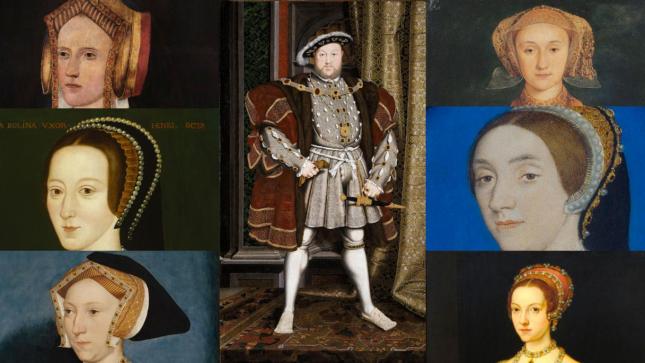
FH #72   The six wives of Henry VIII were executed because they were unable to give him a male heir?

iu


You can’t walk into a bookshop at the moment without risking a debilitating injury should a copy of Hilary Mantel’s The Mirror and the Light fall on any of your soft tissue. The book, which numbers around a thousand pages, is a true Mantel-piece and almost as heavy. The book begins with an execution and there might be an upsurge in sales today because it’s a significant anniversary.

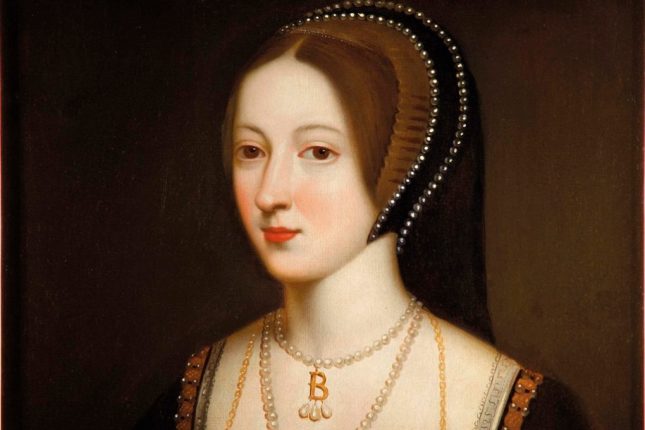
The fifteenth of May wasn’t a great day for Anne Boleyn, second wife of King Henry VIII. Not, admittedly, nearly as bad as the day of her execution, the anniversary of which falls early next week. Her trial for treason began today in 1536 in front of a special jury. An extra special jury really. That’s because it had probably reached its verdict on the fourteenth of May. There are times when jurors, like the chairs of committees of inquiry, know exactly what is required of them. Henry VIII urgently needed to become a widower so that he could carry on his policy of serial monogamy,  something which, owing to frequent practice, he was developing into a fine art.
--

Anne Boleyn

Henry VIII, as even a visiting Martian probably knows, had six spouses. As it happens he’s only trotting after Richard Pryor and Jerry Lee Lewis, with seven each. Elizabeth Taylor, Mickey Rooney, Larry King and Lana Turner with eight, and the brand leader Zsa Zsa Gabor with nine. However, as far as we know, none of the aforementioned caused any of their cast-off spouses to be executed. If you have information to the contrary please phone 911.

However, there seems to be a notion abroad that Henry ordered the passing of all six of his wives because they were not able to provide him with a male heir. If that were actually the case he might well have stopped to consider that perhaps the problem did not lie with his spouses, but with the fact that he was shooting the next best things to blanks. But Kings, of course, don’t entertain such notions. They are not required to do so and no physician this side of the Hippocratic oath would be daft enough to suggest such a possibility to a monarch with a French executioner on speed dial.

But, the fact is that it’s not true anyway. First off, one of Henry’s six wives survived him. He died in 1547, she outlived him by a year, and by the way, is the most married English Queen, with four husbands of her own, three of whom pre-deceased her. In an Agatha Christie novel Poirot would have been all over Catherine Parr.

Secondly, Henry did actually produce a male heir. His son, Edward, was born to his third wife, Jane Seymour and acceded to the English throne on Henry’s death. The fact that he was young and sickly, died at the age of fifteen, and reigned for only six years, is neither here nor there. His half-sister Elizabeth, daughter of the unfortunate Anne Boleyn, more than made up for him. Good Queen Bess was way better than any English King and would have made a good Roman Emperor into the bargain. However, she might not have been such a good Dalai Lama.

The runners and riders in the King Henry VIII Challenge Cup—the challenge being not to cheese him off so much he had you beheaded—were as follows.

Catherine of Aragon, produced one female heir, Mary – divorced.

Ann Boleyn, produced one female heir, fooled around with anyone with a codpiece – decapitated

Jane Seymour (not to be confused with the person who portrayed Dr. Quinn, Medicine Woman) – produced male heir and paid for it with her life when she died shortly after childbirth.

Anne of Cleves, aka the ‘Fat Flanders Mare’. She failed to live up to Hans Holbein’s flattering portrait, lasted six months during which the marriage was not consummated. She was despatched to Chelsea with an annulment, was known thereafter as The King’s Beloved Sister, and had the last laugh when she outlived him and all his other Queens

Catherine Howard, failed to produce an heir and was also allegedly prone to a nicely turned doublet and hose. She was decapitated for having sex with her cousin.

Catherine Parr, reached the finishing post, as Queen, ahead of Henry, and therefore wins the Challenge Cup.

But is it any wonder why we are fascinated by the Tudors. Hilary Mantel will probably win three Booker Prizes without even having had to make anything up.

Bu,t as to whether Henry went through all his wives with an axe, come on people,         the man wasn’t a monster, he only beheaded two of them.
FH #71  Did London have a mayor named Dick Whittington and did he have a cat?


iu-1.jpegiu.jpegiu-2.jpeg

By rights we should have found out today who is to be mayor of London for the next four years, but fate, a former incumbent, and epidemiology intervened to  dictate otherwise. Chances are, based on opinion polls, it would have been a shoo in for Sadiq Khan to be elected to a second term, just as was the case with his predecessor, one  Boris Johnston, the man who decided that London wasn’t going to have a mayoral election after all.

London Mayors tend to be very high profile individuals. This is the case even if Donald Trump likes them and doesn’t troll them mercilessly on Twitter. Johnson’s predecessor was Ken Livingstone who had a spot of bother back in 2018 when he suggested that Adolf Hitler was actually a bit of an old Zionist softie.

But the most famous London mayor of all, celebrated in annual pantos … oh yes he is … is, of course, Dick Whittington. Except that he’s been so mythologised in poems, plays and stories, that you begin to wonder, did he actually exist, or is he more like King Arthur than Boris Johnson. Furthermore, there’s the all-important follow-up question, if he did exist, and if he did become Mayor of London, did he have a cat?

Let’s sort out the first part of the question before proceeding to the issue of his famous pet, portrayed on many a pantomime stage by actors of whose careers it can truly be said ‘it’s behind you!’

The legend has it that Dick Whittington abandoned his home—somewhere in the north of England that voted for Brexit and recently elected its first Tory MP since the middle ages. He headed for London, armed only with his wits and his moggie, because he had heard the streets there were paved with gold. When he got to the southern metropolis, having given Slough a wide berth en route, he discovered his mistake. The streets were not paved with gold, in fact the streets were not even paved, furthermore, he was expected to pave them. Disillusioned, he headed for home but was detained by the ringing of the Bow Bells which somehow managed to communicate to him, campanologically, that he would one day become Mayor of London. So, he retraced his steps. Some years later, after encountering a number of stock pantomime characters who couldn’t even get parts as extras on Eastenders, he duly rose to the mayoralty of what was then the greatest city in the known world.

As it happens there was indeed a Richard Whittington who became Mayor of London, not twice, but four times in the 1400s. He was a wealthy merchant and a Member of Parliament who, on his death, bequeathed his fortune to a charitable trust which bears his name to this day. So far, so good. But what about Puss in Boots? Actually, as that’s the name of an entirely different feline pantomime hero we should probably just refer to the mayoral moggie as ‘cat’. The mythology has the animal being hugely instrumental in Whittington’s good fortune. Dick’s cat was to rat-catching what Lionel Messi is to turning opponents in the penalty area and scoring from six metres. Legend has it that Whittington made enough money from hiring out his moggie, to provide him with the basis of a large fortune. Bear in mind that it wasn’t that all that long since rats had been instrumental in spreading bubonic plague and halving the population of Europe. So a good ratter would have been in great demand.

Except that the real Richard Whittington – not plain ‘Dick’ but the more aristocratic ‘Richard’—was not a bumpkin from ‘Last of the Summer Wine’ country who came to London to become a Cockney shapeshifter. If he wanted money all he had to do was ask Dad, who was a fully paid-up member of the gentry. Richard’s arrival in London was dictated by the fact that he was not an eldest son, and so, would not inherit the family estate. He needed to make his fortune as a merchant, which he duly did. Given that he was well-to-do, he would have had no need for a resident cat to be hired out as an ace ratter, and there is no evidence that he ever served in the capacity of ‘human’ to a member of the feline race.

Having said that, when Sadiq Khan, Boris Johnson and Ken Livingstone go to their eternal rewards will their obituaries note whether or not they ever owned a pussycat? Doubtful!

So, when it comes to the question of whether or not Sadiq Khan ever had a predecessor named Dick Whittington, the answer is an emphatic ‘yes’. But as to whether said Whittington was the proud manservant of a cat, that’s probably fake mews.

iu.jpeg

Fake Histories #70  Did the 1916 Rising result in the introduction of GMT to Ireland?

iu.jpeg


Right about now, one hundred and four years ago, dozens of people in the city of Dublin were concerned for their immediate future.  This was because they had been rounded up after the surrender of the Volunteers in the Easter Rising and were facing courts martial which could, and in a number of cases, actually did, lead to their executions.

A couple of years after the Rising, an irate Countess Markievicz, in a highly fractious letter, seemed to suggest that one of the consequences of the Rising was that a vindictive British government had taken away Ireland’s unique time zone and folded us in with Greenwich Mean Time as a punishment for being bolshy rebels.

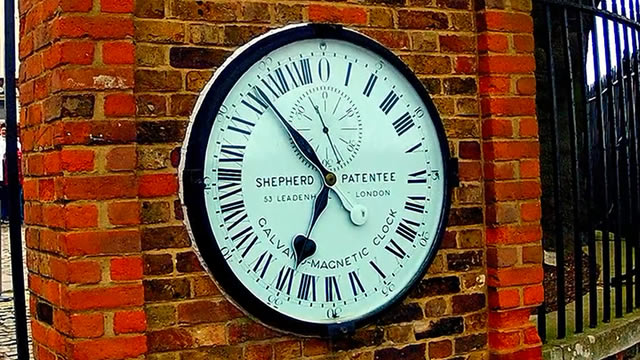
Let’s do some unpacking here. It is true that in 1916 the British government introduced the Time (Ireland) Act. This abolished something called Dublin Mean Time, which had been in force since an earlier piece of legislation, the Statutes (Definition of Time) Act of 1880.  What the 1916 legislation meant was that a practice, whereby time in Dublin was twenty-five minutes behind GMT, was finally abolished. DMT was the local time at Dunsink Observatory. To be completely accurate Dublin was twenty-five minutes and twenty-one seconds behind London. But, with your permission, I will ignore the twenty-one seconds. Or, if you like, I can pause for exactly that amount of time just to keep things straight. Maybe not.

So, when British clocks went back by an hour for the winter of 1916, so that Tommies weren’t fighting the Battle of the Somme in the dark, Ireland only got an extra thirty-five minutes in the scratcher. Alignment with GMT became permanent and remains so to this day.

iu-1.jpeg

The prominence of local time—i.e. the actual time at a specific location, rather than a centralised version of same—came about in the United Kingdom in 1858. At that time we were members of the august configuration of stroppy nations. On 25 November of that year the defendant in Curtis v March, due to be heard by a judge in Dorchester failed to show up for his hearing and lost his case. He appealed on the basis that he’d been told to be in court at 10.00 am and had turned up on time, according to the local time on the town clock, but not in line with GMT. He won his appeal and that ruling defined ‘time’ in the UK as local, until the 1880 legislation which standardised it in Britain and left us twenty-five minutes adrift.

However, there’s quite a bit of post hoc, ergo propter hoc about the Countess’s pronouncement. In other words ‘since event Y followed event X event Y must have been caused by event X’. Which is a bit like saying ‘I bought an ice cream and two minutes later there was an earthquake. Therefore, my purchase of a tub of Cherry Garcia  caused that seismic event.’  Was it really the ‘stab on the back’ of the Easter Rising that prompted an apoplectic and vengeful British government to steal our lovely time zone?

Well, for a start the 1916 Rising was done and dusted by the  beginning of May. The abolition of Dublin Mean Time, which added almost half an hour to the seven hundred and fifty years of British colonial oppression, did not take place until 1 October. While revenge is a dish best served cold, it’s more likely to be consumed when it hasn’t completely gone off.

Having said that, there was some serious opposition to the alignment of Dublin and London in the same time zone. It was opposed in the House of Commons by some Irish nationalist MPs. A letter writer to the Irish Independent in August 1916 observed that, ‘the question is whether we should give up this mark of our national identity to suit the convenience of shipping companies and a few travellers.’

Post Brexit, there is the enormous potential for confusion on the island of Ireland if the UK—along with rejecting the European Court of Justice and pulling out of the Eurovision Song Contest because they’re never going to win it again anyway—should also assert their new-found independence by abandoning summer and winter time. So, it is worth remembering that we have a powerful weapon in our armoury to offer in retaliation. We can threaten them with the restoration of Dublin Mean Time. Then we can make things even more confusing by adding back the twenty-one seconds as well.

But as to whether the loss of DMT one hundred and four years ago was a punishment for the 1916 Rising?   That’s FHT, fake history time.

Fake Histories #69  Was Oscar Wilde brought down by the man who codified the rules of boxing?

iu.jpeg  iu-1.jpeg

Oscar Wilde spent much of this week in 1895 trying, and failing, to stay out of jail.

The famous aesthete and dramatist once said, via one of his characters, that ‘there is only one thing in the world worse than being talked about, and that is not being talked about.’ While it might have been judicious in Chapter 1 of The Picture of Dorian Grey, by April 1895 the epigram had a hollow ring, as its author was being spoken about widely, for all the wrong reasons.

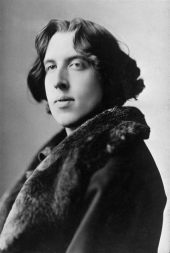
In the same volume he had written that, ‘destiny does not send us heralds. She is too wise or too cruel for that.’ That certainly proved to be the case for Wilde, whose life unravelled rapidly and unexpectedly after the Marquis of Queensberry, the father of his petulant and reckless lover Lord Alfred Douglas—aka Bosie—left a calling card at Wilde’s London club addressed to ‘Oscar Wilde, posing sodomite’. Queensberry, best known for having (supposedly) codified the rules of boxing, was removing his gloves in so doing. Because sodomy was a criminal offence, he was leaving himself open to a suit for criminal libel and a two-year jail sentence.

The note was the culmination of a series of confrontations between the Marquess, his son and the celebrated playwright. Most of Wilde’s friends urged him to let the matter lie and ignore the provocation. Bosie advised otherwise. He encouraged his lover to sue his father. Wilde decided to ignore wiser counsels and indulge the younger Douglas in an ongoing vendetta with his truculent parent. It would prove to be his undoing.

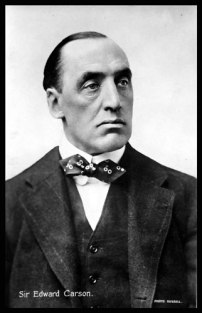
Queensberry played by his own rules in assembling his case against Wilde. These included the hiring of private detectives to delve into the playwright’s private life and the hiring of the distinguished barrister Edward Carson—like Wilde a Dubliner and a former Trinity College student,—to defend the Marquess against the defamation charge.

iu-2.jpeg

The cross-examination of Wilde was a Carsonian tour de force. He was pummelled, poked, prodded and provoked. Carson allowed Wilde to hang himself., with the witness coming across as arrogant and flippant in response to serious and potentially damaging questions.   Carson extracted an admission from the plaintiff that Wilde had lied about his age on oath, and a denial that he had kissed a particular servant boy. Wilde’s refutation did not help his cause one jot. He denied the allegation because, he declaimed glibly, ‘he was a particularly plain boy – unfortunately ugly.’

The defence case did not have to proceed any further than Carson’s opening statement, in which he revealed that Queensberry’s detectives had located a number of young men who were prepared to testify to having had sex with Wilde. The playwright dropped the prosecution, Queensberry was acquitted, Wilde was left to bear his antagonist’s costs, and went bankrupt.

On 26 April 1895, Wilde’s own prosecution for gross indecency under the Criminal Law Amendment Act of 1885, began. It arose directly from the Queensberry case and would end with a conviction, and a sentence of two years hard labour.  As Wilde put it himself in Dorian Grey, ‘behind every exquisite thing that existed, there was something tragic.’

iu.jpeg

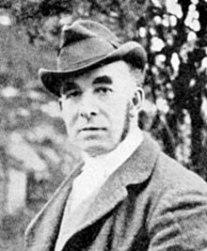
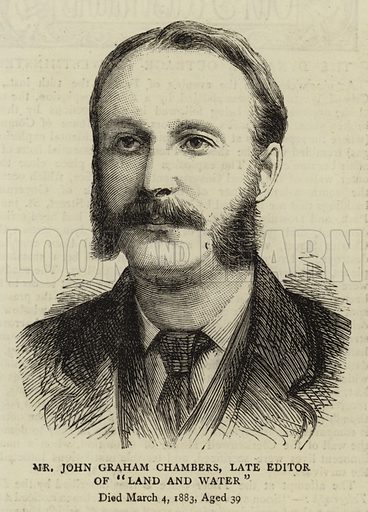
But as to that other question, was Wilde brought down by the man who devised the rules of boxing? You might think so, given that they are called the Queensberry rules. But, in fact, they were devised by a Welsh sportsman named John Graham Chambers—an accomplished oarsman who had rowed alongside Matthew Webb when that swimmer made the first crossing of the Channel in 1875. Chambers, persuaded Queensberry to lend his name to the new regulations in order to hasten their acceptance. The Marquis did none of the donkey work himself – so although he floored Wilde with a haymaker, that’s fake history.