On This Day – 4 September 1844 THE HOUSE OF LORDS FREES DANIEL O’CONNELL FROM PRISON

Daniel_OConnell-The-Liberator

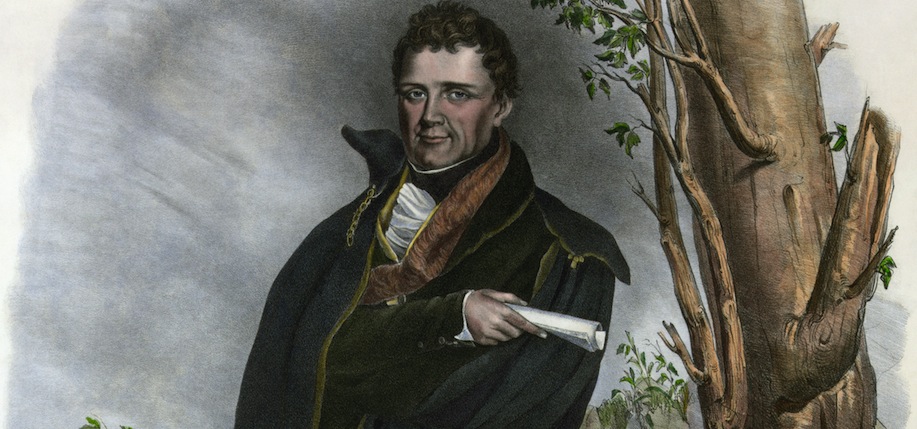
1843 was to have been Repeal Year. A series of huge gatherings, dubbed ‘monster meetings’ by the hostile Times of London, was designed to put pressure on the British government to restore an Irish parliament.

Of course, it didn’t happen, and an almost inevitable consequence of the failure of the Repeal movement was the arrest and prosecution in 1844 of its leaders, the principal motive force being Daniel O’Connell, the architect of Catholic Emancipation.

The charge against The Liberator and a small number of key allies, including his son John, was one of conspiracy. As defined in the mid 19th century this tended to reverse what we would see as the natural order of justice. Essentially the accused had to prove that they were not involved in a conspiracy rather than the onus being on the Crown to prove that they were.

The fact that, in essence, many potential Catholic jurors were excluded from the jury panel, didn’t help O’Connell’s cause. There were four presiding judges, led by Chief Justice Pennefather, a man described by one of the defendants, the Nation newspaper editor Charles Gavan Duffy as ‘descended from a family of Puritan[s] … gorged with lands and offices during the penal times, but still on the watch for ministerial favours …’ So no help to be expected from that quarter.

The defence case was also placed at a severe disadvantage by the refusal of the Crown to supply them with even a list of witnesses. Try that today and see how far you get. Evidence was introduced by the prosecution from official government notetakers of the allegedly seditious speeches made by O’Connell and others at the monster meetings in evocative locations like Tara.

The almost inevitable result of the lengthy trial was the conviction of the accused, helped by a summing up from the Chief Justice that read like a continuation of the closing address of the prosecution to the jury. Anything Pennefather felt the Attorney General had left out, he generously supplied himself.

Although, at the advanced age of 69 and in bad health, O’Connell became a felon his punishment was, in effect, in inverse proportion to the supposed gravity of the crime. O’Connell and his fellow prisoners were allowed to choose their own place of incarceration. They opted for the Richmond Bridewell, a prison mainly used to accommodate debtors, on Dublin’s South Circular Road.

O’Connell and his fellow inmates actually served out their sentences in the comfort of the homes of the Governor and Deputy Governor rather than in prison cells. In time the entire episode would become known as ‘the Richmond picnic’. Hailed as a martyr for the nationalist cause O’Connell’s Richmond experience was, in truth, ‘martyrdom de luxe’. One of the detainees wrote that ‘the imprisonment proved as little unpleasant as a holiday in a country house.’

Not only were the prisoners afforded the facility of having their spouses present at all times – O’Connell himself was a widower – they were also allowed their own servants. Food was imported from eating-houses outside the walls of the prison or, more often than not, provided by hundreds of well-wishers. O’Connell, enabled to take daily exercise, regained much of hi

OTD – 4.9.1844 HOUSE OF LORDS FREES O’CONNELL

1843 was to have been Repeal Year. A series of huge gatherings, dubbed ‘monster meetings’ by the hostile Times of London, was designed to put pressure on the British government to restore an Irish parliament.

Of course, it didn’t happen, and an almost inevitable consequence of the failure of the Repeal movement was the arrest and prosecution in 1844 of its leaders, the principal motive force being Daniel O’Connell, the architect of Catholic Emancipation.

The charge against The Liberator and a small number of key allies, including his son John, was one of conspiracy. As defined in the mid 19th century this tended to reverse what we would see as the natural order of justice. Essentially the accused had to prove that they were not involved in a conspiracy rather than the onus being on the Crown to prove that they were.

The fact that, in essence, many potential Catholic jurors were excluded from the jury panel, didn’t help O’Connell’s cause. There were four presiding judges, led by Chief Justice Pennefather, a man described by one of the defendants, the Nation newspaper editor Charles Gavan Duffy as ‘descended from a family of Puritan[s] … gorged with lands and offices during the penal times, but still on the watch for ministerial favours …’ So no help to be expected from that quarter.

The defence case was also placed at a severe disadvantage by the refusal of the Crown to supply them with even a list of witnesses. Try that today and see how far you get. Evidence was introduced by the prosecution from official government notetakers of the allegedly seditious speeches made by O’Connell and others at the monster meetings in evocative locations like Tara.

The almost inevitable result of the lengthy trial was the conviction of the accused, helped by a summing up from the Chief Justice that read like a continuation of the closing address of the prosecution to the jury. Anything Pennefather felt the Attorney General had left out, he generously supplied himself.

Although, at the advanced age of 69 and in bad health, O’Connell became a felon his punishment was, in effect, in inverse proportion to the supposed gravity of the crime. O’Connell and his fellow prisoners were allowed to choose their own place of incarceration. They opted for the Richmond Bridewell, a prison mainly used to accommodate debtors, on Dublin’s South Circular Road.

O’Connell and his fellow inmates actually served out their sentences in the comfort of the homes of the Governor and Deputy Governor rather than in prison cells. In time the entire episode would become known as ‘the Richmond picnic’. Hailed as a martyr for the nationalist cause O’Connell’s Richmond experience was, in truth, ‘martyrdom de luxe’. One of the detainees wrote that ‘the imprisonment proved as little unpleasant as a holiday in a country house.’

Not only were the prisoners afforded the facility of having their spouses present at all times – O’Connell himself was a widower – they were also allowed their own servants. Food was imported from eating-houses outside the walls of the prison or, more often than not, provided by hundreds of well-wishers. O’Connell, enabled to take daily exercise, regained much of his health.

The main source of irritation was the huge number of visitors anxious to meet with O’Connell now that he was no longer a moving target. That was quickly sorted by a ban from the privileged inmates on visits outside of a four hour window from noon to 4.00 pm.

One aspect of the incarceration in which the Irish public were not permitted to share was the fact of O’Connell’s growing infatuation with a woman young enough to be his granddaughter, Rose McDowell, daughter of a Belfast Presbyterian merchant He corresponded with her and may even have proposed to her. To the relief of his family she was not interested in becoming the second Mrs. O’Connell.

The Liberator, despite the massive celebration that marked his release, may well have had mixed feelings when the House of Lords reversed his conviction 171 years ago, on this day.

1810-1892

On This Day – 28 August 1814 – Birth of Irish Gothic writer Sheridan Le Fanu

lefanudrawing59792370002616324237853Pic

The name Le Fanu doesn’t sound particularly Irish. Indeed it’s not particularly Irish. But one of the most celebrated gentlemen of that name definitely was.

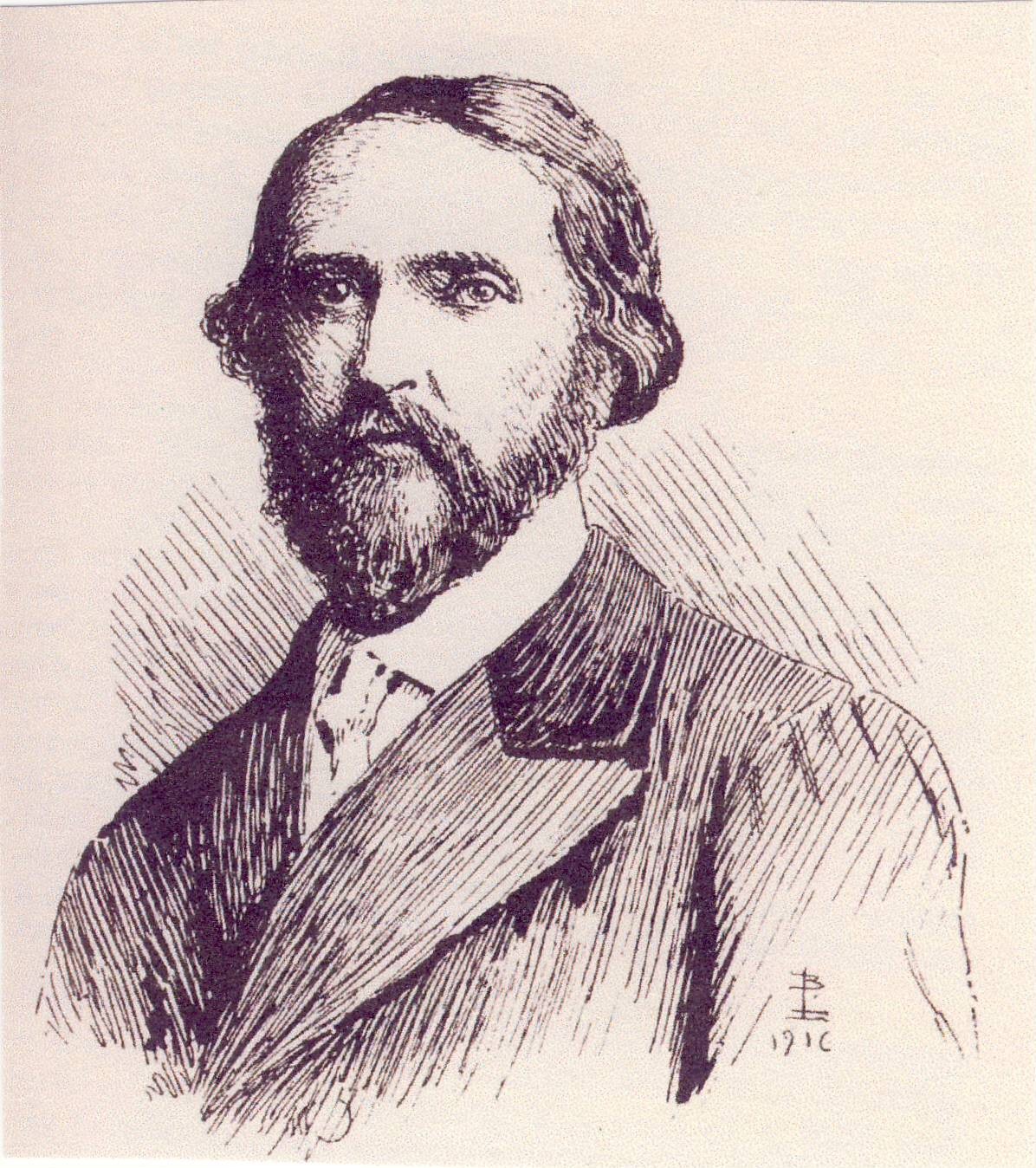
Sheridan Le Fanu, born in Dublin in 1814 was of Huguenot descent. He was the son of a frequently impoverished clergyman and the grand-nephew of the great Irish playwright Richard Brinsley Sheridan, from whom he derived his Christian name. His father had the misfortune to be a Church of Ireland clergyman during the Tithe War, a time when they were about as welcome in most Irish rural communities as President Barack Obama at a Ku Klux Klan rally.

Le Fanu junior went to Trinity College where he became auditor of the Historical Society, the famous TCD debating forum. He began contributing stories to the Dublin University Magazine in 1838 and in 1840 became, for a short period, part owner of the Unionist newspaper the Dublin Evening Mail, which, many years after his tenure, would compare the Irish Land League to the Colorado Beetle, to the detriment of the insect.

Le Fanu’s own political instincts were not quite as Tory as his shareholdng in the Mail would suggest.   During the Famine he allied himself to the likes of John Mitchel, Thomas Francis Meagher, Samuel Ferguson and Isaac Butt in condemning British policy in Ireland during the Famine years.

Le Fanu would become the leading writer of Gothic fiction in early Victorian Britain, the precursor of authors like fellow Dubliner Bram Stoker. His ghostly creations may well have emerged from the horrors of the Great Famine and/or from tragedies closer to home. His wife Susanna suffered from mental illness and died in April 1858 after what was described as an ‘hysterical attack’. After her death Le Fanu became almost a recluse.

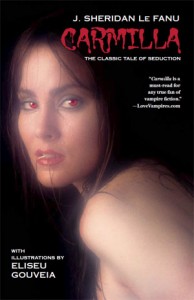
Le Fanu’s first great Gothic novel, The House by the Churchyard, published in 1863, is set in the Phoenix Park and Chapelizod and was used by James Joyce as a source for Finnegan’s Wake. Thereafter, however, for commercial reasons, his work was mostly set in England. In 1864 he had huge success with Uncle Silas a mystery novel that influenced writers like Arthur Conan Doyle and Wilkie Collins. Two film versions have been made of the novel. His other outstanding success was Carmilla, a vampire novella, set in Eastern Europe with a lesbian subtext that has inspired several films and certainly heped Stoker to write Dracula.

Le Fanu’s plots include the aforementioned vampire, a man returning from the grave to claim his bride, a Faustian pact, Gothic castles, supernatural visitors and sundry other joyous subject matter. Like many other Irish writers he also pillaged the Irish folk tradition with gusto and to excellent effect. In this context it is odd that his first published story ‘The Ghost and the Bonesetter’ is a comic narrative. He didn’t persist with the genre.

Many of his short stories, which tend to be more Irish than his longer fiction, purport to be from the memoirs of an 18th century Irish priest Father Purcell. These were published in the Dublin University Magazine and often later mined by the author himself for the storylines of his novels.

Le Fanu might have produced even greater work and been remembered in the manner of Stoker, Edgar Allen Poe and Mary Shelley, but his life was relatively short. He died in 1873 at the age of 59.

Sheridan Le Fanu, ghostwriter in the traditional sense of the word, was born 201 years ago, on this day.

Carmilla_Cover-194x3004f248ad7c8_73545810_o2carmilla-j-sheridan-lefanu-paperback-cover-art

On This Day – 24.7.1750 Birth of John Philpot Curran, the man who almost became Robert Emmet’s father in law

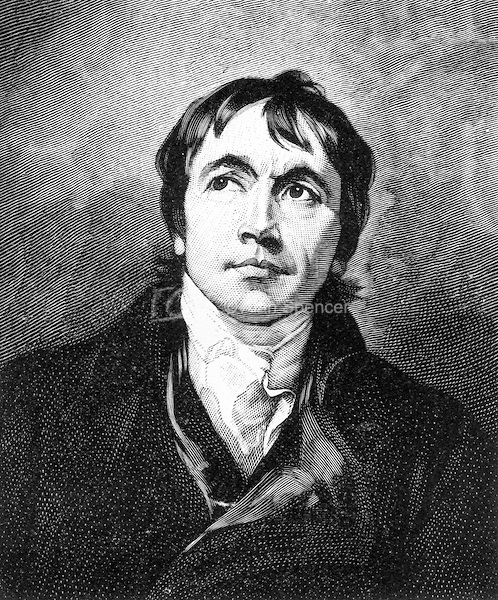
John Philpot Curran (24 Jul 1750 – 14 Oct 1817) Irish orator, politician and wit; Black and White Illustration;

John Philpot Curran (b.24 Jul 1750 )

On the morning of his 53rd birthday the leading Irish barrister of his day, John Philpot Curran, would have received news of serious disturbances in the city of Dublin. He would have been horrified to learn of the brutal death of his friend Lord Kilwarden, dragged from his coach along with his nephew and daughter and stabbed repeatedly with pikes.

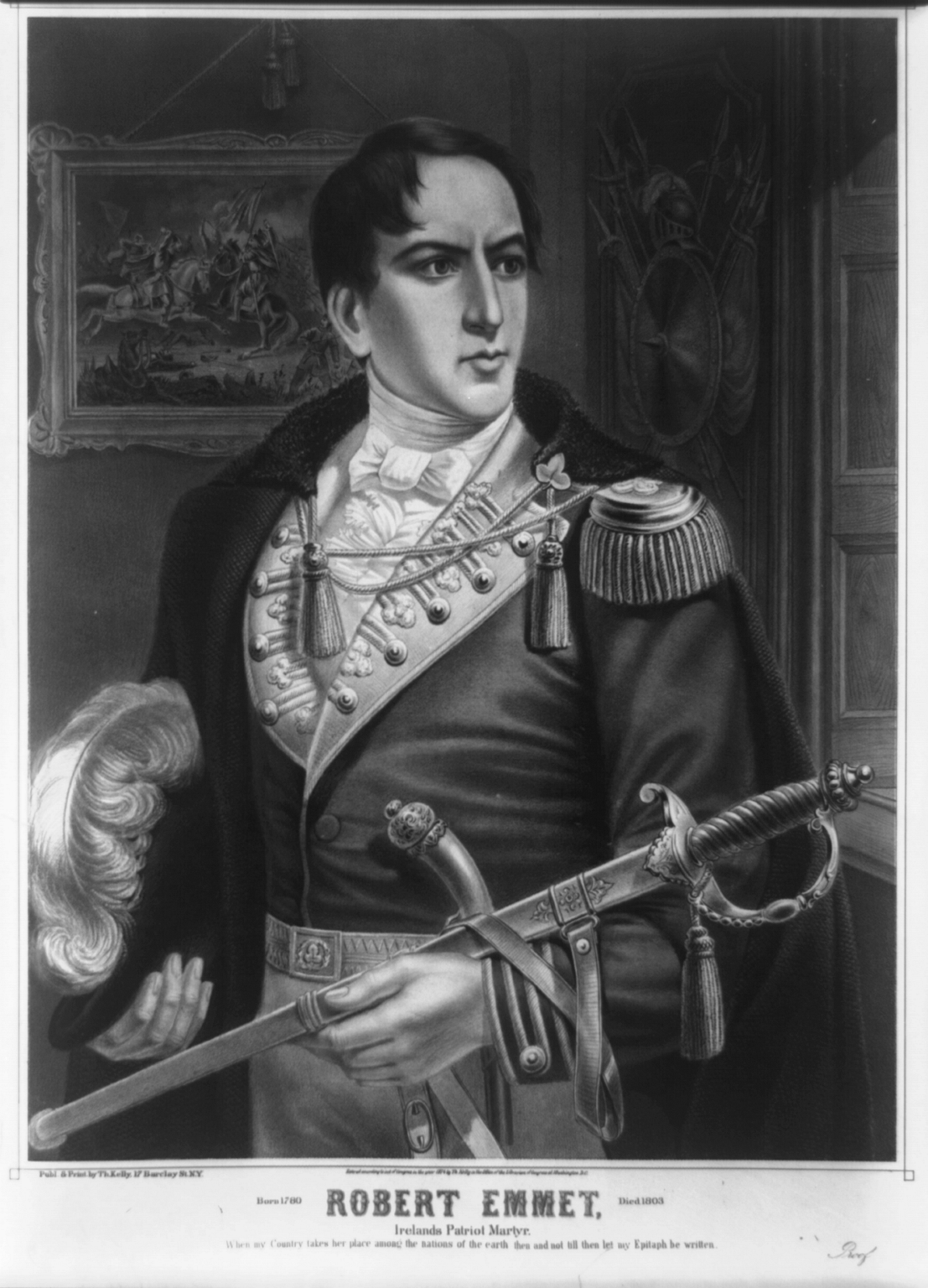
However the violence of 23rd July 1803 was to come even closer to home for Curran. He would quickly have learned that it was no angry and leaderless mob that had murdered Kilwarden. It was the last throw of the dice of the United Irishmen, supposedly suppressed viciously five years earlier, in a rebellion led by a young Dublin Protestant, Robert Emmet. That name would come to haunt Curran.

John Philpot Curran was one of the most celebrated Irish public figures of his day. He was a politician, having been a member of the Irish parliament for three different constituencies. He was probably the most capable member of the Irish bar and had, in 1798, ably but futilely defended many of the leaders of the United Irishmen’s rebellion. His early career as a barrister had been marred by a serious stammer that had earned him the unenviable nickname ‘Stuttering Jack Curran’. But he had conquered his disability, apparently by spending hours reciting Shakespeare in front of a mirror.

He was also a duellist, having fought up to half a dozen opponents and survived.

One of those encounters highlights his penchant for ‘lost causes’ or, at least, his affiliation to the underdog. In 1780 Curran, himself a wealthy and well-connected Protestant, took on the case of an elderly Catholic priest, Father Neale, who had fallen foul of a distinctly obnoxious aristocrat, Lord Doneraile. The priest had criticized the brother of Doneraile’s mistress for maintaining an adulterous relationship and Doneraile, as you did if you were called– I kid you not – St.Leger St.Leger (his parents must have been extremely attached to the family name) had horsewhipped Father Neale for his croppy effrontery. St.Leger (squared) did not anticipate a jury of his peers deciding to punish him. But he reckoned without Curran’s powers of persuasion. The young advocate’s arguments coaxed the jury into awarding the horsewhipped priest 30 guineas and an affronted Doneraile challenged Curran to a duel. He fired and missed, Curran walked away without shooting.

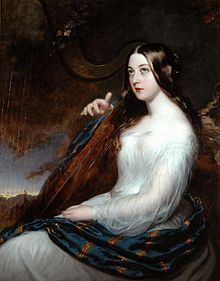
While Curran may have opposed the Act of Union and defended United Irishmen his tolerance did not extend as far as permitting a relationship to form between his daughter Sarah and Robert Emmet. However, after the capture of the young rebel in the wake of his abortive coup Curran, typically, agreed to defend Emmet. He was unaware, however, of the existence of a correspondence between his client and his daughter. When the authorities came to search his house and he was apprised of the existence of letters between the young rebel and his youngest daughter he threw up the brief. Crucially he was replaced as defence counsel by the Crown’s most valuable intelligence asset in Dublin, the traitorous United Irishman Leonard McNally.

Curran was famous as a wit and phrasemaker. It may well have been he, rather than Edmund Burke, who uttered the immortal line ‘evil prospers when good men do nothing’. He said of an enemy that ‘his smile is like the silver plate on a coffin’. Marx once advised Engels to read Curran’s speeches. In an encounter with the infamous Irish hanging judge, Lord Norbury, the justice inquired of Curran if a particular piece of meat was ‘hung-beef’ to which Curran responded acidly ‘Do try it my Lord, then it is sure to be.’

In his private life he was often unhappy, he disowned his daughter Sarah and later his wife, also called Sarah and with whom he had nine children, ran off with a Protestant rector whom Curran sued for criminal conversation. But as a public figure Curran was a colossus who spanned the period between Henry Grattan and Daniel O’Connell and was, in many ways, the equal of both.

John Philpot Curran, scholar, poet, wit, barrister, politician, and humanitarian, was born 265 years ago, on this day.

220px-Sarah_Curran_Beecheyrobert-emmet-4.jpg

On This Day – 17.7.1938 Douglas ‘Wrong Way’ Corrigan lands at Baldonnell aerodrome after flying the Atlantic

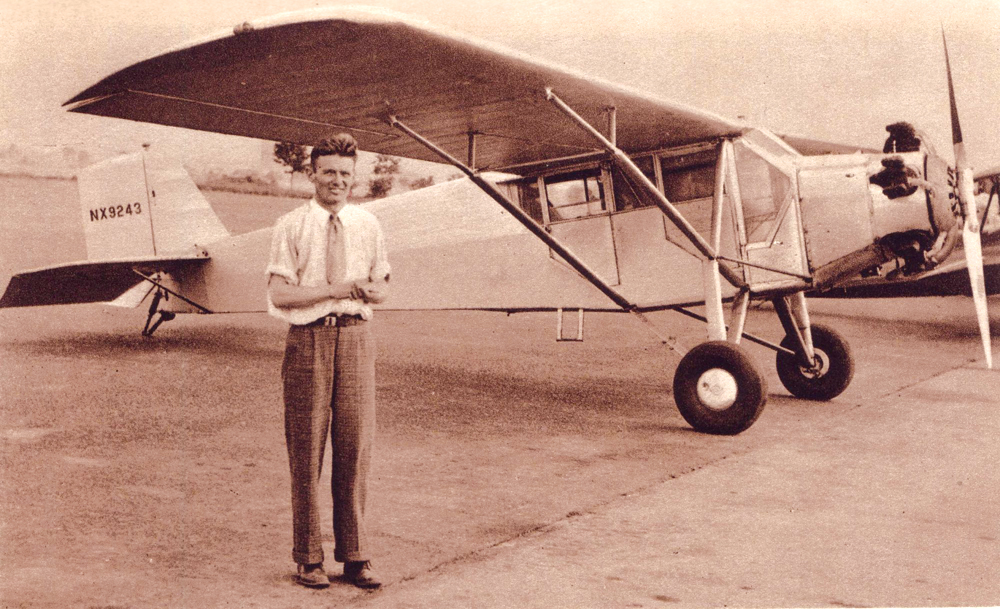
CORRIGAN-Douglas-Wrong-Way-with-his-Curtiss-Robin-NX9243.-at-Floyd-bennet-Field-July-1938Wrong_Way_Corrigan

In the early hours of the 18 July 1938 a rather flimsy, sorry looking, and frankly jerry-built plane landed at Baldonnel Aerodrome. Its arrival had not been expected and the authorities at the airport were astonished to discover that its pilot, 31 year old Douglas Corrigan, casually claimed to have just flown from New York.

Corrigan, a Texan of Irish descent, was a pilot and engineer who had worked with the Ryan Aeronautical Company on the construction of Charles Lindbergh’s Spirit of St. Louis. This was the plane that, in 1927, made the first non-stop solo flight from New York to Paris. Corrigan had made his own first solo flight in 1926 and he’d been severely bitten by the flying bug.

He quickly graduated to stunt flying – much to the annoyance of his employers at the Airtech Flying School in San Diego whose planes he was jeopardising. Corrigan paid no attention to their disapproval, simply taking their planes to a more distant airdrome and performing stunts during his lunch hour, unseen by his bosses. As we shall see the watchword for Corrigan seems to have been ‘out of sight out of mind.’

In 1933 he spent $300 on a four-year old Curtiss Robin monoplane and started to modify it. To put this into some perspective Spirt of St. Louis cost more than $10,000 to build. Corrigan had decided he wanted to emulate Lindbergh but he was going to target his ancestral home, Ireland, as his destination.

When he applied for a licence to make the trip in 1935 he was turned down on the, not unreasonable, basis that his plane was a glorified wreck incapable of surviving the trip. No amount of modifications over two years would make the authorities change their minds.

Based in California Corrigan flew his plane across the USA in July 1938 barely making it to New York before a gasoline leak got him first. He then filed a flight plan for a return trip to the West Coast. He took off on 17 July at 5.15 in the morning but instead of turning west he headed east. He afterwards claimed that low cloud and a faulty compass had brought about the slight error that took him out over the Atlantic. Nobody believed him. Most people who knew him were aware of his obsession.

28 hours and 13 minutes after take off Corrigan landed at Baldonnel. He had survived on two bars of chocolate and two fig bars, had to get his bearings by looking out of the side of his airplane – he had placed his fuel tanks in front – had no radio and a twenty-year old compass which he almost certainly didn’t bother to read until he knew he was over the Atlantic and not New Jersey.

An American journalist with the delightful name of H.R.Knickerbocker, who interviewed Corrigan in Ireland after his epic journey, wrote three years later that …

You may say that Corrigan’s flight could not be compared to Lindbergh’s in its sensational appeal as the first solo flight across the ocean. Yes, but in another way the obscure little Irishman’s flight was the more audacious of the two. Lindbergh had a plane specially constructed, the finest money could buy. He had lavish financial backing, friends to help him at every turn. Corrigan had nothing but his own ambition, courage, and ability. His plane, a nine-year-old Curtiss Robin, was the most wretched-looking jalopy.

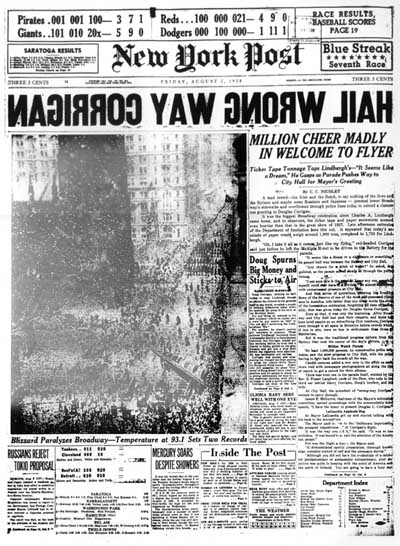
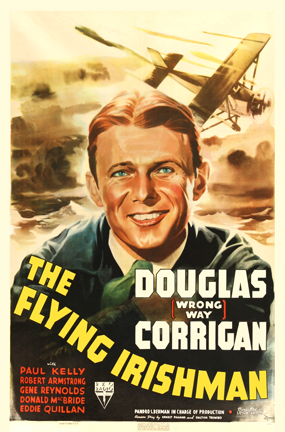
Corrigan’s ‘mistake’ might not have gone down well in official aviation circles – his licence was suspended for fourteen days and his hero Charles Lindbergh never acknowledged his achievement – but he was a big hit with the general public and returned to a hero’s welcome in the USA. He received a ticker tape parade in New York – reckoned to have been attended by more people than greeted Lindbergh. Later he starred in a movie about his own life called The Flying Irishman, delighted in the nickname ‘Wrong Way Corrigan’ and endorsed numerous appropriate products such as a watch that told the time backwards.

Douglas ‘Wrong-Way’ Corrigan took off from New York, bound for California and got conveniently lost, 77 years ago, on this day.

flying-irish_a

On This Day – Drivetime – 10.7.1867 Birth of Finlay Peter Dunne

idunnef001p1

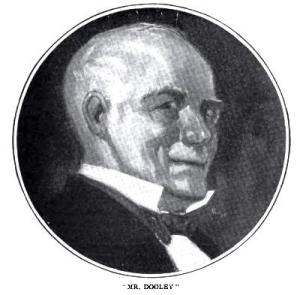
For more than a decade an irascible bar tender from Roscommon, owner of a saloon in Chicago, became the most famous fictional character in American journalism. The barkeep in question, Mr. Dooley, was the creation of the Irish-American humorist Finley Peter Dunne and every week, in the pages of numerous newspapers across the USA, in a syndicated column, Dooley would hold forth on matters of public and domestic policy to his long-suffering customer Hennessy in an Irish dialect that often has to be read aloud to be properly understood.

Finley Peter Dunne was born in Chicago in 1867, the son of Irish immigrants who came to America as refugees from the Great Famine. He was brought up in the heavily Irish neighborhood of Bridgeport and began working for Chicago newspapers straight out of high school. In his mid twenties he started composing Dooley’s satirical monologues for the Chicago Sunday Evening Post. Many of Dooley’s political views would not have been shared by his author. A latter-day version of Dooley therefore might be TV’s Comedy Central creation Stephen Colbert.

Mr.Dooley was never shy about expressing his opinions. In, for example, a column about the vexed topic of immigration (and remember this was the 1890s) Dooley, himself an immigrant, favours the lowering of the portcullis to prevent the entry of further migrants to the USA. Dooley tells Hennessy, whose own cousin is due to arrive in Chicago shortly

Tis time we put our back agin’ the open door an’ kept out th’ savage horde. If that cousin of yers expects to cross, he’d better tear for th’ ship. In a few minutes th’ gates will be down an’ when th’ oppressed world comes hikin’ acrost to th’ haven of refuge, th’ Goddess of Liberty will meet them at th’ dock with an axe in her hand

Dunne coined a host of well-known aphorisms that have entered the great American lexicon, phrases such as ‘trust everyone, but cut the cards,’ ‘the past only looks pleasant because it isn’t here,’ ‘larceny is the sincerest form of flattery,’ and his pithy appraisal of corrupt big city politics ‘a vote on the tallysheet is worth two in the box.’ He may also have coined the famous truism, ‘All politics are local’ an observation usually ascribed to the late House of Representatives Speaker Tip O’Neill.

Perhaps Dooley’s most pointed observation concerned Dunne’s own profession. He once said of the newspaper business that …

The newspaper does ivrything for us. It runs th’ polis foorce an’ th’ banks, commands th’ milishy, controls th’ ligislachure, baptizes th’ young, marries th’ foolish, comforts th’ afflicted, afflicts th’ comfortable, buries th’ dead an’ roasts thim aftherward.

The reference to comforting the afflicted and afflicting the comfortable has been adopted and claimed as a mantra by many journalists, writers and activists.

Despite the numerous barbs aimed at his administration President Theodore Roosevelt contrived to be on very friendly terms with Dunne. Roosevelt would regularly read out Dunne’s columns at cabinet meetings to alert the nation’s political leaders to the vox populi – Dooley being seen as a man of the people and as reflecting the opinions of the man in the street.


Dunne himself, in 1902, married one Margaret Ives Abbot, who just happened to be the first American woman to have won an Olympic gold medal, she was the women’s golf champion at the 1900 Paris Olympiad. In 1910, after writing more than 700 columns, Dunne ended the career of the garrulous Roscommon bartender and no more was heard from Mr. Dooley.

Irish-American writer, Finlay Peter Dunne, humorist, journalist and one of America’s most successful newspaper columnists, was born 148 years ago, on this day.

dooley2