On This Day – Drivetime – 16 May 1907 Birth of Bob Tisdall, winner of Olympic gold medal in 1932


Image


It was Monday 1 August, 1932. In one glorious hour at the Olympic Stadium in Los Angeles Ireland won two track and field gold medals. The second gold was won by hammer thrower Pat O’Callaghan, a surprise champion in 1928 when, as a relative novice, he had only been included in the Irish team to gain experience of top class competition. There was no surprise at all at his follow-up victory four years later.


The first of the two medals, however, was won by a tall, handsome 400 metres hurdler, Robert Morton Tisdall. Born in Ceylon, now Sri Lanka, Tisdall was brought up in Nenagh, Co.Tipperary – home to two previous Irish Olympic gold medallists Johnny Hayes and Matt McGrath, who had competed for the USA in the early 1900s at a time when there was, of course, no Irish Olympic team.


Tisdall had the right pedigree. His father had been an Irish sprint champion and his mother had played hockey for Ireland. The 25 year old Tisdall had given up a pretty fabulous job just to compete in Los Angeles. He had landed on his feet during the Great Depression by becoming an aide to a wealthy young Indian Maharajah on an extensive European tour. That plum job went by the board in the fulfillment of the dream of Olympic success.


Tisdall had already shown athletic promise at the University of Cambridge where he managed to win four events in the annual encounter with Oxford – he finished first not only in the two hurdle races but in the long jump and, bizarrely, the shot putt. In the lead up to the LA Games Tisdall was, essentially, a low hurdles runner over 220 yards. But in 1932, never having actually run in the event, he wrote to the President of the Olympic Council of Ireland, Eoin O’Duffy – taking time off from his duties as Ireland’s leading fascist – and asked to be considered for selection for the 400 metres hurdles. Tisdall qualified to compete in the event by winning the national 440 yards hurdles event in Croke Park in 1932.


His training in California was not ideal. There were no hurdles available at the team training camp – so he collected driftwood and improvised hurdles on a greyhound track. This took quite some time – just as he got ready for his first run someone switched on the mechanical rabbit. One by one the electronic bunny smashed his driftwood hurdles. Tisdall eventually found a track WITH hurdles at a local girls school where he was allowed to train.


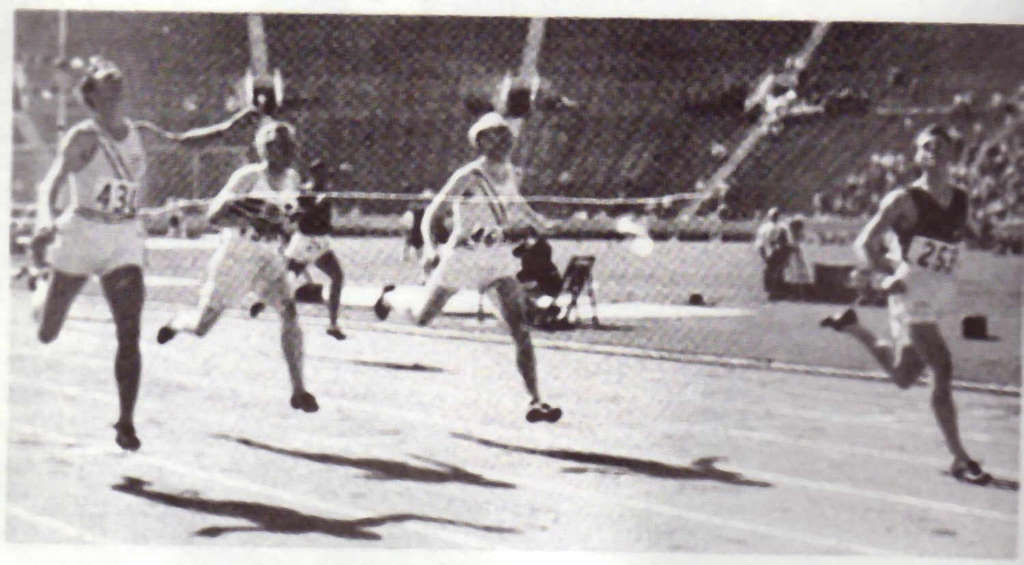
He won his heat with considerable ease. You can actually see a recording of his semi-final victory on YouTube. It’s quite amazing how easily he won this race as well, almost jogging to the line after the last hurdle, running from the outside lane. Astonishingly, after virtually pulling up and walking home nonchalantly, he still equalled the Olympic record . It was Tisdall’s fifth ever run in the event.


In the final he faced three Olympic gold medallists, Glenn Hardin and Morgan Taylor of the USA and David Cecil, Lord Burghley of the Great Britain. He creamed the lot of them, setting a new world best time in the process and becoming the first 400 metres hurdler to break 52 seconds. Ironically though it was silver medallist Glenn Hardin who was credited with a new world record of 51.85 – Tisdall had knocked over the final hurdle and under the rules, changed not long afterwards, he was denied the record.


But he took consolation in his magnificent gold medal and in the fact that at a subsequent gala dinner in Los Angeles he found himself seated between the celebrated aviator Amelia Earhart and the Hollywood star Douglas Fairbanks Jr.


Tisdall, who brought honour and pride to a newly-created state, barely a decade in existence at the time, lived to be 97 years of age. He had run in the Sydney Olympics torch relay at the age of 94. Robert Morton Tisdall, Irish Olympic gold medallist was born, 107 years ago, on this day.


Watch Tisdall in action here

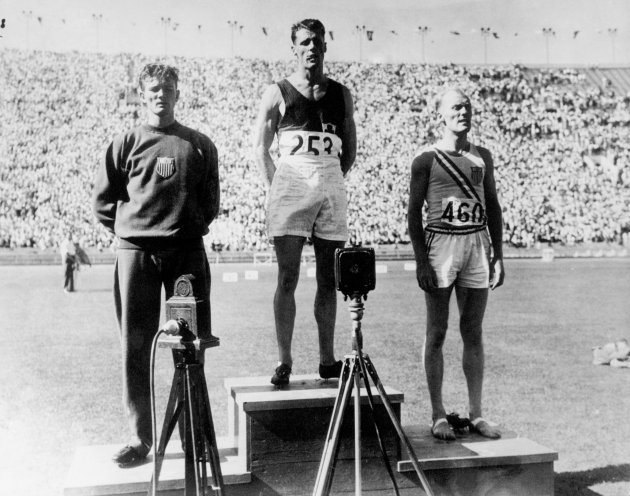
Watch Tisdall and Pat O’Callaghan win their medals here
Image

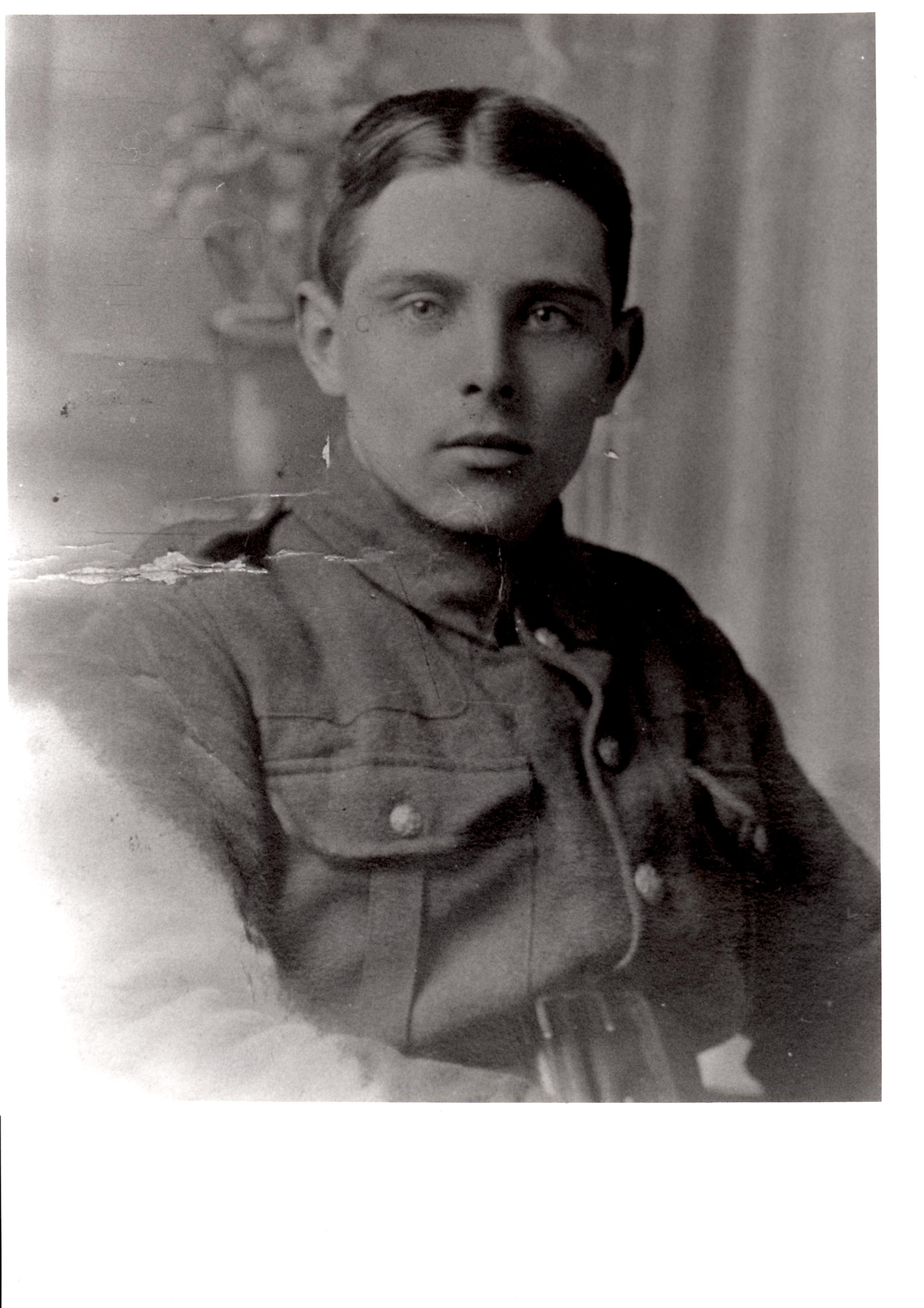
RIFLEMAN J.P O’REILLY – information added to www.livesofthefirstworldwar.org

If you have any information on family members who fought in the Great War you can add it to this wonderful new site of the Imperial War Museum which has just gone live. 

I threw in some of this little lot about my granduncle from Baileborough, Co.Cavan who died on the Somme in 1916.

Image 

J.P.O’Reilly was born in Baileborough, Co.Cavan. He was just about old enough to enlist in 1914 when war broke out. He did so under the influence of a priest who implored his younger male parishioners from the pulpit to go to the aid of ‘little Catholic Belgium’.  His father, tried to get him out but, although he was not entitled to vote at that age he was entitled to die for Belgium.


He was assigned to the 6th Royal Irish Rifles who, in August 1915 landed at the killing zone of Anzac Cove in Gallipoli. The first of three surviving letters home, to his brother Terry, my grandfather, was on 31 August 1915. He was excited at how well Cavan were going in the All Ireland. They’d already had won the Ulster championship.  Later they were beaten in the All Ireland semi final by Wexford.


He told my grandfather that ‘regularly every evening the Turks send across a few shells. These do little damage. It looks like a winter campaign here, but you never know what is going to happen.’ He was wrong about that. The campaign ended in December when Gallipoli was evacuated and left to the Turks.


He was transferred to the 2nd Royal Irish Rifles. On the 29 September 1916, during the Somme offensive, he was killed by the sort of random shell that didn’t seem to cause him much anxiety in Gallipoli. You never know what is going to happen. On 22 October his grandmother wrote to his mother saying ‘I hope you are keeping up and not crying too much. You know crying will do poor Pat no good.. Thank God he is not in the trenches in France now.’


Rifleman 19927 J.P.O’Reilly is buried in Lonsdale cemetery in Picardy. When he died he was still not entitled to vote. 

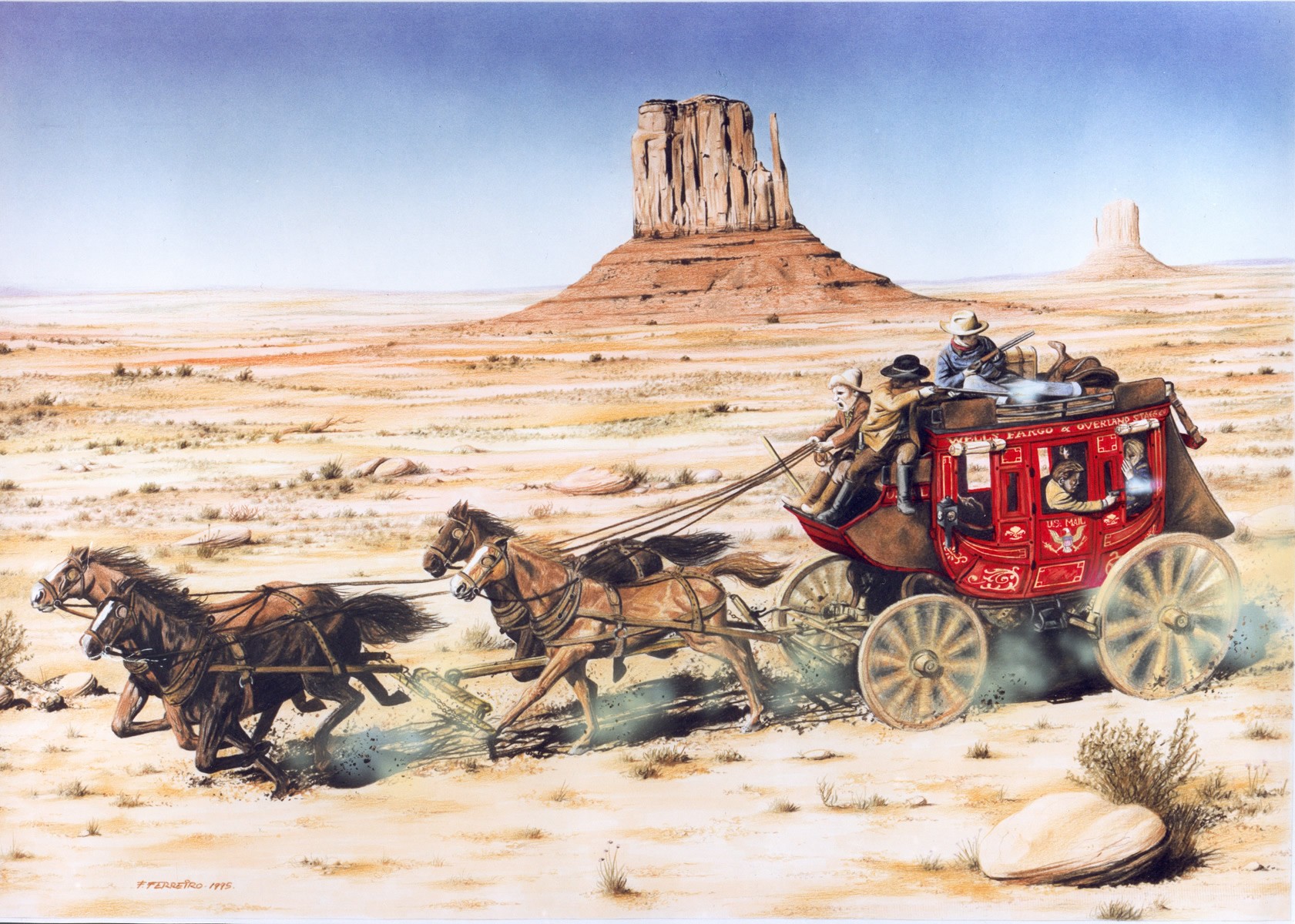
Tall But True – some improbable stories of the Irish in the American West

193061

This is the first in an occasional series of pieces extracted from my book How the Irish Won the West.

I am posting unadorned extracts up on Soundcloud (sorry – none of the production values of On This Day I’m afraid) telling the stories of some of the oddbods, pioneers, freaks, and heroes from Ireland who settled in or impacted upon the American West.

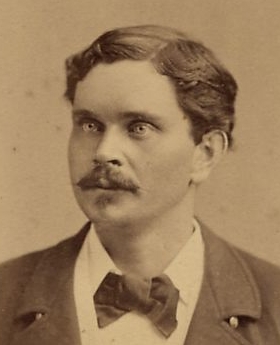
This is a tale about the intersection of an Irish 19th century showman, Paul Boyton from Rathangan, Co.Kildare, with the west.

He liked to throw himself into large bodies of water- this is the story of how he survived a long swim down the Yellowstone and Missouri rivers.

Paul_Boyton_(photo)


Some more information on the career of the Fearless Frogman here

OTD – DT – 9 May 1766 – execution of Thomas Lally


Image


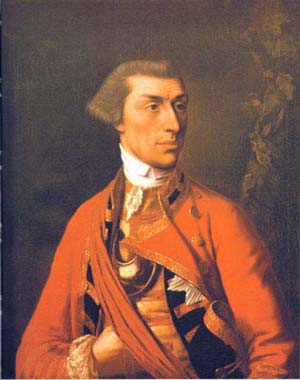
Thomas Arthur Lally was not quite as Irish as his name might suggest. He was born in France in 1702, son of Sir Gerald Lally from Tuam in Co.Galway, an Irish exile in France who had fought in the Jacobite wars. The family was said to be able to trace its Irish ancestry back to Conn of the Hundred Battles. Like his father Thomas Lally was destined for a military career. He joined the French Army in 1721 and rose to command his own regiment in the Irish Brigade at the celebrated French victory against the British at Fontenoy in 1745. He was immediately promoted to Brigadier.


That same year he accompanied Prince Charles Edward Stuart, aka Bonnie Prince Charlie but shared in the Young Pretender’s defeat and was forced to escape to France. While in Scotland he was given the titles of Earl of Moenmoyne, Viscount Ballymole and Baron Tollendally by Prince Charles. Not surprisingly, given the Stuart defeat, none of the titles is to be found in Burke’s Peerage.


When France’s umpteenth war with Britain broke out in 1756 Lally was given command of a French expedition to India – at the time France actually had Indian colonies of its own, the object was to get possession of those belonging to Britain – a project that initially met with some success. But things quickly began to go wrong for Lally’s under-resourced force. Lally was beaten in a number of encounters with British forces – among them was a defeat by fellow Irishman Eyre Coote – and retreated to the city of Pondicherry. There he withstood a lengthy siege before conceding defeat in January 1761 and handing the city back to the British. Lally was sent as a prestigious prisoner to Britain. He must have wondered who would be scapegoated in France for the humiliation of this defeat. Would it be members of the French ministry or perhaps even the King himself, Louis XV.


He soon found out that he was to be the scapegoat. While in Britain Lally discovered, to his chagrin, that he was being accused of treason in France based on the surrender of Pondicherry. Instead of biding his time in England he sought permission from his captors to return to France on parole to defend his reputation. He was imprisoned in France for two years before he was tried and found guilty and beheaded in 1766. This was in the days prior to the French revolution and the invention of the guillotine. The execution was carried out in front of a large crowd at the Place de l’Hotel de Ville in Paris. Lally was decapitated by sword. The infamous Marquis de Sade is said to have described the execution as botched, claiming that Lally had survived for more than a minute after the blow fell and had actually attempted to hold his head and neck together before he finally expired.


In his history of the French Revolution Thomas Carlyle describes Lally’s execution as judicial murder. He describes how Lally was transported through the streets of Paris to his place of execution with a gag around his mouth to ensure that he was unable to protest at the injustice of the sentence against him. Two years after Lally’s death he was posthumously pardoned by the new King, Louis XVI.


Thomas Arthur, Comte de Lally, was executed in Paris 248 years ago, on this day


Useful (but often unreadable) regimental histories of WW1 for those tracing their ancestors’ involvement in the Great War


Image


Regimental War Diaries – available in The National Archive (formerly the PRO) in Kew, London.


General Works

Bartlett, Thomas and Jeffrey, Keith, A Military History of Ireland (Cambridge, Cambridge University Press, 1996).

Bredin, General A.E.C., A History of the Irish Soldier (Belfast, Century Books, 1987).


Divisional and Regimental histories

Cooper, Bryan, The Tenth (Irish) Division in Gallipoli (Dublin, Irish Academic Press, 1993).

Cunliffe, Marcus, The Royal Irish Fusiliers, 1793-1968 (Oxford, Oxford University Press, 1970).


Denman, Terence, Ireland’s Unknown Soldiers: the 16th Irish Division in the Great War (Dublin, Irish Academic Press, 1992).


Fox, Sir Frank, The Royal Inniskilling Rifles in the World War (London, Constable, 1928).


Geoghegan, General S.C.B. Royal Irish Regiment (Army and Navy Press, 2007)

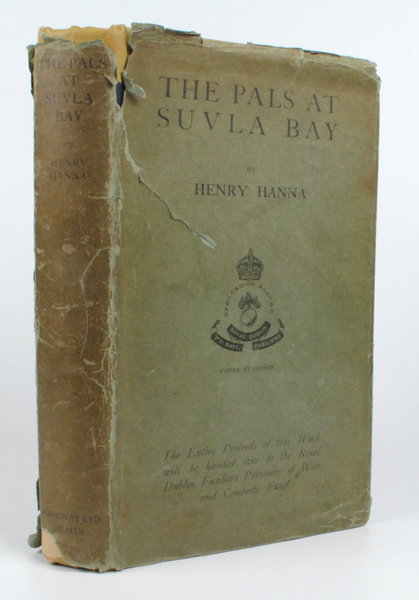
Hanna, Henry, The Pals at Suvla Bay (Dublin, Ponsonby, 1916).

Harris, Henry, Irish Regiments in the First World War (Cork, Mercier Press, 1968).


Hogarty, Patrick, The Old Toughs: A Brief History of the Royal Dublin Fusiliers, 2nd Battalion (Dublin, Private publication, 2001).


Jervis, Lt.Col. H.S., The 2nd Munsters in France, (Aldershot, Gale and Polden, 1922).


Kerr, J.Parnell, What the Irish Regiments Have Done (London, T.Fisher Unwin, 1916).


Kipling, Rudyard, The Irish Guards in the Great War, Vol.1. (London, Macmillan,1923).


McCance, Captain S., History of the Royal Munster Fusiliers: Volume II – from 1862-1922 (Aldershot, Gale and Polden,1927).

MacDonagh, Michael, The Irish at the Front (London, Hodder and Stoughton, 1916).

MacDonagh, Michael, The Irish on the Somme, (London, Hodder and Stoughton, 1917).


Rickard, Jesse Louisa, The Story of the Munsters at Etreux, Festubert, Rue du Bois and Hulluch (London, Hodder and Stoughton, 1918).


Taylor, James. W., The 1st Royal Irish Rifles in the Great War (Dublin, Four Courts Press, 2002).

Taylor, James. W., The 2nd Royal Irish Rifles in the Great War (Dublin, Four Courts Press, 2005).


Walker, G.A.C., The Book of the 7th Service Battalion – The Royal Inniskilling Fusiliers – from Tipperary to Ypres (Dublin, Brindley, 1920).


Whitton, Col.F.E., The History of the Prince of Wales Leinster Regiment, Vol.2 (Aldershot, Gale and Polden, 1926).


Wyly, Col. H.C., Crown and Company – The Historical Record of the 2nd Battalion, Royal Dublin Fusiliers, vol.2 1911-1922 (London, Humphreys, 1923)

Wylly, Col.H.C., Neill’s Blue Caps – Vol.3, 1914-1922 (Aldershot, Gale and Polden, 1923).